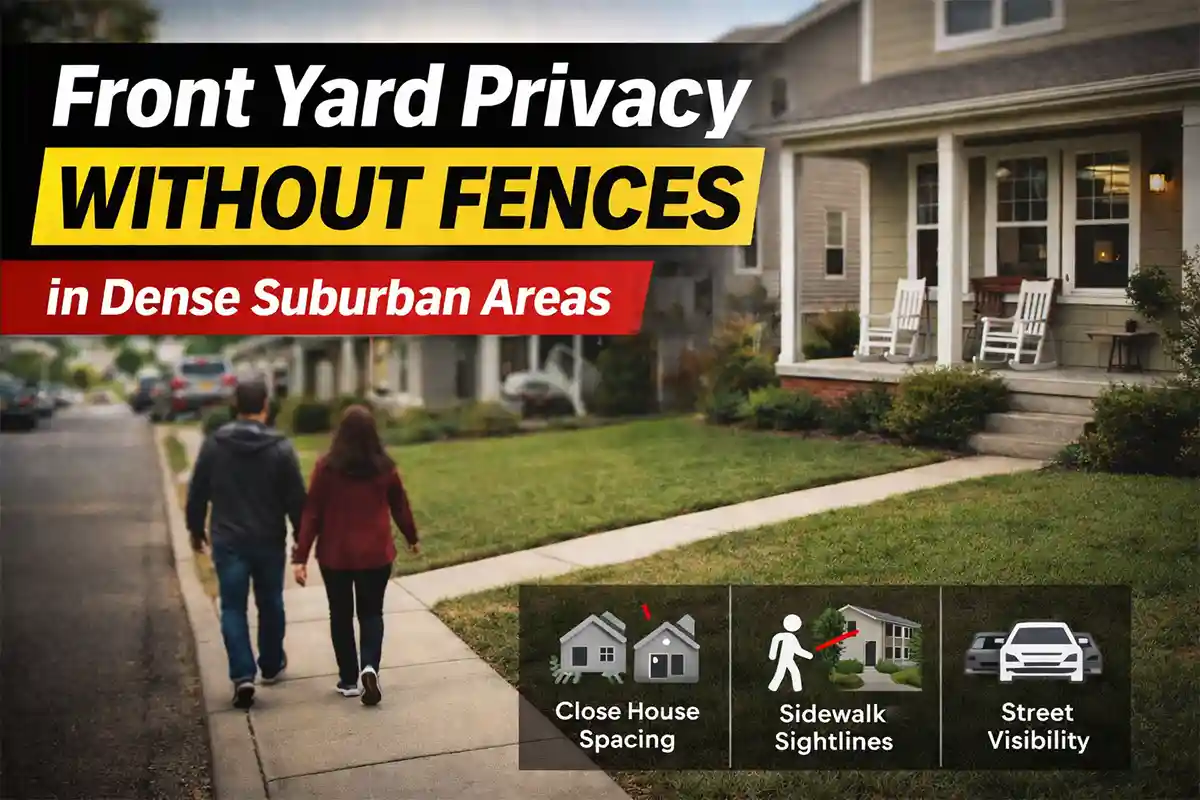
In many suburban developments across the United States, houses are built relatively close together and front yards remain open by design. While this layout creates a cohesive streetscape, it often introduces a challenge homeowners do not anticipate until after moving in—limited front yard privacy.
In neighborhoods where houses may sit only 18–30 feet apart, visibility from sidewalks, streets, and neighboring windows can extend deep into a property. Porch seating areas, front patios, and large windows often face public walkways directly, which makes outdoor spaces feel exposed throughout the day.
The problem becomes even more noticeable during periods of regular neighborhood activity. Morning commutes, afternoon school pickups, and evening dog walks can create continuous pedestrian traffic along sidewalks located only 6–12 feet from the edge of a front lawn.
Because of these conditions, many homeowners begin looking for ways to create natural privacy screens using landscaping rather than installing a fence.
Why Many Suburban Front Yards Cannot Use Fences
Local zoning codes and homeowners association rules often restrict fencing in front yards. In many communities across states like Texas, California, and Illinois, fences in front-facing areas must remain under 3–4 feet tall or are prohibited entirely.
These restrictions are intended to preserve visibility across the neighborhood and maintain consistent curb appeal.
Even when fences are technically allowed, they can create new design problems. A solid barrier may make a home appear closed off from the street, and installation costs frequently range from $3,000 to more than $9,000 depending on materials and yard size.
As a result, landscaping-based privacy solutions—often called landscape screening—have become one of the most effective alternatives.
However, poorly planned plant placement can create gaps or maintenance problems over time. Many of these issues appear when homeowners attempt quick fixes without understanding how suburban sightlines work, which is explored in more detail in Front Yard Privacy Without Fences: What Usually Fails.
Quick Diagnostic Checklist
If your front yard feels exposed, the issue usually involves several overlapping visibility factors.
Check the following conditions:
-
Houses in the neighborhood are spaced closer than 25 feet apart
-
Front-facing windows align with sidewalk sightlines
-
The yard consists mostly of lawn with limited planting layers
-
Porch seating areas face public walkways
-
Parked vehicles create angled views toward the house
-
Neighboring second-story windows overlook the yard
If three or more of these conditions apply, the yard likely needs landscaping designed to interrupt direct sightlines.
Common Sources of Front Yard Visibility
Front yard privacy problems rarely come from a single direction. Instead, they develop from several overlapping viewpoints.
| Visibility Source | Impact on Privacy | Typical Distance |
|---|---|---|
| Sidewalk pedestrians | Direct sightline to windows and porch | 6–15 ft |
| Neighboring windows | Elevated viewing angle | 20–35 ft |
| Street parking | Angled visibility toward entry areas | 10–25 ft |
| Stop signs or intersections | Longer viewing exposure | 20–40 ft |
| Sloped front yards | Lower homes become more visible | varies |
Elevation differences often amplify the issue. When a yard slopes downward toward the street, pedestrians may have a direct view into windows positioned only 36–48 inches above interior floors.
Landscape strategies for those situations require additional plant height and layering techniques, similar to those discussed in How to Add Privacy When Your Front Yard Slopes Down Toward a High-Traffic Street.
Layered Landscaping: The Most Effective Privacy Strategy
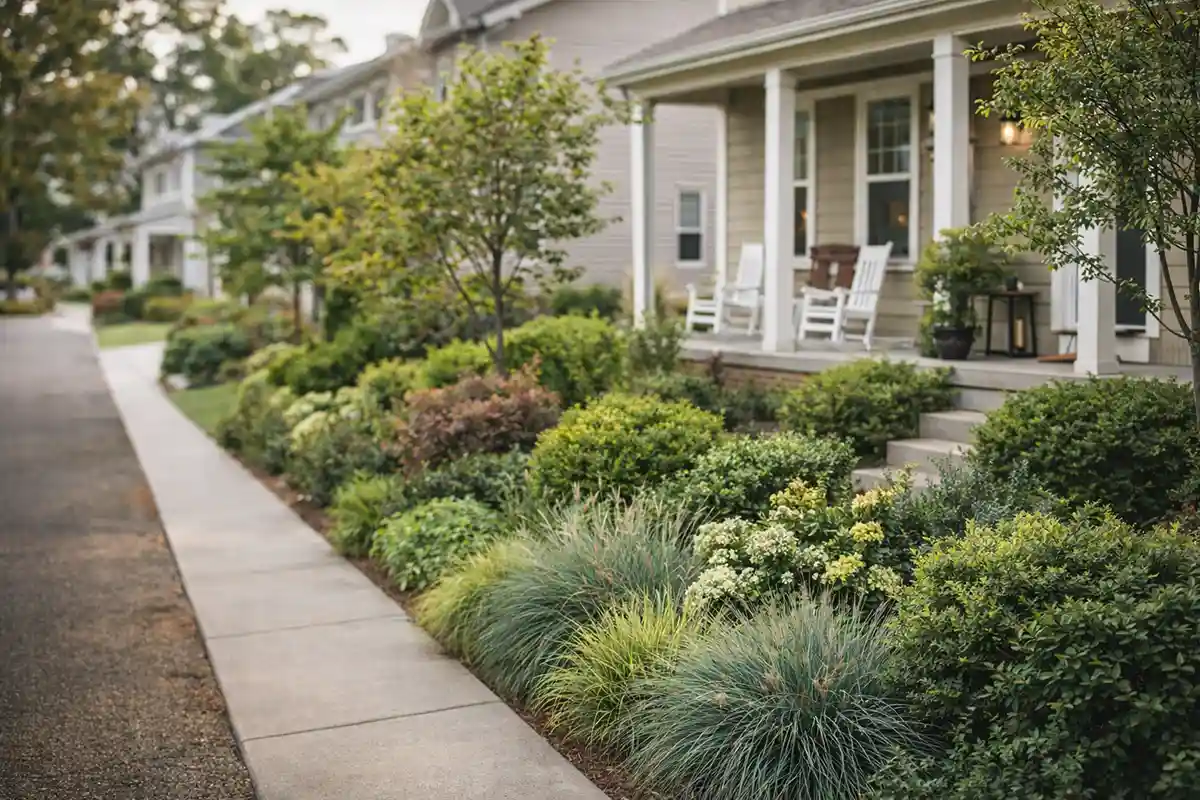
Instead of relying on a single hedge, landscape designers typically create multi-layer planting systems that interrupt sightlines at different heights. This method is commonly used in residential landscape screening because it provides privacy while still keeping the yard visually open.
Foreground Layer (12–24 inches)
The lowest layer sits closest to the sidewalk and helps define the boundary between public and private space.
Plants in this layer typically remain between 12 and 20 inches tall and create a soft visual transition rather than a barrier.
Examples include:
-
dwarf boxwood
-
creeping juniper
-
lavender in dry climates
-
blue fescue ornamental grass
These plants reduce the visual openness of a lawn without blocking the view of the home.
Mid-Level Privacy Layer (3–5 feet)
The mid-level layer forms the primary privacy hedge that blocks direct sightlines from pedestrians and nearby driveways.
Shrubs growing between 36 and 60 inches tall are usually ideal because they align with the average human eye level.
Common choices include:
-
viburnum varieties
-
compact hydrangea cultivars
-
inkberry holly
-
dwarf cherry laurel
In warm climates such as Florida or coastal California, these shrubs may grow 20–30 percent faster due to higher humidity levels and longer growing seasons.
Vertical Structure Layer (8–15 feet)
The final layer consists of small ornamental trees that break long sightlines from neighboring homes or upper-level windows.
Examples include:
-
serviceberry
-
Japanese maple
-
crape myrtle
-
columnar arborvitae
Spacing trees roughly 10–15 feet apart helps maintain airflow while creating an effective visual privacy barrier.
These layered planting strategies are frequently used when designing suburban landscape buffers, as explained in How to Create a Privacy Buffer in a Suburban Yard Step by Step.
Climate Conditions That Affect Privacy Planting
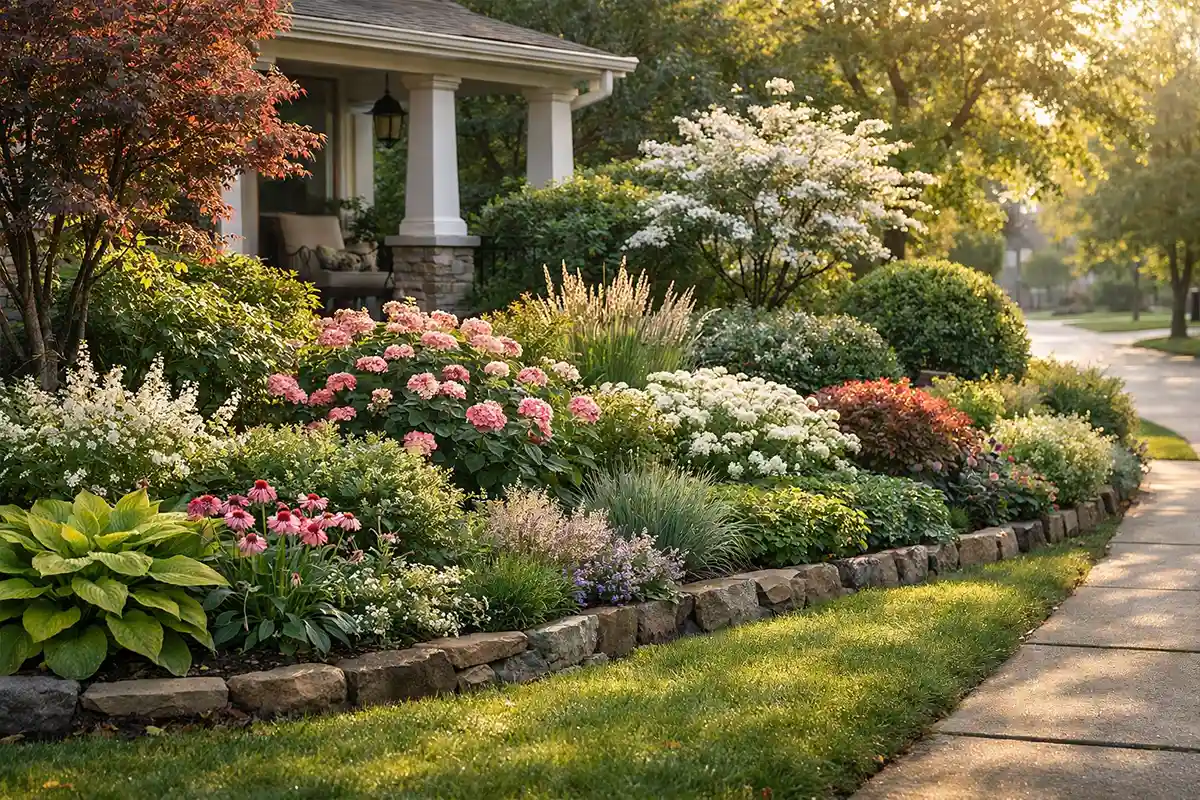
Not every privacy plant performs equally well in every region of the United States. Climate conditions influence growth rates, foliage density, and long-term maintenance needs.
| Climate Region | Privacy Challenge | Recommended Approach |
|---|---|---|
| Florida humid climate | Rapid shrub growth | Select slow-growing varieties |
| Arizona desert | Sparse foliage density | Combine drought shrubs and shade trees |
| Midwest seasonal climate | Winter leaf loss | Use evergreen base layers |
| Northern cold regions | Frost and snow damage | Choose hardy evergreen shrubs |
| Pacific Northwest | Excess moisture | Use mold-resistant shrubs |
| Coastal California | Salt air and wind | Select wind-tolerant screening plants |
In colder regions where winter temperatures regularly drop below 10°F (-12°C), deciduous shrubs can lose much of their privacy function for several months. Evergreen screening plants help maintain consistent coverage during winter.
Landscaping Mistakes That Reduce Privacy
Many front yard privacy problems occur because plants are installed without considering their mature size or spacing requirements.
Common mistakes include:
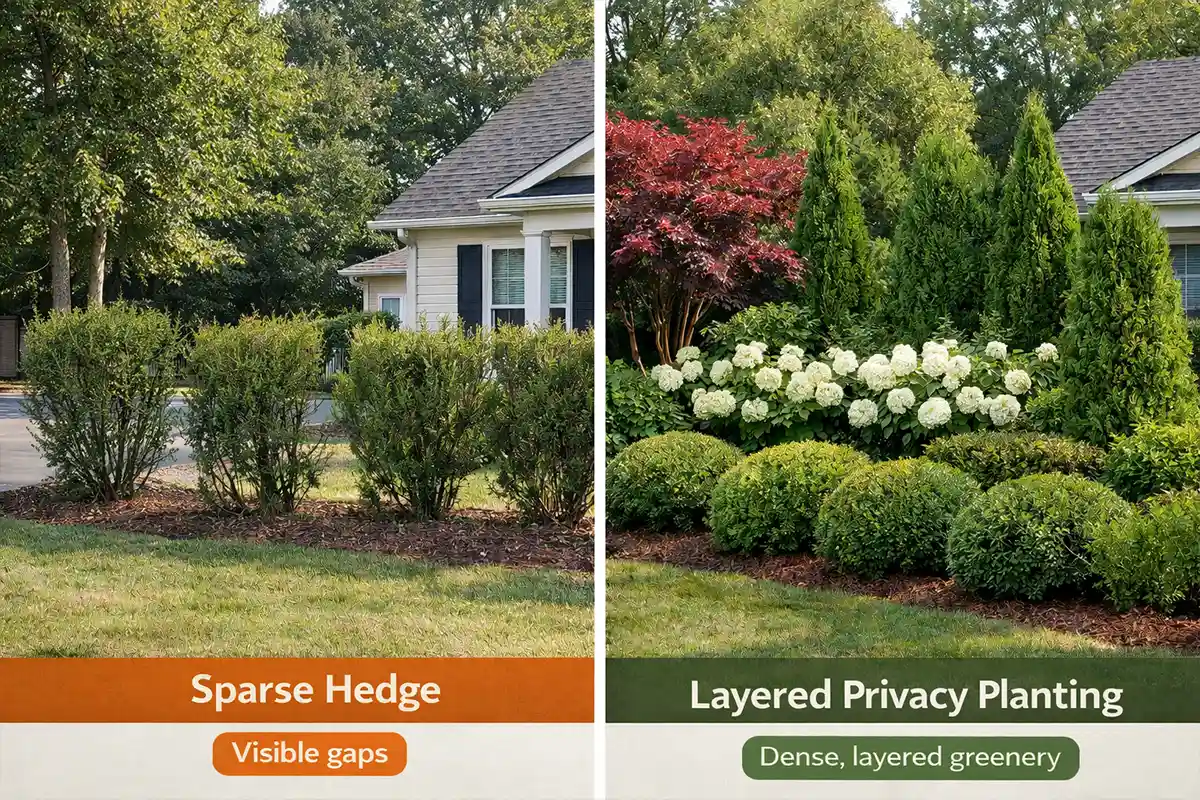
• planting a single narrow hedge that leaves gaps
• choosing tall trees with thin lower branches
• spacing shrubs more than 5–6 feet apart
• placing screening plants directly against windows
These approaches often create uneven coverage rather than a continuous visual barrier.
Overly dense planting can also increase long-term maintenance. Shrubs planted too closely may require frequent pruning and irrigation adjustments as they compete for water and sunlight.
Maintenance issues like these often develop in poorly planned landscapes, similar to challenges discussed in Why Low-Maintenance Backyards Often Become High Maintenance.
Additional Design Features That Improve Privacy
Plants form the foundation of most privacy solutions, but subtle structural features can strengthen the overall design.
Landscape designers often combine plantings with elements such as:
-
decorative garden screens near porch seating areas
-
pergolas supporting climbing vines
-
raised planter walls between 24 and 30 inches tall
-
curved walkways that redirect sightlines away from windows
These features break up long viewing angles while preserving an open and welcoming front yard.
Maintaining curb appeal remains important as well. Homes that balance privacy with attractive landscaping tend to integrate better with neighborhood design standards.
Some design approaches that maintain both aesthetics and privacy are discussed further in Front Yard Landscaping Ideas That Improve Curb Appeal.
Frequently Asked Questions
Can landscaping really replace a fence for privacy?
Yes. Dense shrubs combined with small trees can block most direct sightlines from sidewalks and nearby streets when properly layered.
How long does it take for privacy shrubs to grow?
Most privacy shrubs reach useful screening height within 2–4 growing seasons depending on soil conditions, watering practices, and sunlight exposure.
Which plants provide year-round privacy?
Evergreen plants such as arborvitae, boxwood, holly, and inkberry maintain foliage throughout the year in many climates.
Will privacy landscaping affect property value?
Well-designed landscaping often improves curb appeal and may increase property value, especially when it enhances outdoor usability.
Key Takeaways
Front yard privacy challenges are common in high-density suburban neighborhoods where houses are close together and fencing restrictions limit physical barriers.
Instead of relying on fences, homeowners can create effective privacy using layered landscaping that combines low border plants, mid-height shrubs, and small ornamental trees. These layers interrupt sightlines from sidewalks, nearby streets, and neighboring houses.
When paired with thoughtful design features such as planter walls, curved pathways, and decorative screens, landscaping can significantly improve privacy while preserving the welcoming character of a front yard.
For additional research on residential landscape screening and plant selection strategies, Penn State Extension provides detailed homeowner guidance.