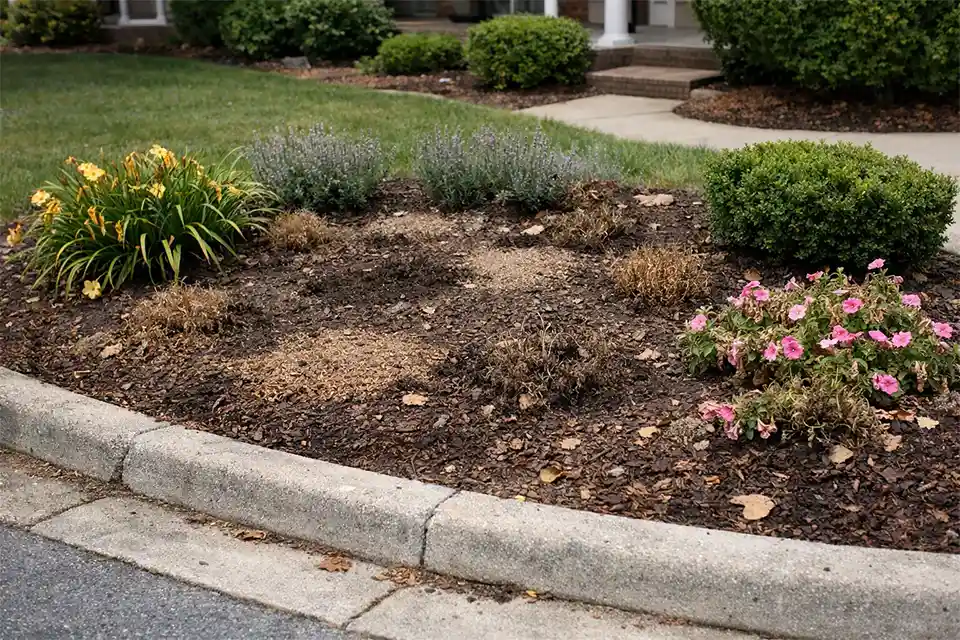
When a decorative front yard flower bed keeps needing new plants, the issue is usually not a single bad planting decision. It is usually a mismatch between display-style landscaping and the reality of the site.
Start with three checks that actually separate normal upkeep from a failing bed: how many hours of direct sun the bed gets, how long the root zone stays wet or dry after watering, and whether the same pockets fail again within 2 to 6 weeks.
That last pattern matters most. A bed that gets a seasonal refresh may be functioning as designed if it leans on annual color. A bed that keeps losing plants in the same spots is usually dealing with heat stress, shallow soil, root competition, drainage imbalance, or too much dependence on short-term bloom.
If more than 20% to 25% of the bed needs replacing before the season is halfway over, this is no longer routine maintenance. It is a design problem wearing the mask of plant failure.
What This Problem Usually Is
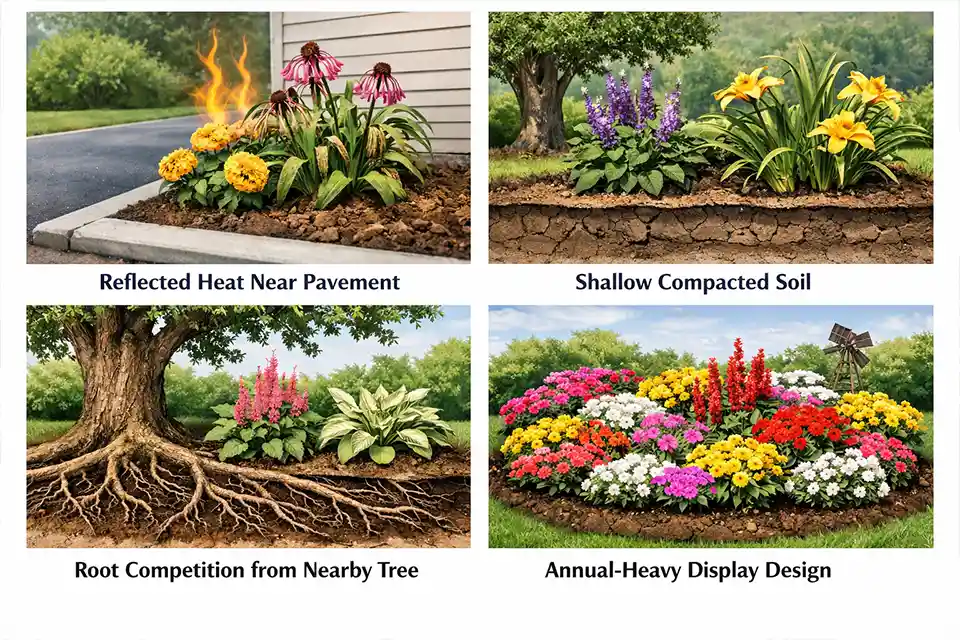
The most common version of this problem is an annual-heavy flower bed placed in a front-yard exposure that is harsher than it looks. Many decorative beds sit beside sidewalks, driveways, stone edging, mailboxes, or foundations that reflect extra heat into the planting zone. On paper, 6 to 8 hours of direct sun may sound manageable. In practice, that same bed can behave much hotter once pavement and wall reflection are added.
The second common pattern is a weak soil profile. Front beds often look improved at the surface but only have 4 to 6 workable inches before roots hit compacted fill, clay, rubble, or construction-disturbed soil.
Plants in those conditions stay shallow-rooted, dry out fast, and never become stable enough to handle summer stress. This kind of hidden site limitation often overlaps with the same underlying issues discussed in Front Yard Maintenance Problems in Yards With Poor Soil That Causes Patchy Grass and Weed Takeover.
The third pattern is less visible but just as common: decorative overloading. Because the bed is highly visible from the street, homeowners try to keep every open space colorful at all times. That pressure leads to constant gap-filling, mixed plant needs in small spaces, and a layout that looks full on planting day but unstable a month later.
Quick Diagnostic Checklist
A decorative front yard flower bed is usually set up for frequent replanting when several of these are true:
-
Plants decline within 14 to 45 days of planting.
-
The same sections fail more than once in one growing season.
-
Soil dries in under 24 hours after watering, or stays wet for more than 48 hours.
-
Most of the bed’s visual effect depends on annual flowers rather than permanent structure.
-
Bed depth is under 8 to 10 inches in exposed sections.
-
Mulch is thinner than 2 inches, or deeper than 3 inches around plant crowns.
-
The bed only looks finished when empty pockets are constantly refilled.
These signals matter more than bloom count. A lull in flowering can be normal. Repeated plant loss is not.
What People Usually Misread First
Most people overestimate fertilizer and underestimate bed structure.
A tired-looking flower bed often gets treated like a hungry flower bed, but fertilizer does not fix shallow roots, crown rot, drainage problems, reflected heat, or repeated drying. Sometimes it makes the bed look better briefly by pushing soft new growth, but that cosmetic improvement fades fast if the site is still wrong.
People also tend to overestimate how much replanting is normal. A seasonal swap is normal in color-focused beds. Replacing the same area two or three times before late July is not. At that point, the question is no longer which flowers to buy next. The real question is why that section keeps rejecting the same idea.
What is usually underestimated is how unforgiving decorative front beds can be. They are often narrower, hotter, shallower, and more compacted than planting areas elsewhere on the property. They also carry more visual pressure.
A backyard bed can look a little loose and still work. A front bed with gaps feels like failure immediately. That is one reason Front Yard Landscaping Mistakes to Avoid connects so closely to this issue: what looks like a flower problem is often a planning problem.
The Failure Patterns That Actually Matter
Not every bed that needs replanting is failing for the same reason, and treating them as one category leads to bad fixes.
Heat and reflected light failure
This is common beside pavement, stone borders, mailbox posts, and south- or west-facing foundations. Plants often look fine for the first 7 to 10 days, then start showing leaf scorch, limp afternoon collapse, and short bloom life. Water helps temporarily, but it does not change the exposure.
Shallow or compacted soil failure
This usually looks less dramatic. Plants do not always scorch; they stall. Growth stays weak, watering needs stay high, and the bed never seems to settle into a stable rhythm. Digging down 6 to 8 inches often reveals why: roots are boxed into a thin layer instead of moving downward.
Root competition failure
Beds near mature trees often lose smaller flowering plants because tree roots capture moisture first. Homeowners often blame the plant variety, but the real problem is competition. This is especially common where flower beds sit near mature shade trees, surface roots, or root-lifted edges, much like the site conflicts behind Tree Roots Lifting Sidewalks and Damaging Front Yard Lawn.
Display-cycle confusion
This one is easy to misread. Sometimes the bed is not failing early at all; it was just built around flowers that were always meant to be temporary. If the whole design depends on constant bloom, it will almost always require more seasonal replacement than the average homeowner expects.
| Pattern | Typical Signal | What It Usually Means | Better Response |
|---|---|---|---|
| Heat stress | Afternoon wilt, scorch, rapid flower drop | Exposure is harsher than the plant mix can handle | Reduce seasonal color and add tougher structure |
| Shallow soil | Weak growth and frequent drying | Roots cannot establish deeply | Improve the top 8 to 10 inches or simplify the bed |
| Root competition | Repeated failure near trees | Moisture is being claimed elsewhere first | Stop forcing thirsty flowers into those pockets |
| Display overload | Bed looks empty after bloom cycles | Too much depends on short-life color | Shift toward layered permanent planting |
Why the Obvious Fix Keeps Failing
The most common wasted fix is buying more of the same bedding plants and inserting them into the same failing spots. It feels productive because the bed looks refreshed immediately, but in most cases it just restarts the same decline pattern.
The second wasted fix is adding more water without deciding whether the bed is too dry or too unstable. A flower bed that dries in 12 to 24 hours may be too shallow or too exposed. A bed that stays wet for more than 48 hours may be draining poorly. Both can produce weak, failing plants. The repair logic is not the same.
Another fix that wastes time is trying to make every square foot bloom-heavy all season. Decorative beds do not fail because they are insufficiently colorful. They fail because they are being asked to act like retail display beds without retail-level inputs.
Pro Tip: When the same pocket fails twice in one season, stop planting flowers there for the rest of that year. Mulch it, mark it, and diagnose the site instead of paying for a third failed experiment.
How to Turn a Replanting Bed Into a Stable Bed
The goal is not to make the bed less attractive. It is to make the bed less dependent on replacement.
Start by mapping repeat-failure zones. Do not treat the bed as one even planting area. Mark the hottest edge, the driest corner, the section nearest the walkway, and any area under tree influence. Frequent replanting is often localized, which means the fix should be localized too.
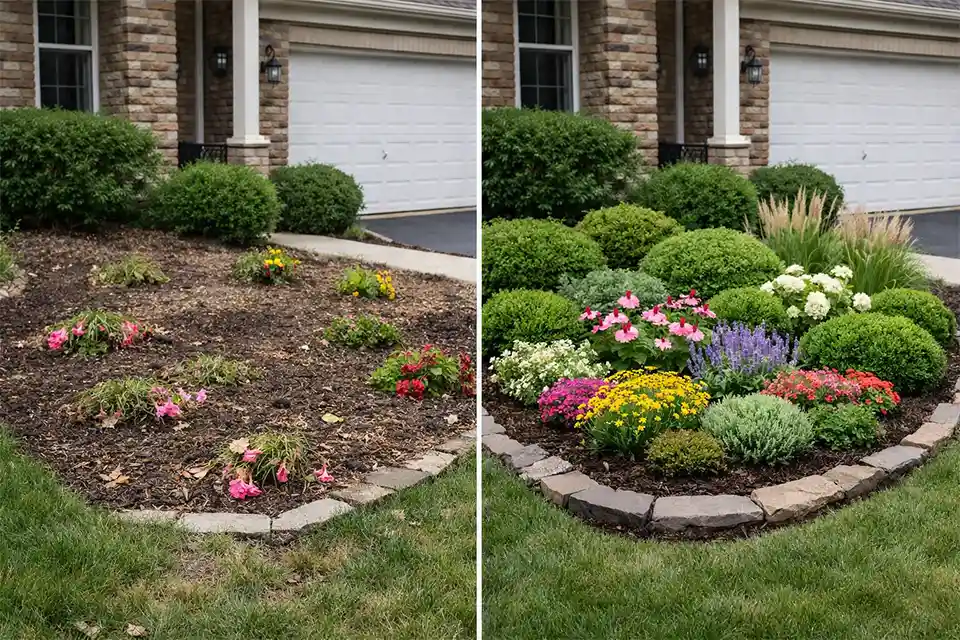
Then reduce annual dependence. If 70% or more of the bed’s impact comes from seasonal flowers, maintenance will stay high. A more stable formula is usually 60% to 70% permanent structure, 20% to 30% repeat-blooming or seasonal color, and the rest mulch, stone, or open breathing room. That is where How to Layer Plants in Front Yard Landscaping becomes far more useful than another list of flower ideas. An unstable bed is color-led. A stable bed is structure-led.
Next, improve the active root zone where plants are actually struggling. In many front beds, the best return comes from improving the top 8 to 10 inches in the worst sections rather than lightly amending the whole bed. Surface-only fixes often look responsible but change very little.
Then simplify watering expectations. New plants may need more frequent irrigation for the first 2 to 4 weeks, but a settled front bed should not need daily rescue watering in normal conditions. If it does, the plant mix is too thirsty, the roots are too shallow, or the exposure is too harsh for that design.
Finally, redefine what makes the bed decorative. Strong front-yard beds do not depend only on flowers for curb appeal. They get visual value from repeated forms, foliage contrast, clean edges, layered height, and plants that still hold shape when bloom is off-cycle. That is exactly why How to Design a Low-Maintenance Front Yard is so relevant here. It shifts the goal from constant replacement to steady performance.
When Replanting Stops Making Sense
There is a point where replacing plants costs more than correcting the bed.
That point usually arrives when more than one-quarter of the bed needs replacement in one season, when the same areas fail twice, or when the bed only stays presentable if you intervene every 10 to 14 days. At that stage, the real problem is not plant choice in isolation. The bed is asking more from the site than the site can give back.
One of the easiest mistakes is confusing visual disappointment with actual failure. A bed may feel underwhelming because bloom has slowed, but that does not mean it needs to be replanted. On the other hand, repeated loss in the same exposed, shallow, or root-competitive sections is not cosmetic. It is diagnostic.
A front flower bed should not need emergency color replacement all summer just to stay acceptable from the street. When it does, the smarter move is usually not more flowers. It is less strain, better structure, and a design that stops fighting the yard.
For broader official guidance on flowers in home landscapes, see the University of Illinois Extension.