Quick Solution Summary
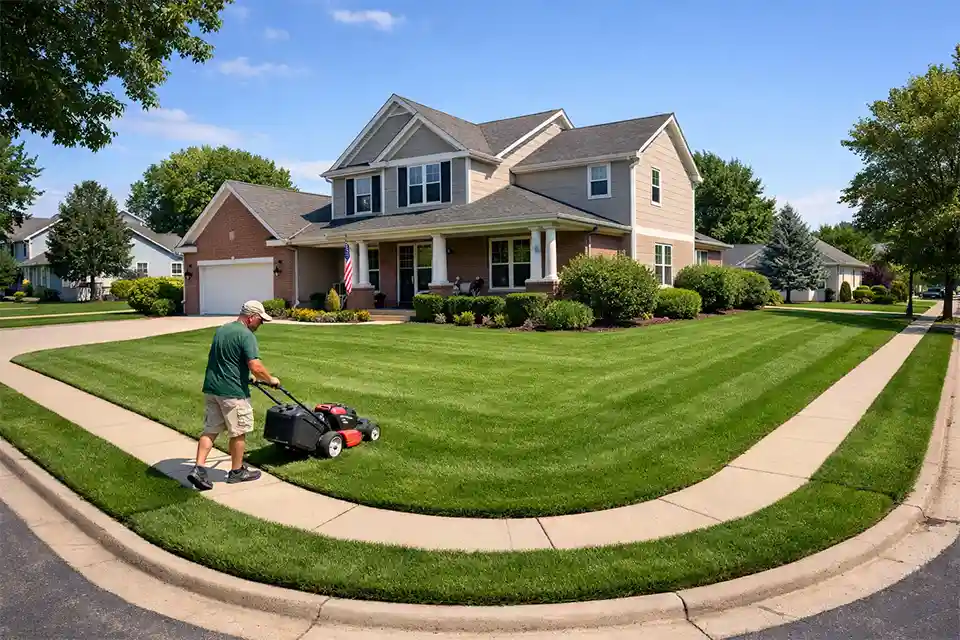
Corner lot homes almost always require more front yard maintenance than interior lots because the lawn typically wraps around two street edges. Instead of maintaining a single front lawn with 40–60 feet of curb frontage, corner properties often expose 90–140 feet of street-facing grass, along with additional sidewalks and visibility areas near intersections.
The result is more mowing, longer edging distances, faster grass growth from full sun exposure, and increased soil stress near the street. These lawns may take 30–60% longer to maintain each week, particularly during peak growing seasons in warm climates.
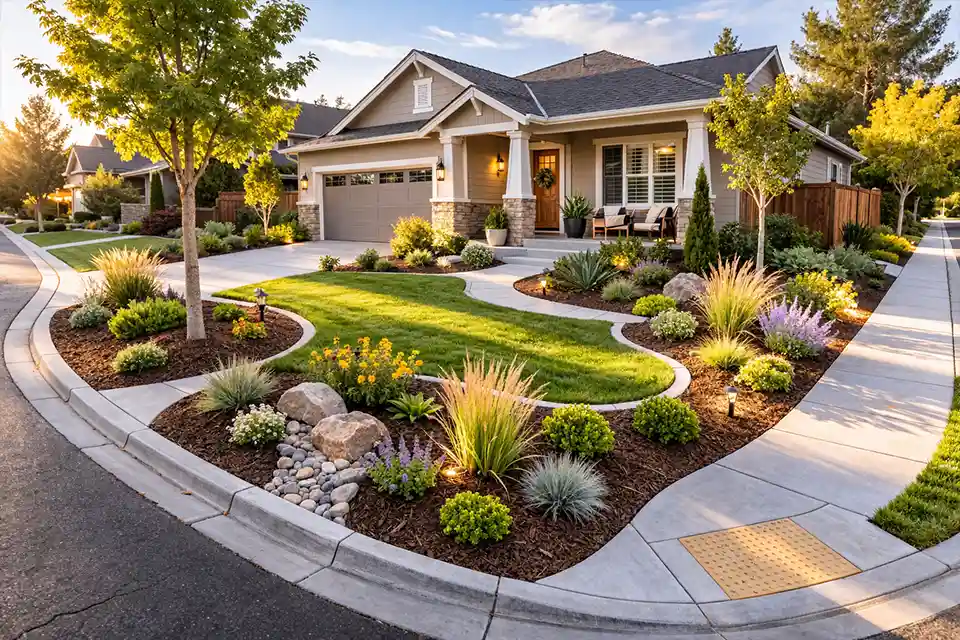
The most effective way to reduce the workload is not simply mowing more efficiently but redesigning difficult lawn zones. Narrow curbside strips, oversized side lawns, and awkward corner angles can be converted into planting beds, groundcover areas, or mulch borders. These adjustments often reduce total lawn area by 20–40% while maintaining strong curb appeal.
When corner lot landscaping is planned carefully, homeowners can significantly reduce mowing time while creating a yard that looks more intentional and easier to maintain year-round.
Why Corner Lot Lawns Require More Maintenance
Corner lot landscaping creates several conditions that naturally increase maintenance.
Most corner properties require extra work because they typically include:
-
Two street-facing lawn edges instead of one
-
Longer sidewalk edging distances
-
More direct sun exposure throughout the day
-
Larger total lawn surface area
While a typical suburban front yard may include 2,000–3,000 square feet of turf, corner lots often increase that area by 800–1,500 additional square feet.
| Layout Issue | Why It Happens | Maintenance Impact | Practical Fix |
|---|---|---|---|
| Narrow curb strips | Developer sidewalk placement | Difficult mowing and trimming | Replace with mulch beds |
| Large side lawns | Corner frontage extends yard | Extra mowing time | Reduce turf area |
| Sun exposure | Open lot position | Faster summer growth | Use drought-tolerant grass |
| Soil compaction | Traffic near curb | Patchy or stressed turf | Aerate and amend soil |
| Irregular lawn edges | Intersection visibility layout | Hard mower turns | Add landscape curves |
Because of these factors, homeowners often discover that a corner lot yard requires 15–30 additional maintenance hours per year compared with interior properties.
Common Lawn Layout Challenges on Corner Lots
The layout of many corner lot yards is determined by subdivision planning rather than landscaping efficiency. Developers often prioritize traffic visibility and sidewalk placement, which can create awkward lawn areas that are difficult to maintain.
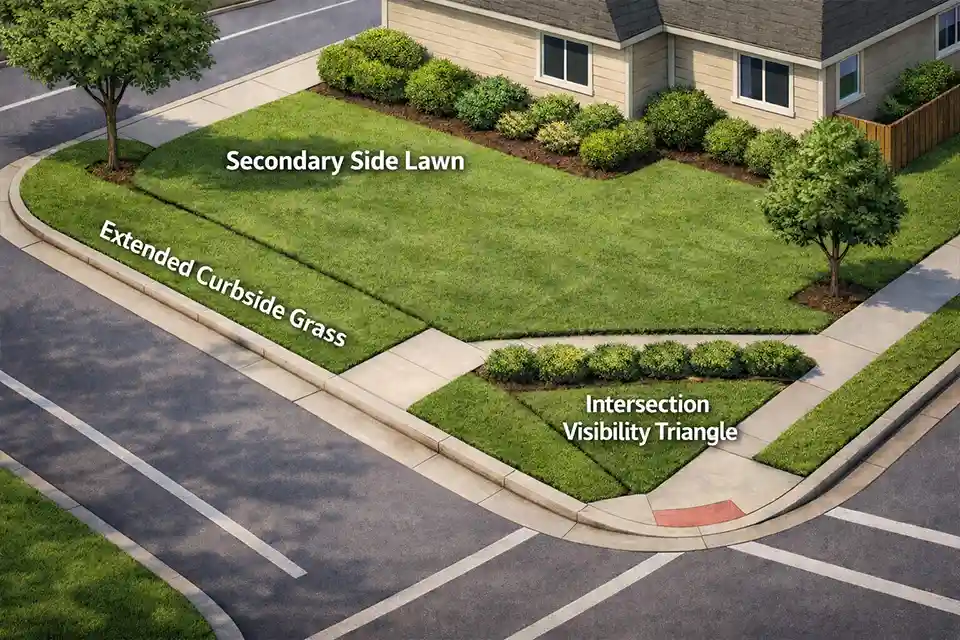
Narrow Grass Strips Along the Curb
Some corner lots contain thin turf strips between the sidewalk and street that measure only 18–36 inches wide.
These areas create several ongoing problems:
-
standard lawn mowers cannot easily fit
-
trimming becomes necessary almost every week
-
grass dries faster due to reflected heat from pavement
Over time these narrow strips often develop thin turf, weeds, or uneven growth.
If physical obstacles such as mailbox posts, poles, or utility cabinets are also present, maintenance becomes even more complicated, similar to the issues described in Front Yard Maintenance Problems When Mailboxes, Utility Boxes, and Poles Interrupt the Lawn Layout.
Oversized Side Lawns Facing the Second Street
Many corner lots effectively include a second front yard along the side street.
In suburban developments this section may add:
-
60–90 feet of additional curb frontage
-
600–1,200 sq ft of extra grass
-
30–40 additional minutes of mowing time
Because these areas are rarely used for seating or recreation, homeowners often maintain grass that serves mostly visual purposes rather than functional outdoor space.
In many cases, reducing turf in these sections improves both the landscape design and the weekly maintenance workload.
Environmental Conditions That Increase Lawn Work
Corner lot lawns are also exposed to environmental conditions that can accelerate turf growth or stress.
Increased Sun Exposure
Because fewer neighboring houses block sunlight, corner properties frequently receive 7–10 hours of direct sunlight daily.
This increases:
-
summer turf growth rates
-
irrigation demand
-
heat stress during temperatures above 95°F
In humid climates like Florida or the Gulf Coast, warm-season grasses such as Bermuda or St. Augustine may grow 2–3 inches per week during peak summer months, requiring frequent mowing.
Roadside Soil Compaction
Grass along the curb is regularly exposed to pressure from:
-
pedestrians
-
temporary vehicle parking
-
snow plow deposits in colder regions
Soil compaction reduces oxygen availability in the root zone and weakens turf density.
Periodic aeration can improve soil structure and increase root growth by 10–25% depending on soil type.
Dust, Debris, and Traffic Residue
Even moderately quiet streets produce airborne debris that collects along curb edges.
Dust, sand, and road residue accumulate in turf and can gradually weaken grass health, which is similar to the conditions explained in Front Yard Maintenance Problems on Busy Roads With Dust and Debris.
This buildup often encourages weed growth along the street edge where soil conditions deteriorate first.
Quick Diagnostic Checklist
If you own a corner lot, the lawn layout may be creating unnecessary maintenance work.
Check for these indicators:
-
lawn wraps around two sidewalks or streets
-
total edging distance exceeds 100 feet
-
narrow grass strips exist along the curb
-
weekly mowing requires 45–60 minutes or more
-
curbside turf frequently becomes thin or patchy
If several of these conditions apply, the yard design may benefit from reducing turf in difficult areas.
Practical Landscape Solutions That Reduce Corner Lot Lawn Maintenance
Rather than trying to maintain every square foot of grass, many homeowners simplify maintenance through strategic corner lot landscaping improvements.
The goal is to maintain curb appeal while reducing weekly work.
1. Replace Difficult Curbside Turf
Thin lawn strips can be replaced with:
-
mulch planting beds
-
drought-tolerant ornamental grasses
-
decorative stone borders
-
creeping groundcovers
This removes narrow mowing zones and reduces trimming time.
2. Convert Secondary Side Lawns Into Landscape Beds
Large side lawns facing the second street often serve little functional purpose.
Transforming portions of these areas into planting beds can reduce turf coverage by 20–40% while creating a more balanced landscape design.
Many homeowners draw inspiration from ideas discussed in Front Yard Landscaping Ideas That Boost Curb Appeal, where lawn reduction is often paired with layered plant beds.
3. Add Curved Landscape Borders
Long straight lawn edges create long trimming runs.
Curved planting beds with 6–10 foot radius arcs naturally break up mowing paths and allow smoother mower turns.
These curves also help guide drainage and prevent runoff from concentrating along straight turf edges.
Visibility Rules Near Street Corners
Many municipalities require clear visibility triangles at intersections to improve traffic safety.
These zones usually extend 20–30 feet from the corner along both streets and limit tall plants or solid structures that could block driver visibility.
Because of these requirements, some corner lot areas must remain open or planted with low-growing vegetation under 30 inches tall.
Intersection visibility and roadside safety guidelines for residential streets are outlined by the Federal Highway Administration (FHWA), which provides planning recommendations for maintaining clear sight lines at road intersections.
Understanding these regulations helps homeowners avoid landscaping changes that violate local codes.
Maintenance Effort Comparison
| Yard Type | Average Weekly Mowing Time | Edging Distance | Maintenance Difficulty |
|---|---|---|---|
| Interior suburban lot | 20–30 minutes | 40–60 ft | Low |
| Medium corner lot | 40–50 minutes | 80–110 ft | Moderate |
| Large corner lot | 60–75 minutes | 120–160 ft | High |
| Corner lot with reduced lawn design | 25–35 minutes | 60–80 ft | Moderate-Low |
Strategic lawn reduction and landscape redesign can reduce annual yard work by 15–30 hours depending on climate and grass type.
Frequently Asked Questions
Are corner lot yards always harder to maintain?
In most neighborhoods they are. Corner properties usually include more street frontage, more sidewalk edges, and larger lawn areas, which increases mowing and trimming time.
Can homeowners remove grass along the secondary street?
Often yes, but local regulations vary. Some cities require certain sections of corner lots to remain open for traffic visibility or pedestrian access, especially near intersections.
What grass types perform best on corner lots?
Durable turf varieties that tolerate heat and foot traffic generally perform best.
Common options include:
-
Bermuda grass in southern climates
-
Zoysia in transitional zones
-
Kentucky bluegrass blends in northern states
These grasses typically recover faster from roadside stress and sunlight exposure.
Does reducing lawn area hurt curb appeal?
Not when done correctly. Many modern landscapes intentionally replace excess turf with planting beds, ornamental grasses, and groundcovers. These features often improve visual structure while lowering maintenance needs.
Key Takeaways
Corner lot homes provide excellent visibility and curb appeal, but they often come with extra front yard maintenance responsibilities. Additional curb frontage, extended sidewalks, and increased sun exposure create larger lawn areas that require more mowing, trimming, and irrigation.
Fortunately, homeowners are not limited to maintaining every square foot of turf. Strategic landscaping improvements—such as replacing narrow curb strips, reducing oversized side lawns, and adding planting beds—can significantly reduce maintenance time.
With thoughtful planning, a corner lot landscape can remain attractive, functional, and far easier to maintain throughout the year.