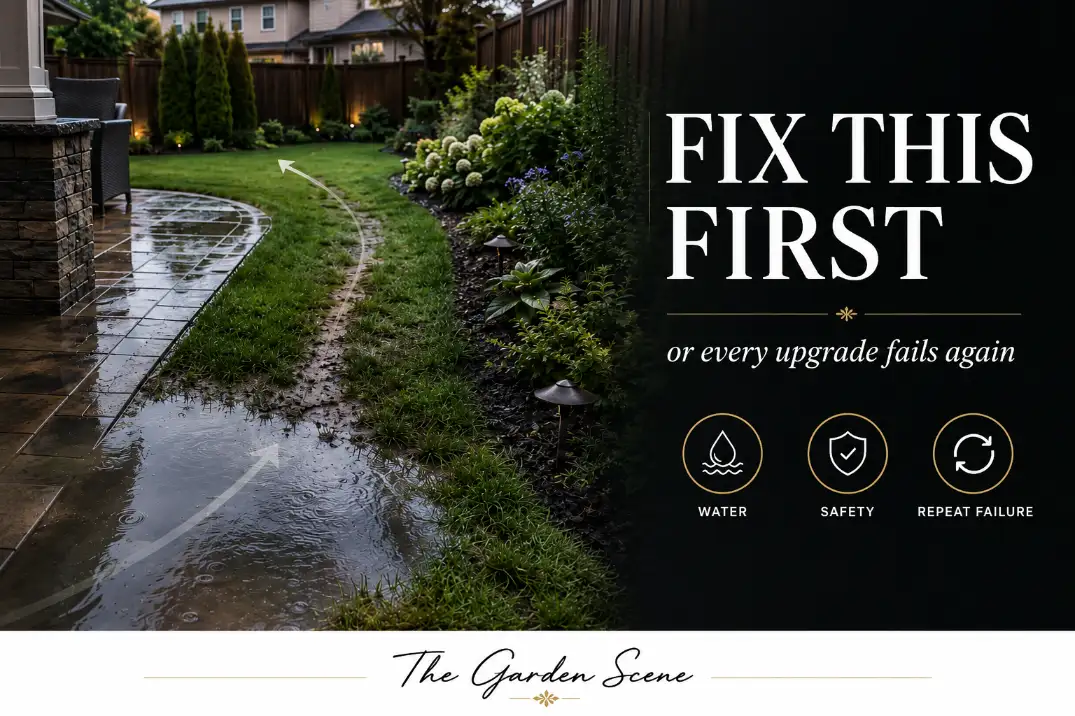
Backyard problems are worth fixing first when they damage the house, create safety risk, or make later improvements fail. Drainage near the foundation, erosion, unstable patios, slippery walkways, and blocked access should usually come before new plants, fresh mulch, lawn patching, privacy shrubs, or furniture upgrades.
A practical first check is simple: after a normal rain, water should not sit near the house for more than 24 to 48 hours, soil should not wash across paths, and people should not have to step around the same slick, muddy, or unstable spot every time they use the yard.
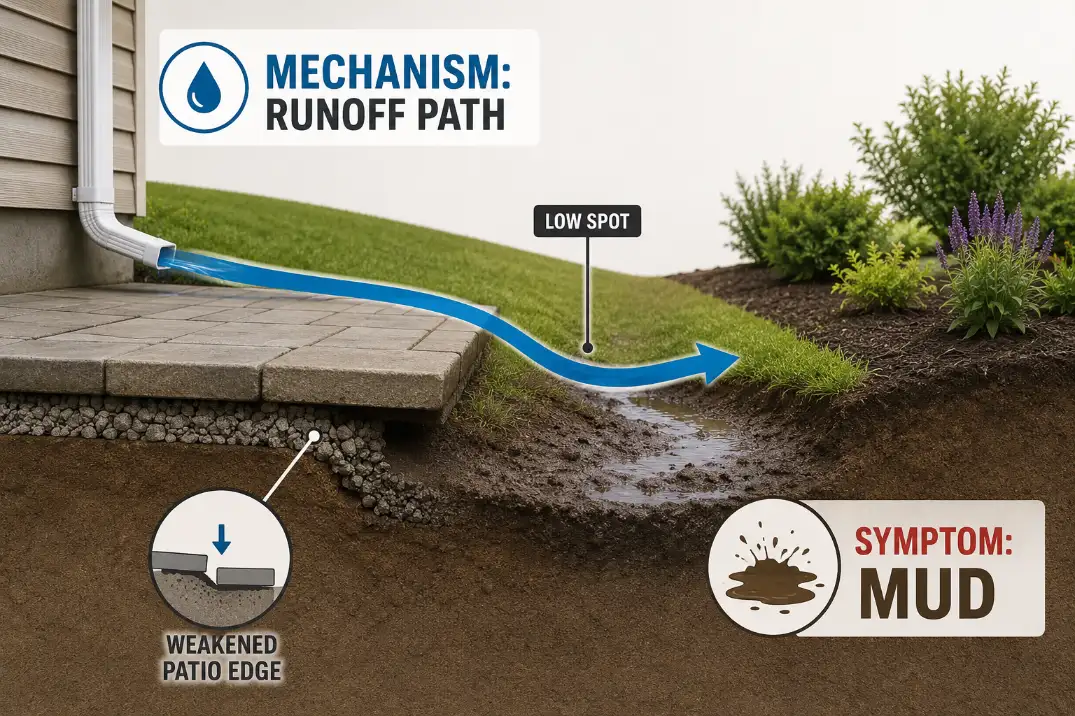
The mistake is treating the most visible problem as the most important one. Mud, weeds, thin grass, and tired beds are symptoms. The mechanism underneath may be runoff, compacted soil, poor patio slope, deep shade, or a traffic route in the wrong place. Fixing the symptom first may improve the yard for a few weeks, but the same failure usually returns.
The Backyard Triage Rule
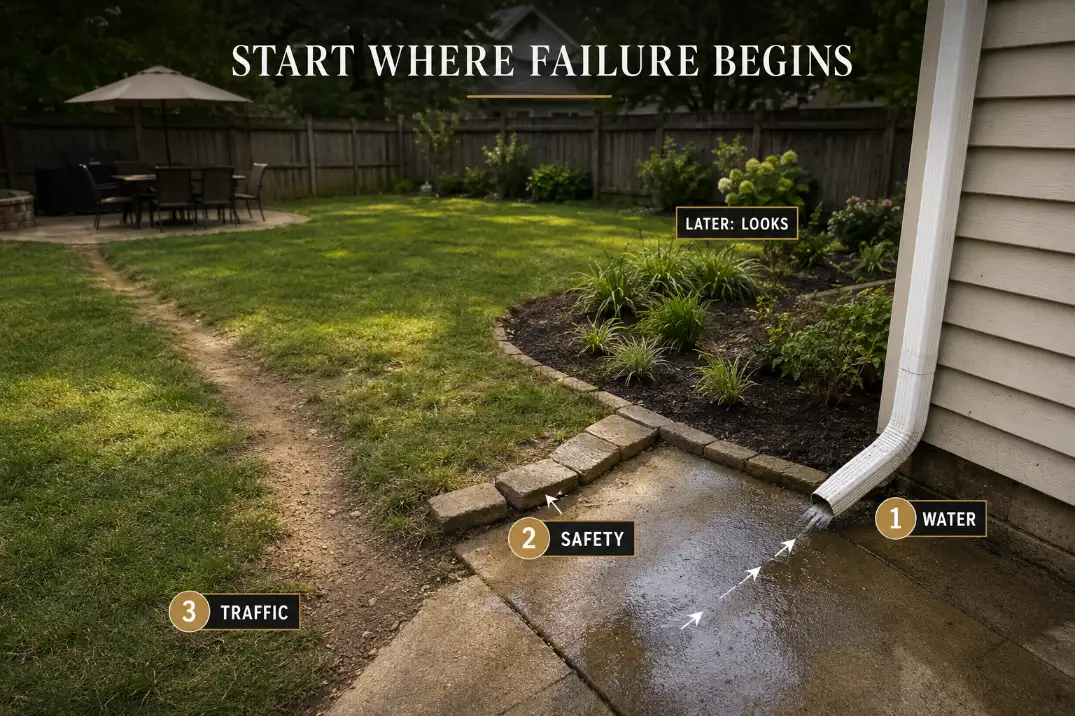
A good backyard fix order is not based on what looks worst. It is based on what creates the biggest consequence if ignored.
First: problems that damage the house or site
Water moving toward the house, soil washing downhill, exposed roots, and soft patio edges should move to the front. These problems spread. They also weaken anything installed on top of them.
A new planting bed will not hold mulch if runoff cuts through it. A reset paver will not stay level if the base below it stays saturated.
This is why drainage and grading decisions often need to come before layout upgrades. If the yard’s main problem could be either water movement or awkward use, compare those two priorities before deciding whether to fix drainage or layout first.
Second: problems that make the yard unsafe
A patio edge lifted more than about 1/2 inch, loose steps, slick algae on shaded concrete, or a wobbly walkway should beat most decorative projects. These are not just appearance issues. They affect whether people can safely move through the yard while carrying food, tools, drinks, or a child.
Third: problems that make repairs fail repeatedly
If the same area fails twice in 12 months, stop treating it as ordinary maintenance. Repeated mulch washout, recurring muddy paths, shifting pavers, and grass that disappears again 4 to 8 weeks after reseeding usually point to a deeper site problem.
Pro Tip: Fix what spreads before fixing what stays contained. Water, erosion, unsafe circulation, and unstable surfaces affect other parts of the yard. A plain planting bed usually stays where it is.
Fix These Backyard Problems First
Drainage moving toward the house or hardscape
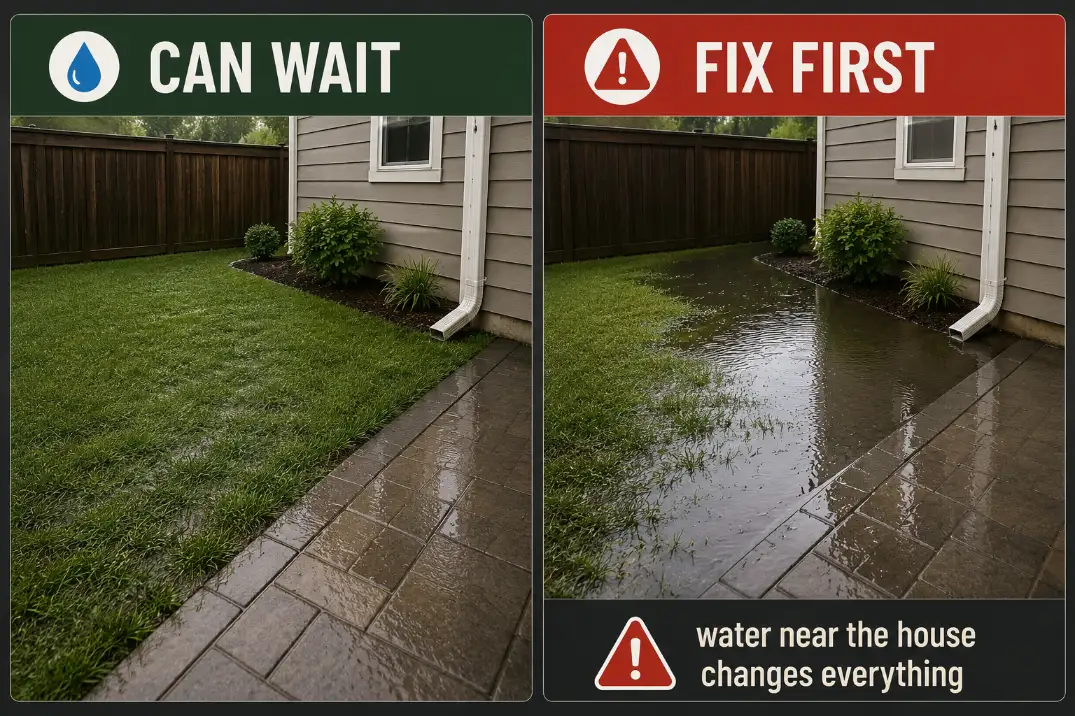
Drainage near the house belongs at the top of the list. Water pooling within 5 to 10 feet of the foundation, collecting near basement windows, flowing toward patio doors, or dumping from downspouts into low beds can damage more than the lawn. It can saturate soil, undermine patio edges, worsen settling, and keep planting areas too wet for roots.
Not every wet area is urgent. In humid climates or heavy clay soils, a lawn may stay damp for a day after a storm. The warning sign is repeated pooling in the same place, water moving toward the house, or soil that stays soft and unstable for several days after ordinary rainfall.
Start with observation, not products. Watch where water enters, where it slows, and where it exits during a moderate rain. Extend short downspouts, clear blocked drain openings, and keep mulch or soil from forming dams along patios and walkways.
If the water path crosses a patio base or foundation zone, do not spend money on furniture, plants, or decorative stone there yet.
Erosion and soil movement
Erosion should move up the list because it rarely stays the same. A shallow wash line can become a 2- to 4-inch rut after repeated storms. Exposed roots, soil piled at the bottom of a slope, mulch sliding downhill, or sediment collecting on a patio all show that water is moving material.
The common mistake is treating erosion as a planting problem. Plants help only after water speed and exposed soil are controlled. Seed, loose mulch, and small plugs often fail on active runoff paths because they wash away before roots establish.
If the yard is sloped, follow the sequence in fixing slope drainage and erosion in the right order before investing in surface-level upgrades.
Patio and walkway problems that should not wait
Hardscape problems deserve more attention than they usually get. A patio that holds puddles, drains toward the house, shifts underfoot, or develops loose edges is not just old. It may be telling you that slope, base, edge restraint, or drainage is wrong.
A patio should generally shed water away from the house. Even a small slope matters; many patios are built with roughly 1/8 to 1/4 inch of fall per foot so water does not sit on the surface. In northern states, standing water becomes more serious because freeze-thaw cycles can widen gaps, lift edges, and accelerate cracking.
Routine cosmetic fixes stop making sense when the same pavers sink, spread, or need resetting more than once a year. At that point, resurfacing, pressure washing, or topping up joints is not the real fix. The base and water path need to be understood first.
Blocked access and awkward circulation
A backyard can look finished and still be hard to use. If people squeeze between chairs and planters, detour through grass, or avoid one doorway because the route is cramped, layout should move up the list. A main walking route usually needs about 30 to 36 inches of clear width. Around dining chairs, 30 inches behind the chair often feels like a minimum once people are seated and moving.
This problem is commonly underestimated because it does not look like damage. But blocked access changes daily behavior. If the grill, gate, shed, patio door, or seating area is awkward to reach, the yard gets used less even when everything looks attractive.
Backyard Problems That Can Usually Wait
Thin grass that is only cosmetic
Thin grass can wait if it is not muddy, dusty, eroding, or part of a main traffic route. Many homeowners overestimate what patchy lawn says about the whole yard. In shade, under shallow tree roots, or along a shortcut path, turf may be the wrong surface rather than a failed maintenance routine.
Reseeding makes sense when the soil is stable, light is adequate, and foot traffic is low enough for recovery. It stops making sense when the same strip turns bare again within 4 to 8 weeks. In that case, the better fix may be a stepping path, mulch route, gravel strip, or changed access line.
Plain planting beds
Tired planting beds can usually wait unless they block movement, trap moisture against siding, crowd utilities, or repeatedly fail in the same place. A bed that looks dull in winter is not urgent. A bed that sheds mulch across a walkway after every storm is.
Replacing plants without correcting drainage, soil compaction, shade, or heat exposure is one of the easiest ways to waste a season. In small yards especially, removing or reducing plant mass may help more than adding new plants. The same logic applies when an overplanted backyard feels smaller: the first improvement is often recovering space.
Furniture that looks dated but still functions
Old patio furniture can wait when the surface is stable, circulation works, and the seating area is safe. Style is not the same as priority. A dated table matters less than a patio that pitches water toward the house or a grill zone that forces people through a 20-inch pinch point.
Furniture becomes a higher priority only when it blocks use. If chairs, sectional pieces, or storage boxes interrupt the only practical route from the door to the yard, then the issue is layout, not taste.
A Risk-Based Priority Guide
Use this table when several backyard problems are competing for attention.
| Problem | Fix Now If | First Practical Move | Can Wait If |
|---|---|---|---|
| Drainage | Water moves toward the house, patio base, door, or basement | Watch flow during rain and extend short downspouts | Lawn dries within 24–48 hours |
| Erosion | Soil moves after storms or roots become exposed | Slow runoff and cover bare soil | Mulch shifts slightly but soil stays put |
| Patio or walkway | Surface is loose, slick, uneven, or holding water | Correct water path before cosmetic repair | Surface is old but stable |
| Access and layout | Main routes are blocked or under 30 inches wide | Clear the primary path first | Furniture only looks dated |
| Planting beds | Plants crowd siding, block paths, or fail repeatedly | Fix soil, water, light, or spacing | Beds simply look unfinished |
| Lawn | Grass becomes mud, dust, or a recurring traffic rut | Redirect traffic or change surface | Lawn is only thin or uneven |
This table is not about making the yard perfect. It is about preventing the wrong first move. A backyard can look unfinished and still be improving in the right order.
What People Usually Misread
Mud is usually evidence, not the cause
Mud gets attention because it is visible. But mud is usually the result of something else: runoff, compaction, shade, poor access, or a low spot. Healthy soil may be damp after rain, but it should not smear underfoot for days or hold the same footprint impressions long after the weather clears.
This is why a backyard that feels generally difficult often needs a sharper diagnosis before a repair is chosen. A broader look at what to fix first when a backyard is hard to use can help separate comfort issues from structural ones.
Privacy can feel urgent before it actually is
Privacy matters, but it is often overestimated in the first round of fixes. Screening plants will not make a wet, unsafe, or awkward backyard function better. Privacy should move up only when exposure is the main reason the yard is not being used.
A hot tub visible from a second-story window is a real use problem. A back fence that feels a little open in winter may not be. The best privacy upgrades happen after seating, circulation, and drainage decisions are clear.
Cheap surface fixes can hide bigger failure
Fresh gravel, new mulch, pressure washing, and quick paver resets can make a yard look repaired for a few weeks. But if runoff, compaction, or a soft base is causing the problem, the failure returns. A patio dip of 1 inch in a season or a path that turns muddy after every rain gives more useful information than the surface appearance.
What Moves Up the List in Different US Backyards
Northern states
In freeze-thaw regions, water around patios, walkways, and steps moves up the priority list. Pooled water that seems minor in summer can become ice, widen cracks, lift edges, and make walking surfaces unsafe. Slippery routes near doors should be corrected before cosmetic planting.
Florida, the Gulf Coast, and humid regions
Standing water, poor air movement, and shaded wet surfaces matter more in humid climates. A low spot that stays wet for several days can affect comfort, plant health, mosquitoes, and surface algae. Drainage and airflow often deserve attention before dense planting.
Arizona and the desert Southwest
Heat and irrigation efficiency move up. A yard may not have soggy soil, but overheated paving, reflected heat, and poorly aimed irrigation can make outdoor areas unusable. Shade placement and water-smart planting may outrank lawn repair or decorative beds.
Midwest clay soils
Slow drainage and compaction are easy to underestimate. Clay can hold water near the surface, then dry hard enough to resist root growth. If water sits after seasonal storms or the soil becomes brick-like in summer, soil structure and water movement matter more than reseeding.
Coastal California and other coastal areas
Moisture, salt exposure, shade, and slick surfaces can raise the priority of cleaning, drainage, and low-slip materials. A patio that looks merely stained may become a safety issue if it stays slick during cool, damp mornings.
A Realistic Fix Order If You Cannot Do Everything
This weekend
Start with low-cost, high-information work. Watch the yard during rain. Mark where water enters, pools, and exits. Extend downspouts that dump water near the house. Clear leaves or mulch from drain inlets. Remove algae from slick walking areas. Move furniture or planters that block the main route.
This is not glamorous work, but it prevents guessing. Many expensive backyard mistakes happen because the first purchase is made before the actual failure pattern is seen.
This month
Handle the problems that keep returning. Stabilize eroding soil. Correct a compacted traffic route. Open the main path to at least 30 inches. Prune or remove shrubs that crowd walkways, siding, gates, or seating areas. Reset a loose paver only after checking whether water is causing the movement.
For small yards, this phase can change more than it seems. When space is limited, one wet corner or blocked path affects the entire yard. That is why small backyard fix priorities should be based on consequence, not appearance.
Later
Save purely cosmetic work for after the yard’s main systems behave. That includes replacing usable furniture, adding décor, refreshing bed shapes, reseeding nonessential thin lawn, and changing plants that are merely plain. These improvements are more satisfying after water, access, and safety are under control.
Fixes That Usually Happen Too Early
Reseeding a traffic path is one of the most common early mistakes. If people, pets, or wheelbarrows use the same strip daily, grass will likely fail again. A route needs a surface that matches the use.
Adding mulch before controlling runoff is another weak fix. Mulch belongs on stable soil, not in an active water channel. If it washes out after every heavy rain, the bed needs runoff control, edging, planting density, or a different surface strategy.
Buying furniture before measuring clearances also causes trouble. A patio set that looks compact online may make a small patio unusable once chairs are pulled out. Measure the walking route, door swing, grill area, and chair clearance before replacing furniture.
Power washing a slippery patio can help briefly, but it is not enough if shade, drainage, or surface texture keeps the patio slick. Cleaning treats the surface. The recurring mechanism may still be moisture.
Quick Diagnostic Checklist
Use this before spending money on visible upgrades:
- Water sits within 5 to 10 feet of the house after normal rain.
- Soil washes downhill, exposes roots, or leaves sediment on patios or paths.
- A patio, step, or walkway has a trip edge around 1/2 inch or more.
- The same grass path turns bare again within 4 to 8 weeks of repair.
- Furniture leaves less than 30 inches of clear walking space.
- Plants are touching siding, blocking paths, or repeatedly dying in the same bed.
- A repair has failed twice in the same spot within 12 months.
If two or more of these are true, the backyard needs sequencing more than another isolated upgrade.
Questions People Usually Ask
What if I can only afford one backyard fix this year?
Choose the problem that prevents other work from lasting. That usually means drainage, erosion, unsafe hardscape, or blocked access. If none of those apply, improve the area you use most often.
Can I make cosmetic upgrades before drainage is perfect?
Yes, but only in areas not affected by runoff, pooling, soft soil, or erosion. Avoid installing plants, gravel, furniture, or pavers in the exact zone where water is still causing trouble.
When does a lawn problem become urgent?
A lawn problem becomes urgent when it turns into mud, dust, erosion, standing water, or the main traffic route. Thin grass in a low-use corner can wait.
Should privacy ever come first?
Yes, when exposure is the main reason the yard is unused. But if the yard is wet, unsafe, or cramped, privacy screening should usually wait until the seating area and circulation are settled.
For broader guidance on reducing runoff before it causes pooling, erosion, or patio problems, see the EPA’s Soak Up the Rain homeowner actions.