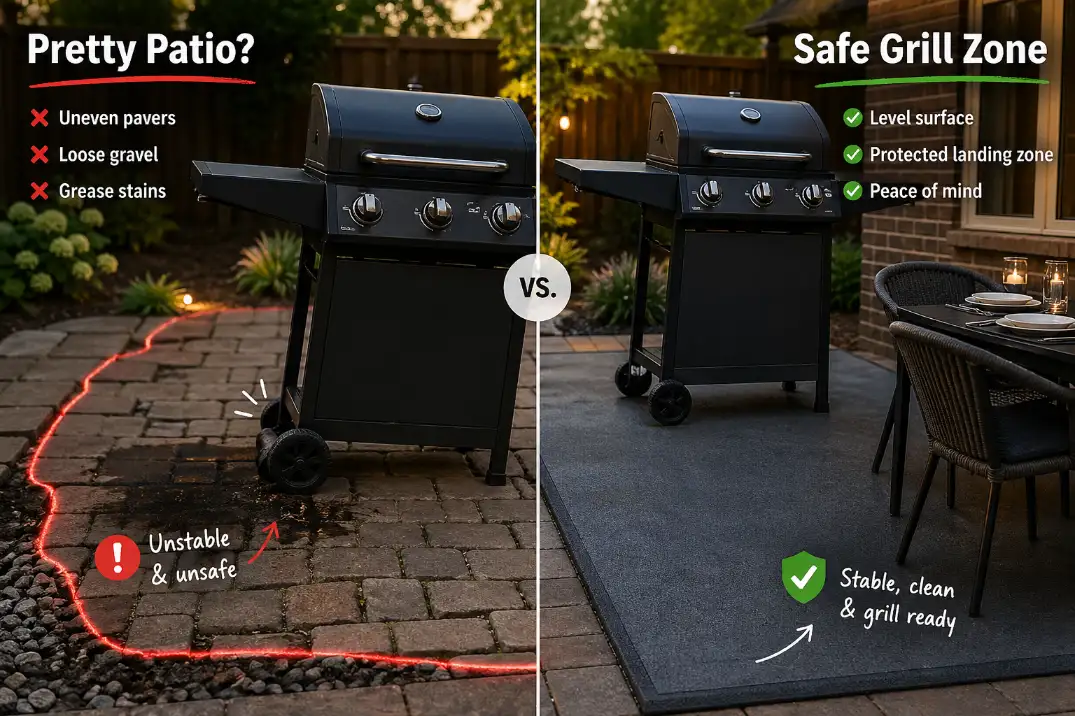
The best surface around a backyard grill is not simply the toughest or most expensive material. It is the surface that stays level, sheds grease, gives wet shoes traction, and does not become a maintenance problem after one summer of cooking.
For most US backyards, the strongest choices are concrete, properly installed pavers, outdoor-rated porcelain pavers, or a protected deck surface with a grill pad.
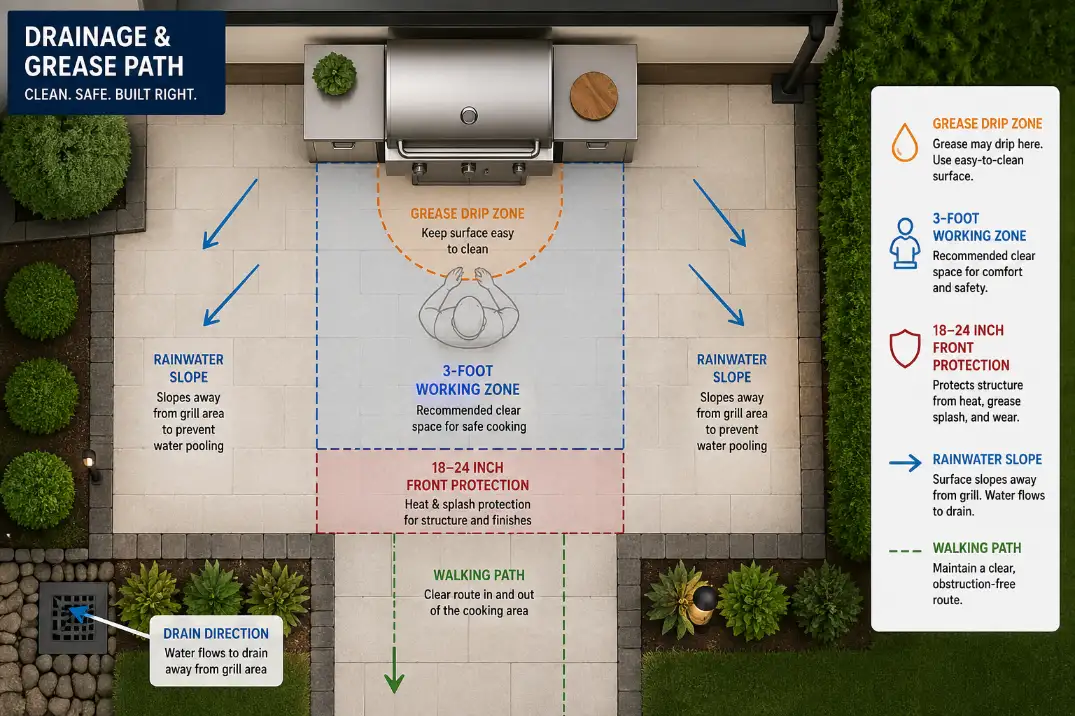
Use three checks before choosing: the grill should rock less than 1/4 inch across its footprint, you should have about 3 feet of clear working space in front of the cooking side, and rainwater should not sit near the grill for more than 24 hours.
A surface that looks expensive but traps grease, gets slick when wet, or lets grill wheels sink is the wrong surface for a cooking zone.
Best Grill-Area Surfaces, Ranked by Real Performance
Concrete Is the Safest Default
Concrete is usually the most dependable surface around a backyard grill because it is hard, flat, noncombustible, and stable under heavy equipment. A full-size gas grill can weigh 100–250 pounds before food, tools, and propane are added, so a surface that does not shift matters more than a decorative finish.
Its weakness is staining. Bare concrete absorbs grease quickly, especially when it is older, rough, or unsealed. Sealed concrete performs better, but glossy sealers can become slick after rain or cleaning.
Concrete works best when the grill, prep counter, and dining route are planned as one outdoor room. If the slab is fine but the cooking area still feels awkward, the surface is probably not the real problem. The fix may be a better traffic pattern, which is where Best Patio Layout for Grill, Prep Space, and Dining becomes more useful than changing materials.
Properly Installed Pavers Are the Best Flexible Choice
Pavers are one of the best grill-area surfaces when the base is solid. They look warmer than concrete, damaged pieces can be replaced, and they handle outdoor cooking well when the joints stay tight.
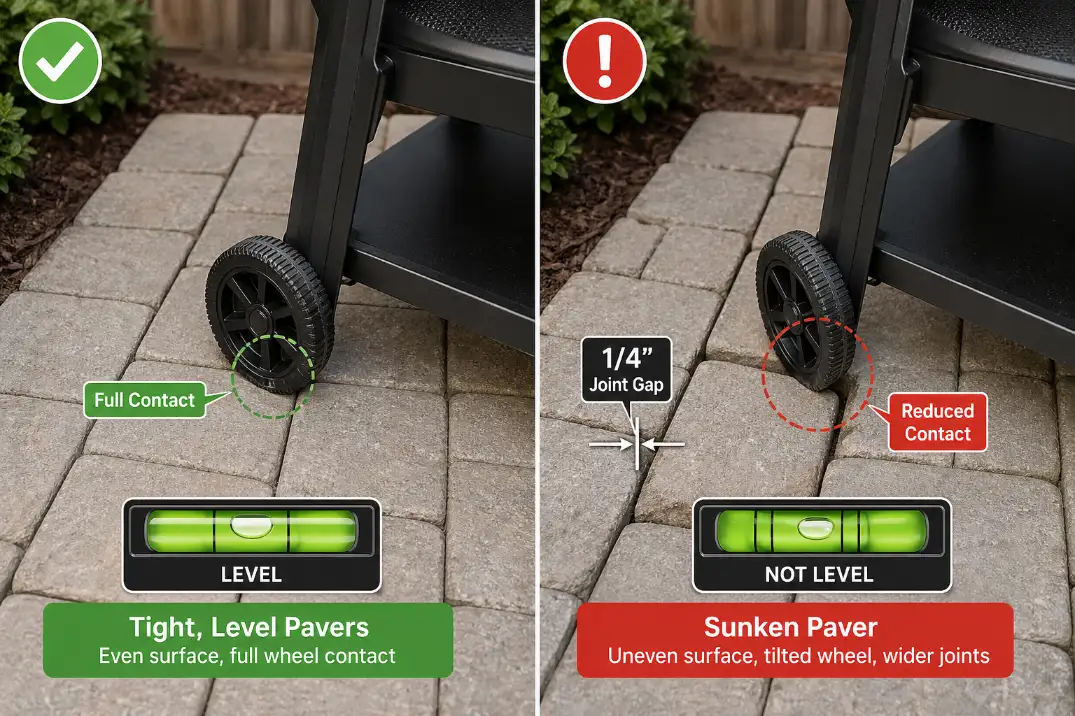
The weak point is installation. A grill zone should not feel crunchy, hollow, or uneven underfoot. For many residential patios, a 4–6 inch compacted base is the difference between a stable cooking surface and a paver area that settles after a season.
Once joints widen beyond about 1/4 inch or one grill wheel drops into a low spot, the issue is no longer cosmetic. A rocking grill is harder to cook on, harder to move, and more likely to damage the surface further.
Outdoor Porcelain Pavers Are the Premium Low-Maintenance Option
Outdoor-rated porcelain pavers deserve more attention than standard patio tile. They resist grease, wipe clean easily, and absorb less water than many natural stones. For a polished grill area where cleanup matters, they can be the strongest premium option.
The key is traction. Do not use smooth indoor-style tile around a grill. Look for exterior-rated porcelain with a textured finish and a wet-slip rating such as R11 or PTV36+ when available. That detail matters when rain, sauce, oil, and cleaning water all meet in the same standing zone.
Porcelain is not always the budget choice, and poor installation can still create cracked grout or hollow spots in freeze-thaw climates. But when the product is thick enough for exterior use and installed correctly, it often outperforms natural stone for grease cleanup and long-term appearance.
Decking Works Only When It Is Protected
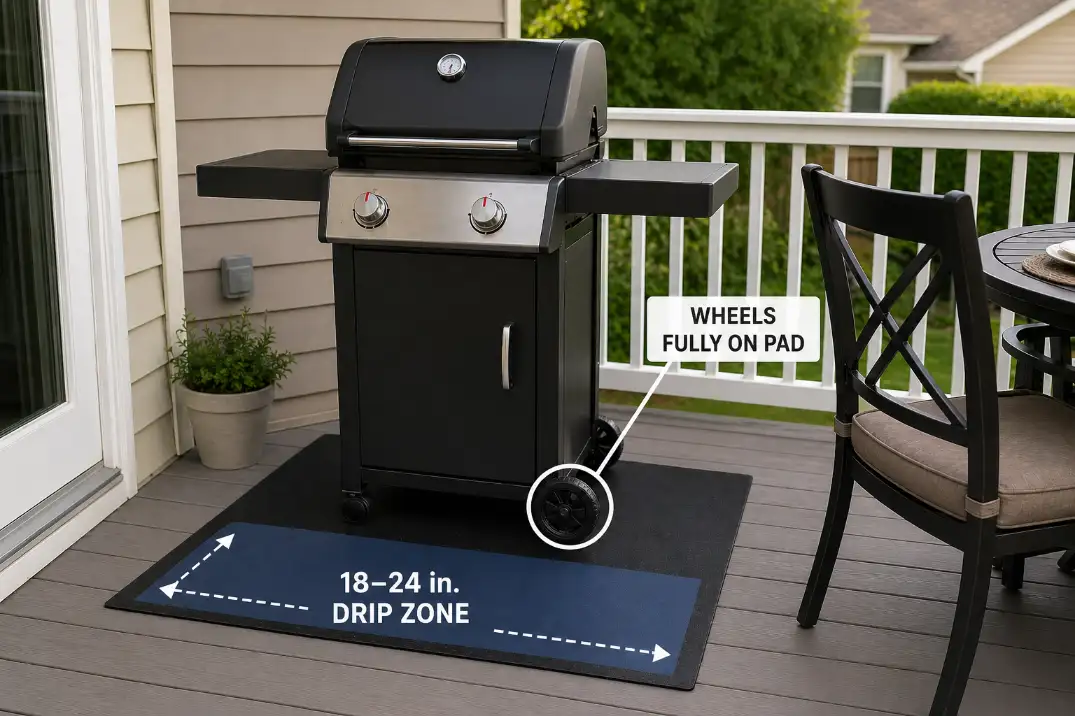
Wood and composite decking can work near a grill, but they should not be treated like concrete. Heat, grease, moisture, and rolling weight are harder on decks than many homeowners expect. A decorative outdoor rug is not a substitute for protection; it can trap moisture and hide early damage.
On wood or composite decks, the surface decision is incomplete without a proper protective pad. This is where Best Grill Mats and Protective Pads for Small Patios fits directly, because the mat becomes part of the cooking surface system rather than a cleanup accessory.
Pro Tip: On deck surfaces, choose a grill pad that covers the drip zone and the cook’s standing zone, not just the grill feet.
Surfaces That Usually Disappoint Around a Grill
Loose Gravel Solves Drainage but Creates Instability
Gravel drains well, but it is rarely a good surface directly under a grill. Wheels sink, legs twist, dropped tools disappear, and grease is difficult to clean. Gravel can work beside the cooking zone as a drainage border, but the grill itself needs a hard, level landing surface.
This is one of the most common surface misreads: homeowners overvalue drainage and undervalue stability. Fast drainage does not help if the grill rocks every time the lid opens.
Natural Stone Can Be Beautiful but Too Absorbent
Flagstone, limestone, and sandstone can look beautiful around a patio, but many stones are porous. Grease can darken the surface quickly, and repeated scrubbing may leave a faded patch that looks worse than the original stain.
Natural stone works better away from the main drip zone or when sealed properly. Even then, it usually needs more maintenance than concrete, porcelain, or dense pavers.
Grass, Mulch, and Outdoor Rugs Do Not Belong in the Cooking Zone
Grass beside a grill path turns muddy and worn. Mulch shifts, holds grease, and adds unnecessary fire risk. Outdoor rugs may look like a quick fix, but under a grill they often trap moisture and hide stains until the surface below is already damaged.
If the grill feels cramped no matter what surface you choose, the station may simply be too large for the patio. In that case, When a Grill Station Is Too Big for the Patio is the better problem to solve first.
Grill Surface Comparison Guide
| Surface | Best Use | Main Risk | Decision Rule |
|---|---|---|---|
| Concrete | Everyday grill areas where stability matters most | Grease stains on unsealed slabs | Best default if you want low drama |
| Pavers | Patios that need repair flexibility and visual warmth | Settling from a weak base | Use only if joints stay tight and level |
| Outdoor porcelain pavers | Premium grill zones with easy cleanup | Slick or indoor-style tile | Choose textured exterior-rated porcelain |
| Wood or composite deck | Raised decks and small patios | Heat, grease, trapped moisture | Use with a proper grill pad |
| Natural stone | Decorative areas away from heavy drips | Porous staining | Seal it and avoid soft stone under the grill |
| Gravel | Drainage edges and nearby paths | Wheel sinking and poor cleanup | Do not place the grill directly on it |
When a Grill Pad Is Enough
A full patio rebuild is not always necessary. If the existing surface is level, drains well, and mainly needs protection from grease, heat, or ash, a grill pad may be the smarter fix.
That usually applies when the grill already sits firmly, the surface does not hold water longer than 24 hours, and the problem is staining or deck protection. It does not apply when pavers are sinking, boards are soft, or the grill leans when the lid opens.
For small patios, this distinction saves money and space. A protective pad can define the cooking zone without adding another bulky material. But if the grill, chairs, and walkway all compete for the same 6–8 feet, surface protection will not fix the layout. Small Patio Grill Placement Without Crowding the Dining Area helps separate the placement problem from the surface problem.
What the Surface Has to Handle
Heat Is Only One Part of the Problem
Heat damage gets attention, but grease and movement usually create the first visible failures. A grill rolled across a soft or uneven surface every weekend can loosen joints faster than heat alone.
Protect at least the grill footprint plus 18–24 inches in front of the cooking side. If you cook for groups often, 36 inches of protected working depth feels much better.
Drainage Changes the Right Answer
A grill surface should dry predictably. After normal rain, water should clear from the grill zone within a few hours. If it still sits there the next day, grease, dirt, and foot traffic collect in the same weak spot.
In humid Florida-style conditions, slow drying can make surfaces slick and grimy. In northern freeze-thaw states, trapped water can widen joints over winter. In dry Arizona climates, UV exposure, heat, and grease staining usually matter more than moss or freeze movement.
Covered Patios Need Easy-Clean Surfaces
Covered patios create a different problem. The surface may be stable, but smoke and residue can collect around the cooking area. Deeply textured stone that looks good in an open patio may become annoying under cover because grease settles into pits and takes longer to clean.
If smoke hangs under the roof after 10–15 minutes of cooking, the surface is not the main issue. Airflow is. For that situation, Why Grill Smoke Gets Trapped on a Covered Patio is the better diagnostic path.
Quick Decision Checklist
- Choose concrete if stability and low maintenance matter most.
- Choose pavers if the base is compacted and joints stay tight.
- Choose outdoor porcelain pavers if you want premium cleanup and a finished look.
- Use a grill pad on wood, composite, and vulnerable small patios.
- Avoid gravel directly under grill wheels.
- Avoid mulch, grass, and outdoor rugs in the cooking zone.
- Fix drainage if water sits near the grill longer than 24 hours.
Final Takeaway
The best backyard grill surface is hard, level, cleanable, and safe when wet. Concrete is the safest default. Properly installed pavers are the best flexible choice. Outdoor porcelain pavers are the premium low-maintenance option. Decking can work, but only when the grill zone is protected.
The wrong surface usually fails in ordinary ways: the grill rocks, grease stains spread, water sits too long, or the cook has to stand half on one surface and half on another. Choose the surface that solves those problems first. Appearance comes after stability, cleanup, and safety.
For broader official outdoor fire safety guidance, see the U.S. Fire Administration.