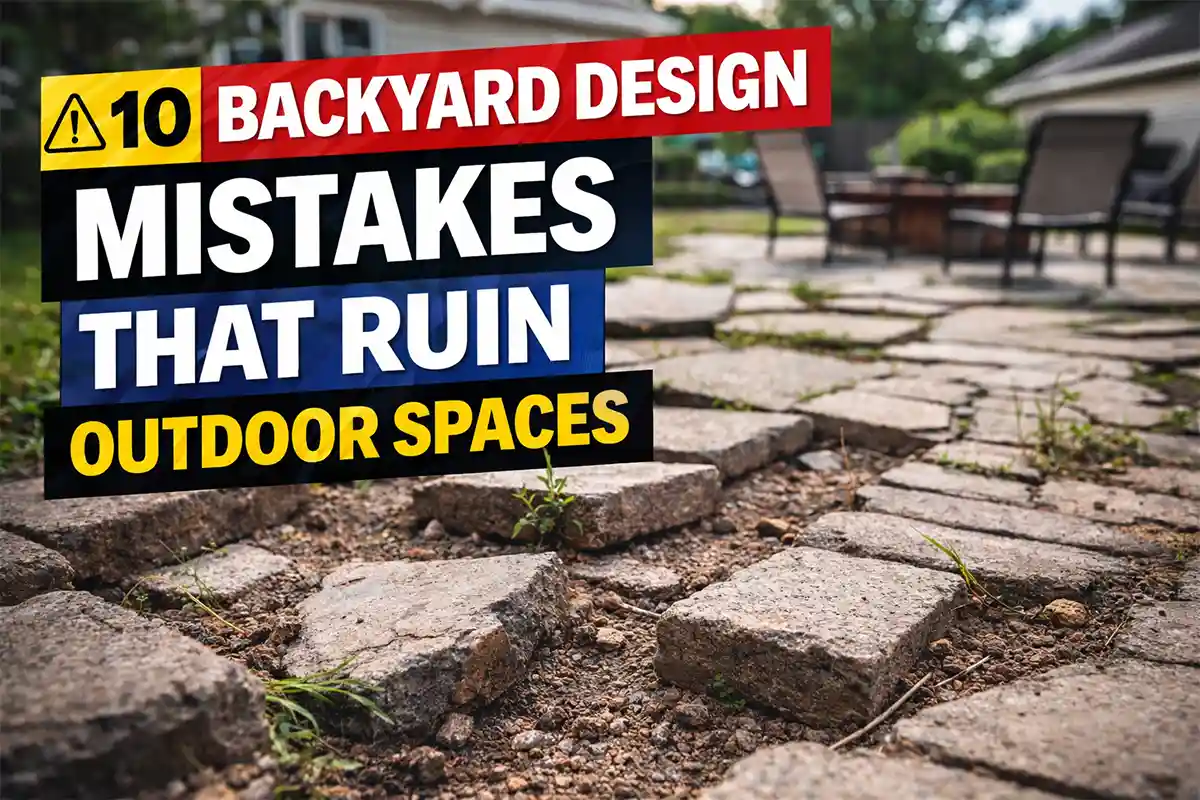
Backyards are often designed with good intentions—more seating, more plants, more decorative elements. Yet many outdoor spaces end up feeling cramped, awkward, or difficult to maintain. In most cases the problem isn’t the size of the yard. It’s the layout decisions.
Small design mistakes can reduce usable outdoor space by 20–40%. Poor drainage, unstable ground, or oversized furniture can also create long-term maintenance issues. In humid climates such as Florida, trapped moisture around patios may lead to algae buildup within a few weeks. In northern states, repeated freeze–thaw cycles between 28°F and 38°F can slowly shift pavers and crack concrete surfaces.
Successful outdoor design focuses on circulation, environmental conditions, and realistic daily use. When those factors are ignored, even expensive landscaping can feel uncomfortable or impractical.
Understanding the most common backyard design mistakes helps prevent these problems before they become expensive to fix.
Most Common Backyard Design Mistakes
Many backyard problems come from a few recurring design issues.
The most common backyard design mistakes include:
-
Designing the space without a clear purpose
-
Ignoring walking paths and traffic flow
-
Installing patios in poorly drained areas
-
Choosing oversized furniture for small patios
-
Using unstable ground for hardscape surfaces
-
Overcrowding the yard with décor
-
Forgetting shade and sun exposure
-
Ignoring regional climate when choosing plants
-
Creating landscapes that require constant maintenance
-
Treating the backyard as decoration instead of living space
Fixing these issues often improves usability immediately without requiring a full landscape renovation.
Quick Diagnostic Checklist
If your outdoor space feels uncomfortable or hard to use, look for these warning signs:
-
Seating areas feel cramped or difficult to move through
-
Water pools on the patio after rainfall
-
Walking paths cut directly through seating zones
-
Plants require frequent trimming or watering
-
Outdoor furniture blocks natural movement
-
Yard feels cluttered despite having open space
If two or more of these issues apply, the layout likely needs adjustment rather than more landscaping.
Mistake 1: Designing the Backyard Without a Clear Purpose
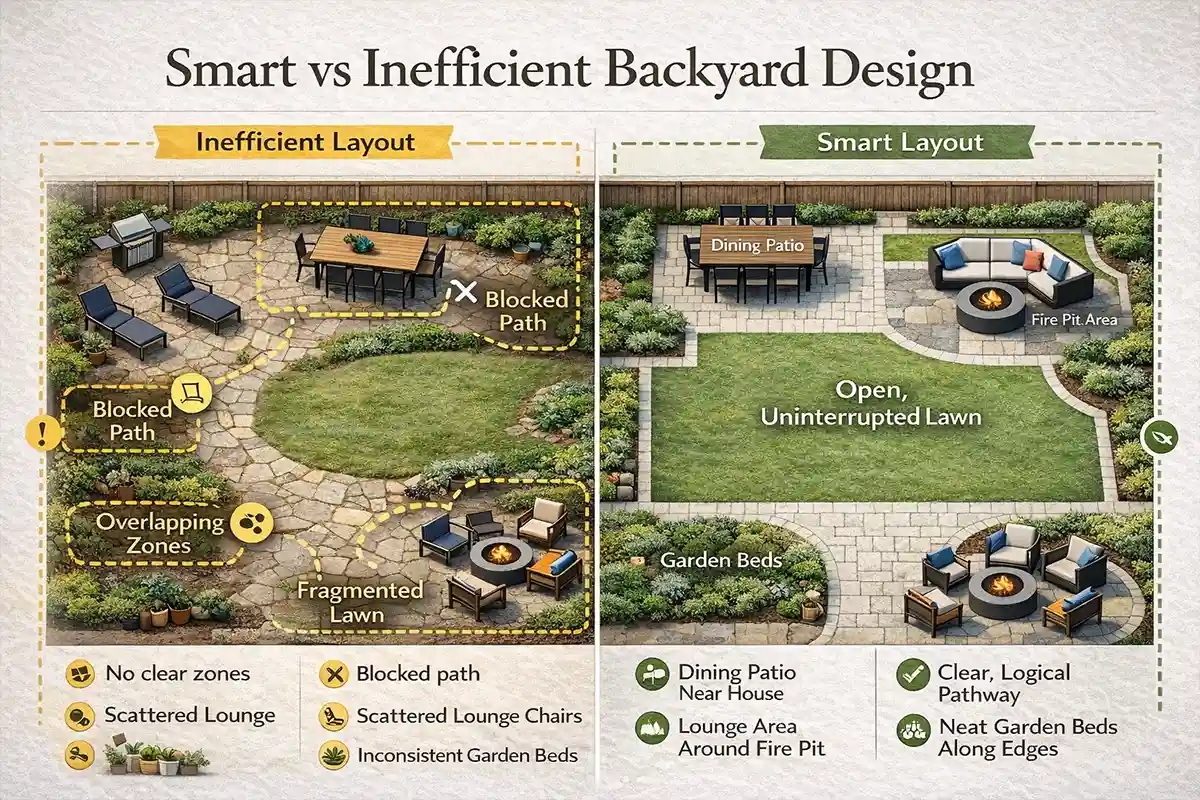
Many backyards try to function as dining space, lounge area, play area, and garden all at once. Without clear zones, furniture placement becomes random and circulation suffers.
A more effective approach divides the yard into activity areas. Even a modest backyard between 400 and 600 square feet can support multiple zones if spacing is planned carefully.
A typical layout might include:
-
dining space near the house
-
lounge seating farther into the yard
-
garden beds along the perimeter
Separating these areas by just 6–10 feet often makes the yard feel larger and more organized.
Thoughtful layout planning—like the strategies discussed in Backyard Layout Ideas for Functional Outdoor Living—helps ensure that each area serves a specific purpose instead of competing for space.
Mistake 2: Ignoring Traffic Flow
Movement through the yard should feel natural and unobstructed. Unfortunately many outdoor layouts place furniture directly in walking paths.
A comfortable pathway generally requires about 30–36 inches of clearance. When furniture narrows that space to 18–24 inches, movement becomes awkward.
Common traffic flow problems include:
-
chairs blocking walkways
-
grills placed in high-traffic zones
-
garden beds interrupting paths
-
seating areas cutting across circulation routes
Even large backyards can feel cramped when movement patterns are ignored.
Outdoor spaces function much better when walking paths connect major zones with at least three feet of clearance.
Mistake 3: Poor Patio Placement
The patio usually becomes the center of outdoor living, but its location is often chosen based only on convenience during installation.
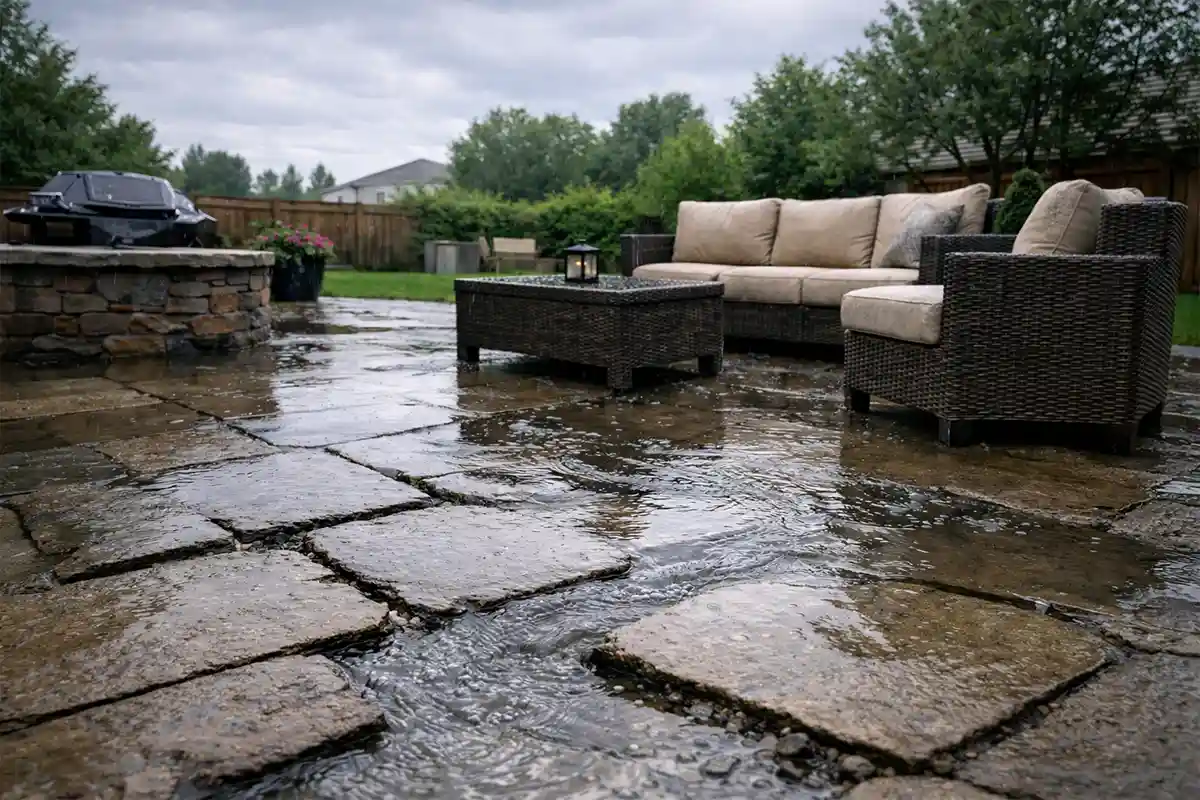
When patios are placed in low areas or drainage paths, water accumulation becomes inevitable. A rainstorm dropping 1–2 inches of water in the Midwest can leave patios covered in puddles if ground slope is incorrect.
Proper grading typically requires a subtle slope of about 1–2% away from structures to direct water runoff.
Many homeowners encounter these layout issues after installation, which is why understanding common problems described in Patio Layout Problems That Make Spaces Hard to Use can prevent costly redesigns later.
Mistake 4: Underestimating Drainage
Drainage problems rarely appear immediately. They usually develop months after installation when soil compacts and water begins to collect.
Signs of poor drainage include:
-
puddles remaining for 24–48 hours
-
algae or moss forming on hard surfaces
-
muddy soil around patios
-
water flowing toward the house
In humid regions such as Florida, moisture trapped between pavers can encourage mold growth within just a few weeks.
Understanding the warning signs explained in Patio Drainage Problems Most Homeowners Notice Too Late helps homeowners address grading issues early before structural damage occurs.
Mistake 5: Choosing Oversized Furniture
Outdoor furniture is often much larger than homeowners expect.
A typical sectional sofa may span 9–11 feet. On a 12-foot patio this leaves almost no space for movement. Even smaller seating arrangements should allow at least 30–36 inches of walking clearance.
When furniture fills most of the patio footprint, guests tend to avoid using the space because circulation feels restricted.
Modular seating systems or lightweight chairs often provide more flexibility. Rearranging furniture for gatherings becomes easier, and patios feel significantly more open.
Mistake 6: Ignoring Ground Stability
Backyards with uneven soil or shifting ground can cause patios and walkways to settle over time.
Clay-heavy soils common in many parts of the Midwest and Texas can expand by roughly 10–15% when saturated with water. As the soil dries, it contracts again, slowly shifting pavers or concrete slabs.
These subtle movements eventually lead to:
-
uneven patio surfaces
-
rocking outdoor furniture
-
small cracks between pavers
The structural factors described in Uneven or Sloped Ground: Here’s Why Your Patio Feels Unstable show how proper base layers—typically 4–6 inches of compacted gravel—prevent these problems.
Mistake 7: Overcrowding the Yard With Décor
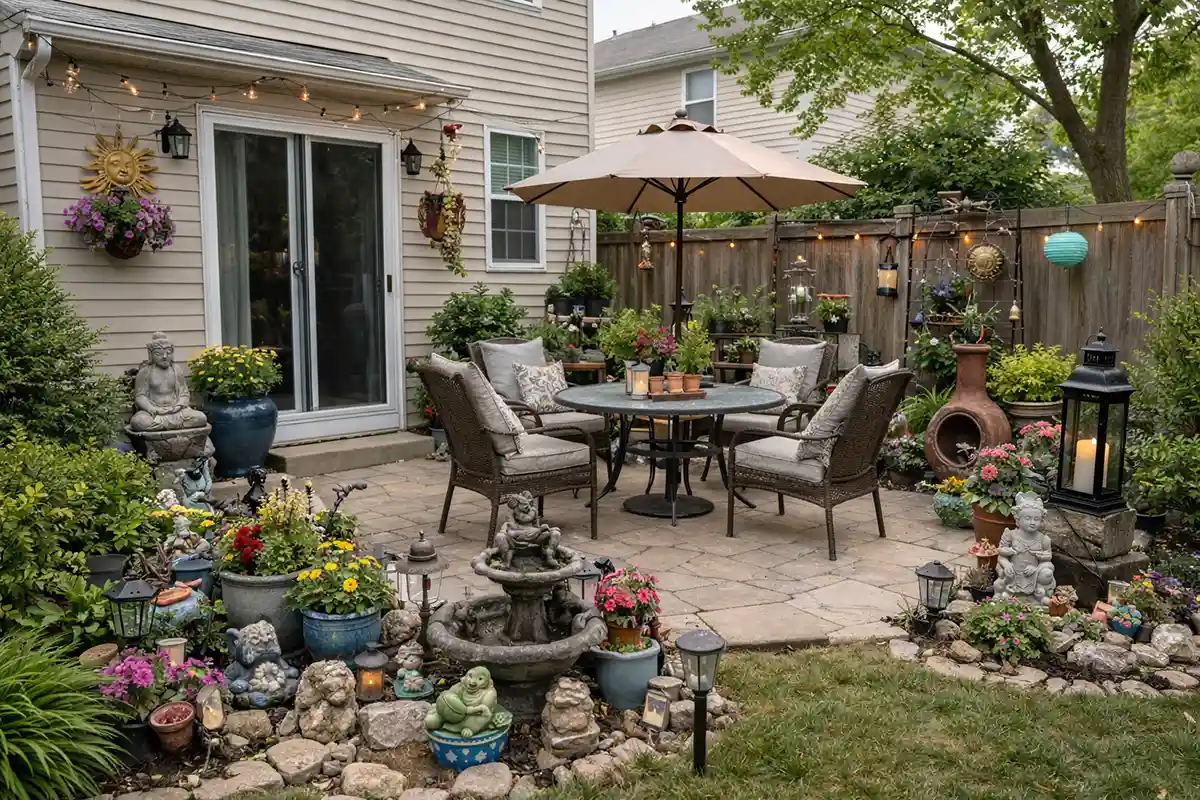
Decorative features can add personality to a backyard, but too many elements quickly overwhelm the space.
Common clutter sources include:
-
multiple fire pits or heaters
-
excessive garden statues
-
too many decorative planters
-
overlapping lighting fixtures
When every area becomes a focal point, the yard feels visually chaotic instead of relaxing.
Professional landscape designers usually rely on one or two dominant features—such as a fire pit, pergola, or water feature—while keeping surrounding décor minimal.
Mistake 8: Forgetting Shade and Sun Exposure
Sun exposure plays a major role in backyard comfort. Yet shade planning is frequently overlooked.
Patios facing direct afternoon sun can reach surface temperatures between 110–130°F during summer in states like Arizona or Texas. Even mild climates such as coastal California experience uncomfortable glare when seating areas lack shade.
Without shade structures, outdoor spaces may remain unused during the hottest hours of the day.
Solutions include:
-
pergolas
-
shade sails
-
strategically planted trees
-
covered patio extensions
Providing shade can reduce surface temperatures by 15–25°F, dramatically improving comfort during summer months.
Mistake 9: Choosing Plants That Don’t Match the Climate
Plant selection often focuses on appearance rather than climate compatibility.
In desert environments such as Arizona, plants that require consistent moisture may struggle during prolonged periods above 100°F. In coastal California, high humidity and salty air can stress certain ornamental species.
Selecting climate-appropriate plants can reduce irrigation requirements by 30–50%.
Mistake 10: Designing a Backyard That Requires Too Much Maintenance
Some backyard designs look appealing initially but become difficult to maintain over time.
Gravel landscapes may accumulate weeds within a few seasons. Dense planting beds often require constant pruning as plants mature and expand beyond their intended size.
Maintenance demands typically increase as organic debris, soil compaction, and plant growth change the original design.
Many homeowners eventually discover that the issues described in Why Low Maintenance Gardens Never Stay That Way arise when designs ignore long-term maintenance needs.
Low-maintenance landscaping usually relies on simple layouts, durable materials, and plant species suited to local conditions.
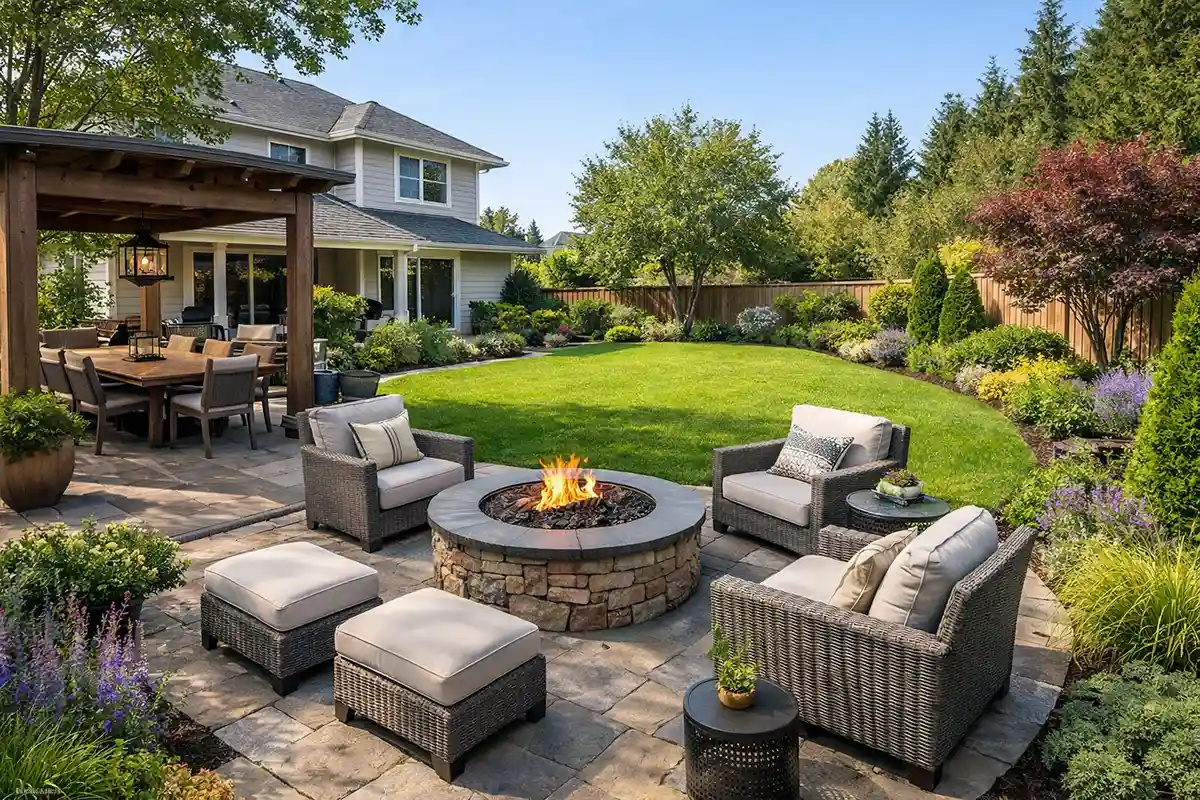
Backyard Design Problems and Practical Fixes
| Problem | Impact | Likelihood | Fix |
|---|---|---|---|
| Poor layout planning | Space feels cramped | High | Define activity zones |
| Poor drainage | Standing water | Medium | Regrade soil or install drains |
| Oversized furniture | Limited movement | High | Use modular seating |
| Unstable soil | Patio shifting | Medium | Install gravel base layers |
| Excess décor | Visual clutter | Medium | Limit focal points |
| Lack of shade | Outdoor discomfort | High | Add pergola or shade structures |
Frequently Asked Questions
What is the most common backyard design mistake?
The most common mistake is poor layout planning. When patios, seating areas, and walkways are arranged without considering movement paths, the yard quickly becomes difficult to use.
How large should a backyard patio be?
A functional patio typically ranges from 200–400 square feet. Smaller patios around 120–150 square feet can still work if furniture is scaled appropriately.
Why does my patio collect water after rain?
Patios often collect water when ground slope is incorrect. A proper installation usually includes a 1–2% slope directing water away from structures.
How can I make my backyard more comfortable in summer?
Adding shade structures such as pergolas, umbrellas, or trees can reduce patio surface temperatures by roughly 15–25°F.