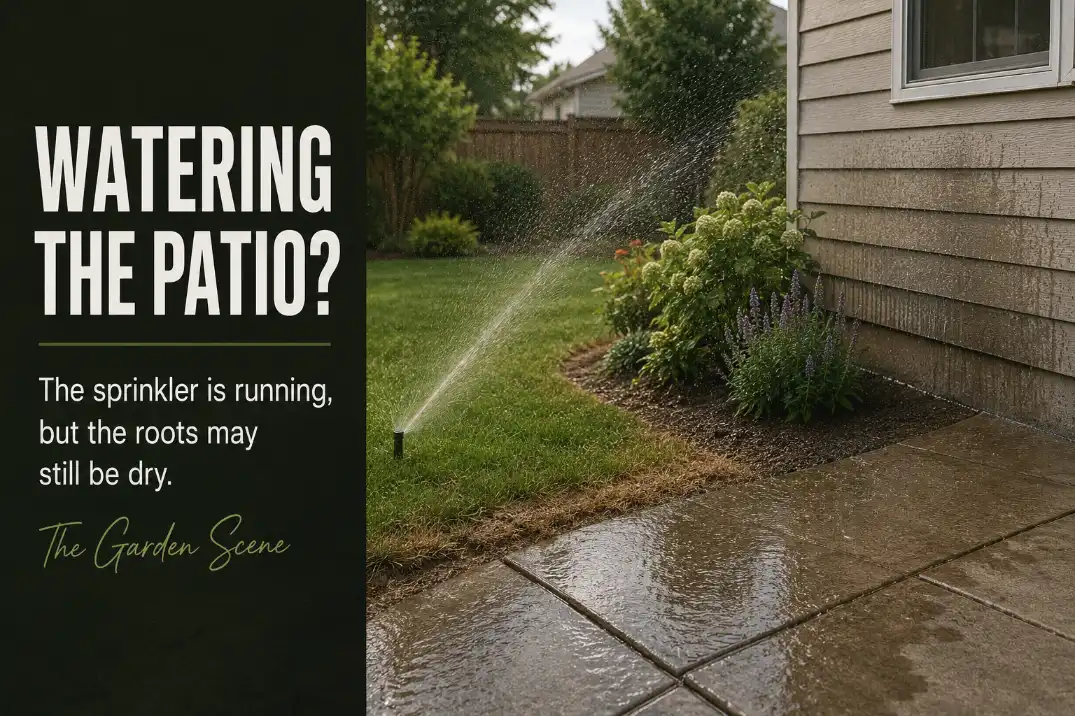
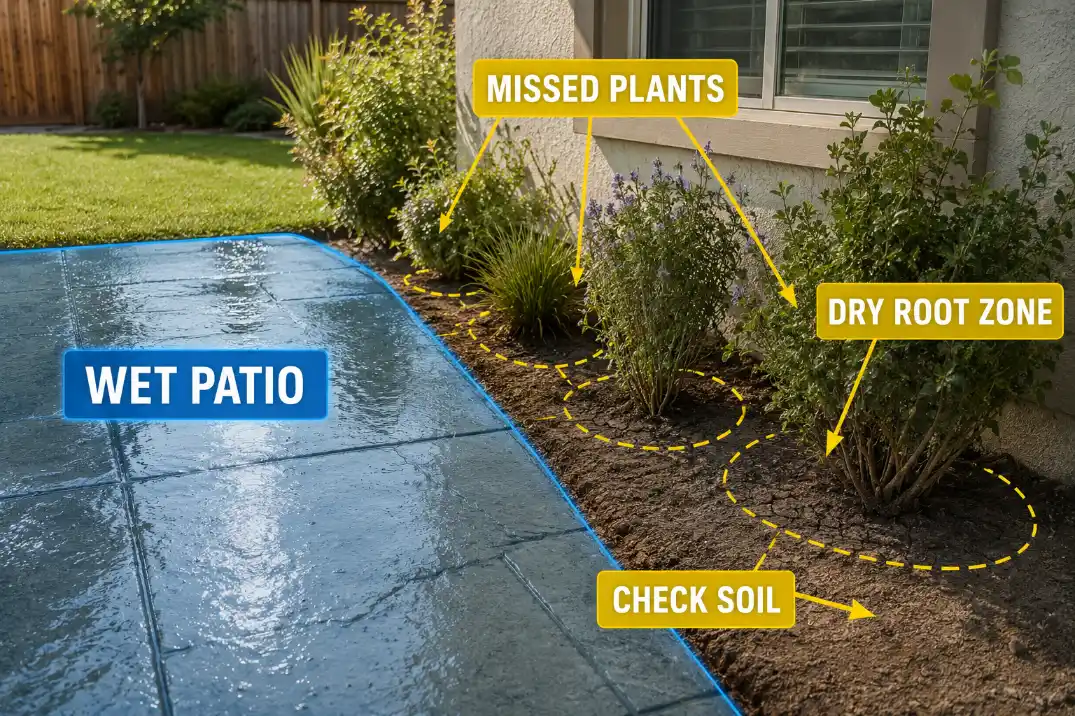
A wet patio after the sprinkler runs is not proof that the yard was watered well. It is often proof that the water pattern is leaving the target.
Sprinkler overspray usually starts as a visible surface clue: a damp walkway, beads on siding, a wet fence base, or a darker strip of concrete near the lawn edge. Those surfaces are not just getting messy. They are showing where the spray is actually going.
The useful diagnosis is simple: compare the surface that looks wet with the soil that should be wet. If the patio, walkway, siding, or fence is soaked while the root zone is barely damp, adding more minutes only repeats the same mistake for longer.
Where Overspray Usually Shows Up First
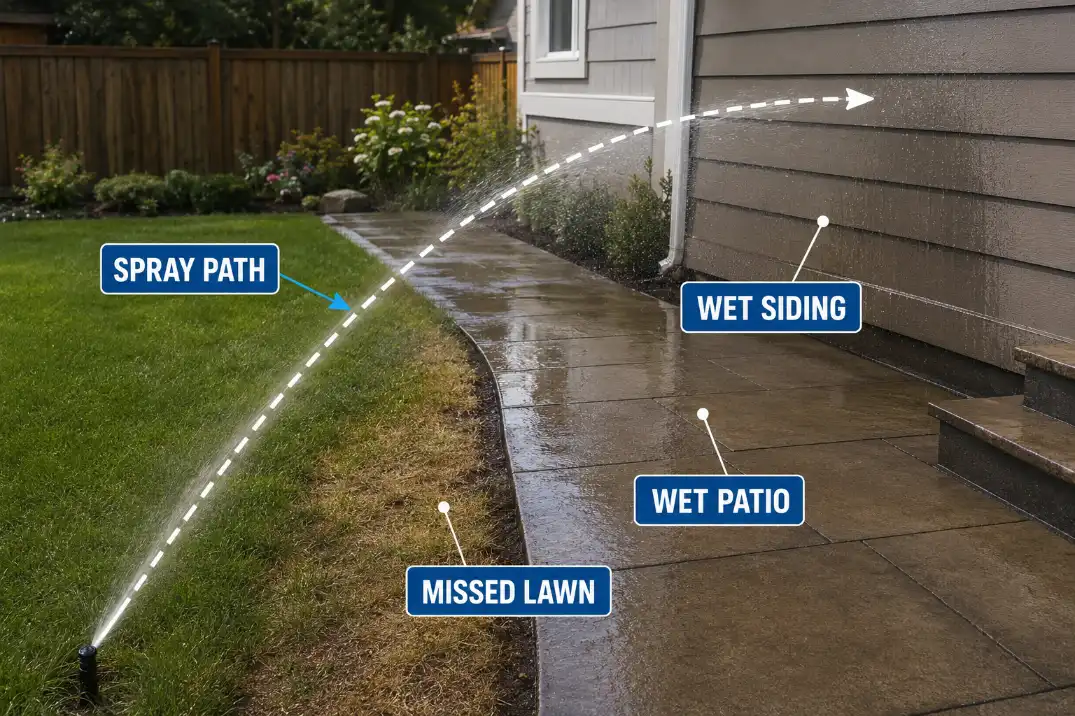
The first wet surface usually tells you more than the controller does. After one full sprinkler cycle, look at the hard edges around the lawn or planting bed before the sun dries them. A patio border, walkway strip, driveway edge, fence face, window, or lower siding panel may reveal the spray direction faster than the grass.
Concrete and pavers often darken in a clean arc or band. That line usually matches the throw of the sprinkler, especially when the spray is aimed too far across an edge or pressure is pushing water beyond the planted area. On siding or fences, the clue may be smaller: beads of water on lower panels, wet trim, or a damp line where the spray hits at the same height every cycle.
Walkways are especially useful because they show overspray in narrow strips. If one side of the path is wet and the planting bed beside it is still dry, the spray may be crossing the hard surface instead of landing in the root zone. If both the walkway and the lawn edge are wet, the pattern may be close but too wide for the space.
The practical test is to watch one full cycle from the side, not from the controller. Do not judge only by the first few seconds, because some sprinkler heads rotate, pulse, or change reach as pressure stabilizes. Stand where you can see the patio, siding, and plant bed at the same time. The first wrong surface that gets wet is the beginning of the diagnosis.
Mixed spaces make this harder. A single zone may be trying to water lawn, shrubs, a patio edge, and a walkway border at once. When those areas need different spray patterns, sprinkler zones that waste water in mixed backyards often show up first as overspray along the hardscape.
Why Hard Surfaces Waste Water Faster Than Soil
The problem with overspray is not only that water lands in the wrong place. It lands on surfaces that cannot hold it for roots.
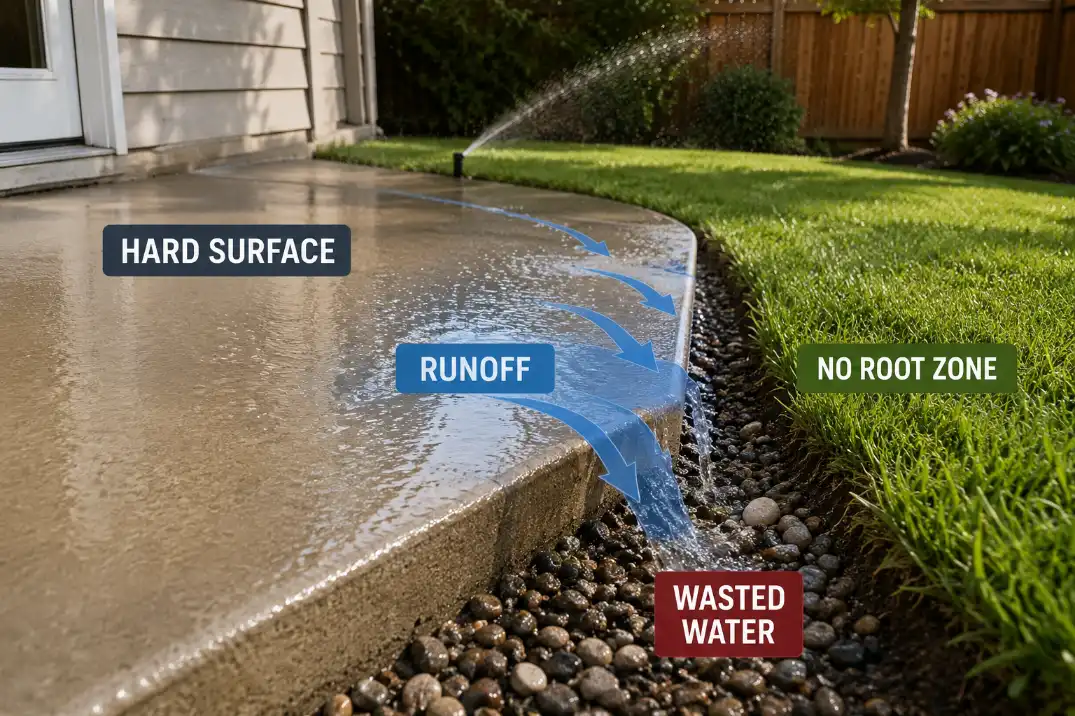
Soil can absorb and store water long enough for plants or turf to use it. A patio, walkway, siding panel, fence face, or window cannot. Once sprinkler water hits those surfaces, it beads, sheets, evaporates, or runs toward an edge.
That shortens the useful part of the watering cycle. A sprinkler may run for fifteen minutes, but if a noticeable share of the spray lands on concrete or siding, the planted area receives less usable water than the runtime suggests. The controller records time, not successful delivery.
Hard surfaces also make runoff appear faster. Water on a patio does not need to saturate soil before it moves; it can start sliding almost immediately. On pavers, it may collect in joints or flow to the lowest edge. On smooth concrete, it may sheet toward the lawn, a step, a door threshold, or a walkway joint.
That is how overspray can quietly contribute to summer backyard water bills without looking dramatic. The sprinkler runs, the area looks wet, and the cycle finishes. But the better question is whether the right soil got wet.
Overspray also changes edge behavior. A patio edge that gets occasional rain is different from a patio edge hit by sprinklers every morning. Repeated wetting can move fine soil, soften mulch lines, encourage slick patches, or leave mineral deposits where water dries.
How Overspray Stains Siding, Windows, and Edges
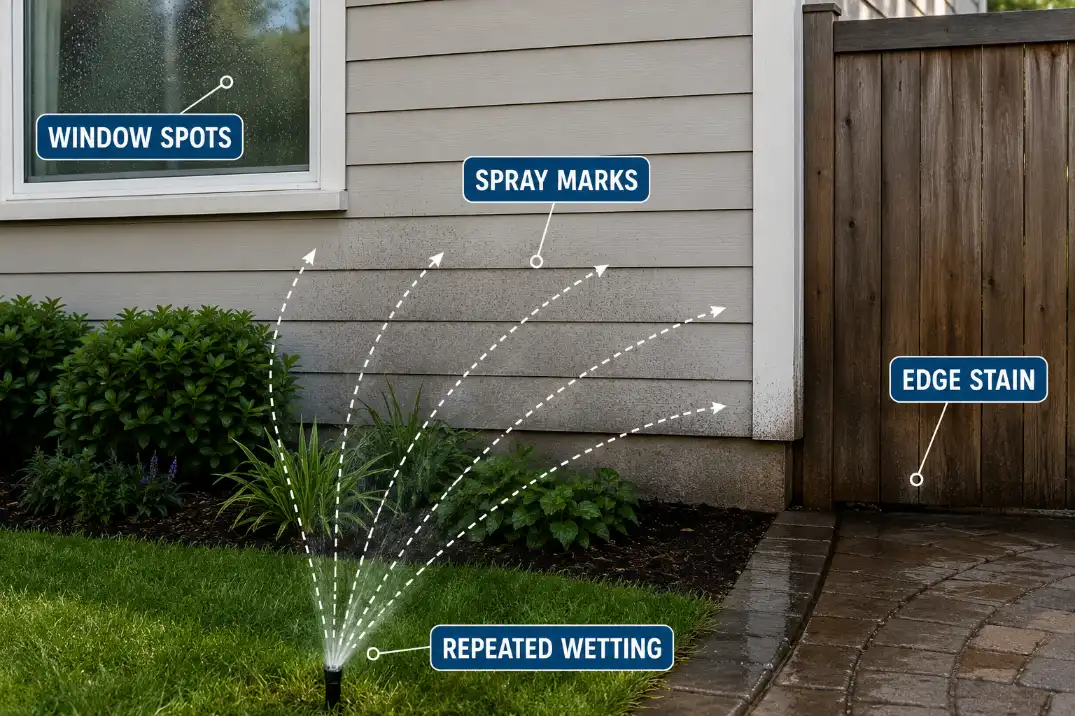
Stains usually mean the spray path has been wrong for more than one watering cycle. The mark is not the main problem; it is the record of repeated wetting.
On windows, sprinkler spray can leave mineral spots where droplets dry in the same area again and again. On siding, the pattern may look like a faint dirty band, a darker damp zone near the base, or repeated splash marks below trim. Fence panels often show the same behavior near the bottom rail or along narrow side areas where spray has nowhere useful to land.
Edges tell a slightly different story. If mulch is washing away near a patio border, gravel is creeping into a walkway, or soil is collecting in a low strip, overspray may be part of the movement. The sprinkler may not be creating a major drainage issue, but it can create a small edge wash every time the system runs.
The repair boundary matters here: cleaning the window or rinsing the siding only removes evidence. If the spray path still hits the same surface tomorrow morning, the pattern starts again.
Overspray can also blur the line between irrigation trouble and outdoor edge trouble. If the surface only gets wet during sprinkler cycles, the spray pattern is the first suspect.
If the same edge stays wet after rain, roof runoff, or grading movement, broader water problems along outdoor edges may need a separate look after the sprinkler pattern is corrected.
When Plants Still Stay Dry Even While the Patio Gets Wet
The most misleading overspray problem is the one that looks like successful watering from a distance. Everything nearby appears wet, but the root zone is still dry.
A shrub may have damp leaves while the soil beneath it remains dry. A planting strip may look included in the sprinkler arc, but the water may be hitting the walkway, bouncing off foliage, or landing on the patio side of the edging. Turf near a hardscape edge may stay patchy even though the concrete beside it is wet every morning.
This happens because sprinkler performance is often judged by visible wetness. Water on leaves, pavers, siding, and patio edges is easy to see. Water a few inches into the soil is not. A homeowner may see wet surfaces and assume the plants are receiving enough moisture, then increase runtime when leaves wilt or lawn edges brown.
Raised edging, dense foliage, containers, and narrow beds make the diagnosis harder. A spray pattern may hit the outside face of a plant but never reach the soil under the canopy. A container near a patio may get its leaves sprayed while the potting mix stays dry because water is deflected away. A narrow strip beside a walkway may receive enough mist to look damp on top while the actual root zone remains uneven.
The stronger test is soil, not surface shine. After the cycle ends, check the intended watering area. Push past mulch or loose surface soil and feel a few inches down where roots actually need moisture. If the patio is wet but that soil is still dry or only lightly damp, the sprinkler pattern is missing the job.
This is why an outdoor watering layout has to match the real planted area, not just the open shape of the yard. The target is not the general zone. The target is the soil that supports the lawn or plants.
Common mistake: adding minutes before checking the target.
When plants look thirsty and nearby hardscape is wet, the easy move is to increase runtime. That only helps if the water is already reaching the root zone. If the spray is landing on patio, walkway, siding, or fence surfaces first, longer watering usually increases waste, stains, and runoff before it fixes plant stress.
What to Adjust Before Adding More Water
The first adjustment is the diagnosis order. Correct the spray path before you reward the wrong pattern with more runtime.
Watch the sprinkler run before changing the controller. Look for the exact moment water begins landing on hard surfaces. If the spray reaches the patio only at the far end of a rotating arc, the issue may be aim or arc width.
If mist drifts across the walkway the whole time, pressure or wind may be part of the problem. If one part of the yard is soaked while another remains dry, the zone may be trying to water too many different surfaces at once.
Spray direction and arc are the first practical checks. The goal is not to make the sprinkler look centered. The goal is to make water land where roots can use it. If a narrow strip near a walkway is the problem, the target may be much smaller than the sprinkler’s natural throw.
That is where watering narrow sidewalk strips without runoff becomes different from watering an open lawn.
Pressure is the next clue. Fine mist that floats sideways, hits siding, or disappears in the air often behaves differently from heavier droplets that land where they are aimed.
Wind can make this worse, even when the sprinkler is technically pointed in the right direction. Early morning watering often reduces drift and evaporation, but timing cannot fix a spray pattern aimed at a patio.
Runtime comes after targeting. If runoff starts on the patio or walkway before the soil near the plants is damp, the cycle may be too long for that surface edge or soil condition. Shorter cycles with time between them can help some soils absorb water, but only after the spray is landing in the right place.
Use this short field check before adding more water:
- Watch one full sprinkler cycle from the patio or walkway side.
- Mark the first hard surface that gets wet.
- Check whether the intended lawn or planting bed is damp a few inches into the soil.
- Adjust spray direction, arc, or timing before increasing runtime.
- Recheck the same soil area after the next cycle.
- Add water only if the target area is being reached and still needs more moisture.
If the patio, walkway, siding, or fence keeps getting wet after these checks, the issue may be bigger than one simple adjustment. A mixed backyard zone may be trying to water lawn, shrubs, containers, and hardscape edges with the same pattern. In that case, the useful next step is not more water. It is separating the visible surface symptom from the actual watering target.
Wet hardscape is evidence of misplaced water. Correct the spray path first, then confirm the soil. The final test is not whether the patio looks dry. It is whether the root zone is finally damp where the plants or lawn actually need it.
For a neutral reference on efficient outdoor watering and reducing waste, see the EPA WaterSense guide to outdoor water use.