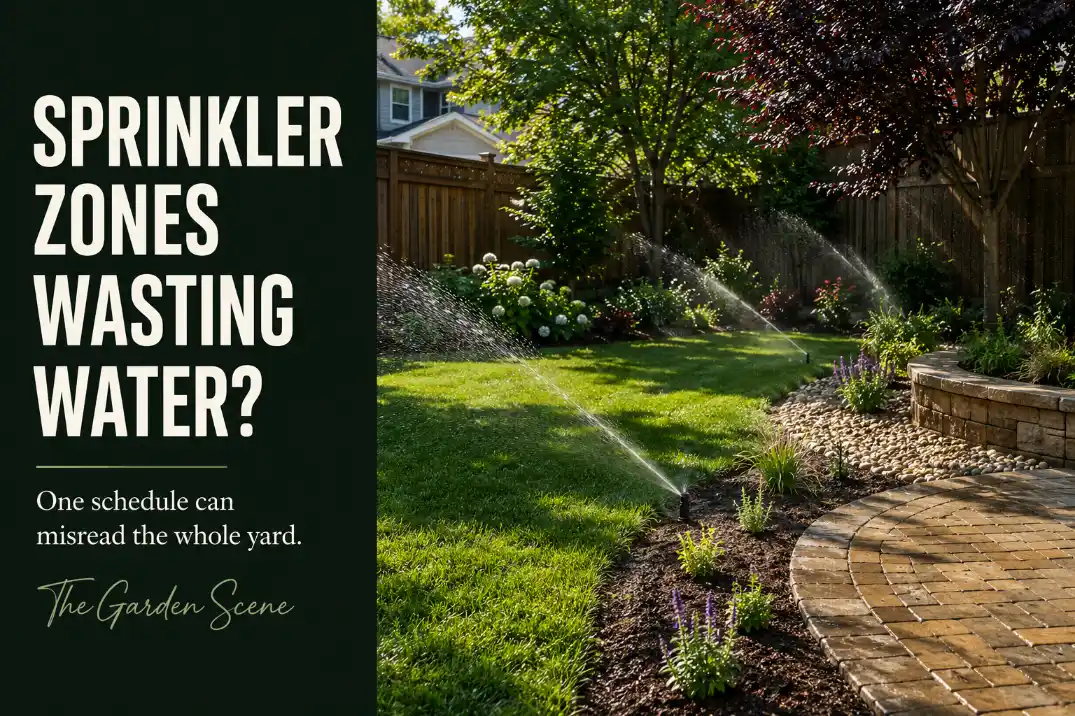
A mixed backyard can look wrong after one sprinkler cycle even when the system is technically working. The lawn edge near the patio may still look dry. A shaded planting bed may stay damp. A new shrub may wilt while older plants beside it look fine. Water may run across the patio before the cycle ends.
That does not always mean the sprinkler system is broken. In many backyards, the bigger problem is that one schedule is being asked to serve several different water behaviors.
A lawn, a mulched planting bed, a new planting pocket, a shaded fence line, and a hot hardscape edge do not dry at the same pace. When they share the same runtime and frequency, the schedule usually starts chasing the most stressed-looking area. That is how one dry edge can lead to overwatering everywhere else.
Why One Watering Schedule Fails in a Mixed Backyard
One watering schedule fails because it treats the backyard as one surface. Real backyards are not one surface. They are a patchwork of turf, mulch, soil pockets, patio edges, fence shade, containers, shrubs, and newly planted areas.
The first clue is usually not the sprinkler spray itself. It is the mismatch after watering. A spray head may rotate, pop up, and cover the zone exactly as designed, but the area it serves may no longer make sense as one watering group.
A useful way to diagnose this is to stop asking, “Did this zone run?” and start asking, “What happened after it ran?”
Look for contrast inside the same zone:
- Runoff starts near the patio while the lawn still looks thirsty.
- A planting bed stays damp after the nearby grass dries.
- A shaded corner feels wet while a sunny edge looks stressed.
- New plants droop even though established shrubs look fine.
- Water hits mulch, leaves, fence boards, or hardscape instead of soaking evenly into the target area.
That kind of contrast often shows a logic problem, not just an equipment problem. The zone may be grouped by pipe layout, not by actual backyard demand.
This is why a sprinkler issue can show up as a broader summer backyard water bill spike even when there is no dramatic leak or obvious broken head. The waste comes from repeating a schedule that is too blunt for the yard it serves.
Equal runtime does not create equal watering
A ten-minute cycle does not mean every part of the zone received the same useful water. Some water may soak into turf. Some may bead on compacted soil. Some may hit mulch and evaporate faster. Some may run off a sloped edge. Some may land in shade where the soil was already damp.
The wrong fix is to raise the whole zone because one part looks dry. That may help the driest edge temporarily, but it can push shaded beds, low spots, and established planting areas into excess moisture.
Lawn Zones and Planting Beds Do Not Dry the Same Way
The most common mismatch in a mixed backyard is lawn plus planting bed. Lawn areas usually need broad, even coverage. Planting beds are more irregular. They have mulch depth, shrub canopies, root competition, different soil texture, and sometimes low spots near fences or downspouts.
A sprinkler head that works acceptably for turf can be clumsy in a planting bed. Spray may hit plant leaves, splash mulch, wet only the front edge of the bed, or miss the deeper root area. At the same time, a bed with mulch and partial shade may hold moisture long after the lawn surface has dried.
That is why a “green lawn” schedule can quietly overwater beds, and a “gentle bed” schedule can leave turf thin or patchy. The issue is not only how much water is applied. It is whether the zone’s schedule matches how each area absorbs and releases water.
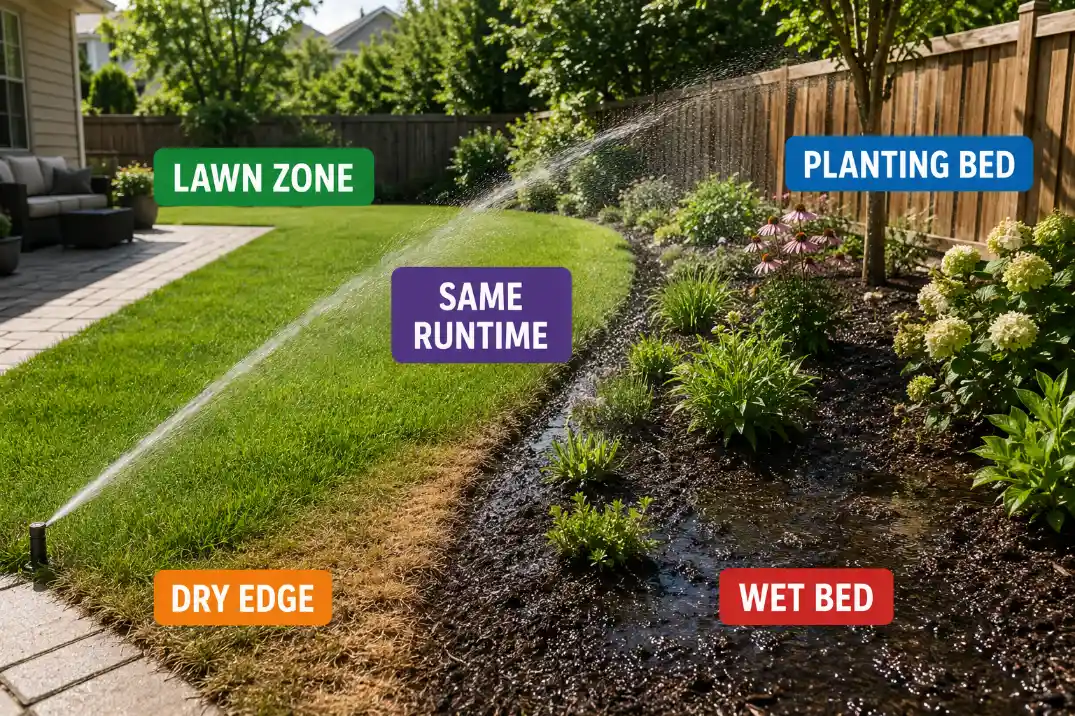
A better diagnosis starts with watching one full watering cycle, then checking the yard again later that day or the next morning. Do not judge only during the spray. Watch what stays wet, what dries fast, and where water leaves the target area.
| Backyard area | Why one schedule can waste water | What to check first |
|---|---|---|
| Lawn zone | Turf may need even coverage, but dry edges can tempt longer runtimes for the whole zone. | Look for dry margins, uneven spray, and runoff before the cycle ends. |
| Planting bed | Mulch, shade, shrubs, and soil pockets can hold moisture longer than turf. | Check whether the bed is still damp while nearby lawn has dried. |
| Shade zone | Lower sun exposure can slow drying and make normal runtimes excessive. | Compare shaded soil with sunny soil later the same day. |
| New plants | Small root systems may need closer attention than the established bed around them. | Check the new plant root ball area, not just the bed surface. |
| Hot hardscape edge | Patio, walkway, gravel, or wall heat can dry nearby soil faster than the rest of the zone. | Look for one fast-drying edge instead of assuming the whole zone is dry. |
The table matters because most water waste starts when the homeowner responds to one visible symptom with a whole-zone change. If the patio edge dries first, the entire zone gets more time. If new plants wilt, the whole bed gets more frequent cycles. If the lawn looks pale, the adjacent planting bed gets soaked along with it.
A stronger watering layout by yard area separates those behaviors before changing the timer. The schedule should follow how the yard dries, not just where the sprinkler pipe happens to run.
Sun, Shade, and Hardscape Heat Change Water Demand
Sun and shade can make one sprinkler zone behave like two different landscapes. A strip of lawn in full afternoon sun may lose moisture quickly, while the bed under a fence shadow may stay damp. If both areas share the same runtime, one side becomes the reason for overwatering the other.
Hardscape makes the mismatch sharper. Patio edges, walkways, retaining walls, gravel strips, and fence bases can hold or reflect heat. Plants near those surfaces may look thirstier because the surrounding soil warms faster and dries at the edge first.
That does not always mean the whole zone needs more water. Sometimes the hot edge needs a different approach, while the shaded portion needs less frequent watering.
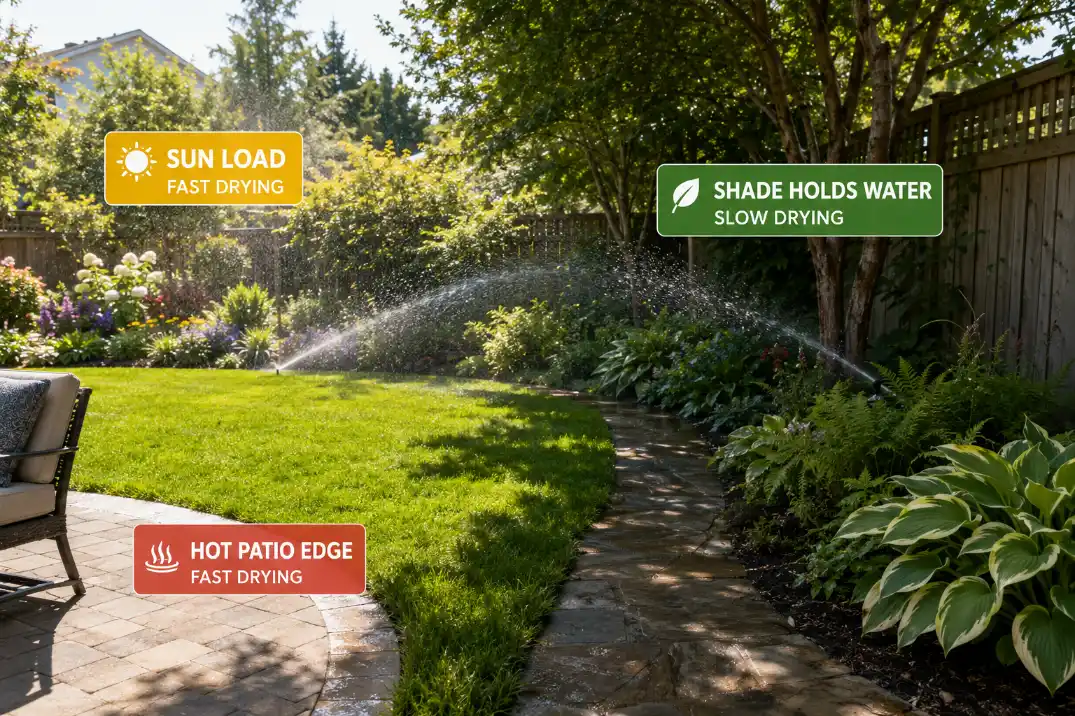
The key is to avoid letting the driest-looking edge speak for the entire zone. A plant beside a hot patio may show stress sooner than a plant ten feet away in the same bed. That is an exposure problem as much as a watering problem.
This is especially important where hardscape heat around patios makes nearby soil and plants behave differently from the rest of the yard. A single dry strip along concrete should not automatically trigger a longer schedule for shaded beds, fence-line plantings, or established shrubs.
The wrong signal to chase
The most expensive signal is often the loudest one: the dry, bright, exposed edge that always looks worse first. If the schedule is raised until that spot looks perfect, every slower-drying part of the same zone may be getting more water than it can use.
A better read is comparative. After watering, check the hot edge, the shaded bed, the lawn center, and the planted border separately. The mismatch between them is the diagnosis.
New Plants and Established Beds Should Not Share the Same Logic
New plants create another scheduling trap. They may need closer observation because their roots have not fully moved into the surrounding soil. An established shrub nearby may be pulling moisture from a wider area, while a new plant is still depending on the smaller planting pocket around its original root ball.
That does not mean the entire sprinkler zone should be changed to match the newest plant.
When a new planting pocket sits inside an established bed, the sprinkler schedule can become distorted. The homeowner sees one new plant wilt and adds time or frequency to the whole zone. The older shrubs, shaded mulch, and lower soil areas then receive extra water they may not need.
The opposite can happen too. The established bed looks fine, so the schedule stays unchanged, while the new plant struggles because its immediate root area dries faster than the rest of the bed appears to.
This is why new plants and established beds should not share the same logic, even when they physically share the same bed. The diagnosis should separate the plant’s stage from the zone’s overall moisture pattern.
For a temporary period, targeted watering around the new plant may be more sensible than changing the whole sprinkler zone. That keeps the mature bed from being overwatered while the new plant gets the attention it actually needs.
The important boundary is simple: do not judge a mixed bed by one plant. Judge the new plant, the established plants, the mulch surface, and the soil below the surface as separate clues.
How to Adjust Zones Before Replacing the System
The first adjustment should be diagnostic, not mechanical. Before replacing heads, changing valves, or assuming the system is wrong, watch how the existing zone behaves.
A sprinkler system can have hardware problems, of course. Broken heads, blocked spray, poor direction, chronic overspray, and uneven coverage matter. But in mixed backyards, the more common first mistake is adjusting equipment before understanding the water-demand mismatch.
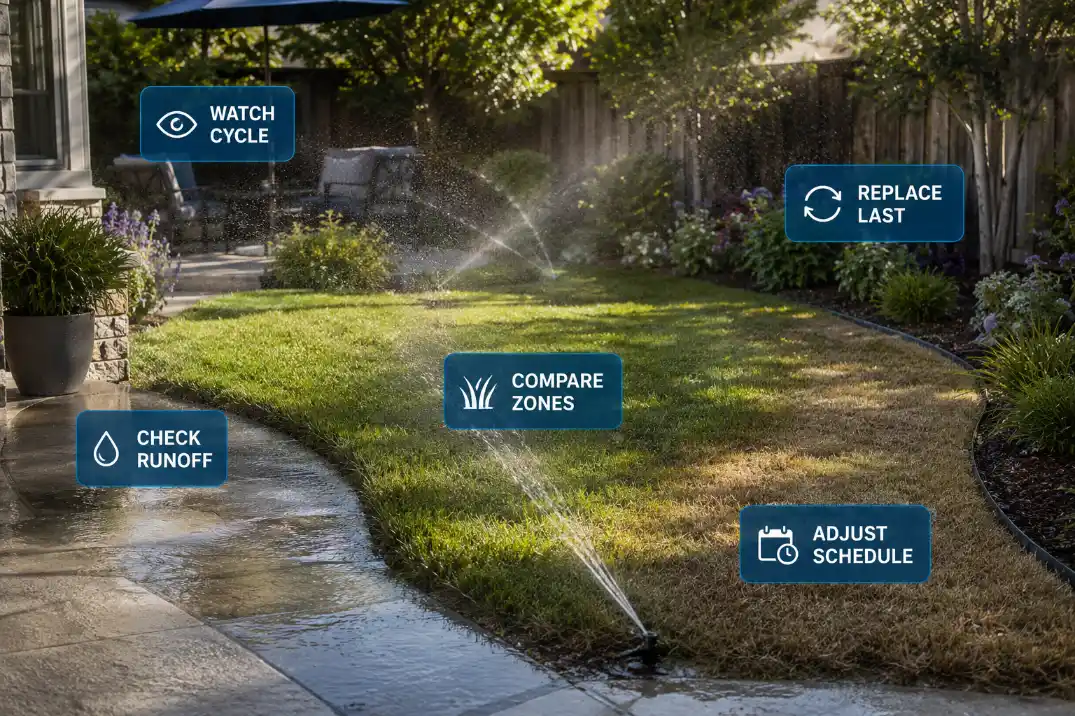
Use this order before treating the system as a replacement project:
- Watch one full cycle.
Look for runoff, pooling, overspray, blocked spray, dry edges, and shaded areas that were already damp before watering. - Compare the same zone later.
Check the lawn, planting bed, new plants, shaded soil, and hardscape edge later that day or the next morning. The difference after drying is more useful than the spray pattern alone. - Separate the reason for stress.
A dry patio edge, a wilting new plant, and a damp shaded bed are not the same problem. Do not solve them with one longer runtime. - Adjust schedule logic first.
Reduce or split watering logic where possible. A mixed zone may need shorter cycles, different frequency, targeted supplemental watering, or a different grouping over time. - Replace only after the logic is clear.
If the zone still has poor coverage, broken heads, chronic overspray, or spray going onto hardscape after the schedule is corrected, then the equipment may need attention.
Also check whether a wet planting bed is truly a sprinkler problem. In some yards, the bed is already receiving roof runoff, slope runoff, or drainage from nearby surfaces. In that case, increasing or even maintaining the same sprinkler runtime can make the bed look like an irrigation issue when the real problem is planting beds that stay wet from runoff.
The practical goal is not to make every part of the backyard look identical after watering. It is to stop one zone from forcing lawn, beds, shade, new plants, and hot hardscape edges into the same routine.
A mixed backyard should be judged by behavior, not by the timer alone. If the shaded bed stays damp, the hot patio edge dries fast, the lawn needs broad coverage, and the new plant needs temporary attention, the schedule should reflect those differences before the system is blamed.
For neutral outdoor water-efficiency guidance, see the EPA WaterSense resource on outdoor water use.