Last updated: July 7, 2026
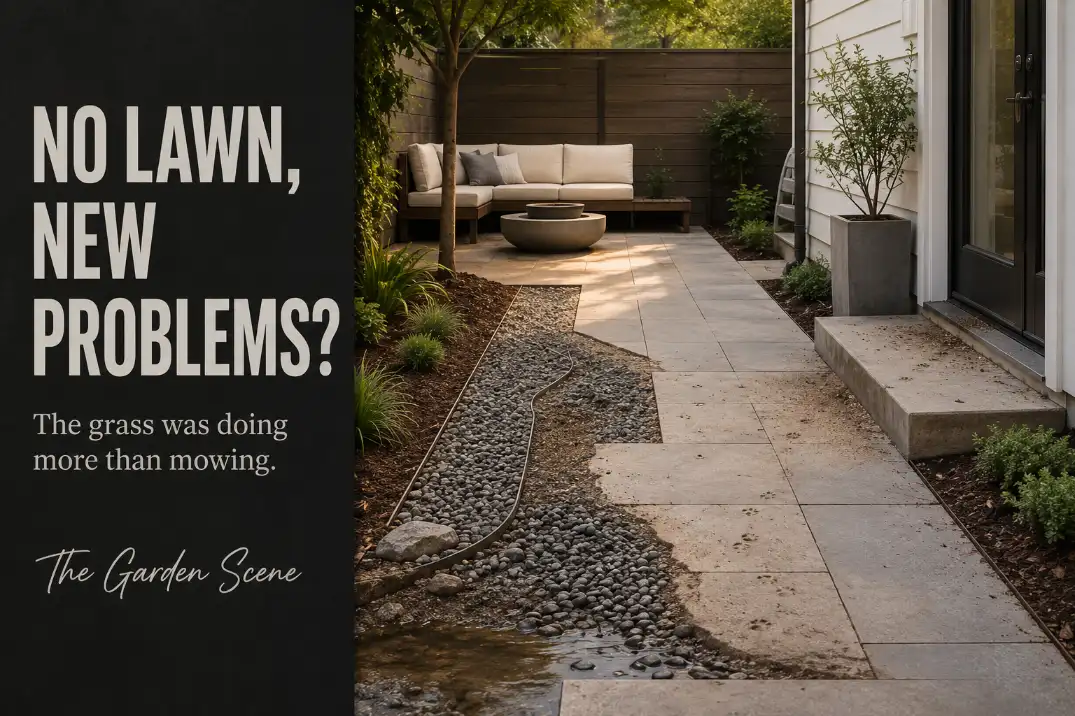
Removing lawn from a small garden can look like the cleanest possible move until the space starts behaving like a harder, hotter, less forgiving room.
The patio may feel sharper in late afternoon. Water may run faster toward a low edge. Gravel or mulch may start showing up at the back door. The dog may wear down the same corner every day. The mower is gone, but sweeping, rinsing, seam weeding, edge correction, and drain clearing may take its place.
That does not mean a small garden needs grass. It means the lawn was probably acting as a buffer. Before replacing it, the real decision is not which surface looks best. It is which lawn function has to be replaced: cooling, water absorption, dust control, pet-use tolerance, soft circulation, or maintenance buffer.
The Lawn Was Doing More Than Filling Space
A lawnless small garden starts to fail when the new surface removes mowing but does not take over the lawn’s quieter jobs.
Grass can slow rain before it reaches the patio. It can keep soil covered. It gives pets and foot traffic a forgiving surface. It creates a cooler pause between hard edges. It also hides light daily wear because the pressure is spread across one soft area instead of forced into seams, thresholds, and corners.
| Lawn function | What happens when it is removed |
|---|---|
| Cools the small garden | Hard, dark, or dry surfaces hold and reflect more heat |
| Slows rainwater | Runoff reaches edges, low spots, and doors faster |
| Holds soil and fine particles | Dust, mulch, gravel fines, and soil move into paths and thresholds |
| Softens pet traffic | Repeated routes, odor spots, and worn corners concentrate |
| Absorbs daily mess | Maintenance shifts into seams, drains, edges, and cleaning loops |
The useful diagnosis is simple: do not ask only what will replace the grass. Ask what the grass was absorbing.
That keeps the decision focused. This is not a list of no-grass landscaping ideas. It is a check for the small-space problems that appear when the lawn’s hidden work is not assigned to something else.
Heat Builds Faster When the Soft Surface Disappears
Heat is usually the first no-lawn problem people feel, because it changes comfort before it looks like a defect.
A small lawnless garden can become noticeably hotter when grass is replaced by pavers, concrete, gravel, artificial turf, dark mulch, or exposed soil. The issue is not just direct sun. It is the way heat bounces between close surfaces: patio, fence, wall, siding, planting edge, and seating area.
In a compact garden, there may be only a few feet between the hot surface and the place people actually sit. A clean paver strip can still push warmth toward a chair. A dry bed against a fence can make the edge feel harsher. A dark surface near a door can turn the threshold into the hottest part of the space.
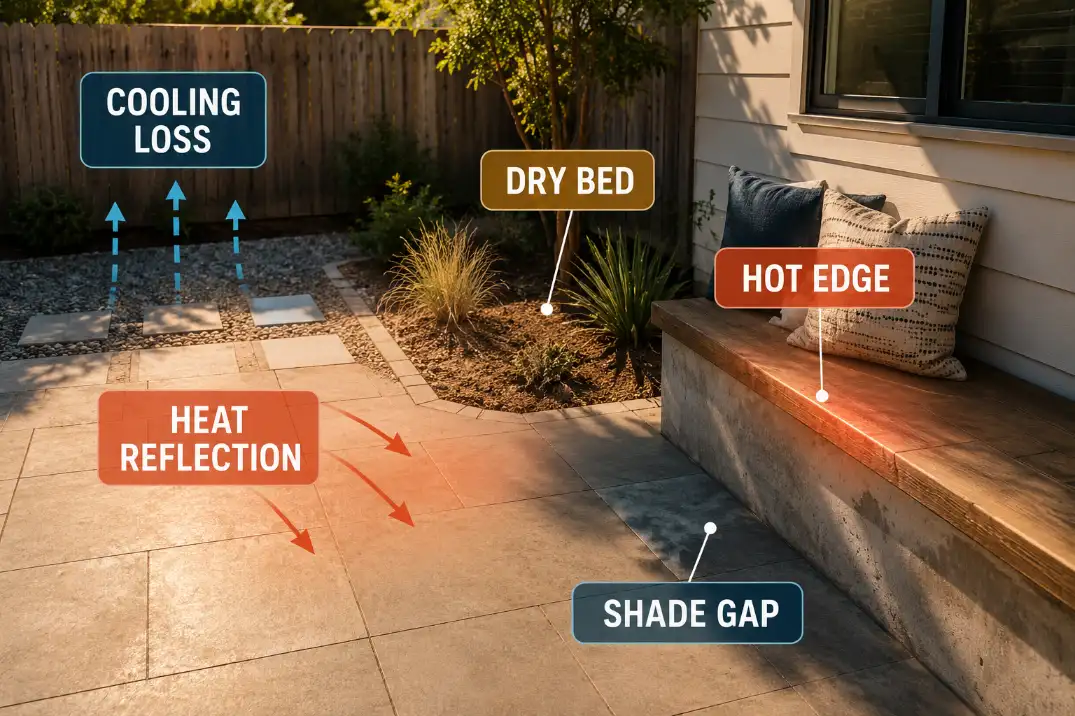
The best test is late afternoon, not installation day. Stand where you sit, where pets pause, and where the back door opens. If the uncomfortable zone follows a wall, fence, or hard edge, the problem is reflected heat and missing cooling space, not simply “no lawn.”
The first fix should not be another full layer of hard material. Shade, lighter surface choices, planting pockets, airflow gaps, or a cooler groundcover zone can matter more than covering every open inch.
For a deeper look at this specific heat pattern, the same mechanism shows up around patios where reflected heat around patios makes nearby seating and planting areas harder to use.
Runoff Speeds Up When the Sponge Is Removed
The runoff problem starts when the lawn’s slowing effect disappears.
A small patch of grass may not solve drainage, but it can interrupt water before it reaches a patio edge, planting bed, fence base, drain, or door threshold. Once that area becomes compacted base, concrete, pavers, artificial turf base, gravel over fabric, or dry hard-packed soil, rain can move faster across the same footprint.
That speed matters more than the size of the garden. In a compact space, runoff has almost no distance to spread out before it hits something important. A minor slope that once looked harmless can start carrying mulch, gravel fines, soil, and pet residue into the same low spot after every storm.
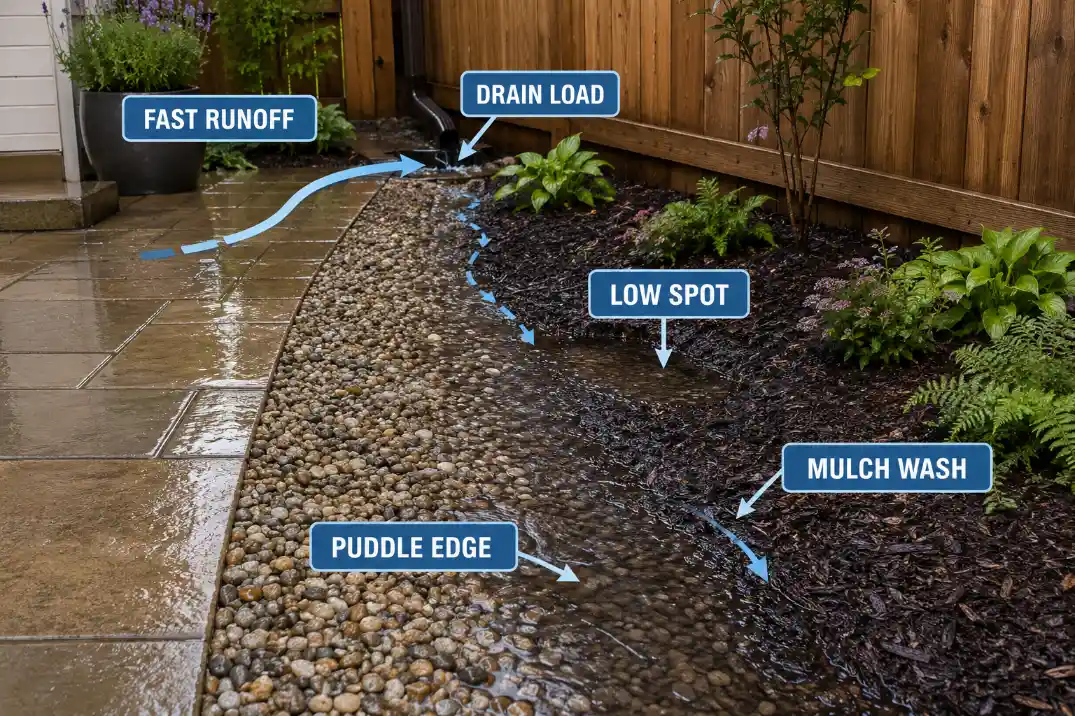
Watch the garden during rain or immediately after it stops. Water cutting across the same strip, mulch washing onto the patio, fines collecting near a drain, or a damp line forming close to the house are more useful clues than checking the yard the next day.
The wrong fix is adding more decorative material into the wash path. More mulch in a moving-water zone usually creates more cleanup. More loose gravel near a low point can send fines into seams and drains. Start with direction: where does water begin, where does it speed up, and where does it stop?
If the entire space already has soggy corners or recurring puddles, treat that as a drainage issue before choosing another surface. Small garden drainage problems can make almost any no-lawn surface perform badly.
Dust and Loose Material Move More Than People Expect
Dust is a diagnosis of movement. If grit keeps reaching the door, the surface is not staying where the plan expected it to stay.
Many lawn replacements are loose, dry, or edge-dependent. Gravel, decomposed granite, dry mulch, exposed soil, and lightly planted beds all need containment. In a large yard, that movement may stay out of the living area. In a small garden, the back door, pet route, dining area, and storage path may sit only a few feet away.
Wind moves fine dust. Rain moves fines downhill. Shoes and paws carry material across thresholds. Chair legs, bins, and hose movement can scrape loose particles into seams. Once the lawn is gone, there is less living cover to hold the small particles in place.
Do not judge the surface only when it is freshly installed. Check it after wind, after rain, and after one normal week of use. If the same material keeps collecting in the same place, that spot is a movement path.
The fix depends on the pattern. Gravel that spreads sideways needs a stronger edge or a cleaner transition. Dust near a fence may need better coverage, not more raking. Mulch reaching the patio may point to runoff, not mulch depth. A threshold that collects grit needs a stable landing zone before the mess gets carried indoors.
This is why a small lawnless garden with gravel can need more attention than expected; backyard landscaping gravel maintenance problems often start with the same loose-surface movement pattern.
Pet Use Concentrates in a Smaller No-Lawn Space
Pet pressure is rarely evenly distributed, so a lawnless small garden should be planned around the repeated route first.
Most dogs create patterns: back door to fence, door to corner, patio to shade, gate to sniffing spot. Once the lawn is gone, that repeated traffic lands on fewer forgiving surfaces. Gravel may scatter. Mulch may hold odor or get kicked into beds. Artificial turf may need better rinse-down and drainage planning. Exposed soil may become a mud gap.
Heat belongs in the pet diagnosis too. A surface can look clean and still be uncomfortable for paws or resting during late-day sun. If the pet avoids one route in summer but uses it in cooler weather, the hidden issue may be surface heat rather than layout.
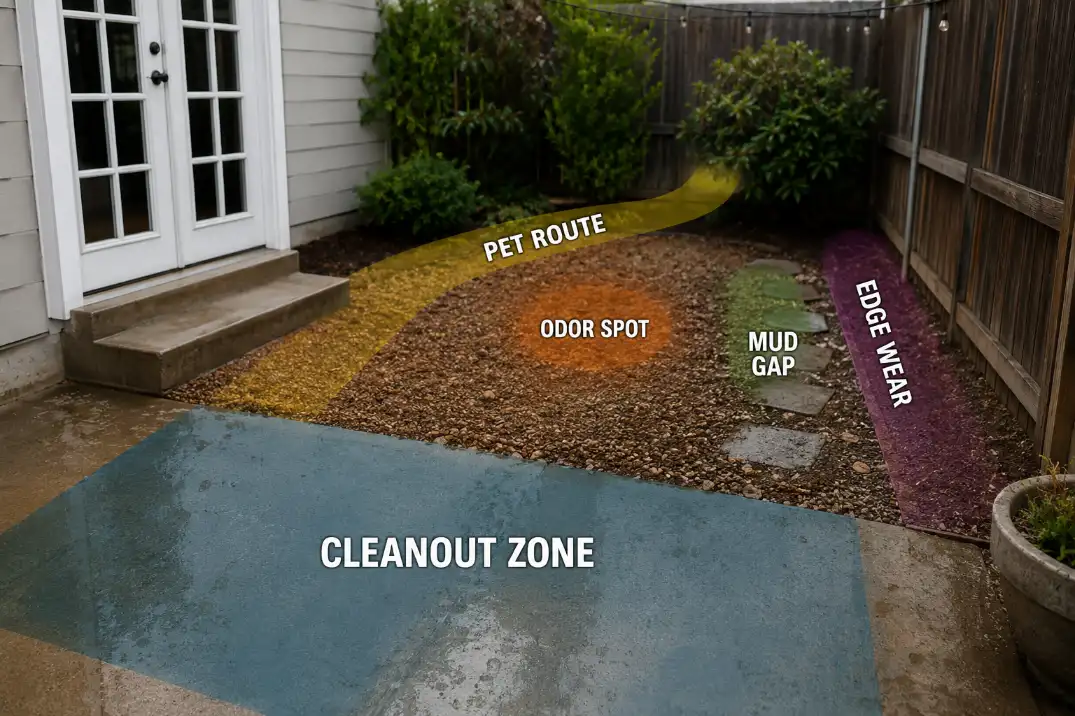
Map the pet route over several normal days before choosing or correcting the surface. Watch where the dog turns, pauses, urinates, digs, waits, or cuts through a bed. That route needs durability before decoration.
The correction does not have to become a full pet-yard redesign. It may be one washable route, one shaded resting patch, one better-drained bathroom area, or one protected planting edge. Place that durable zone where the pet already goes, not where the plan looks neat from above.
For yards where dog use is already creating mud, worn routes, or repeated damage, dog-friendly backyard design mistakes are usually easier to fix before the whole surface plan is locked in.
Maintenance Does Not Disappear; It Moves to Edges and Seams
The maintenance test is not whether mowing disappears. It is whether the new work lands in places that are easy to reach and quick to reset.
A no-lawn small garden can still demand weekly attention. Patio seams collect weeds. Gravel edges need resetting. Mulch borders creep. Drains need clearing. Door tracks collect grit. Fence bases trap leaves. Pet zones need rinsing. Low spots collect stains or debris.
This is not a failure of every lawnless garden. It is a sign that the plan removed one kind of maintenance without deciding where the new maintenance would land.
Ask the blunt question before committing: what will need sweeping, rinsing, unclogging, pulling, resetting, or scraping every week? If the answer is “almost every edge,” the garden may not be low-maintenance. It may only be mower-free.
| Main symptom | Likely hidden problem | First check |
|---|---|---|
| Patio feels hotter after lawn removal | Lost cooling buffer and reflected heat | Stand in the space in late afternoon |
| Mulch or fines wash across the surface | Runoff is moving faster than before | Watch the path during or right after rain |
| Grit keeps reaching the door | Loose material is in a traffic or wind path | Check the threshold after one normal week |
| Pet odor or mud returns quickly | Pet use is concentrated in one route or corner | Map the pet route for several days |
| More sweeping and seam work than expected | Maintenance moved from lawn to edges | Identify every weekly cleanout point |
In small spaces, maintenance pressure stays visible. A messy seam is near the seating area. A dusty threshold is near the kitchen. A damp pet corner is near the door. A drain covered by mulch can affect the whole patio edge.
A no-lawn garden can still be easier to maintain, but only when the cleanup points are designed on purpose. Edges need to hold. Drains need to stay visible. Pet zones need access. Loose material needs containment. Walking routes need stable transitions.
That is the same larger pattern behind why low-maintenance backyard choices can move work instead of removing it, but in a small no-lawn garden the shift is tighter and more obvious.
When a No-Lawn Small Garden Still Works
A small garden without a lawn works when the replacement plan assigns every lost lawn function to something specific.
Cooling may come from shade, planting pockets, lighter surfaces, or airflow. Water control may come from grade, permeable areas, drains, or planted slowing zones. Dust control may come from stable edges and covered soil. Pet use may need a durable, washable route. Maintenance access needs to stay reachable after furniture, planters, bins, and hoses are in place.
The strongest lawnless small gardens usually mix functions. They do not cover every inch with one surface and hope it solves every pressure. A compact patio may handle seating. A planted strip may slow water. A stable path may handle traffic. A shaded soft zone may protect comfort. A clean threshold may keep grit out of the house.
Before removing lawn or correcting a lawnless garden, run this hidden-problem check:
- Check late-afternoon heat where people and pets actually sit, walk, and pause.
- Watch runoff during or immediately after rain before adding more loose material.
- Look for dust, gravel, mulch, or soil at doors, drains, seams, and patio edges.
- Map pet routes before choosing the surface for the whole garden.
- Count weekly cleanout points, not just mowing time saved.
- Keep drains, hose access, and cleaning routes reachable.
- Replace each lawn function with a surface, planting zone, edge, shade source, or water path.
If several problems appear at once, fix the controlling pressure first. Heat, runoff, pet traffic, and loose material can make each other worse, so changing the most visible surface is not always the best first move. Use small backyard fix priorities before changing surfaces when the space feels crowded with competing problems.
The Real Question Before Removing Lawn
The real question is not whether a small garden should have grass. It is whether the lawn’s hidden jobs have somewhere else to go.
Is the current lawn cooling the space? Slowing rain? Holding soil in place? Giving pets a forgiving route? Keeping grit away from the door? Making maintenance simple because the messy pressure is spread across one soft surface?
Once that job is clear, a no-lawn garden becomes easier to judge. The replacement does not need to imitate grass. It does need to handle the pressure grass was absorbing.
In a small garden, problems have less room to fade into the background. Remove lawn only after each hidden job has been assigned to shade, planting, stable edges, washable routes, cleanable transitions, visible drainage, or surfaces that match the way the space is actually used.
For a neutral stormwater reference, see the EPA’s guide to permeable pavement and runoff reduction.