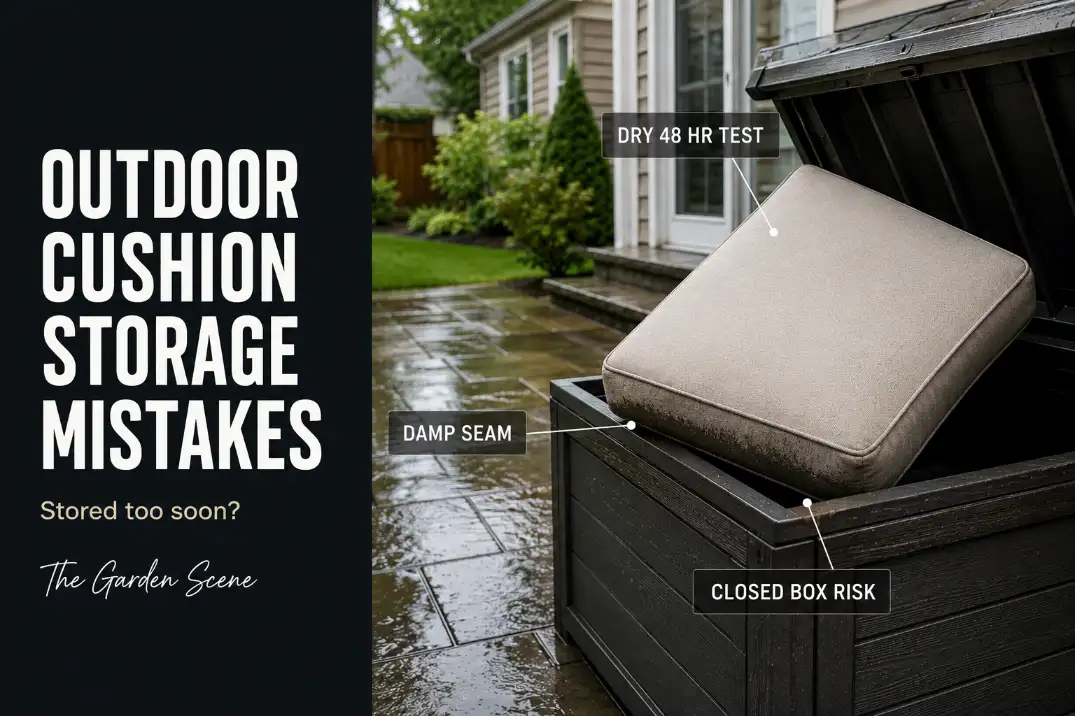
Outdoor cushion storage mistakes usually start before the lid closes. The cushion looks dry on top, but the lower seam, zipper edge, or foam core may still be holding moisture.
Once that damp cushion goes into a closed deck box, the box stops being protection and starts acting like a small humid chamber.
The first useful check is not whether the fabric looks clean. Press the lowest seam for 10 seconds, check whether the underside feels cool, and smell near the zipper before storage.
A cushion soaked through by rain often needs 24 to 48 hours of open-air drying before enclosed storage. In humid regions, that window can stretch longer. The main mistake is confusing a normal wet cushion with one that is ready to be sealed away.
Dry Before Storing When the Top Looks Ready First
The top fabric dries before the cushion does
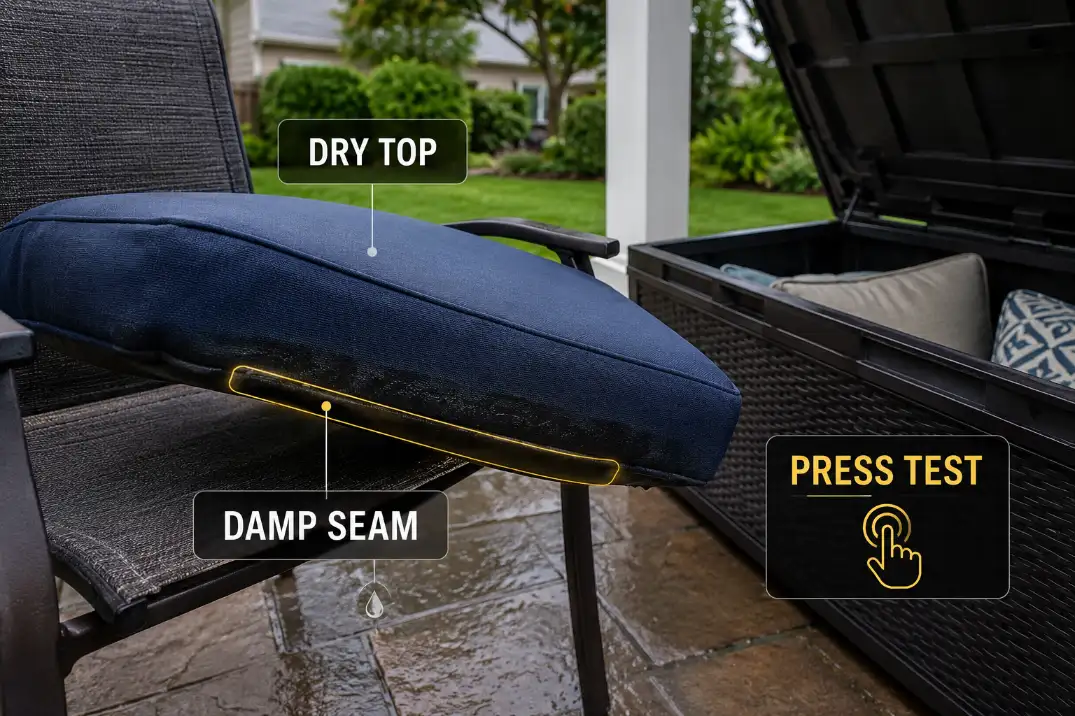
The most misleading cushion is the one that looks finished. The top surface may warm up in the sun and feel dry by afternoon, while the lower edge still sits damp from contact with the chair seat. That lower edge is where storage problems usually begin.
If the cushion was only misted by light dew, a few dry hours may be enough. If it absorbed rain through seams or sat on a wet chair base, treat it differently. A cushion that still feels cool on the underside after several hours has not finished drying, even if the face fabric looks normal.
The sharper rule is simple: do not close the box until the lower seam passes the press test.
The 10-second press test is more useful than wiping
Press the lower seam, piped edge, or zipper area for about 10 seconds. If the fabric darkens, feels cool afterward, or releases a damp smell, the cushion is still carrying moisture. Wiping the top does not change that.
This is where people often waste effort. Fabric sprays, quick cleaners, and scented treatments can make a cushion seem fresher for a day, but they do not remove dampness from foam. Odor is the symptom. Trapped moisture is the mechanism.
If cushions already smell musty after drying, the issue has moved beyond simple storage timing. That is when Outdoor Cushion Mildew Problems becomes the more useful diagnosis, because the question changes from “Where should I store these?” to “Did moisture already settle into the cushion?”
Deck Boxes Can Trap Moisture Instead of Solving It
A deck box is a rain shield, not a dryer
A deck box protects cushions from new rain. It does not dry cushions that are already damp. That distinction matters more than the box material, lid style, or gallon capacity.
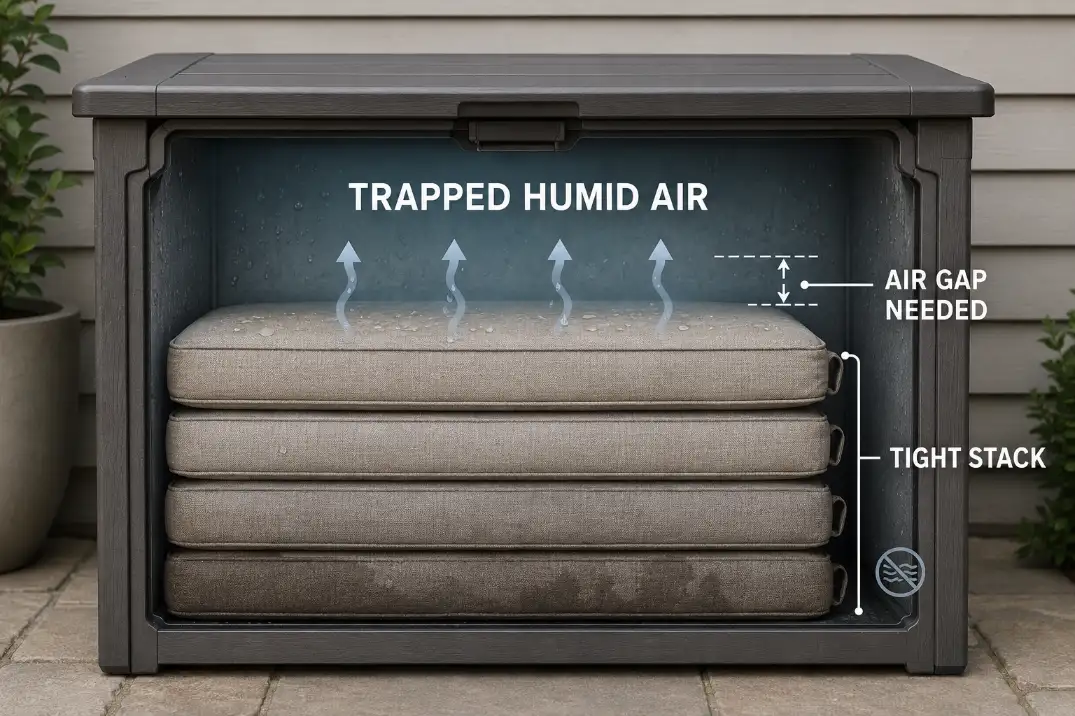
Once damp cushions are stacked inside, the lid cuts off airflow. The cushions touch each other, the bottom piece stays compressed, and moisture has fewer escape paths.
A sealed box that helps on a dry day can become one of the worst places for cushions right after a storm.
The right sequence is: dry first, store second. A deck box should be the final storage step, not the drying location.
When the storage product becomes part of the problem
The box itself starts to matter when cushions keep coming out cool, musty, or slightly damp even after a normal drying period. At that point, the issue is no longer just “put them away.” It is moisture-control storage.
A better cushion storage setup usually has enough interior room that cushions are not crushed together, a raised floor or dry base, and some way for small amounts of air to move. Even a finger-width gap between cushions is healthier than a tight stack with no edge exposure.
If the real problem is choosing a storage setup that handles rain and mildew risk better, Best Outdoor Cushion Storage for Rain and Mildew Problems is the buying-focused guide that fits this decision point.
Cushions Need Air Between Pieces, Not Just a Bigger Box
Tight stacking keeps the bottom cushion wet longest
A bigger box does not automatically fix cushion storage. If the cushions are still stacked tightly, the same moisture problem remains. The top cushion may dry or air out first, while the bottom one sits against a damp base with the least airflow.
This is why the bottom cushion often smells first. It carries pressure from the stack, has less exposed edge area, and may sit closest to a wet patio slab or damp box floor. The problem is not always the amount of storage space. It is how much breathing room each cushion has.
A healthier stack has loose edges, upright pieces when possible, and no damp cushion buried in the middle. If one cushion fails the press test, separate it from the dry group instead of hiding it inside the pile.
Plastic bags are the wrong weekly shortcut
Plastic bags seem protective because they block rain, dust, and insects. For weekly cushion storage, they often make the problem worse. If even a little moisture is sealed inside, the bag removes nearly all drying potential.
Plastic is an off-season dry-storage tool, not a weekly drying tool. Use it only when cushions are fully dry, clean, and stored in a protected place. For everyday patio use, breathable spacing beats a perfect seal.
| Storage choice | What it does well | Where it fails | Better rule |
|---|---|---|---|
| Sealed deck box | Blocks new rain | Traps cushions that are still damp | Dry first, then close |
| Plastic bag | Keeps dust off dry cushions | Locks in hidden moisture | Use only for fully dry off-season storage |
| Tight cushion stack | Saves space | Keeps the bottom cushion damp | Leave edge gaps or stand pieces upright |
| Covered patio corner | Reduces direct rain | Can stay humid after storms | Check lower seams before storing |
| Slatted shelf | Allows airflow | Needs more room | Best for recovery drying |
For small patios, the storage piece also has to fit the layout. A bench or deck box that blocks the door, traps cushions too tightly, or becomes hard to open will not be used consistently.
If storage needs to double as seating or fit a tight patio edge, Outdoor Storage Benches and Deck Boxes for Small Patios is the better cluster link to compare workable forms.
Storage Near the Door Works Better Than Perfect Storage Far Away
Convenience decides whether cushions get protected
The best cushion storage location is usually the one people actually use before rain. A perfect box across the yard may fail if no one wants to carry cushions there during a quick summer storm. A slightly less perfect box near the patio door may protect cushions more often.
A practical target is about 10 to 20 steps from the seating area. If the routine requires walking through wet grass, moving a grill cover, lifting a heavy lid, and rearranging chairs, cushions will eventually stay out one more night.
That one extra night is often when the damp cycle starts.
The route matters as much as the box
Storage should not block the patio door, chair pullback zone, or main walking route. If the box sits where people need to move, it becomes another patio obstacle. When storage creates daily friction, people use it less.
The setup should pass a one-minute test: open the lid, place the cushions loosely, close it, and reopen it without rearranging the whole patio. If that takes more than a minute for normal daily cushions, the system is too fussy for real weather.
This is why storage planning overlaps with patio usability. If the location, lid swing, or access route keeps making the patio awkward, Patio Storage Ideas That Stay Easy to Use is more useful than simply buying a larger container.
Rainy Weeks Need a Holding Zone, Not a Closed Stack
Repeated damp cycles are harder than one rain
One storm followed by a dry day is manageable. A rainy week is different. Cushions may never get a full drying window if the patio stays shaded, the air remains humid, or new rain arrives every 12 to 24 hours.
This is where people overestimate water-resistant fabric. Water resistance helps against quick exposure, but it does not make cushions immune to repeated damp cycles. A cushion that gets slightly wet five times in a week can become harder to manage than one cushion that gets soaked once and then dries fully.
During rainy stretches, the goal should shift. Do not try to force every cushion back into a closed box every night. Create a temporary holding system instead.
Use three zones during wet weather
The cleanest rainy-week routine has three zones:
- wet cushions that need open drying
- almost-dry cushions that should stay upright or loosely spaced
- fully dry cushions that can go into closed storage
This prevents one damp cushion from contaminating an otherwise dry stack. It also makes the decision easier when rain is coming again. You do not have to guess which cushions are ready because the routine already separates them.
In humid coastal areas, shaded backyards, or Midwest storm patterns, this kind of temporary system matters more than perfect off-season storage.
Seasonal swings also affect the rest of the patio setup, so Seasonal Outdoor Readiness is a useful next step when cushion storage keeps failing during weather changes rather than one isolated rain.
Easy Daily Storage Prevents the Next Damp Cycle
The checklist should happen before the lid closes
Outdoor cushion storage does not need to be complicated. It needs to be repeatable. The best routine is short enough to use before dinner, before bed, or before a fast-moving storm.
Use this quick check before closing cushions away:
- Press the lower seam for 10 seconds.
- Check the underside, not only the top.
- Separate any cushion that feels cool or smells musty.
- Keep damp cushions out of the dry stack.
- Leave small edge gaps instead of compressing the pile.
- Reopen the box after damp weather to release humid air.
The key is not doing every possible maintenance task. It is stopping the one mistake that causes most of the damage: sealing moisture inside.
When cleaning stops making sense
Cleaning makes sense when the problem is surface dirt, pollen, or a short wet spell. It stops making sense when the cushion still smells musty after 72 hours of open-air drying, or when the foam edge feels cool every time it is pressed.
At that point, repeated washing may improve the cover and still leave the cushion core compromised. The visible symptom is odor. The underlying mechanism is moisture that keeps returning or never fully leaves.
Once the foam itself holds odor after a real drying window, storage changes will not fully reset the cushion. Replacement may be more rational than another round of cleaner, especially if the cushion is older, flattened, or repeatedly stored damp.
The right storage system does more than hide cushions from rain. It stops the next damp cycle before the lid closes.
For broader official guidance on moisture and mold prevention, see the EPA guide to mold and moisture.