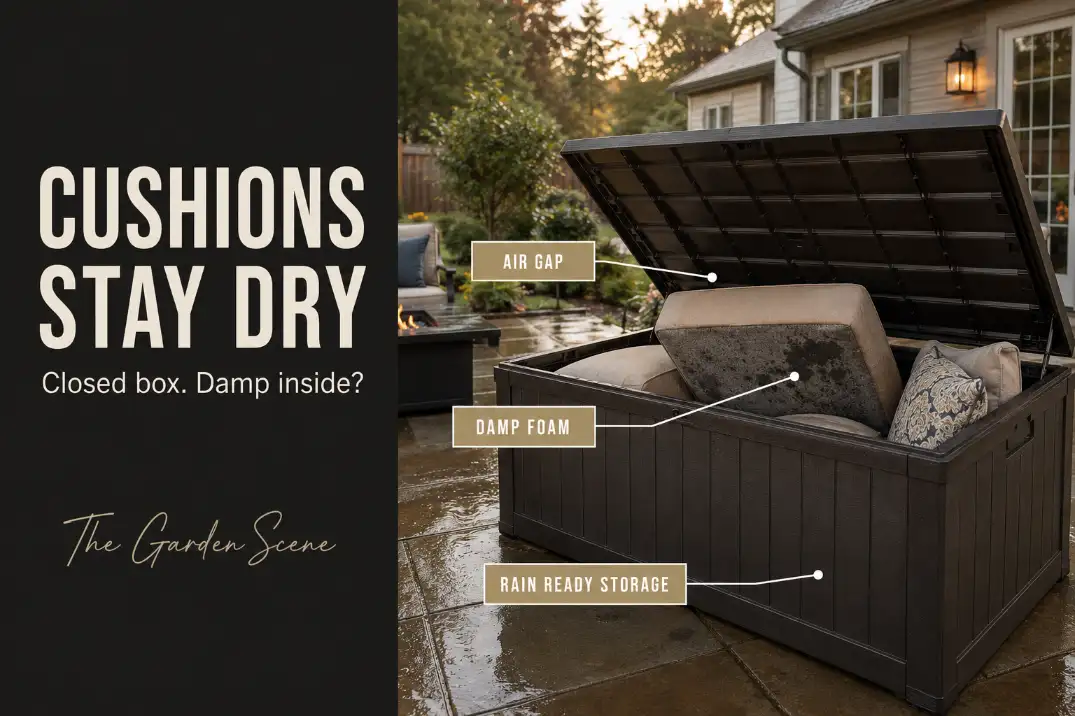
The best outdoor cushion storage for rain and mildew problems is storage that blocks direct rain without trapping yesterday’s moisture.
That usually means a weather-resistant deck box, storage bench, or upright cushion cabinet with enough interior space for cushions to sit loosely instead of being pressed flat.
The first checks are simple: if a cushion still feels cool, heavy, or damp at the seam after 6–12 hours, it is not ready for closed storage. If cushions stay damp for more than 24–48 hours, mildew risk rises sharply. And if the storage box sits where water pools around the base, the box may look protected while the inside stays humid.
The mistake is buying the most sealed container first. For cushion storage, “water-resistant” is often the more honest buying term. Rain needs to stay out, but trapped cushion moisture still needs a way to escape.
BEST FIRST BUY — WEATHER-RESISTANT DECK BOX WITH AIRFLOW SPACE
Best for: everyday patio cushions exposed to spring and summer rain.
Look for: raised interior floor, weather-shedding lid, loose cushion fit, and enough room so cushions are not compressed wet.
Skip if: your patio floods around the box or the box will sit under constant roof drip.
Start With the Moisture Problem, Not the Box Size
A bigger storage box is not automatically better. Outdoor cushions usually fail because fabric, foam, and storage walls stay in damp contact too long. A tight plastic box can protect cushions from a storm and still create the exact mildew conditions people were trying to avoid.
Rain Is Obvious; Trapped Humidity Is the Real Problem
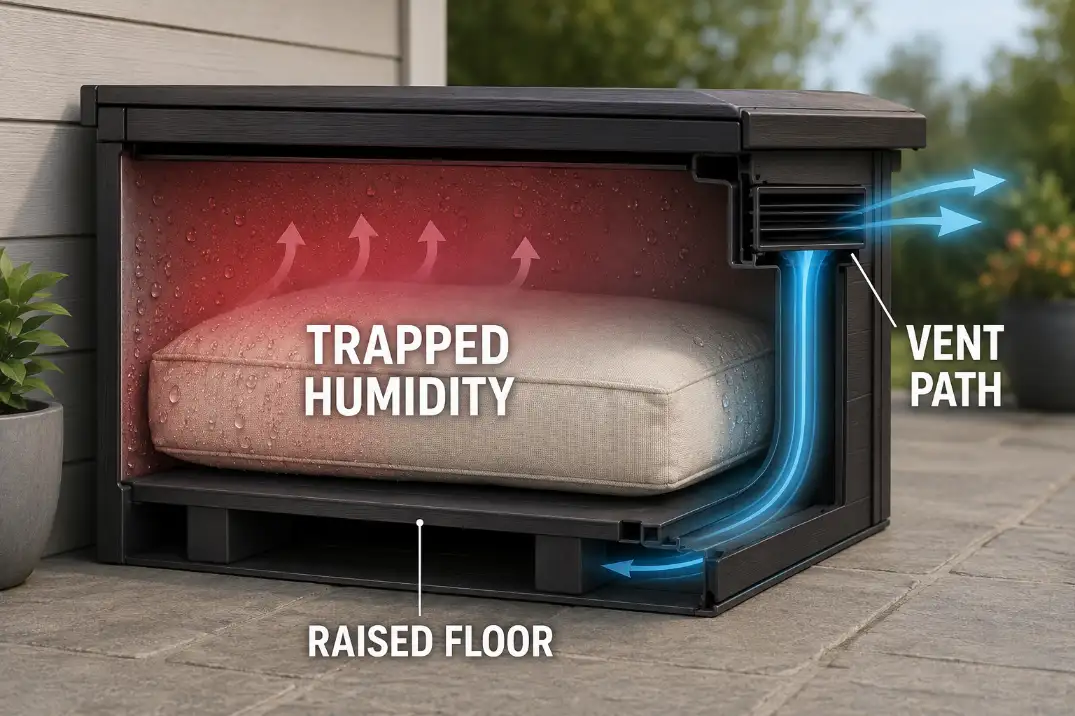
Direct rain is the visible trigger. Trapped humidity is the failure mechanism. In humid states, shaded patios, and coastal areas, cushions can feel dry on top while foam or seams still hold moisture. Closing that cushion inside a sealed box overnight keeps the dampness close to the fabric.
That is why a slightly ventilated, raised, easy-open storage setup usually beats a fully sealed bin for weekly cushion use. The goal is not to make the box airtight. The goal is to keep rain off while preventing damp foam from becoming a closed moisture source.
Loose Fit Matters More Than Decorative Features
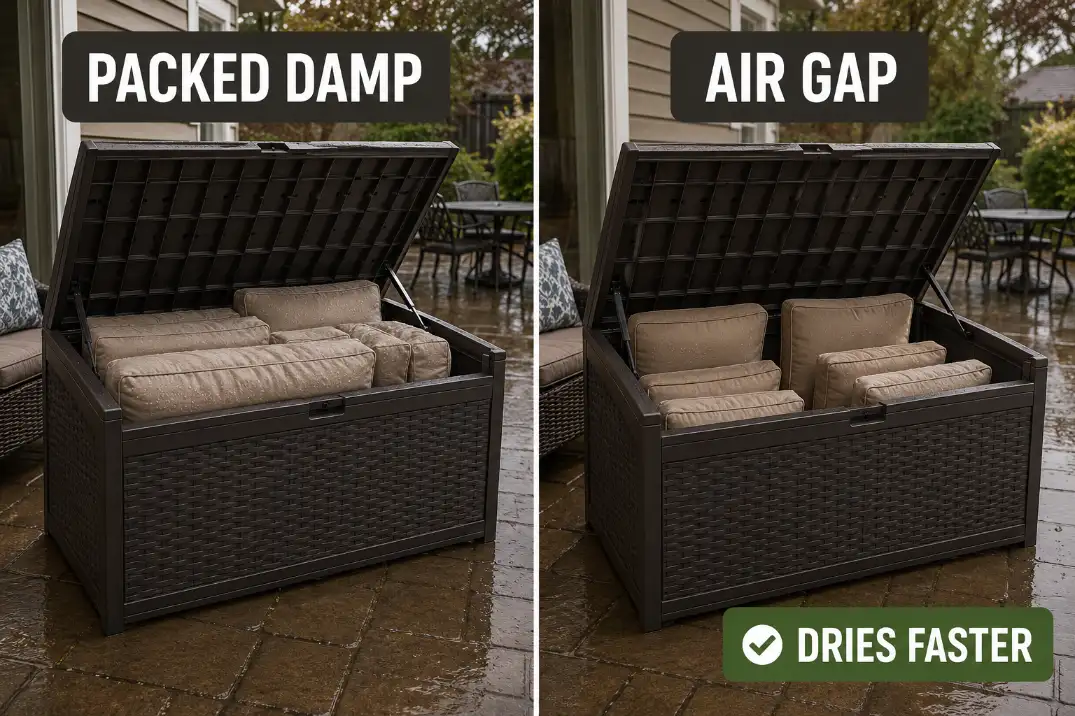
The healthier condition is loose storage: cushions standing upright or stacked with small gaps. The failing condition is a packed box where thick seat cushions are wedged against the lid and side walls.
Leave at least 2–3 inches of spare room across the top or side when possible. That small air gap is more useful than a decorative texture, fake wood finish, or oversized lid hinge that does not change drying behavior.
Choose the Storage Type by Patio Condition
The right product category depends on how the patio gets wet. An open paver patio, a covered porch, a poolside seating area, and a shaded coastal patio do not need the same storage shape.
Deck Boxes Work for Most Patios
A deck box is usually the strongest first choice when cushions need to be stored often and moved quickly. It works well for standard chair cushions, loveseat cushions, and loose pillows that come out several times a week.
For many small patio sets, a 100–130 gallon box is enough. Larger sectionals often need 150 gallons or more. But capacity should not be the only buying decision. A huge box placed in a wet corner can perform worse than a smaller box placed on the driest edge of the patio.
Choose resin or weather-resistant construction, a lid that sheds water instead of holding puddles, and an interior that does not force the lowest cushion to sit flat against a damp floor.
Small Patios Need Storage That Does Not Block Use
If the patio is small, the wrong box can solve mildew and create a new daily-use problem: a blocked door route. That is where a storage bench or compact deck box earns its place.
SPACE-SAVING PICK — STORAGE BENCH OR SMALL DECK BOX
Best for: small patios, apartment patios, and seating zones where storage must also look intentional.
Look for: lift-top access, cushion-safe interior, stable lid, and a footprint that keeps the main walking route open.
Avoid: deep boxes that force you to dig through damp cushions at the bottom.
A storage bench is best for thinner cushions, throw pillows, and daily-use accessories. It is weaker for bulky sectional cushions unless the interior is tall enough to avoid tight compression.
This is the point where storage has to work with the patio layout, not just the cushion pile. If the box steals the route from the back door or makes chairs harder to pull out, compare the placement against best small patio storage solutions before choosing the largest container.
Upright Cabinets Help in Humid, Shaded, or Coastal Areas
If cushions dry slowly even under a covered patio, a low box may be the wrong shape. The upgrade is not just bigger storage; it is vertical storage.
An upright cushion cabinet lets thick cushions stand instead of lying in a damp stack. Vertical storage exposes more surface area, keeps seams from being pressed against the floor, and makes it easier to separate dry cushions from recently used ones.
HUMID-CLIMATE UPGRADE — UPRIGHT CUSHION CABINET
Best for: thick cushions, shaded patios, coastal moisture, and long rainy stretches.
Look for: vertical cushion spacing, protected wall placement, resin or weather-resistant construction, and a raised floor.
Skip if: wind exposure makes a tall cabinet unstable or hard to anchor safely.
Upright cabinets are strongest against slow-drying conditions, not quick afternoon showers. They make the most sense where cushions pick up moisture from dew, shade, or damp air even when rain is not falling.
What Not to Buy First
Some storage products help only after the main moisture problem is solved. Buying them too early can make the setup look organized while the cushions still smell musty.
Cushion Storage Bags Are Not a Cure for Wet Foam
Storage bags are useful for fully dry seasonal storage, moving cushions, or keeping dust off cushions in a garage. They are not the best first buy for cushions that are still damp from rain, dew, or pool use.
A bag compresses fabric and foam together. If the cushion is even slightly damp, that compression can slow drying instead of protecting the cushion. Use bags only after the cushion has dried fully, especially before winter storage.
Furniture Covers Help, but They Do Not Replace Storage
A breathable furniture cover can reduce overnight dew and surprise rain on a seating set. It is helpful when cushions stay on furniture most nights. But it does not fix cushions that are already wet, and it does not help much when water blows sideways into the seating area.
If covers are your main plan, lift them after rain and check the cushion seams. A cover that keeps the top dry but traps damp air underneath still needs a drying step.
Buying Check: If your cushions already smell musty, do not start with cleaner or bags. Start with the storage type that changes how long moisture stays trapped.
Features That Actually Change the Outcome
Outdoor cushion storage has plenty of nice-looking extras. Only a few features really change rain and mildew performance.
Raised Floor
A raised interior floor keeps cushions from sitting directly on the coldest, dampest part of the box. This matters most on patios where water lingers after storms. Even a 1/2-inch air lift is better than fabric lying flat against a wet plastic floor.
If the box floor is flat and low, a removable plastic grate or slatted insert can help, as long as it does not damage the cushion fabric.
Weather-Shedding Lid
The lid should move rain away from the opening. A lid that puddles after a 20-minute storm is a warning sign. Standing water increases seep risk and makes it easier to dump water inside when the lid is opened.
The lid does not have to feel like a cooler. In fact, a box that seals like a cooler may be worse for weekly cushion use if the cushions go in slightly damp.
Easy Access
If storage is annoying, people stop using it. Cushions get left outside overnight, then stored late, wet, and dirty. A box that opens smoothly and sits near the seating area usually protects cushions better than a perfect box placed where nobody wants to walk.
The placement also matters for flow. A storage piece that blocks the path can make the patio feel worse, which is why backyard storage mistakes that hurt patio flow often start with a box that was bought for function but placed like an afterthought.
The Routine That Prevents Mildew
Good storage is part product and part timing. The routine does not need to be complicated, but it does need to happen before the box closes.
Dry Before Closing
After light rain or morning dew, stand cushions upright for at least 1–2 hours before closing them inside storage. After heavy rain, give thick cushions closer to 6–12 hours if the foam feels cool or heavy.
The palm test is better than the eye test. Press the cushion for 5 seconds near a seam. If it feels cool, releases moisture, or feels heavier than usual, store it open-air first.
Open the Box After Wet Weather
During long wet stretches, open the box on the first dry day. Let the inside air out before the next round of rain. This small habit matters in humid climates because the box can hold moisture even when the outside surface looks dry.
Seasonal resets also help. During a spring patio check, inspect the box base, lid, and cushion smell before the first heavy-use weekends. A broader spring patio readiness checklist is a good time to decide whether the old storage setup is still protecting the cushions or just hiding damp items.
Keep Dirt Out of Storage
Mildew gets worse when moisture meets pollen, leaves, food crumbs, and body oils. Brush cushions before storage, especially after outdoor dining or pool use. A 30-second brush-off often prevents more trouble than a deep cleaning after odor appears.
Do not store weekly-use cushions in plastic bags inside the box. Plastic bags can be useful for fully dry off-season storage, but for normal patio use they usually trap the moisture you are trying to remove.
When Better Storage Stops Making Sense
There is a point where a new box will not save the old cushions. The storage system prevents the next failure; it does not always reverse the current one.
Surface Mildew Is Still Recoverable
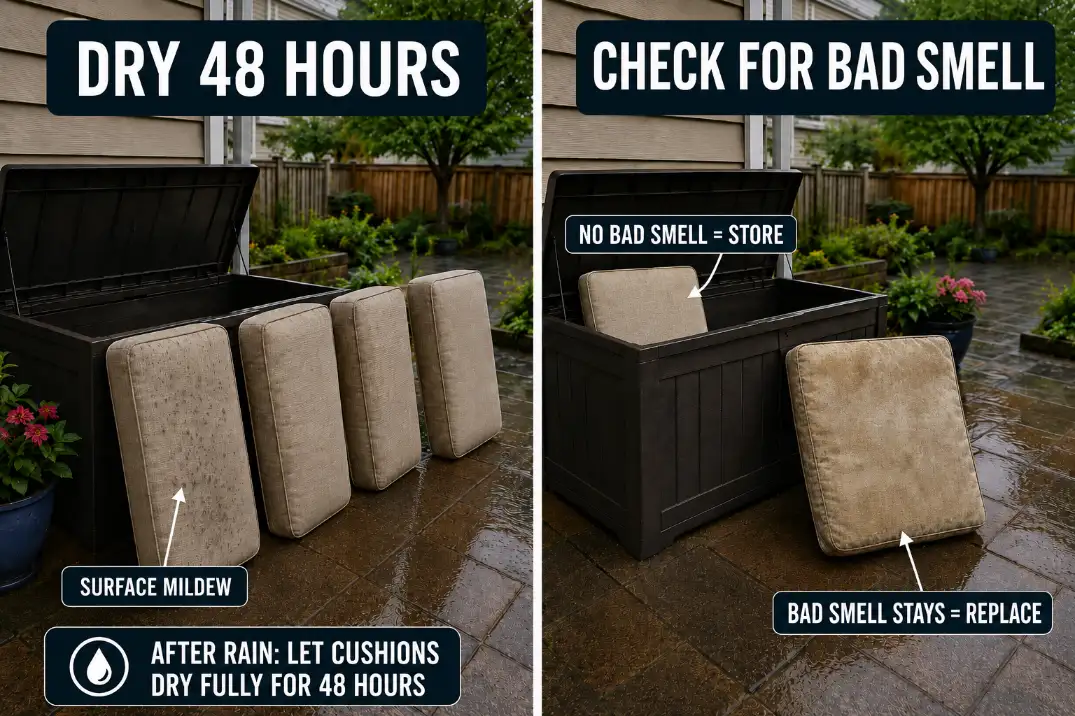
Light spotting on the fabric can often be cleaned if the cushion dries quickly afterward. This is the stage where better storage still changes the outcome. Clean according to the cushion label, rinse lightly if needed, and dry upright with airflow.
Embedded Foam Odor Is Different
If the cushion still smells sour or musty after 48 hours in warm airflow, the foam may be holding moisture inside. Storing that cushion in a new deck box will not fix the odor. It may spread the smell to cleaner cushions.
At that point, replacement cushions may make more sense than another round of cleaning. Upgrade the storage before the new cushions arrive so the same failure pattern does not repeat.
A Wet Patio Base Can Defeat a Good Box
Sometimes the storage box is not the weakest point. The patio surface is. If water pools under or around the box after rain, the storage area sits in a damp microclimate every time the weather changes.
Move the box to the driest practical edge, raise it slightly if the design allows, and avoid roof-drip lines. If puddles keep returning near the house or seating zone, solve the surface pattern first with help from patio drainage layout problems before blaming the storage product.
Best Choice for Most Homes
For most U.S. patios, the best outdoor cushion storage is a medium or large resin deck box with a raised interior base, weather-shedding lid, and enough interior room to avoid tight compression. It should sit where the patio dries fastest, not where water collects.
For small patios, choose a storage bench or compact deck box only if it protects the walking route. For humid, shaded, or coastal patios, an upright cushion cabinet is often the better long-term choice because it stores cushions vertically and reduces damp stacking.
The decision rule is simple: buy storage that keeps rain off without locking moisture in. That is the difference between cushions that survive the season and cushions that smell musty every time the lid opens.
For broader official guidance on mold and moisture control, see the U.S. Environmental Protection Agency.