Last updated: July 3, 2026
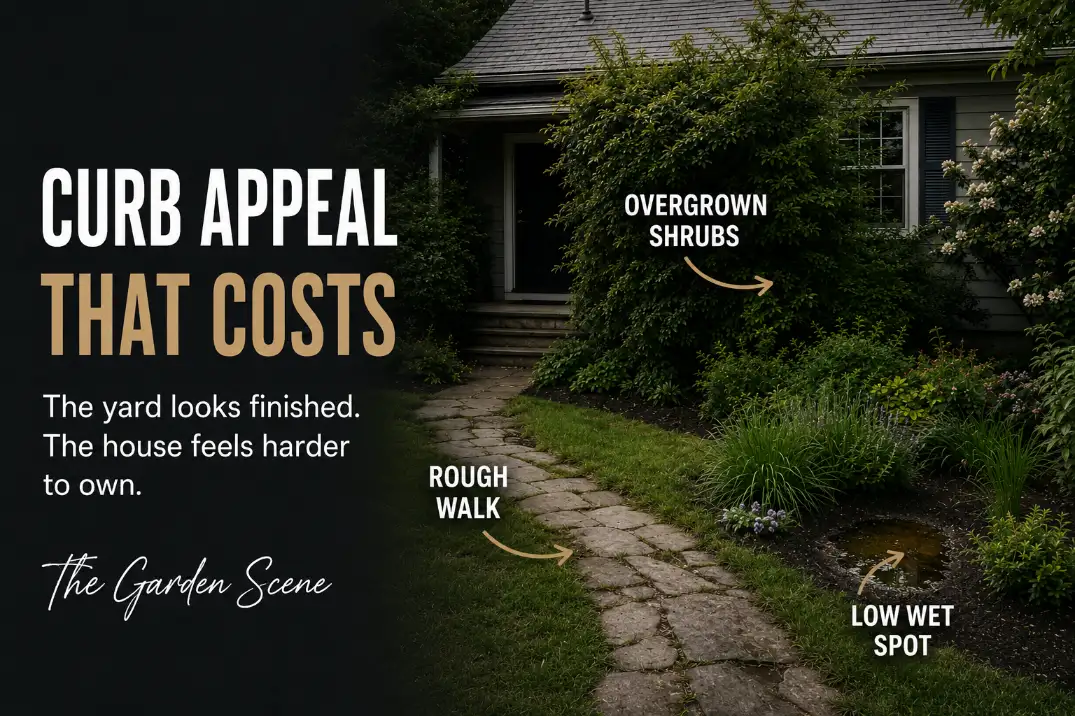
Not every imperfect front yard lowers home value. A thin patch of grass, a tired flower bed, or a missing seasonal planter may look unfinished, but those are not the mistakes that usually make a house feel risky.
The mistakes that matter more are the ones that change how the home is read from the curb. They make the house look neglected, harder to enter, more expensive to maintain, or awkward to live with.
Sometimes the yard is not ugly at all. It may even look “done.” But if it hides the front door, sends water toward the house, squeezes the walkway, blocks utility access, or requires constant trimming just to stay under control, the front yard starts working against the property.
The useful question is not, “Does this yard look pretty?” It is, “What does this yard make the house feel like?”
The Real Mistake Is Letting the Yard Signal Neglect
The value risk begins when the front yard makes people doubt the care of the house before they understand the house itself. A buyer, guest, delivery driver, or neighbor reads the yard first: the entry, the walk, the plant scale, the drainage clues, and the sense of upkeep.
That is why some small flaws matter less than larger design signals. A plain lawn with a clear walk, visible entry, and clean edges can feel stronger than an overdesigned yard that hides the house.
A simple bed can work better than a crowded one if it frames the porch, leaves the windows readable, and does not fight the driveway or walkway.
Use this as the first diagnostic filter:
| Visible front yard issue | What it may signal | Why it can affect perceived value |
|---|---|---|
| Overgrown shrubs covering windows or the porch | Neglect or poor scale | The house looks darker, smaller, and less maintained |
| Cracked, stained, or confusing walk surfaces | Weak entry care | The approach feels rough before the home is even seen clearly |
| Water collecting near beds, walks, or the foundation | Future repair pressure | The yard suggests drainage, erosion, or moisture issues |
| Planting too close to siding, utilities, or mature roots | Poor planning | The yard looks like it will need constant correction |
| Large driveway or awkward access with no clear pedestrian route | Daily-use friction | The front yard feels built for cars, not people |
| Fresh decor placed over unresolved problems | Wrong repair priority | New details can make old problems more obvious |
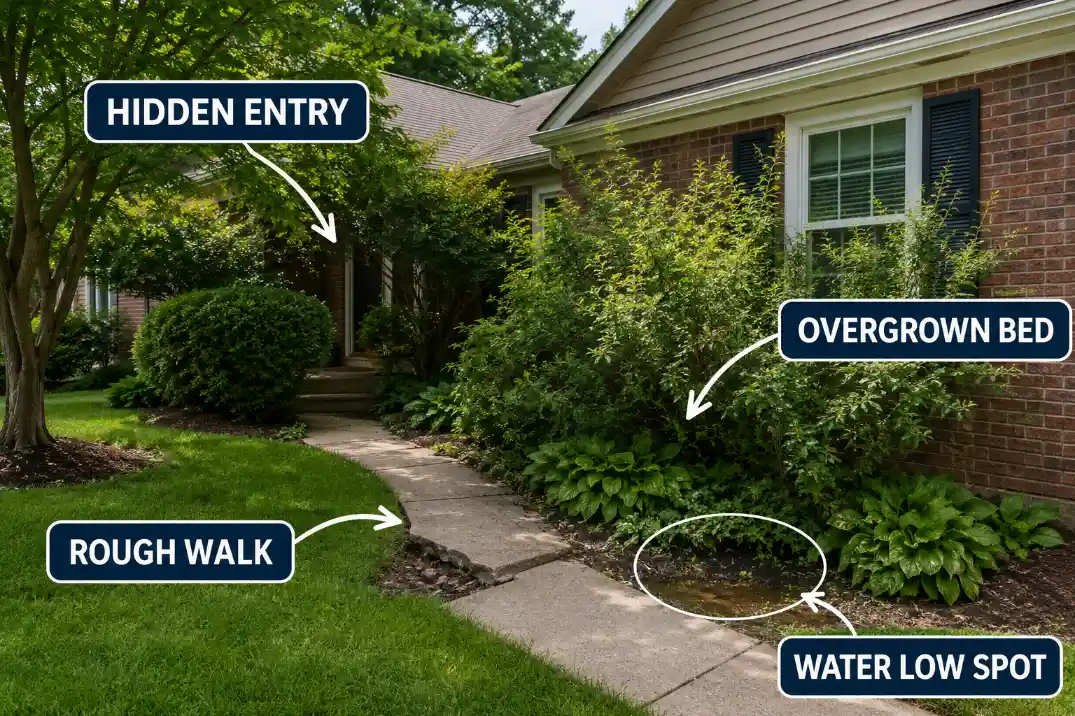
The mistake is not having a yard that needs work. Most yards do. The mistake is letting the front yard make the home feel harder to own.
A missing annual flower is cosmetic. A bed that traps water against the front walk is diagnostic. A shrub that needs trimming is normal. A shrub that blocks the front window, touches the siding, and swallows the porch is a value signal.
That difference matters because the best fix is not always “add more landscaping.” Often, it is remove, open, redirect, simplify, or repair first.
Overgrown Planting That Hides the House Instead of Framing It
Planting lowers perceived value when it stops supporting the architecture and starts erasing it. This often begins as a good choice: a homeowner wants privacy, softness, color, or a mature look. Over time, shrubs reach the window line, the porch edge disappears, and the front door becomes something people have to search for.
That is where planting stops adding curb appeal.
The front yard should help the house read clearly from the curb. The main roofline, entry, front walk, address area, steps, and primary windows should still make sense.
When shrubs cover those features, the home can look smaller, older, darker, or less maintained. It may also suggest that future owners will inherit constant pruning work just to keep the house visible.
Mature planting is not the problem. Misplaced mass is the problem. Layered shrubs can make a home feel established when they sit below window lines, frame the porch, or soften blank walls. The same shrubs become a liability when they press against siding, cover glass, hide steps, or close off the entry.
Stand at the curb and do one simple test: can you identify the front door, the main walk, and the shape of the house within a few seconds? If the planting forces your eye to search, the yard is not framing the home anymore.
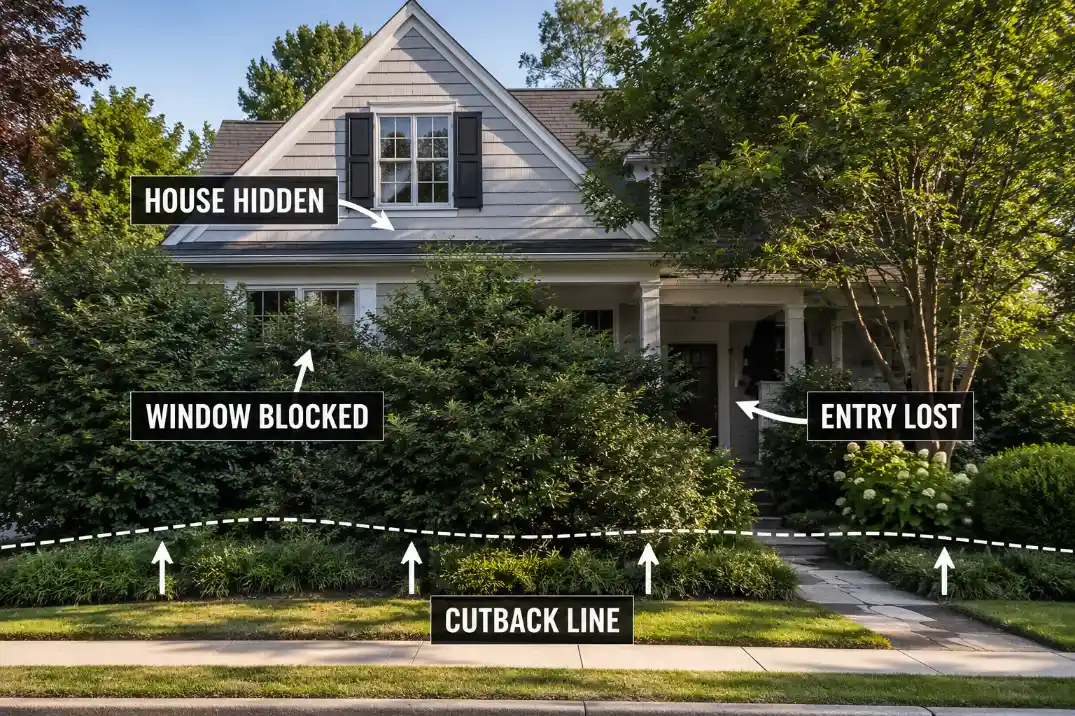
This is also where privacy planting can accidentally work against value. A front yard does not need to expose everything, but it still needs to feel intentional from the street. If the house looks sealed off, the entry feels unwelcoming, and front rooms lose natural light, the yard may be solving privacy while creating a curb-appeal problem.
The stronger fix is not always a full redesign. Sometimes it is editing the plant mass so the house becomes readable again. Keep the structure visible first. Then decide where privacy, softness, or screening actually belongs.
Hardscape Problems That Make the Entry Feel Uncared For
The front walk carries more value weight than many planting beds because it controls the first physical experience of the home. If that route feels broken, squeezed, stained, patched, or unclear, the yard creates doubt before anyone reaches the door.
Cracked concrete, uneven pavers, loose edging, awkward stepping stones, and narrow routes can make the entry feel neglected even when the plants nearby are healthy. The problem is not only appearance. It is the message: basic approach, safety impression, and daily use have not been fully resolved.
A front yard loses value perception when the walkway fails one of three jobs. It should lead clearly to the door. It should feel stable underfoot. It should have enough breathing room around it that guests do not feel like they are squeezing through leftover planting.
When the route is unclear, people drift across the lawn, cut from the driveway at a diagonal, or hesitate at the curb. When the surface is rough, their attention drops to their feet instead of the house. When planting crowds both sides, even a decent walkway can feel like an afterthought.
This is why a simple, well-placed walk often does more for perceived value than another decorative bed. If the entry path is the weak point, treat it as part of the home’s presentation, not just a strip of hardscape.
A front walk that makes the entry feel intentional can correct more curb-appeal tension than adding another layer of seasonal color.
The field test is simple: walk from the street or driveway to the front door while carrying a bag, package, or groceries. If the route feels narrow, indirect, uneven, or visually confusing, the yard is creating daily friction at the exact point where the home should feel most cared for.
Drainage and Slope Problems That Suggest Future Cost
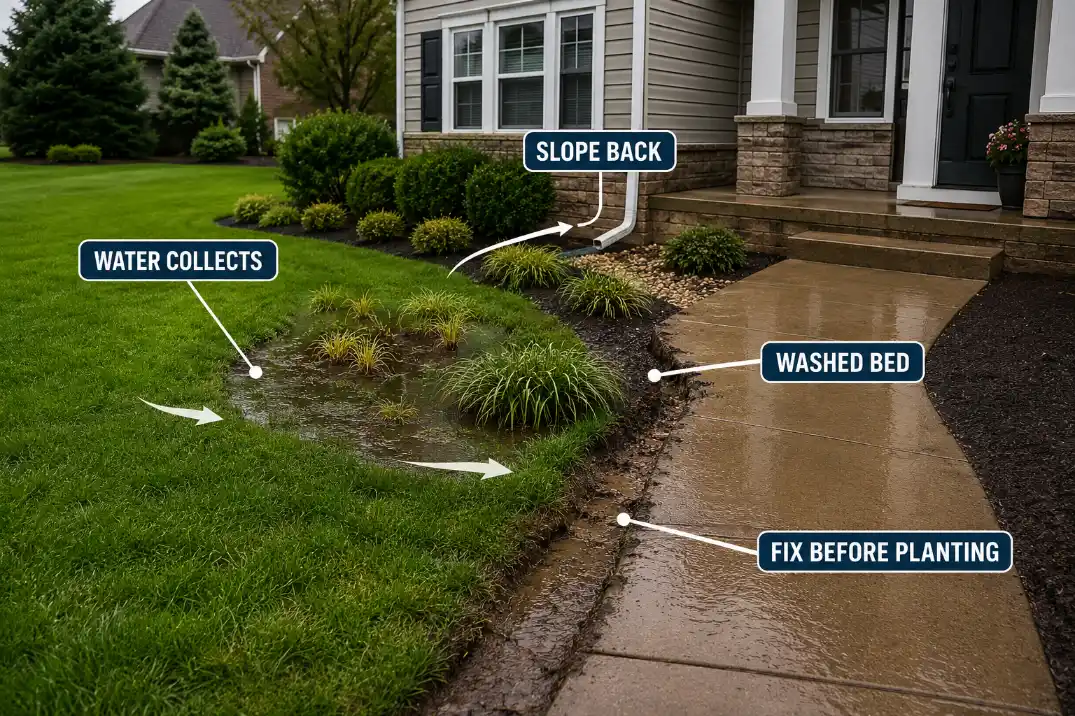
Water problems create a stronger value warning because they imply future work. A front yard with washed mulch, exposed soil, soggy beds, ponding near the walk, or water moving toward the house does not just look messy. It suggests that the landscape is not controlling runoff.
That signal is different from a cosmetic flaw. A faded flower bed can be refreshed. A low area that keeps collecting water after normal rain asks a bigger question: where is the water supposed to go?
Look for the signs after rain, not during the first hour of a storm. Water sitting in a low bed, soil pushed across a walkway, mulch gathered at the driveway edge, or plant decline in one repeated wet zone can all point to drainage behavior that landscaping alone will not hide.
If the yard slopes back toward the house, cuts water across the main walk, or erodes the same bed every season, the front yard is telling a future-cost story.
Fresh mulch is a common wrong fix here. It makes the bed look cleaner for a short time, but if water keeps carrying it away, the new mulch only makes the failure pattern easier to see. New plants can fail the same way when the actual issue is saturated soil, compacted runoff paths, or a slope that keeps pushing water through the bed.
Field judgment:
A messy bed can be cleaned up. A bed that repeatedly washes out is not asking for decoration; it is asking for water behavior to be diagnosed first. When runoff controls the shape of the yard, planting should follow the drainage decision, not lead it.
On sloped properties, the mistake becomes easier to misread. A homeowner may keep replacing plants, edging, or mulch when the deeper issue is grade, flow direction, or erosion pressure.
If the slope affects the whole approach to the house, it is better to treat it as a layout constraint and look at front yard slope problems that affect the whole layout instead of treating each washed-out bed as a separate failure.
The value question is not whether the yard has perfect drainage after every storm. It is whether the visible signs make the home feel like it is already fighting water.
Planting Too Close to Structures, Utilities, or Mature Roots
Plant placement becomes a value problem when it creates a conflict that has to be managed forever. This is not about whether a shrub is attractive. It is about whether the plant is in a place where it will keep fighting the house.
Shrubs planted too close to siding, windows, meters, hose bibs, vents, or utility boxes often look fine when young. The problem appears as they mature.
Branches touch the wall, windows lose light, utility access narrows, and the homeowner has to prune repeatedly just to keep the plant from becoming a problem. From the curb, that reads as poor planning. Up close, it reads as future maintenance.
The same issue happens around mature trees. New planting under established trees can struggle because the root zone, shade, and soil competition already belong to the tree.
When plants fail repeatedly in that area, the front yard can look neglected even if the real problem is placement. That is why planting around mature tree root zones should be treated as a constraint, not a blank bed waiting to be filled.
Utility areas need the same restraint. A front yard can soften a utility box without burying it behind dense shrubs. If access is blocked, the landscape may look more finished for a season, but it creates service friction and future cutting.
The field test here is mature size, not nursery size. If the plant will eventually touch the house, block the window, cover a meter, crowd a walkway, or require constant shaping to stay acceptable, it is not a low-risk planting choice. It is a delayed maintenance problem.
Front Yard Layouts That Make Daily Use Feel Awkward
A front yard can look landscaped and still feel lower value if it fights daily movement. The driveway dominates. The walk begins in the wrong place. The route from car to door cuts across the lawn. Delivery drivers approach from an awkward angle. Guests hesitate because the yard does not clearly say where to go.
That kind of friction matters because it makes the property feel unresolved. A front yard should not only photograph well from the street. It should make arrival, access, and everyday use feel obvious.
A large driveway can create this problem quickly. If the driveway takes over the front yard and there is no clear pedestrian route, the home may feel practical for parking but weak as an entrance. The mistake is not having a large driveway. The mistake is letting the driveway become the only readable design element.
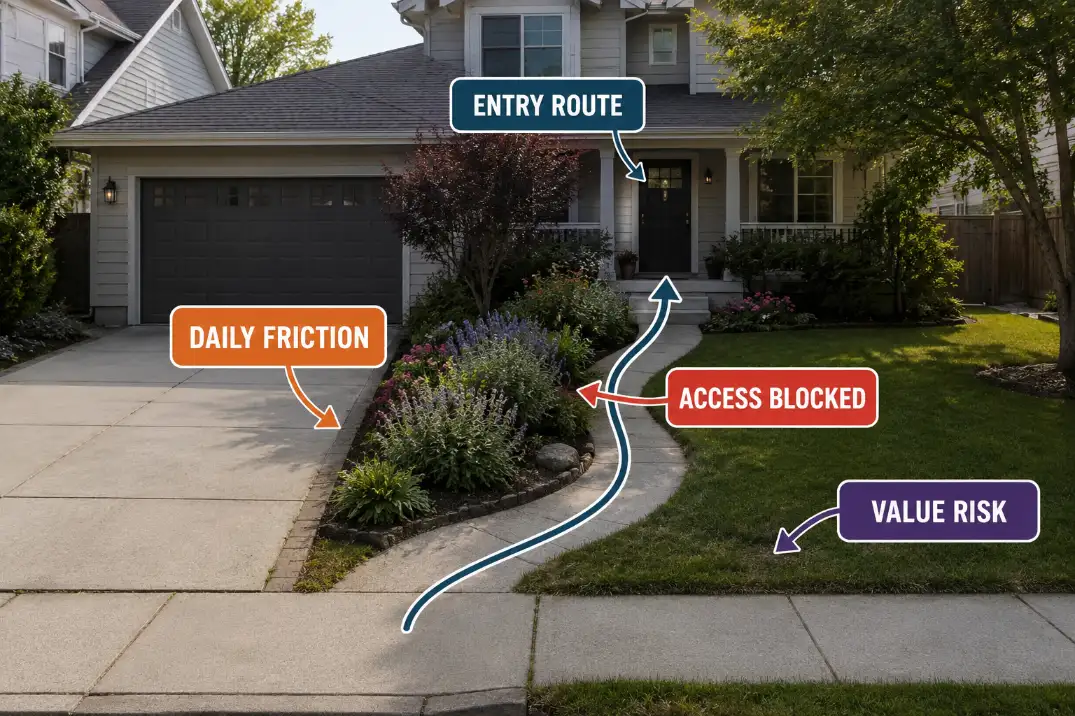
The better test is movement. Can someone park, open a car door, reach the front door, carry a package, roll a trash bin, and find the entrance without cutting through planting or stepping into lawn edges? If not, the landscaping is not supporting the house’s daily function.
This is where front yard design around a large driveway becomes more than a style issue. The yard needs to soften the driveway, but it also needs to clarify movement. Otherwise, the landscape may look busy while the home still feels awkward to approach.
Decorative Fixes That Make the Wrong Problem More Visible
Decorative upgrades backfire when they polish the surface of an unresolved problem. Fresh mulch, new flowers, solar lights, edging, seasonal pots, or a decorative border can improve a yard that is already structurally clear. But they do very little when the entry is hidden, the walk is rough, water keeps moving through the bed, or shrubs are swallowing the house.
In those cases, decoration can make the real problem louder. Fresh black mulch beside cracked concrete draws the eye to the concrete. New flowers under overgrown shrubs make the scale problem more obvious. Solar lights along a confusing route do not make the route logical. Edging around a wet bed only outlines the drainage issue.
The issue is not spending less. It is fixing the wrong layer first.
A cheap fix becomes a value problem when it tries to cover a diagnosis instead of respond to one. There are smart low-cost moves, but the useful ones simplify, expose, redirect, or repair the real issue.
The weak ones add detail to a yard that already feels unresolved. That is the difference between a practical refresh and cheap front yard ideas that cost more later.
Common mistake:
Adding new decorative material before removing the thing that is hurting the yard’s structure. If the front door is hidden, the walk is awkward, or water is moving the mulch, the first improvement should make the problem clearer to solve, not prettier to ignore.
How to Judge Which Front Yard Mistake Matters First
The first mistake to fix is not always the most visible one. It is the one that makes the house feel least cared for, least usable, or most likely to create future work.
Use this field check before adding anything decorative:
- Does the front door read clearly from the street or driveway?
- Is the main walk stable, visible, and easy to follow?
- Does water move away from the house, walk, and planting beds after normal rain?
- Are shrubs clear of windows, siding, utilities, and service areas?
- Does the yard support daily movement from car, sidewalk, mailbox, bins, and deliveries?
- Would a new decorative layer hide the problem, or make the yard genuinely easier to own?
If the answer points to water, access, entry clarity, overgrowth, or maintenance pressure, fix that first. Those are the mistakes that change how the home feels. They make the front yard read as neglected, awkward, or expensive before anyone notices smaller details.
A front yard does not need to be elaborate to protect perceived value. It needs to make the house understandable. The entry should be readable. The planting should frame rather than hide. The hardscape should feel cared for. Water should not appear to be winning. Utility and service areas should be handled without being trapped. Daily movement should feel obvious.
When those pieces are working, even a simple front yard feels stronger. When they are failing, more landscaping usually just gives the wrong problem a cleaner border.
For a neutral planting reference, University of Minnesota Extension notes that trees and shrubs should be selected for site conditions and mature size: Planting and transplanting trees and shrubs.