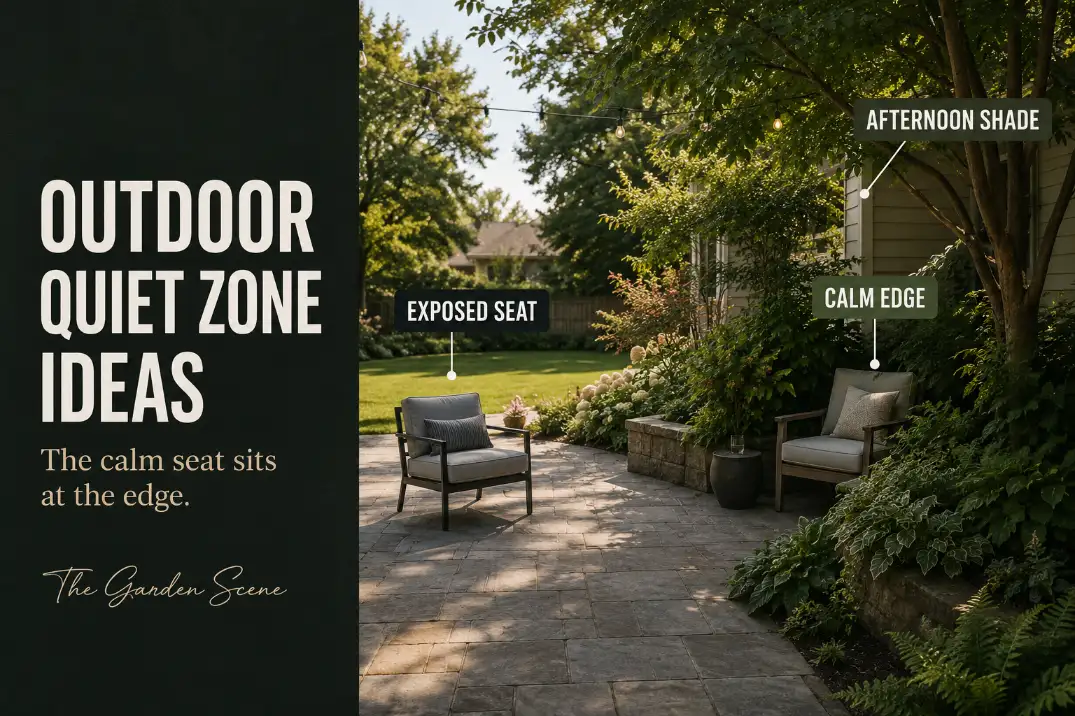
A good outdoor quiet zone usually starts with a protected edge, not a prettier chair. Before buying furniture, check where shade lands between 2 p.m. and 5 p.m., whether a seated person is exposed to a street or neighbor window, and whether two people can talk comfortably from about 6 feet apart without raising their voices.
An outdoor quiet zone is a small seating pocket where shade, privacy, sound, and access work together so the seat feels restful instead of exposed.
This is different from a general patio layout problem. A patio can have enough walking space and still fail as a quiet zone.
If a seat gets abandoned after 10 minutes, needs constant umbrella adjustment, or makes people feel watched, the symptom is not bad decor.
The mechanism is exposure: too much sun, too many sightlines, too much sound, or no protected back.
Not Every Seat Feels Restful
The real signal is whether people stay
A quiet zone is not proven by how the chair looks in the corner. It is proven by whether someone naturally remains there. A useful test is to sit in the spot for 15 minutes during the time you expect to use it.
If you start shifting the chair, squinting, checking sightlines, or moving back toward the house, the location is already telling you what is wrong.
The most common mistake is treating comfort as a furniture problem first. A deeper cushion, larger lounge chair, rug, or fire bowl will not fix a seat that sits in glare, heat, traffic, or visual exposure.
Comfort begins with pressure removed
A restful seat needs four things before style matters: a protected back, tolerable shade, enough clearance, and a sound level that does not keep pulling attention away.
Leave at least 30 inches for a nearby walking route and about 24 inches beside a chair if someone needs to pass without brushing the furniture.
If the chair looks comfortable but feels awkward to get in and out of, the quiet zone will not become a habit.
For small patios where the furniture itself starts creating pressure, Outdoor Seating Height Mistakes is a useful companion because seat height can quietly decide whether a corner feels relaxed or forced.
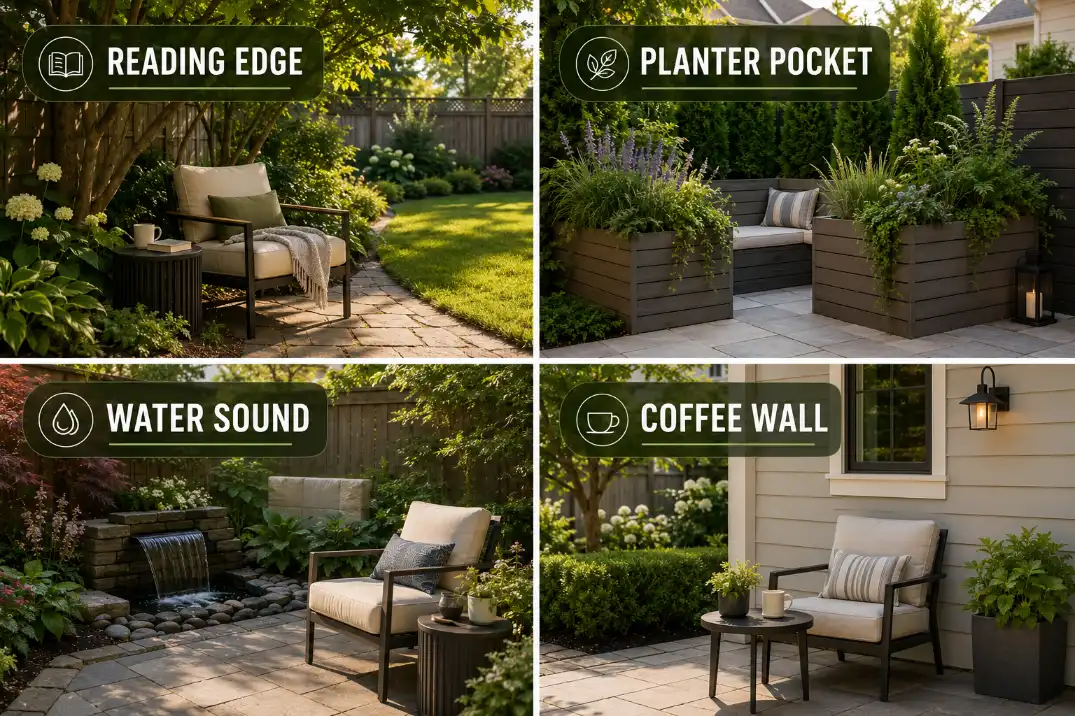
Choose the Quiet Zone Type First
Reading edge
A reading edge works best where the chair has shade from the side or above, not only from behind. The seat should face a calmer view and avoid glare from pale paving, white fences, or reflective windows.
If the book or phone screen is hard to see after 5 minutes, the issue is not the chair. It is the light angle.
Planter privacy pocket
A planter pocket is useful when one specific sightline ruins the seat. This might be a neighbor window, driveway angle, sidewalk view, or open side yard.
The goal is not to build a wall. The goal is to interrupt seated eye level with a planter, tall grasses, shrubs, or a partial screen placed exactly in the view path.
Water-sound corner
A water-sound corner only works when the sound is close enough to the seat. A small fountain 3 to 6 feet away can soften light traffic or nearby conversation. A fountain across the yard usually becomes decoration, not useful sound masking.
House-wall coffee seat
A seat near the house can be more successful than a distant garden corner if it has quick access, morning light, and a protected back. This is often the best quiet zone for coffee, short breaks, or evening air because it does not require crossing the yard.
Side-yard reset bench
A narrow side yard can work as a quiet pause if it has shade, privacy, and a clear walking line. It fails when the bench competes with trash bins, hoses, AC equipment, or gate swing. In that case, the side yard is still a utility corridor, not a retreat.
Find the Calmest Edge
Edges usually beat centers
The middle of a patio looks flexible, but it is often the least restful place to sit. It receives more sun, more crossing traffic, more direct views, and more sound from every direction. For a quiet zone, openness is not automatically comfort.
A stronger location usually sits along an edge: near a planting bed, under a tree canopy, beside a low wall, along a fence line, or near the house where the back feels anchored. The goal is not to hide. The goal is to reduce the number of directions your body has to monitor.
Keep one side open
A quiet zone should feel protected, not boxed in. If shrubs, screens, walls, and furniture close the seat on every side, the space can feel trapped instead of restful.
The better formula is one protected back, one softened side, and one open view. In many suburban yards, that means placing the seat with its back to the house, fence, hedge, or planter while facing lawn, sky, garden, or a softened view across the yard.
Layout Check: If the seat has to be dragged forward every time someone sits down, the quiet zone is too tight. Fix the clearance before upgrading the furniture.
Shade Before Furniture
Afternoon shade decides real use
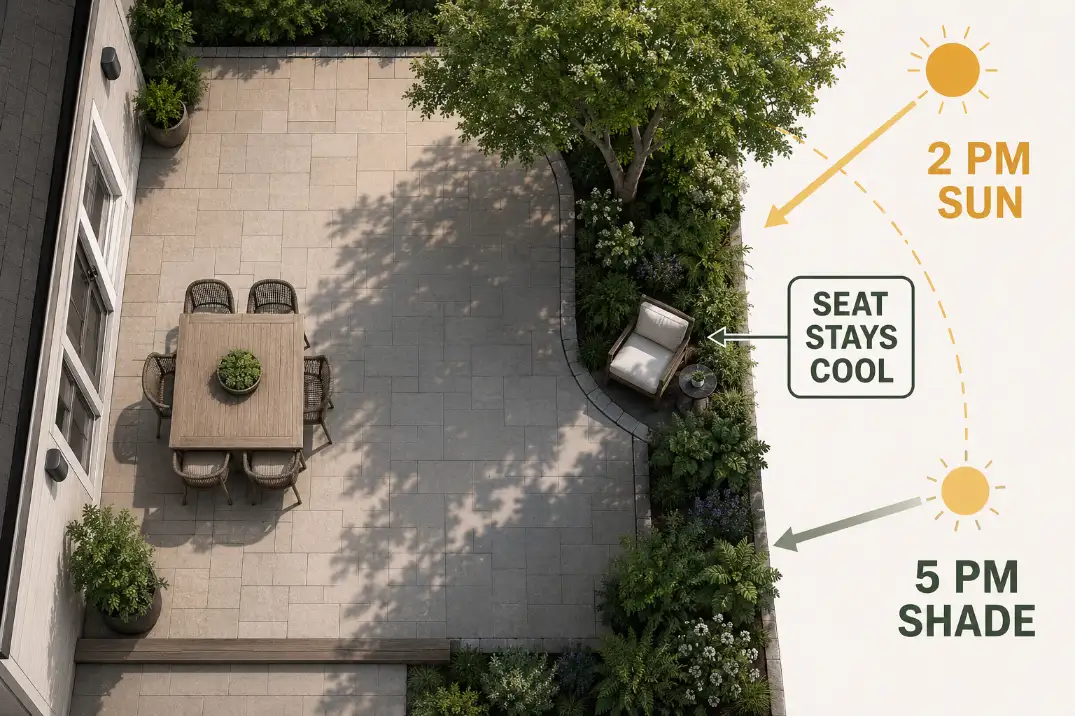
Morning shade is pleasant, but afternoon shade decides whether the space works in summer. The uncomfortable window in many U.S. yards is not 9 a.m.; it is 2 p.m. to 5 p.m., when paving, walls, and furniture have absorbed heat and the sun starts hitting seats from the side.
Mark the shade at 2 p.m., 4 p.m., and 6 p.m. A quiet zone that stays shaded for at least 2 hours during the time you actually use it will usually outperform a prettier chair that only has early-day shade.
If the quiet zone needs movable shade rather than a permanent structure, Best Patio Umbrellas for Shade on Small Backyards can support the buying decision without turning the whole layout into an umbrella problem.
Avoid the shaded heat pocket
Shade can still feel bad when air is trapped. A tall solid screen, deep corner, and dark paving can create a warm pocket even when the chair is technically out of direct sun. This is why a fully enclosed “cozy corner” sometimes fails by midafternoon.
Healthier conditions feel shaded but breathable. Failing conditions feel still, heavy, and warm after 5 to 10 minutes. In hot climates, a 3-foot breathing gap behind a screen or a looser planting layer can matter more than adding another privacy panel.
Privacy Without Closing In
Block the sightline, not the whole yard
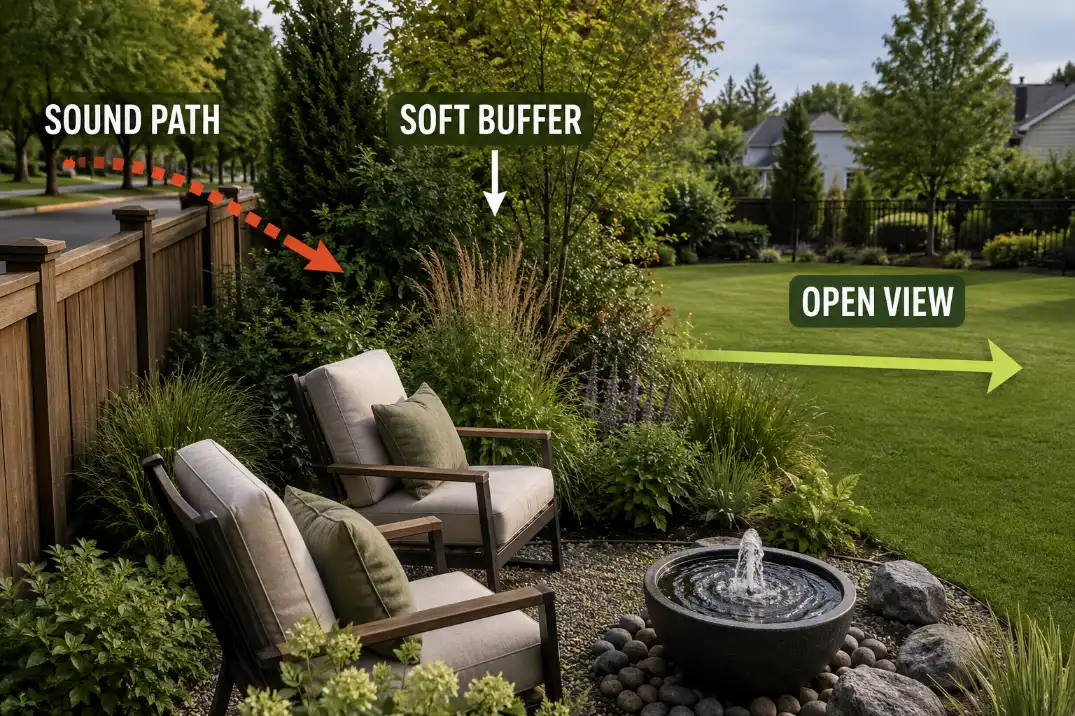
Privacy for a quiet zone is usually about one or two sightlines, not total enclosure. The mistake is building a wall around the seat when the real problem is a neighbor window, sidewalk view, driveway angle, or second-story line of sight.
A 4- to 6-foot planting layer or partial screen may be enough when it interrupts seated eye level. Taller is not automatically better.
Many homeowners overestimate height and underestimate placement. An 8-foot screen set outside the view path may block less than a 5-foot planter placed directly between the seat and the problem.
For a seating-focused privacy approach, Patio Privacy Ideas for Secluded Seating connects naturally because it treats privacy as something the body feels, not just something the yard has.
Use soft boundaries first
Plants, slatted screens, tall planters, and partial panels usually work better than solid walls for a quiet zone. They create a sense of backing without making the corner feel shut down.
The standard fix stops making sense when privacy features reduce airflow, crowd the walking route, or make the chair face a blank barrier. At that point, the screen is solving visibility while creating a new comfort problem.
| Quiet zone condition | Healthier signal | Failing signal | Better first move |
|---|---|---|---|
| Shade | Seat stays comfortable for 20+ minutes | Seat feels hot after 5–10 minutes | Move into afternoon shade |
| Privacy | One clear sightline is softened | Space feels boxed in | Shift screen into the exact view line |
| Noise | Conversation works at 6 feet | Voices rise or pauses feel awkward | Move behind mass or add masking sound |
| Clearance | 30 inches of route stays open | Chair blocks normal movement | Reduce furniture size or shift edge |
| Mood | Seat has a protected back and open view | Seat feels exposed from all sides | Anchor one side with planting or wall |
Noise Decides the Mood
Constant sound matters more than occasional sound
A quiet zone does not need silence. It needs sound that does not keep pulling attention away. Occasional kids, dogs, or a neighbor gate are usually less damaging than steady road hum, HVAC cycling, pool equipment, or a dining area where chairs scrape and conversation carries.
The practical threshold is simple: if two people sitting about 6 feet apart naturally raise their voices, sound should be treated as a layout issue, not background atmosphere.
Moving the seat 10 to 20 feet farther from the noise source, placing it behind a fence, hedge, wall, garage corner, or dense planting mass can change the mood more than adding decorative accessories.
For broader sound control around a yard, Outdoor Noise Buffer Ideas is a closer support article because it separates blocking, absorbing, and masking instead of treating all noise fixes as the same.
Water helps only when the layout is already close
A small fountain can help, but it does not erase road noise. It gives the ear a more pleasant nearby sound to hold onto. That distinction matters because water features are often overestimated.
Start with seat position first. Then use water if the remaining sound is moderate and close-range. A fountain placed 3 to 6 feet from the seat can soften light background noise.
A fountain placed 15 feet away on the far side of the patio is more likely to look nice than change the experience.
When water sound is part of the plan, Outdoor Water Features for Yard Noise can help decide whether masking is realistic or just an expensive distraction.
A Place That Invites Staying
Make entry easy
A quiet zone should feel separate without feeling inconvenient. If it requires squeezing past a grill, stepping over a hose, crossing wet lawn, or dragging a chair into place, people will use it once and stop.
Keep the approach simple. A 30- to 36-inch route is enough for most quiet seating corners, but the path should feel intentional. Loose gravel, stepping stones spaced too far apart, or a chair set partly in lawn can make the zone feel temporary.
Keep the setup small on purpose
The best quiet zone is often one chair and one small table, or two chairs angled slightly apart. A large conversation set can turn the area into another social zone, which defeats the purpose.
This is where less is not a compromise. It is the function. A stable surface for a drink, a comfortable seat, and one useful shade or privacy layer can outperform a full lounge set if the location has calm.
Add evening use carefully
Lighting should help people reach the quiet zone, not put the seat on display. Use low, warm, indirect light near the route or table edge. Avoid bright overhead fixtures aimed into the seating pocket.
A quiet zone that works in daylight can be ruined at night by glare, visible cords, or a path that feels uncertain.
If the seat is near a busy street or exposed frontage, Patio Seating for a Busy Street adds a more specific angle because visual exposure and noise usually need to be solved together.
Questions People Usually Ask
Can a quiet zone work in a small backyard?
Yes, but it needs sharper editing. In a small yard, one protected edge, one compact seat, and one useful shade source are stronger than trying to create a full outdoor room. The mistake is making the quiet zone too complete.
Should the quiet zone be far from the house?
Not always. A quiet corner 8 feet from the back door may get used more than a prettier spot 40 feet away if the farther spot feels exposed, hot, or inconvenient. Distance only helps when it improves shade, sound, privacy, or view.
Is a fence the best quiet zone fix?
Only when the fence blocks the actual sightline or sound path. A fence that sits behind the problem may change the look of the yard without changing the seat.
Start by sitting in the spot and identifying the exact pressure before adding a permanent barrier.
For broader official context on outdoor environmental sound, see the EPA noise level guidance.