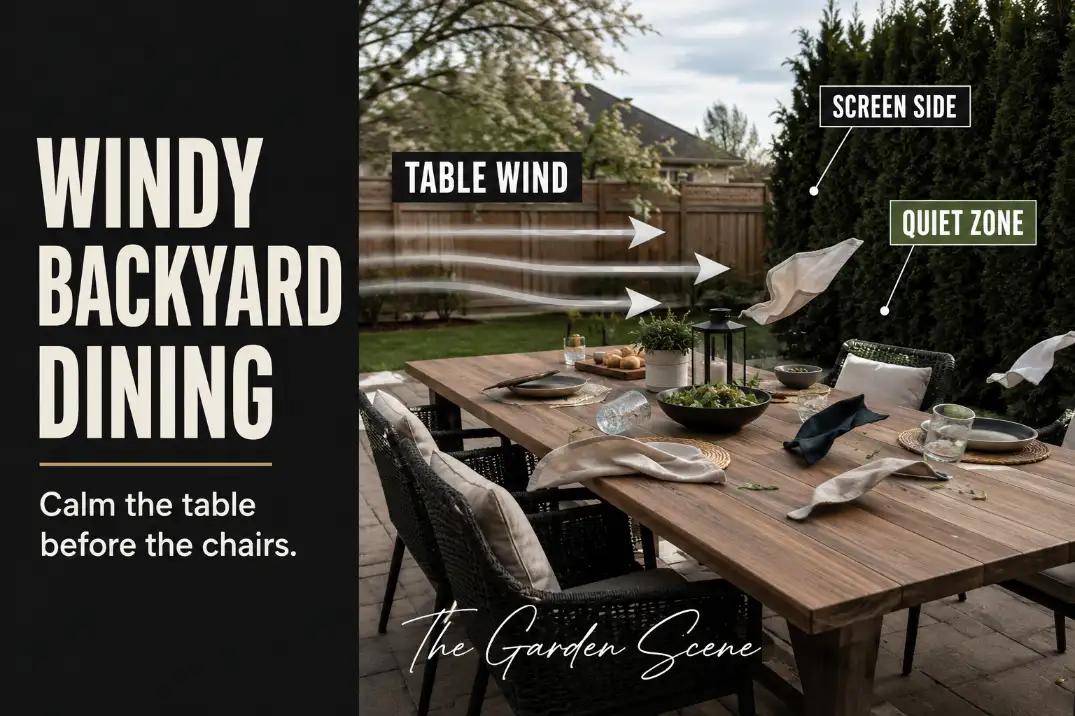
Outdoor dining in a windy backyard usually fails at the table before it fails at the seat. If napkins move, glasses need constant holding, or serving dishes feel exposed within the first 5 to 10 minutes of eating, the problem is not just “too much breeze.” The table is usually sitting in the wind lane before the air has been slowed.
Best quick fix: move the dining table out of the direct wind path first, then place a screen on the windward side before air reaches the chairs and tabletop.
If loose napkins, paper plates, or light cups move repeatedly within 5 minutes, treat the tabletop as exposed even if the chairs still feel comfortable.
Start with three checks: where the wind first enters, whether the table surface is exposed at roughly 28 to 30 inches high, and whether one exit side still has open air.
A seating area can tolerate some shoulder-level breeze, but dining becomes stressful when steady 13 to 18 mph wind starts lifting loose paper, or when 19 to 24 mph periods make umbrellas, light furniture, and table items harder to manage.
Dining Fails Before Seating Does
The table surface is the real test
A windy lounge chair can still feel usable if people lean back, lower their profile, or turn slightly away from the breeze.
Dining is less forgiving. Plates, glasses, napkins, serving bowls, condiments, and tabletop candles all sit in a flat exposed plane.
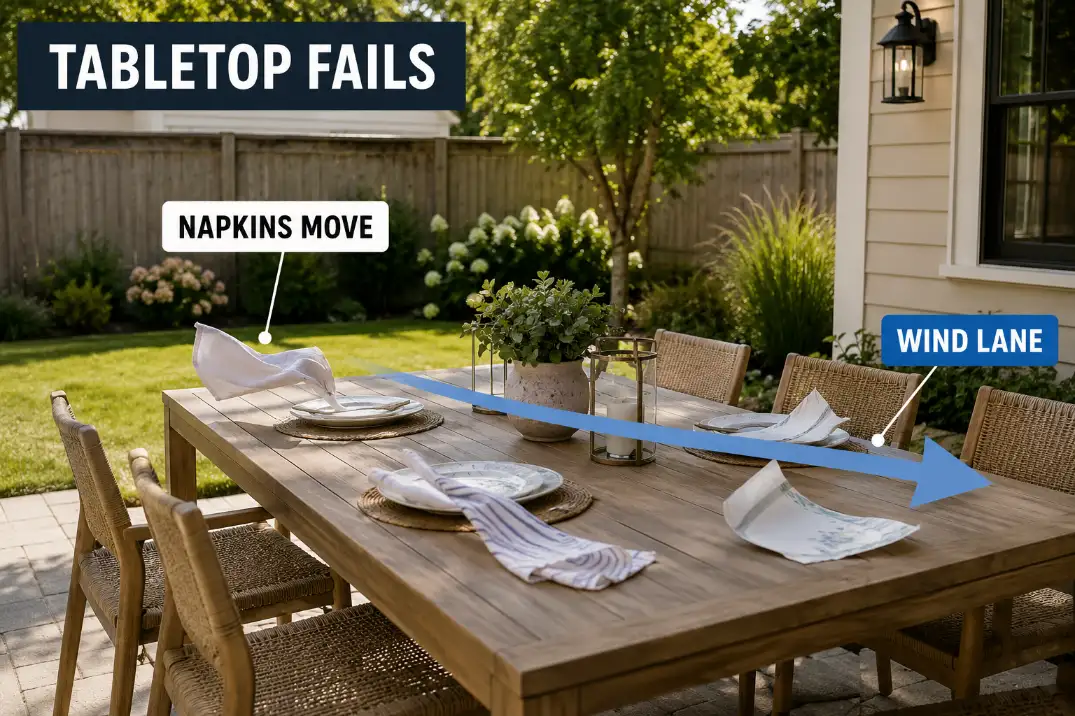
That is why the first symptom is often not discomfort in the chair. It is the restless table: napkins sliding, paper plates lifting, drinks needing to be held, and serving utensils drifting toward one side.
When that happens, the dining zone is already failing even if the chairs still look correctly arranged.
A simple test works better than guessing. Set a napkin, an empty paper plate, and a lightweight plastic cup on the table during the breeziest part of the day.
If two of the three move repeatedly within 5 minutes, the table is in a wind path, not just a lively backyard.
Chair movement and tabletop movement mean different things
This distinction matters because the fix changes. If chairs slide but the table surface stays calm, the furniture is probably too light or too smooth on the patio surface.
If the tabletop fails first, the main problem is airflow placement. If the umbrella shakes before anyone sits down, a shade device is being asked to solve a wind problem.
People often judge the layout by standing beside the table. That misreads the issue. Wind at standing height is not the same as wind across a dining surface.
A 6-foot-tall person may feel only a passing breeze while the tabletop catches a concentrated stream coming between a fence gap, house corner, open side yard, or lawn edge.
This is why simply buying heavier chairs often disappoints. Heavier chairs reduce movement, but they do not calm the meal surface. If the table is still exposed, the dining experience still feels unsettled.
For yards where the wind lane affects the whole patio layout, the decision logic is closer to Windy Patio Layout Ideas than to a furniture-style problem.
The Table Needs the Quietest Zone
Move the meal before adding products
The best first fix is not usually a taller screen, a bigger umbrella, or heavier furniture. It is moving the dining table into the quietest existing zone of the backyard.
Look for the place where wind has already been slowed by the house wall, fence return, planting mass, garage side, or partial corner. In many backyards, this calmer pocket is only 3 to 6 feet away from the current table position.
That small shift can matter more than adding a decorative screen in the wrong place.
A better dining position usually has three traits: the table is not centered in the open wind lane, the windward side has some interruption before air reaches the chairs, and at least one exit side remains open so air can leave instead of swirling.
Test three positions before committing
Do not judge the table from one calm moment. Test the layout for 10 to 15 minutes during the hours you actually eat, usually late afternoon or early evening.
Try three positions if the patio allows it. First, test the visual center of the patio. This often looks best but performs worst. Second, test the house-side calm zone, even if it feels slightly off-center.
Third, test a fence-return or screen-side position where wind is slowed before it reaches the table.
The winner is not the spot with no air movement. The winner is the spot where the tabletop stays calm while the patio still feels open.
Pro Tip: Test the table location with only the table and two chairs first. If the test position works, then bring the full set back in.
The exposed center is often overvalued
The middle of a patio feels balanced, but it is often the worst place for outdoor dining in a windy backyard.
Open centers collect cross-breeze from fences, side yards, lawn openings, and house corners. A centered table can look intentional and still perform badly.
A calmer dining position may look slightly offset. That is not a design failure. For a 6-person dining table, shifting the whole set 2 to 4 feet toward the house-side calm zone can reduce the exposed tabletop area without making the patio feel cramped.
Still, wind control should not erase function. Keep enough pull-out space behind chairs and do not push the table so far into a corner that people have to squeeze around it.
For dining clearance, Patio Dining Set Space is the better related check because a calm table still needs usable chair movement.
Screens Behind the Chairs
The screen belongs before the seating zone
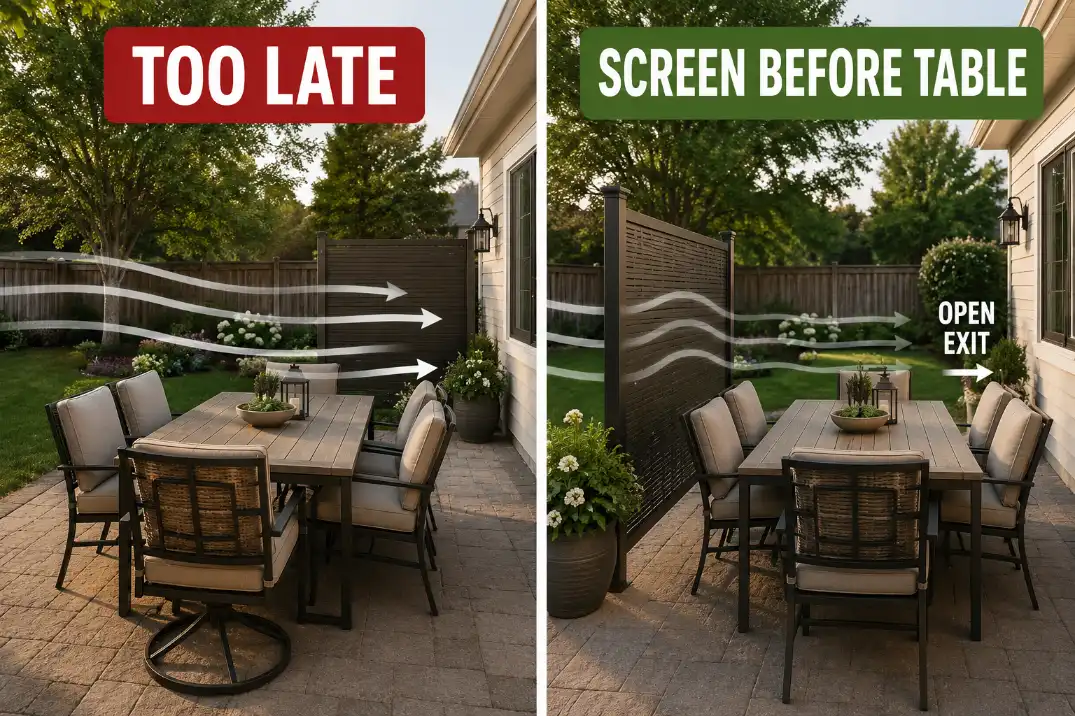
A wind screen works best when it catches air before the air reaches the dining zone. That usually means the screen sits on the windward side, slightly behind or beside the chairs, not directly tight against the table.
The useful height is usually seated-height protection, not full enclosure. A screen that protects roughly the chair-back and tabletop zone often does more for dining comfort than a tall solid wall that traps heat or creates rebound. For many patio dining setups, a 4- to 6-foot screen is enough if it is placed in the first-hit zone.
The common mistake is putting the screen where it looks neat instead of where the wind arrives. A screen on the wrong side may add privacy while doing almost nothing for dinner.
Choose the screen by wind pattern, not appearance
A retractable side screen makes sense when wind comes from one repeatable side and there is a house wall, post, or solid mounting point.
A weighted freestanding screen is better when drilling is not possible or the layout needs seasonal adjustment. A mesh or semi-open screen works when the goal is slowing air without making the dining corner feel sealed.
A solid panel should be used more carefully. It may help when privacy and wind control are both needed, but it should not close every exit path around the table.
If air has no soft way to leave, it can curl around the edge or rebound into the meal zone.
This is why product choice should follow placement. If the yard has repeated side gusts, Best Patio Wind Screens is the closer decision than a general privacy screen.
| Dining symptom | Likely mechanism | Best first fix | Usually wasted fix |
|---|---|---|---|
| Napkins move within 5 minutes | Tabletop is in the wind lane | Shift table or screen the windward side | Heavier chairs only |
| Umbrella shakes during dinner | Shade device is catching side wind | Calm the wind path or close the umbrella | Bigger canopy |
| Serving trays feel exposed | Buffet edge sits in crosswind | Move serving area into the protected pocket | More table weights |
| Chairs slide but plates stay calm | Furniture stability issue | Use heavier or better-footed chairs | Rebuilding the whole layout |
| Screen adds privacy but not comfort | Screen is on the wrong side | Move protection before the table | Taller screen on calm side |
Serving Areas Need Shelter
The buffet edge matters more than it looks
A meal zone can feel calm at the chairs and still fail at the serving edge. This happens when a grill cart, side table, buffet tray, or drink station sits in the open wind path while the dining table is slightly protected.
Serving areas are especially vulnerable because people use them with one hand, lift covers, pour drinks, set down utensils, and move food between zones.
A 15 mph breeze across a dining table is annoying. The same breeze across a paper towel roll, salad bowl, foil tray, or stack of plates can make the whole setup feel chaotic.
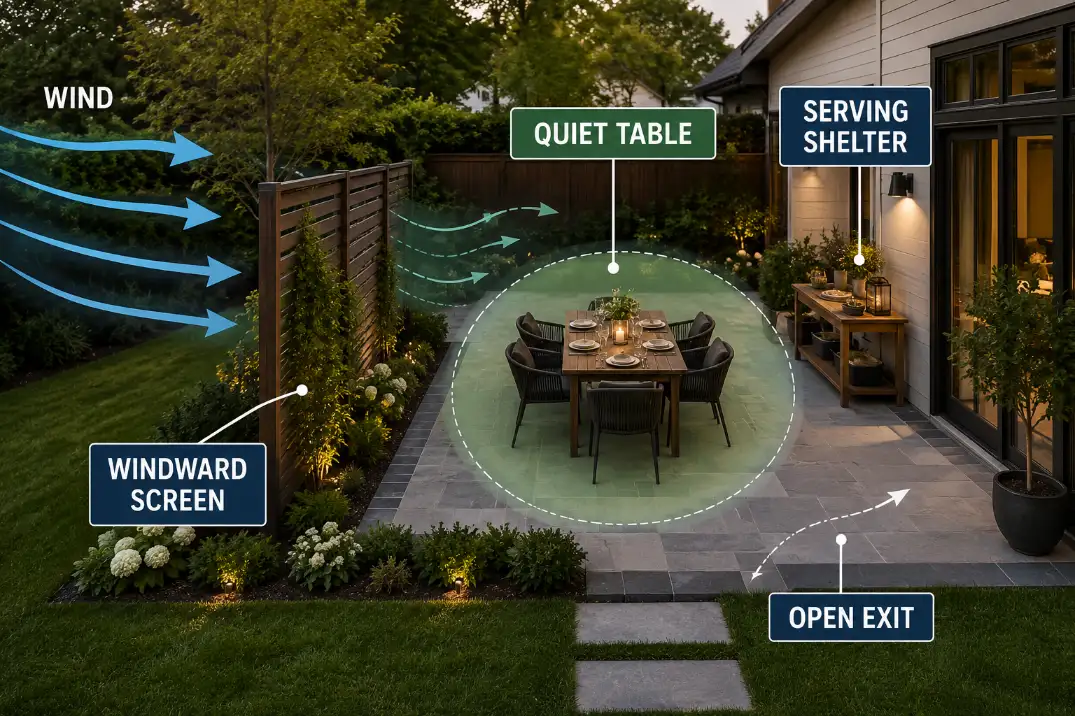
The best serving position is usually 2 to 5 steps from the table, on the same calm side, with the wind hitting a screen, wall, or planting mass before it reaches the food.
Too far away and the meal feels scattered. Too exposed and the table may be calm while serving still feels stressful.
Do not move the whole table for a serving problem
If the serving station fails while the table feels calm, do not move the dining table again. Move the serving edge into the same protected pocket.
That one distinction prevents a lot of unnecessary rearranging. The symptom is at the serving surface, not the entire dining zone. A small side table tucked behind the windward screen may solve the issue better than relocating the full dining set.
Cooking wind and dining wind are not identical
Backyard cooking often needs ventilation and smoke movement. Outdoor dining needs steadiness. Those are related but not identical goals.
A grill should not be boxed into a windless corner, especially under a covered patio or near combustible surfaces. A dining table, by contrast, benefits from a calmer pocket.
When both functions share one patio, separate them by task: let the cooking zone breathe, then protect the meal zone from the direct crosswind.
For combined patios, Patio Layout for Grill, Prep, and Dining is the more complete layout reference.
Lightweight Furniture Causes Stress
Weight fixes movement, not airflow
Lightweight furniture is not the root cause of a windy dining zone, but it can make the symptoms louder. Thin aluminum chairs, folding bistro chairs, plastic side tables, light umbrellas, and hollow outdoor accessories all react quickly when gusts pass through.
This is where readers often overestimate furniture weight. A heavier dining set can make the patio look more stable, but if the wind still crosses the tabletop, the meal still needs management. Weight reduces sliding, tipping, and rattling. It does not protect food, flame, paper goods, or comfort.
A good decision rule: if the chairs move but the tabletop feels calm, upgrade or anchor the furniture. If the tabletop fails first, fix the wind path before buying more furniture.
Furniture shape matters too
A heavy table with unstable accessories can still feel fussy. A solid-back lightweight chair can catch side wind like a small sail. A slatted or open-back chair usually behaves better because some air can pass through it.
Narrow folding tables and very light side tables are often the first pieces to rattle, shift, or tip.
The better goal is not simply “heavy everything.” It is stable furniture in a calmer air path. Once the table is out of the direct wind lane, heavier bases, lower centerpieces, covered serving dishes, and better-footed chairs become useful. Before that, they are just fighting the wrong problem.
Umbrellas are a weak wind fix
A patio umbrella is mainly a shade tool. In wind, it becomes a sail. Even a well-weighted umbrella can feel wrong if gusts hit from the side during dinner.
Most dining umbrellas become noticeably annoying once wind periods reach the high teens or low 20s mph, especially if the canopy is tilted.
If the umbrella needs constant closing during normal mealtimes, the problem is not simply the base. It is that the dining position is asking a shade device to solve an airflow problem.
That is the point where the routine fix stops making sense. A larger base can improve safety and stability, but it will not make an exposed table feel calm.
For that specific failure, Patio Umbrella Problems in Windy Yards is a better next read than another umbrella shopping comparison.
A Meal Zone That Feels Settled
Build the zone in this order
A settled outdoor dining area is not windproof. It is arranged so normal wind does not control the meal.
Start with the wind path. Find where the breeze first enters the patio during the hours you actually eat. Watch it for 10 to 15 minutes, because gust direction often matters more than the average breeze.
Then place the table in the calmest usable zone, not the most visually centered zone. Keep 30 to 36 inches behind chairs where people need to pull out and pass.
If a screen is needed, put it before the wind reaches the seating and tabletop height. Keep the exit side open so the patio does not feel boxed in.
Finally, shelter the serving edge and remove the lightest failure points. Use heavier napkin holders, lower centerpieces, covered serving dishes, and stable side tables.
These small details matter only after the wind lane has been corrected; before that, they are just accessories fighting the wrong battle.
Quick diagnostic checklist
- Napkins or paper plates move within 5 minutes: the tabletop is exposed.
- Chairs feel fine but food service feels chaotic: the serving edge is in the wind lane.
- Umbrella shakes before guests sit down: the shade tool is being used against airflow.
- Screen adds privacy but dinner still feels windy: the screen is probably on the wrong side.
- Table works at lunch but fails at 5–7 p.m.: the layout is reacting to a time-based wind pattern.
- Heavier furniture helped movement but not comfort: airflow, not furniture weight, is the main issue.
The best fix is usually partial, not total
The goal is not to block every breeze from the backyard. Total blocking can trap heat, smoke, humidity, and conversation noise.
In humid Florida yards, that can make a screened-off dining corner feel sticky. In dry Arizona conditions, the same enclosure can reduce the little cooling air that makes outdoor eating pleasant.
The better target is a quiet dining pocket: slowed wind at tabletop height, open air on at least one side, and a serving route that does not cross the strongest gust path.
When those three pieces work together, the backyard still feels open, but the meal stops feeling like something everyone has to manage.
Questions People Usually Ask
Can an umbrella fix windy outdoor dining?
Usually not. An umbrella can help with sun, but it is a poor wind-control tool. If side gusts hit the canopy, the umbrella may become the most unstable object in the dining zone.
Fix the table’s wind exposure first, then use the umbrella only where shade is still needed.
Should the screen go behind the table or behind the chairs?
Place the screen before the wind reaches the chairs and tabletop. In many layouts, that means the screen sits behind or beside the windward chairs, not tight against the table and not on the calm side.
The screen should slow the first hit while leaving an open exit side.
Is heavier outdoor dining furniture worth it in a windy backyard?
Yes, but only after the airflow problem is understood. Heavier furniture helps with sliding, tipping, and rattling. It does not stop napkins, plates, candles, or serving items from reacting if the tabletop is still in the wind lane.
For a broader official reference on why partial wind barriers can slow air without sealing off the space, see the USDA National Agroforestry Center windbreak guidance.