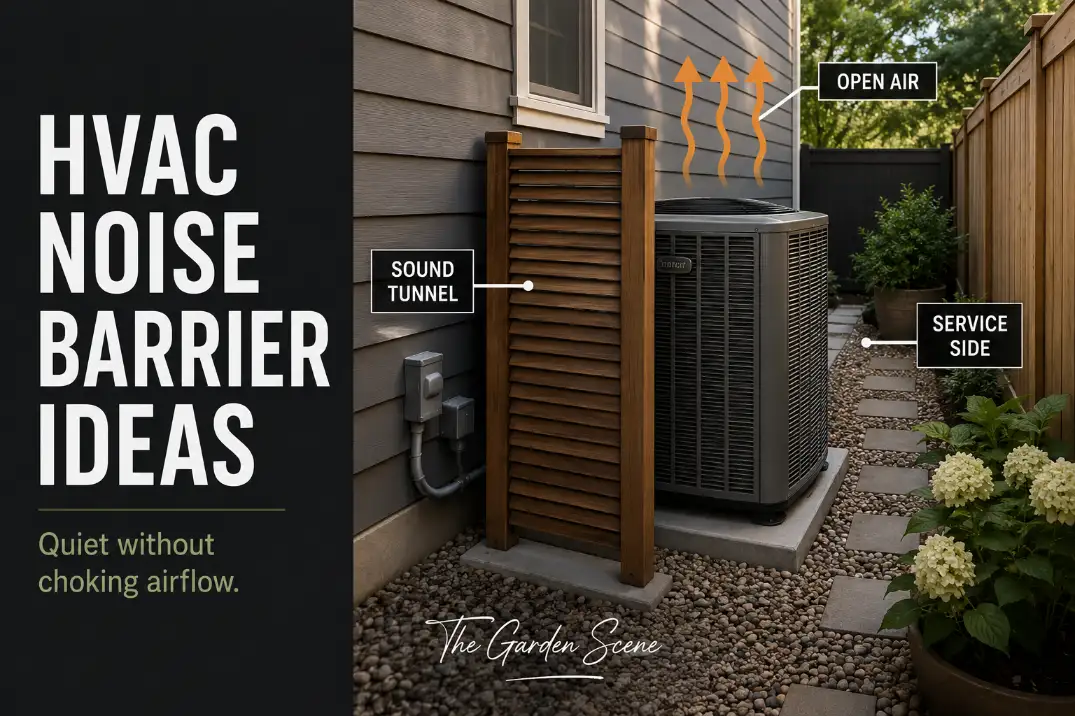
The best HVAC noise barrier for a side yard is usually an offset partial screen, not a tight box around the unit. The goal is to break the direct sound path while keeping the outdoor condenser open enough to pull air through the coil, discharge heat upward, and remain serviceable.
Start by checking three things: where the hum travels, how much clear space surrounds the unit, and whether the service panel is still reachable.
A useful side-yard barrier often keeps at least 24 inches of breathing room where the unit manual allows it, preserves a 30–36 inch working path on the service side, and never covers the fan discharge above the condenser.
Some units need more clearance than that, so the manufacturer’s installation manual should always win over a landscape rule of thumb. If the noise is grinding, rattling, buzzing, or suddenly louder than normal, do not solve it with a screen first.
That is a mechanical warning sign, not a landscape screening problem.
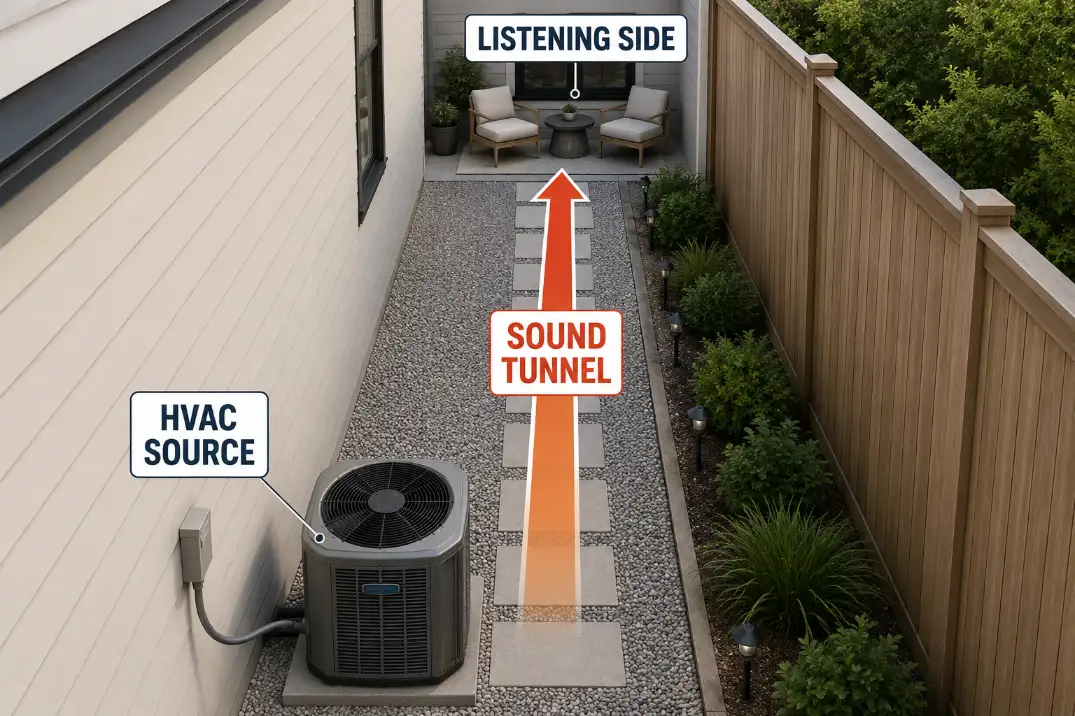
The Side Yard Sound Tunnel
A side yard turns HVAC noise into a corridor problem. The condenser may sit only a few feet from the house wall, with a fence, gate, or neighbor boundary on the other side.
The unit hums, the fan moves air, and the sound travels down the narrow space toward a patio, bedroom window, neighbor window, or side gate.
Find the exit path before choosing a barrier
The most useful first question is not “How do I hide the unit?” It is “Where does the sound leave the side yard?” A screen that hides the condenser from the street may do almost nothing if the noise is escaping toward the patio end of the corridor.
Stand at the listening spot while the system runs. If the hum is strongest at the gate opening, fence gap, or patio end, that is the path to interrupt. If the sound feels sharp between two hard surfaces, adding another hard panel in the wrong place may make the side yard feel more boxed-in rather than calmer.
A side yard that also handles bins, hoses, gates, and service access should be treated as a working corridor. The layout logic in Side Yard Utility Corridor Ideas is especially relevant when the HVAC unit shares space with everyday movement.
Quick HVAC noise barrier checklist
- Identify the direct sound line from the condenser to the listener.
- Keep the fan discharge above the unit fully open.
- Leave about 24 inches of side clearance where the unit manual allows it.
- Preserve a 30–36 inch service path, and more if the manufacturer requires it.
- Avoid tight boxes that feel hotter after a 10–15 minute cooling cycle.
- Keep mature plant growth outside the coil and service zone.
- Treat grinding, rattling, or sudden loud noise as a repair issue first.
Airflow Comes First
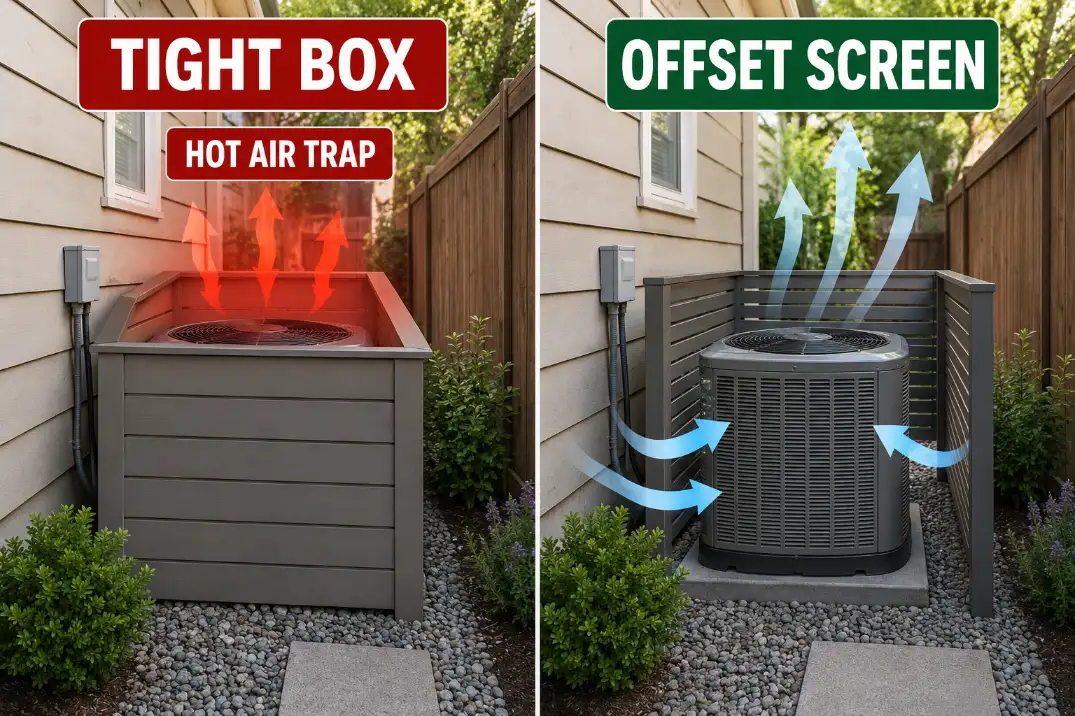
A noise barrier fails when it treats the condenser like a trash can enclosure. The outdoor unit is not just an object to hide. It is a heat-rejecting machine that needs open air around the coil and open space above the fan.
The symptom is noise, but the risk is heat
The hum is what you notice. Heat buildup is what can make the fix wrong. A solid enclosure may seem quieter for the first few minutes, but if it traps warm discharge air around the condenser, the unit may run longer, work harder, and become more noticeable during peak summer cooling.
That is why airflow should outrank appearance. If the side yard already feels stagnant, do not add a second solid wall close to the coil. In hot Arizona side yards, dry debris and reflected heat can make a tight enclosure worse.
In humid Florida side yards, dense foliage and damp leaves can block the coil before the screen itself becomes the problem.
For a closer look at equipment screening without choking the unit, Side Yard AC Screening Without Blocking Airflow covers the most important layout mistake: enclosing the equipment before deciding where air and service need to move.
Use a short heat-trap test
Before building anything permanent, mock up the barrier location with a temporary panel, lattice section, or scrap board. Run the system for 10–15 minutes during normal cooling demand.
If the air around the condenser feels noticeably hotter, the fan tone becomes sharper, or the unit seems to cycle longer than usual, the screen is too close, too solid, or blocking the wrong side.
Pro Tip: If the screen makes the unit sound more strained, remove one side or move the panel outward before adding more material.
Screens Need Distance
The strongest side-yard screen is usually partial and offset. It blocks the direct sound line without wrapping the condenser so tightly that air and service access disappear.
A dense panel helps only in the right position
Solid material is not automatically better. A dense panel can reduce direct noise when it sits between the condenser and the listener. But a solid panel placed too close to the coil can reflect noise back into the side yard and trap warm air around the unit.
A slatted or louvered screen may not block as much sound as a dense panel, but it can be safer near equipment because it allows more air movement. The best choice depends on the gap available.
If you have room to offset the panel away from the unit, a denser barrier can work. If the side yard is extremely tight, a breathable screen with a more strategic position is often the safer compromise.
Do not build a full box just because it looks clean
A full enclosure is the fix that often wastes money. It looks finished in a product photo, but it can create the exact conditions an outdoor condenser dislikes: poor airflow, trapped heat, awkward service access, and reflected sound between hard surfaces.
| Barrier choice | Best use | Main risk | Better adjustment |
|---|---|---|---|
| Tight solid box | Rarely ideal for HVAC | Traps heat and blocks service | Open the top and remove one side |
| Offset dense panel | Direct sound path to patio or neighbor | Reflects sound if too close | Move it outward and leave return gaps |
| Slatted screen | Visual screening near tight equipment | Too open to block all hum | Use it to break the sightline, not seal the unit |
| Planting layer | Softens edge noise and view | Grows into coil over time | Place outside mature clearance |
| Fence extension | Long side-yard sound corridor | Can amplify hard reflections | Stagger surfaces instead of closing the tunnel |
If the side yard is narrow enough that every inch matters, screen depth and planter width become part of the decision. Narrow Planters and Privacy Screens for Side Yards is useful when you need screening that does not turn the corridor into a pinch point.
Plants Can Soften the Edge
Plants are useful around HVAC noise barriers, but they are rarely the main sound solution. They soften the edge, reduce the hard look of the equipment zone, and help break up reflections from fence and siding. They do not turn a loud condenser into a quiet one by themselves.
Use plants after the direct sound path is handled
A layered planting strip works best as the second layer. First, block or bend the direct sound path with a partial screen. Then use shrubs, grasses, or upright perennials to soften the side yard and reduce the harsh, empty-corridor feel.
This is where homeowners often overestimate plants and underestimate mature size. A shrub that sits 18 inches from the condenser in year one may crowd the coil by year three. In fast-growing warm climates, check plant spread every 4–6 weeks during active growth.
In colder northern states, leave space for snow piles, roof runoff, and winter debris so the unit is not buried or blocked.
For broader yard-level sound softening, Outdoor Noise Buffer Ideas helps separate what planting can realistically improve from what needs a stronger layout move.
Heat pumps need winter breathing room too
If the outdoor unit is a heat pump, the side yard has to work in winter as well as summer. Do not place shrubs, screens, or storage where snow drifts can pack against the unit.
Avoid routing roof runoff or icicles toward the equipment area. A screen that is safe in July can become a problem in January if it traps snow, ice, or defrost moisture around the unit.
Planting stops making sense when it forces the screen closer to the condenser, blocks the service side, or makes routine trimming difficult. If you have to choose between greenery and clear airflow, clear airflow wins.
Do Not Block Service Access
A barrier is not finished if it makes the unit hard to service. HVAC access is not a small detail. Outdoor units may need coil cleaning, electrical checks, refrigerant diagnosis, defrost inspection, or panel removal.
The service side is not spare space
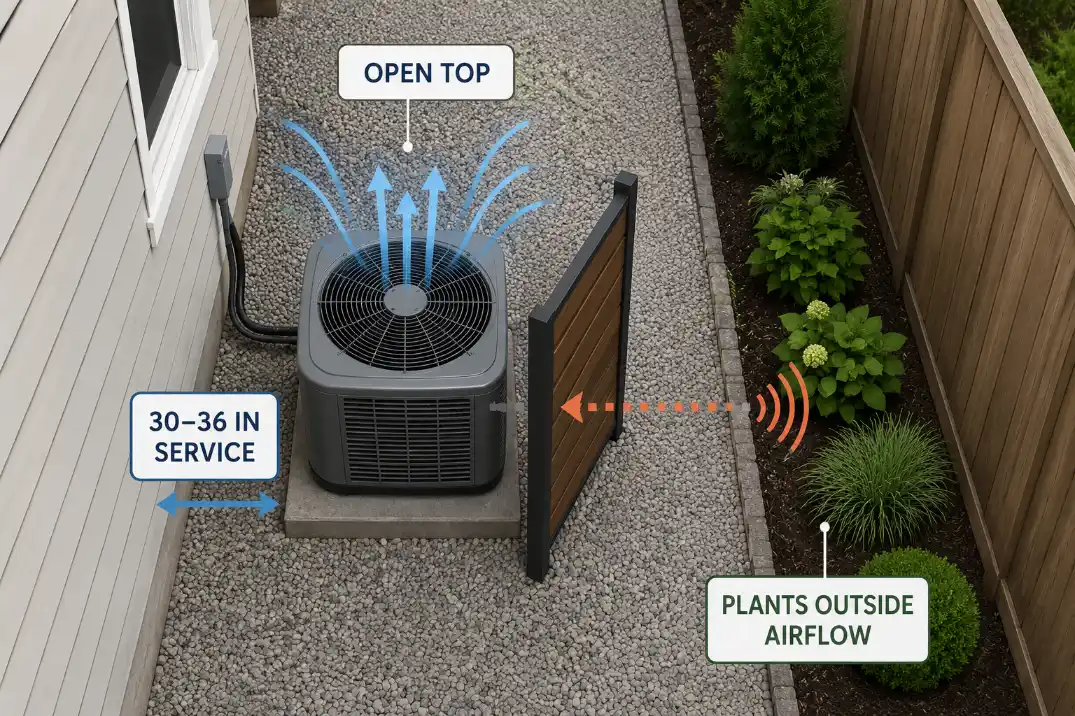
A 12-inch squeeze path may look acceptable in a photo, but it is not a practical working zone. Plan for about 30–36 inches on the side where a technician needs to stand and remove the access panel. Some installations need more, so the unit manual or local contractor’s requirement should override the garden layout.
This is where a removable screen, lift-out panel, or gate-style section beats a fixed decorative enclosure. If the screen sits near a side gate, check the gate swing, latch, condenser panel, and standing zone together. A noise barrier should not turn a routine service visit into a dismantling job.
The same clearance logic applies when the side yard also needs mower or wheelbarrow access. Side Yard Access for Mowers and Wheelbarrows can help avoid solving the noise problem while creating a new movement problem.
Mark the access zone before building
Before installing posts or panels, mark the service side on the ground with painter’s tape, stakes, scrap boards, or pavers. Open the path as if someone had to work there with tools.
If the screen, planting, or gate makes that movement awkward, adjust the layout before anything becomes permanent.
Less Noise Without Trapping Heat
The best side-yard HVAC noise barrier is usually a quieting layout, not a sealed enclosure. It blocks the direct sound line, keeps the top open, leaves the coil clear, and protects the service side.
Build the barrier in the right order
Start with cleanup. Remove leaf buildup, weeds, stored items, leaning panels, and anything sitting close to the coil. If the unit sounds cleaner after the area is cleared, the problem was partly airflow and debris, not just noise travel.
Next, identify the listening line. If the noise is strongest at the patio end, neighbor-facing side, or gate opening, place the barrier there.
A 5–6 foot screen may be enough when it interrupts the sound path between the condenser and listener, but height alone is not the cure. A tall screen in the wrong place is still the wrong screen.
Then add softening. Use planting outside the airflow zone, not pressed against the equipment. Keep vines away from the coil, choose shrubs that can be trimmed cleanly, and leave enough room to maintain the screen and the unit.
When screening stops being the right fix
Screening stops making sense when the noise is mechanical, sudden, metallic, or much louder than it used to be. A barrier can reduce normal operating hum, but it will not fix a failing fan motor, loose panel, damaged blade, refrigerant issue, or vibration problem.
It also stops making sense when the only possible screen location would block airflow or service access. In that case, a smaller offset panel, a softer planting layer farther away, or a different listening-area solution may be better than forcing a full enclosure into a side yard that cannot support it.
Questions People Usually Ask
Can I build a full soundproof box around an HVAC unit?
Usually, no. A full box is the wrong instinct for most outdoor condensers because the unit needs airflow, open fan discharge, and service access. If you want a box-like look, use an open-top layout with a removable service side and generous clearance around the coil.
Will a wood fence reduce HVAC noise?
A wood fence can reduce some direct sound if it breaks the line between the unit and the listener. It can also reflect sound down a narrow side yard if it creates a harder tunnel. Placement matters more than the material alone.
Are plants enough to quiet an outdoor AC unit?
Plants can soften the edge, hide the equipment, and reduce the harsh feel of the side yard. They usually cannot solve normal condenser hum by themselves, and they should never grow into the coil or service area.
What is the safest simple layout?
For most side yards, the safest simple layout is one offset screen on the listening side, open space above the unit, a clear service side, and planting outside the mature airflow zone.
That reduces the direct hum without turning the condenser into a heat trap.
For broader official guidance on keeping outdoor air conditioner units clear and efficient, see the U.S. Department of Energy air conditioner maintenance guide.