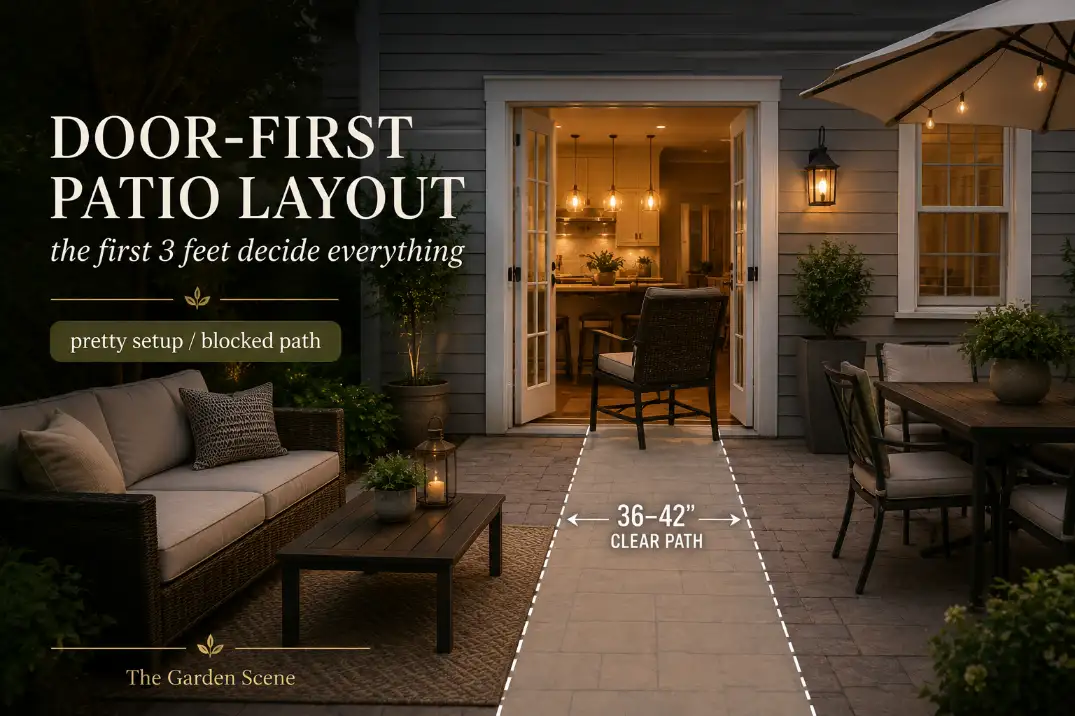
The best patio layouts for homes where the back door opens right into the seating area usually start with a side-loaded lounge, an offset conversation corner, or a bistro landing layout — not seating centered on the door.
The first 36–42 inches outside the door should stay clear before any chair, table, or sectional is placed.
The quickest checks are simple: can the door open without clipping furniture, can someone step outside carrying a tray, and does the first chair stay out of the natural walking line when occupied?
A layout with only 22–24 inches of clear space may photograph well, but it usually feels cramped within a few days of real use.
This is not the same as a generally small patio problem. The issue is more specific: the entry path and the seating zone are trying to occupy the same space.
Start With the Door Path, Not the Furniture
When a back door opens straight into seating, the patio has no buffer. There is no landing zone where people can pause before entering the outdoor room. That means the layout has to create one.
The First 3 Feet Decide the Patio
A back door is not just an edge of the patio. It is the busiest movement point. People step out with drinks, carry plates, let pets through, move cushions before rain, refill food, and walk back inside repeatedly.
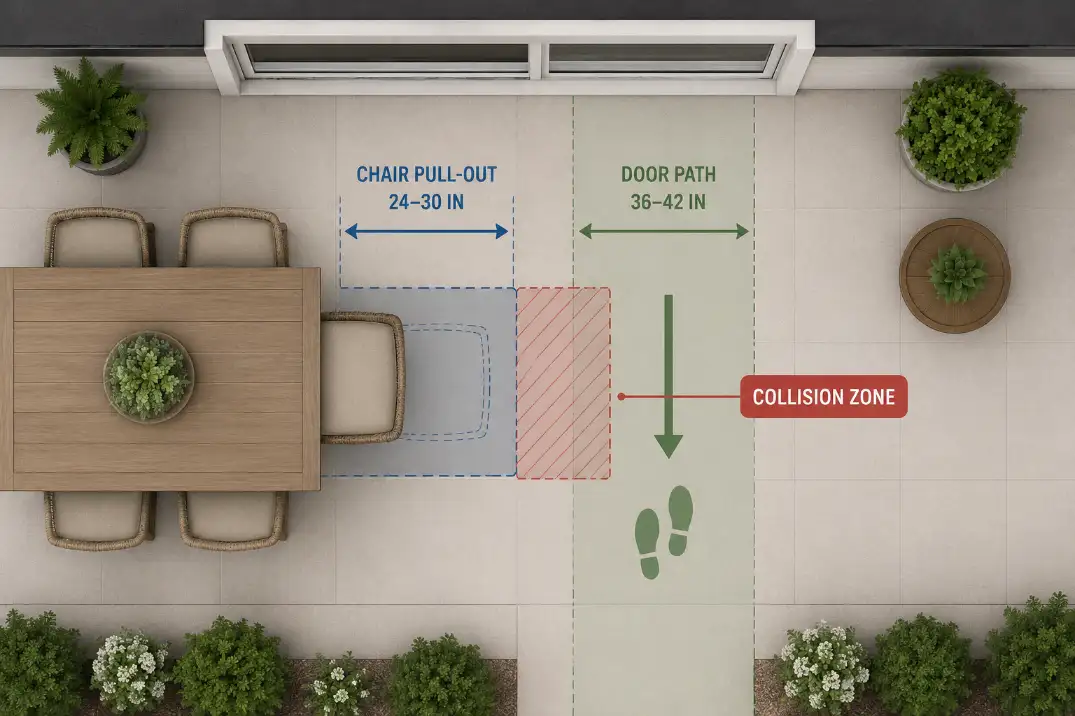
For most homes, the practical minimum is a 36-inch clear path from the threshold. If the door connects directly to dining, grilling, kids’ play, or frequent pet traffic, 42 inches is safer. Less than 30 inches is where people start turning sideways or stepping around furniture instead of moving naturally.
This is why the strongest layouts begin by drawing an invisible lane from the door outward. Once that lane is protected, the seating can sit beside it, angle around it, or frame it. If the seating sits inside it, the patio will feel awkward no matter how attractive the furniture is.
For homes with glass doors or direct yard access, the same movement-first logic appears in Patio Layouts for Sliding Glass Doors and Walkways, where the active door route has to stay readable before furniture begins.
The First Chair Is Usually the Real Blockage
The biggest piece is not always the problem. A sofa pushed to one edge may work well, while one loose lounge chair near the door can ruin the whole layout.
The reason is movement expansion. A chair that looks fine when tucked in may slide back 6–12 inches during use. A dining chair may need 24–30 inches behind it for someone to sit down and stand up.
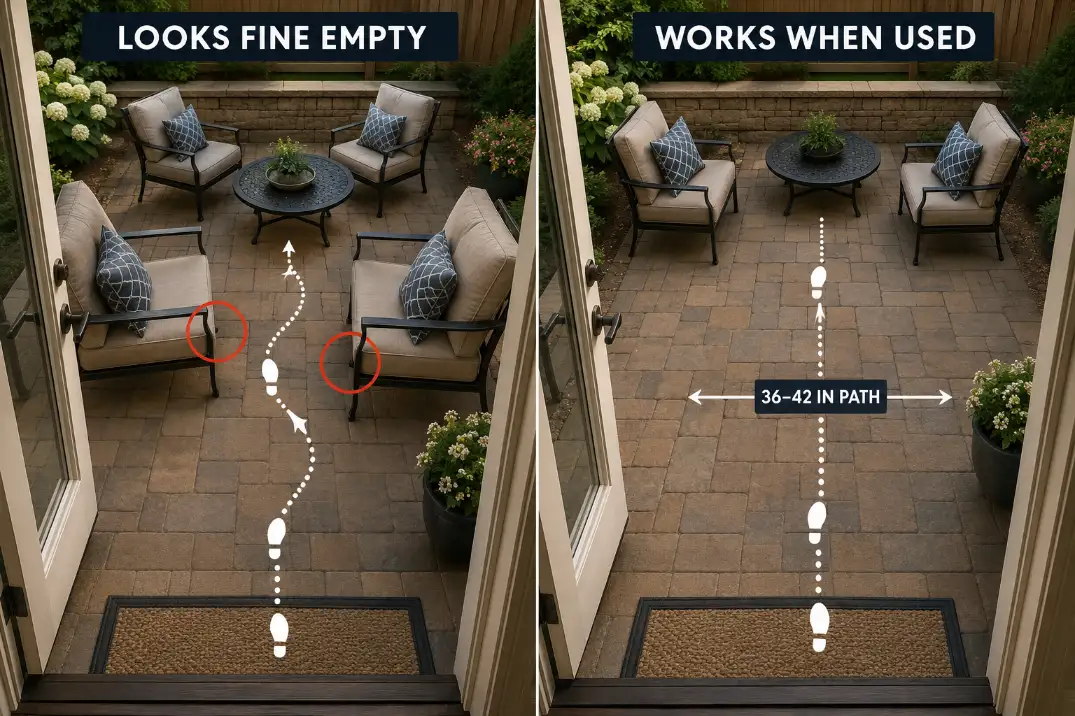
That means the layout should be tested with chairs pulled out and occupied, not staged neatly.
The chair is the symptom. The underlying mechanism is an unprotected walking route.
Best Layouts for a Back Door That Opens Into Seating
The best arrangement depends on where the door path wants to go. Most patios in this scenario work best with one of these layouts.
Side-Loaded Lounge Layout
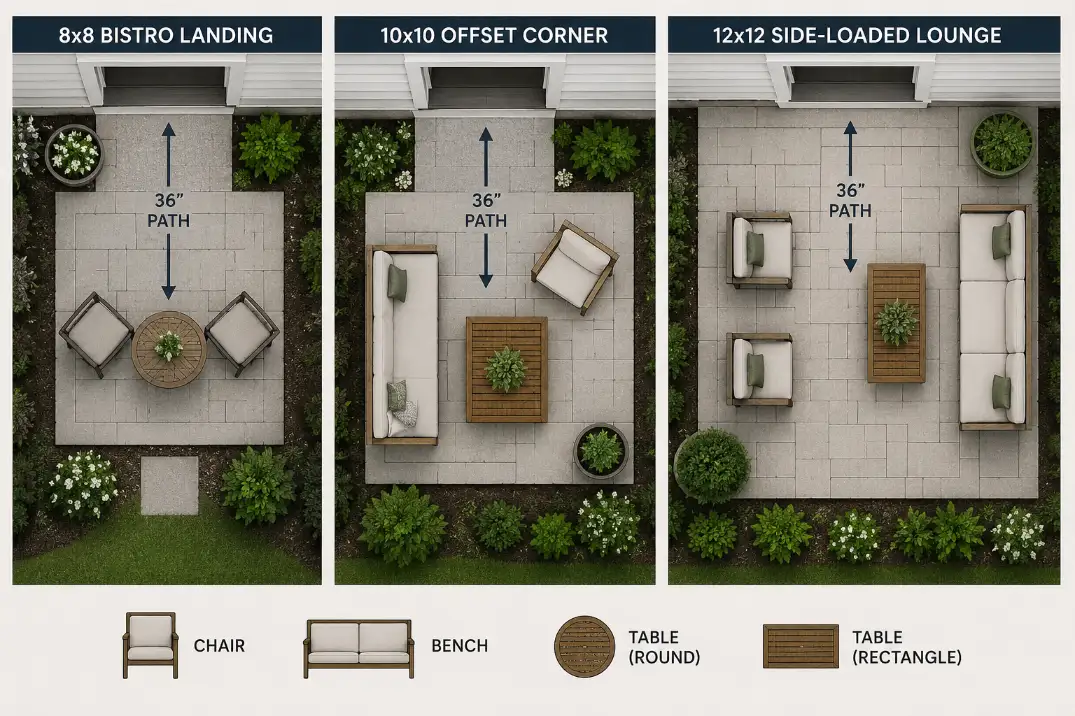
A side-loaded layout places the main seating group to the left or right of the door path instead of directly in front of it. This is usually the safest choice for patios that are 10–14 feet wide because it lets the route run straight from the back door to the yard, steps, grill, or garden path.
Use a loveseat, sofa, or two lounge chairs along one side. Keep the coffee table out of the first 36–42 inches from the door. If a table is needed, a narrow rectangular table or two small side tables usually performs better than a square coffee table in the center.
This layout works because it does not ask people to enter the seating area before they can move through the patio.
Offset Conversation Corner
An offset conversation corner places the seating diagonally away from the door rather than centered on it. This is especially useful on 10×10 or 10×12 patios where centering the furniture would make the back door feel blocked.
The best version uses a loveseat on one side, one or two chairs angled inward, and a small side table instead of a large central table. The seating still feels social, but the door path remains separate.
This is often better than a perfectly centered layout. Centering the conversation group on the door may look balanced from inside the house, but it usually performs worse once people start walking through.
L-Shaped Seating With the Open Side Facing the Door
An L-shaped sectional can work, but only when the open side faces the door route. The sectional should frame the seating area without becoming a barricade.
The common mistake is placing the long side of the sectional across the back door because it visually anchors the patio. It does anchor the scene, but it also forces every person to step into furniture.
If the sectional leaves less than 36 inches between the threshold and the first cushion edge, it is the wrong orientation.
For compact patios, an L-shape works best when one side sits along a wall, fence, or railing and the return side stops before it crosses the entry lane.
The same restraint matters in Small Patio Sectional Sofa Layout Ideas, where a sectional should define the seating zone without taking over circulation.
Bench-First Layout
A bench-first layout is often the most efficient choice for shallow patios. A bench holds seating tight to one edge while keeping the center open. This works especially well when the patio is only 6–9 feet deep and loose chairs keep drifting into the door route.
A built-in bench, backless bench, or slim outdoor bench can preserve more usable space than two individual chairs. The tradeoff is flexibility. If the patio is used for conversation, pair the bench with one movable chair or a small stool so the layout does not feel rigid.
Bistro Landing Layout
For very small patios, a bistro landing layout is better than forcing a full lounge set. Leave the door landing clear, then place a small round table and two chairs to one side.
This works well for 8×8 patios, apartment patios, and townhome back entries where the goal is coffee, reading, or a quick meal rather than full outdoor entertaining.
A 28–32 inch round table is usually easier to live with than a square table because the corners do not project into the walking line.
Pro Tip: If a piece has to be moved every time the back door opens, it is not flexible furniture. It is a permanent obstruction with handles.
Match the Layout to the Door Type
The door itself changes the layout. A sliding door, outswing door, inswing door, and French door do not all need the same furniture placement.
Sliding Doors Need an Active-Panel Route
With a sliding door, only one panel may be used most of the time. Protect the route from that active panel, not just the full glass width. A chair placed in front of the inactive side may be fine, but a chair in front of the active opening will make the patio feel blocked immediately.
Low-back seating also helps near sliding doors because it keeps the indoor-outdoor sightline open. If the first thing visible from inside is the back of a bulky chair, the patio will feel smaller before anyone steps outside.
Outswing Doors Need a Clear Swing Arc
If the back door swings outward, the door arc is non-negotiable. No chair arm, planter, side table, or storage bench should sit inside that swing zone. Leave the full swing clear, then add the 36-inch movement path beyond it.
This is where people commonly underestimate the problem. They measure the patio when the door is closed, then realize the layout fails only when the door is actually used.
French Doors Need a Wider Center Opening
French doors can make a patio feel generous, but they punish centered furniture. When both leaves open, the middle needs to stay visually and physically clear.
The best layout usually places seating to both sides or one side, not directly in front. A long bench across the door line may look elegant in a catalog, but in daily use it turns a wide opening into a narrow squeeze point.
Choose the Layout by Patio Size and Shape
A patio does not need a complicated plan. It needs the right amount of furniture for its usable route.
| Patio Size or Shape | Best Layout | What to Avoid |
|---|---|---|
| 8×8 or smaller | Bistro landing or side bench | Four loose lounge chairs |
| 6–9 ft deep | Open-center bench layout | Coffee table in the door path |
| 10×10 | Offset conversation corner | Seating centered on the door |
| 10×12 or 12×12 | Side-loaded loveseat and chairs | Dining pull-out across the route |
| Long narrow patio | Seating shifted 3–4 ft from door | Furniture lined across the house wall |
Shallow Patios Need Open Centers
On a shallow patio, the center should usually stay open. A bench, two slim lounge chairs along one side, or a small bistro setup will outperform a deep conversation set.
A coffee table often wastes the exact space the door needs. Two small side tables are easier to place outside the path and still give people somewhere to set drinks.
Square Patios Need One Dominant Seating Zone
A square patio can handle comfortable seating, but it gets messy when every side has a chair. Choose one main seating wall and one open approach from the door.
On a 12×12 patio, a loveseat and two chairs can work if the door path stays clear. On a 10×10 patio, that same idea often needs to become a loveseat and one chair.
For more general sizing decisions, Patio Furniture Layout by Size helps separate what technically fits from what remains comfortable after people sit down.
Long Patios Should Shift Seating Away From the Door
A long patio should not become one continuous furniture strip along the house. Keep the door zone open, then move the main seating group slightly down the patio.
Even shifting the seating area 3–4 feet away from the door can change how the patio feels. The entry becomes a transition instead of a collision point.
Furniture Choices That Usually Make This Layout Worse
The wrong furniture type can turn a workable patio into a daily annoyance. The issue is not whether the furniture is attractive. It is whether the piece expands into the path when used.
Four Loose Club Chairs
Four separate chairs require more clearance than most people expect. Each chair shifts, angles, and needs legroom. On a tight patio, a loveseat and one chair often seats fewer people on paper but works better in real life.
Square Coffee Tables
Square coffee tables are risky near a back door because their corners project into the walking line. A narrow table, round table, or side tables usually creates fewer collisions.
Full Dining Sets Directly Outside the Threshold
Dining sets need pull-out space. If the table sits directly in front of the back door, every meal turns the entry route into chair storage. For patios where dining is the main goal, Patio Dining Set Space is a better planning step than guessing from product dimensions alone.
Oversized Storage Benches Near the Door
Storage benches are useful, but not when they sit beside the threshold and collect shoes, cushions, toys, or packages. The bench may begin as seating and become a landing strip for clutter. That makes the door zone feel tighter over time.
The Fix That Saves the Most Money
The most common wasted fix is buying smaller furniture before testing the path. Homeowners replace a bulky set with a compact one, then place it in the same conflict zone. The patio looks improved for a few days, but the awkward movement returns.
Run the 20-Minute Door Test
Move every loose piece away from the back door. Mark a 36-inch route from the threshold with painter’s tape, chalk, or temporary objects. If the patio carries food, pets, or frequent traffic, mark 42 inches instead.
Then bring furniture back one piece at a time. Pull chairs out 18–24 inches as if people are sitting. If a piece enters the route, it either moves to the side, changes type, or leaves the patio.
This test works because it separates cosmetic space from functional space. Empty corners do not matter if the path from the door still fails.
When Rearranging Stops Making Sense
Rearranging stops making sense when the patio loses its route every time all seats are occupied. At that point, the issue is not placement. It is too many moving pieces.
This is especially common with four-chair conversation sets and full dining sets on small patios. If every “better” layout still requires someone to squeeze past a chair, one item has to be removed or replaced.
In some cases, Remove Patio Furniture From a Cramped Space is the more honest fix than another arrangement attempt.
Pro Tip: Test the patio at its busiest moment, not its cleanest moment. A layout that works during dinner, pets, and open doors will work the rest of the week.
Small Details That Make the Layout Feel Better
Once the route is solved, the patio can still feel more open with a few selective choices.
Keep the Indoor View Light
If the back door has glass, avoid placing the tallest chair backs directly in the center of the view. Low-back seating, side-loaded benches, and offset chairs usually make the patio feel larger from inside the house.
This does not mean every piece has to be low. It means the first view through the door should show open floor or a clear path, not furniture pressed against the threshold.
Use Side Tables Instead of a Central Table
A central table makes sense only if it sits outside the walking line. In tight layouts, side tables usually perform better because they support seating without taking over the center.
This is a small change, but it often matters more than switching from one chair style to another.
Let Climate Influence Clearance
In humid areas like Florida, cushions and chairs often get moved for drying after rain, so tight furniture clusters become annoying faster.
In hot Arizona or inland California patios, shade near the house can pull seating toward the door, increasing the risk of blockage.
In northern states, storm doors, snow gear, and seasonal furniture storage can make the threshold area busier than it looks in summer.
Climate does not change the core rule. It only makes the clear path more important.
Questions People Usually Ask
What is the best patio layout when the back door opens into seating?
The safest layout is usually a side-loaded lounge or offset conversation corner that keeps the first 36–42 inches outside the door clear. On very small patios, a bistro landing layout or side bench often works better than a full conversation set.
Should patio seating face the back door?
It can, but it usually should not sit directly in the path from the door. Seating that faces the door works best when it is offset or set far enough back to leave 36–42 inches of clear movement.
Is a sectional bad when the back door opens into the seating area?
No. A sectional works if the open side faces the door route and the long side does not cross the threshold path. A sectional becomes a problem when it acts like a wall outside the door.
What is the easiest layout change to try first?
Remove the chair closest to the back door and replace the central coffee table with side tables. If the patio immediately feels easier to enter, the layout problem is confirmed.
For broader accessibility context, see the ADA Standards for Accessible Design.