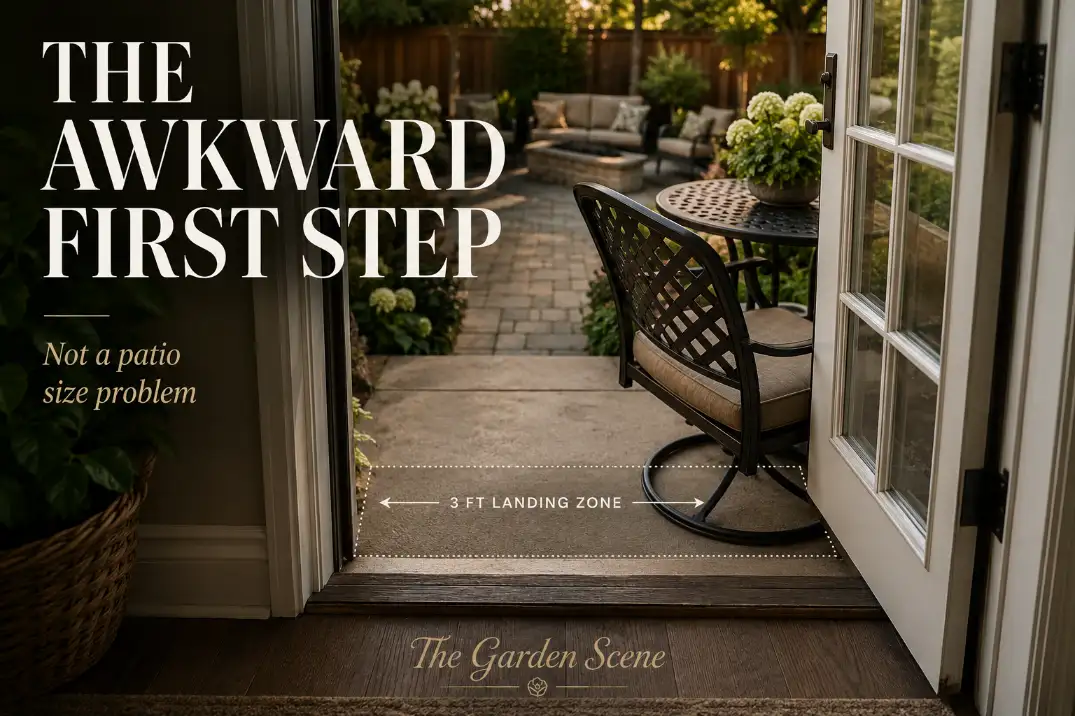
The back door to patio transition usually feels awkward because the door, landing, surface height, and first walking path are not working as one sequence.
The first checks are simple: measure the drop from the threshold, watch where your first two steps naturally land, and see whether the door swing or furniture forces a side-step within the first 3 feet.
A 1–2 inch height change can feel normal if the landing is stable and visible; a 4–7 inch drop with no clear landing cue feels abrupt, especially when carrying food, guiding kids, or stepping out at night.
This is different from a patio that is simply too small. A small patio can still work if the exit path is clean. An awkward transition happens right at the handoff between indoor movement and outdoor use.
Quick Diagnostic Checklist
Use this before moving furniture or planning a larger patio. The awkward part is often narrower than people think.
- The first clear landing outside the door is less than 36 inches deep.
- The threshold drop is more than about 3 inches and has no obvious step or edge cue.
- The door opens into a chair, table, grill, planter, or storage item.
- Water collects near the door for more than 24 hours after normal rain.
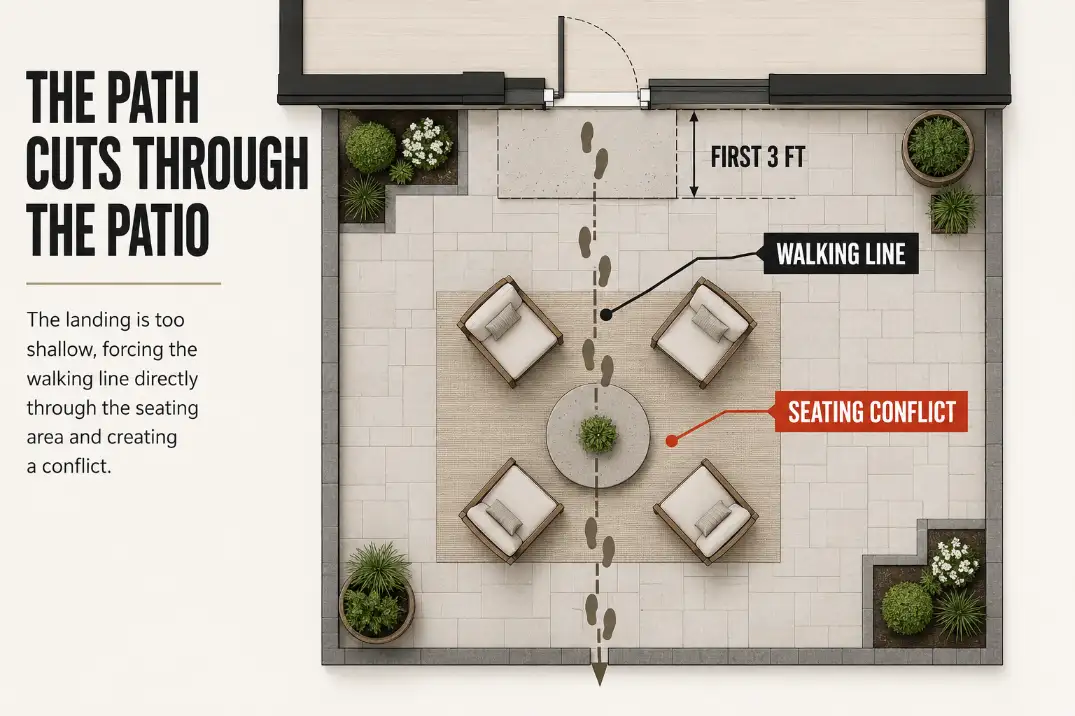
- The walking line from the door cuts diagonally across the main seating zone.
- The patio surface slopes toward the house instead of away from it.
- The outdoor light does not clearly show the threshold edge at night.
A transition that fails two or three of these checks will feel clumsy even if the patio furniture is attractive.
What People Usually Misread First
They blame patio size before checking the landing
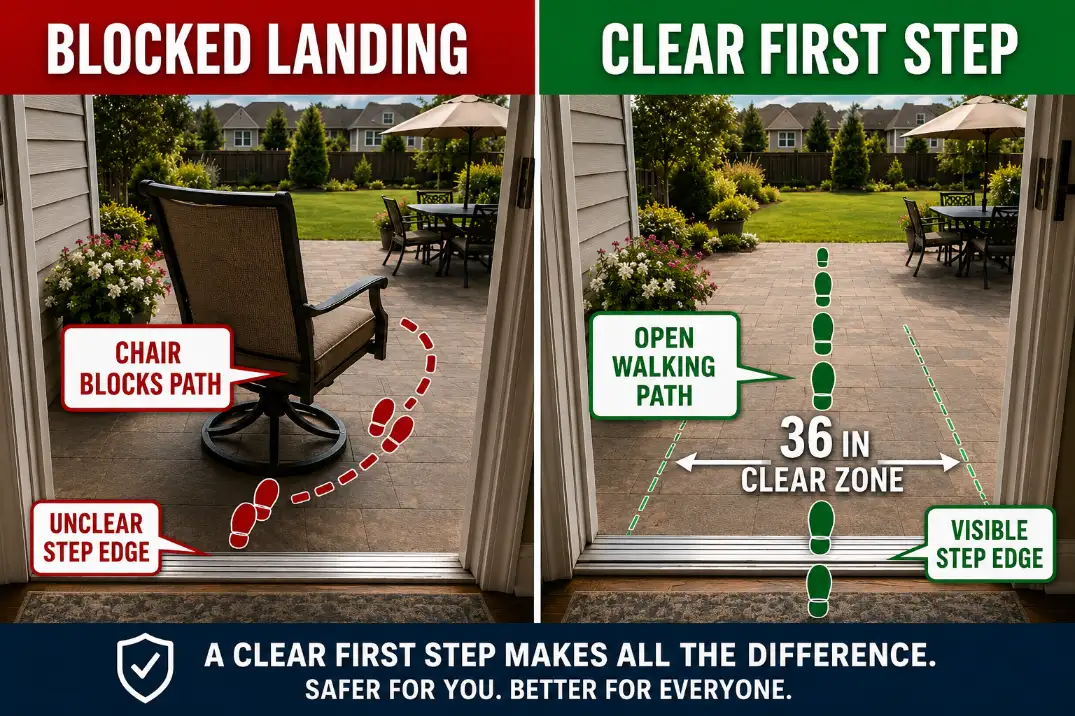
The most common mistake is assuming the patio needs to be larger. Sometimes it does, but the first failure is often the landing immediately outside the door.
If the first usable outdoor surface is squeezed between a door swing and a furniture zone, the body hesitates before the patio even begins.
A practical landing should give at least 36 inches of clear depth outside a frequently used back door. More is better if the door is used for dining, grilling, pets, or kids moving in and out.
When that first clear zone drops below about 30 inches, people begin turning sideways, stepping around furniture, or pausing in the doorway.
That is why a patio can be 12 feet wide and still feel wrong. The total square footage is less important than whether the first step lands somewhere calm.
They treat the symptom as decoration
A new doormat, planter pair, or outdoor rug may make the doorway look more finished, but those are cosmetic signals. The underlying mechanism is movement compression: the user exits through a narrow opening, changes height, adjusts to a new surface, and immediately has to choose a direction.
If that sequence happens in less than 3 feet, the transition feels crowded. If it happens across a stable landing, then a turn, then a wider patio zone, the same space feels intentional.
This is also why patio layouts around sliding glass doors and walkways need to be judged by movement first, not by where the furniture looks balanced in a photo.
The Real Mechanism Behind an Awkward Door-to-Patio Handoff
Height, slope, and direction collide
A back door transition feels smooth when three things line up: the threshold height is understandable, the surface drains correctly, and the walking direction is obvious. It feels awkward when those cues disagree.
A 1-inch threshold lip may be barely noticed on a dry, well-lit landing. A 5-inch step-down onto a dark paver edge feels much more abrupt.
A patio sloped 1/8 to 1/4 inch per foot away from the house often drains well, but if that slope is combined with a diagonal furniture route, the first step can feel slightly off-balance.
The user is not just stepping down; they are stepping down, turning, and adjusting to grade at the same time.
That combination matters more than any single measurement.
Drainage can make the doorway feel wrong
Water near the door is not just a drainage issue. It changes how people move. If the landing stays damp for 24–48 hours after rain, people begin stepping around the wet area. That creates a new traffic pattern, often cutting across a chair zone or hugging the wall.
In humid parts of Florida or the Southeast, shaded patios may dry slowly even when the slope is technically acceptable. In northern states, the same awkward low spot becomes more serious when freeze-thaw cycles turn a small puddle into a slick patch.
The fix is not simply “add a mat.” A mat over a damp low spot often traps moisture and makes the threshold feel even messier.
If water is collecting near the wall, the issue belongs closer to patio drainage and layout problems than furniture styling.
Pro Tip: After a normal rain, check the doorway at 1 hour and again at 24 hours. Fast runoff with a briefly damp surface is normal; standing water or a slick threshold the next day is a layout problem.
Match the Fix to the Type of Back Door
Sliding doors need a protected active side
Sliding glass doors are usually more forgiving because they do not swing into the patio. That can hide the problem. The active panel still needs a clear landing and a clean path.
If the chair, grill, or planter sits directly outside the moving panel, people step out and immediately dodge sideways.
For sliding doors, protect the first 36 inches outside the active panel, not just the center of the wall opening. A patio layout can look centered from the yard and still feel awkward if the active door panel exits into the wrong half of the furniture arrangement.
Hinged and storm doors need retreat space
A hinged back door or storm door asks for more than a landing. It also needs a place for the person to stand while the door opens, closes, or catches wind. This is where many small patios fail. The furniture may technically clear the doorway, but there is no comfortable place to pause.
For outswing or storm doors, 42 inches of clear depth feels noticeably better than 30 inches. If people carry trays, handle pets, or use the door several times a day, 48–60 inches can be the difference between a patio that feels composed and one that always feels like a shuffle.
French doors multiply the conflict
French doors look generous, but they can create a wider conflict zone. When both leaves open, the door swing can occupy the same space where homeowners want planters, small tables, or accent chairs. If only one leaf is used daily, design around that active path first and treat the second leaf as occasional clearance.
The mistake is making the patio look symmetrical to the doors while ignoring the everyday exit route. The better move is to preserve one strong walking line, then place furniture around it.
The Fixes That Usually Matter Most
Clear the first 3 feet before redesigning everything
The fastest useful fix is to protect the first 3 feet outside the door. This zone should not hold a chair, grill, storage box, planter, or table corner. It should work like a small outdoor foyer: step out, stabilize, then turn.
This is where many patio refreshes waste money. Homeowners buy a smaller dining set, swap chairs, or add decor while leaving the first step blocked. The patio looks different but behaves the same.
Before buying anything, temporarily remove every item within 36 inches of the door and use the patio for two days. If the awkward feeling drops immediately, the main problem was circulation, not patio size.
That test is especially useful on compact patios where every item feels justified. A storage bench near the door may seem efficient, but if it steals the landing, it costs more usability than it adds.
Separate the exit path from the sitting zone
The most reliable layout has a clear exit path that does not slice through the best seat. A 30–36 inch walking lane is usually enough for normal use, while 42 inches feels much more forgiving if people carry trays, open a storm door, or move around pets.
The sitting zone can still be close to the house. It just should not occupy the first move out of the door. If the patio is rectangular, run the walking lane along one edge instead of through the center.
If the patio is shallow, use a bench, narrow table, or two chairs angled away from the door rather than a full dining set directly outside the threshold.
For sizing decisions, patio furniture layout by size is more useful than choosing furniture by style first. A beautiful set that leaves only 22 inches beside the door will feel like an obstacle every day.
When the Standard Fix Stops Working
A doormat will not solve a bad threshold
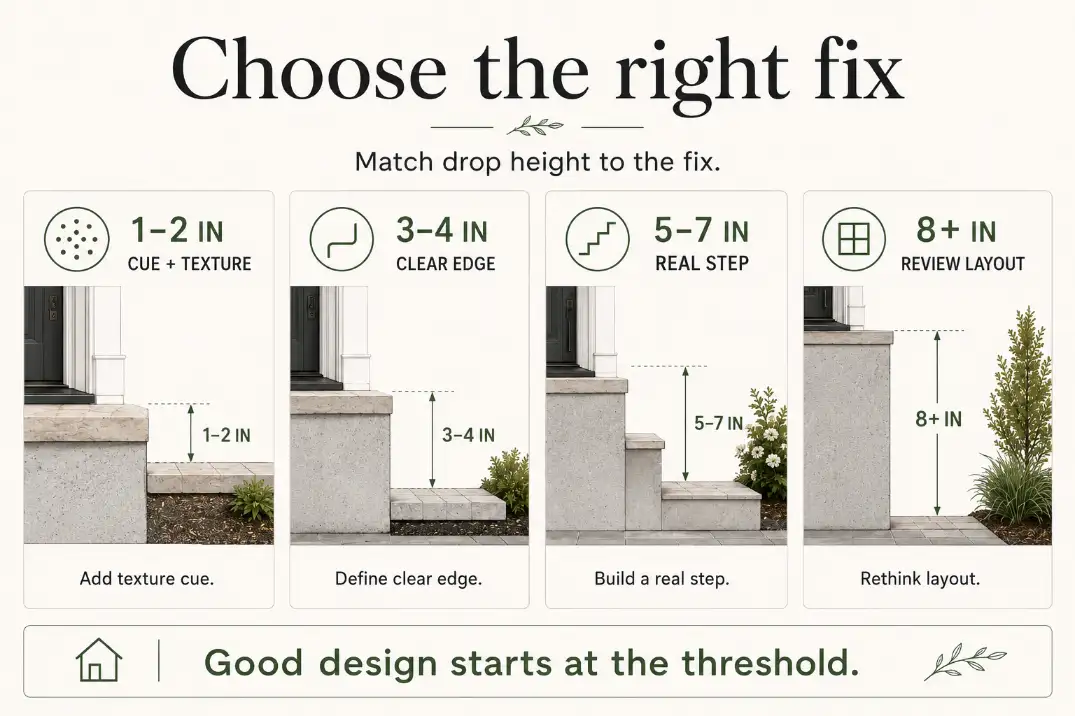
A thicker mat can soften the look of a threshold, but it does not fix a poor height change. If the step-down is more than about 4 inches and people regularly hesitate, miss the edge, or step sideways, the issue is structural enough to deserve a better landing or step detail.
A 1–2 inch change can usually be handled with clear visibility, stable texture, and lighting. A 3–4 inch change needs a more deliberate edge cue and enough landing depth to make the movement feel intentional. A 5–7 inch drop often deserves a real step or landing correction.
Once the drop moves beyond that range, the better answer may be a step sequence, raised patio edge, or professional layout review rather than another styling adjustment.
If a real step is added, it should feel like a full foot landing, not a narrow ledge. A shallow 9–10 inch step can still feel awkward near a busy back door, while 11–12 inches of usable tread usually feels more secure for daily use.
Even if the goal is not a fully accessible route, the same principle helps: the first outdoor move should be predictable, visible, and stable.
Settling and reverse slope change the category
A paver area that has dropped 1/2 inch near the door may not look dramatic, but it can create a toe-catching edge. A concrete slab that pitches back toward the house is worse because it sends water and movement pressure to the same place. At that point, styling is not the right category of fix.
The routine furniture fix stops making sense when you see water stains at the sill, repeated ice at the threshold, loose pavers near the door, or a patio surface that visibly slopes toward the house.
Those are not layout annoyances. They are surface, drainage, or grading problems showing up at the most sensitive point of the patio.
If the sill area shows staining, softness, or repeated wetness, solve water entry before improving the step appearance. A cleaner threshold will not help if the door base is already telling you water is getting into the wrong place.
Raising the patio is not automatically the better fix
Raising the patio can solve the first-step problem, but it only makes sense if drainage, siding clearance, and edge containment are designed together. A patio brought too close to the door sill can create a cleaner-looking transition while making water management worse.
This is where homeowners often overestimate the value of a flush-looking patio. A near-level transition feels appealing, but not if it traps water against the house or reduces clearance below siding, trim, or the door threshold.
The better decision is not “make it level.” It is “make the first move stable while still moving water away from the house.”
If the fix changes step height, landing size, drainage against the house, or door clearance, check local code before building. Small exterior steps are often where comfort, safety, and code overlap.
Surface changes can create hesitation
A transition from interior flooring to exterior concrete, then to pavers or gravel, asks the foot to read several surfaces in quick succession.
That is fine when each surface is level, dry, and visually clear. It becomes awkward when the first outdoor surface is uneven, glossy, loose, or broken into small pieces.
Gravel right outside a back door is a common example. It may drain well, but if it shifts under the first step, the exit feels less secure. Smooth sealed concrete can create the opposite issue: it looks clean but may become slick during rain.
In daily use, a stable, low-slip surface near the door matters more than a dramatic material upgrade farther out on the patio.
This is where backyard surface choice and usability becomes more important than appearance. The first landing surface should feel predictable underfoot, especially in wet weather or at night.
Door-to-Patio Transition Problems: What Each Signal Usually Means
| What you notice | More likely cause | Less useful first fix | Better first move |
|---|---|---|---|
| People pause in the doorway | Landing too shallow or unclear | Add decor near the door | Clear 36 inches outside the door |
| Guests step sideways immediately | Furniture blocks the natural path | Buy smaller cushions | Move seating out of the first walking line |
| Door hits furniture | Layout ignores door swing | Change chair style | Reserve the full swing zone |
| Drop feels abrupt | Step height lacks landing support | Add a thicker mat | Add visibility, tread depth, or landing correction |
| Wet area near threshold | Slope, low spot, or drainage conflict | Cover it with a rug | Check runoff and drying time |
| Staining at door sill | Water entry or poor clearance | Hide it with trim or paint | Fix water path before cosmetic work |
| Step feels worse at night | Poor edge visibility | Add more general patio light | Light the threshold and first step |
| Patio looks large but feels clumsy | Circulation cuts through use zones | Add more furniture | Separate path from seating |
What Changes Under Different Conditions
In wet or shaded patios
The doorway zone needs more discipline in wet climates. A surface that dries in 2–4 hours after light rain is usually manageable. A shaded landing that remains slick into the next day changes the whole transition because users start avoiding the natural path.
Avoid placing rugs, dense planters, or storage boxes against the threshold if they slow drying. Keep the first landing open enough for air and sunlight where possible.
If the awkwardness appears mainly after rain, do not start with furniture. Start with slope, runoff, and surface texture.
For more serious cases, especially where water is moving toward the foundation, patio water pooling against the house is the more important problem to solve first.
In cold or dark-season use
In colder regions, the transition often feels fine in summer and risky in winter. The difference is not imagination. Short daylight, wet leaves, ice, and shoes with less grip make small defects more noticeable. A 1/2-inch lifted paver edge near the door may be easy to ignore in July and irritating in January.
Lighting also matters more than people expect. A bright wall fixture that shines into your eyes can leave the step edge hard to read. A lower, warmer light that grazes the threshold usually works better.
If the back door is used after sunset more than a few times a week, the first step needs its own visual cue, not just general patio brightness.
For related safety logic, path lighting for steps, slopes, and walkways connects well to this same threshold problem.
The Best Practical Order of Fixes
Start with movement, then height, then water
Do not begin with the prettiest upgrade. Begin with the sequence that changes daily use.
First, clear the landing. Remove anything within the first 36 inches outside the door and protect a 30–36 inch path away from it. Use the patio normally for a weekend. If movement improves, rebuild the layout around that open lane.
Second, evaluate height. A small threshold lip is usually fine if it is visible and stable. A taller drop, uneven paver edge, or settled slab near the door needs a real step, landing correction, or surface repair.
If the door is used constantly, judge the threshold while carrying something with both hands; that exposes awkwardness faster than simply stepping in and out once.
Third, address water. Before improving the look of the doorway, confirm that runoff moves away from the house, the sill stays dry, and the landing does not remain slick the next day. Water problems near the door should outrank furniture and finish choices.
Fourth, refine the surface. The first outdoor step should be firm, stable, and not slippery when wet. That may mean resetting pavers, improving the landing texture, replacing loose gravel near the door, or correcting a low spot.
Only after those checks should you choose decor, rugs, planters, or a new furniture set. Those can make a good transition feel finished, but they rarely rescue a bad one.
Questions People Usually Ask
Should the patio be level with the back door?
Not always. A small step-down can work well, and exterior surfaces often need slope for drainage. The real goal is a stable, readable transition that drains away from the house. Level-with-the-door only helps if water control, threshold detailing, and surface stability are handled correctly.
Is one step outside the back door a problem?
One step is not automatically a problem. It becomes awkward when the step is visually unclear, too close to furniture, uneven, wet, too shallow, or poorly lit.
A single obvious step with a clear landing and secure tread can feel safer than a shallow, confusing height change.
What is the cheapest fix that actually helps?
Move everything out of the first 3 feet outside the door and create a clean walking lane. This costs nothing and reveals whether the issue is layout or construction.
If the transition still feels awkward after that, the next fix is usually height, drainage, or surface repair—not more styling.
For broader official guidance on safe walking surfaces and exterior transitions, see the U.S. Access Board.