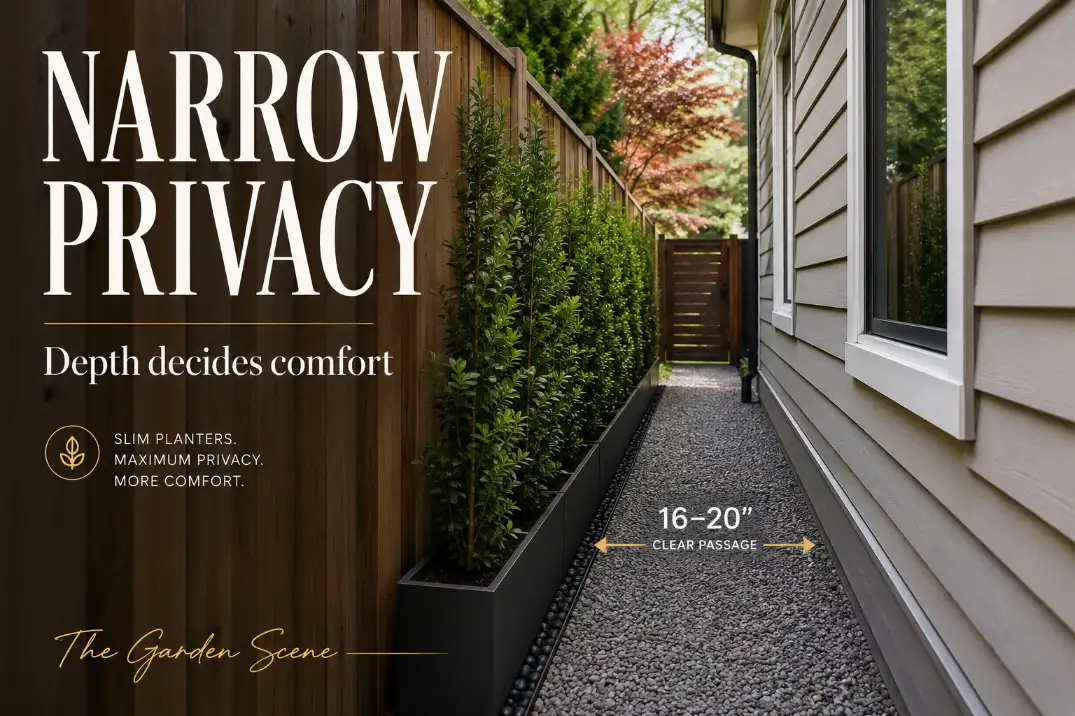
Narrow side yards need privacy differently than patios or back fences do. The issue is not just height; it is whether the screen steals the last usable walking space, traps moisture against siding, or turns a service path into a blocked corridor.
In most side yards, the first meaningful check is width: if the path is under about 36 inches, a planter or screen deeper than 12–16 inches can quickly become the problem instead of the solution.
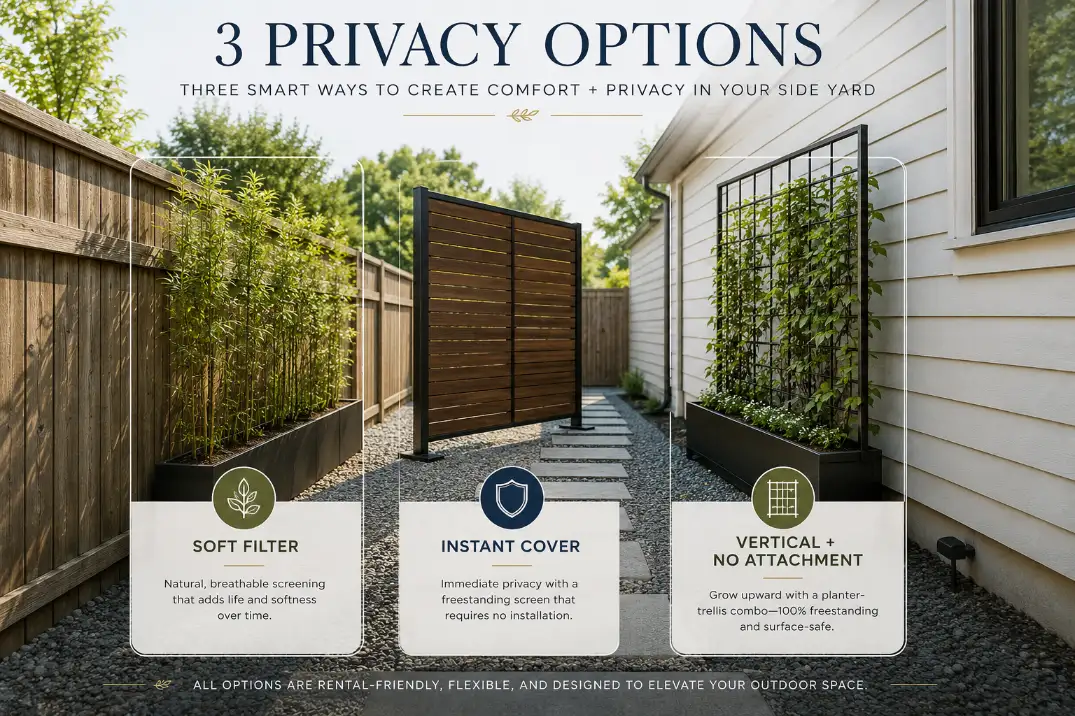
The quick answer: use narrow trough planters when you want soft screening and plant flexibility, freestanding privacy panels when you need immediate coverage, and planter-trellis combinations when you need vertical privacy but cannot attach anything to a fence or wall.
The buying mistake is treating all three as interchangeable. They solve different constraints.
Quick Scenario Guide: What to Choose First
For a tight side yard under 4 feet wide
Start with a narrow trough planter or planter-trellis unit no deeper than 10–14 inches. In this width range, every inch matters.
A planter that looks reasonable online can make a 36-inch passage feel like a squeeze point once plants, irrigation, and daily movement enter the space.
For fast privacy without waiting for plants
Choose a freestanding privacy screen panel. It gives immediate coverage and is easier to control than fast-growing vines. This matters near neighbor windows, exposed gates, street-facing side yards, or utility areas where waiting one or two growing seasons is not realistic.
For a softer garden look
Choose narrow planters with upright plants, grasses, or compact shrubs. The privacy will be lighter and more seasonal, but it usually feels less harsh than a solid panel. This works best when the goal is visual filtering, not full blockage.
The Buying Decision Is Mostly About Depth, Not Height
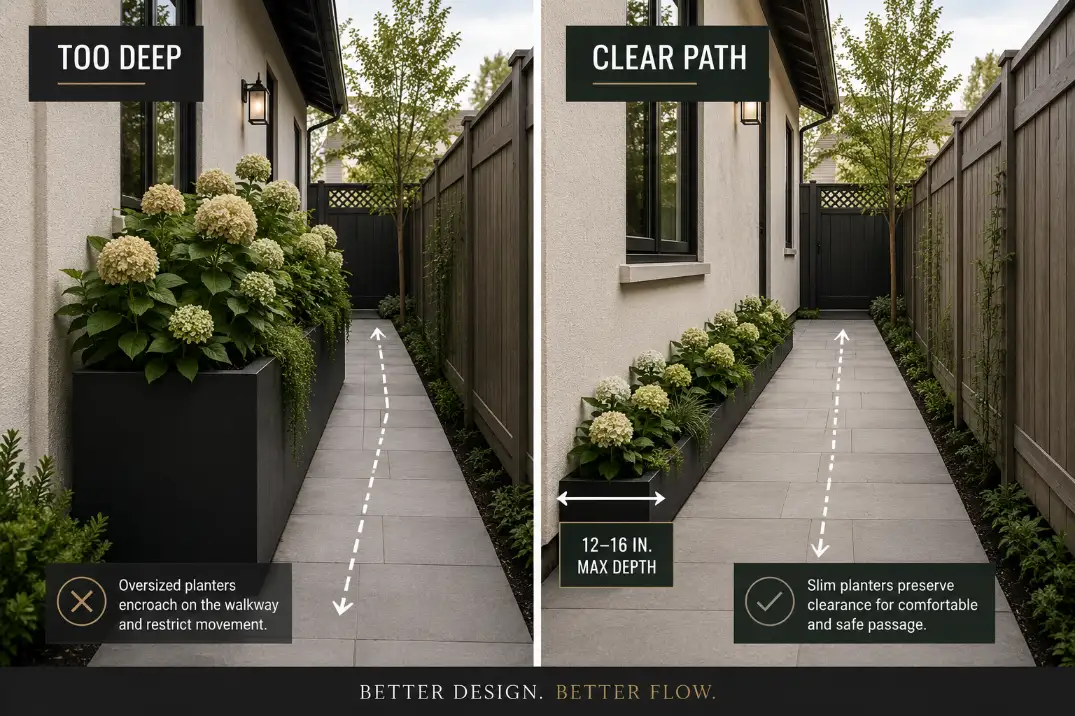
Height gets attention because privacy is the visible goal. Depth decides whether the side yard still works.
A 48–72 inch screen may be useful, but a 22-inch planter base can ruin a tight route. In a side yard, the better buying question is not “How tall is it?” but “How much floor space does it take?” A screen can be tall if its footprint stays narrow and stable.
A planter can be beautiful, but if it interrupts gate swing, hose movement, bin access, or AC service, it is the wrong category.
What depth usually works
For most narrow side yards, look for planters around 8–16 inches deep. Trough-style planters in this range can hold enough soil for many upright plants while still keeping the path usable.
If the planter will sit along a fence, wall, or property-line edge, a long rectangular shape usually performs better than round pots because it creates a cleaner boundary.
Planter length is less risky than planter depth. A 36–60 inch long trough can feel orderly, while several round pots of the same total volume often create more visual clutter and more trip points.
What buyers often overestimate
Many homeowners overestimate how much plant density they need. A side yard does not always need a solid green wall. In many cases, a 50–70% visual screen feels private enough because the viewing angle is narrow and people are usually passing through rather than sitting there for hours.
What gets underestimated is stability. Tall, narrow products catch wind. In storm-prone or coastal areas, a lightweight screen with a shallow base can tilt, rattle, or scrape against fencing unless it is weighted or anchored properly.
Best Category for Soft Privacy: Narrow Trough Planters
Narrow trough planters are the safest starting point when the side yard still needs to function as a walkway. They create a defined edge, add planting space, and avoid the bulky footprint of large decorative pots.
They are especially useful along blank fencing, beside long siding walls, or near a gate where a softer transition is needed.
The best versions have drainage holes, weather-resistant material, and enough soil volume to keep plants from drying out too quickly.
A very shallow decorative trough may look clean on day one but struggle through hot summer afternoons, especially in sunny side yards in the Southwest or inland California.
Look for these filters before buying:
- Depth: about 8–16 inches for tight paths
- Length: 30–60 inches if you want fewer gaps
- Drainage: visible holes or a raised insert system
- Material: resin, fiberglass, powder-coated metal, or sealed outdoor wood
- Base stability: wider or heavier bottom if plants will grow above 3 feet
Skip this category if you need full privacy immediately. Plants take time to fill in, and even fast-growing choices may need several months before they visually soften the space.
For the typical narrow side yard, this is the first category worth shopping because it solves the privacy problem without sacrificing the walking route.
If your goal is a softer screen rather than a hard visual wall, start here before looking at bulkier panels.
BEST PLANTER CATEGORY FOR TIGHT SIDE YARDS
Narrow Outdoor Trough Planters
Best for homeowners who want soft privacy while preserving a usable walking path.
The long, slim footprint fits against fences and walls better than round pots or bulky planter boxes.
Look for 8–16 inch depth, drainage holes, weather-resistant material, and a stable base.
🔴 SHOP narrow outdoor trough planters
Best Category for Immediate Coverage: Freestanding Privacy Screen Panels
Freestanding privacy screens are better when the real problem is exposure, not planting space. If a neighbor window overlooks the side yard, a gate area feels too open, or an outdoor utility zone needs visual cover, a panel solves the issue faster than plants.
This category works best when the screen can sit against a stable edge and does not need to be moved often. It is less ideal in very windy side yards unless the product can be anchored, weighted, or tied into a planter base.
A screen that looks elegant but rocks in a 20–30 mph gust is not a good side-yard purchase.
What to look for
Choose panels with a rigid frame, outdoor-rated finish, and a base that matches the exposure. Metal screens should have a corrosion-resistant coating, especially in coastal moisture.
Wood screens need realistic maintenance expectations; even good outdoor wood may need resealing every 1–3 years depending on climate and sun exposure.
Height depends on the sightline. A 48-inch panel may hide bins or utilities, while 60–72 inches is more useful for neighbor-facing privacy. Going taller is not automatically better if it makes the side yard feel boxed in.
Who should skip this category
Skip freestanding panels if the side yard is already visually tight and shaded. Solid screens can make a narrow passage feel colder, darker, and more closed off. In that case, a planter-trellis or spaced slat screen usually feels better than a fully opaque panel.
When the problem is exposure today, not plant growth later, this is the category that earns the click. Browse freestanding screens first when the side yard has one clear sightline problem and enough room for a stable base.
BEST SCREEN TYPE FOR INSTANT PRIVACY
Freestanding Outdoor Privacy Screens
Best for side yards where neighbor views, bins, gates, or utility areas need immediate coverage.
They work faster than plants and can be positioned exactly where the sightline problem occurs.
Look for rigid frames, outdoor-rated finishes, anchor options, and 48–72 inch height ranges.
🔴 SHOP freestanding outdoor privacy screens
Best Hybrid Choice: Planter-Trellis Privacy Screens
Planter-trellis units are the best compromise when you want vertical privacy but cannot attach a trellis to a fence, wall, or neighbor-owned structure.
They combine ballast, planting, and height in one product, which makes them useful for renters, HOA-controlled homes, and side yards where permanent installation is not worth the trouble.
The key is not buying the tallest unit. The key is buying one with enough planter volume and enough frame stiffness to support the plant type you actually plan to grow. Lightweight trellis panels can bow once vines gain weight, especially after rain.
When this category works best
Use a planter-trellis screen when the side yard has a narrow viewing angle and you want coverage above waist height. It is especially good near gates, small seating pockets, side entries, or outdoor shower-style screening areas where the privacy need is vertical and localized.
For plant support, look for a trellis height around 48–72 inches and planter depth around 12–18 inches. Smaller bases can work for annual vines or light climbers, but heavier evergreen vines need more root volume and better support.
The common buying mistake
The common mistake is choosing a decorative trellis planter that is too light for outdoor exposure. It may look good in a product photo but fail once soil, water, wind, and plant weight enter the picture. In freeze-thaw climates, also avoid fragile containers that hold water in cracks or seams.
Pro Tip: If the trellis will sit on gravel, pavers, or concrete, check whether the base can be leveled. A slight lean becomes much more visible once the screen reaches 5 or 6 feet tall.
A planter-trellis privacy screen is the category to browse when you need both height and softness, but permanent attachment is off the table. It gives more coverage than a plain trough planter while avoiding the closed-in feel of a solid panel.
BEST HYBRID PRIVACY OPTION
Planter Trellis Privacy Screens
Best for side yards that need vertical screening without attaching hardware to a fence or wall.
The planter base adds weight while the trellis supports vines, grasses, or trained plants.
Look for 12–18 inch planter depth, a rigid trellis frame, drainage, and weather-rated materials.
🔴 SHOP planter trellis privacy screens
What Matters More Than Style
Drainage matters before plant choice
A narrow planter without drainage is a short-term decoration, not a reliable side-yard solution. In humid regions, poor drainage can keep roots wet for days after rain. In hot dry climates, the opposite problem appears: small containers dry out fast and need more frequent watering.
As a practical threshold, if the top inch of potting mix stays wet for more than two or three days in mild weather, the planter may be holding too much moisture. If it dries hard within one afternoon, the container may be too small for the exposure.
Access still has to work
Privacy should not block the boring but necessary side-yard functions. Trash bins, hose bibs, meters, AC units, crawl-space doors, and gates all need clearance.
If a planter has to be dragged out every time maintenance happens, it is too large or in the wrong location.
A good side-yard screen should make the space feel more intentional without making basic movement worse.
Opacity is not always the goal
Solid privacy can backfire in a narrow passage. A fully opaque panel may make the side yard feel smaller, especially beside tall fencing or shaded walls.
Slatted screens, vertical grasses, and trellis planting often provide enough privacy while allowing light and air to pass through.
This is where buyers often choose too aggressively. They try to block everything, then end up with a corridor that feels boxed in.
Narrow Planter and Screen Comparison
| Category | Best Use | Watch Out For | Best Buying Filter |
|---|---|---|---|
| Narrow trough planter | Soft privacy along fences or walls | Too little soil volume | 8–16 inch depth with drainage |
| Freestanding privacy screen | Immediate visual coverage | Wind movement and base stability | Rigid frame with anchor or weighted base |
| Planter-trellis screen | Vertical privacy without permanent attachment | Weak trellis or shallow planter | 12–18 inch planter depth and stiff frame |
| Tall individual pots | Accent screening near entries | Clutter and tipping | Heavy base and compact upright plants |
| Rolling planter screens | Flexible privacy zones | Wheels on gravel or uneven pavers | Locking casters and stable rectangular base |
When Not to Buy Yet
Do not buy a privacy screen before checking the sightline. Stand where the neighbor, street, or window view actually comes from. Sometimes the problem is only a 6-foot stretch near a gate, not the full side yard. Covering the entire run wastes money and can make the space feel narrower.
Also wait if drainage, grading, or walkway instability is already a problem. Planters add weight and water. If the side yard already puddles, shifts, or sends runoff across the path, adding containers may worsen the maintenance burden unless placement and drainage are corrected first.
Final Verdict
For most narrow side yards, start with narrow trough planters if you want soft, attractive privacy and still need the route to function. Choose freestanding privacy screens when the privacy need is immediate and specific.
Choose planter-trellis privacy screens when you need vertical coverage without permanent installation.
The best choice is not the tallest screen or the fullest planter. It is the option that gives enough privacy while preserving clearance, drainage, access, and stability.
In a side yard, the product that uses the least floor space while solving the actual sightline usually wins.
Related Articles
- Plan the side yard layout before adding privacy pieces
- Choose plants and materials that work in narrow side yards
- Fix drainage and access problems before placing heavy planters
- Avoid the mistakes that make side yards feel cramped
- Improve walkway flow before adding screens or containers
- Understand why some side-yard paths feel uncomfortable
For broader container gardening guidance, see University of Minnesota Extension.