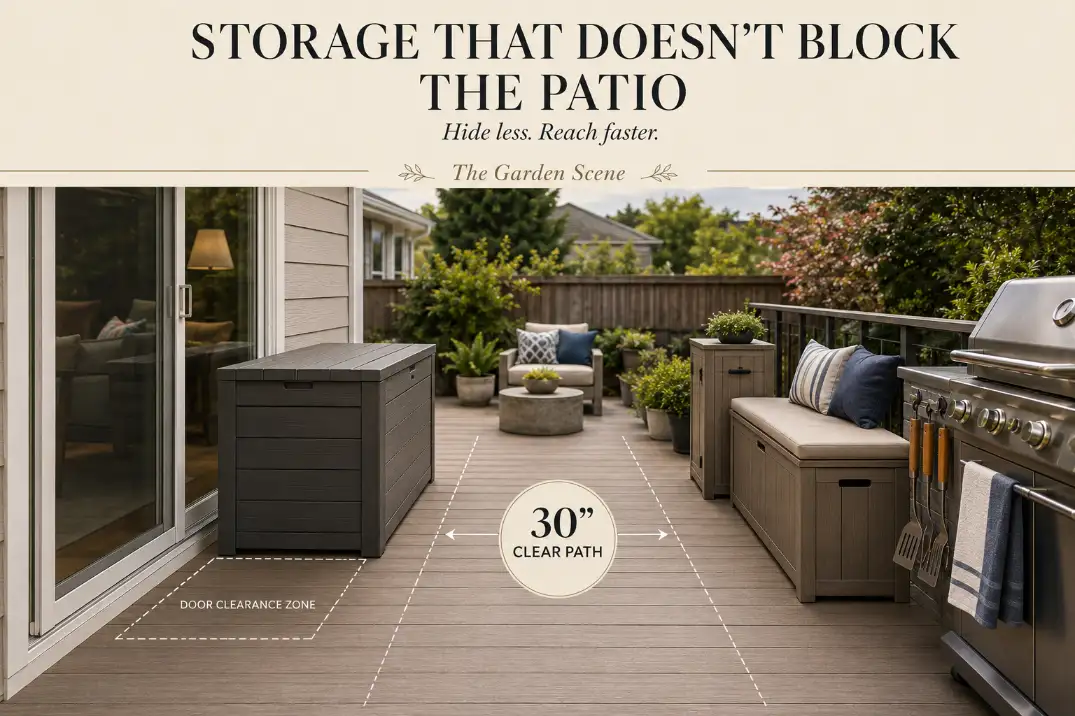
A patio storage idea is only worth adding if the patio stays easy to use after the clutter disappears. The most common failure is not “not enough storage.” It is one oversized box placed near the door, in the walking route, or too close to seating to open without moving something first.
Start with three checks: keep at least 30 inches of clear walking space, preserve about 36 inches around busy door and entry zones, and store daily-use items within roughly 6 to 10 feet of where they are used.
If those conditions are met, most patios can be reset in under 5 minutes. If they are not, a new deck box may hide the mess while making the patio more awkward every day.
That is the difference between storage that looks tidy and storage that actually works. Patio storage should be judged like layout, not like garage organization.
What Patio Storage Actually Needs to Do
The best patio storage ideas solve two jobs at once: they reduce visible clutter, and they lower daily friction. Friction is what makes a patio annoying: moving a chair to open a lid, stepping around a bulky box every time you go outside, or storing wet towels with clean cushions because everything got dumped into one container.
Start with the path, not the box
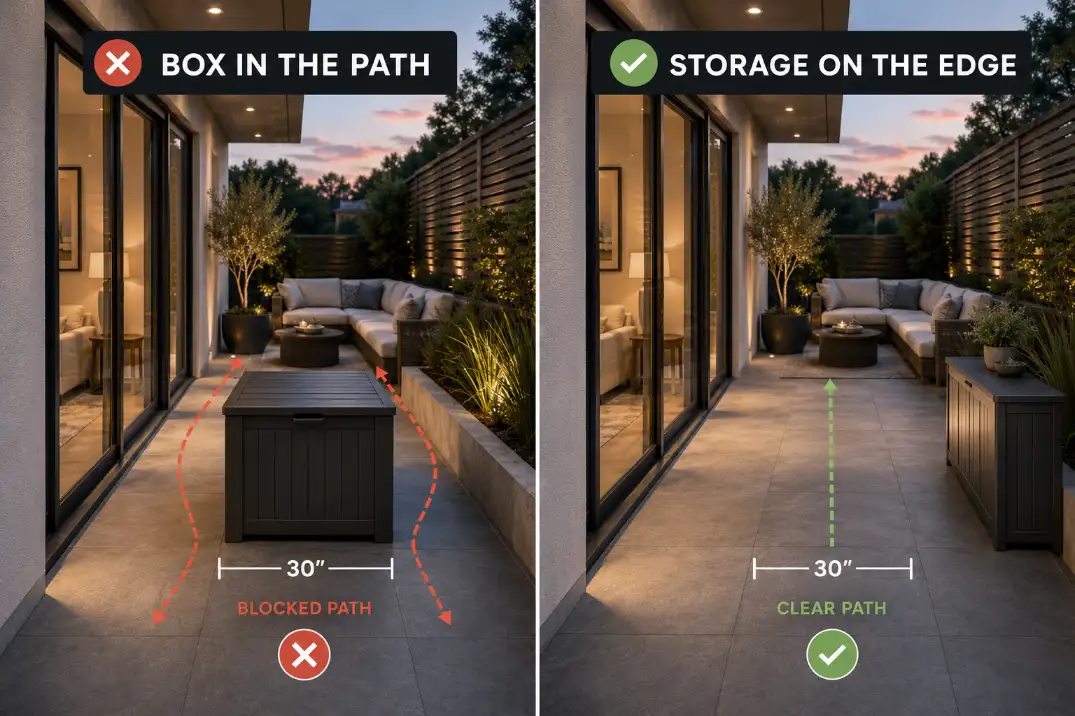
On most patios, the walking path matters more than the container. If the main route from the house to the seating area, grill, or steps narrows below about 30 inches, the space starts to feel tight even if it technically still fits.
Small clutter is often underestimated here. A pair of shoes, a hose nozzle, a toy basket, and a watering can can make a patio feel more irritating than one large object because they create repeated micro-obstacles.
That is one reason clutter can make outdoor spaces feel smaller, especially when the items collect along the same route people use every day. If the issue is visual crowding as much as storage, the deeper problem may be closer to why backyard clutter makes outdoor spaces feel smaller.
Keep daily-use items within reach
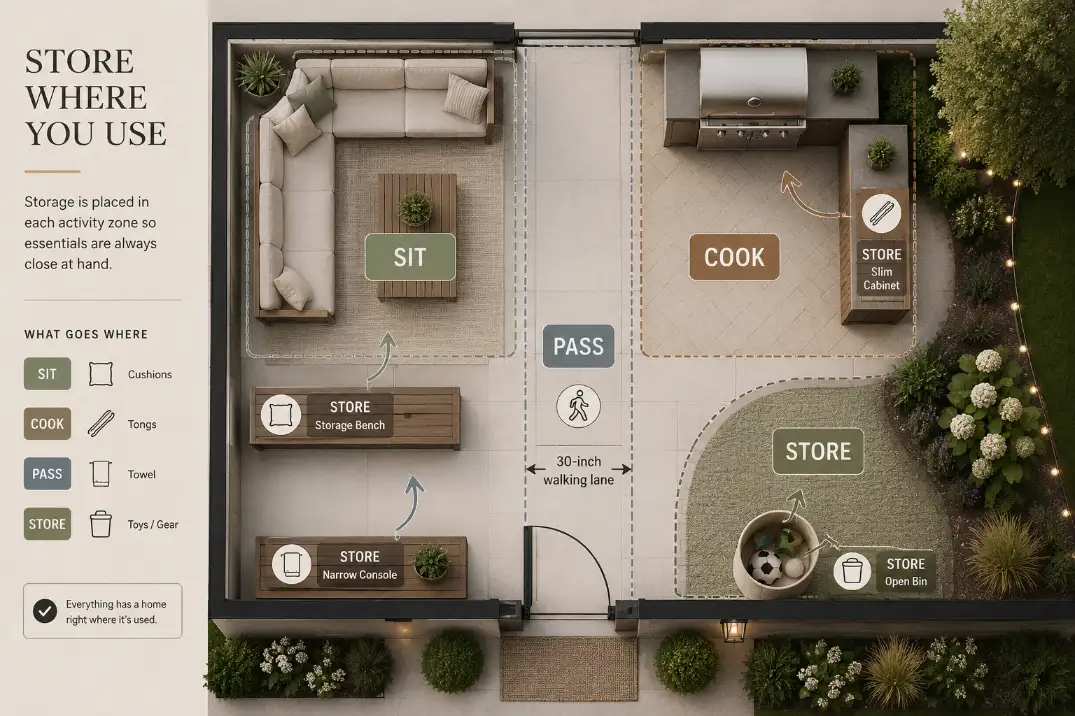
Storage should match behavior, not categories. Grill gloves should live near the grill. Cushion storage should stay near seating. Dog towels should not be mixed with outdoor pillows. If grabbing something takes more than 15 to 20 seconds because another object has to be moved first, that storage system usually fails in real life.
The fast test is simple: if you use an item several times a week, it deserves close-access storage. If it is used monthly or seasonally, it probably does not need to live on the patio at all.
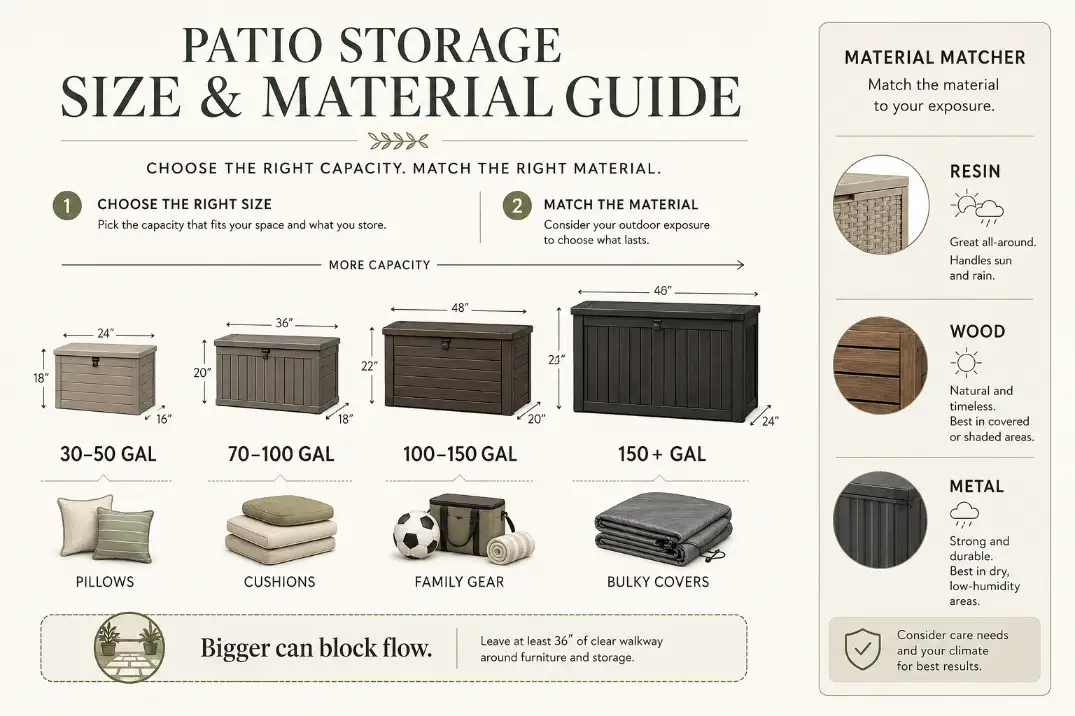
Choose the Right Storage Size Before the Style
Many patio storage decisions go wrong before material or color even matter. The box is either too small to hold what the owner actually wants stored, or so large that it becomes the new obstacle.
| Storage size | Best for | Usually works well when | Starts to fail when |
|---|---|---|---|
| 30–50 gallons | candles, small toys, hand tools, cushions for 1–2 chairs | you need quick-access storage on a small patio | you expect it to hold a full cushion set |
| 70–100 gallons | several cushions, towels, light family gear | you need one moderate box for daily-use items | wet and dry items get mixed together |
| 100–150 gallons | most standard patio cushion sets, furniture covers | the patio has a dead edge or wall for placement | it blocks doors, chairs, or the main route |
| 150+ gallons | bulky covers, pool gear, large family overflow | the patio is large and storage can be spread by zone | you use one giant box to solve a layout problem |
Interior dimensions beat the gallon label
Gallon capacity helps compare storage boxes, but it does not tell the whole story. Cushions need usable length, width, and height. A box can sound large on paper and still fail because the interior is too short for a bench cushion or too shallow for deep-seat back pillows.
Before buying, measure the largest cushion first, then compare it to the interior dimensions, not just the exterior size. Also check lid clearance. A box that technically fits the patio but cannot open fully without hitting a wall, railing, or chair is already the wrong choice.
A useful cushion reality check
Most people underestimate how much space a full cushion set takes. A small chair cushion may fit almost anywhere, but deep-seat back cushions, bench cushions, and sectional pieces fill storage quickly. In many cases, a full seating set realistically pushes storage into the 100 to 150 gallon range.
That does not mean the largest box is smartest. It means the storage size has to match both the cushions and the patio footprint.
When bigger stops helping
A bigger box stops helping when it solves visibility but not usability. This is where many patios waste money. The patio still feels cluttered, so the instinct is to buy more storage volume.
But the real problem is often a mix of oversized furniture, bad placement, and too many items living outside year-round.
Sometimes the better move is not another storage piece at all. It is removing one chair, one ottoman, or one side table the space cannot support.
That same logic appears in when to remove patio furniture from a cramped space: a patio gets easier to use when every object earns its footprint.
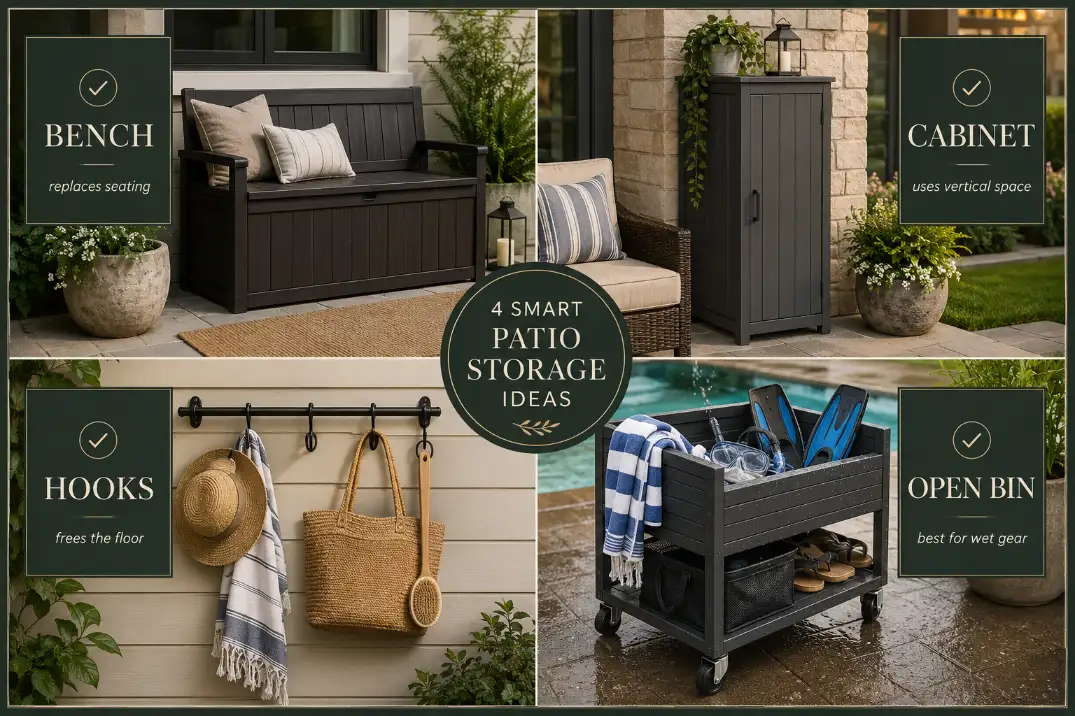
Four Storage Ideas That Actually Earn Their Footprint
Good patio storage does not just fit the patio. It earns the space it takes. The best ideas prevent a specific failure, not just hide things.
1) Storage benches that replace furniture
A storage bench works best when it replaces two loose chairs, a side table, or a random pile of cushions. On tighter patios, that is the smartest version of “more storage” because the piece serves two jobs.
On patios under about 100 to 120 square feet, storage should replace a furniture footprint, not add a new one. Benches around 16 to 20 inches deep are usually easier to live with than bulkier pieces.
If deeper seating already dominates the patio, you may need to rethink the furniture scale first, especially if the overall proportions are already off in the way described in patio furniture layout by size.
2) Slim vertical cabinets for small, constant clutter
A tall, narrow cabinet often beats a wide deck box because it uses vertical volume instead of eating floor space. This is best when the clutter is small but constant: grill brushes, hand tools, plant ties, citronella, serving trays, gloves, and small cleaning supplies.
Depth matters. A cabinet about 15 to 20 inches deep can hold a surprising amount without behaving like another bulky furniture piece.
3) Wall hooks and rails for items that waste box space
Hooks are underrated because they do not look like traditional storage. That is exactly why they work. A short rail can hold a broom, grill tools, gloves, lanterns, a leash, or a watering can with almost no floor impact.
If your clutter is long, skinny, awkward, or grab-and-go, wall storage usually beats boxed storage. A broom laid across a deck box wastes space. Hung vertically, it almost disappears.
4) Open bins or rolling carts for wet, fast-moving gear
Wet gear is where many storage systems break down. Pool toys, dog towels, muddy garden gloves, and kids’ outdoor gear should not live in the same sealed space as clean cushions. Open bins or ventilated carts are often better because they encourage airflow and fast access.
This is not the most polished-looking solution, but it is often the one a busy patio will actually use.
Pro Tip: Store by behavior, not by category. The things used together should live together, even if they are technically different types of items.
Deck Box Details That Matter More Than They Seem
A deck box can be the right answer, but only when the details match the way the patio is used.
Look for a lid you will actually use
Large lids can be awkward, especially when the box is full. A soft-close or hydraulic-assisted lid is not just a nice feature; it can make the storage safer and easier for families, especially when kids are around. If the lid feels heavy in the store or looks flimsy online, it will probably become annoying once the box is loaded.
Lockability helps with wind as much as security
A lockable lid is useful for keeping items secure, but on exposed patios it also helps keep the lid from lifting in wind. This matters on open decks, side yards, and patios in windy regions where a lightweight lid can slap open or let rain blow inside.
Assembly is part of the buying decision
Large outdoor storage boxes are not always difficult to assemble, but they are rarely as effortless as the product photo suggests. Hinges, lid alignment, and panel stiffness matter. If reviews mention poor lid fit or gaps at the seams, pay attention. Those issues affect both usability and weather resistance.
Match Storage to the Patio Zone
The strongest storage plan is not one big storage unit. It is a set of smaller storage decisions tied to where things happen.
The door zone needs the least obstruction
The area right outside the door is usually the most valuable space on the patio because it handles foot traffic, trays of food, pets, groceries, and quick movement in bad weather. This is where bulky storage pieces cause the most regret.
If the door zone is shallower than about 5 feet, avoid storage pieces that project more than roughly 16 inches into that path. On spaces shaped by entry routes, furniture and storage both need to respect circulation in the same way covered in patio layouts with sliding glass doors and walkways.
The seating zone should protect comfort
Cushion storage belongs near seating, but not at the expense of comfort. Around lounge seating, leave about 18 inches for side access and 24 to 30 inches where people need to pass through. A storage bench along the edge usually performs better than a large center-placed box.
The grill zone should stay close but safe
Storage near a grill should be tight to the task but not tight to the heat. Grill gloves, tongs, foil, thermometers, and cleaning brushes should stay nearby, but cushion boxes, paper napkins, and mixed household clutter should not be piled into the cooking zone.
A slim side cabinet works better than a bulky container parked in the route between the grill and dining area. On smaller patios where cooking already competes with seating, small patio grill placement and dining area is often the more important decision before adding another storage piece.
The garden or play edge can handle wet storage
The least formal edge of the patio is usually the best place for breathable bins, toy baskets, or garden-supply storage. These are the items that create visible mess fast but do not require furniture-grade storage.
What People Usually Misread First
The biggest misread is assuming visible clutter automatically means “buy a deck box.” Often, that is the symptom. The underlying mechanism is bad storage placement, mixed item types, or furniture that already consumes the usable patio.
Weather-resistant is not climate-controlled
Most outdoor storage boxes should be treated as rain-shedding storage, not climate-controlled storage. Many products can handle normal rain, but wind-driven rain, humid air, snowmelt, and condensation can still get inside.
If you are storing cushions, open the box within 24 hours after a heavy rain. If the interior smells damp, the bottom feels wet, or condensation appears inside the lid, do not trust that box for uncovered long-term cushion storage without liners or a better location.
This is especially important in humid regions, coastal climates, and patios where the box sits directly on concrete or in roof runoff. In those conditions, a slightly raised base, a better lid seal, and occasional venting matter more than the word “weatherproof.”
A hidden mess can still be a bad system
If a storage piece cannot be opened fully without moving chairs, if everyone stacks items on top of it, or if wet and dry gear constantly get mixed together, the storage is failing even if the patio looks cleaner from a distance.
One practical signal matters more than most people realize: cleanup speed. A good patio storage system should make daily reset take less than about 5 minutes. When it takes longer, people start abandoning the system.
The standard fix stops making sense when layout is the real issue
Once a patio already feels crowded, adding a large storage box can be the wrong fix. If storage competes with the door route, chair pull-out space, or the spot where people naturally stand and talk, the problem is no longer a storage shortage. It is a layout conflict.
That is when divided storage usually beats a larger single box: one bench for cushions, one cabinet for tools, one open bin for wet gear.
Material Choices That Actually Change the Outcome
Material matters less than placement, but it still changes maintenance, appearance, and lifespan.
Resin and plastic: usually the safest all-around choice
For most patios, resin or quality outdoor plastic is the most forgiving option. It is usually lighter, easier to clean, and better at handling rain without the maintenance burden of wood. It is also the easiest material to recommend for exposed patios where function matters more than visual warmth.
Wood: best under cover or in style-led patios
Wood benches and cabinets can look better than plastic, but they ask more from the owner. They usually make the most sense on covered patios or when the storage piece is acting partly as furniture. On exposed patios in wet or freeze-thaw climates, maintenance becomes part of the storage decision whether you intended it or not.
Metal and wicker-look storage: useful in the right role
Powder-coated metal cabinets can be slim and practical, especially for tool storage. Wicker-look resin pieces often blend better into lounge areas and can visually soften the patio. The main question is not style alone. It is whether the material fits the item being stored, the weather exposure, and the level of upkeep you will tolerate.
Quick Storage Check Before You Buy Anything
Use this checklist before adding a new patio storage piece:
- Does it keep at least 30 inches of clear walkway in the main path?
- Can the lid or door open fully without moving other furniture?
- Will the stored items sit within 6 to 10 feet of where they are used?
- Are wet items separated from clean cushions or fabrics?
- Does the piece replace a footprint or add a new obstacle?
- Are the interior dimensions large enough for the biggest item?
- Will the storage still make sense after rain, humidity, wind, or winter storage conditions?
If two or more answers are no, the product is probably the wrong type, the wrong size, or the wrong location.
Best Patio Storage Ideas by Situation
For small patios under 100–120 square feet
Use the perimeter. Choose a storage bench, wall rail, slim cabinet, or storage side table before you choose a big deck box. If the piece floats in the middle of the patio, it will probably behave like clutter.
For family patios with toys and pets
Open bins and forgiving systems work better than deep sealed boxes for active items. The more perfect the system has to be, the less likely it is to survive everyday use. For families, a storage system that looks 80% tidy but gets used every day beats a beautiful cabinet everyone avoids.
For larger patios and decks
Do not automatically size up to one giant box. Spread storage by zone instead. Large patios usually perform better with smaller storage points near seating, cooking, play, and garden areas rather than one oversized container that is always a little too far from something.
For wet climates and uncovered patios
Choose raised storage, air items out every 1 to 2 weeks during heavy-use months, and never store damp cushions long-term in an enclosed box. Mold prevention is usually more about drying habits than marketing claims.
For winter climates
Empty, clean, and dry storage before the cold season. Freeze-thaw cycles expose weak seals and hinges fast. Fabric left damp for months will rarely come out better in spring.
Questions People Usually Ask
What size deck box do I need for patio cushions?
For a few loose cushions, 70 to 100 gallons can work. For a fuller patio set, especially deep-seat or sectional cushions, 100 to 150 gallons is a more realistic range. Always check interior dimensions before buying.
Is a storage bench better than a deck box for a small patio?
Usually, yes, if it replaces seating or another furniture piece. On small patios, storage that does double duty is often smarter than a separate box that takes up another footprint.
Are outdoor storage boxes actually waterproof?
Not always. Many are weather-resistant, which means they shed normal rain but may still allow moisture from wind-driven rain, condensation, or damp ground conditions. For cushions, check the interior after heavy rain before trusting it for long-term storage.
What should not be stored outside on a patio?
Avoid storing paint, pesticides, pool chemicals, fuel, paper goods, and delicate textiles in patio storage. Exposure, moisture, heat, freezing, and access by children or pets can turn convenience into a safety problem.
The Bottom Line
The best storage ideas for patios are not the ones that hold the most. They are the ones that protect the walking path, shorten cleanup time, and keep the things you use most close to where you use them.
That usually means smaller, smarter, zone-based storage rather than one oversized box.
If a storage piece blocks the door route, crowds seating, traps damp fabric, or creates another thing to walk around, it is not helping enough. Start with access, movement, and behavior.
Then choose the smallest storage solution that actually supports how the patio works.
For broader safety guidance on storing household and garden chemicals, see University of Minnesota Extension.