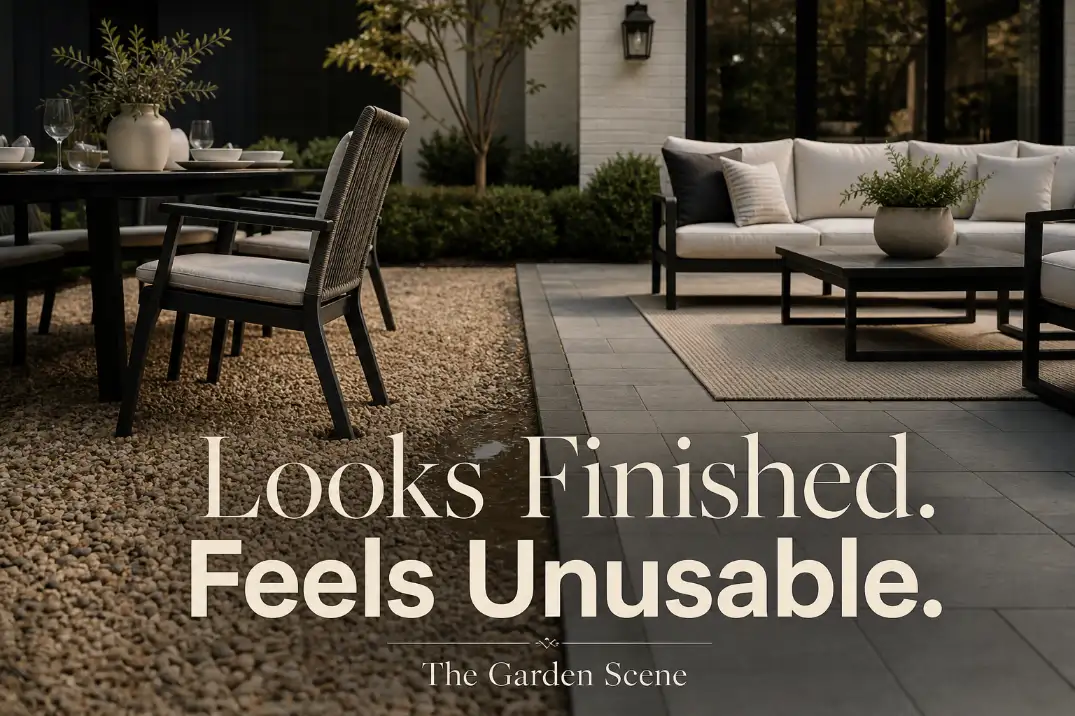
Backyard surface choice affects usability by deciding whether the space supports furniture, drains quickly, stays safe underfoot, and cleans up without turning every weekend into maintenance.
The common mistake is choosing for how a surface looks on installation day instead of how it behaves after rain, heat, pets, foot traffic, and repeated chair movement.
Start with the checks that actually change the outcome: does water clear within 24 hours, do chair legs stay level under real weight, and can someone walk from the back door to the main seating area without crossing mud, loose stone, slick algae, or an awkward edge?
If the same spot is still soft, wet, or slippery 36 to 48 hours after normal rain, the surface is reducing how often the backyard can actually be used.
A stain may be annoying. A rocking table, spreading gravel, hot patio, slick shaded slab, or soggy transition is different. Those are surface-performance problems.
The Surface Is Doing More Work Than It Looks Like
A backyard surface is not just a finish layer. It carries weight, manages water, absorbs heat, creates traction, and controls how much cleanup is needed before anyone sits down.
Load comes first in activity zones
Dining, grilling, and lounging require firm support. A chair leg creates a narrow point load. A grill wheel adds rolling pressure. A serving cart, walker, stroller, or cooler needs a surface that does not shift underneath it.
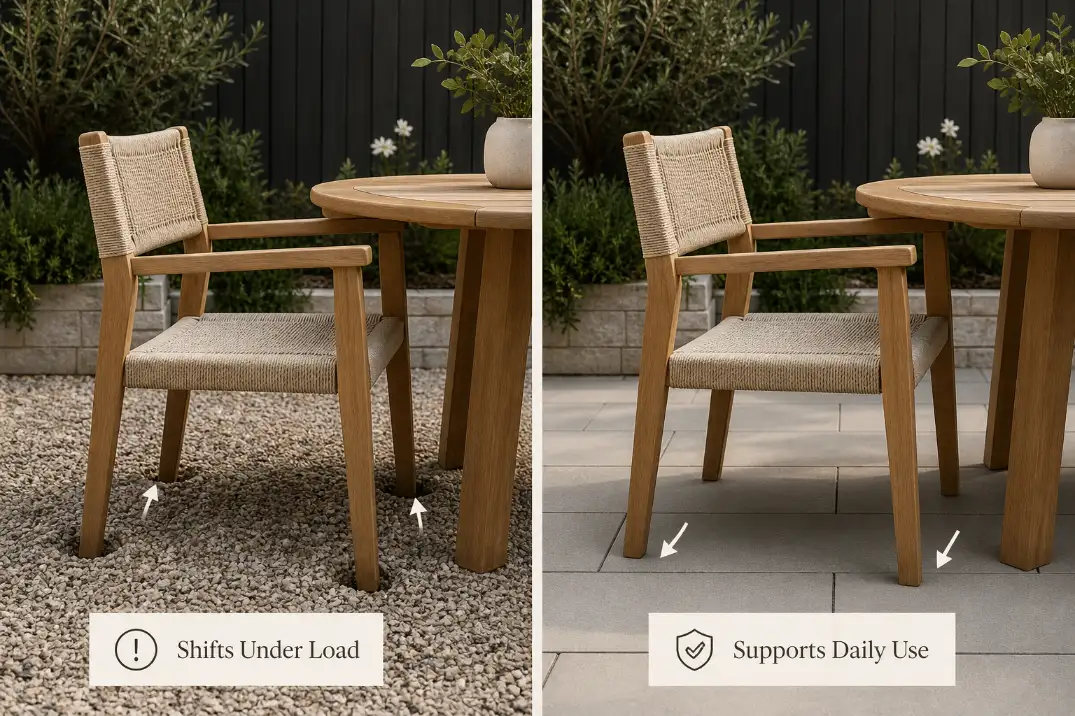
That is why loose surfaces often disappoint in high-use zones. Pea gravel may photograph well, but under dining chairs it can move, sink, and spread. Mulch may soften a planting edge, but it does not belong under furniture that needs to stay level.
For the hardest-working parts of the yard, stability matters before style. Concrete, well-installed pavers, stone on a proper base, porcelain pavers, and correctly framed decking usually perform better under repeated use. If the issue is a table that never sits flat, the furniture is often not the real problem. The surface is.
Water decides when the yard is available again
Drainage is not only about preventing damage. It is about recovery time. A backyard that stays wet for two days after ordinary rain loses usable time, especially for families, pets, and people who use the patio daily.
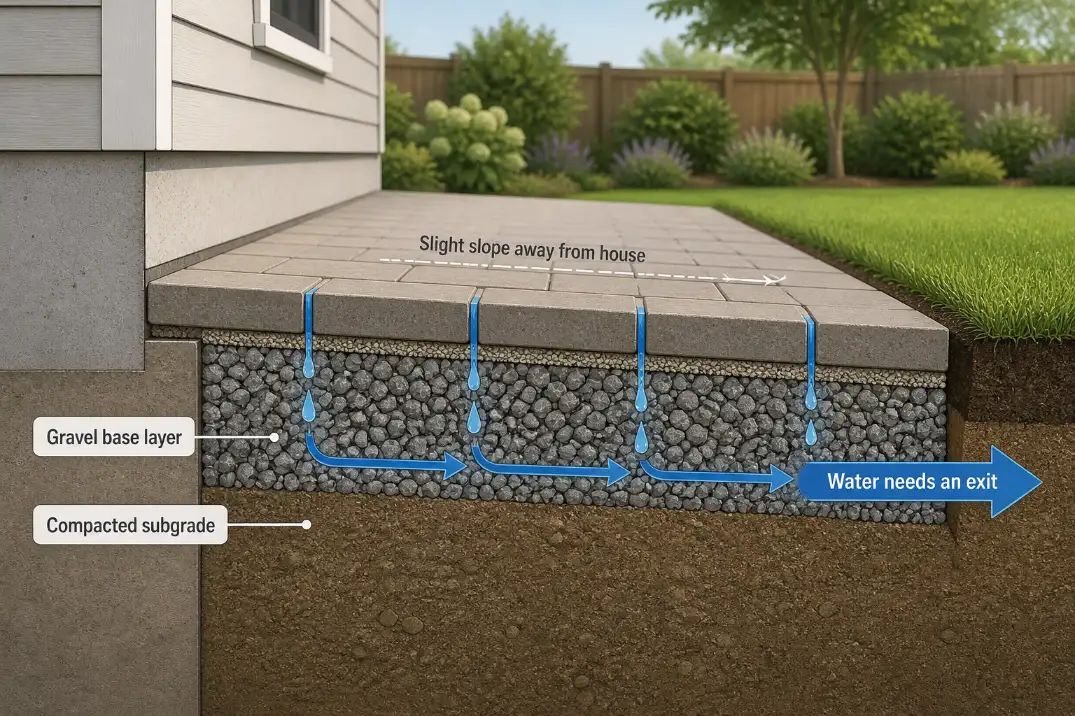
A healthy hardscape should usually be walkable within 12 to 24 hours after moderate rain. Standing water, slick film, or soft soil after 36 to 48 hours points to a deeper issue: poor slope, a low spot, compacted soil, failed base material, or runoff from another part of the yard.
Near the house, the stakes are higher. A patio that sends water toward the foundation is not just inconvenient. It is failing one of its basic jobs. A common patio slope target is about 1/8 to 1/4 inch per foot away from the house, depending on the material, climate, and site conditions.
Heat, traction, and cleanup decide comfort
A surface can be stable and still unpleasant. Dark pavers, artificial turf, composite decking, and dense concrete can become uncomfortable in full afternoon sun, especially in Arizona, Nevada, inland California, and other hot regions. In humid Florida or shaded Southeast yards, slickness from algae and slow drying may matter more than heat.
Cleanup matters too. A quick weekly sweep is normal. Pressure washing every 2 to 3 weeks during warm weather is a clue that the surface is holding moisture, catching organic debris, or sitting in a poor airflow zone.
Match the Surface to the Backyard Job
The best surface depends on what that area has to do. A backyard can use multiple surfaces well, but only if each one has a clear role.
| Backyard use | Better surface choices | Weak primary choices | Why it matters |
|---|---|---|---|
| Dining area | Concrete, pavers, porcelain, decking | Loose gravel, mulch, thin lawn | Chairs and tables need level support |
| Grill zone | Concrete, pavers, stone | Mulch, turf, loose gravel | Grease cleanup, wheel stability, and fire safety matter |
| Main walkway | Concrete, pavers, tight stepping slabs | Loose mulch, sparse stepping stones | Daily routes need predictable footing |
| Kids’ play area | Lawn, turf, rubber, smooth compacted surfaces | Slick sealed concrete, sharp gravel | Comfort and fall tolerance matter |
| Pet zone | Turf with drainage base, gravel dog run, durable lawn | Loose mulch in digging areas | Odor, mud, and wear show quickly |
| Wet shaded corner | Permeable pavers, gravel with proper base, drainage correction | Solid slab over a low spot | Recovery time decides usability |
A main route should usually be at least 36 inches wide. If two people pass often, or someone carries food, tools, or laundry through the space, 48 inches feels noticeably better. Width alone does not fix a bad surface, but a narrow route over loose or slick material makes every weakness harder to ignore.
What People Usually Misread First
They overestimate soft surfaces
Soft surfaces feel relaxed and natural in a design plan. Lawn, mulch, pea gravel, and artificial turf can make a backyard look less rigid. But softness is not the same as usability.
Loose gravel is the most common example. It drains well and can be attractive, but it performs poorly under narrow chair legs, high heels, grill wheels, walkers, and rolling carts. That does not make gravel a bad material. It makes it a poor primary surface for precision activities unless it is stabilized, compacted, and contained.
The same is true of lawn. Grass is comfortable and cooling, but it cannot tolerate every job. A repeated route to a grill, shed, side gate, or dog area can wear into mud long before the rest of the yard looks damaged.
They underestimate the seams
Many surface failures start at transitions: patio to lawn, gravel to pavers, deck stairs to mulch, or walkway to seating area. The material in each zone may be acceptable, but the seam becomes where water collects, gravel spreads, mud forms, or shoes catch.
A raised edge of about 1/4 inch or more is worth correcting on a main path, especially near doors, steps, dining areas, and grill zones. It may not look dramatic, but it can catch shoes, cart wheels, and chair legs.
If water collects where a hard surface meets the house, the finish is secondary. The more important question is why the low point exists. Patio Water Pooling Against the House is useful here because the puddle is only the visible symptom; the slope and discharge path are the mechanism.
They blame the material when the base failed
Pavers that dip, gravel that disappears into soil, concrete that cracks, and turf that smells after rain may all look like surface problems. Often, the surface is only reporting what the base, grade, or drainage system is doing underneath.
That is why a cheap surface swap can disappoint. Adding gravel to a muddy low spot may help briefly, but if runoff still feeds that spot, the gravel eventually silts up and softens. Replacing old pavers with new ones will not solve repeated settling if the base is still weak.
How Common Backyard Surfaces Actually Perform
Concrete: stable, clean, and unforgiving
Concrete is one of the strongest choices for dining areas, grill zones, rolling carts, and accessible routes. It is firm, continuous, and easy to sweep.
The drawback is that concrete is difficult to correct after installation. If it slopes poorly, traps water, or cracks into raised edges, the problem is expensive to hide and harder to repair cleanly. Concrete also gets hot in full sun, especially with darker finishes or exposed afternoon placement.
Concrete makes sense when you need a dependable activity pad. It makes less sense as a cover-up for unresolved drainage, tree-root movement, or unstable soil.
Pavers: repairable, flexible, and base-dependent
Pavers can be one of the best backyard surfaces because they combine support with repairability. Individual units can be lifted, reset, or replaced. That is especially useful in northern freeze-thaw states where soil movement can punish rigid surfaces.
But pavers are not automatically stable. They depend heavily on base depth, compaction, edge restraint, joint material, and drainage. A paver patio over a weak base may look good for the first season, then show dips, open joints, or edge creep within 1 to 3 years.
For homeowners deciding between slab and modular systems, Concrete vs Pavers for a Stable Patio is a better comparison than choosing by appearance alone, because stability comes from the installation system as much as the top surface.
Pro Tip: If pavers keep shifting after one reset, stop treating joint sand as the main fix. The base, edge restraint, or drainage path is probably the real problem.
Gravel: strong for drainage, weak for precision
Gravel is useful when water movement matters and the surface does not need to behave like an outdoor dining room. It can work well on secondary paths, informal fire pit edges, garden access routes, and drainage-sensitive areas.
Its weakness is movement. Gravel spreads, sinks, and collects debris when it is asked to do too much. A 2-inch decorative layer over weak soil is not the same as a built gravel surface with excavation, compaction, edging, and a suitable base.
For wet or runoff-prone yards, the better comparison is not simply hardscape versus stone. It is how each surface manages water. Pavers vs Gravel for Backyard Drainage is helpful when drainage is the real decision driver.
Decking: comfortable, elevated, and maintenance-sensitive
Decking can bridge uneven ground, create a level outdoor room over a slope, and feel more forgiving underfoot than masonry.
But decking introduces its own limits. Boards can become slippery in shade. Gaps collect leaves. Railings can make a small yard feel chopped up if the deck is oversized. Wood may need staining or sealing every 2 to 4 years depending on exposure, while composite reduces some upkeep but can still heat up or feel slick when wet.
Lawn, mulch, and turf: useful around activity, weaker under activity
Grass is cooling and comfortable, but it wears quickly under repeated traffic. A path to a grill, a dog run, or the landing below deck stairs can turn muddy long before the rest of the lawn looks bad.
Mulch belongs in planting beds and informal garden routes, not under daily furniture. Artificial turf can solve mowing and mud, but it can run hot, hold pet odor if drainage is poor, and still require rinsing. These surfaces work best around activity, not under the hardest-working activity.
When the Surface Is Only the Symptom
Poor grade beats good material
If water moves toward the house, collects at a patio edge, or sits in a low corner, changing the finish material may only hide the issue for a season. A prettier surface over the same low spot will still inherit the same water problem.
This matters most near the foundation. A patio that sends water toward the house, traps roof runoff, or holds water at the door should be corrected before the finish is upgraded. The visible puddle is the symptom. The grade is the mechanism.
A weak base makes strong surfaces act weak
A stable surface needs a stable system underneath it. Pavers can sink. Concrete can crack. Gravel can disappear into soil. Deck posts can move. The visible surface gets blamed, but the hidden layer often made the decision months earlier.
This is where many “easy fixes” waste money. More gravel will not correct runoff. More sealer will not fix poor traction if the surface texture is wrong. More joint sand will not stabilize pavers if the edge restraint has failed.
What Changes by Climate and Use
Freeze-thaw regions need repairability
In northern states, repeated freezing and thawing can move soil, open joints, and punish rigid surfaces. Pavers and modular systems can be easier to reset than cracked concrete, but only if the base is built for the climate.
Humid and shaded yards need traction first
In Florida, the Gulf Coast, and shaded Southeast backyards, slow-drying surfaces can become slick even when they look clean. Smooth sealed finishes may feel premium when dry but risky after a humid night or summer storm.
If the area is used by kids, older adults, or pets, the surface should be comfortable without becoming slippery. Best Low-Slip Patio Surfaces for Family Backyards is the kind of choice to make before committing to a finish, not after the first fall scare.
Hot climates need surface comfort
In Arizona, Nevada, inland California, and other high-sun areas, heat can decide whether a patio is usable. A dark hardscape may be technically durable but unpleasant during peak afternoon use. Shade, lighter surface colors, and activity placement can matter as much as the material itself.
Clay-heavy yards need base and drainage discipline
In many Midwest regions, heavy clay soil holds water and moves seasonally. That makes base depth, compaction, slope, and drainage more important than the surface label. A premium paver over a weak base can fail faster than a simpler surface installed with better site preparation.
A Better Way to Choose Backyard Surfaces
Put firm surfaces where the yard works hardest
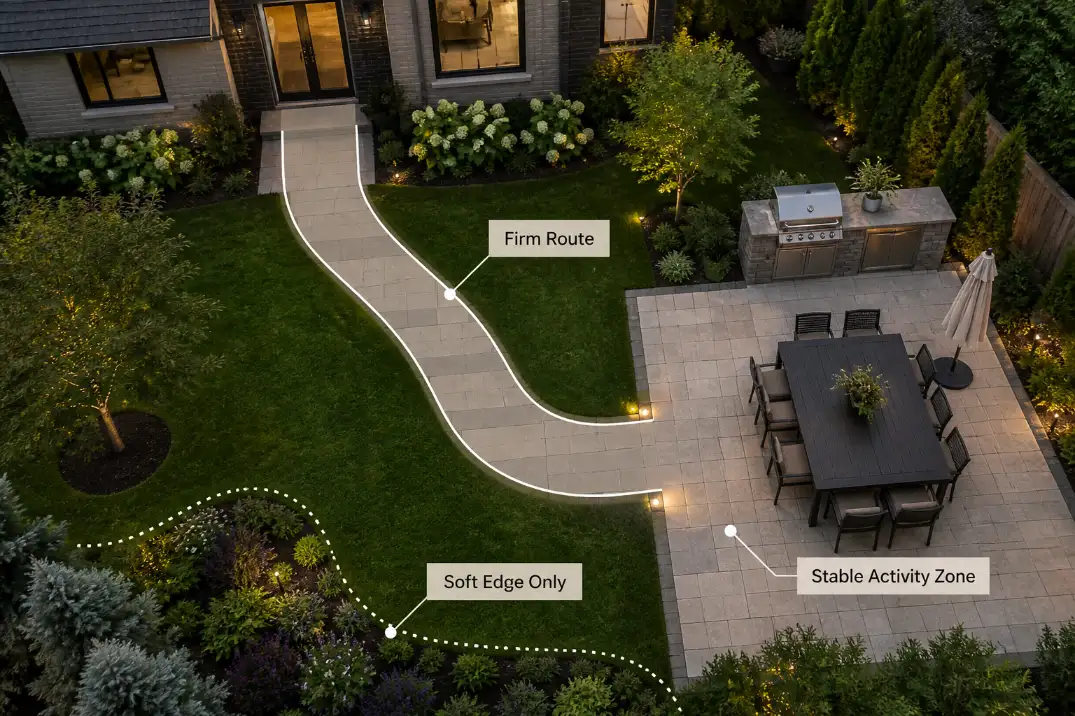
Use stable hard surfaces for the main path, dining pad, grill zone, and any area that carries rolling weight. Use softer or more decorative surfaces along garden edges, informal routes, and lower-traffic transition areas.
If wheels or mobility matter, loose surfaces lose priority on the main route. Strollers, walkers, wheelchairs, rolling coolers, grill carts, and serving trolleys all need predictable footing. A backyard can feel spacious but still be difficult to use if every route crosses loose stone, uneven stepping pads, or soft lawn.
Keep surface types simple
A backyard does not become more usable by adding more materials. Too many surface changes create edges, maintenance differences, and visual clutter. A cleaner strategy is usually better: one primary hard surface for daily use, one secondary surface for garden movement or drainage, and planting to soften the edges.
The best surface choice is rarely the most decorative one. It is the one that lets the backyard recover after rain, support the furniture, stay safe underfoot, and clean up quickly enough that using the space does not feel like preparation.
Know when cheap stops being practical
A lower-cost surface can be smart in the right place. Gravel along a side path, mulch in planting beds, and lawn in open play areas can all make sense. They become expensive when they are forced into high-use jobs they cannot handle.
Once a surface needs attention after every storm, every cookout, or every heavy weekend of use, the original savings start to disappear. At that point, upgrading the activity zone is often more useful than repeatedly repairing the wrong surface.
For homeowners weighing short-term savings against long-term performance, When Cheap Pavers Stop Being a Smart Backyard Choice adds useful context.
The Most Useful Rule
Choose the hardest-working surface for the hardest-working part of the yard. Then use softer, cheaper, or more decorative materials only where they do not have to carry furniture, traffic, water, heat, and cleanup every week.
That is why surface choice affects backyard usability so much. It controls the friction between the design and real life: where water goes, where people walk, where furniture sits, how hot the patio feels, and how often the space is ready without explanation.
Permeable surfaces are especially worth considering where runoff and recovery time shape how often the yard can be used; the U.S. EPA’s permeable pavement resource is a useful starting point for that decision.