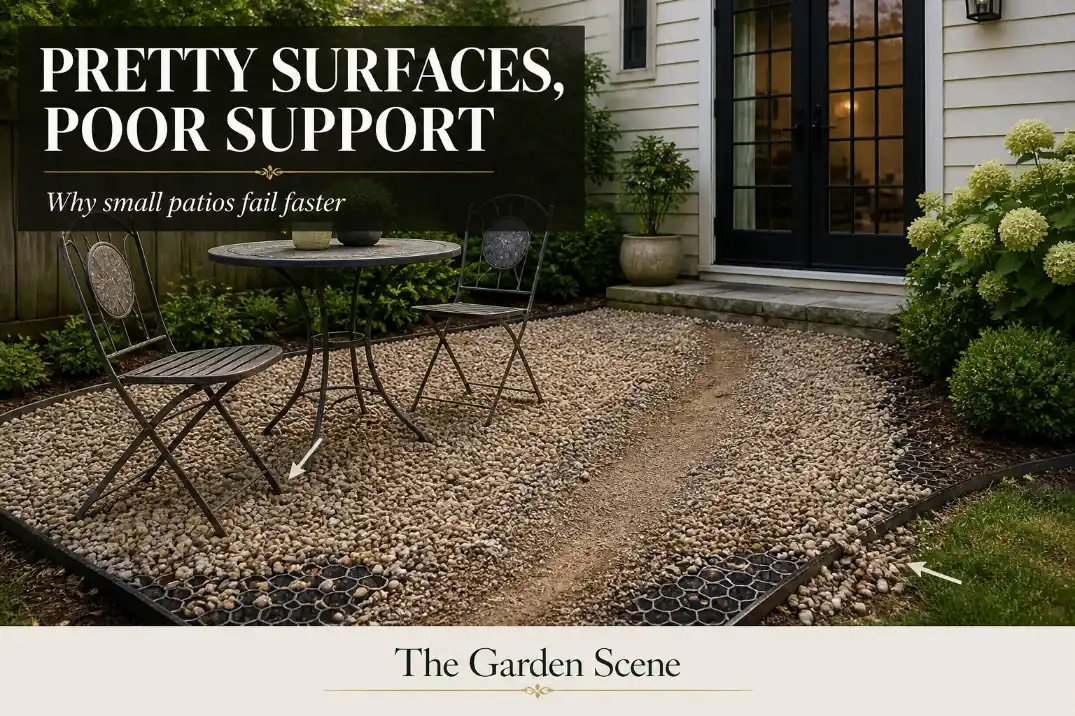
Small backyards expose weak patio materials quickly because the same few square feet take almost every step, chair pull, grill turn, and pet shortcut. A surface that works on a garden path can fail on a 10-by-12-foot patio where dining chairs land in the same spots every night.
The first warning signs are usually practical, not cosmetic: chair legs wobble within 2–4 weeks, loose material spreads more than 6 inches past the edge, or water still sits in low spots 24 hours after rain.
The main distinction is simple. Dirt, pollen, and leaf stains are maintenance issues. Sinking, shifting, rutting, pooling, and repeated edge failure are surface-and-base problems. Cleaning, topping up, or resealing will not fix a patio material that cannot handle concentrated daily use.
Quick Diagnostic Checklist
Use this before replacing furniture or blaming the whole backyard layout.
- Chair legs sink, catch, or rock after normal use.
- Gravel, mulch, or decomposed material spreads more than 6 inches beyond the patio edge.
- The main walking path looks visibly lower than the surrounding surface.
- Water remains on the patio more than 24 hours after moderate rain.
- The surface becomes uncomfortable barefoot above roughly 120°F in direct summer sun.
- Cleanup regularly takes more than 20–30 minutes because debris sits in texture, joints, or loose material.
- The same low spot, rut, or scattered edge returns within 30–60 days of fixing it.
A heavy-use patio surface has to support furniture, drain predictably, clean quickly, and stay inside its edges. That is why generic “best patio material” advice can mislead small-yard owners. The better question is whether the surface supports daily movement in a tight footprint, which is also the core issue behind Backyard Surface Choice and Usability.
The Fastest-Failing Patio Materials in Small Heavy-Use Yards
Pea Gravel Without Serious Edge Restraint
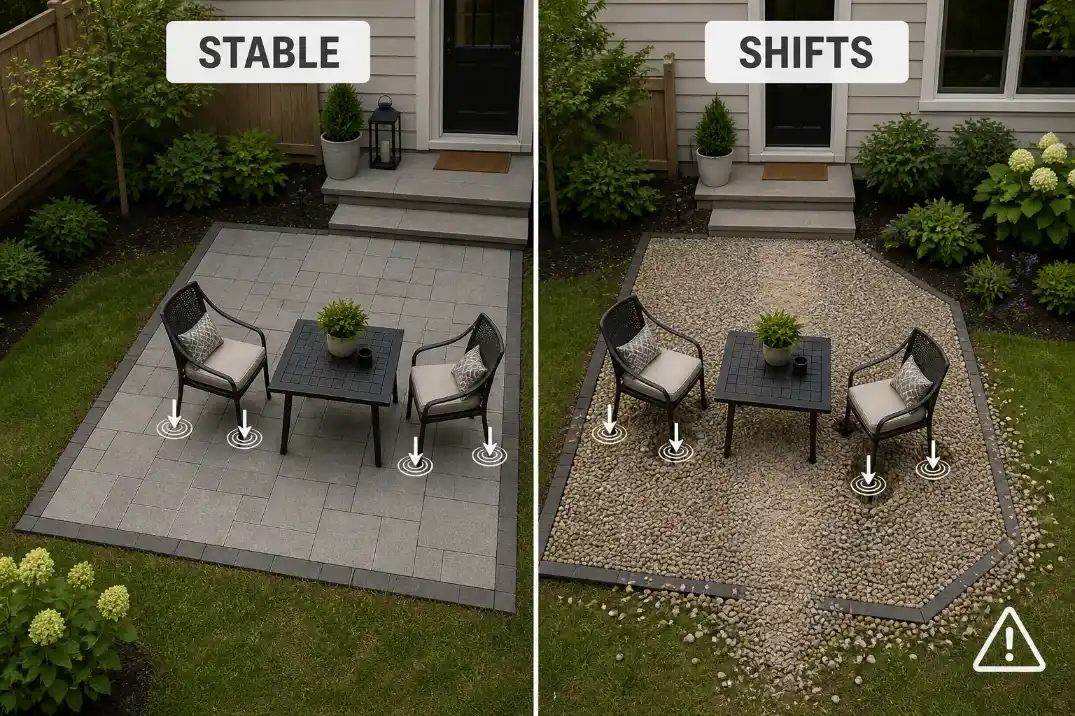
Pea gravel is the classic material that looks charming on day one and annoying by week four. The problem is not drainage. Pea gravel drains well. The problem is that rounded stones roll under pressure, especially under chair legs, table feet, grill wheels, and repeated turning movements.
In a small backyard, traffic does not spread out. The route from the door to the table, the grill, and the seating area often overlaps in one 3-foot-wide corridor. That concentrated wear pushes gravel into lawn, planting beds, and door thresholds.
The working depth is also unforgiving. Less than about 2 inches can expose fabric or base. More than about 3 inches makes furniture sink. That narrow range is why many gravel patios become a cycle of raking, topping up, and sweeping stones back into place.
Pro Tip: If a loose stone surface is still the goal, angular crushed stone usually performs better than rounded pea gravel because the particles lock together instead of rolling.
Mulch or Wood Chips Used as a Patio Surface
Mulch belongs in planting beds, not under dining chairs. It compresses, decomposes, floats in heavy rain, and tracks indoors. In humid climates such as Florida or the Gulf Coast, organic mulch can stay damp for days after rainfall, especially in shaded corners.
The failure pattern usually appears within one season. A fresh 2–3 inch layer may look level at first, but daily foot traffic grinds down the main path. After 3–6 months, the sitting zone often shows exposed fabric, muddy pockets, or uneven depressions.
The common wasted fix is adding more mulch. That refreshes the color, but it does not create load support. Once the area holds chairs, a grill, or frequent foot traffic, the surface needs structure rather than another soft layer.
Mulch is especially weak around cooking zones because grease, ash, and food debris are difficult to remove from fibrous material. If the patio also needs to support a grill, Best Surfaces Around a Backyard Grill is a better starting point than choosing by appearance alone.
Thin Plastic Grid Pavers Over Soil
Plastic grid systems can work when they are installed over a proper base and filled correctly. They fail when treated as a shortcut over uneven soil. In a heavy-use small yard, the weak spots show fast because the same cells carry the same pressure every day.
The typical failure is gradual distortion: corners lift, cells telegraph through the fill, and the path from the door to the seating area becomes lumpy. After a few wet weeks, grids placed over soft soil can feel worse than the original ground.
A repair stops making sense when more than 10–15% of the grid field rocks, cups, or sits lower than adjacent panels. At that point, replacing a few pieces treats the symptom. The real issue is usually the missing compacted base.
Unstabilized Decomposed Granite
Decomposed granite can be useful in dry climates and casual garden paths, but unstabilized DG is risky for a small patio with dining chairs or pets. It powders, tracks into the house, and ruts where feet turn repeatedly.
In dry desert conditions in Arizona or inland California, loose fines can become dusty during long hot stretches. After rain, low spots may crust, wash, or collect sediment. A rut only 1/4 inch deep may not seem serious, but under a four-leg chair it is enough to create constant rocking.
Stabilized decomposed granite is better, but it still needs grading, compaction, binder, and firm edging. If the patio is already fighting runoff, surface choice alone will not solve the problem.
Pavers vs. Gravel for Backyard Drainage helps separate water movement from furniture stability, which is where many small patio decisions go wrong.
Patio Substitutes That Also Fail Under Heavy Use
Artificial Turf Over a Weak Base
Artificial turf solves mowing. It does not automatically solve patio performance. In small backyards, turf used as a patio substitute can mat down under chairs, hold pet odor, show seams, and become hot in direct sun. Dark synthetic surfaces can feel uncomfortable barefoot well before surrounding planted areas do, especially during summer afternoons.
The issue readers often underestimate is drainage below the turf. If water or pet urine cannot move through the base and away from the use zone, the surface may look neat while smelling stale.
Furniture also creates depressions that do not behave like natural lawn wear because the fibers and infill are being compressed in the same few points.
Artificial turf can work for play zones. It is much less convincing as a dining or grill surface.
Snap-Together Deck Tiles on Uneven Ground
Wood or composite deck tiles look like a clean shortcut, but they are only as stable as what sits below them. Over uneven soil, tired concrete, or a poorly drained corner, they rock, trap debris, and hold moisture underneath. In shaded yards, that trapped dampness can encourage slick algae on nearby hard surfaces and musty buildup below the tiles.
Properly built decks are a different category. The problem is the floating tile system used as a quick patio cover. When chair legs hit tile seams or grill wheels twist across the surface, small movements become obvious fast.
Dark composite tiles also overheat in exposed summer sun. That may be tolerable on a decorative balcony, but it is a poor fit for a family patio where people walk barefoot or pets lie near the door.
Worst Fit by Use Case
| If your small patio is mainly used for… | Avoid first | Why it fails fastest | Better direction |
|---|---|---|---|
| Dining chairs | Pea gravel, wide soft joints | Chair legs sink, catch, and wobble | Concrete pavers or broom-finished concrete |
| Grill station | Mulch, artificial turf | Grease, heat, ash, and cleaning problems | Concrete, dense pavers, porcelain rated for outdoors |
| Pets and kids | Loose fines, weak turf base | Tracking, odor, muddy wear paths | Textured concrete or tight-joint pavers |
| Shaded humid yard | Wood chips, slick sealed stone | Slow drying and algae risk | Light-textured pavers with good slope |
| Freeze-thaw climate | Thin grids over soil | Base movement and winter heaving | Proper base with pavers or concrete |
| Hot exposed patio | Dark stamped concrete, dark composite | Surface heat limits comfort | Lighter textured concrete or pavers |
What Matters More Than the Material Name
Base Depth Decides Whether Hard Surfaces Stay Stable
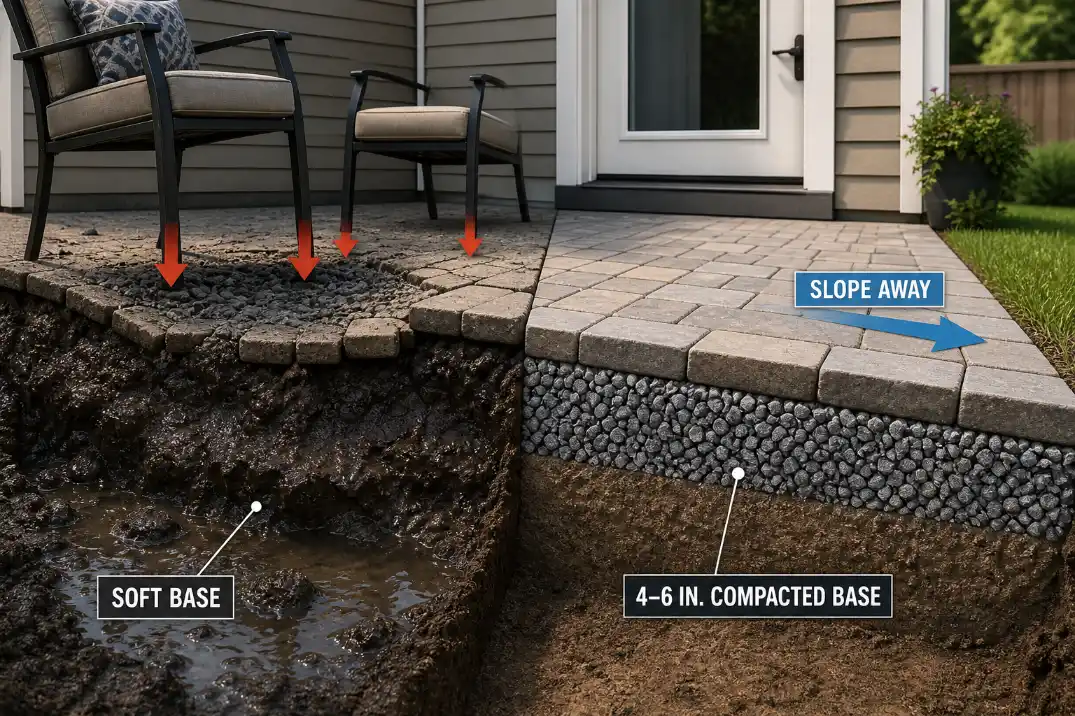
A patio surface is only the visible layer. For many small paver patios, the real performance comes from 4–6 inches of compacted aggregate base beneath the surface. In northern states with freeze-thaw winters, poor drainage under that base can lift and drop sections over winter, creating wobble by spring.
This is why cheap pavers can perform badly while better-installed pavers perform well. The material gets blamed, but the mechanism is base movement. If a patio rocks after rain or settles along the main walking line, the surface is showing a base problem.
Edge Control Decides Whether Loose Surfaces Survive
Loose materials fail from the edges inward. Every chair movement and footstep pushes material outward. A decorative border sitting loosely on soil is not enough restraint for daily lateral pressure.
Small patios expose this faster than large spaces. A 300-square-foot gravel courtyard spreads wear across multiple routes. A 90-square-foot backyard pad has no spare route. The entry path, seating zone, dog path, and grill zone often overlap.
Drainage Decides Whether Solid Surfaces Age Well
Solid surfaces do not scatter, but they can pool water, stain, grow algae, or undermine the base if water has nowhere to go. A patio should generally slope away from the house at about 1/8 to 1/4 inch per foot. Less than that can leave water sitting. Much more can make furniture feel awkward.
Water pooling near the house is more important than a cosmetic stain. If puddles sit near siding, thresholds, or foundation walls after rain, replacement should not be the first move. The drainage pattern needs correction before the next surface goes in. Patio Water Pooling Against the House goes deeper into that specific risk.
What Changes by US Climate
Humid Southeast
In humid areas, the worst surfaces are the ones that stay damp, trap organic debris, or become slick in shade. Mulch, wood chips, glossy sealed stone, and poorly drained turf can look clean at installation but become unpleasant after repeated rain.
Desert Southwest
In hot, dry regions, heat and dust matter more. Dark composite, dark stamped concrete, and loose decomposed fines can make a patio uncomfortable or messy. A material that looks natural in a design photo may track grit indoors every time someone crosses the threshold.
Northern Freeze-Thaw States
Freeze-thaw climates punish thin installations. Plastic grids over soil, pavers over weak base, and poorly drained joints can shift after winter. The visible symptom is unevenness, but the mechanism is water expanding and moving the base below.
Coastal and Rainy Regions
Coastal California, the Pacific Northwest, and rainy Midwest stretches reward surfaces that dry quickly and resist algae. Texture helps, but too much texture traps dirt. This is where cleanability and slope matter as much as appearance.
The Cheap Material That Becomes Expensive First
The cheapest surface is often the one that needs the most correction. Pea gravel can require stronger edging, periodic top-ups, and repeated leveling. Mulch has replacement built in, often every 6–12 months in active areas. Unstabilized fines can need regrading after storms or heavy use.
The most common wasted fix is adding more loose material to a patio already failing from movement. More pea gravel can make chairs sink deeper. More mulch gives a fresher-looking unstable surface. More decomposed granite creates more dust unless the binder, compaction, edging, and drainage are corrected.
A useful rule: if the same defect returns within 30–60 days, maintenance is no longer maintenance. It is delayed replacement or base repair.
Better Replacements, Ranked by What They Solve
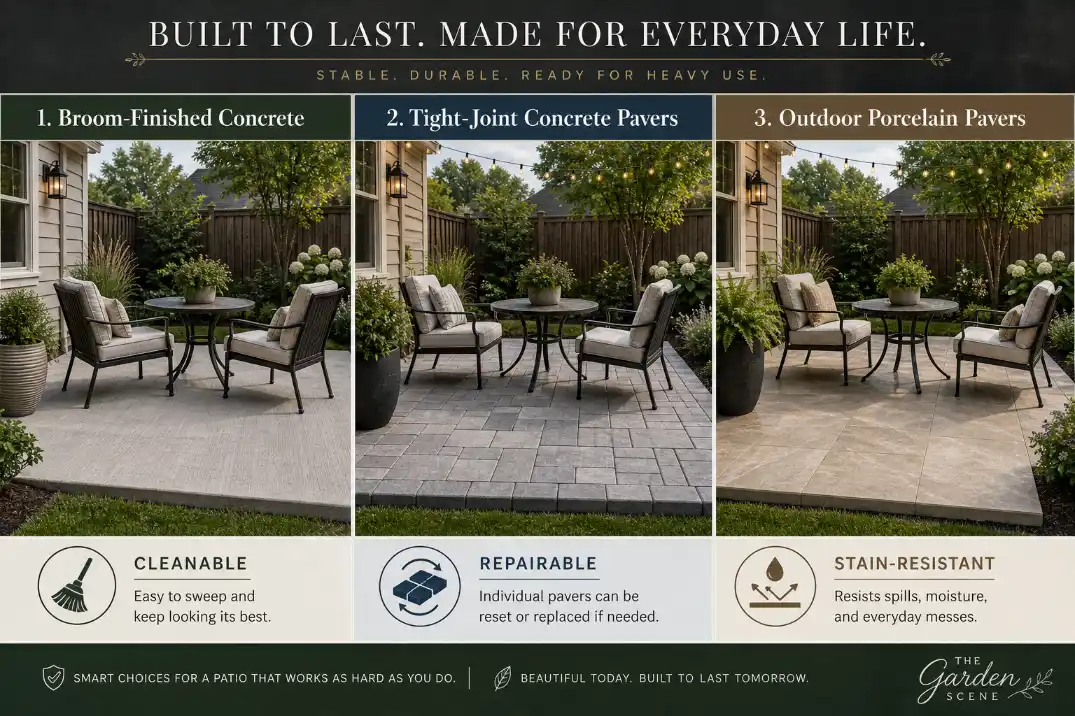
Best Everyday Choice: Broom-Finished Concrete
Broom-finished concrete is not the most romantic option, but it performs well in heavy-use small backyards. It supports furniture, cleans quickly, handles grill movement, and does not migrate into lawn or beds.
The weak points are finish and drainage. A slab that is too smooth can become slick. A dark slab can become too hot in summer sun. A poorly sloped slab can hold water. The best version is usually simple: light to medium color, visible texture, correct slope, and planned control joints.
Best Repairable Choice: Concrete Pavers on a Proper Base
Concrete pavers are often the most forgiving long-term option because settled areas can sometimes be lifted and reset. They work especially well where future access, spot repair, or design flexibility matters.
The catch is installation. Pavers over a weak base are not meaningfully better than any other shortcut. For heavy-use patios, choose firm, even pavers with tight joints rather than highly irregular textures that catch chair legs. For a deeper comparison, Concrete vs. Pavers for a Stable Patio is the more useful question than which material looks better on day one.
Best Clean-Looking Upgrade: Outdoor Porcelain Pavers
Outdoor porcelain pavers can be excellent where stain resistance and a clean look matter. They resist many spills better than porous stone and can make a compact yard feel more finished.
They are not a budget shortcut. Porcelain needs the right outdoor slip rating, stable installation, and careful edge detailing. Indoor tile logic does not apply. In a small heavy-use backyard, porcelain works best when the goal is a firm, easy-clean surface rather than a rustic garden floor.
Best Limited-Use Compromise: Angular Crushed Stone
Angular crushed stone can work better than pea gravel because it interlocks. It is still not ideal for dining chairs, but it can be acceptable for casual seating if the patio has hard edging, a compacted base, and a realistic maintenance expectation.
Use it where occasional raking is acceptable. Avoid it where the main goal is stable dining, grilling, or barefoot comfort.
Questions People Usually Ask
Is gravel ever okay for a small backyard patio?
Yes, but mainly for casual seating or low-traffic areas. It is a poor choice for dining chairs, grill wheels, and daily routes unless the stone is angular, the edging is strong, and some maintenance is expected.
What is the lowest-maintenance patio surface for heavy use?
For most small backyards, broom-finished concrete or properly installed concrete pavers are the safest low-maintenance choices. They support furniture, clean faster, and do not need repeated raking or top-ups.
Is artificial turf better than gravel for a small patio?
Not necessarily. Turf may look neater at first, but heat, pet odor, drainage problems, seam visibility, and furniture depressions can make it a weak patio substitute.
When should I stop repairing the existing surface?
Stop repeating the same fix when the defect returns within 30–60 days. Recurring ruts, shifting panels, scattered edges, or puddles usually mean the base, edge restraint, slope, or material choice is wrong.
The Bottom Line
The worst patio materials for small backyards are the ones that need perfect conditions to stay usable: pea gravel without restraint, mulch under furniture, thin grids over soil, unstabilized decomposed granite, weak turf installations, and floating deck tiles over uneven ground. They may be affordable or attractive at first, but heavy use exposes their limits quickly.
A small patio should not require everyone to move carefully. People will drag chairs, turn grill wheels, spill drinks, let dogs cut corners, and walk the same route dozens of times a week. The right material absorbs that reality without weekly correction.
For broader official guidance on runoff-aware hardscape choices, see the U.S. Environmental Protection Agency’s permeable pavement guidance.