Last updated: July 2, 2026
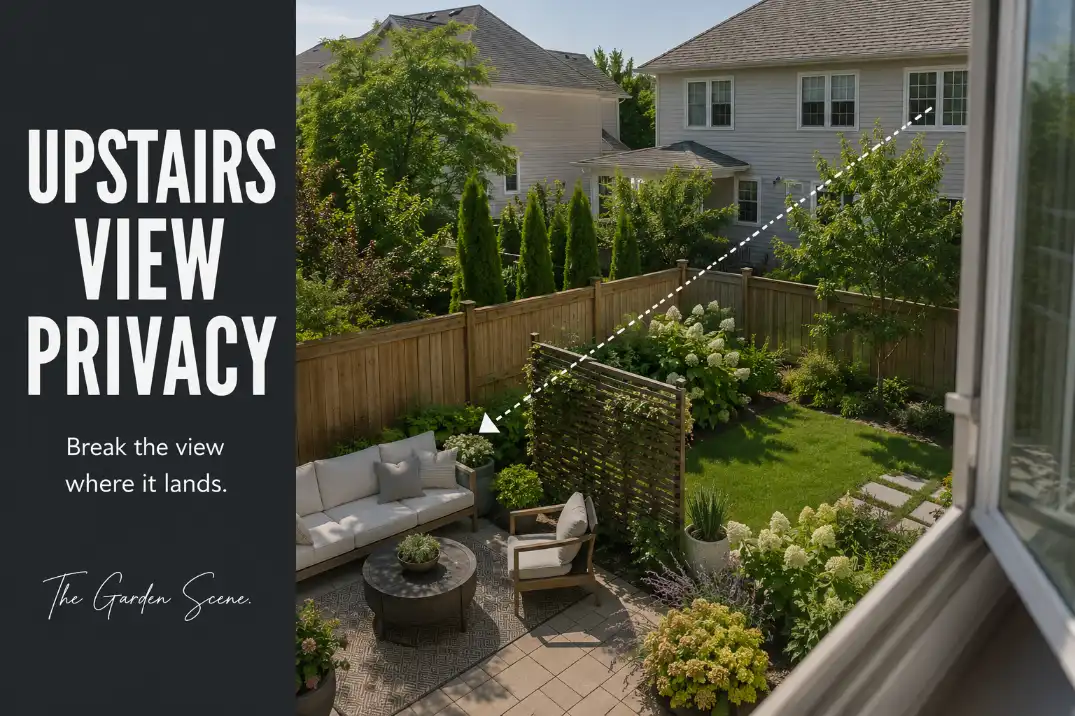
An upstairs view into your yard is not mainly a fence problem. It is an angle problem.
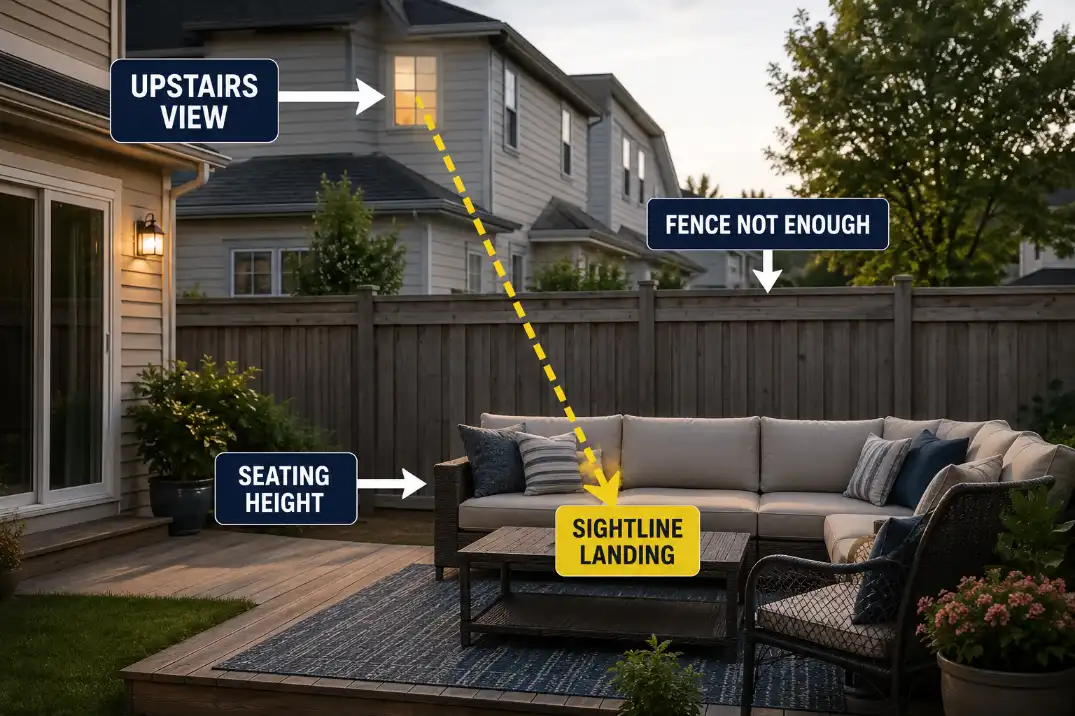
A standard fence may block people walking beside the property, cars passing the street, or a neighbor standing at ground level. But when the view comes from above, the line can pass over that fence and land directly on the part of the yard where you sit, eat, rest, or gather.
That is why the first move should not be “make everything taller.” The stronger sequence is to find where the upstairs view actually lands, mark the use zone that feels exposed, break the sightline at the first practical point, then support that quick fix with planting that softens the yard over time.
The goal is not to hide the whole backyard. The goal is to make the exact place where the view becomes uncomfortable feel usable again.
Why an Upstairs View Needs a Different Privacy Sequence
Treat an upstairs view as a falling sightline, not a flat boundary view. If you solve it like ordinary fence-line privacy, you may add height in the wrong place and still leave the patio table, deck chair, or lawn seating exposed.
The privacy target is usually smaller than it feels at first. The uncomfortable part may be one dining spot, one lounge corner, one deck edge, or one open patch of lawn. Once that landing point is clear, the solution can be more precise and less defensive.
If the problem is a normal side window looking straight across into your yard, that belongs to a different layout problem, such as privacy from a neighbor window. This page is about the higher angle that a regular fence does not solve.
| Setup stage | What you decide | Why it comes in this order |
|---|---|---|
| Find the upstairs sightline | Where the view actually lands | You cannot place privacy until you know the angle |
| Mark the exposed use zone | Which patio, deck, lawn, or seating area needs comfort | The whole yard usually does not need screening |
| Choose the first interruption point | Where the view should be broken | A closer, lower interruption can work better than a taller boundary |
| Add a fast filter | What gives usable privacy now | Plants and layered screening take time to fill in |
| Build the long-term layer | How planting softens and supports the fix | The permanent look should feel natural, not defensive |
Step 1: Find Where the Upstairs Sightline Actually Lands
Start the setup from the place where the view lands, not from the place where the fence stands.
Sit in the chair, dining spot, lounge area, or deck position you actually use. Then look back toward the upstairs source. It may be a second-story window, elevated rear room, landing window, or upper-level view from a nearby home.
Do not choose the solution yet. First, trace the view path. The practical question is simple: where does that higher line become personal?
Test both sitting and standing height
A fix that looks adequate while you stand in the yard may still fail when people sit at a table. The opposite can also be true: a small overhead or vertical interruption may protect seated use even if the standing view across the yard remains partly open.
That difference matters because privacy is usually felt most strongly where people pause. A visible walkway may not be a problem. A visible dining chair often is.
Mark the landing zone
Use a chair, bucket, garden stake, planter, or temporary marker to note where the upstairs view seems to land. You are looking for the spot where the view crosses into daily use.
It may land on:
- the back half of a deck
- the center of a patio table
- one exposed corner of a lounge area
- a fire pit circle
- a small lawn area used by kids or guests
- a hot tub or poolside edge
This is the first major correction: the view may come from beyond the fence, but the problem may land several feet inside the yard.
Step 2: Mark the Use Zone That Needs Privacy
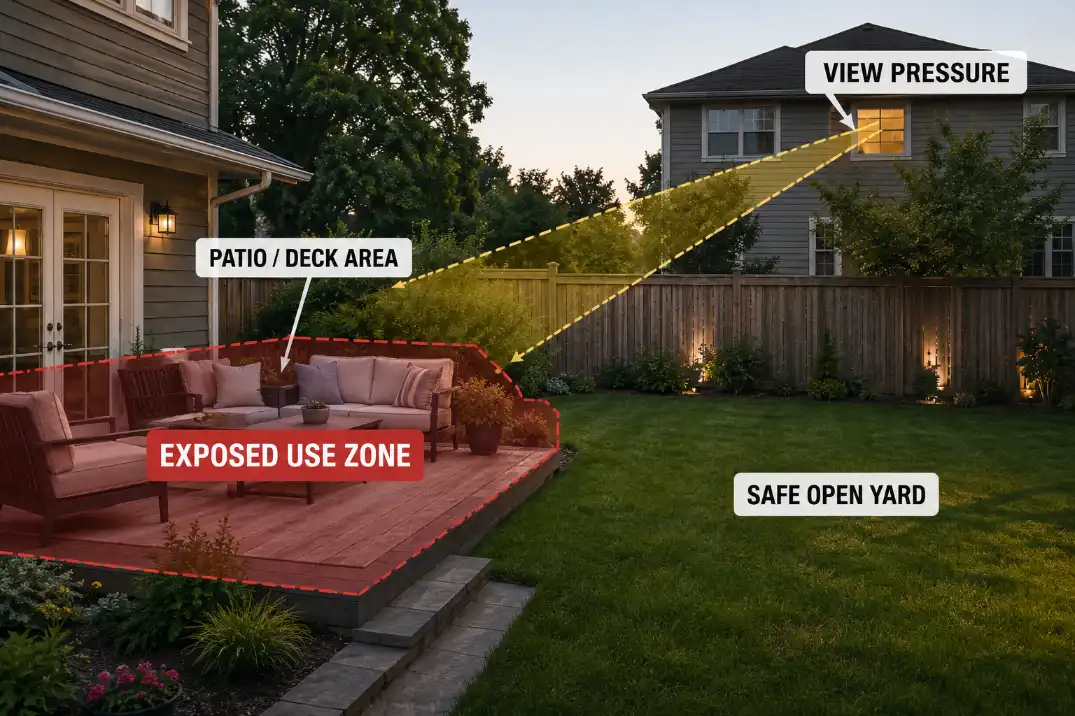
Now separate exposure from discomfort. A yard can be partly visible and still feel usable. The area that needs privacy is the area where people stay long enough to feel watched.
That is why this step should be narrow. Do not mark every visible square foot. Mark the patio, deck, lawn, dining, fire pit, or lounge zone where the upstairs view changes how the space feels.
Separate background visibility from uncomfortable overlook
Not every visible area needs a screen. It is normal for parts of a suburban yard to be seen from surrounding homes. The question is whether the upstairs view lands on a place where people sit, eat, rest, play, or gather.
If the view only crosses an empty lawn strip, the fix can stay light. If it drops directly into a deck sofa or patio table, the interruption needs to be more deliberate.
Keep open yard space open
The strongest upstairs privacy plans protect the use zone while letting the rest of the yard breathe. That keeps the space from feeling smaller, preserves daylight, and avoids the “barricade” look that happens when every edge gets screened before the real view line is understood.
For deeper whole-yard planning, the broader idea of building a privacy buffer in the right order can help, but this upstairs-view problem should stay focused on the exposed use zone first.
Step 3: Choose the First Interruption Point
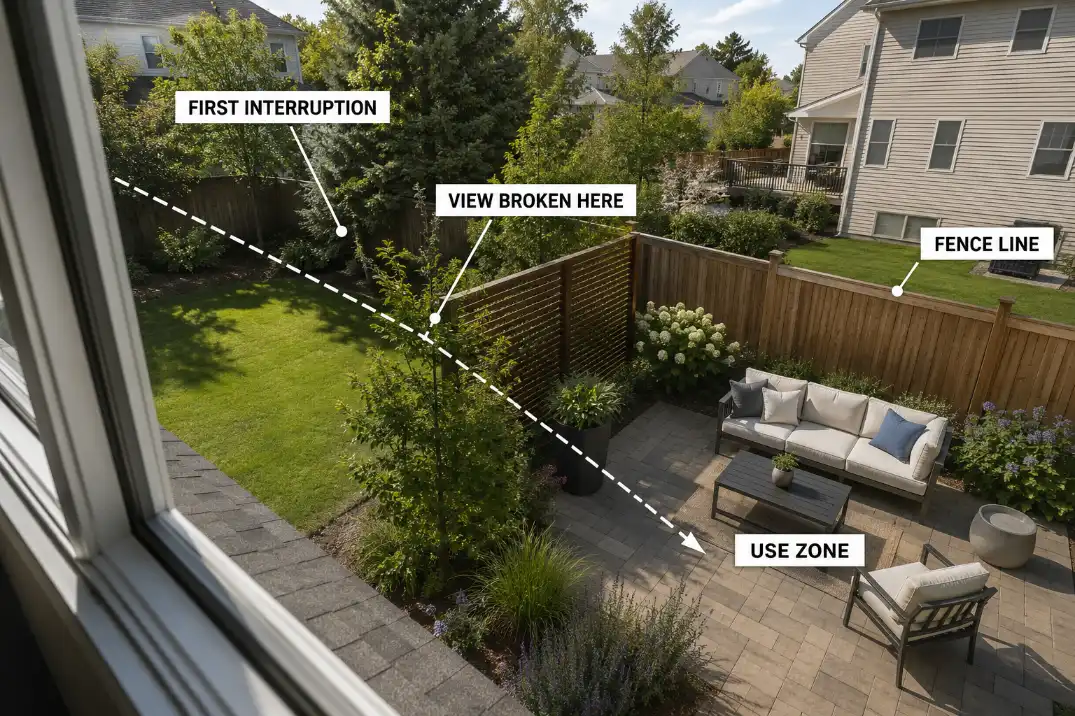
The first interruption point belongs where the elevated view can be broken before it reaches the use zone. That point is not automatically the fence line.
In many yards, the fence is too far away from the actual privacy failure. A taller boundary may still miss the angle, or it may need so much height that the yard starts to feel boxed in. A better interruption point may sit closer to the patio, deck, planting bed, seating back, or overhead corner.
The practical test is this: if you placed a temporary screen, post, planter, or overhead marker there, would it break the line to the chair, table, or lounge area?
Why closer can work better than taller
A shorter element near the use zone can outperform a taller element at the boundary because it sits closer to the person being viewed. It does not have to erase the entire upstairs view. It only has to interrupt the part of the view that lands on daily use.
This is where placement matters more than material. A screen, trellis, planting mass, or overhead filter in the wrong place may look useful but fail the sightline. A modest interruption in the right place can make the seating area feel private without closing the whole yard.
Field note: protect the seat, not the whole skyline
The cleanest upstairs privacy fixes usually do one precise thing: they break the line to the seat, table, or lounge area. Once that point is protected, the rest of the yard can stay lighter. If the solution tries to erase every possible view from above, it often becomes too tall, too dark, or too visually defensive.
Before you build anything permanent, test the likely interruption point with a temporary object. Even a rough marker can show whether the break belongs near the fence, near the patio edge, or somewhere between.
Step 4: Add a Fast Screen or Overhead Filter Before the Plants Mature
Add the fast layer only after the sightline and interruption point are clear. If you choose it earlier, you may solve the wrong angle.
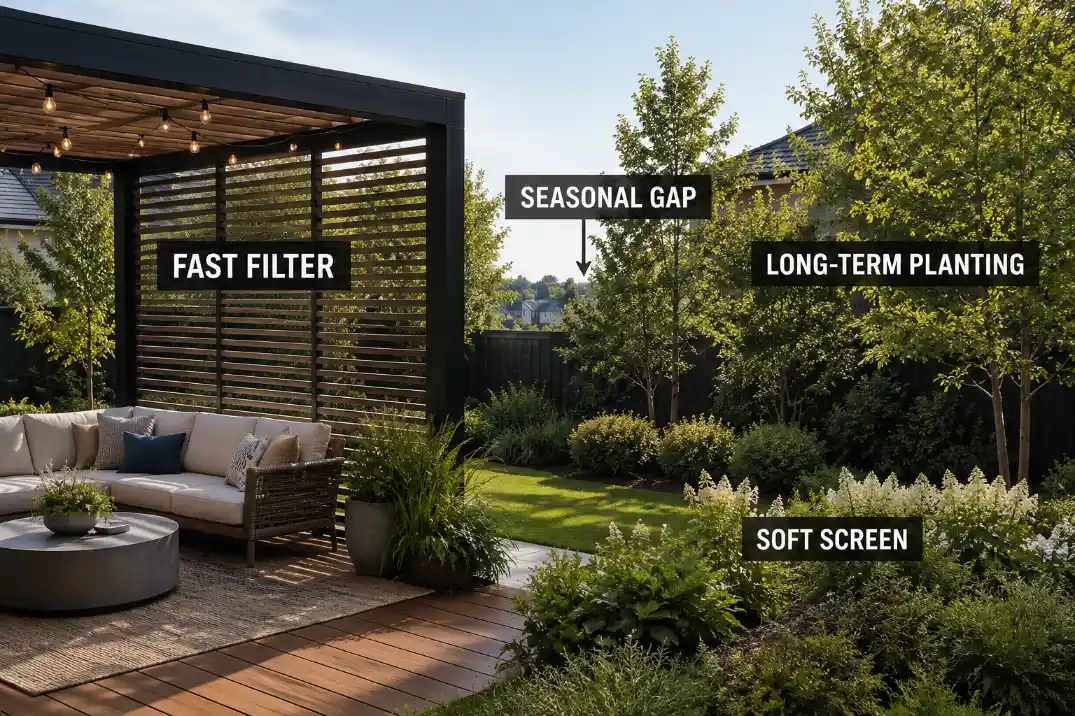
This first working layer gives the yard usable privacy now. It might be a partial vertical screen, trellis panel, overhead filter, slatted corner, canopy-like filter, or another simple interruption. The category matters less than whether it breaks the tested view.
Keep it targeted. If the exposed zone is one deck corner, do not wrap the yard. If the view lands on the dining table, protect the table. If the view only crosses a lounge chair from one diagonal angle, solve that angle.
The fast layer also has to preserve the yard’s normal use. People should still be able to move from the house to the patio, from the patio to the lawn, and around furniture without feeling squeezed. Privacy that blocks the view but ruins the route is not finished.
Common setup mistakes to avoid
- Raising the fence first without testing where the upstairs view actually lands.
- Screening the entire yard when only one patio, deck, or lawn zone feels exposed.
- Planting a single future hedge and living with the exposed view for years.
- Adding a heavy overhead element that makes the seating area feel dark or closed in.
Step 5: Build the Long-Term Planting Layer Behind the Quick Fix
Use planting to soften the tested interruption, not to restart the whole privacy plan from the property line.
The fast screen or overhead filter handles the immediate comfort problem. Planting gives the fix depth, texture, and a more natural long-term look. It should support the same sightline you already tested.
If the first interruption point is near the deck edge, the planting should help that edge. If the upstairs view drops into one patio corner, planting should thicken that corner and the view path behind it. Random boundary planting may look busy without improving the exposed seat.
Think in layers, not one hedge wall
A long-term planting layer can include low foreground planting, mid-height shrubs, selective vertical accents, and overhead softness where it fits the yard. The exact species depend on region, sun, water, mature size, and maintenance tolerance, so this article should not turn into a plant list.
The useful structure is:
- low planting keeps the edge from looking bare
- mid-height mass softens the direct view
- selective vertical height interrupts the upstairs angle
- overhead softness can reduce the exposed feeling from above
- maintenance access keeps the layer from crowding the patio or fence
If you need a broader planting framework later, use privacy landscaping that supports the view line as the next layer of planning. For this setup, the planting should serve the tested sightline, not become a separate garden project.
Let the fast layer become less dominant
A good long-term setup often looks lighter as planting fills in. The screen, trellis, or overhead filter may still be there, but it no longer has to carry the whole privacy job visually. The planting softens the hard edge and makes the fix feel like part of the yard rather than a reaction to a neighbor’s upper window.
That is the difference between a yard that looks protected and a yard that looks barricaded.
Test the Privacy From Real Yard Positions Before Making It Permanent
The final test should happen from the places where privacy will actually be felt. Testing from the fence tells you very little about an upstairs sightline that lands on a chair, table, or deck edge.
Use temporary markers first. A folding chair, tall cardboard panel, garden stake, empty planter, or temporary fabric line can show whether the interruption point is high enough, close enough, and wide enough before you commit to planting or construction.
Quick privacy test checklist
- Sit in the main chair or dining position and look toward the upstairs view.
- Stand at the patio or deck edge and check whether the view still drops into the use zone.
- Walk the main route from the house to the yard and confirm the filter does not block movement.
- Check the diagonal angle, not just the straight-on angle.
- Look for seasonal gaps where planting may thin out or lose coverage.
- Confirm the space still feels open, bright, and usable after the view is interrupted.
This is where small adjustments matter. Moving the interruption point a few feet closer to the seating area may solve more than adding height at the fence. Narrowing the privacy layer may preserve more light. Opening one side may keep the yard from feeling boxed in.
The setup is not finished when something blocks the view once. It is finished when the use zone feels comfortable from the positions where people actually spend time.
The Goal Is a Softer Use Zone, Not a Closed-In Yard
The right upstairs-view privacy setup should make one exposed use zone feel comfortable without making the entire yard feel like a closed room.
That usually means the fix is targeted, not oversized: find the sightline, mark the exposed use zone, interrupt the view at the first practical point, add a fast filter, then let planting soften the result. Each layer earns its place because it serves the tested view line.
When the sequence is right, the fence does not have to do work it was never meant to do. The yard can stay open where openness still feels good and private where privacy actually matters.
The best result is not a taller, darker boundary. It is a yard where the upstairs view no longer controls how the patio, deck, or lawn seating area feels.