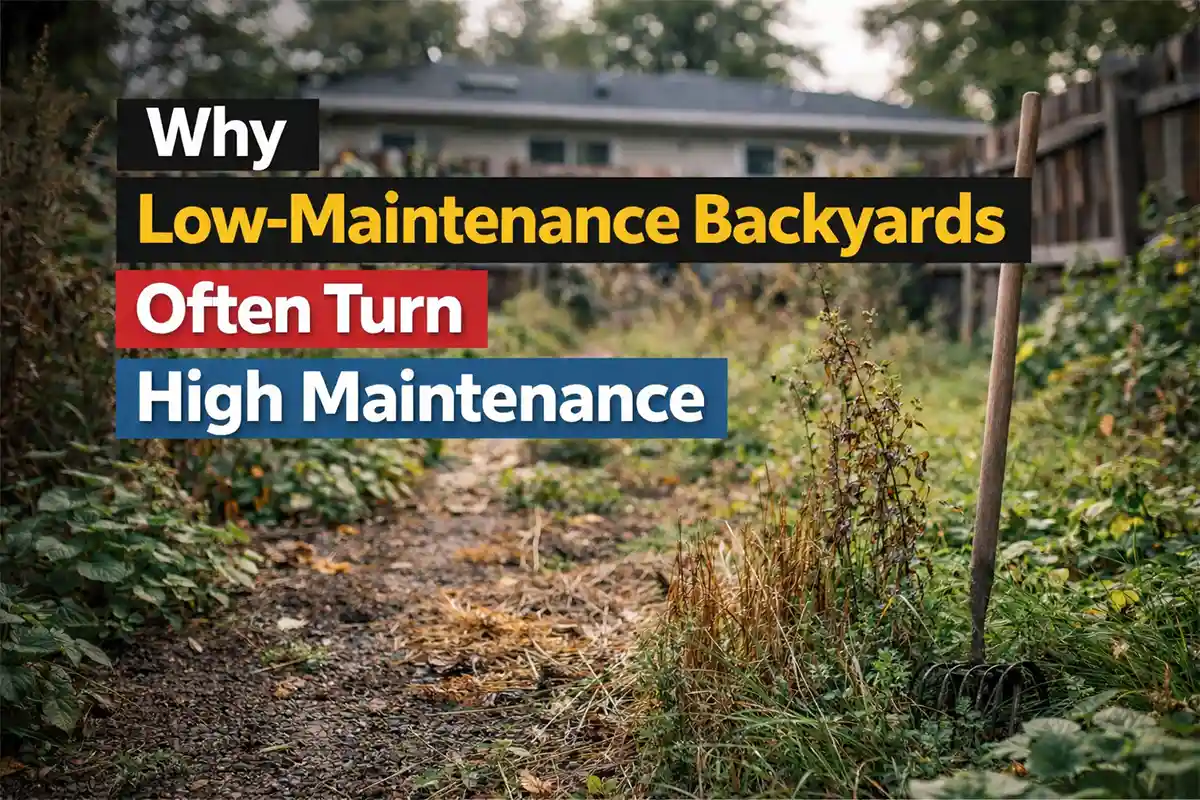
Many homeowners replace grass with gravel, stone patios, or mulch beds expecting their weekends to finally be free from yard work. The idea seems logical: eliminate mowing, install drought-tolerant plants, and the backyard should practically maintain itself.
For the first few months, it often looks exactly that way.
But after a year or two, many homeowners discover something surprising. Weeds begin pushing through gravel beds. Mulch slowly disappears. Patios collect leaves and debris in corners. Plants labeled “low maintenance” grow faster than expected and require constant trimming.
Instead of reducing work, the landscape begins demanding new types of maintenance.
This happens because outdoor spaces function as living environmental systems. Soil, moisture, plant growth, and seasonal debris continue interacting even after lawns are removed.
When those systems are not considered during landscape design, a backyard that was supposed to simplify maintenance can gradually become more time-consuming than the lawn it replaced.
Understanding why this happens helps homeowners avoid the most common low maintenance landscaping mistakes.
Quick Summary: Why Low-Maintenance Yards Become High Maintenance
Several hidden processes gradually increase maintenance in simplified landscapes.
Most problems appear within 12–24 months after installation.
Common causes include:
-
Gravel beds slowly collecting organic debris and forming soil
-
Mulch decomposing and thinning within a year
-
Fast-growing shrubs requiring frequent pruning
-
Patio surfaces trapping leaves and dirt
-
Poor drainage moving soil into rock beds
-
Wind spreading seeds into decorative stone areas
These issues rarely appear immediately. They develop slowly as natural environmental processes begin interacting with the landscape.
Recognizing these patterns early can prevent a yard from turning into a constant maintenance project.
The Core Misconception Behind “Low Maintenance”
The phrase low maintenance landscaping often creates unrealistic expectations.
Many homeowners interpret the term as meaning no maintenance at all.
In reality, outdoor environments continue functioning through several natural cycles:
-
organic material decomposes
-
wind spreads dust and seeds
-
soil gradually accumulates between stones
-
plant roots expand over time
-
moisture collects in shaded areas
Even small amounts of organic debris can trigger noticeable changes.
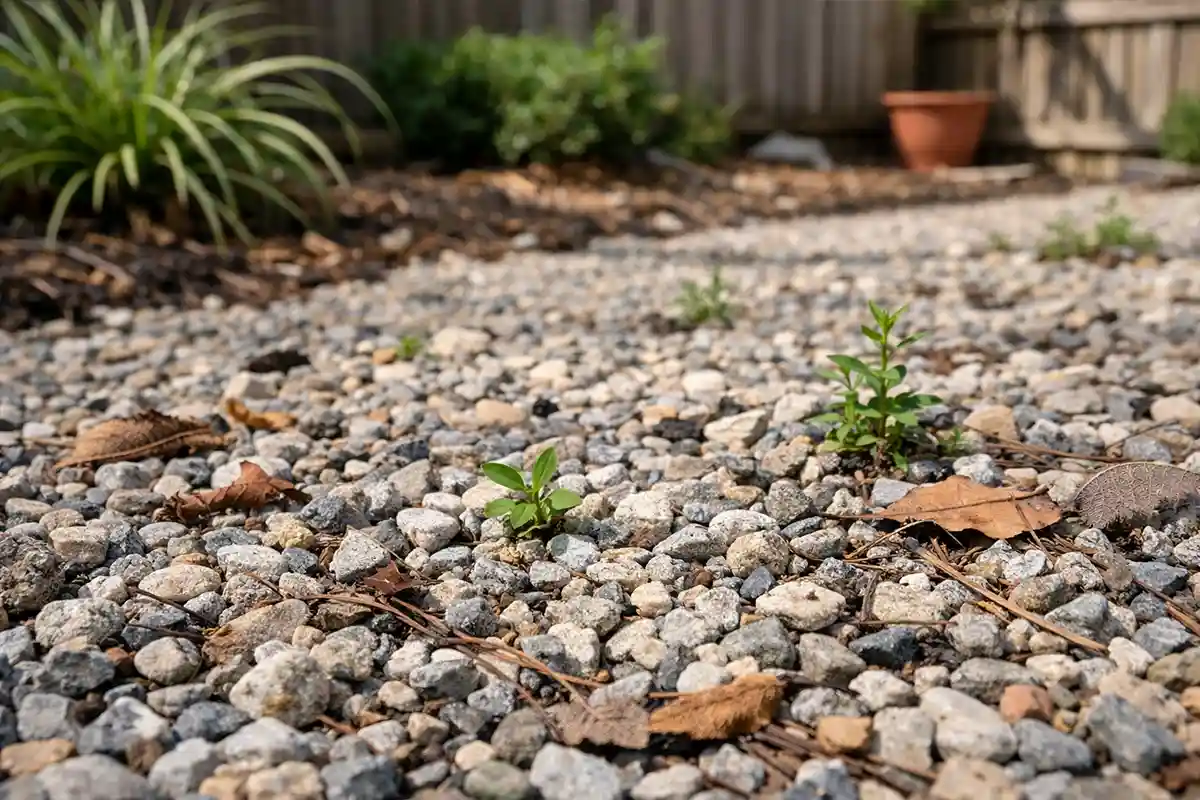
For example, gravel landscapes frequently develop thin soil layers within 12–24 months as dust, pollen, and decomposing leaves settle between stones. Once the organic layer reaches about ½ inch (1.2 cm), weed seeds can germinate easily.
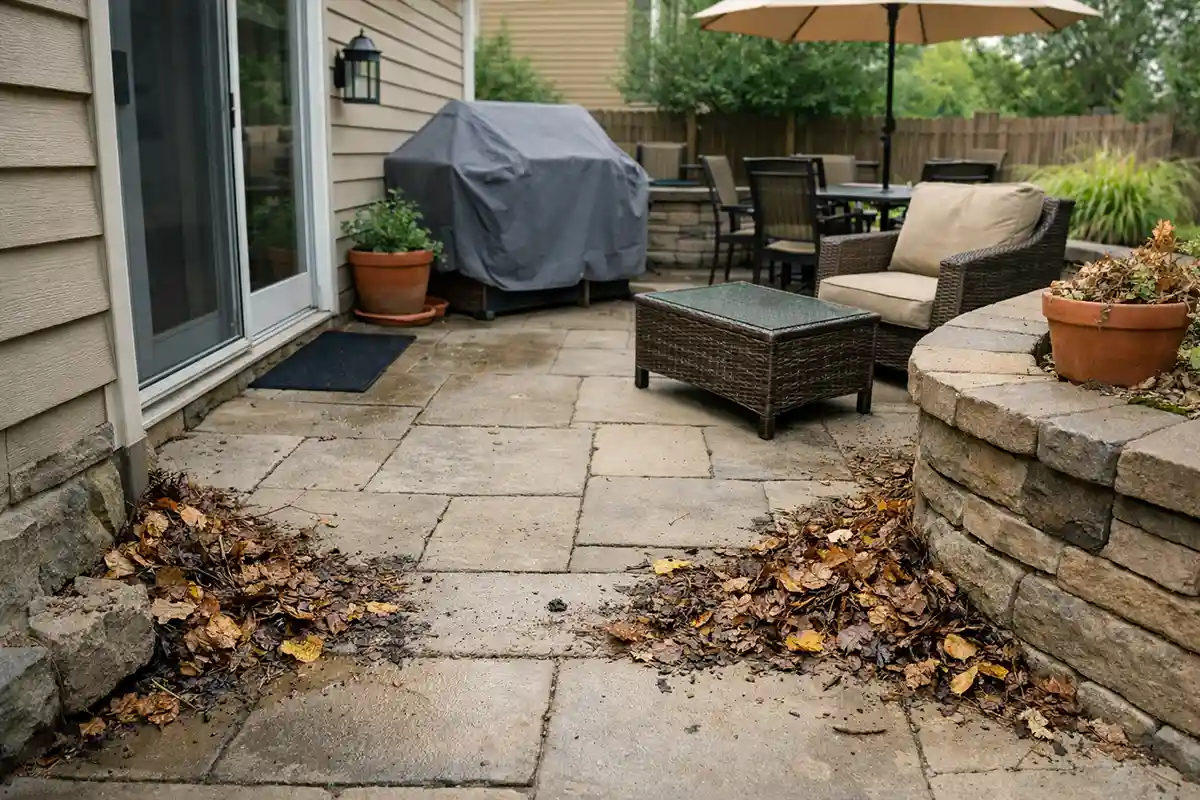
Hardscape surfaces also change maintenance patterns. Patios remove mowing requirements but introduce new tasks such as sweeping debris, cleaning paver joints, and removing algae in shaded conditions.
The key insight is that landscaping materials rarely eliminate maintenance entirely. Instead, they shift the type of work required.
Expectation vs Reality in Low-Maintenance Landscaping
Many backyard redesign projects focus on removing visible work, but they unintentionally introduce new maintenance cycles.
| Landscape Feature | Expected Benefit | What Often Happens | Resulting Maintenance |
|---|---|---|---|
| Gravel landscaping | No mowing required | Organic debris forms soil | Frequent weed removal |
| Mulch beds | Weed suppression | Mulch decomposes within a year | Annual replacement |
| Drought-tolerant plants | Less watering | Rapid growth in fertile soil | Regular pruning |
| Large patios | Reduced landscaping work | Debris collects on flat surfaces | Sweeping and washing |
| Dense planting beds | Weed suppression | Plants compete and overgrow | Trimming and thinning |
In most cases, maintenance changes form rather than disappearing.
Gravel Landscapes That Gradually Grow Weeds
Gravel landscaping is one of the most common approaches used in low-maintenance backyard designs.
It removes mowing, reduces irrigation, and creates a clean minimalist appearance. However, gravel surfaces rarely remain maintenance-free for long.
Several environmental processes begin affecting gravel beds almost immediately:
-
Wind carries dust and organic particles into the gravel layer.
-
Leaves and pollen accumulate between stones.
-
Rainwater helps bind fine particles together.
Over time, these materials gradually form a thin soil substrate beneath the gravel surface.
Once that layer develops, weed seeds begin germinating easily.
Without proper installation—such as a 4–6 inch compacted base layer and heavy landscape fabric barrier—weed growth becomes increasingly difficult to control.
Many homeowners eventually spend more time pulling weeds from gravel beds than they previously spent mowing grass.
Design problems like this are often connected to larger landscape planning issues described in
Backyard Design Mistakes That Ruin Outdoor Spaces, where material choices, drainage, and layout decisions interact in ways that affect long-term maintenance.
Fast-Growing Plants That Require Constant Pruning
Plant labels often describe species as low maintenance, but that description usually refers to water requirements or soil tolerance, not growth rate.
Some shrubs commonly used in modern landscaping grow surprisingly fast under favorable conditions.
In fertile soil with moderate rainfall, certain ornamental plants can grow 18–36 inches (45–90 cm) per year.
Rapid growth is especially common in:
-
humid southeastern climates such as Florida or Georgia
-
coastal regions of California with mild temperatures
-
irrigated suburban landscapes in warm climates
During peak growing seasons, fast-growing shrubs may require pruning every 4–6 weeks to maintain shape and prevent overcrowding.
Over time, constant trimming becomes one of the most demanding maintenance tasks in the yard.
Selecting plants based on mature size and natural growth habits usually prevents this problem.
Plant selection mistakes are explored further in
Small Garden Design Mistakes That Increase Maintenance, where overcrowded plantings and fast-growing species frequently lead to long-term upkeep problems.
Mulch That Breaks Down Faster Than Expected
Mulch is widely recommended for reducing weeds and improving soil moisture retention. While it provides many benefits, mulch is not permanent.
Organic mulch slowly decomposes through several natural processes:
-
microbial activity in the soil
-
rainfall and irrigation exposure
-
seasonal temperature changes
-
insect and fungal activity
In humid climates, mulch layers can shrink by 30–50 percent within one year.
As the protective layer becomes thinner, weed seeds reach the soil surface and begin germinating.
Maintaining effective coverage typically requires refreshing mulch to a depth of 2–3 inches every 12–18 months.
While mulch remains valuable for soil health, relying on it as the primary maintenance strategy often leads to recurring annual work.
Hardscape Surfaces That Still Require Upkeep
Patios, walkways, and stone terraces are commonly installed to replace lawns in low-maintenance backyard designs.
Although these surfaces eliminate mowing, they introduce new maintenance tasks.
Flat outdoor surfaces naturally collect:
-
leaves
-
pollen
-
wind-blown soil
-
organic debris
-
algae in shaded areas
In regions with heavy autumn leaf fall—such as the Midwest or northeastern United States—patios may require sweeping every 3–5 days during peak leaf season.
Drainage also plays a major role. Even a slight slope difference of 1–2 percent can determine whether rainwater carries debris away or deposits it in patio corners.
Layout issues like these are often connected to broader backyard planning challenges explained in
Backyard Layout Problems That Make Spaces Hard to Use, where inefficient layouts increase both maintenance and usability problems.
Environmental Conditions That Increase Landscape Maintenance
Climate and environmental exposure strongly influence whether a landscape remains low maintenance over time.
A design that performs well in dry desert regions may require significantly more upkeep in humid or rainy environments.
| Environmental Factor | Impact on Landscape | Likelihood | Possible Adjustment |
|---|---|---|---|
| High humidity | Faster mulch decay and algae growth | High in Florida | Improve airflow and sunlight |
| Strong winds | Seeds and debris accumulate in gravel | Common in Arizona | Install wind-buffer plants |
| Heavy seasonal rain | Soil shifts into rock beds | Midwest regions | Improve drainage grading |
| Coastal moisture | Increased mold and organic buildup | California coast | Use permeable surfaces |
| Freeze-thaw cycles | Paver joints expand and shift | Northern states | Install flexible base layers |
Research from the University of California Agriculture & Natural Resources shows that organic debris accumulation can gradually create soil layers in gravel landscapes, allowing weeds to establish if the surface is not periodically maintained.
How to Design a Backyard That Actually Stays Low Maintenance
The most successful low-maintenance backyards are not defined by a single material like gravel or mulch. Instead, they rely on balanced landscape systems that reduce recurring work over time.
When layout design, plant growth rates, drainage patterns, and surface materials work together, maintenance tasks remain manageable.
In well-designed landscapes, routine upkeep may take 10–15 minutes per week. In poorly planned spaces, small issues compound until the yard requires constant seasonal attention.
The difference usually comes down to a few key design decisions.
1. Prioritize Simple Layouts
Backyard maintenance often increases when the layout becomes too complicated.
Small planting pockets, narrow beds, and tight corners create areas where debris accumulates and tools cannot easily reach. Leaves collect along edges, weeds appear in inaccessible gaps, and trimming becomes more time-consuming.
Simpler layouts reduce these problems dramatically.
Open spaces allow leaf blowers, rakes, and garden vacuums to clear debris quickly. Wider planting beds also make pruning and mulching easier.
Many homeowners who struggle with backyard maintenance are actually dealing with layout inefficiencies rather than plant problems.
Planning outdoor spaces around daily usability helps prevent these issues. Layout strategies that emphasize access and circulation are explored in
How to Design a Backyard for Everyday Use, where functional outdoor spaces naturally reduce maintenance demands.
2. Choose Slow-Growing Plants
Plant growth speed is one of the biggest factors influencing long-term landscape maintenance.
Many ornamental shrubs can grow 2–3 feet per year under ideal conditions. In warm climates with fertile soil and irrigation, these plants may require trimming every 4–6 weeks during the growing season.
Over time, this frequent pruning becomes the primary maintenance task in many backyards.
A more sustainable strategy focuses on plants with naturally slower growth patterns.
Landscape designers often favor species that:
-
grow less than 12 inches (30 cm) per year
-
maintain compact shapes naturally
-
tolerate local rainfall and soil conditions
-
require minimal fertilization
Native plants frequently meet these criteria because they evolved within regional climate patterns.
For example:
-
drought-adapted species perform well in Arizona and Nevada
-
cold-tolerant shrubs survive northern winters
-
salt-tolerant plants thrive along the California coast
Matching plants to environmental conditions reduces the need for pruning, watering adjustments, and fertilizer use.
3. Replace Loose Gravel With Stable Ground Covers
Loose gravel landscapes often appear clean at first but gradually accumulate organic debris.
Once soil begins forming between stones, weed seeds establish roots and become difficult to remove.
In some landscapes, living ground covers provide a more stable long-term solution.
Low-growing plants create dense coverage that blocks sunlight from reaching weed seeds while stabilizing soil.
Examples commonly used in low-maintenance landscaping include:
-
creeping thyme
-
sedum varieties
-
dwarf mondo grass
-
clover-based ground covers
Once established, these plants require only occasional trimming and seasonal cleanup.
They also reduce dust movement and improve soil stability compared with decorative gravel surfaces.
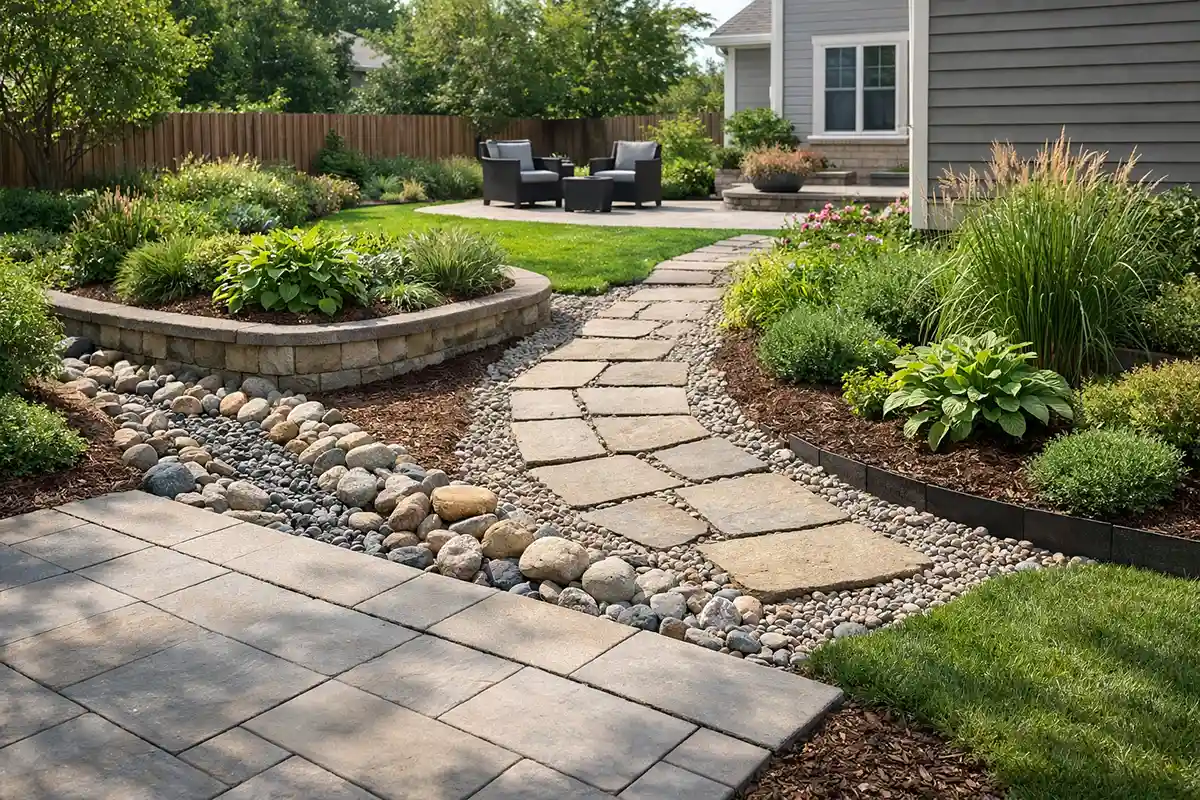
4. Design Drainage to Prevent Maintenance Problems
Water movement through a backyard has a major influence on long-term maintenance.
When rainwater flows incorrectly through a landscape, several issues can develop:
-
soil washes into gravel beds
-
mulch shifts away from plants
-
patios collect sediment and debris
-
standing moisture encourages algae growth
Proper grading usually involves a 1–2 percent slope away from structures, allowing rainwater to drain slowly across the yard.
In regions with heavy seasonal rainfall—such as the Midwest or southeastern United States—effective drainage dramatically reduces debris accumulation and weed formation.
Patio drainage is particularly important because even minor slope problems can cause water to pool along edges or corners. These hidden issues are discussed in
Patio Drainage Problems Most Homeowners Notice Too Late, where subtle grading mistakes often lead to long-term maintenance problems.
5. Balance Hardscape and Planting Areas
Backyards dominated entirely by plants often require regular pruning and seasonal care. Landscapes made almost entirely of stone or concrete can accumulate dust, leaves, and organic debris.
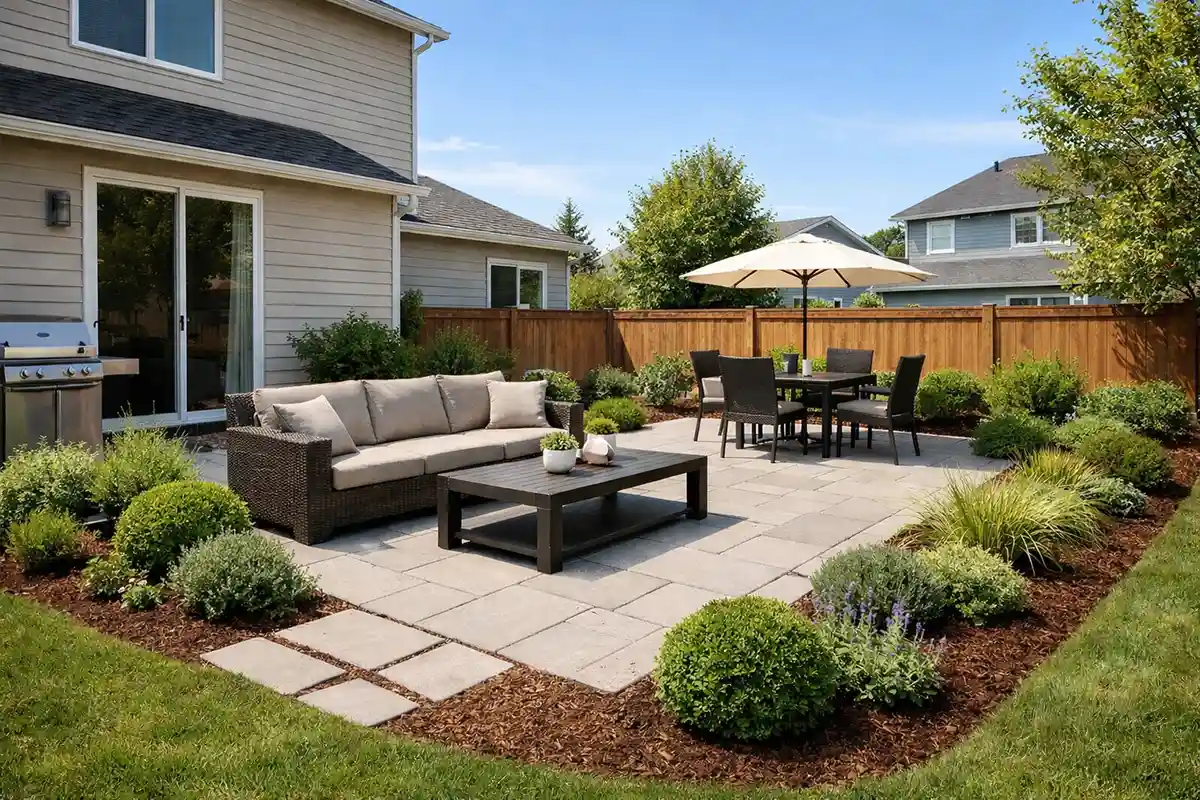
The most successful low-maintenance yards typically balance these elements.
A common design ratio includes:
-
40–60% hardscape surfaces such as patios or walkways
-
30–40% planting areas with slow-growing plants
-
10–20% flexible space including lawn or ground covers
This balance prevents any single maintenance task from becoming overwhelming.
Hardscape reduces mowing requirements while plants soften the environment and help hide small amounts of debris.
Carefully designed patios can also reduce cleaning tasks over time. Material choices and installation methods that simplify upkeep are explained in
Step-by-Step Guide to a Patio That Stays Low Maintenance, where surface texture, drainage, and joint materials influence long-term maintenance needs.
How Maintenance Tasks Shift After Removing Lawns
Removing grass does reduce certain types of yard work. However, it often introduces different tasks that many homeowners don’t anticipate.
| Removed Task | New Task That Appears | Typical Frequency | Difficulty |
|---|---|---|---|
| Lawn mowing | Gravel weed removal | Monthly | Medium |
| Lawn fertilizing | Mulch replacement | Annual | Medium |
| Lawn irrigation | Plant pruning | Seasonal | Medium |
| Lawn edging | Patio sweeping | Weekly | Low |
| Lawn aeration | Paver joint cleaning | Annual | Medium |
This shift explains why some homeowners feel their yard still requires attention even after installing low-maintenance landscaping.
The maintenance simply changes form rather than disappearing entirely.
Key Insight
Low-maintenance landscaping is less about specific materials and more about how landscape systems interact.
Gravel, mulch, patios, and plants all behave differently depending on climate conditions, soil composition, drainage patterns, and seasonal debris.
When those systems are designed to support one another, outdoor spaces remain functional and manageable.
When they conflict, even minimalist landscapes can slowly evolve into high-maintenance environments.
Understanding these interactions allows homeowners to create outdoor spaces that stay attractive while requiring far less ongoing work.
Frequently Asked Questions
Do gravel yards really reduce maintenance?
Gravel landscapes remove mowing and irrigation tasks, but they can increase weed control and debris removal. Without proper installation and periodic cleaning, weeds may begin appearing within 12–24 months.
Are native plants always low maintenance?
Native plants generally require less watering and fertilizer because they are adapted to local climates. However, some native species still grow quickly and may require seasonal pruning.
How often should mulch be replaced?
Most mulch layers need refreshing every 12–18 months to maintain a protective depth of about 2–3 inches. In humid climates, decomposition may occur faster.
What type of backyard design requires the least maintenance?
Backyards that combine simple layouts, slow-growing plants, balanced hardscape areas, and effective drainage systems typically require the least ongoing upkeep.
Conclusion
Low-maintenance backyards often become high maintenance because landscaping materials alone cannot control the natural systems shaping outdoor spaces.
Organic debris gradually forms soil beneath gravel, plants grow faster than expected, mulch decomposes, and patios collect dust and leaves.
These processes are unavoidable, but thoughtful landscape design can reduce their impact.
By focusing on balanced layouts, appropriate plant choices, stable ground covers, and effective drainage, homeowners can create outdoor environments that remain attractive while requiring far less work over time.