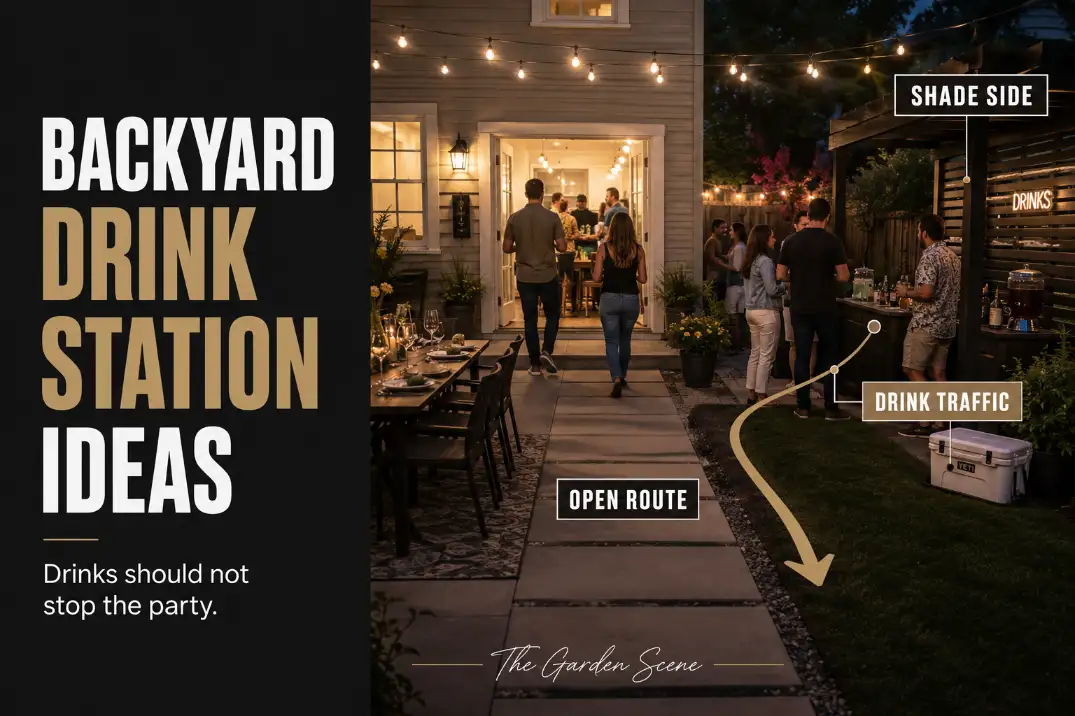
The best backyard drink station is usually a shaded side-edge setup that guests can see quickly without stopping in the doorway path. It does not start with the cart, cooler, dispenser, or bar surface. It starts with repeat traffic.
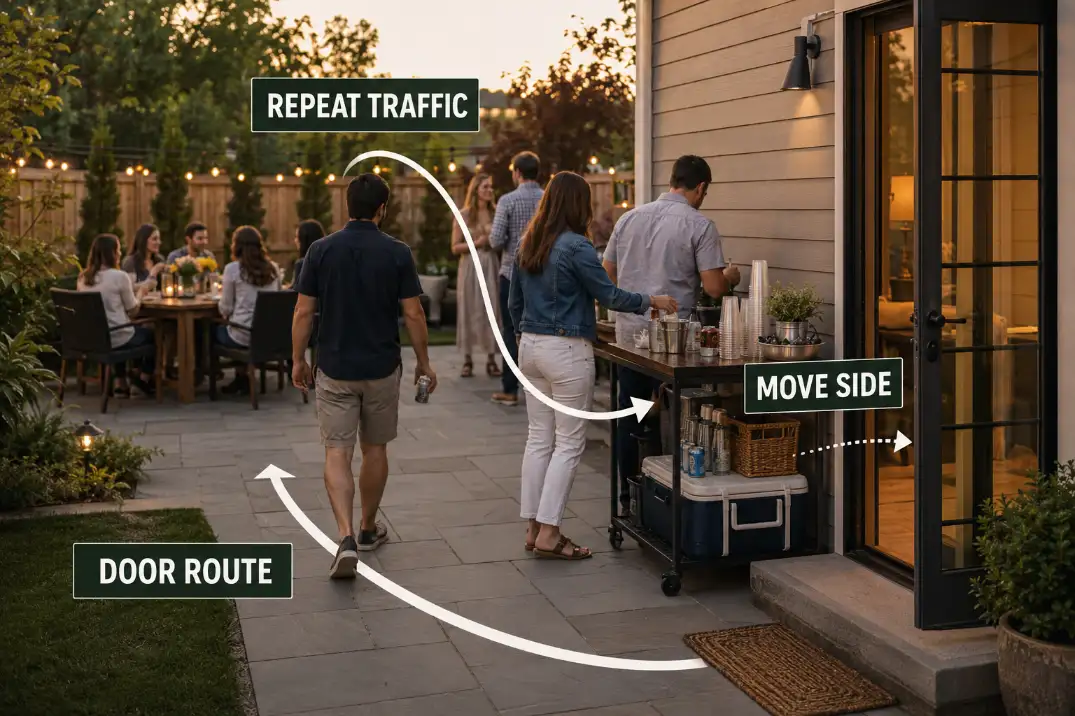
During a casual party, guests may return for drinks every 15–30 minutes, which means the drink point quietly becomes one of the busiest places in the yard. If it sits at the back door, beside the grill, or at the tight end of a dining table, the whole patio can feel crowded even when there are enough seats.
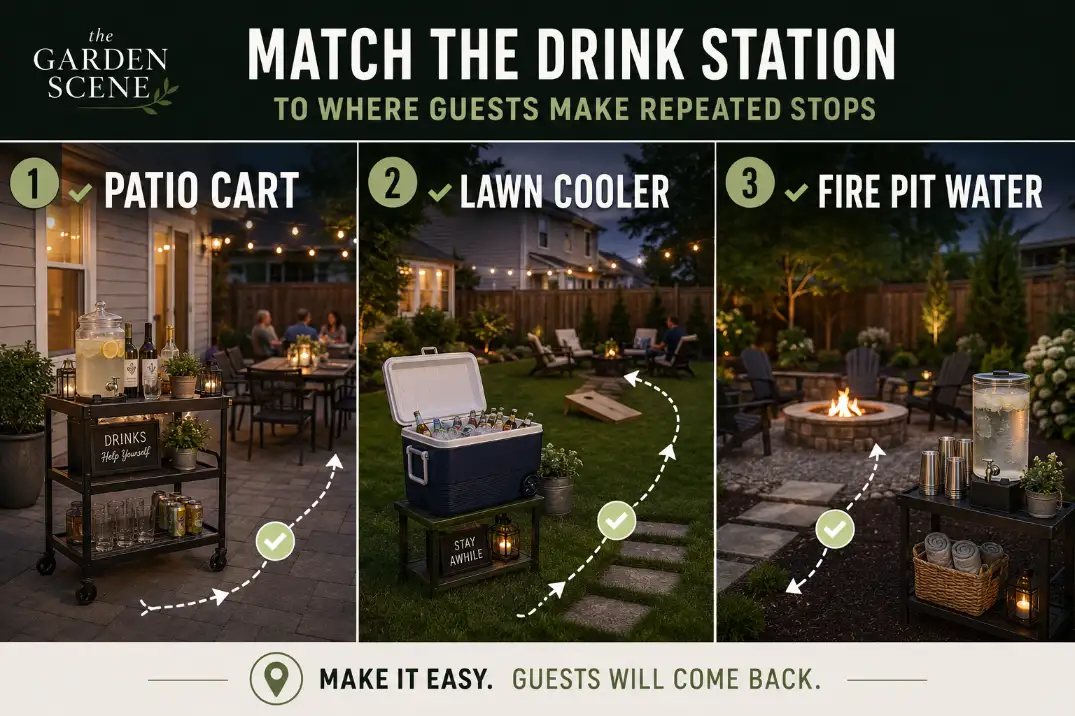
The quick solution is to match the drink setup to the way people actually move. A side-edge cart works for a small patio. A cooler-and-table setup works for a BBQ.
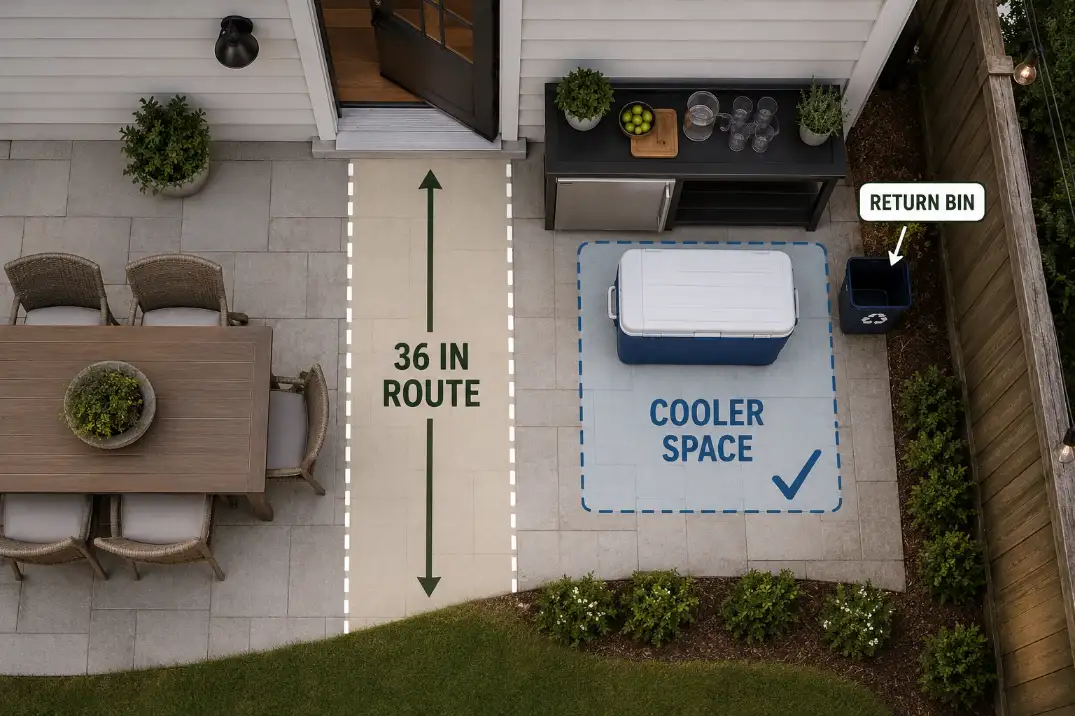
A lawn cooler point works when guests spread away from the patio. Whatever style you choose, keep a 36-inch open path past the station, give coolers at least 24 by 36 inches of floor space, and keep glasses 8–12 inches back from exposed edges.
Drinks Create Repeat Traffic
The drink point is not a one-time stop
Food usually creates a few heavy waves: guests serve themselves, sit down, and maybe return once. Drinks behave differently. A guest may grab a drink on arrival, come back after 20 minutes, return for ice, and stop again before moving to the lawn, fire pit, or dessert table.
That repeat pattern matters more than the size of the setup. A small drink table in the wrong place can create more congestion than a larger one placed along the side.
The issue is not that people want drinks. The issue is where they have to pause to get them.
Match the setup to the repeat path
The right backyard drink station idea depends on where guests keep returning. On a compact patio, a side-edge drink cart usually works better than a centered bar table. For a casual BBQ, a cooler-and-table setup gives guests cold storage and a quick surface without pushing them toward the grill.
In a larger yard, a small lawn cooler point can prevent guests from walking back through the dining area every time they want water or a canned drink.
This is the same traffic logic behind Outdoor Entertaining Flow Ideas: the party feels smoother when movement, serving, seating, drinks, and trash do not all compete for the same few feet.
Pro Tip: If guests can see the drink point within 3 seconds of entering the yard, it does not need to sit directly in the entry path.
Avoid the Doorway Cluster
The back door needs a clean release zone
The first 4–6 feet outside the back door should stay open whenever possible. This is the release zone where guests step out, pause, scan the patio, and decide where to go. If the drink setup sits there, every arriving guest meets someone who has already stopped.
That is why a drink table directly beside a sliding door often feels convenient in planning and annoying in use. It is easy for the host to refill, but it turns every guest into a door blocker. It also makes carrying trays, moving chairs, and taking trash back inside harder than it needs to be.
The better spot is usually a side edge
The strongest placement is often along a side wall, fence line, patio edge, or shaded corner that faces the gathering area. The station should be obvious without becoming central. Aim for 4–8 feet off the main doorway path and within about 10–15 feet of the main seating or standing area.
This is where many layouts go wrong. People place drinks where the wall outlet, shade, or table space happens to be, then wonder why everyone piles up at the same corner. The symptom is crowding. The mechanism is a refill point sitting inside a travel lane.
Shade Matters for Drinks
The table surface needs shade too
Shade is not only about keeping ice from melting. The table surface also matters. Cups, napkins, garnishes, mixers, open bottles, and drink dispensers all feel worse when they sit in hard afternoon sun.
A cooler can still be full of ice while the serving surface feels sticky, warm, and unpleasant to use.
In hot conditions above about 85°F, a fully exposed cooler may need attention every 45–60 minutes, especially if guests keep opening it. But the bigger mistake is assuming the cooler solves everything. A shaded cooler protects cold storage. A shaded surface protects the actual guest experience.
Afternoon parties need a different read
A placement that works for a 6 p.m. gathering may fail during a 2 p.m. cookout. Afternoon sun can hit the side of a patio harder than the host expects, especially on west-facing yards. A fence-side shade pocket, umbrella edge, pergola corner, or tree canopy can make the setup feel intentional without pulling it too far away from the party.
For perishable drink items such as cut fruit, dairy-based mixers, or prepared pitchers, shade is not a complete safety solution. Bring out smaller batches and keep backup supplies chilled instead of leaving everything exposed for the full event.
| Drink station condition | Better placement choice | Why it works |
|---|---|---|
| Back door gets crowded | Move station 4–8 feet to the side | Guests can pause without blocking arrivals |
| Patio has strong afternoon sun | Use a shaded wall, umbrella, or covered edge | Ice, cups, and mixers hold up better |
| Cooler sits in the walking path | Shift cooler beside or under the station | Floor space stays clear |
| Guests miss the station | Face it toward the main gathering area | People find it fast without asking |
| Cups keep tipping near the edge | Move glasses 8–12 inches inward | Reaching feels safer and less fussy |
Coolers Need Floor Space
The cooler is part of the layout
A common weak fix is buying a prettier drink cart while leaving the cooler on the ground in front of it. That does not solve the layout problem. The cooler still becomes the real pause point because people bend, open the lid, search for a drink, close it, and step back.
Plan the cooler as part of the footprint. A medium rolling cooler or large party cooler often needs at least 24 by 36 inches of usable floor space, plus room for the lid to open without hitting the cart, wall, chair, or a guest’s knees. If the lid opens into the walking lane, the station is not placed correctly yet.
Cleanup belongs in the same zone
A drink area also needs a return point. Empty cans, bottle caps, used cups, wet napkins, and loose openers are what make the setup feel messy after the first 30–45 minutes. A small trash bin, recycling tub, or return tray should sit near the station but not in front of it.
This is usually more useful than adding another decorative tray. A tray makes the surface look finished at setup. A return zone keeps it working after guests actually start using it.
If the drink setup is part of a broader serving layout, Best Outdoor Serving Carts for Patio Parties can help separate what belongs on a rolling cart from what should stay in a cooler, side bin, or backup area.
Keep Glasses Away From Edges
Edge safety matters more than styling
Drink stations often fail in small ways before they fail in big ways. Cups sit too close to the edge. Ice tongs fall behind the cooler. Guests reach across a tray and knock over napkins. These are not dramatic problems, but they make the station feel poorly planned.
Keep glasses, cups, and breakable items at least 8–12 inches back from exposed edges. If children will use the station, use the deeper end of that range and keep glass bottles toward the back. For a narrow serving table, that may mean cups belong in one grouped tray rather than spread across the full surface.
Surface type changes the decision
Glassware may look better, but it is not always the smarter backyard choice. On a concrete patio, pool deck, raised deck, or hard paver surface, one dropped glass can interrupt the party and create a cleanup problem. If the drink point sits near a pool, steps, or a kid-heavy zone, use acrylic, plastic, stainless, or melamine drinkware instead.
This is a good example of a condition people overestimate: the look of the station. They underestimate the surface below it. A polished station that creates broken glass risk is not a better station.
If the same table is handling food, drinks, and guest circulation, use the clearer route logic in Small Patio Serving Table Placement before adding more pieces.
A Station People Find Fast
Visibility beats central placement
A drink station does not have to dominate the patio. It has to be findable. Face it toward the main gathering zone, use one clear surface, and avoid hiding it behind chairs, grill smoke, tall planters, or the dining table. Guests should be able to spot the setup from 15–20 feet away without asking.
The simplest cue is often height. A raised tray, dispenser, ice bucket, small sign, or grouped cup stack makes the station easier to read from across the yard.
That is usually better than placing it in the center, where it competes with chairs and foot traffic.
Build the setup in three layers
The strongest arrangement has three layers: a visible top surface for cups and quick grabs, a cold zone for drinks and ice, and a backup zone for refills. These do not all need to be on one piece of furniture. Splitting them slightly can reduce crowding.
Use the top for cups, napkins, opener, and one display drink. Use the cooler or tub for the main cold supply. Keep backup drinks in a shaded bin, garage edge, or indoor staging area so everything can be refreshed in under 2 minutes. That refresh speed matters because the host should not have to rebuild the whole drink area every time ice runs low.
| Backyard situation | Best drink station idea | Why it works |
|---|---|---|
| Small patio | Side-edge drink cart | Keeps the door path open |
| BBQ near the grill | Cooler plus side table | Separates drinks from cooking traffic |
| Lawn gathering | Small cooler point | Prevents repeated trips through the patio |
| Pool area | Shatter-resistant drinkware station | Reduces broken glass risk |
| Fire pit setup | Water and canned drink stop | Keeps guests from crossing the yard repeatedly |
When One Drink Station Is Not Enough
One station works when guests stay in one zone
A single drink station works well for a small patio dinner, compact BBQ, or gathering where most guests stay near one table or seating area. In that case, bigger is not automatically better. A clean side setup with a cooler, cups, napkins, opener, and return bin can handle the job without taking over the patio.
The routine fix stops making sense when every refill sends guests through the same narrow space. If people keep moving past the dining chairs, grill, or back door just to get another drink, the station is too centralized.
Two small stations can beat one large station
For more than 12–15 guests, or when the yard splits into two areas, two smaller drink points often work better than one large bar table. Put the main station near the patio and a simpler cooler point near the lawn, pool, or fire pit. The second point does not need the full setup. Water, canned drinks, and extra cups may be enough.
The station that photographs best is not always the one guests use most smoothly. A large drink table can look impressive but still force everyone back to the same bottleneck. Two quieter stops can make the whole yard feel easier to use.
Quick Drink Station Checklist
- Keep a 36-inch walking path open beside the station.
- Place the setup 4–8 feet away from the back-door release zone.
- Give coolers at least 24 by 36 inches of floor space.
- Keep glasses and breakables 8–12 inches back from exposed edges.
- Use shade for the table surface, not only for the cooler.
- Add a return bin for empty cans, caps, and used cups.
- Add a second drink point when guests split between two yard zones.
Questions People Usually Ask
Should a backyard drink station be near the kitchen door?
Near the kitchen is useful for refilling, but directly beside the door is usually too close. Keep it close enough for the host to restock quickly, but outside the first 4–6 feet where guests step out and pause.
Is a cooler better than a drink cart?
A cooler is better for cold storage. A cart is better for cups, napkins, openers, and presentation. The strongest setup often uses both, with the cooler tucked beside or below the station instead of sitting in the walking path.
What is the best drink station idea for a small backyard?
A side-edge cart or narrow table usually works best. It gives guests a clear drink point without taking over the main patio path. Avoid centered bar tables unless the patio has enough space for people to stand on both sides.
How do I keep drinks cold during a hot backyard party?
Use shade, smaller batches, and a cooler that is easy to close. In hot weather, refresh exposed drinks and ice more often instead of setting everything out at once.
For outdoor food and drink safety during warm gatherings, see the FDA food safety guidance.