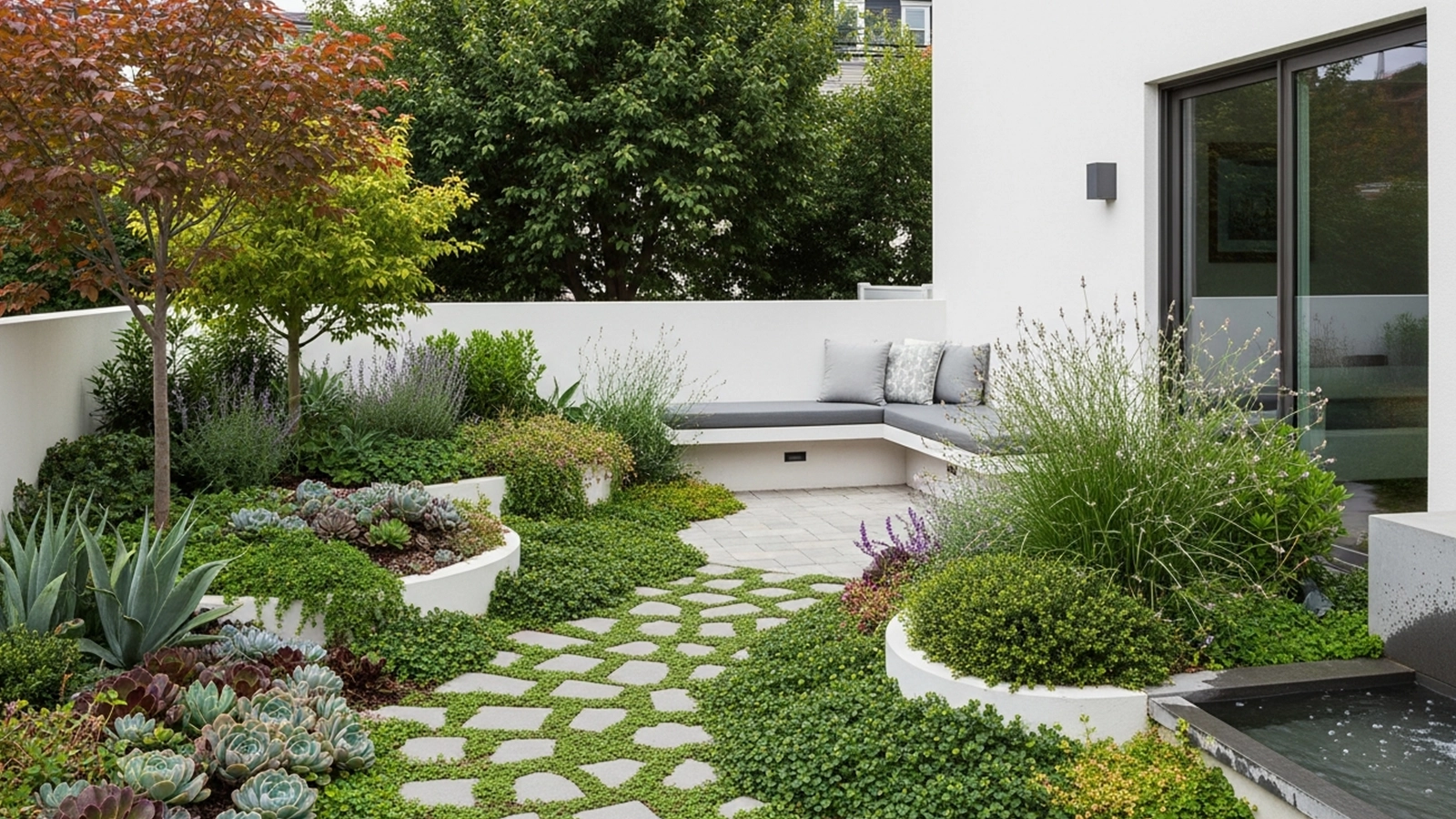
Designing a small garden often feels more demanding than planning a large one because every choice carries visible consequences. When space is limited, proportions, circulation, and plant selection must work together rather than compete for attention. A well-designed small garden does not try to appear larger than it is but instead focuses on clarity, comfort, and intention.
Many homeowners discover that small gardens succeed when they are treated as extensions of daily life rather than decorative afterthoughts. The most effective designs respond to how the space will actually be used throughout the day and across seasons. This practical mindset turns limitations into guiding parameters rather than obstacles.
A small garden can support relaxation, social connection, and visual calm when its structure is clear. Good design principles provide a framework that prevents overcrowding and visual fatigue. These principles help ensure that even modest outdoor areas feel purposeful and welcoming.
Rather than relying on trends, successful small garden design depends on timeless spatial logic. Understanding how people move, pause, and interact with outdoor environments leads to layouts that remain functional over time. This foundation allows aesthetic choices to evolve without compromising usability.
Start With Clear Purpose and Use
Every successful small garden begins with a clear understanding of how the space will be used on a daily basis. A garden designed for morning coffee requires different priorities than one intended for entertaining or quiet reflection. Defining the primary function early helps eliminate unnecessary elements that would otherwise consume valuable space.
Purpose-driven design also influences material selection and layout decisions. For example, a garden meant for frequent use benefits from durable surfaces and accessible seating rather than purely ornamental features. This approach prevents the space from feeling cluttered or underutilized.
When purpose guides design, each element earns its place. Plants, furniture, and pathways work together instead of competing for attention. This clarity makes the garden easier to maintain and more enjoyable to inhabit.
✔️ A small garden designed around everyday use often feels more generous than one focused solely on appearance.
Prioritize Simple Circulation Paths
Movement is one of the most overlooked aspects of small garden design. Even compact spaces need clear circulation paths to prevent a cramped or confusing experience. When movement feels intuitive, the garden becomes easier to navigate and more comfortable to use.
Simple circulation does not mean rigid geometry. Gentle curves or offset stepping stones can guide movement without overwhelming the space. The key is ensuring that paths feel intentional and unobstructed rather than improvised.
Well-planned circulation also protects plants and surfaces from unnecessary wear. When people know where to walk, they are less likely to trample planting areas or compact soil. This practical benefit supports long-term garden health.
💡 Clear pathways visually organize the garden, helping the eye move smoothly through the space instead of stopping abruptly.
Use Vertical Space Thoughtfully
Vertical design is one of the most powerful tools in small gardens, but it must be handled with restraint. Walls, fences, and vertical planters can add greenery without sacrificing floor space. However, overcrowding vertical surfaces can create visual noise rather than harmony.
Thoughtful vertical design focuses on layering rather than filling every surface. A single climbing plant, espaliered tree, or narrow trellis can create depth and enclosure. This approach adds character while maintaining visual calm.
Vertical elements also influence how the garden feels emotionally. Taller features can create a sense of privacy and refuge, while open areas prevent the space from feeling boxed in. Balancing these effects is essential for comfort.
⚠️ Overloading vertical surfaces with too many materials or plant types can make a small garden feel closed and overwhelming.
Create Visual Balance With Fewer Elements
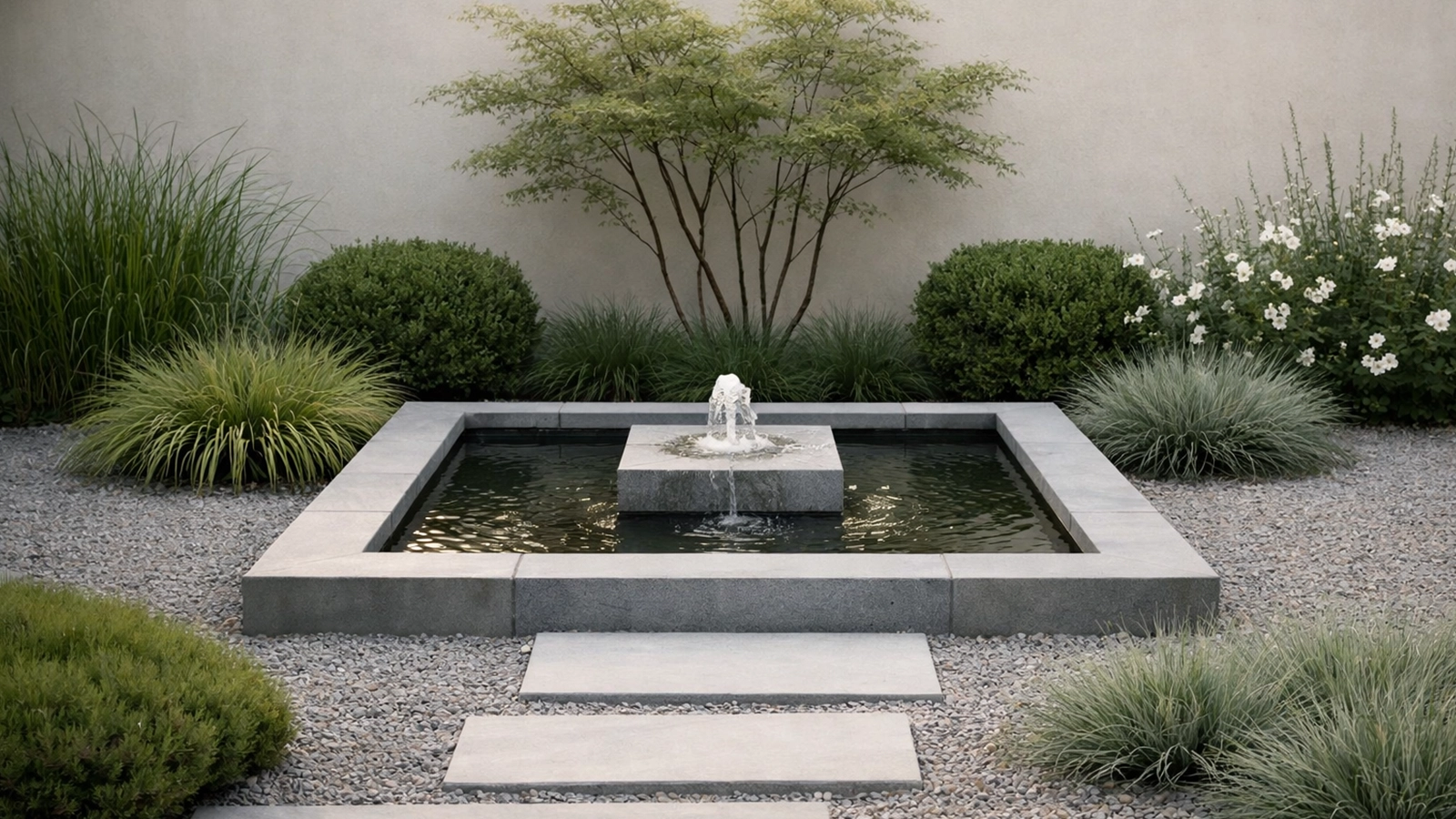
Visual balance is critical in small gardens because every element is immediately noticeable. Using fewer materials, plant types, and colors helps the space feel cohesive rather than chaotic. Limitation becomes a design strength rather than a compromise.
A single focal point often works better than multiple competing features. This could be a sculptural plant, a water bowl, or a simple seating area. When the eye knows where to rest, the garden feels more intentional.
Balance also involves negative space, which is often underestimated. Leaving some areas open allows the garden to breathe visually. This restraint enhances the impact of the elements that remain.
❌ Adding features simply to fill space usually reduces clarity and comfort.
Choose Plants for Scale and Longevity
Plant selection in small gardens requires careful attention to mature size rather than initial appearance. Plants that outgrow their space quickly create maintenance challenges and visual crowding. Selecting species suited to the garden’s scale supports long-term success.
Longevity matters as much as size. Perennials, shrubs, and small trees that age gracefully reduce the need for frequent redesign. This stability allows the garden to evolve naturally instead of feeling temporary.
A limited plant palette also simplifies care routines. Repeating the same species in different areas creates rhythm and visual unity. This repetition strengthens the overall design without requiring additional space.
🐾 For households with pets, choosing non-toxic and resilient plants helps maintain both safety and durability.
Integrate the Garden Into Daily Living
A small garden becomes truly successful when it feels connected to everyday routines. Visual access from interior spaces, easy entry points, and comfortable seating encourage frequent use. This integration prevents the garden from becoming an overlooked corner.
Design choices that support daily living often prioritize comfort over decoration. Shade, wind protection, and lighting all contribute to usability. These practical considerations ensure the garden remains inviting beyond ideal weather conditions.
When a garden supports daily habits, it becomes part of the home rather than a separate feature. This sense of continuity enhances both indoor and outdoor experiences. The garden feels lived in rather than staged.
Design clarity becomes even more important as a small garden begins to take shape, because early structural decisions influence every later choice. At this stage, the focus shifts from defining intent to refining how individual elements interact with one another. Subtle adjustments in layout, materials, and scale can dramatically change how the space feels and functions over time.
As the garden matures, successful designs rely less on decoration and more on spatial intelligence. Each surface, boundary, and transition should support comfort and ease of use. This part explores how thoughtful detailing and restraint help small gardens remain flexible, durable, and visually calm.
Define Edges Without Creating Barriers
Edges play a critical role in how a small garden is perceived and used. Clear boundaries help organize space, but overly rigid edges can make the garden feel boxed in. The goal is to define zones while maintaining visual flow.
Soft edges created through planting, low walls, or changes in material subtly guide movement without interruption. These transitions allow the garden to feel layered rather than segmented. This approach supports both aesthetics and usability.
Edges also affect maintenance and durability. Well-defined borders prevent soil erosion, protect hard surfaces, and make routine care more manageable. Over time, this structural clarity reduces wear and keeps the garden looking intentional.
✔️ Gentle boundaries often feel more spacious than solid dividers in compact outdoor areas.
Limit Materials to Strengthen Cohesion
Material choice has an outsized impact in small gardens because surfaces are seen up close and often at once. Using too many materials fragments the visual experience and makes the space feel restless. Limiting the palette creates calm and continuity.
Consistency does not mean monotony. Varying textures within a narrow material range adds interest without clutter. For example, combining smooth paving with rough stone accents maintains cohesion while providing contrast.
Fewer materials also simplify maintenance and future updates. When replacements or repairs are needed, matching existing finishes is easier. This foresight helps the garden age gracefully rather than becoming patchwork over time.
💡 A restrained material palette allows plants and light to become the primary sources of visual change.
Balance Open Space With Functional Features
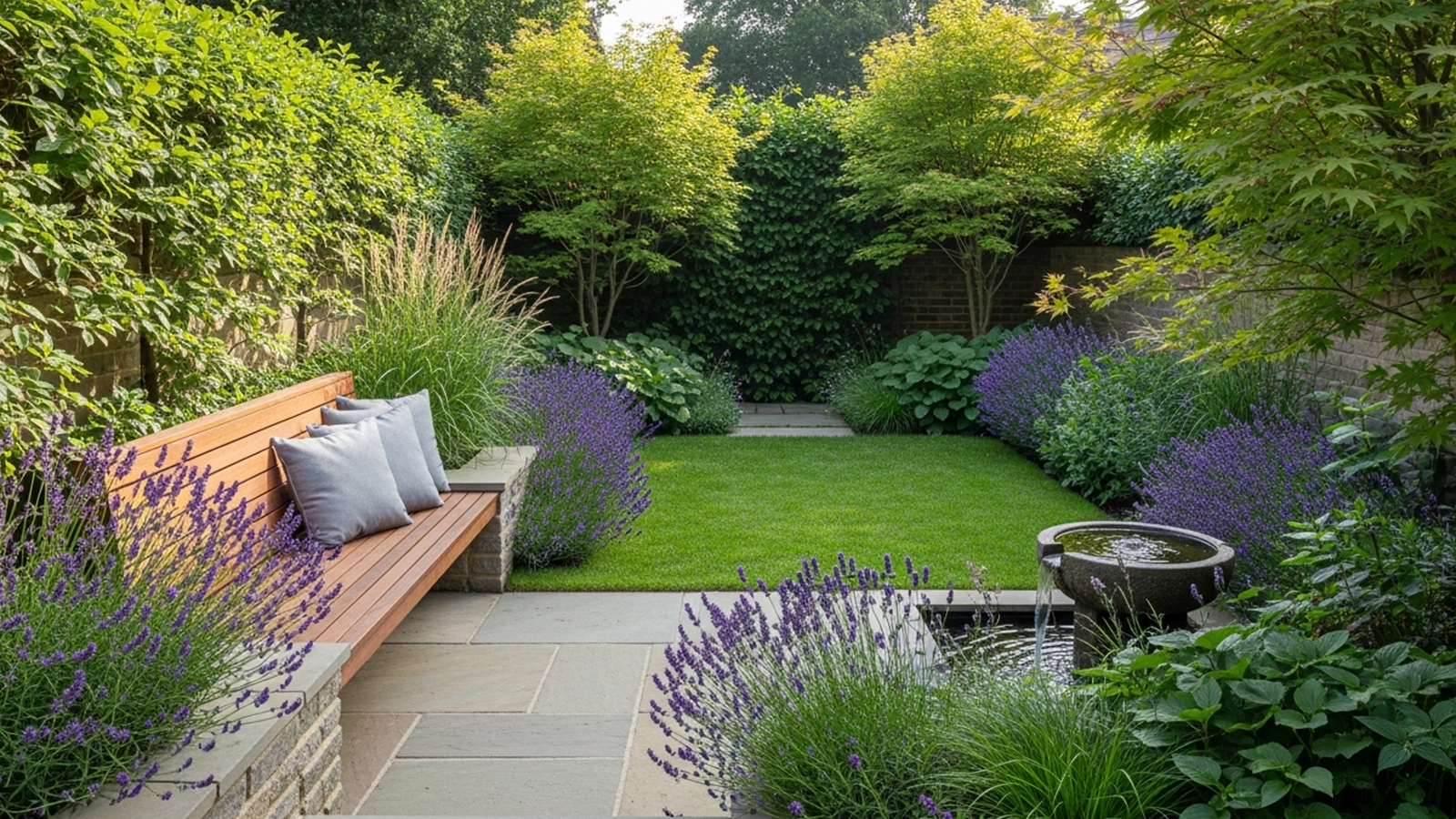
Open space is not wasted space in a small garden. It provides visual relief and allows other elements to stand out. Without some openness, even well-chosen features can feel crowded.
Functional elements such as seating, planters, or storage should be placed strategically to preserve this openness. Built-in solutions often work better than standalone pieces because they reduce visual clutter. Multifunctional features earn their footprint by serving more than one purpose.
The relationship between open and occupied space also affects how the garden is used socially. Clear areas support movement and gathering, while defined features offer places to pause. This balance makes the garden adaptable to different activities.
⚠️ Filling every corner with objects often reduces comfort rather than increasing usability.
Design for Seasonal Flexibility
Small gardens benefit from designs that adapt easily to seasonal changes. Fixed elements should provide structure year-round, while flexible components allow adjustment. This approach prevents the space from feeling static or underused.
Seasonal flexibility can be achieved through movable furniture, container planting, or temporary shade solutions. These elements respond to weather and usage patterns without requiring permanent change. Over time, this adaptability extends the garden’s usefulness.
Plant selection also supports seasonal balance. Mixing evergreen structure with seasonal interest ensures visual continuity while allowing variation. This strategy maintains appeal even during quieter months.
🐾 In climates with harsh winters or hot summers, flexible design reduces stress on both plants and users.
Think in Zones Rather Than Square Footage
Focusing on square footage can be misleading in small gardens. What matters more is how space is organized into zones that support different functions. Even a very small garden can feel generous when zones are clearly defined.
Zones do not need physical separation. Changes in surface, planting height, or furniture placement can signal different uses. This subtle zoning helps the garden feel layered and intentional.
Thinking in zones also supports long-term adaptability. As needs change, zones can be reprogrammed without redesigning the entire space. This flexibility is especially valuable in compact environments.
When zones align with real habits, the garden becomes easier to use and maintain. The space feels responsive rather than restrictive.
Let Lighting Extend Usability and Depth
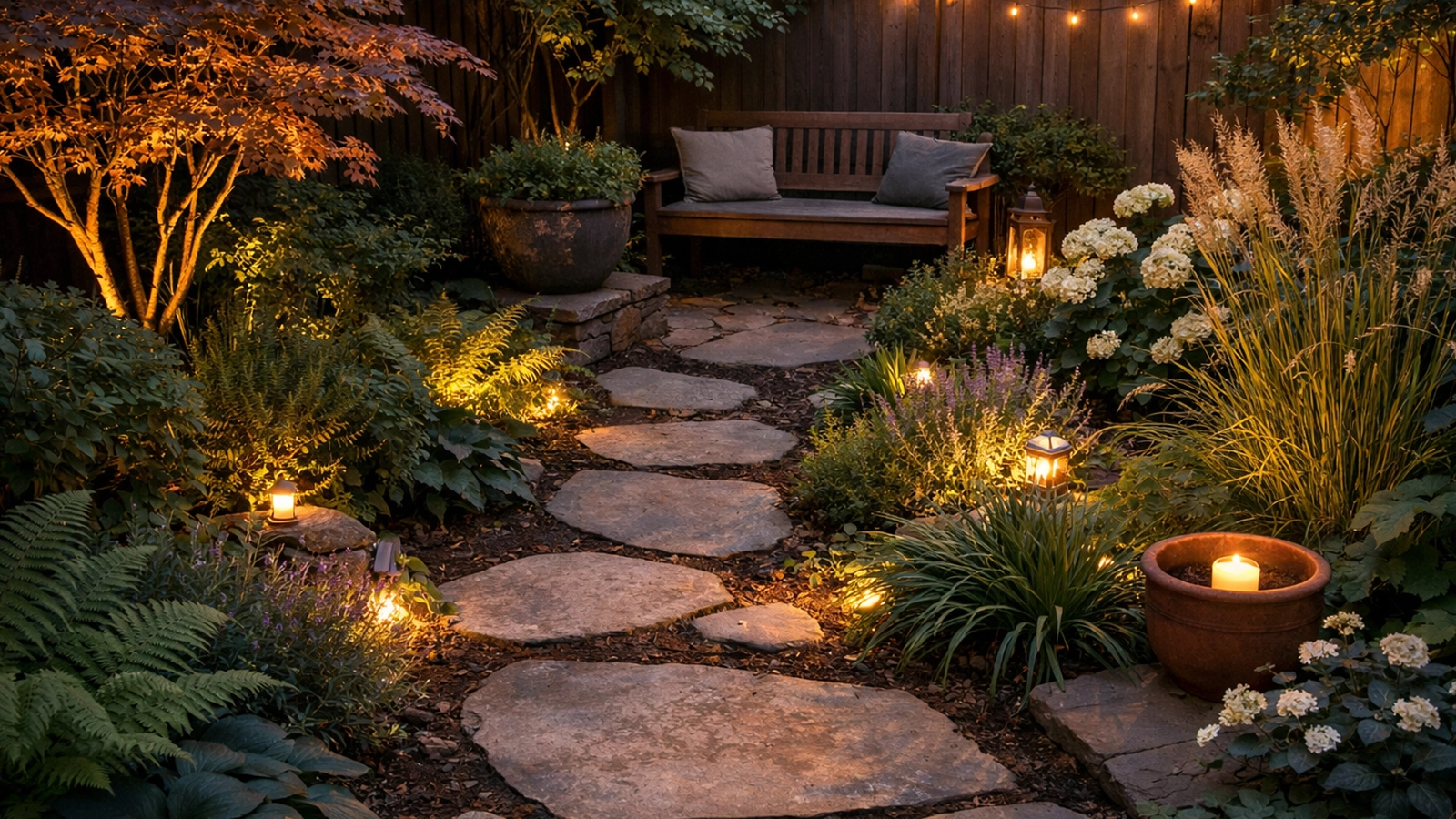
Lighting transforms how a small garden is experienced, especially after sunset. Subtle illumination extends usability and creates a sense of depth that daylight alone cannot provide. Thoughtful lighting makes the garden feel larger and more inviting.
Layered lighting works best in compact spaces. Low-level path lights, accent lighting on plants, and gentle ambient sources each play a role. Together, they guide movement and highlight key features without glare.
Lighting choices also affect mood and comfort. Warm tones tend to feel more welcoming and less intrusive. Proper placement ensures safety while preserving the garden’s calm character.
❌ Overly bright or poorly positioned lighting can flatten the space and disrupt its atmosphere.
Refinement is what ultimately separates a small garden that simply fits from one that truly works. At this stage, attention shifts toward long-term comfort, visual continuity, and how the garden interacts with its surroundings. The goal is not to add more elements, but to ensure that every existing decision supports ease, durability, and everyday enjoyment.
As small gardens mature, their success becomes more apparent through how effortlessly they are used. Well-considered details reduce friction and invite repeated use without demanding constant adjustment. This final section focuses on subtle principles that help compact outdoor spaces remain functional and satisfying over time.
Maintain Proportion Between Hardscape and Planting
Proportion is especially unforgiving in small gardens because imbalance is immediately noticeable. Too much hardscape can make the space feel rigid and exposed, while excessive planting may feel crowded and difficult to manage. Finding the right balance supports both comfort and visual calm.
Hard surfaces should be sized according to actual use rather than convenience. Narrow paths, compact patios, and scaled-down steps often work better than standard dimensions. This restraint leaves more room for planting without sacrificing functionality.
Plants, in turn, should soften hard edges rather than overwhelm them. When planting and paving feel interdependent, the garden reads as a cohesive whole. This balance improves drainage, comfort, and long-term maintenance.
✔️ Proportionate design often feels intuitive, even if the reasoning behind it is invisible.
Use Repetition to Create Visual Rhythm
Repetition is a powerful organizing tool in small spaces. Repeating materials, plant forms, or colors creates rhythm and helps the eye move smoothly through the garden. This continuity reduces visual noise and strengthens the overall design.
Repetition does not require uniformity. Subtle variation within a repeated theme keeps the space from feeling static. For example, using the same plant species at different heights or stages of maturity adds depth without clutter.
This principle also simplifies decision-making. Once a visual language is established, new additions naturally align with the existing design. Over time, this coherence makes the garden feel intentional rather than assembled.
💡 Visual rhythm often makes a small garden feel calmer and more expansive.
Design Storage and Utilities Into the Layout
Functional needs do not disappear simply because a garden is small. Tools, hoses, and seasonal items still require storage, and ignoring this reality leads to clutter. Integrating utilities into the design prevents visual disruption later.
Built-in benches, concealed cabinets, or vertical storage solutions often work best. These features blend into the structure of the garden rather than competing with it. Thoughtful placement ensures they remain accessible without dominating the space.
Utilities should also be easy to maintain. Access to water, electricity, or drainage should not require moving furniture or plants. This foresight reduces friction and supports consistent use.
⚠️ Poorly planned storage often undermines otherwise strong garden design.
Consider Sightlines From Indoors and Outdoors
Small gardens are frequently viewed from inside the home as much as they are used outside. Sightlines influence how the garden is perceived throughout the day. Designing with these perspectives in mind strengthens the connection between interior and exterior spaces.
Key views should terminate in calm, composed elements rather than clutter. A focal plant, simple wall feature, or open planting bed often works better than complex compositions. This clarity enhances visual comfort from indoors.
Outdoor sightlines matter as well. When the garden feels visually ordered from within, it also feels easier to navigate. This dual consideration improves both aesthetics and usability.
🐾 For homes with pets, clear sightlines also support safety and supervision.
Align the Garden With the Home’s Overall Character
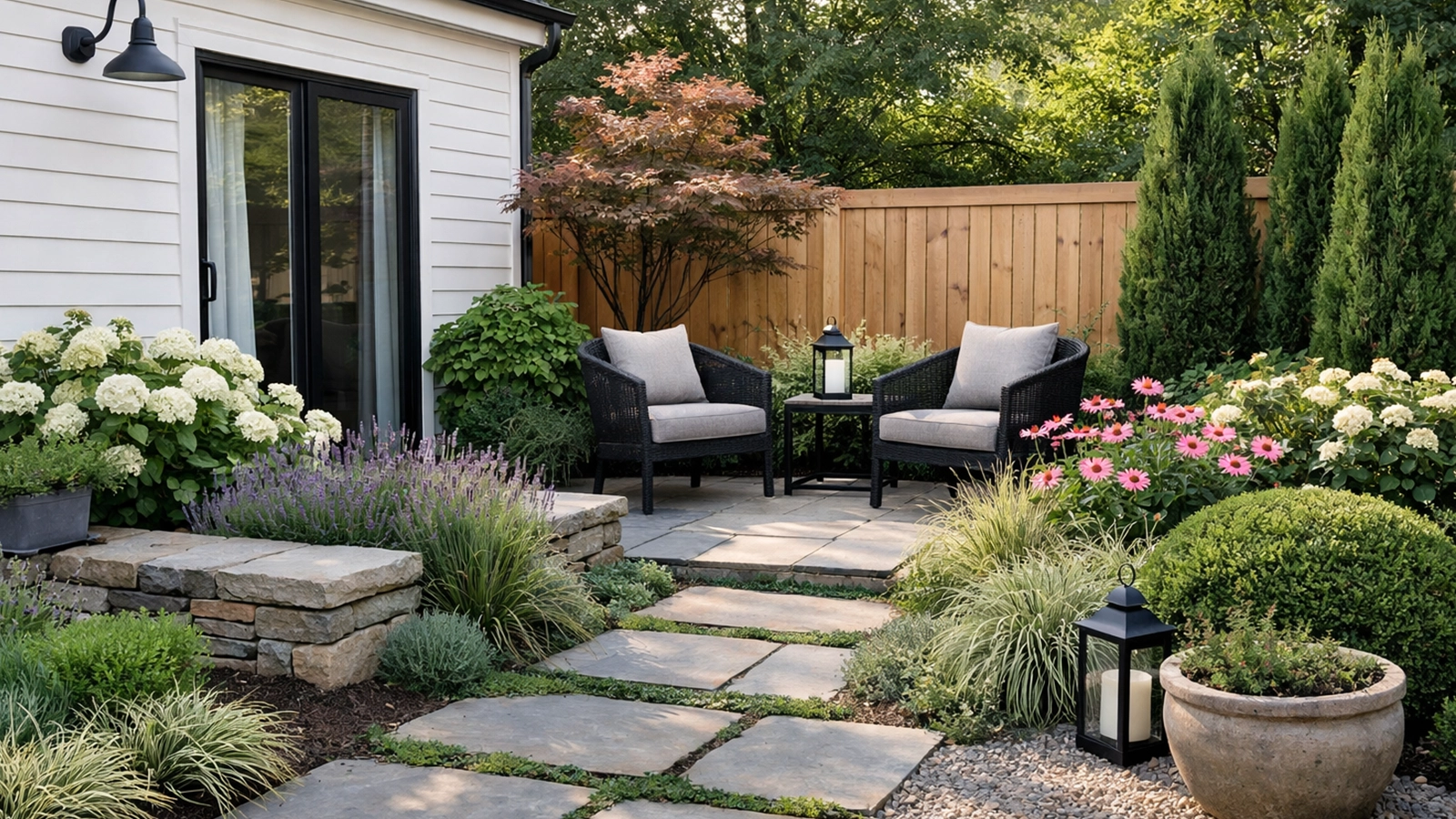
A small garden feels most successful when it reflects the character of the home it belongs to. Materials, colors, and forms should feel like a continuation rather than a contrast. This alignment creates visual harmony and strengthens the overall property experience.
Consistency does not require exact matching. Interpreting architectural cues through planting style or material choice is often enough. This subtle connection helps the garden feel grounded and intentional.
This principle is especially important in visible areas. Many homeowners notice how aligning garden design with the home’s exterior can significantly improve curb appeal, as explored in front yard landscaping ideas that improve curb appeal. When garden and architecture support each other, even small spaces feel complete.
❌ Ignoring the home’s character often makes a small garden feel disconnected.
Accept Constraints as Design Guidance
Constraints are unavoidable in small gardens, but they are not inherently negative. Limited space, light, or budget can clarify priorities and guide better decisions. Accepting these limits early leads to more focused and effective design.
When constraints are treated as parameters, creativity becomes more disciplined. Choices are made with intention rather than impulse. This mindset reduces wasted effort and supports long-term satisfaction.
Over time, gardens designed within clear boundaries often age better. They adapt gracefully because they were never overextended. This acceptance ultimately makes small gardens more resilient and enjoyable.
✔️ The most successful small gardens work with constraints, not against them.
External source: https://www.gardendesign.com/landscape-design/rules.html