You step outside on a Saturday morning thinking the yard will take twenty minutes. An hour later, you are still trimming, pulling, and adjusting. The space is small, yet it never feels finished.
Most small garden maintenance problems do not start with neglect. They start with design choices that looked harmless at the beginning. Over time, those choices stack up and quietly turn a simple yard into a constant project.
A compact garden reacts faster than a large one. Plants fill gaps quickly, edges blur sooner, and mistakes show up earlier. That is why small garden design mistakes that increase maintenance often feel surprising.
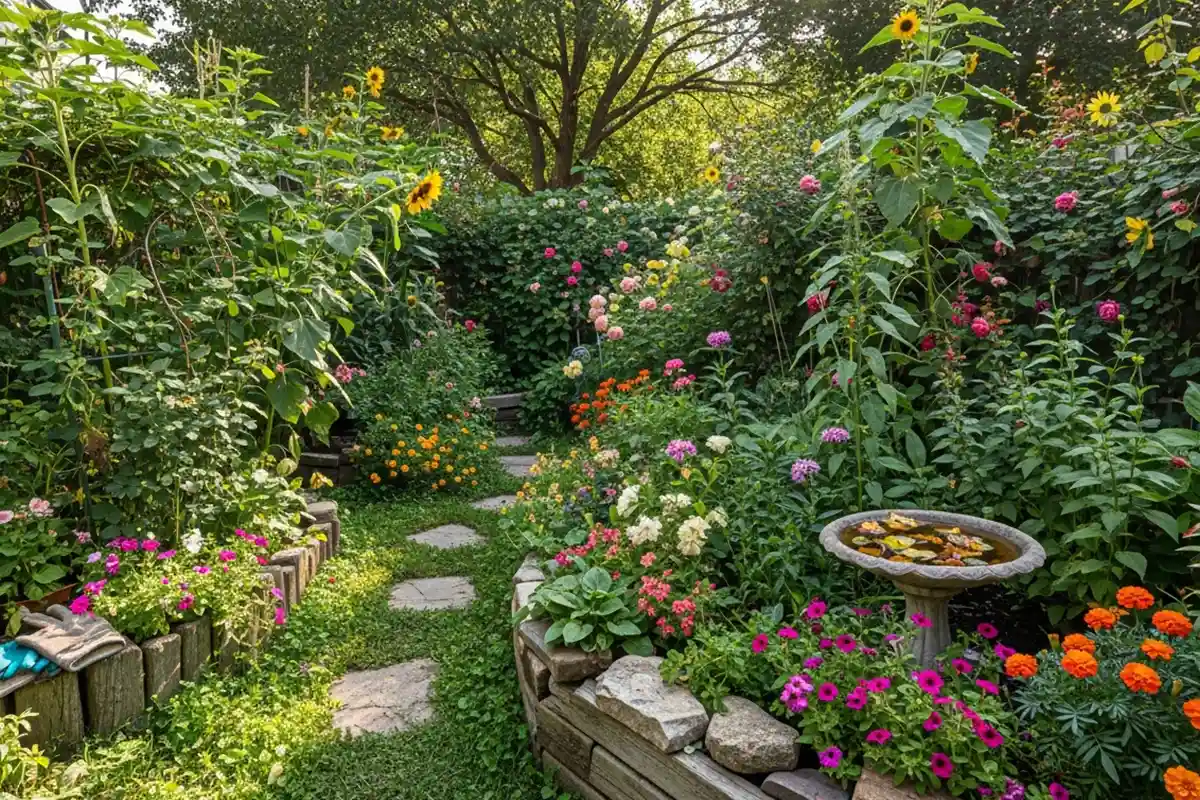
Overcrowding Plants in Limited Space
You plant a few extra perennials because the bed looks empty in spring. By midsummer, you can barely see the soil, and you are cutting things back every week just to walk through.
When plants sit too close together, you start noticing:
-
Leaves staying wet longer after rain.
-
Mold or yellowing where air cannot move.
-
Branches leaning into each other.
-
Path edges slowly disappearing.
At first, the fullness feels lush. Then it starts to feel messy. You trim one side, and another area looks overgrown the next week. The garden never settles.
A common belief is that packing plants tightly reduces weeds and maintenance. In reality, it often increases pruning, disease checks, and reshaping. Without breathing room, everything grows into everything else.
Overcrowding also changes how the garden feels. There is no visual pause. Your eye keeps searching for structure but finds only layers of growth. Front Yard Landscaping Mistakes That Lower Home Value explains how plant overcrowding can diminish curb appeal and create long-term structural imbalance. The same visual pressure shows up in small backyards, only faster.
Ignoring Mature Plant Size at Installation
At the nursery, that shrub looks compact and tidy in its pot. Two seasons later, it pushes against the fence and blocks half the walkway.
You begin to notice small daily frustrations:
-
You brush against branches when walking by.
-
Windows lose light.
-
You cut the same plant back every few weeks.
-
New growth looks uneven because it is constantly trimmed.
The issue is rarely aggressive growth alone. It is installing plants based on how they look today instead of how they behave later. In a small garden, even twelve extra inches matter.
Roots add another layer you do not see. When several plants compete in tight soil, you water more often because they dry out faster. Fertilizer becomes routine instead of occasional. The garden feels needy.
Many people assume regular pruning keeps any plant “manageable.” What actually happens is this:
-
Pruning becomes seasonal, then monthly.
-
The plant loses its natural shape.
-
Stress increases vulnerability to pests.
The maintenance load grows quietly because the plant was never meant for that space.
Fragmented Layout Without Clear Circulation
You step into the yard and instinctively cut across a planting bed because there is no clear path. After a few weeks, the soil is compacted and plants near the edge look stressed.
When circulation is unclear, you start seeing patterns:
-
Mulch spreads into grass.
-
Lawn creeps into beds.
-
Edges blur after every rain.
-
You re-edge more often than expected.
A small garden without defined movement zones feels tighter than it is. You hesitate before stepping, and that hesitation usually means the layout is unclear.
There is also a visual effect. Without strong lines, everything blends together. Beds, lawn, and hardscape start competing instead of guiding movement. Front Yard Design Problems on Narrow Lots demonstrates how unclear spatial organization can make compact spaces feel tighter and harder to manage. The same tension appears in small backyard layouts where space is limited.
People often believe that small yards do not need strong structure because everything is close anyway. The opposite is true. The smaller the space, the more obvious the confusion.
Mixing High-Maintenance and Low-Maintenance Species Randomly
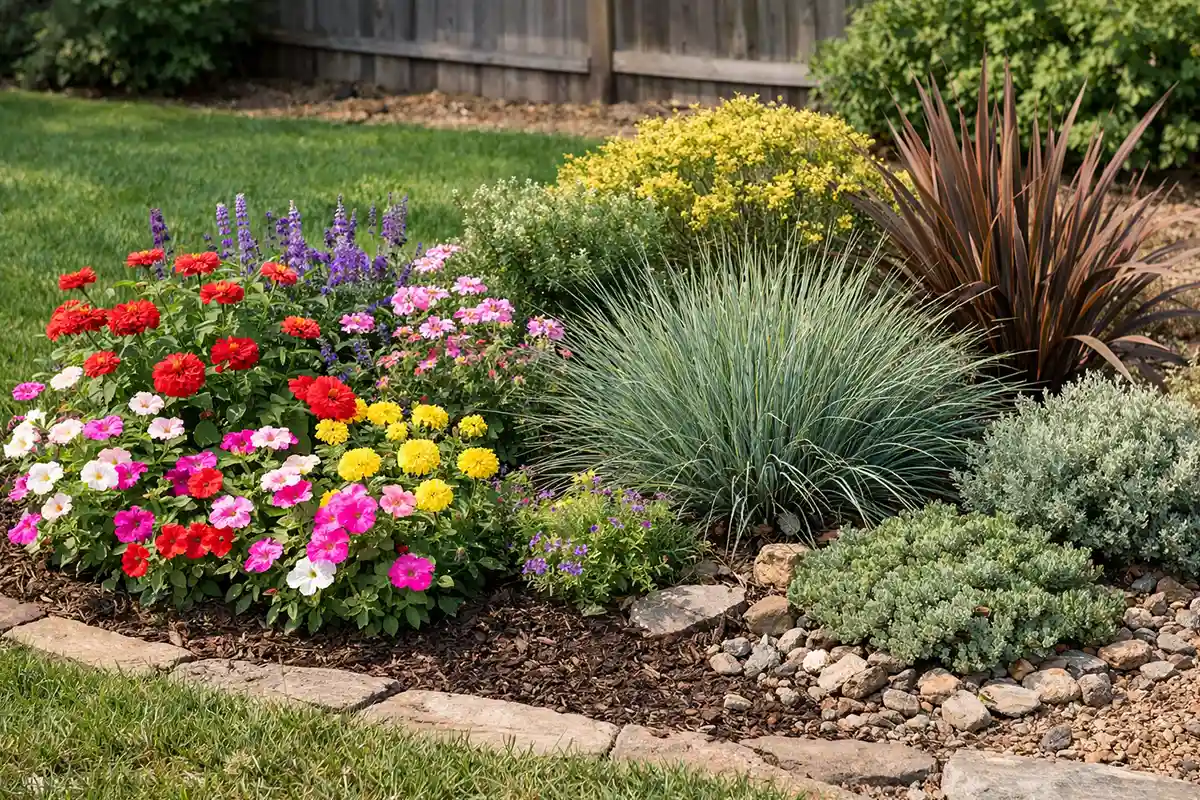
You water one side of the bed because the flowers look dry. A few days later, the shrubs next to them start yellowing from too much moisture.
In mixed beds, you begin to notice:
-
Some plants droop while others thrive.
-
Watering feels inconsistent.
-
Pruning schedules never align.
-
One plant always looks slightly stressed.
When thirsty annuals sit beside drought-tolerant shrubs, the irrigation rhythm never fits both. You adjust constantly. The space demands attention because it was not grouped by similar needs.
Many homeowners think variety automatically creates balance. In small gardens, random variety creates friction. You manage multiple micro-systems in one tight area.
| What You Notice | What You Assume | What Is Actually Happening |
|---|---|---|
| Plants look uneven in height. | They just need more trimming. | They are growing at different natural rates. |
| Soil dries out in some spots only. | The weather is inconsistent. | Different root systems are competing unevenly. |
| You water more often than expected. | Small gardens need frequent watering. | Mixed plant needs are forcing overcorrection. |
These patterns are easy to miss because each one seems small. Together, they explain why the garden feels harder than its size suggests.
Neglecting Soil Preparation in Compact Beds
You plant directly into existing soil because the bed looks small and manageable. A few weeks later, water pools on the surface or drains too fast.
Signs show up quickly:
-
Plants wilt even after watering.
-
Weeds appear in thin patches.
-
Soil feels hard when you push a trowel in.
-
Roots stay shallow.
In compact beds, there is no buffer. Poor soil affects everything at once. You respond by watering more or feeding more, but the core problem stays below the surface.
There is a widespread belief that soil improvement matters more in large landscapes than in small ones. In reality, limited soil volume makes quality even more critical. When the base is weak, maintenance increases across the entire space.
A small garden can feel simple or exhausting. The difference usually comes from early structural decisions that shape how the space behaves long before the plants fully mature.
Choosing Decorative Gravel Without Weed Control Strategy
You spread fresh gravel and for a few weeks the surface looks clean and sharp. By mid-season, thin green shoots start popping up between the stones.
Gravel behaves differently than mulch. Light reaches the soil through the gaps, and airborne seeds settle easily. When there is no proper barrier underneath, roots travel straight into the ground and anchor deeply. What looked like a low-maintenance surface slowly turns into a hand-weeding routine.
Several conditions combine to increase the workload:
-
A thin gravel layer that shifts with foot traffic.
-
No compacted base beneath the stones.
-
Inadequate edge restraint allowing soil migration.
-
Wind exposure that carries seeds into open gaps.
Each factor seems minor on its own. Together, they create a surface that constantly needs correction.
Over time, gravel compacts unevenly. Low spots collect moisture and organic debris, which speeds up germination. The more weeds you pull, the more you disturb the surface, and the cycle repeats.
Why Does Gravel Feel Slippery Even When It Looks Dry?
You step onto the path in sneakers, and your foot slides slightly even though the surface looks clean. Nothing appears wet, yet the footing feels unstable.
The confusion usually comes from surface interaction rather than visible moisture. Small particles shift under pressure, and fine dust between stones reduces friction. The instability is subtle, but you notice it in everyday movement.
Is it just the type of shoes?
Soft rubber soles grip better, while smooth or worn soles slide more easily on loose aggregate.
Can dry gravel still move underfoot?
Yes. Even dry stones roll against each other if they are not compacted into a stable base.
Does temperature play a role?
Heat can dry out the surface layer while leaving fine dust beneath, which reduces traction.
Is lighting affecting perception?
Low-angle light can make the surface appear solid, masking unevenness that increases slip risk.
Does moisture from dew matter even if I cannot see it?
Light condensation can coat small particles, making them behave like ball bearings without looking wet.
This instability often signals a deeper installation issue:
-
Insufficient compaction before stone placement.
-
Rounded gravel instead of angular aggregate.
-
No binding layer to lock particles together.
What feels like a minor slip can indicate that the surface will continue shifting and spreading over time.
Installing Lawn Areas That Are Too Small to Function Properly
A narrow strip of grass along a fence seems easy to maintain at first. Then mowing becomes awkward, and the edges start thinning.
Small turf areas create concentrated stress. Mower wheels pass over the same lines repeatedly. Heat from adjacent hardscape dries the soil faster. Edges receive constant trimming damage.
Common patterns appear quickly:
-
Brown lines forming along concrete borders.
-
Uneven growth between shaded and sunny edges.
-
Irrigation overspray reaching nearby beds.
-
Soil compaction in narrow corridors.
The lawn begins requiring more water and fertilizer to stay presentable. Yet it may not serve any real function beyond appearance.
Front Yard Design Ideas for Suburban Homes highlights how selecting appropriately scaled focal elements creates long-term balance without excessive trimming. The same scale logic applies to turf placement in compact backyards.
Over time, undersized lawns become maintenance-intensive decorative strips rather than usable space.
Surface and Plant Interaction Under Changing Conditions
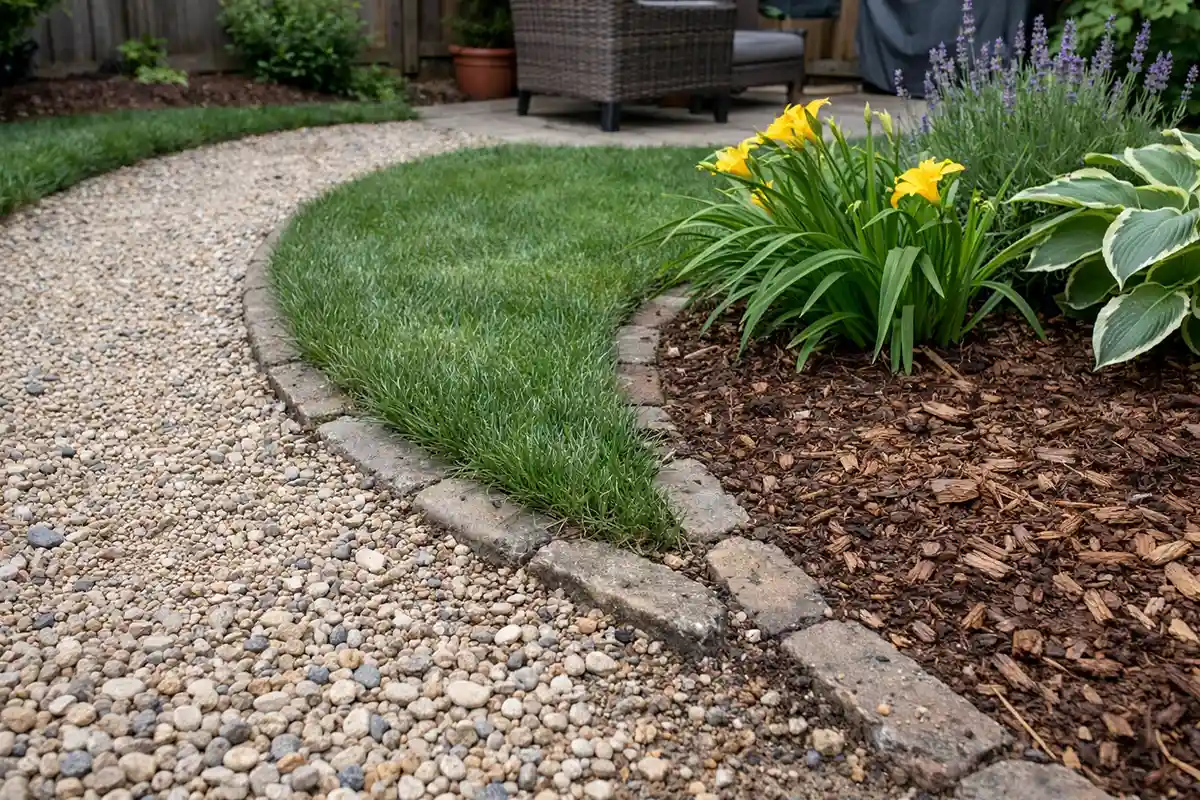
You notice gravel creeping into the lawn and grass pushing back into the path. The boundary never stays clean for long.
Surface and plant materials respond differently to moisture and foot traffic. Grass spreads laterally, mulch decomposes, and gravel migrates outward. In a small garden, these shifts overlap quickly.
The interaction varies depending on conditions:
High Rainfall Environments
-
Gravel sinks into softened soil.
-
Mulch washes into turf.
-
Edges blur faster after storms.
Dry, Hot Climates
-
Turf edges shrink and separate from hardscape.
-
Soil contracts, creating small gaps.
-
Fine dust accumulates between stones.
Heavy Foot Traffic Areas
-
Grass compacts and thins.
-
Gravel spreads outward.
-
Plant roots near paths become exposed.
Shaded Zones
-
Moisture lingers longer.
-
Moss or algae may develop along borders.
-
Organic debris accumulates more quickly.
These interactions explain why maintenance patterns differ from one yard to another, even when layouts look similar.
Analytical Interaction Matrix
| Element Pair | Primary Stress Factor | Visible Outcome | Long-Term Effect |
|---|---|---|---|
| Gravel + Lawn | Lateral spread | Mixed materials at edge | Frequent re-edging |
| Lawn + Concrete | Heat reflection | Browning at borders | Increased watering demand |
| Mulch + Rain | Water displacement | Washed-out beds | Soil exposure |
| Turf + Foot Traffic | Soil compaction | Thinning strips | Weed intrusion |
| Gravel + Shade | Moisture retention | Slippery surface patches | Surface instability |
This matrix clarifies how small material conflicts gradually amplify maintenance demands.
Overusing Containers Without Planning Drainage
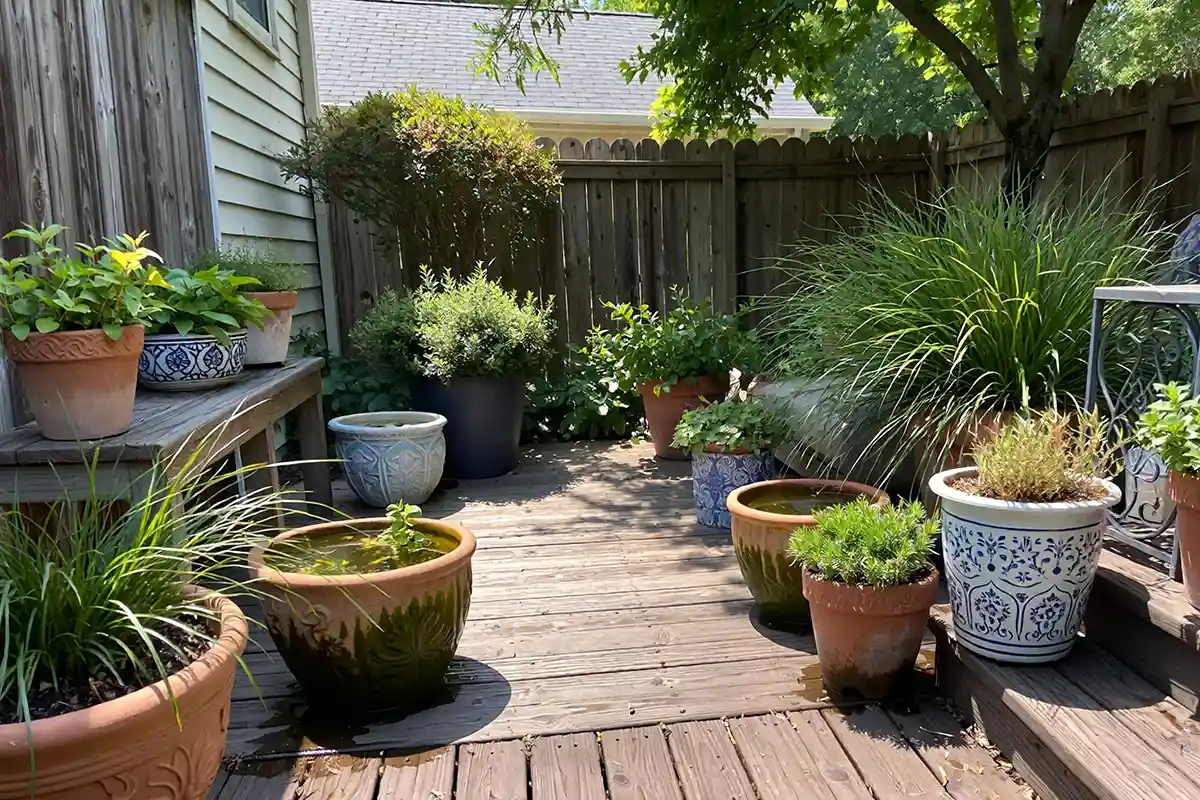
You water the containers in the morning, and by late afternoon some look dry again while others remain saturated. The difference is visible within hours.
Containers create isolated soil systems. Each pot drains, heats, and dries at a different rate depending on size, material, and exposure. In a small garden with many containers, you manage multiple micro-environments at once.
Patterns that increase workload include:
-
Small pots drying out faster than large ones.
-
Dark containers overheating in direct sun.
-
Poor drainage holes causing root stress.
-
Grouped pots trapping humidity between them.
What feels decorative at first becomes a daily monitoring task. Unlike in-ground beds, containers offer little buffer against weather shifts.
As the season progresses, evaporation rates rise, root systems fill available space, and watering frequency increases. The workload scales upward even though the garden footprint remains small.
Maintenance intensity in compact gardens rarely comes from one dramatic mistake. It builds from overlapping interactions between surfaces, plants, and environmental shifts that accelerate wear in limited space.
Relying on Seasonal Color Without Structural Backbone
By late summer, the bright spring blooms are gone and empty gaps start showing between plants. The garden that once looked full now feels patchy and uneven.
When color comes mostly from annuals, the rhythm of the yard depends on constant replacement. As one wave fades, another must take its place. That cycle quietly increases time spent planting, deadheading, and refreshing beds.
A more stable structure changes how the space behaves. Evergreen shrubs, ornamental grasses, and long-lived perennials hold shape even when flowers are not at peak. Color becomes a layer, not the entire foundation.
Minor situations show up as short gaps between bloom cycles. Moderate cases involve large empty sections after seasonal dieback. Severe cases feel like the garden disappears outside peak months. The difference is not style, but how much the design relies on temporary elements.
If structural plants are added without scale control, a new problem appears. Overly large shrubs can shade out seasonal color and reintroduce pruning pressure. Balance matters as much as presence.
Irrigation Patterns That Work Against the Layout
You notice one corner staying soggy while another dries out quickly. The sprinkler runs evenly, yet plant health varies across the same small yard.
When irrigation is not aligned with plant groupings, water distribution creates stress rather than stability. Shrubs with deep roots receive the same schedule as shallow-rooted flowers. Over time, roots either suffocate or struggle.
Small gardens often operate on a single watering zone. That simplicity can hide uneven needs:
-
Moisture-loving plants yellow from overwatering.
-
Drought-tolerant species show soft growth.
-
Algae forms on nearby hardscape.
-
Soil compacts in consistently wet areas.
In minor cases, adjusting timing reduces visible stress. Moderate cases require separating zones or modifying spray patterns. Severe cases involve root damage that demands plant replacement.
If irrigation is adjusted too aggressively, new imbalances can emerge. Reducing water without understanding soil composition may lead to sudden plant decline. Changes need to reflect both plant type and drainage conditions.
Consolidating the Layout to Reduce Daily Intervention
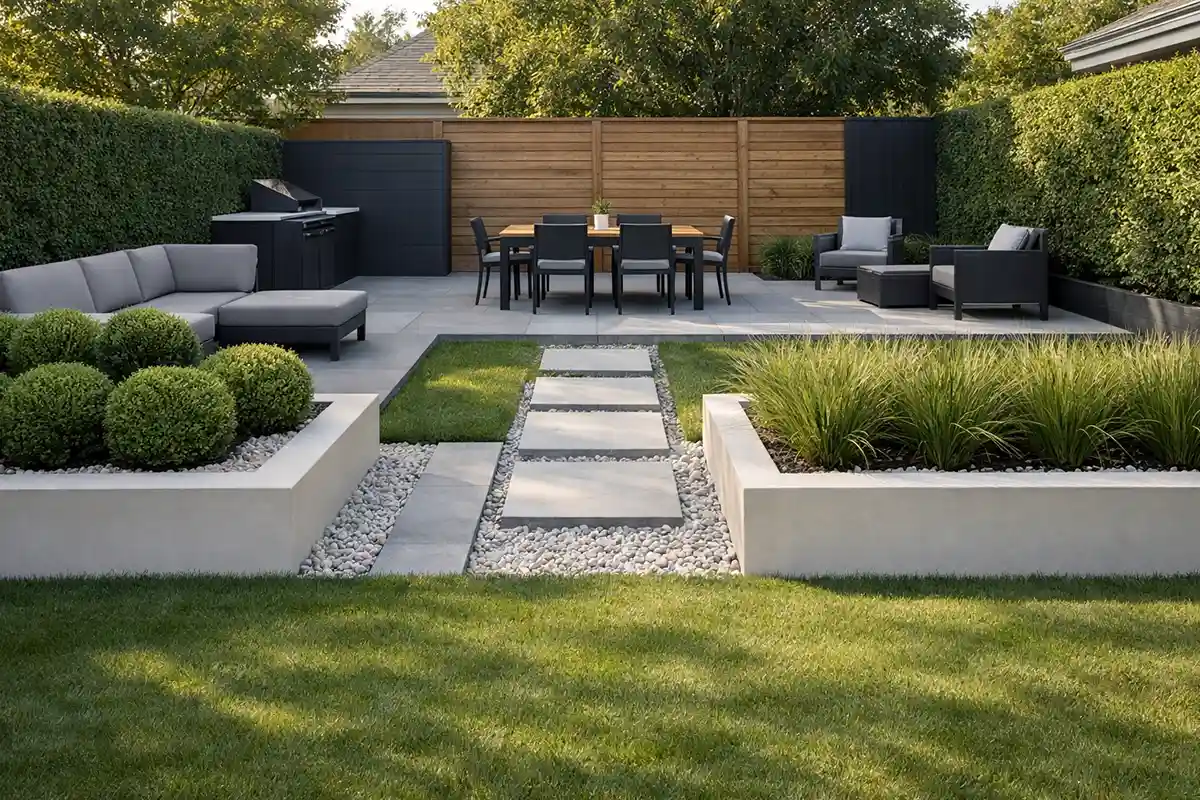
The yard feels calmer after a few underperforming plants are removed and beds are redefined. Walking through the space becomes easier because there are fewer overlapping elements.
Consolidation does not mean stripping character. It shifts the garden from scattered additions to intentional groupings. When plants with similar growth rates and water needs sit together, maintenance becomes more predictable.
This adjustment often includes:
-
Merging fragmented beds into larger unified areas.
-
Reducing the total number of species.
-
Replacing small turf strips with stable groundcover.
-
Strengthening edges between surfaces.
In minor scenarios, removing only the most demanding elements lightens the load. Moderate scenarios involve rebalancing entire sections of the yard. Severe cases may require partial redesign when the layout itself causes repeated stress.
How to Maintain a Clean and Simple Front Yard outlines how clarity in layout directly reduces ongoing labor and visual stress. The same principle applies in compact backyard spaces where every element interacts closely.
This solution can fail if consolidation ignores light conditions or mature plant size. Grouping shade and sun plants together without regard for exposure creates new stress patterns. When simplification is done only for visual minimalism, not functional alignment, maintenance problems shift rather than disappear.
Structured Corrective Pathways Based on Severity
Not every small garden requires full redesign. The level of correction depends on how deeply maintenance pressure is embedded.
Minor Imbalance
-
Occasional overcrowding.
-
Slight edge migration.
-
Seasonal gaps manageable with light adjustments.
Monitoring and small spatial corrections often stabilize these situations.
Moderate Accumulation
-
Repeated pruning cycles on the same plants.
-
Gravel or mulch displacement after every rain.
-
Uneven irrigation stress across beds.
Here, partial reorganization and surface reinforcement reduce recurring friction.
Severe Structural Conflict
-
Constant plant replacement.
-
Persistent drainage or compaction issues.
-
Layout that restricts movement and access.
In these cases, foundational changes to bed size, plant selection, or material transitions may be necessary.
If deeper structural issues are ignored, symptoms compound. Weed pressure increases, surfaces degrade faster, and plant health declines simultaneously.
Mini Checkpoint: Self-Assessment for Ongoing Maintenance Load
Reviewing visible patterns helps determine whether the garden needs simple monitoring or corrective restructuring.
-
Pruning the same plant more than three times per season.
-
Edges between lawn and beds losing definition within weeks.
-
Water pooling after moderate rainfall.
-
Containers drying out within a single day repeatedly.
-
Gravel or mulch shifting noticeably after foot traffic.
-
Persistent yellowing in one section despite regular watering.
-
Narrow turf strips showing thinning or soil exposure.
-
Weeds emerging in identical spots each month.
If several of these signs appear consistently, surface-level adjustments may not be enough and structural intervention could be required.
A small garden becomes manageable when its parts support each other instead of competing for correction. The shift is visible in how often you reach for tools, how clearly paths remain defined, and how stable the space feels across changing seasons.
For a broader look at how plant spacing and long-term growth affect maintenance patterns, explore the guidance shared by American Society of Landscape Architects.