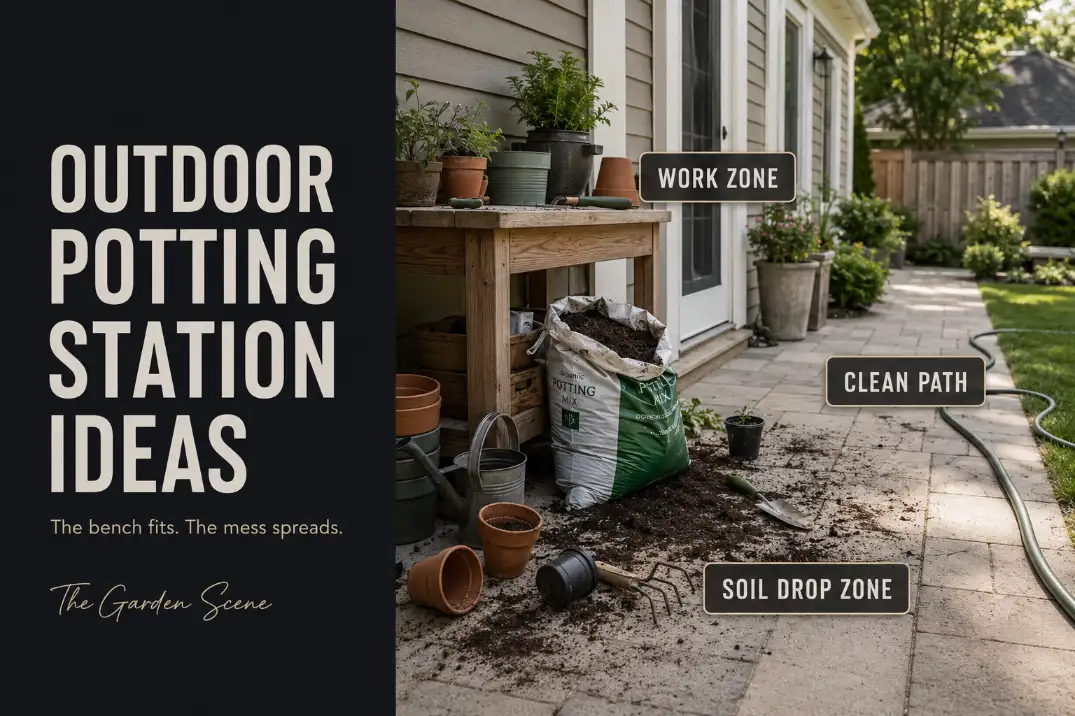
An outdoor potting station is not just a potting bench. The bench is the object; the station is the working zone around it. That zone needs a clear surface, a soil drop area, water access, and a cleanup route that does not pull dirt across the patio.
The first checks are practical: keep at least a 36-inch walking route open, make sure water can reach the station without a hose crossing the main path, and aim for a cleanup routine that takes about 3–5 minutes after a normal planting task.
If cleanup takes 15 minutes or the hose blocks the door every time you use it, the issue is not style. It is placement.
This is where potting stations differ from ordinary patio clutter. Random clutter usually comes from too many objects. Potting station mess comes from a task with no boundary.
Give Garden Work a Place
The first decision is not what the bench looks like. It is where soil work can happen without crossing the clean patio route.
A good potting station belongs near the path garden work already follows: a side patio edge, garage-to-yard route, shed corner, fence-side utility strip, or hose wall. It should be close enough to use casually but far enough from dining, lounging, and back-door traffic that one unfinished planting job does not make the whole patio feel dirty.
Measure the activity, not just the bench
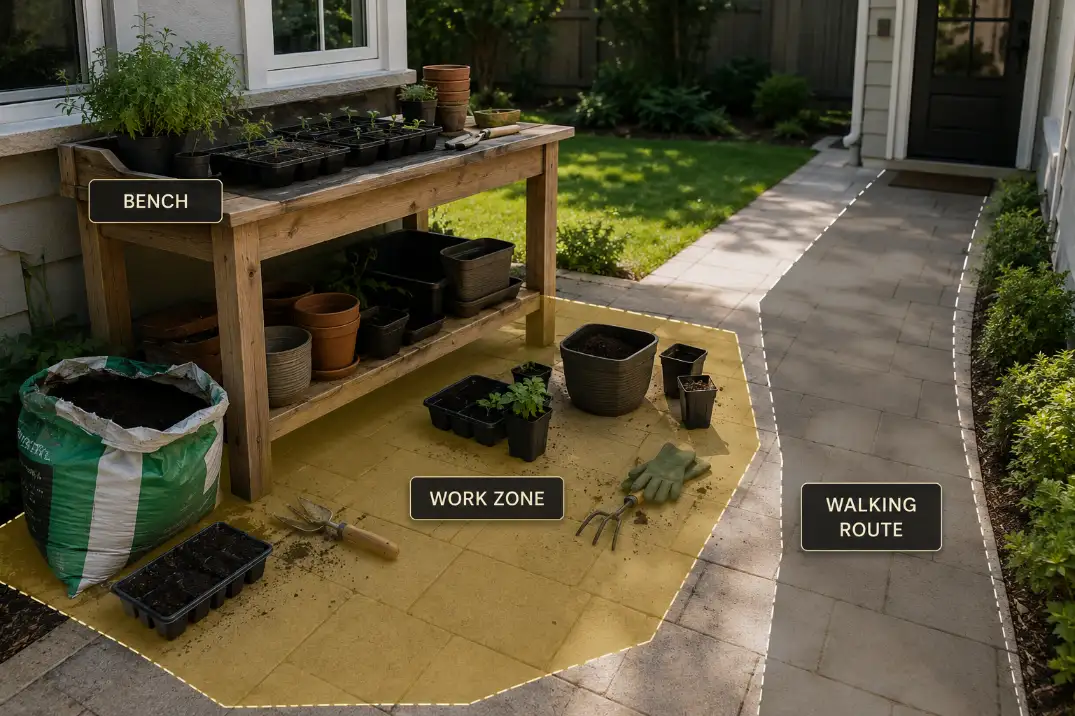
A 36-inch-wide potting bench can easily need a 5- to 6-foot working zone once you add standing room, a soil bag, trays, nursery pots, and space to step back.
That is the part many homeowners miss. They measure the furniture, then wonder why the patio still feels crowded.
The symptom is soil and tools spreading across the surface. The mechanism is a work zone that was never given enough room.
If your patio already has a tight route between the back door, lawn, grill, and seating area, treat the potting station like a small outdoor work zone rather than another decorative piece.
The same task-first logic used in Outdoor Work Space Ideas for Patios applies here: the setup has to support the work without taking over the path.
Put it near garden movement
A potting station placed across the yard from the plants may look neat, but it often stops getting used. For container gardens, herbs, and seasonal annuals, the station usually works best within about 20–40 feet of the area where pots are filled, moved, or refreshed most often.
That distance is close enough for regular use but far enough to keep soil work away from clean furniture. In a small backyard, the best location may be a side-yard edge near the hose. In a larger yard, it may be near the garage, shed, or utility wall.
Choose the Right Potting Station Setup
Most outdoor potting station ideas fail when they are chosen by appearance alone. A rustic bench, rolling cart, or wall shelf can all work, but only when the setup matches the way the yard is actually used.
Patio-edge bench
A patio-edge bench works when the patio has enough room to keep garden work to one side. This is the best choice when you want a permanent station but still need the center of the patio open for seating, grilling, or walking.
The bench should face the working side of the yard, not the main seating area. If you have to stand in the middle of the patio to use it, the station is facing the wrong way.
Hose-side utility station
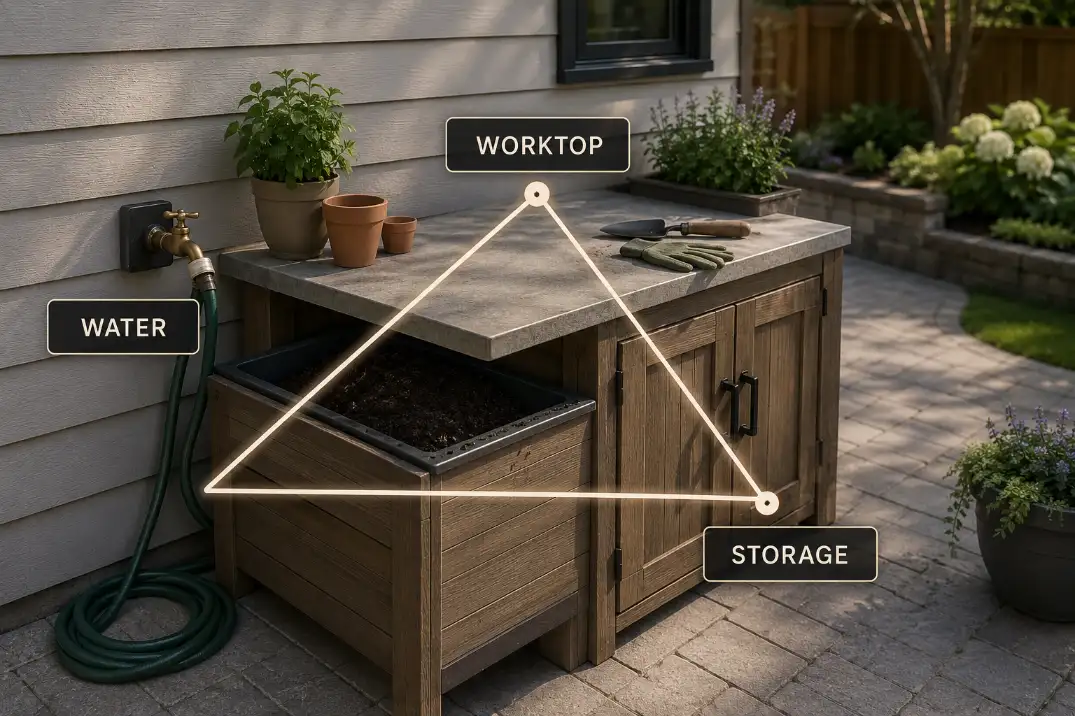
A hose-side station is the most practical option for regular container care. It keeps water, soil, and cleanup in one service zone instead of dragging the mess through the patio.
The key is the hose route. A station 8 feet from the faucet can still be badly placed if the hose crosses the back-door path. A station 20 feet away can work better if the hose runs along a fence or wall edge.
For yards where the faucet already sits in a side route, a small station near that wall can borrow the same planning logic as Side Yard Hose Reel and Faucet Zone Ideas: water access should feel like a controlled service area, not a loose line across the patio.
Rolling cart for small patios
A rolling cart is useful when the potting station is seasonal or the patio is too small for a permanent bench. It works best for herbs, seed trays, small pots, and light tools.
The limit is weight. Once you are moving full soil bags, large ceramic pots, or wet containers, a cart can become more awkward than helpful. Use it for mobility, not as a substitute for a real work surface.
Garage-to-yard setup
A garage-to-yard station is often the cleanest choice for homeowners who do heavier planting work. Soil bags, fertilizer, empty nursery pots, and tools can stay closer to storage while the patio remains cleaner.
The tradeoff is convenience. If the garage station is too far from daily containers, it may only get used for big spring and fall planting sessions. That is fine if the goal is seasonal work, not daily patio gardening.
Close to Water, Not in the Way
Water access matters, but it should not decide the layout by itself. A potting station beside a hose is only useful if the hose does not wrap around furniture, cross the doorway, or drag wet soil through the seating area.
Follow the hose before choosing the spot
Before placing the station, pull the hose as if you were actually rinsing pots or watering new plants. Watch where it lands. If it cuts across the main walking route for more than a few minutes at a time, the station is probably in the wrong place.
A hose that crosses a patio once a month is a small annoyance. A hose that crosses the path every warm weekend becomes part of the layout problem.
Drainage should be quiet
A potting station does not need complex drainage, but rinse water needs somewhere to go. On pavers or concrete, a slight slope away from the house is important. Even about 1/8 inch per foot helps water move instead of sitting under bench legs, bins, and trays.
If the station area stays wet for more than 2–3 hours after a light rinse, it may be too shaded, too flat, or too enclosed for regular messy work.
In humid places like Florida or the Gulf Coast, that can lead to damp wood, mildew-prone trays, and sour-smelling soil residue. In dry Arizona-style conditions, the issue is different: soil dries fast, turns dusty, and gets tracked indoors.
Cleanup Check: Put the station where rinse water can leave quietly. If you need a towel every time you use it, the location is already working against you.
Work Surface Before Storage
The biggest potting station mistake is buying storage before solving the work surface. Shelves look useful, but they do not help much if there is no clear place to fill pots, divide plants, label seedlings, or stage trays.
Clear top space does more than extra shelves
For most home garden work, the surface should offer at least 24 inches of usable depth and 36–48 inches of clear width. Less than that can work for one small pot, but it becomes frustrating once you add a soil scoop, gloves, nursery packs, and a watering can.
A comfortable standing height usually falls around 34–38 inches. Too low, and repotting turns into bending. Too high, and lifting a full container onto the surface feels awkward.
The right height lets you work for 15–20 minutes without your shoulders or lower back doing the job.
The order should be simple: work surface first, soil drop zone second, storage third.
Storage should remove decisions
Good storage keeps the most-used items within one reach: gloves, snips, plant labels, twine, a scoop, and small hand tools. Less-used items can live below, behind doors, or in a separate cabinet.
A visible tool rail looks organized in a photo, but it is often overestimated outdoors. In rainy, coastal, or humid regions, exposed tools can rust, collect grime, and make the station look busy even when it is technically organized.
If your potting bench is holding tools, soil bags, pots, gloves, fertilizer, and random patio items at the same time, the better fix is usually not another open shelf. A separate cabinet, deck box, or tool organizer can protect the boring supplies while keeping the potting surface usable.
For tight patios, Best Backyard Storage Cabinets and Tool Organizers is the more relevant next decision than buying a larger decorative bench.
Soil, Tools, and Cleanup
The hidden test of a potting station is what happens after the work is done. If cleanup takes longer than the planting job, the setup will either be avoided or left messy.
Soil needs a landing zone
Soil bags are the item people underestimate most. A 1.5-cubic-foot bag can be bulky even when it is not extremely heavy, and once opened, it rarely behaves neatly.
A good station gives soil a lower landing area: a lidded bin, galvanized tub, low shelf, or closed storage box that does not require lifting the bag above waist height.
Avoid leaving open potting mix directly on the patio floor for days. It gets damp, spills at the corners, collects leaves, and makes every quick planting task messier than it needs to be.
A clean soil system does not have to be fancy. It just has to close.
Cleanup should be short enough to repeat
A realistic cleanup routine should take about 3–5 minutes: close the soil, stack empty pots, sweep the top, rinse if needed, and put tools back. If cleanup regularly takes 15 minutes, the station is storing too much or sitting too close to clean living space.
This is where routine fixes stop making sense. Another basket will not fix a station with no soil bin. Another hook will not fix a bench with no clear top. A decorative screen will not fix a work zone placed in the main patio route.
When a station starts absorbing cushions, toys, outdoor plates, broken clips, plant food, and dead nursery pots, the issue is no longer potting convenience. It is patio overflow. That problem sits closer to Reduce Patio Clutter Without Losing Function than to garden styling.
| Station element | Healthy condition | Failing condition | Better priority |
|---|---|---|---|
| Work surface | 36–48 inches of clear usable width | Top is full before work begins | Clear the surface first |
| Water access | Hose reaches without crossing the main path | Hose cuts through seating or door traffic | Move the station or reroute the hose |
| Soil handling | Soil has a closed landing zone | Open bag sits on the patio floor | Add a low bin or lidded container |
| Tool storage | Weekly tools are one reach away | Every tool is visible all the time | Store by frequency |
| Cleanup | Reset takes 3–5 minutes | Mess remains after each task | Reduce stored items and contain soil |
Keep the Patio Clean
A patio does not need to be spotless to work well. It does need a boundary between garden work and living space.
Keep soil away from soft surfaces
The potting station should not sit beside outdoor cushions, rugs, or sliding glass doors if there is another option.
Soil behaves differently on finished patio surfaces than it does in a garden bed. It blows, smears, tracks, and settles into seams.
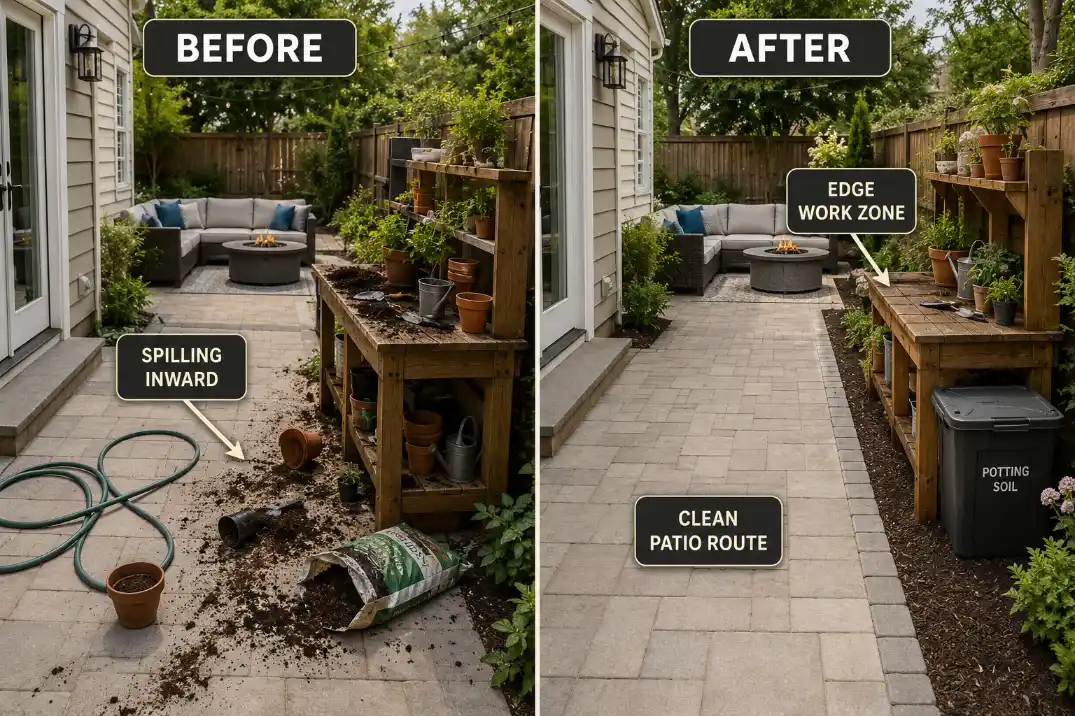
If the station must stay on the patio, keep it near an outside edge and face it away from the main seating zone.
A washable mat can help catch loose mix, but it is not a fix for a bad location. Mats catch some dirt; they do not solve a station that sends people through the work zone every time they step outside.
Match the setup to the season
Not every yard needs a permanent potting bench. If you only do heavy planting in spring and fall, a folding table, closed soil bin, and small tool tote may work better than year-round furniture.
That is especially true on small patios where every permanent object has to earn its footprint. Temporary staging follows the same logic as Temporary Outdoor Storage Ideas: use the setup when the task is active, then let the patio return to normal.
Permanent stations make sense when you handle containers weekly, start seeds, maintain herbs, or refresh pots throughout the growing season. Seasonal stations make sense when garden work happens in bursts.
Useful Without Looking Messy
The best outdoor potting station looks quiet when it is not being used. That does not mean hiding every tool. It means the station has a clear job and a visual boundary.
Do not make one station do five jobs
A small station can be a potting bench, seed-starting shelf, container-care counter, or garden tool point. It usually cannot be all of those plus a bar cart, decor shelf, compost area, storage cabinet, and patio drop zone.
Compost is a good example. It belongs near garden work only if it stays contained and does not affect the patio. If food scraps, leaf bins, or compost tools are part of the same rhythm, place them in a separate utility corner.
A better arrangement may follow the logic in Compost Bin Placement for Small Backyards rather than trying to fold compost into the potting surface.
Choose materials by exposure
Wood looks natural, but it needs airflow and drying time. Powder-coated metal wipes clean but can heat up in exposed summer sun. Resin storage can be practical, but cheaper pieces may warp or fade after a few seasons.
In freezing northern states, avoid storage details that trap water where expansion can crack bins, shelves, or containers.
Under covered patios, the problem changes: rain protection is useful, but damp trays and soil can dry slowly if airflow is poor.
The right material is not the one that looks most charming on day one. It is the one that still looks orderly after wet gloves, spilled soil, sun exposure, and a few rushed cleanup days.
Let the station disappear between tasks
A strong potting station does not need to dominate the patio. It should let you work, clean up quickly, and return the space to normal.
That usually means a clear worktop, one closed soil landing zone, water that does not cross the main path, and storage that hides the supplies that do not need to be seen.
If you are choosing between a beautiful bench that blocks flow and a simpler setup along a side edge, choose the side-edge setup.
Garden work does not need a stage. It needs a place where mess can happen briefly without becoming the whole outdoor room.
For containers that stay near a patio or potting station, watering is not just about frequency; it also depends on how quickly the mix drains, dries, and warms in that exact location. For broader container watering guidance, see the University of Illinois Extension.