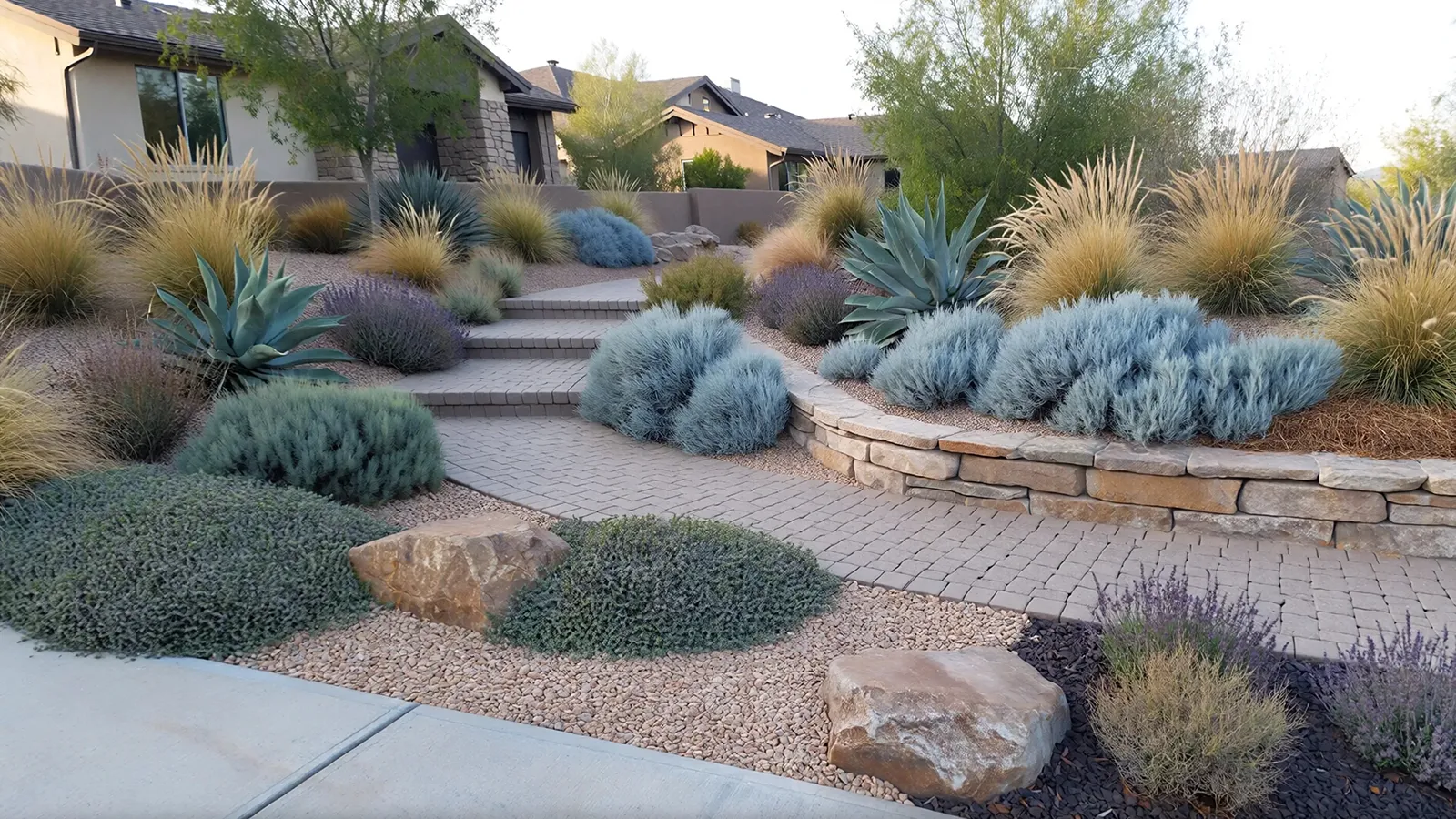
Water use usually becomes noticeable when a front yard starts behaving unevenly. Some plants stay upright and full during dry weeks, while others thin out or lose color even though everything receives the same care. That contrast is often the first sign that water is not being used efficiently.
A low-water front yard still needs to look composed from the street. When planting beds hold their structure through heat and dry spells, the space feels intentional rather than stressed. Most long-term problems come not from climate alone, but from early decisions that quietly increase water demand.
Understanding What “Low-Water” Really Means in Front Yards
✔️ The difference becomes clear during the first extended dry period. A low-water front yard does not require constant adjustment to stay presentable when irrigation is reduced. Plants may shift slightly, but they do not collapse or appear neglected.
Low-water does not mean keeping soil dry at all times. It describes a landscape that reaches a point where frequent watering is no longer needed to maintain visual stability. This balance develops through root depth, soil behavior, and even water distribution.
Because front yards are always visible, designs that depend on ongoing correction rarely feel settled. Predictable performance matters more than peak appearance.
Start With Soil and Grading, Not Plants
⚠️ Uneven behavior shows up quickly after rain or watering. Some areas stay wet long after others dry out, even when plant types are similar. This usually points to soil structure and grading rather than plant choice.
Soil that drains too fast encourages shallow roots, while soil that stays saturated limits oxygen. Both conditions quietly increase water demand as plants struggle to stabilize.
Grading problems reinforce the issue.
-
Water moves toward pavement instead of planting beds.
-
Certain sections remain damp far longer than others.
-
Plant growth varies noticeably across the same area.
These patterns often lead to heavier watering, even though the real issue is how water moves through the ground.
Choosing Plant Groupings That Share Water Needs
💡 The problem becomes obvious when one plant consistently looks stressed while another nearby looks fine. Mixing plants with different moisture needs forces the entire bed to follow the most demanding one.
Grouping plants with similar water behavior creates steadier results. Irrigation schedules become more predictable, and plant performance evens out across the season. In front yards, that consistency reads as intentional design.
This approach also aligns well with broader layout decisions. Designing the front yard around realistic maintenance and water patterns helps prevent mismatches that quietly increase long-term irrigation demand.
Designing Hardscape to Reduce Water Demand
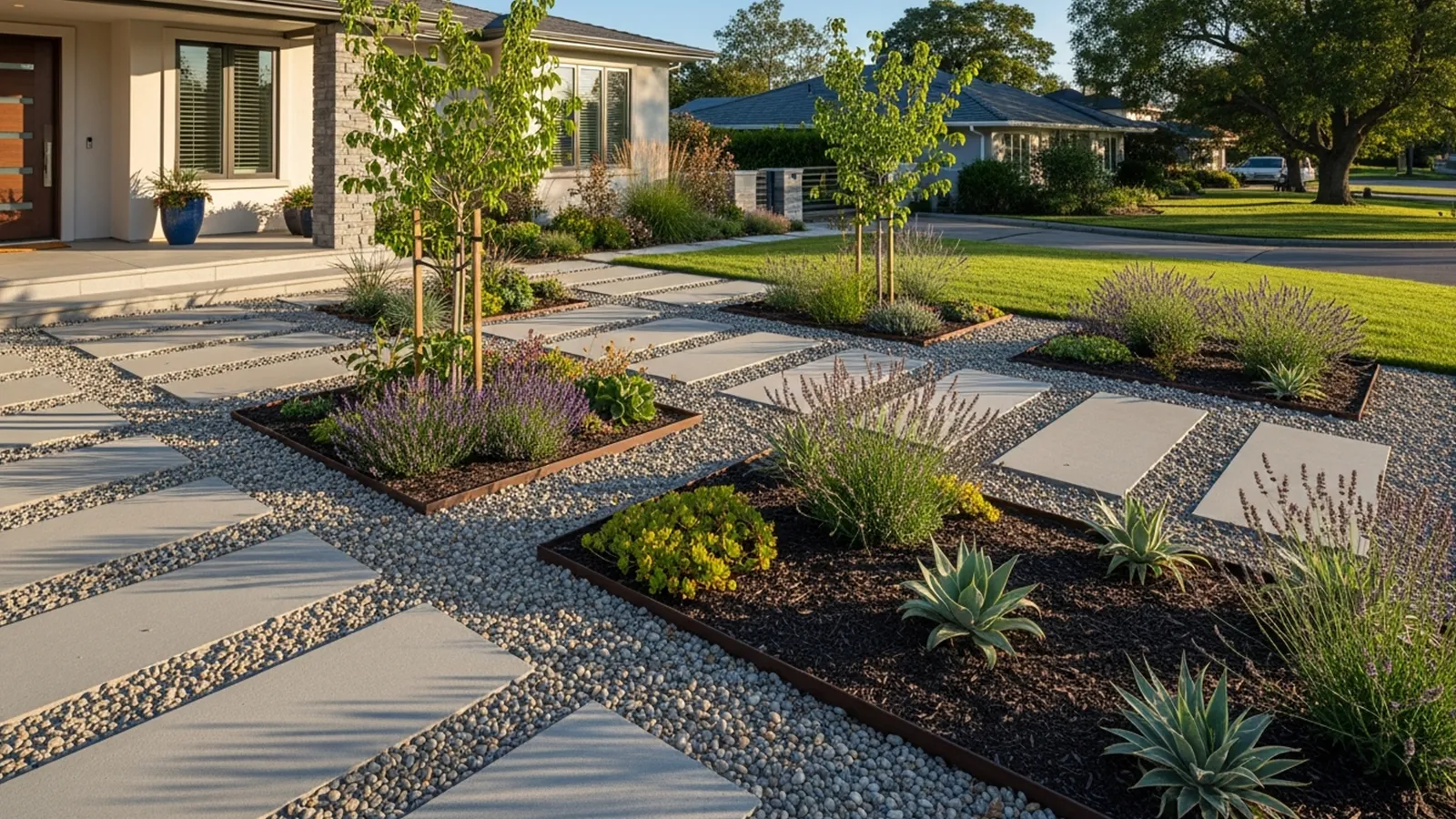
✔️ Hardscape choices start to matter when planted areas dry out faster than expected. Walkways, borders, and paved surfaces can either support moisture retention or quietly increase water loss.
Permeable materials slow water down and allow it to enter the soil rather than running off. When hardscape frames planting beds instead of dominating them, rain and irrigation stay useful longer.
Problems tend to appear when hard surfaces take over.
-
Heat builds up near solid edges.
-
Soil dries faster along borders.
-
Nearby plants show stress first.
Balanced hardscape supports planting rather than competing with it.
Mulch Choices That Actually Conserve Water
💡 The effect of mulch becomes clear after several hot days. Mulched beds stay cooler and more even, while exposed soil hardens and dries quickly. That surface change directly affects how often watering feels necessary.
Organic mulch reduces evaporation and gradually improves soil condition. This allows moisture to stay available longer without increasing irrigation. Gravel can work in specific areas, but it does not soften soil or buffer temperature in the same way.
Most mulch issues come from imbalance.
-
Thin layers provide little benefit.
-
Excessive depth traps moisture where it should not.
-
Uneven coverage creates dry and wet pockets.
Consistent coverage supports stable moisture without drawing attention.
Planning for Establishment Without Long-Term Overwatering
⚠️ Early plant stress often stands out in front yards because everything is on display. This is when many landscapes drift away from low-water goals.
Plants need time to adapt and send roots deeper. Cutting water too quickly interrupts that process, while maintaining heavy irrigation for too long prevents it. Either path creates long-term dependence.
Signs of successful establishment tend to appear gradually.
-
Growth becomes more even across the bed.
-
Plants recover faster after heat.
-
Watering feels less urgent over time.
This adjustment phase is what allows a low-water front yard to remain stable rather than fragile.
Selecting Plants That Thrive With Minimal Irrigation
✔️ The issue usually shows up after the first summer. Some plants keep their shape with little help, while others always seem on the edge of decline. That contrast reveals which plants are truly suited to low-water conditions.
Plants that handle limited moisture well tend to grow at a steady pace rather than in bursts. Their leaves stay consistent, and their overall form changes slowly instead of reacting sharply to heat. In a front yard, this steadiness reads as intentional and well cared for.
Local performance matters more than labels. Plants that are commonly used in nearby landscapes usually adapt better to soil and climate patterns, which reduces the need for corrective watering and replacement.
Rethinking Lawns Without Losing Structure
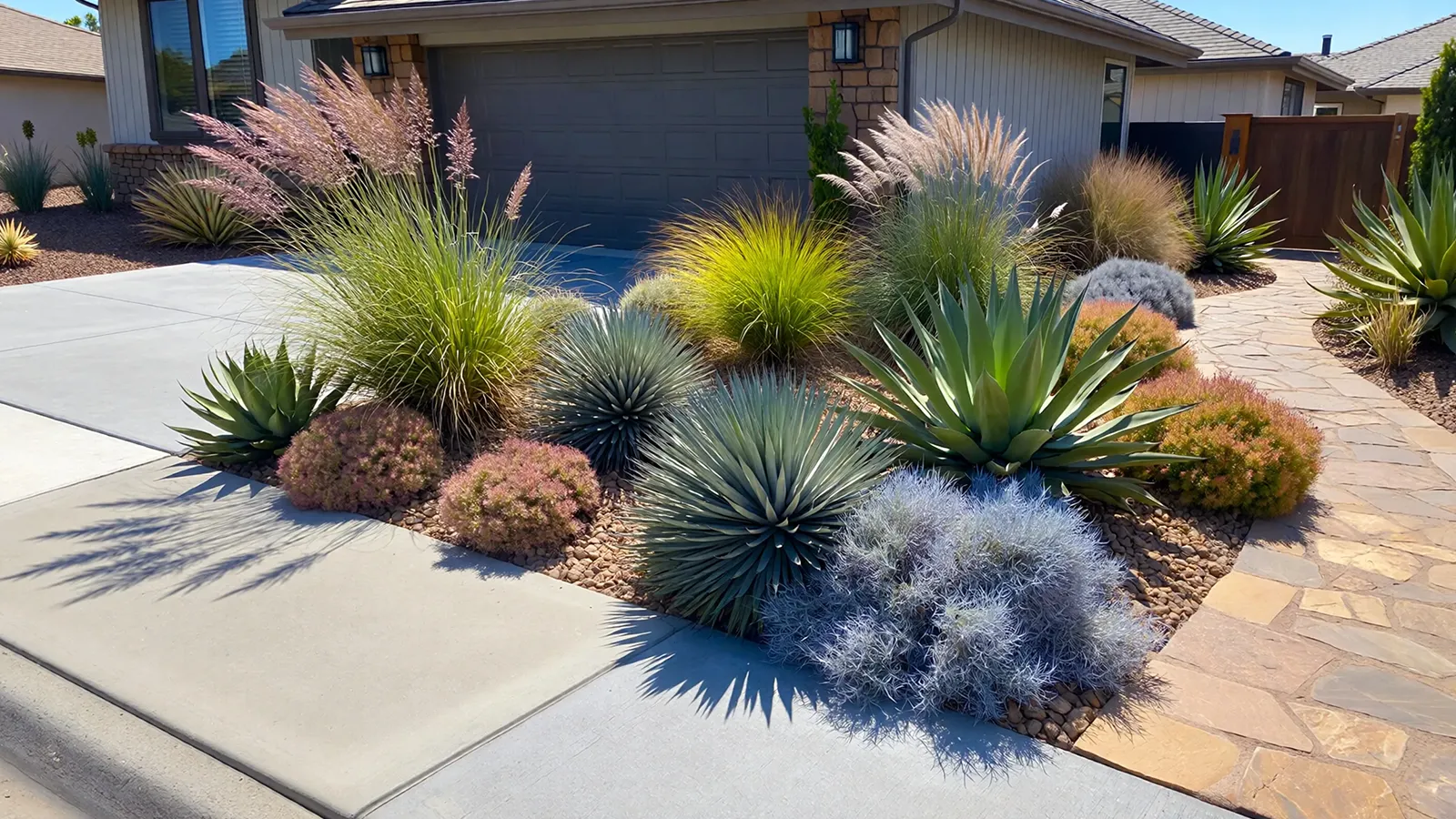
⚠️ Lawns often become the largest source of water use without being the most noticeable design feature. The problem usually appears when turf struggles at the edges or thins out unevenly, despite regular watering.
Removing lawn entirely can make a front yard feel visually flat if nothing replaces its role. Narrow or framed lawn areas preserve openness while reducing the irrigated footprint. These smaller zones are easier to manage and recover more quickly from dry periods.
Low-growing ground covers often step in where lawns are reduced.
-
They stabilize soil without frequent watering.
-
They soften transitions between paths and beds.
-
They reduce the visual gap left by removed turf.
Used carefully, they maintain structure without increasing water demand.
Matching Plant Form to Exposure and Heat
💡 Heat stress becomes obvious near driveways, walls, and walkways. Plants in these areas often show stress earlier, even when they receive the same water as the rest of the yard.
Sun exposure and reflected heat change how much moisture plants actually need. Upright or airy forms handle heat differently than dense or low-growing plants. Matching plant form to exposure prevents constant adjustments to irrigation.
Ignoring these microclimates leads to predictable problems.
-
Plants near hard surfaces decline first.
-
Extra watering becomes a routine response.
-
Water use increases without visible improvement.
Alignment between plant form and exposure reduces these cycles.
Using Plant Density to Control Evaporation
✔️ Bare soil becomes noticeable during hot spells. Beds with large open gaps dry out faster and fluctuate more in temperature than those that fill in naturally over time.
Plants that meet or lightly overlap at maturity help shade the soil. This reduces evaporation and keeps moisture available longer between watering cycles. The effect is subtle but consistent across the season.
Density works best when planned for mature size.
-
Overcrowding restricts airflow.
-
Excess gaps increase evaporation.
-
Late additions disrupt established roots.
Balanced density supports stability without forcing intervention.
Choosing Plants With Predictable Growth Habits
💡 Growth habits become frustrating when plants surge, collapse, and rebound unpredictably. These swings often trigger pruning and extra watering that undermine low-water goals.
Plants with consistent growth patterns hold their form through stress. They require fewer corrections and maintain a cleaner appearance without additional input. This predictability is especially valuable in visible front-yard beds.
When selection feels overwhelming, looking at how plants behave over time rather than how they look at purchase simplifies decisions without sacrificing design quality. This approach aligns expectations with real performance.
Avoiding High-Water Traps in Decorative Planting
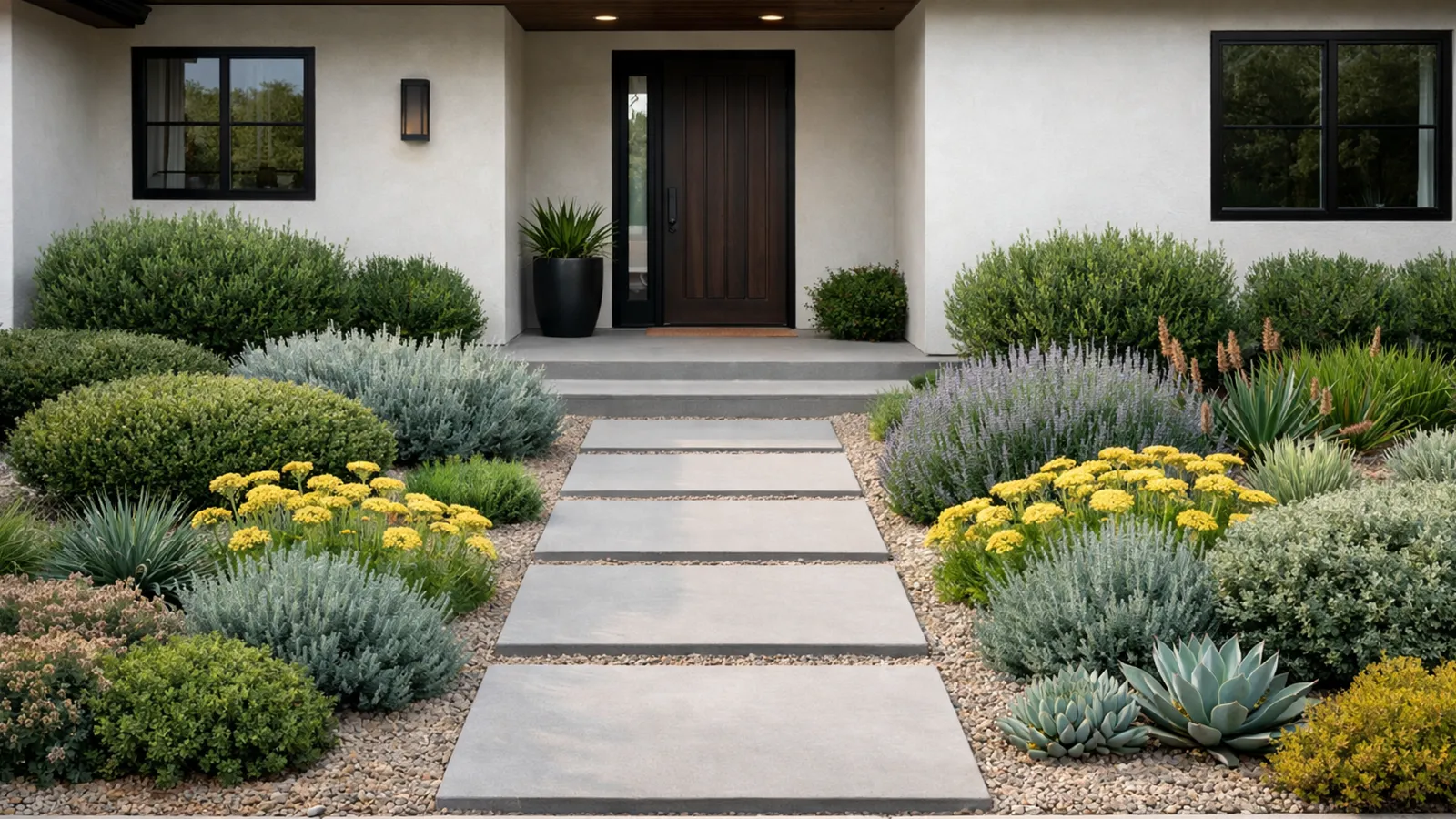
⚠️ Entryways and foundation beds often receive extra water because stress is immediately visible there. These areas quietly set the watering standard for the entire yard.
Plants that tolerate brief dryness prevent reactive watering. Compact forms and controlled growers hold their shape without constant moisture, even in focal areas.
Problems usually arise when one thirsty plant is mixed into an otherwise efficient bed.
-
Irrigation increases for the entire zone.
-
Low-water plants lose their advantage.
-
Visual consistency declines over time.
Consistency within decorative areas protects both appearance and water use.
Irrigation Systems That Support Low-Water Goals
✔️ Irrigation problems usually show up when plants look stressed even though watering feels frequent. This often means water is reaching the wrong places, not that there is too little of it. Low-water landscapes depend on precision more than volume.
Drip systems and low-volume emitters deliver moisture directly to root zones. This limits evaporation and avoids watering areas that do not need it, such as paths or bare soil. In front yards, this targeted approach keeps plant growth even and predictable.
Separation matters as well. When irrigation zones match plant groupings, water use stays controlled instead of being driven by a few sensitive plants.
Seasonal Adjustments That Prevent Overcorrection
⚠️ Sudden changes in weather tend to trigger reactive watering. A brief heat wave or dry stretch can make plants look stressed, even when they are still adjusting normally.
Plants adapted to lower water often show short-term signs before settling. Leaves may soften or dull slightly, then recover without intervention. Increasing water too quickly interrupts this process and trains plants to depend on frequent moisture.
Gradual seasonal shifts help avoid this pattern.
-
Watering becomes less frequent but deeper.
-
Roots move downward instead of staying near the surface.
-
Plant response becomes steadier over time.
This rhythm reduces long-term demand rather than increasing it.
Maintenance Habits That Reinforce Water Efficiency
💡 Maintenance starts to matter when plants grow unevenly or require frequent correction. These signals often trace back to habits that encourage excess growth or expose soil unnecessarily.
Pruning that respects natural form keeps plants stable. Heavy or frequent cuts stimulate new growth that needs more water to sustain itself. Lighter, well-timed pruning maintains shape without increasing demand.
Other routine actions also affect water use.
-
Removing weeds reduces competition for moisture.
-
Clearing debris improves airflow around plants.
-
Leaving soil exposed increases evaporation.
Small, consistent habits quietly reinforce the original low-water intent.
Mulch Renewal and Soil Monitoring Over Time
✔️ Mulch performance changes slowly, which makes problems easy to miss. Over time, coverage thins, shifts, or breaks down, reducing its ability to regulate moisture and temperature.
Soil issues show up just as gradually. Compaction, erosion, or settling alter how water moves through planting beds, creating dry pockets or runoff. These changes often lead to extra watering rather than correction.
Periodic renewal keeps the system working.
-
Mulch stays evenly distributed.
-
Soil absorbs water more consistently.
-
Plant stress becomes less frequent.
These adjustments maintain efficiency without redesign.
Common Low-Water Mistakes That Increase Water Use
⚠️ Many water issues come from early assumptions rather than neglect. Treating all drought-tolerant plants the same often leads to uneven results and unnecessary irrigation.
System neglect plays a role as well. Clogged emitters, shifted lines, or outdated schedules quietly increase water use while masking the real problem. These issues often go unnoticed until decline becomes visible.
Design shortcuts tend to compound the issue.
-
Poor soil preparation forces corrective watering.
-
Overcrowded beds increase stress.
-
High-demand plants set irrigation levels for entire zones.
Long-Term Performance and Visual Stability
💡 Over time, successful low-water front yards begin to feel easier rather than harder to maintain. Plants settle into consistent forms, and irrigation becomes less urgent.
Visual calm is the clearest indicator. When spacing, color, and structure hold through dry periods, the landscape signals that systems are aligned. This stability reduces the impulse to intervene with extra water.
As years pass, these yards become more forgiving. With fewer reactive changes and steady habits, low-water landscapes mature into durable spaces that balance appearance and resource use naturally.
Design context: https://www.epa.gov/watersense