Low-maintenance garden design sounds appealing for obvious reasons. Homeowners want outdoor spaces that look attractive without requiring constant watering, pruning, and replanting. The idea is simple: choose durable plants, limit lawn space, and rely on simple landscaping features that can survive seasonal weather changes.
However, many gardens designed with this goal eventually become more difficult to maintain than traditional landscapes. Within two to three growing seasons, weeds appear in gravel beds, shrubs expand beyond their intended space, irrigation systems struggle to keep plants healthy, and pathways collect debris that requires constant cleaning.
These issues rarely happen because of neglect. In most cases, they result from design mistakes made during the planning stage. Plant spacing, soil preparation, drainage planning, and hardscape layout all determine how much maintenance a garden requires over time.
Across the United States, climate also plays a major role. A low-maintenance design that works well in dry Arizona conditions may fail quickly in Florida’s humid climate, where fungal diseases spread easily. Likewise, landscapes in northern states must survive freezing winters where soil expands and contracts repeatedly.
Understanding the most common design mistakes can help homeowners create gardens that remain manageable for 10–15 years instead of becoming constant weekend repair projects.
Quick Diagnostic Checklist
If a supposedly low-maintenance garden already feels like too much work, these warning signs often reveal design problems:
-
Plants require trimming every 3–4 weeks during the growing season
-
Weeds appear in gravel or mulch beds within 6–8 weeks
-
Irrigation systems run longer than 25–30 minutes per cycle
-
Pathways collect leaves or debris after every storm
-
Plants block walkways or seating areas within 2–3 years
-
Soil becomes compacted or water pools after rainfall
When several of these symptoms appear together, the underlying cause usually relates to layout, plant selection, or soil preparation rather than routine maintenance.
Why Many “Low-Maintenance” Gardens Fail
Low-maintenance landscapes often fail because the design focuses on appearance during installation rather than long-term growth patterns.
When plants are first installed, they are small and manageable. Gravel beds look clean, mulch appears fresh, and pathways remain unobstructed. But most plants expand significantly over time.
Typical landscape growth patterns include:
| Plant Type | Average Annual Growth | Long-Term Impact |
|---|---|---|
| Shrubs | 8–18 inches per year | overcrowding in 2–4 years |
| Ornamental grasses | 12–24 inches per season | spreading into pathways |
| Groundcovers | 30–40% spread annually | covering edging or stones |
| Climbing vines | 3–10 feet per year | structural maintenance required |
Without accounting for these growth patterns, even simple gardens gradually become high-maintenance systems.
Many homeowners eventually discover why supposedly easy landscapes require constant work, a problem explored further in Why Low-Maintenance Gardens Never Stay That Way.
Mistake #1: Planting Too Densely at Installation
One of the most common design mistakes happens at the beginning of a project.
Because newly planted gardens look sparse, homeowners often place plants closer together than recommended. While the landscape appears full immediately, overcrowding becomes inevitable as plants mature.
Within three growing seasons, shrubs that were spaced 24 inches apart may expand to widths of 36–48 inches. When this happens, several maintenance problems emerge:
-
constant pruning to control plant size
-
reduced air circulation between plants
-
higher fungal disease risk in humid climates
-
uneven watering due to root competition
In regions like the Southeast where humidity levels often exceed 70–80%, dense plant groupings can trap moisture around foliage. This environment encourages fungal diseases such as powdery mildew or leaf spot.
Proper plant spacing based on mature width rather than container size dramatically reduces pruning work over time.
Poor spacing is also one of the most common causes of high-maintenance landscapes in smaller properties, which is discussed further in Small Garden Design Mistakes That Increase Maintenance.
Mistake #2: Choosing the Wrong Plants for the Climate
Plants that struggle with local weather conditions require constant attention.
A garden filled with plants poorly suited to its environment quickly becomes dependent on irrigation, fertilizers, and repeated replacement.
Across the United States, climate mismatches frequently create maintenance issues.
| Climate Region | Common Plant Mistake | Long-Term Result |
|---|---|---|
| Florida humidity | drought plants sensitive to moisture | fungal diseases |
| Arizona desert | shade plants exposed to full sun | excessive watering |
| Midwest climates | warm-climate shrubs | winter dieback |
| Coastal regions | non-salt-tolerant plants | leaf burn and stress |
Research from the USDA Natural Resources Conservation Service shows that landscapes using native or climate-adapted plants may reduce irrigation needs by 30–60% compared with non-adapted plantings.
Climate-appropriate plant selection is especially important for drought-prone regions where water restrictions can limit irrigation during summer months.
Some effective strategies for building durable landscapes are explained in Low-Water Front Yard Landscaping: Practical Solutions That Last.
Mistake #3: Assuming Gravel Landscapes Are Maintenance-Free
Gravel beds are often promoted as a way to eliminate mowing and reduce garden work. While they can reduce lawn maintenance, they are far from maintenance-free.
Over time, organic debris accumulates between stones. Dust, pollen, and fallen leaves gradually create a thin layer of soil where weed seeds germinate.
In windy regions such as the Southwest, seeds carried by seasonal winds can accumulate rapidly. Even gravel layers 2–3 inches deep may support weed growth within a year.
Common long-term issues include:
-
weeds growing through seams in landscape fabric
-
gravel sinking into soil after heavy rainfall
-
organic debris collecting between stones
-
uneven surfaces that require periodic leveling
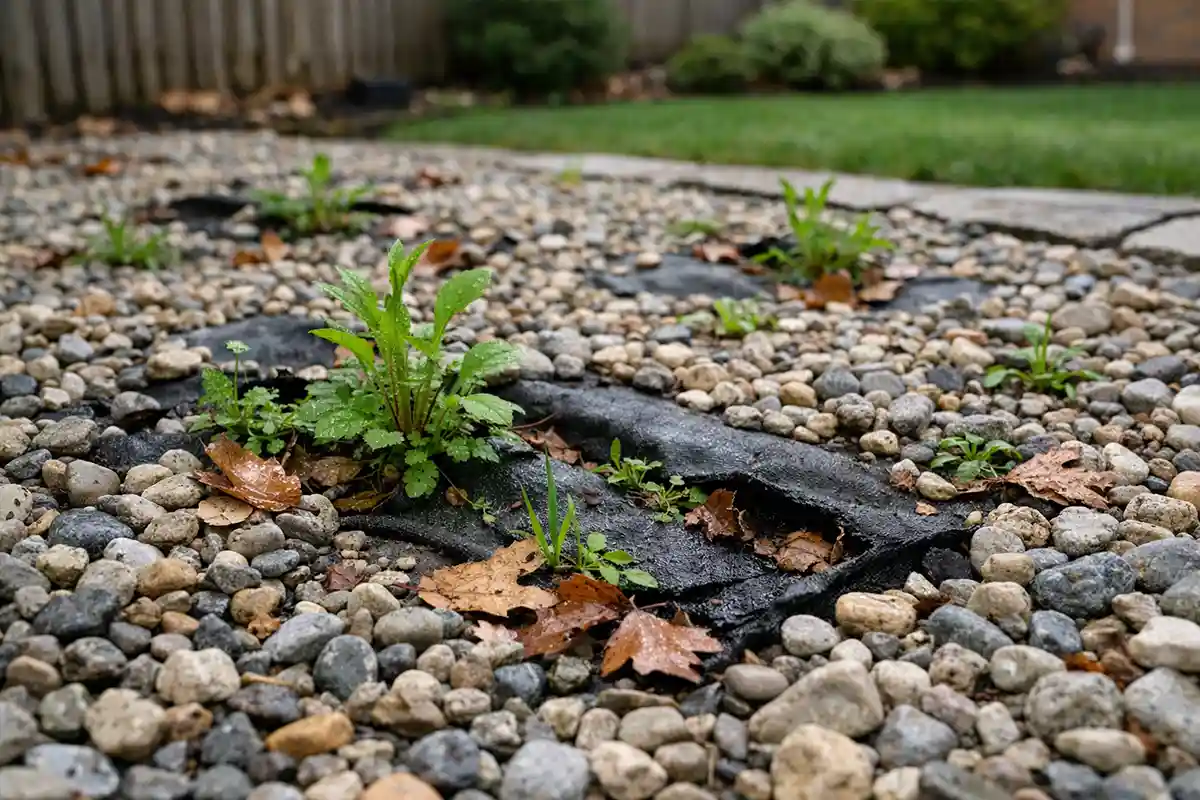
Replacing lawns with gravel or stone can sometimes create unexpected maintenance problems, particularly in smaller landscapes where debris accumulates quickly.
Many of these hidden issues are discussed in Small Garden Landscaping Without Lawn: Hidden Problems.
Mistake #4: Ignoring Soil Preparation and Drainage
Soil conditions determine whether plants thrive or struggle.
When gardens are installed quickly without improving soil structure, roots often encounter compacted layers that prevent proper growth.
Clay soils common throughout parts of the Midwest and Texas can retain water for several hours after heavy rain. In poorly prepared planting beds, water may remain near plant roots long enough to cause oxygen deprivation.
Symptoms of drainage problems usually appear gradually:
-
yellowing foliage
-
slow plant growth
-
roots growing near the soil surface
-
algae or moss forming in damp areas
Over time, these problems force homeowners to replace plants or install drainage solutions that could have been incorporated during the initial design.
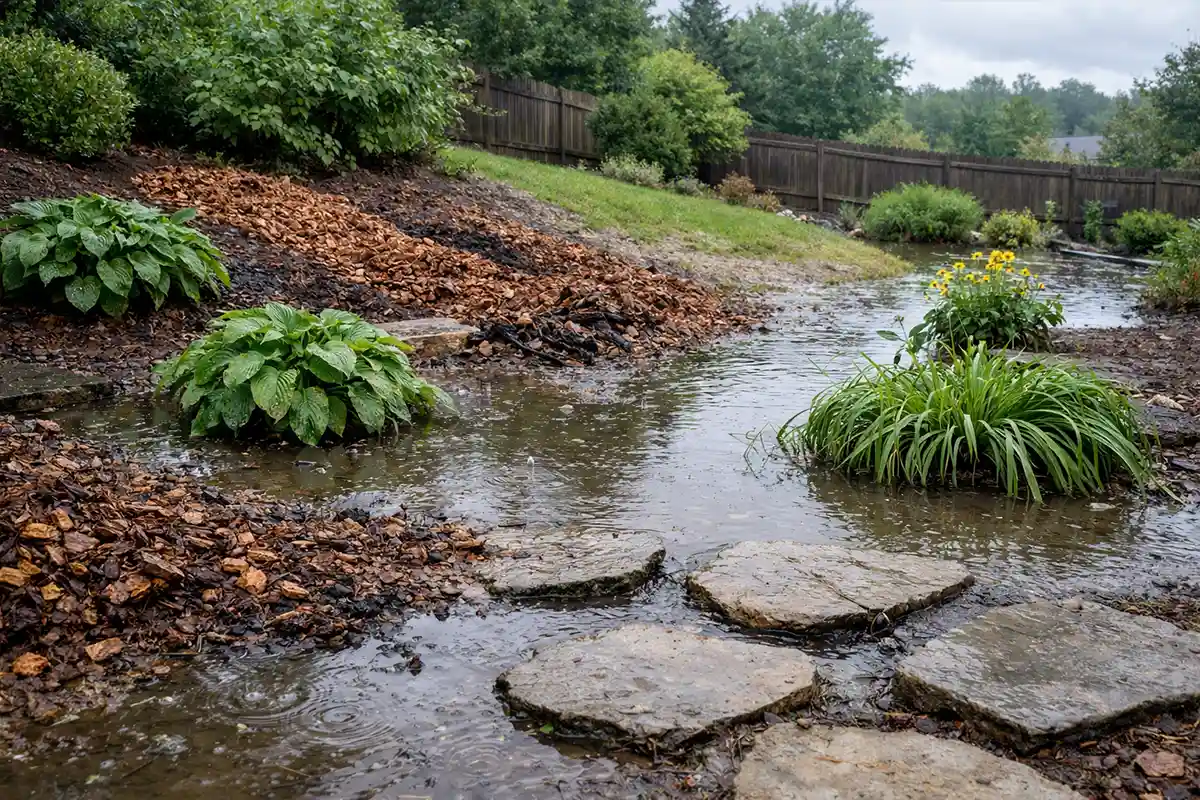
Sloped landscapes can make drainage issues even worse. During heavy storms, runoff may wash mulch or soil downhill, exposing plant roots and creating uneven garden beds.
Similar challenges often appear in properties with uneven ground, which can affect patios and outdoor spaces as well, as explained in Uneven or Sloped Ground: Why Your Patio Feels Unstable.
Mistake #5: Poor Mulch Selection and Installation
Mulch plays a critical role in low-maintenance garden design. When applied correctly, it suppresses weeds, stabilizes soil temperature, and reduces evaporation.
However, improper mulch installation often leads to more work rather than less.
Common mulch mistakes include:
-
applying mulch layers thinner than 2 inches
-
piling mulch against plant stems or tree trunks
-
using lightweight bark mulch in windy climates
-
skipping edging barriers around planting beds
When mulch depth falls below about 2–3 inches, sunlight can reach weed seeds in the soil. Within weeks, weeds begin to emerge through the mulch layer.
In contrast, excessively thick mulch layers—more than 4 inches—may trap moisture and encourage fungal growth around plant bases.
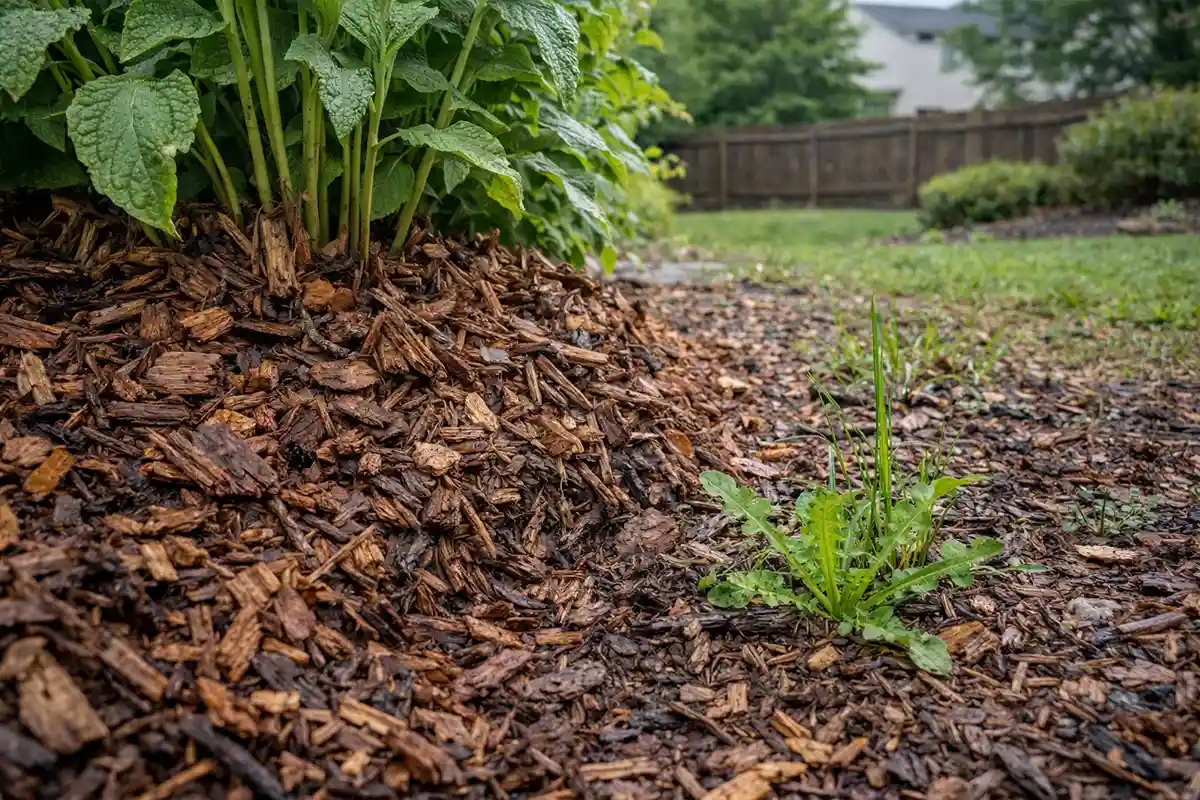
Proper mulch installation is a simple but often overlooked step that significantly reduces long-term garden maintenance.
Mistake #6: Overcomplicating the Garden Layout
A common misconception about low-maintenance gardens is that reducing lawn area automatically reduces work. In reality, replacing lawn with multiple decorative features often increases maintenance.
Homeowners frequently combine several landscape elements in a relatively small space:
-
curved pathways
-
multiple seating areas
-
raised planters
-
decorative gravel sections
-
dense planting borders
Individually, each feature may seem manageable. But when combined, these elements dramatically increase the number of surfaces that require cleaning, trimming, or repair.
For example, every pathway edge creates a location where weeds can appear. Small gravel areas collect debris quickly. Raised beds require additional irrigation adjustments and soil management.
When a garden contains many small landscape zones, maintenance becomes fragmented. Instead of maintaining one large area efficiently, homeowners end up maintaining several small areas separately.
Some outdoor spaces also become difficult to use when layouts are overly complex. Circulation paths become narrow, seating areas feel cramped, and plants gradually encroach on walkways. These issues are discussed further in Backyard Layout Problems That Make Spaces Hard to Use.
Simplifying the layout often reduces maintenance dramatically. Fewer pathways, larger planting beds, and clearly defined activity zones typically create landscapes that remain easier to manage over time.
Mistake #7: Forgetting Maintenance Access
Many garden designs focus on visual appearance but ignore a critical practical requirement: access for maintenance.
When shrubs, fences, or hardscape features are installed too close together, basic tasks become difficult. Pruning tools cannot reach plant bases, irrigation lines become hard to repair, and debris collects in tight corners.
Maintenance problems frequently appear in areas such as:
-
narrow planting beds along fences
-
shrubs planted directly against patios
-
tightly spaced raised planters
-
decorative rock features with no access space
Even professional landscapers sometimes overlook this issue when designing compact spaces.
A useful rule is to maintain 6–12 inches of clearance between structures and planting beds. This small buffer allows space for trimming tools, irrigation repairs, and debris removal.
Without access gaps, maintenance tasks become time-consuming and frustrating. Over several years, these areas may gradually become overgrown because they are difficult to reach.
Mistake #8: Poor Irrigation Planning
Irrigation systems are often installed after planting rather than being integrated into the original design. This approach frequently leads to inefficient watering patterns.
Sprinklers designed for lawns may deliver uneven water distribution when used in planting beds. Some plants receive excessive moisture while others remain dry.
Typical irrigation problems include:
-
sprinkler heads blocked by growing plants
-
overspray onto patios or walkways
-
shallow watering that encourages weak roots
-
inconsistent coverage in irregular garden shapes
In climates with limited rainfall, irrigation design becomes especially important. Arizona landscapes, for example, may rely on irrigation systems for 8–10 months each year, while Midwestern gardens often depend more on seasonal rainfall.
Drip irrigation systems are generally more efficient for planting beds. These systems deliver water directly to plant roots through emitters that release approximately 0.5–2 gallons per hour.
Compared with overhead sprinklers, drip systems may reduce water consumption by 20–50%, while also limiting weed growth between plants.
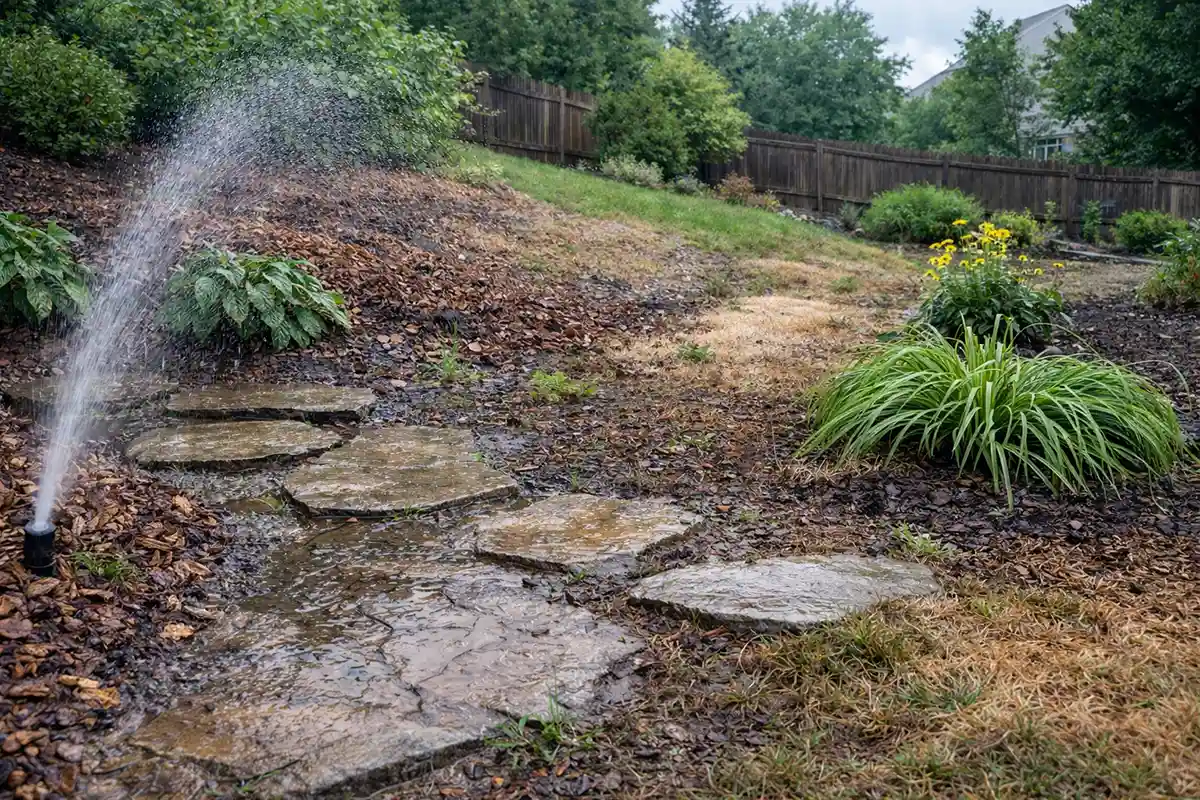
When irrigation systems are carefully planned during the design stage, gardens remain healthier and require far less maintenance throughout the growing season.
How to Design a Truly Low-Maintenance Garden
Avoiding mistakes is important, but successful landscapes also follow a few simple design principles.
Low-maintenance gardens typically share several characteristics.
1. Use Fewer Plant Varieties
Gardens with too many plant types become difficult to manage because each species has different watering, pruning, and soil requirements.
Most durable landscapes rely on 5–7 core plant varieties repeated throughout the space. This approach simplifies maintenance while creating visual consistency.
2. Prioritize Native or Climate-Adapted Plants
Plants adapted to local conditions tolerate temperature extremes, seasonal rainfall patterns, and soil types more effectively.
For example:
-
drought-tolerant plants perform well in Arizona and Nevada
-
salt-tolerant plants thrive in coastal California
-
cold-hardy shrubs survive freezing winters in northern states
Native plants also tend to require fewer fertilizers and pesticides.
3. Simplify Hardscape Surfaces
Large continuous surfaces are easier to maintain than many small decorative features.
Instead of installing several small pathways or patios, consider:
-
one larger seating area
-
fewer but wider pathways
-
simple geometric layouts
Reducing edges and transitions between materials significantly decreases weed growth and debris buildup.
4. Plan for Mature Plant Size
One of the most effective maintenance strategies is designing gardens based on how plants will look in five years rather than on installation day.
When mature size is considered during planting, shrubs and grasses rarely need heavy pruning.
Spacing plants correctly may initially make the garden appear sparse, but within two to three growing seasons the landscape usually fills in naturally.
5. Use Efficient Irrigation Systems
Drip irrigation and low-flow emitters deliver water slowly and directly to plant roots.
This approach reduces evaporation and limits weed growth in areas between plants.
In many climates, efficient irrigation systems can reduce water use by 25–40% compared with conventional sprinkler systems.
Comparison: Mistake vs Better Design Approach
| Common Design Mistake | Long-Term Impact | Better Solution |
|---|---|---|
| Overcrowded plant spacing | constant pruning | space plants for mature size |
| Gravel beds without maintenance planning | weeds and debris buildup | combine gravel with planting zones |
| Climate-incompatible plants | frequent watering and replacements | use native or adapted species |
| Complex garden layouts | difficult maintenance access | simplify garden zones |
| Poor irrigation design | uneven watering | drip irrigation systems |
Key Insights
Low-maintenance gardens rarely fail because homeowners ignore maintenance. Instead, they fail because of design decisions made before the garden is even planted.
Plant spacing, irrigation planning, soil preparation, and layout complexity all influence how much work a landscape requires over time. Gardens designed around mature plant sizes and local climate conditions typically remain manageable for many years.
In contrast, landscapes that prioritize immediate visual impact often become harder to maintain after just a few growing seasons.
By simplifying layouts, selecting climate-appropriate plants, and planning for long-term growth, homeowners can create outdoor spaces that remain attractive without constant attention.
Common Questions
How long does it take for maintenance problems to appear in a new garden?
Most design-related maintenance problems appear within 12–36 months after installation, once plants reach their mature growth phase.
Are gravel gardens really low maintenance?
Gravel landscapes can reduce mowing, but they still require periodic cleaning. Organic debris often accumulates between stones, allowing weeds to grow.
What plants require the least maintenance?
Native plants adapted to local climate conditions usually require the least watering, fertilizing, and pruning.
Can irrigation systems reduce garden maintenance?
Yes. Efficient irrigation systems such as drip emitters can reduce water waste and prevent uneven plant growth, making gardens easier to manage.