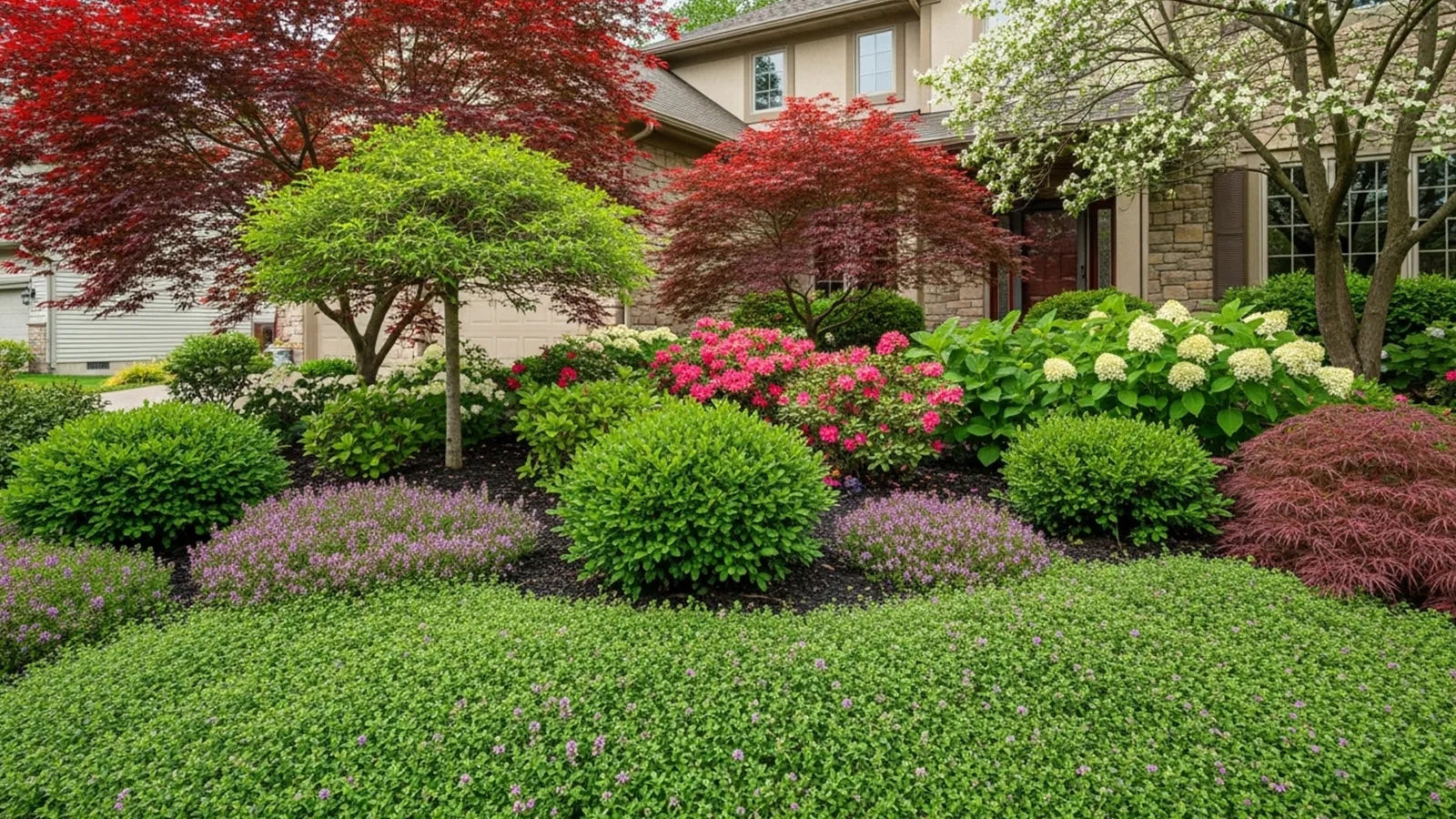
Standing on the sidewalk and looking at a front yard, it is easy to sense when something feels balanced and calm. The space feels open at the front, fuller near the house, and nothing seems to block the view or compete for attention. That feeling usually comes from proper plant layering, even if the viewer cannot name it.
Layering plants is less about decoration and more about organizing how the yard is read from front to back. Plants are placed so each height has room to exist without crowding the next. When this structure is missing, the yard may still have healthy plants, but it often feels busy or unfinished.
Most front yards deal with real constraints such as sidewalks, driveways, and clear sightlines to doors and windows. Layering helps manage these limits quietly, guiding the eye and the body through the space without drawing attention to the rules behind it. The result is a yard that feels settled rather than forced.
Understanding Plant Layers and Visual Hierarchy
Looking across a front yard from the street, the eye naturally scans upward and inward. When lower plants sit closest to the sidewalk and taller ones rise gradually toward the house, the space feels deeper and easier to read. This visual order is what makes even modest yards feel intentional instead of cluttered.
Visual hierarchy works because each plant group has a clear role. When everything tries to stand out at the same height, the scene becomes noisy and hard to process. Clear layering avoids that confusion by giving each group its own visual zone.
✔️ Problems usually appear when mature size is ignored. Plants that start small can eventually blur the hierarchy and crowd neighboring layers. This breakdown often shows up as:
-
shrubs blocking windows,
-
taller plants spilling into walkways,
-
or constant pruning to regain control.
The Ground Layer: Defining Edges Without Blocking Views
Walking along the sidewalk, the ground layer is the first part of the yard you notice. When these plants stay low and consistent, the yard feels open and welcoming rather than closed off. This layer quietly sets the boundary between public space and the home.
Ground-layer plants also carry a lot of practical weight. They protect soil, soften hard edges, and visually connect paths and driveways to planting beds. When this layer is patchy or uneven, the whole yard can feel disconnected.
💡 Ground layers work best when they feel continuous rather than scattered. Yards often look more settled when:
-
the same plant repeats along the front edge,
-
gaps between plants are minimal,
-
and textures feel calm rather than busy.
The Mid Layer: Creating Mass and Seasonal Rhythm
At eye level, the mid layer is where most people sense whether a yard feels full or sparse. This is where shrubs and medium-height plants create shape and rhythm across the space. When done well, this layer makes the yard feel complete without feeling heavy.
Seasonal change is most noticeable here. Flowering cycles, foliage shifts, and subtle texture changes all happen within this band. Because this layer sits in direct view, mistakes tend to stand out quickly.
⚠️ Overcrowding usually starts here. When shrubs are planted too close together, problems follow:
-
airflow decreases,
-
pruning becomes constant,
-
and the layered look slowly collapses into a solid wall.
The Upper Layer: Anchoring the Yard to the House
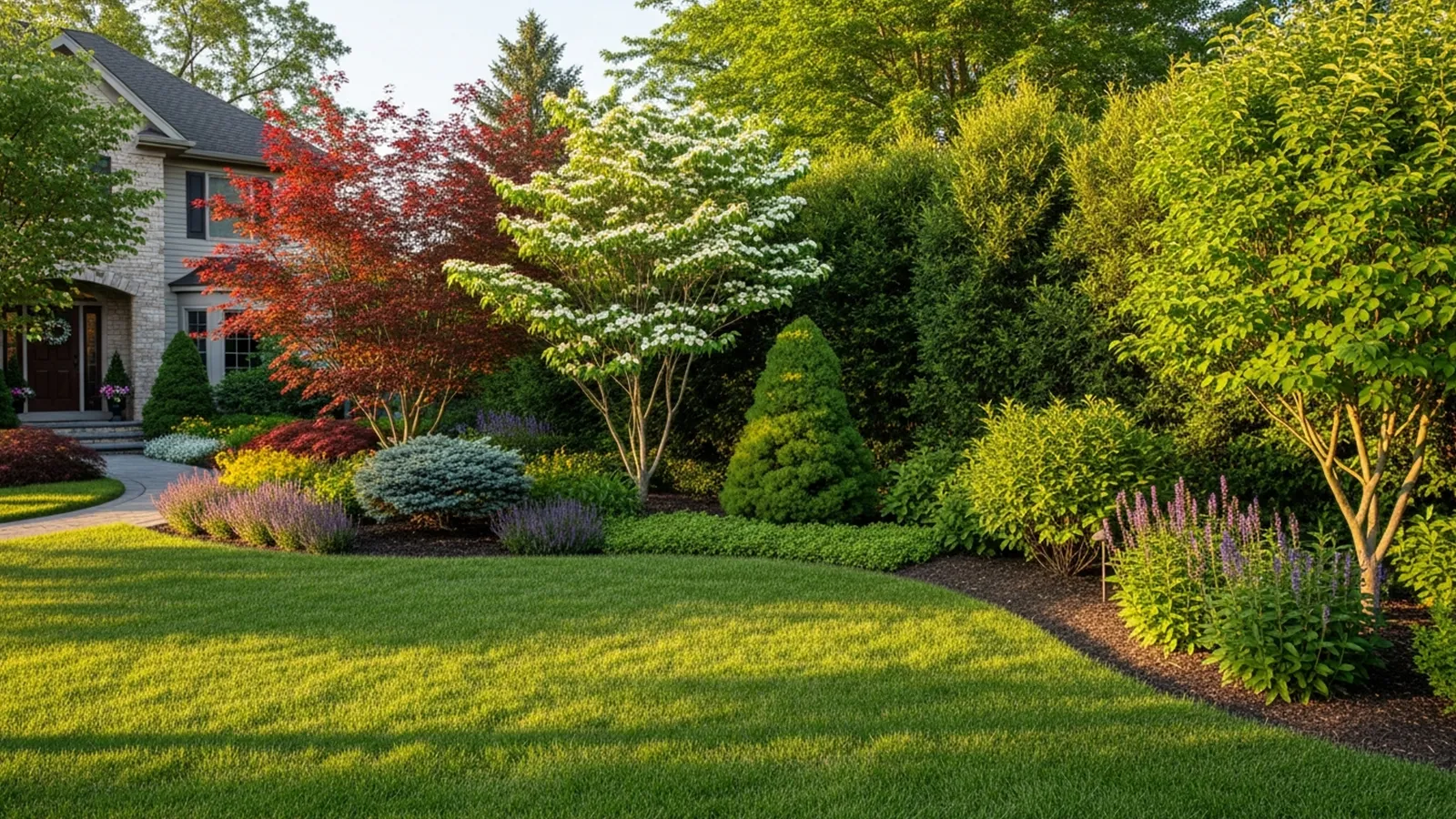
From the front door looking outward, the upper layer is what ties the yard back to the house. Taller shrubs and small trees soften walls, frame entrances, and make the structure feel grounded instead of exposed. Without this layer, even well-planted yards can feel flat.
These plants also shape how the yard feels throughout the day. Shade patterns shift, wind is filtered, and lower plants are protected from harsh conditions. When upper-layer plants are placed thoughtfully, they support everything beneath them.
❌ Issues often arise when scale is misjudged. Common problems include:
-
trees planted too close to foundations,
-
canopies blocking sightlines,
-
roots interfering with walkways over time.
Spacing, Overlap, and Depth Perception
Standing back and viewing the yard as a whole, depth usually comes from subtle overlap rather than strict separation. When plants slightly pass in front of one another, the scene feels natural and layered instead of staged. This gentle overlap helps the eye move through the space.
Spacing affects how clearly each layer reads. Too much distance breaks continuity, while too little creates competition. Balanced spacing allows plants to touch visually without pressing physically.
✔️ Designers often rely on small shifts to build depth, such as:
-
staggering plants instead of lining them up,
-
using curves rather than straight rows,
-
and letting layers blend at their edges.
Layering for Maintenance Efficiency and Longevity
Over time, the real test of layering shows up in how the yard ages. Well-layered yards tend to need fewer corrections because each plant has room to grow into its role. Poorly layered yards often feel like they are constantly being fixed.
Maintenance becomes more predictable when plants are grouped by size and function. Watering, pruning, and general care follow clear patterns instead of reacting to problems. This long-term stability supports the same thinking behind Designing a front yard that prioritizes durability and ease of care allows layered planting to remain attractive without constant intervention.
💡 Yards that age well usually share a few traits:
-
plants mature without crowding,
-
pruning stays light and occasional,
-
and the original structure remains visible years later.
Layering Based on Sun Exposure and Microclimates
Spending a full day around a front yard often reveals that light behaves very differently than expected. Morning sun may hit one corner strongly, while the same area falls into shade by afternoon. These shifts quietly shape how well each plant layer performs.
Plants placed without considering these patterns tend to struggle in subtle ways. Ground covers thin out where shade lingers too long, while shrubs in harsh sun often look stressed even when watered. Layering that responds to sun exposure allows each plant to settle into conditions it can actually handle.
✔️ Yards that feel stable over time usually reflect careful observation, such as:
-
noticing where snow melts first in winter,
-
watching which areas dry out fastest in summer,
-
and seeing where shade consistently falls near walls and fences.
Using Texture and Leaf Size to Strengthen Layer Transitions
Walking past a layered yard, texture is often felt before it is consciously noticed. Fine, soft foliage near the front tends to fade into the background, while larger or bolder leaves draw the eye forward. This quiet contrast helps layers separate visually without obvious height changes.
When textures are too similar across all layers, the yard can feel flat even if plant heights vary. Texture gives each layer its own presence and helps the eye understand distance. The effect becomes especially clear when light hits foliage at different angles.
💡 Texture balance often shows up through simple contrasts:
-
fine grasses against broader shrub leaves,
-
smooth foliage next to rougher textures,
-
lighter visual weight near paths and heavier forms closer to the house.
Layering in Small Front Yards Without Overcrowding
In small front yards, every plant choice feels amplified. There is little room for excess growth, and even one oversized plant can disrupt the entire balance. Layering still matters here, but it must feel compressed and deliberate.
Rather than spreading outward, successful small-yard layers tend to grow upward or stay narrow. Visual depth comes from clean edges and controlled shapes rather than mass. Empty space plays a bigger role, allowing layers to stand apart without physical separation.
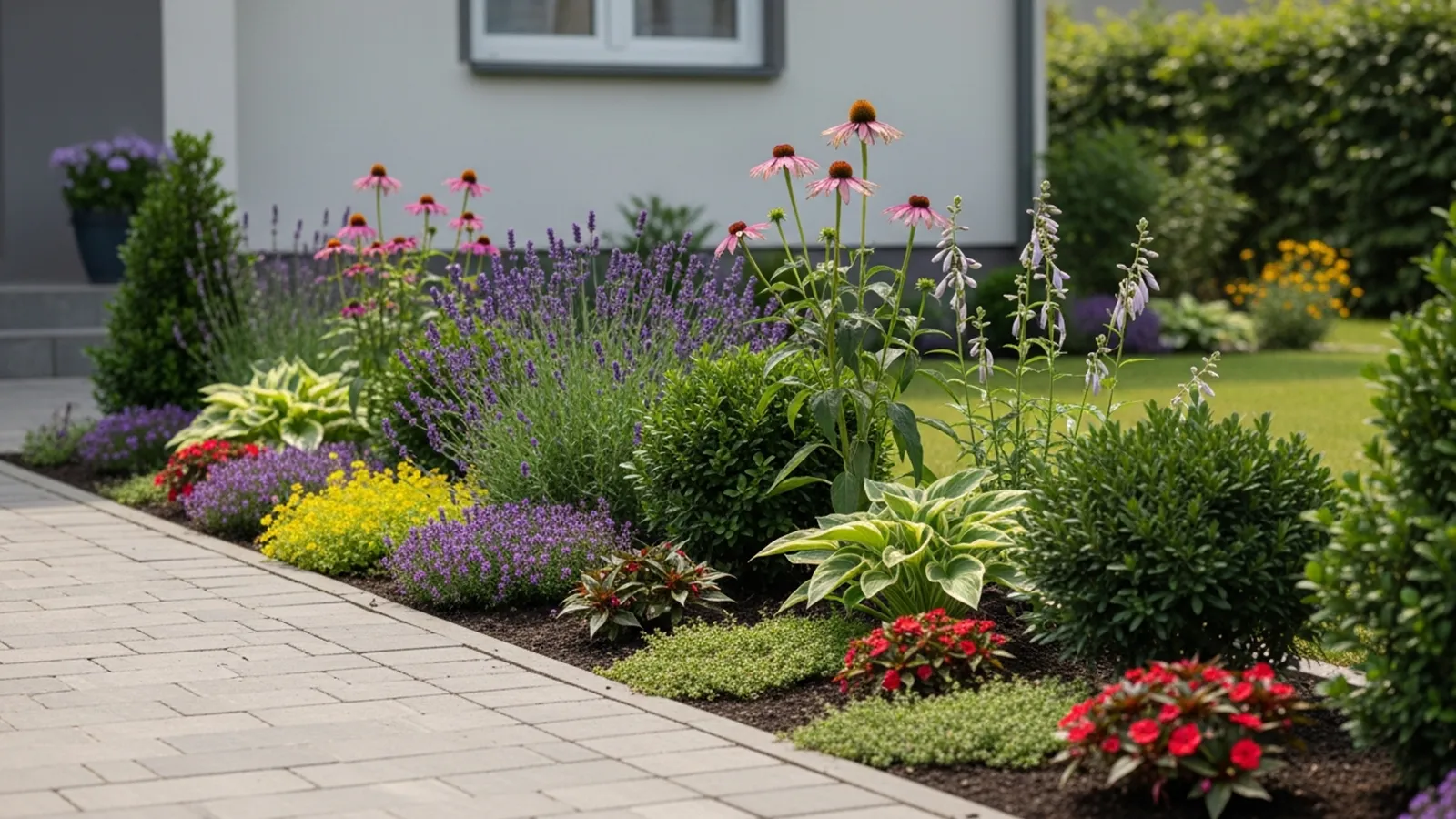
⚠️ Overcrowding usually happens when every plant is treated as a feature. Small yards feel calmer when:
-
only one or two elements draw attention,
-
layers stay visually narrow,
-
and plants repeat instead of constantly changing.
Color Layering and Seasonal Continuity
Color tends to be noticed most when something feels off. A front yard may look vibrant for a short season and then suddenly feel dull or chaotic. This usually happens when color is concentrated in one layer or one moment.
Layered color spreads interest more evenly through the yard. Lower layers often rely on steady foliage tones, while mid layers carry seasonal highlights. Upper layers add quieter accents that appear briefly but don’t dominate the view.
✔️ Yards that feel balanced through the year often share patterns like:
-
repeated colors across different heights,
-
blooms that shift gradually instead of all at once,
-
and foliage that holds visual weight when flowers fade.
Avoiding Common Layering Mistakes That Break Visual Flow
Most layering problems become obvious only after plants begin to grow. A yard that once looked orderly may start to feel crowded or uneven as certain plants push forward. These issues rarely come from poor plant health and more often from spacing and placement choices.
Mid-layer shrubs placed too close to paths often force taller plants into the foreground. Fast growers mixed with slow growers quickly upset the balance between layers. These patterns create a sense of visual drift rather than stability.
❌ These breakdowns are common in yards that skip early planning. The long-term impact of such choices is explored in Recognizing planting errors early protects spacing, hierarchy, and long-term visual balance in front yard design.
Transitioning Layers Around Walkways and Entry Points
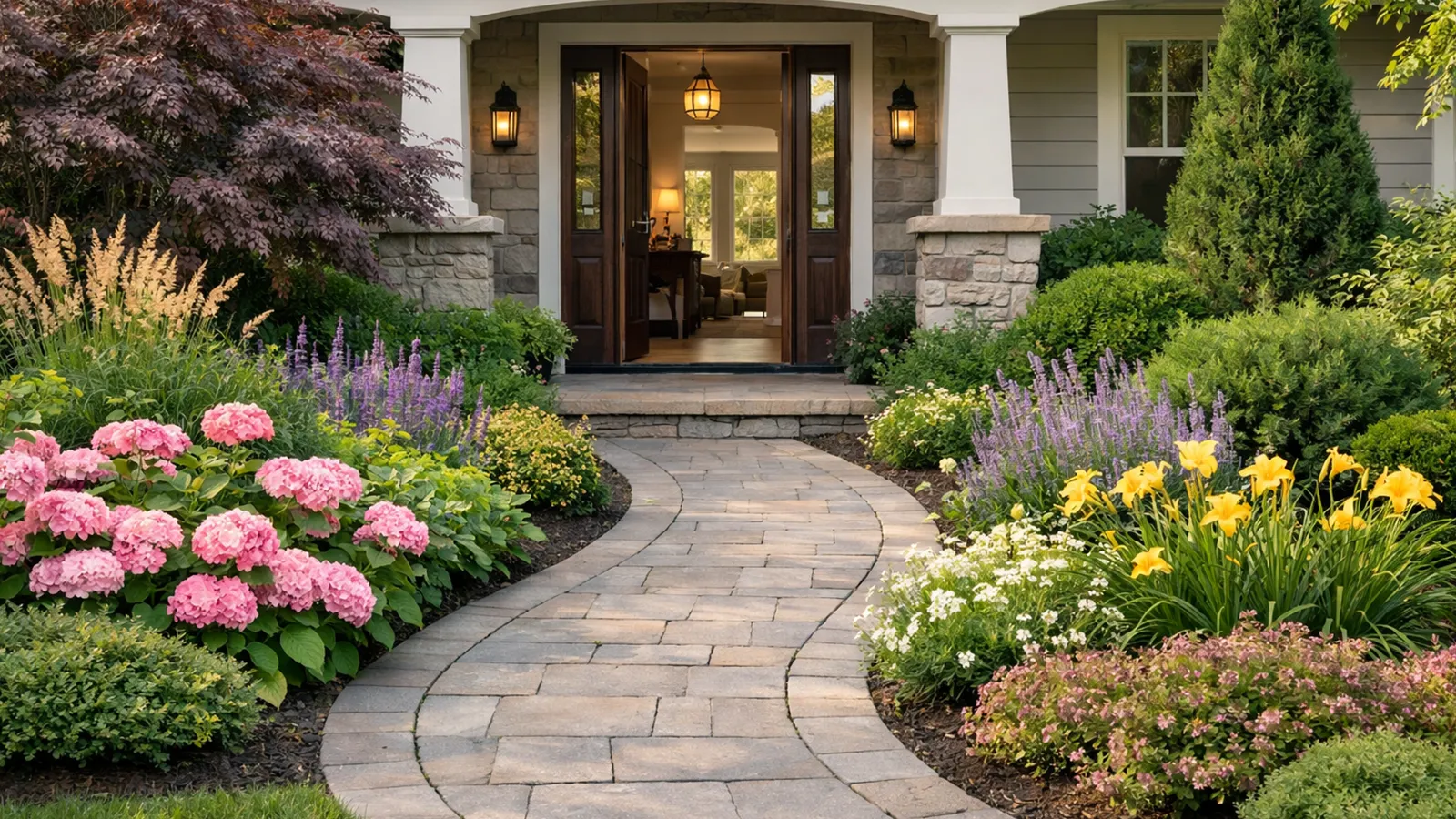
Approaching the front door, people instinctively read how plants guide movement. When layers taper gently along walkways, the path feels clear and inviting. Sudden height jumps near paths can feel awkward or slightly obstructive, even if there is room to walk.
Entry areas usually benefit from lighter layering that keeps views open. Taller plants step back, while lower layers frame movement instead of crowding it. This balance reduces maintenance pressure and keeps entrances visually calm.
💡 Well-layered entries often share a few traits:
-
plants sit back from path edges,
-
heights change gradually near doors,
-
and the entrance remains visually clear from the street.
Integrating Layered Planting With Architectural Lines
Standing in front of a house, it becomes clear when plants feel disconnected from the structure behind them. Layers that ignore rooflines or window heights often look accidental, as if they were placed without reference to the building itself. When planting aligns with architecture, the yard feels settled and intentional.
Lower layers that stay beneath windows keep interiors bright and views open. Mid layers tend to sit comfortably around porch railings or lower rooflines, while upper layers soften corners and vertical walls. This alignment helps the yard feel like a natural extension of the house rather than a separate scene.
✔️ Yards that age gracefully often show this quiet coordination:
-
shrubs never press against windows,
-
taller plants echo the home’s vertical lines,
-
and pruning stays minimal because scale was right from the start.
Using Repetition and Grouping to Stabilize Layers
Walking past a front yard, repetition is often what makes it feel calm. When the same plant forms appear again and again within a layer, the eye relaxes and understands the pattern. Without repetition, layers fragment and start to feel restless.
Grouping plants into small clusters strengthens each layer without making it rigid. A repeated shrub form in the mid layer or a consistent ground cover at the front creates rhythm that carries across the yard. This rhythm is subtle but deeply stabilizing.
💡 Effective repetition usually looks like:
-
the same shape appearing at regular intervals,
-
limited plant variety within each layer,
-
and small variations that never break the overall pattern.
Managing Growth Rates Across Layers
A newly planted yard often looks balanced, but growth quickly reveals weak planning. Fast-growing plants surge ahead, while slower ones disappear into the background. When growth rates clash, layers blur and the original structure fades.
Ground layers that spread aggressively can creep into shrubs, while upper-layer plants may cast unexpected shade as they mature. Choosing plants that grow at similar speeds keeps the layers evolving together rather than competing.
⚠️ Growth-related imbalance often shows up as:
-
one plant needing constant trimming,
-
another failing to thrive under new shade,
-
and the layered look slowly collapsing within a few seasons.
Adjusting Layers for Climate and Regional Conditions
Seasonal changes make it obvious whether layering truly fits its environment. In colder regions, winter exposure reveals weak structure when plants die back unevenly. In warmer climates, heat and humidity expose poor airflow between layers.
Layering that respects climate feels more resilient. Upper layers may shield lower plants from harsh sun, while spacing allows air to move freely in humid conditions. Regional awareness keeps layers visually intact through seasonal stress.
✔️ Climate-responsive layering is often noticeable through:
-
fewer signs of heat or frost damage,
-
plants holding form longer through the year,
-
and less seasonal dieback disrupting the overall shape.
Layering to Enhance Privacy Without Closing the Space
Front yard privacy often feels uncomfortable when it turns into a wall. Layering offers a softer alternative, filtering views instead of blocking them completely. This approach keeps the yard open while still creating a sense of separation.
Mid and upper layers can stagger sightlines without closing off light or airflow. Lower layers remain open, preserving a welcoming feel near walkways and entrances. The result is privacy that feels natural rather than defensive.
💡 Layered privacy usually works best when:
-
plants overlap instead of forming straight lines,
-
taller elements sit farther back,
-
and openness remains near the front edge of the yard.
Refining Layers Over Time Through Selective Editing
Living with a layered yard reveals which plants truly belong. As seasons pass, some plants begin to crowd or disrupt the original balance. Refinement keeps the structure clear without changing the overall design.
Selective editing often means removing rather than adding. Thinning a single shrub can restore depth faster than introducing new plants. This mindset preserves clarity and prevents gradual clutter, especially in compact spaces.
✔️ Smaller front yards benefit most from this restraint, which aligns closely with Design approaches that help compact front yards feel open while still supporting layered planting.
Careful refinement allows layered planting to mature instead of unravel. Over time, the yard feels more intentional, calmer, and easier to live with rather than more complicated.
Design context: https://www.nps.gov/