Last updated: February 13, 2026
Designing a front yard that looks polished year-round without constant upkeep starts with intentional decisions rather than decorative excess. A low-maintenance approach focuses on durability, clarity of layout, and materials that age gracefully instead of demanding frequent attention.
Homeowners often assume that visual impact requires regular trimming, watering, and seasonal replanting, but the opposite is usually true. The most effective front yards rely on restraint, structure, and smart plant choices that work with the environment rather than against it.
A well-planned front yard also sets expectations for the entire property. When the space feels calm, balanced, and easy to care for, it communicates thoughtful design and long-term value from the moment someone approaches the home.
Define a Clear Layout Before Choosing Plants
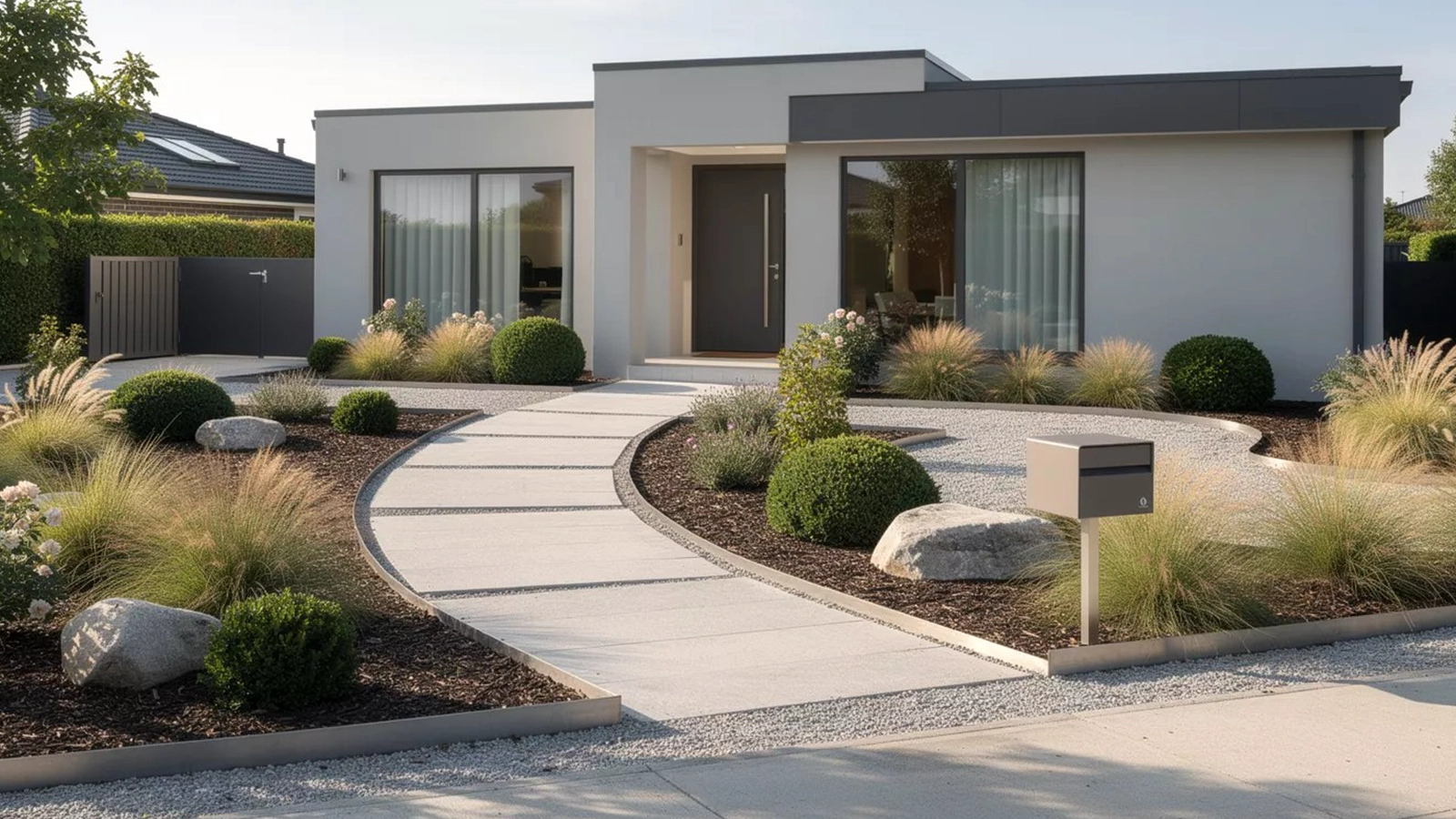
A low-maintenance front yard begins with a legible layout that prioritizes function before aesthetics. Clear pathways, defined planting zones, and intentional open space reduce visual clutter and prevent the need for constant adjustments as plants mature. When the structure is strong, individual elements can remain simple without the design feeling sparse or unfinished.
Establishing primary circulation routes early helps prevent common maintenance issues like trampled ground cover or overgrown borders. Walkways should follow natural movement patterns rather than forcing sharp turns or narrow passages that require frequent edge correction. A layout that aligns with daily use naturally stays cleaner and more organized over time.
Zoning the yard into hardscape, planting beds, and transitional areas also makes long-term care predictable. Each zone can be maintained on its own schedule without overlapping tasks, which reduces the mental and physical effort required to keep the space looking intentional. This approach creates a front yard that remains visually consistent even when maintenance is infrequent.
Choose Materials That Age Well Instead of Wearing Out
Material selection plays a critical role in determining how much effort a front yard will demand over the years. Surfaces that weather naturally, such as stone, concrete pavers, or gravel, tend to look better with age and require minimal intervention compared to painted or sealed finishes. These materials hide minor imperfections and reduce the need for seasonal repairs.
Avoid materials that rely on constant cleaning or refinishing to maintain their appearance. Wood elements, for example, can be beautiful but often introduce recurring maintenance cycles that undermine a low-effort goal. Substituting composite materials or masonry accents can preserve visual warmth without ongoing upkeep.
Consistency across materials also reduces visual noise and maintenance complexity. Limiting the palette to two or three complementary surfaces makes repairs easier and prevents the patchwork effect that develops when materials age at different rates. This restraint supports both durability and long-term visual cohesion.
When material choices prioritize appearance over long-term performance, even a minimal front yard can quietly accumulate new maintenance demands over time, a shift examined more closely in our breakdown of why low-maintenance front yards often become high maintenance.
Prioritize Plants That Thrive Without Intervention
Plant selection is one of the most impactful decisions in a low-maintenance front yard. Native and climate-adapted species typically require less watering, fertilizing, and pruning because they are already suited to local conditions. These plants establish stronger root systems and recover more easily from seasonal stress.
Grouping plants with similar water and light needs simplifies care routines and prevents uneven growth patterns. When plants compete for resources or require different schedules, maintenance quickly becomes fragmented and time-consuming. Thoughtful grouping allows the landscape to stabilize naturally with minimal input.
A restrained planting palette also reduces ongoing work. Repeating a few reliable species throughout the yard creates rhythm and cohesion while eliminating the need to manage dozens of individual care requirements. This strategy supports a polished look that remains consistent throughout the year.
Use Ground Covers to Reduce Weeds and Watering
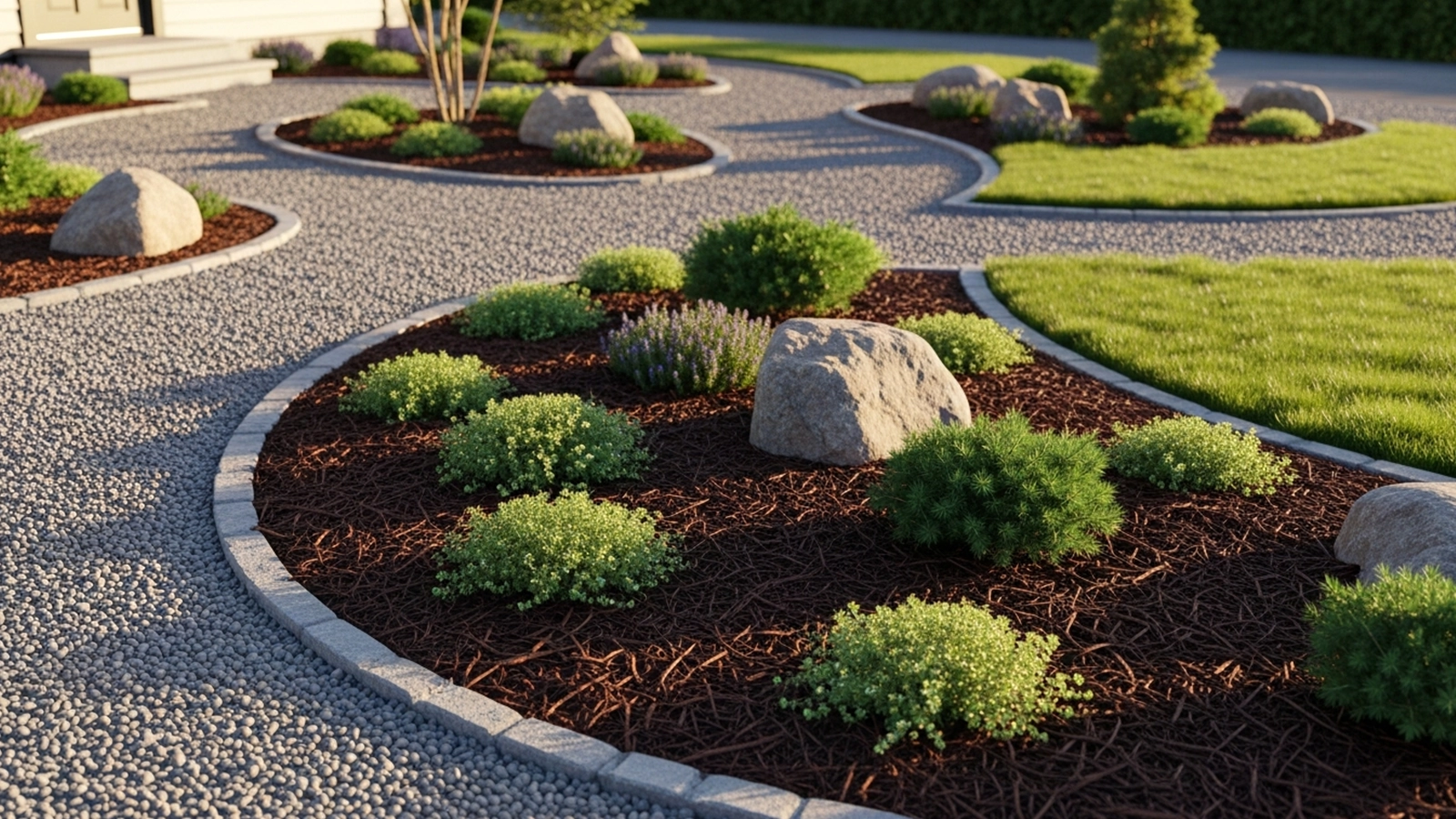
Ground covers are essential tools for minimizing routine yard work while preserving visual order. Mulch, gravel, and low-growing plants suppress weeds, retain moisture, and protect soil health without requiring frequent intervention. When properly installed, these surfaces dramatically reduce the need for weeding and watering.
Organic mulches improve soil quality over time while creating a clean visual base for plantings. Gravel and stone options offer a more architectural look and can last for years with minimal refreshment. The choice depends on aesthetic preference, but both options support long-term efficiency.
Combining ground covers with edging or defined borders prevents migration into walkways and hardscape areas. This containment keeps maintenance predictable and avoids the gradual spread that often leads to corrective work later. A stable ground layer is one of the most effective ways to simplify front yard care.
Limit Lawn Areas to What You Actually Use
Traditional lawns are often the most maintenance-intensive feature in a front yard, yet they frequently serve little practical purpose. Reducing lawn size or eliminating it entirely can significantly lower watering, mowing, and fertilizing demands. A smaller, intentional lawn area feels purposeful rather than neglected.
When lawns are retained, their shape and placement matter. Simple geometric forms are easier to edge and maintain than irregular outlines. Positioning turf where it visually balances hardscape rather than filling leftover space helps the yard feel designed rather than defaulted.
Many homeowners find that alternative solutions provide equal or greater visual appeal with far less effort. Front yard designs that focus on curb appeal often achieve stronger results by balancing structured greenery with hardscape elements rather than relying heavily on lawn coverage.
Design for Long-Term Growth, Not Initial Appearance
A common maintenance trap is designing for how the yard looks on installation day rather than how it will function years later. Plants that are spaced too closely or selected for short-term impact often require aggressive pruning or replacement as they mature. Planning for full growth reduces corrective work and preserves design intent.
Understanding mature plant size allows for better airflow, healthier growth, and clearer sightlines. This foresight minimizes disease risk and eliminates the need for constant reshaping. A landscape that respects natural growth patterns tends to regulate itself over time.
Designing with patience also improves sustainability. Allowing plants and materials to settle into their environment results in a front yard that feels established rather than forced. This long-term perspective transforms maintenance from a recurring burden into an occasional check-in.
Reduce Maintenance Through Smart Hardscape Choices
Hardscape elements quietly determine how much ongoing effort a front yard will require. When paths, borders, and surfaces are thoughtfully selected, they eliminate repetitive tasks like edging, resetting, or surface repair. Durable hardscape also creates visual stability, allowing plantings to remain simple without the space feeling unfinished.
Concrete pavers, natural stone, and compacted gravel outperform decorative but fragile materials over time. These options tolerate freeze-thaw cycles, foot traffic, and minor settling without demanding constant correction. Their visual consistency also helps the yard maintain structure even when plant growth fluctuates seasonally.
Spacing and proportion matter as much as material choice. Oversized pavers reduce joint lines where weeds can emerge, while generous path widths prevent erosion along edges. A front yard anchored by practical hardscape requires fewer touch-ups and remains presentable with minimal attention.
Control Growth With Intentional Plant Spacing
Overcrowding is one of the most common causes of high-maintenance landscapes. Plants placed too closely may look lush at first, but they quickly compete for light, water, and nutrients. This competition leads to weak growth, increased disease risk, and frequent pruning to restore order.
Designing with mature plant size in mind creates a calmer, more predictable landscape. Adequate spacing improves airflow and sunlight penetration, allowing plants to maintain their natural form without intervention. This approach also preserves clear sightlines and prevents plants from encroaching on walkways or structures.
Resisting the urge to fill every gap pays off long-term. Open space allows the design to breathe and gives each element room to contribute without conflict. The result is a front yard that evolves gracefully rather than demanding constant correction.
Simplify Care With Repetition and Visual Rhythm
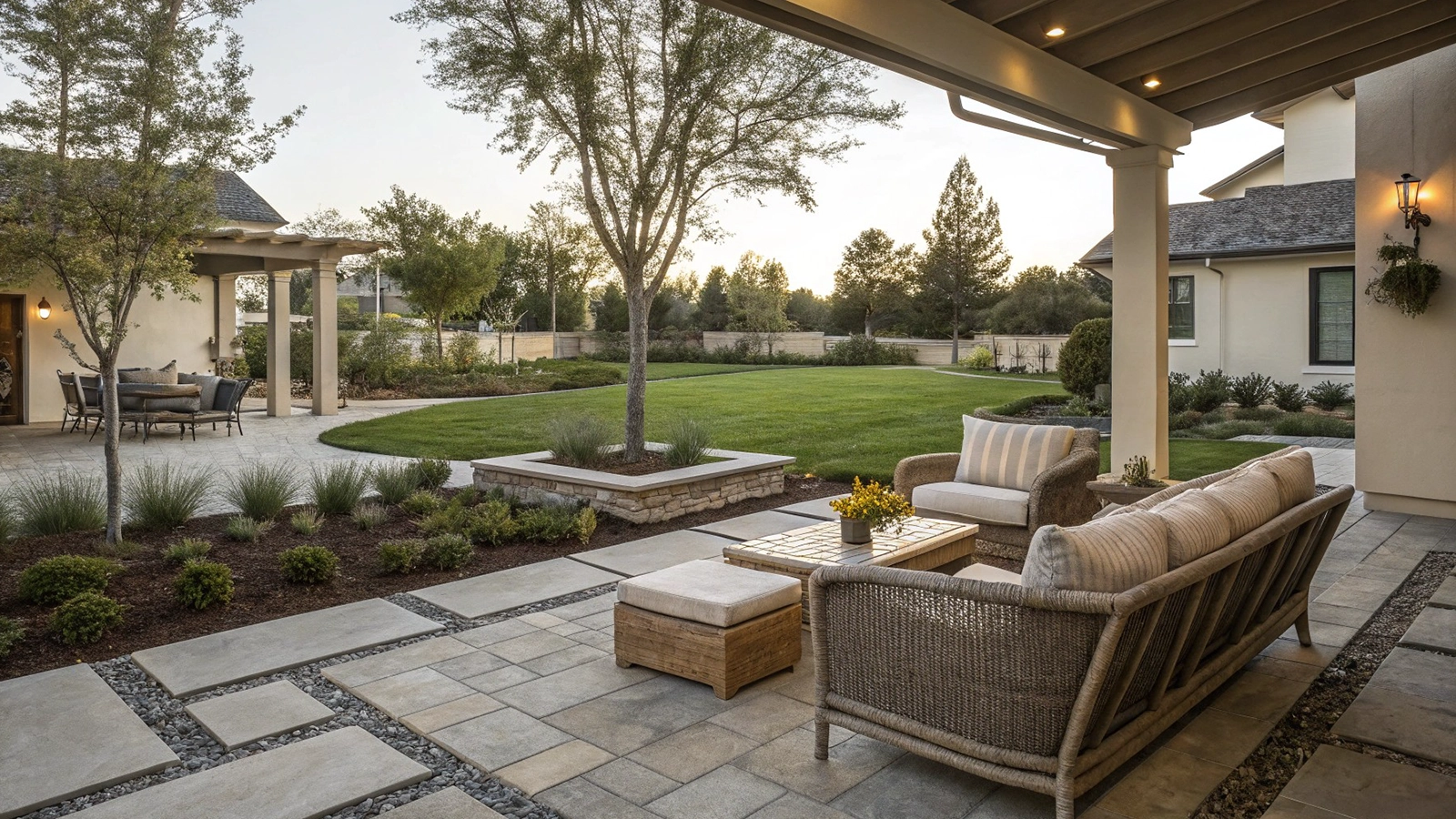
Repetition is a powerful tool for reducing both visual clutter and maintenance effort. Using the same plant species in multiple locations simplifies care routines because watering, pruning, and seasonal expectations remain consistent. This uniformity also strengthens the overall design by creating rhythm and cohesion.
Visual rhythm guides the eye naturally through the space, making the yard feel intentional rather than pieced together. Repeated forms and textures establish order without relying on constant upkeep. Even when individual plants fluctuate slightly, the pattern remains intact.
Limiting variety does not mean sacrificing interest. Subtle changes in scale, spacing, or placement can add depth while preserving simplicity. A restrained palette supports long-term ease by minimizing the number of variables that require attention.
Design Edges and Borders to Stay in Place
Unstable edges are a hidden source of ongoing maintenance. When borders between lawn, planting beds, and hardscape are poorly defined, they shift over time and require frequent reworking. Stable edging materials lock zones in place and prevent gradual erosion.
Metal, stone, or concrete edging provides clean separation without drawing attention to itself. These materials resist movement and keep ground covers contained where they belong. Once installed correctly, they significantly reduce the need for seasonal adjustments.
Clear borders also reinforce the design visually. They create crisp transitions that make the yard look organized even when growth is at its peak. This clarity allows the landscape to feel maintained without constant intervention.
Plan Irrigation to Support Low Effort, Not High Control
Irrigation systems should serve the design, not dictate it. Overly complex setups often require frequent monitoring, repairs, and adjustments that undermine a low-maintenance goal. Simpler systems focused on efficiency and zoning are easier to manage and more reliable over time.
Drip irrigation and soaker lines deliver water directly to plant roots with minimal waste. These systems reduce evaporation and discourage weed growth between plants. Once calibrated, they operate quietly in the background without daily oversight.
Grouping plants by water needs further streamlines irrigation. When each zone has consistent requirements, schedules remain stable and predictable. This alignment reduces both water usage and the likelihood of plant stress caused by inconsistent care.
Apply Small-Space Principles Even in Larger Front Yards
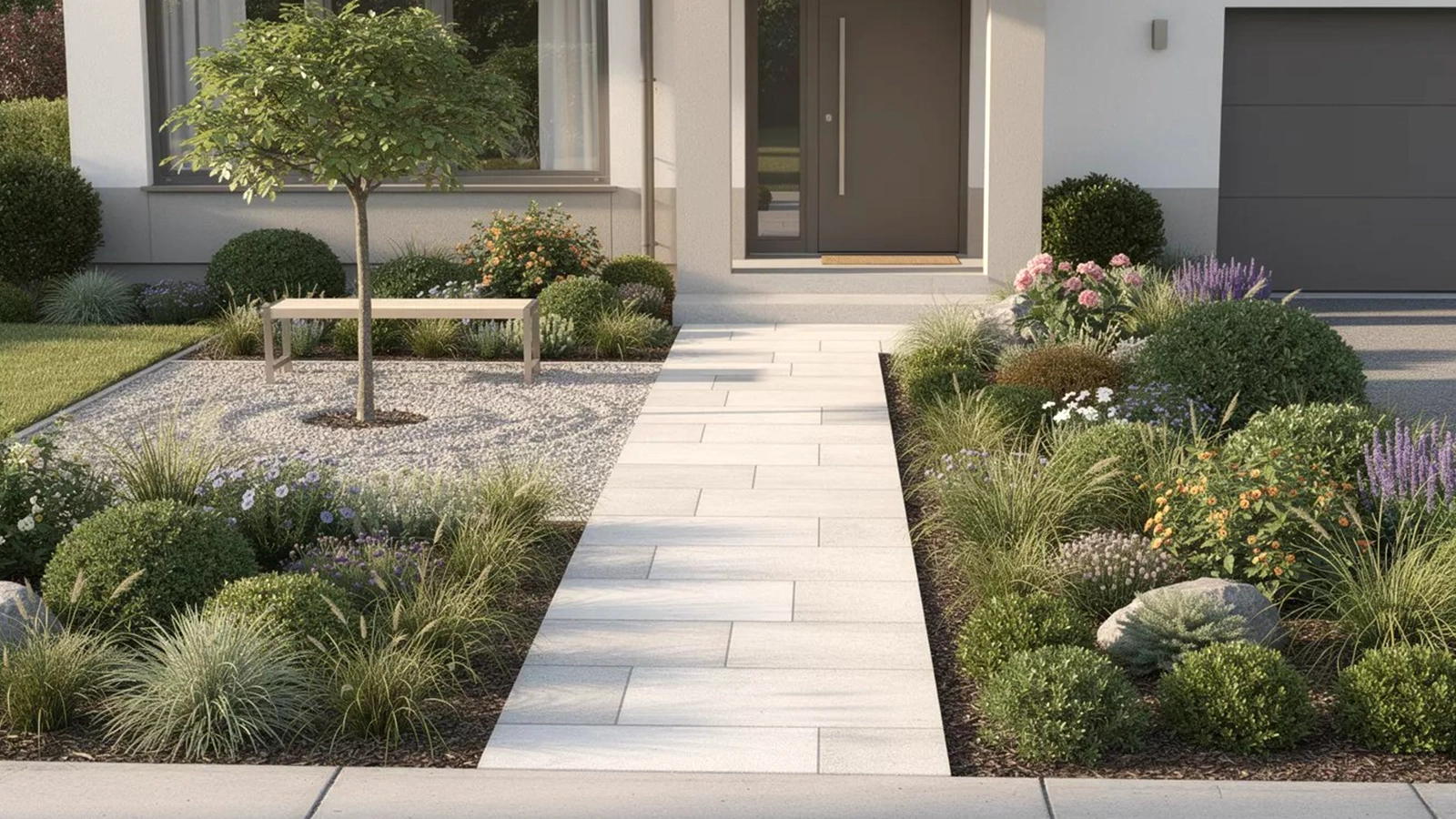
Many low-maintenance strategies come from small garden design, where efficiency is essential. Clear zoning, limited materials, and intentional focal points prevent wasted space and unnecessary upkeep. Applying these principles to front yards of any size improves both function and longevity.
Compact layouts encourage thoughtful decisions rather than filler solutions. Each element must earn its place, which naturally reduces excess planting and decorative clutter. This discipline leads to designs that remain manageable without feeling sparse.
These principles also support better long-term balance between hardscape and greenery. Design approaches rooted in proven small garden principles often result in front yards that feel cohesive, efficient, and easier to maintain over time. Looking ahead, the next phase of design focuses on how everyday use and lifestyle considerations further refine low-maintenance choices.
Align Design Decisions With Everyday Use Patterns
A truly low-maintenance front yard reflects how the household actually moves through and observes the space. When design decisions ignore daily routines, even well-built landscapes can feel inconvenient and demand extra effort to manage. Aligning layout and features with real behavior reduces friction and prevents unnecessary wear.
Paths should accommodate natural walking lines rather than forcing detours across planted areas. Entry visibility, mailbox access, and driveway transitions all influence how often certain zones are disturbed. Designing around these realities minimizes damage and keeps the yard orderly without constant correction.
This alignment also improves long-term satisfaction. When the landscape supports daily habits instead of resisting them, maintenance becomes an occasional task rather than a recurring chore. The yard quietly performs its role without demanding attention.
Use Lighting Strategically Instead of Decoratively
Lighting choices often increase maintenance when treated as ornament rather than infrastructure. Overly decorative fixtures require frequent cleaning, bulb replacement, and repositioning as plants grow. Strategic lighting focuses on safety, navigation, and subtle emphasis with minimal components.
Low-voltage, well-spaced fixtures provide consistent illumination without cluttering the landscape. When lights are positioned to wash paths or architectural features rather than spotlight individual plants, they remain effective even as the landscape matures. This reduces the need for ongoing adjustments.
Durability matters as much as placement. Weather-resistant materials and simple designs age more gracefully and require fewer replacements. A restrained lighting plan supports both functionality and long-term ease.
Favor Permanent Structure Over Seasonal Decoration
Seasonal decor can quickly undermine a low-maintenance front yard if it becomes the primary source of visual interest. Constant rotation of planters, ornaments, or temporary features introduces storage needs and setup effort. Permanent structure provides year-round appeal without recurring work.
Architectural elements such as retaining walls, seating ledges, or sculptural planters anchor the design visually. These features create presence regardless of season and reduce reliance on short-lived accents. When the structure is strong, minimal seasonal changes feel intentional rather than necessary.
This approach also stabilizes the overall aesthetic. A front yard built on permanent elements looks complete even during dormant seasons, eliminating pressure to compensate with additional effort.
Anticipate Maintenance Access During Design
Ease of access is rarely considered during planning, yet it strongly influences long-term maintenance effort. Tight planting beds, narrow gaps, and obstructed corners make even simple tasks more time-consuming. Designing for access ensures that necessary upkeep remains efficient.
Allowing space for tools, hoses, and movement prevents accidental damage during routine care. Clear access routes also discourage shortcuts that wear down planted areas over time. This foresight preserves both plant health and design clarity.
Accessible design supports longevity. Landscapes that can be maintained comfortably are more likely to be maintained consistently, which keeps effort low and results high.
Integrate the Front Yard With Everyday Outdoor Living
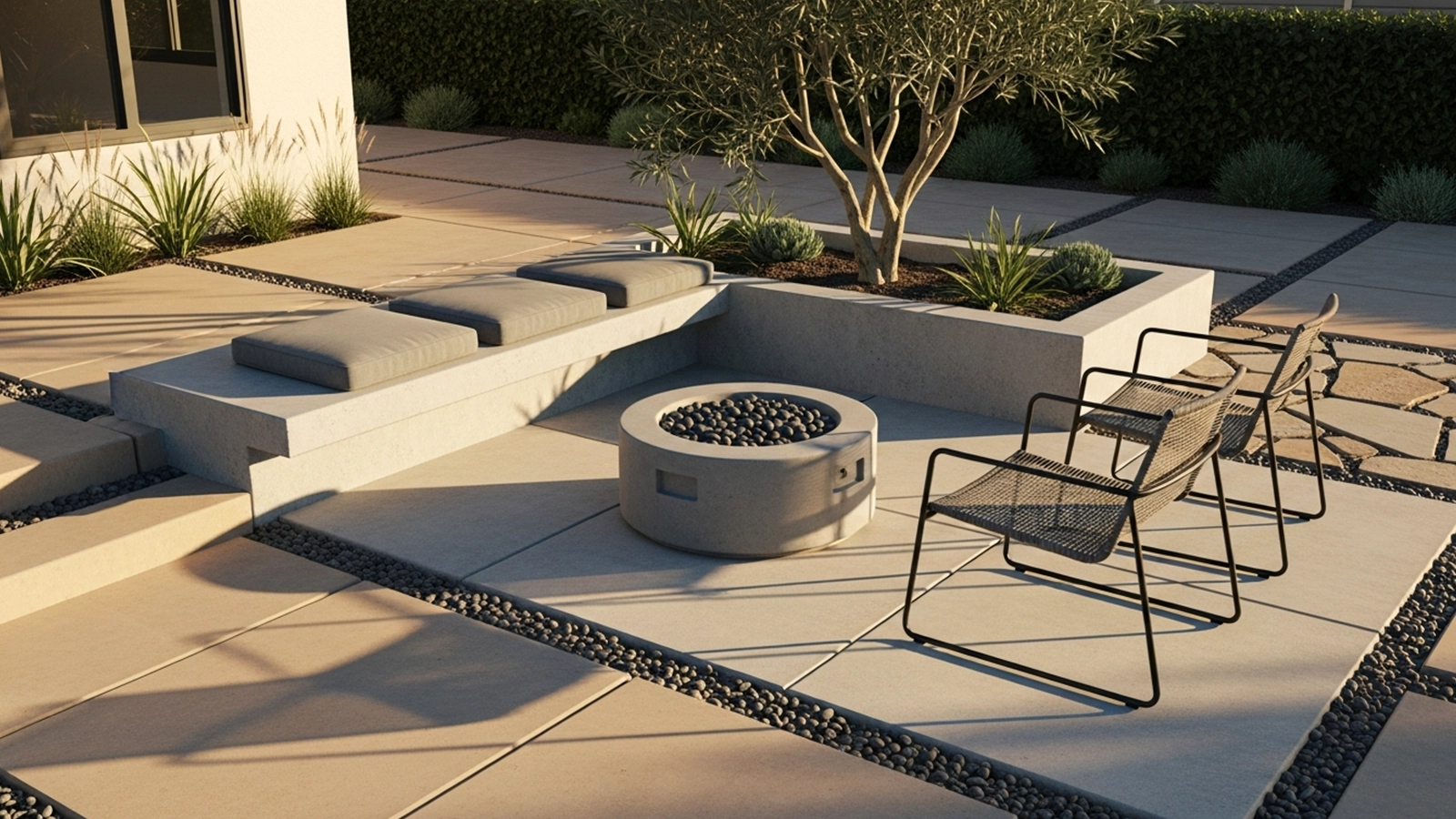
When front yards are treated as usable extensions of the home, design decisions naturally prioritize durability and comfort. Spaces intended for sitting, walking, or casual interaction benefit from materials and layouts that tolerate regular use. This practicality inherently reduces maintenance demands.
Integrating subtle seating, widened paths, or viewing areas encourages engagement without adding complexity. These features rely on solid construction rather than delicate planting, which lowers ongoing care. A front yard designed for use remains orderly because it is actively valued.
This mindset also reframes maintenance as preservation rather than correction. Designing outdoor spaces around everyday living needs often leads to front yards that stay functional, attractive, and easy to care for over time. The landscape becomes part of daily life instead of a background obligation.
Commit to Fewer Decisions After Installation
The final stage of a low-maintenance front yard is restraint after completion. Continual tweaking, adding, or replacing elements introduces complexity that erodes the original efficiency of the design. Committing to the plan allows the landscape to settle and perform as intended.
Plants need time to establish, and materials need time to weather. Allowing this process reduces reactive changes that often create more work. Minor imperfections tend to resolve naturally when the design is given space to mature.
Long-term ease depends on trust in the original structure. When the yard is designed with clarity and discipline, the best maintenance strategy is often to intervene less, not more.
External source: https://www.gardendesign.com/landscape-design/front-yard.html