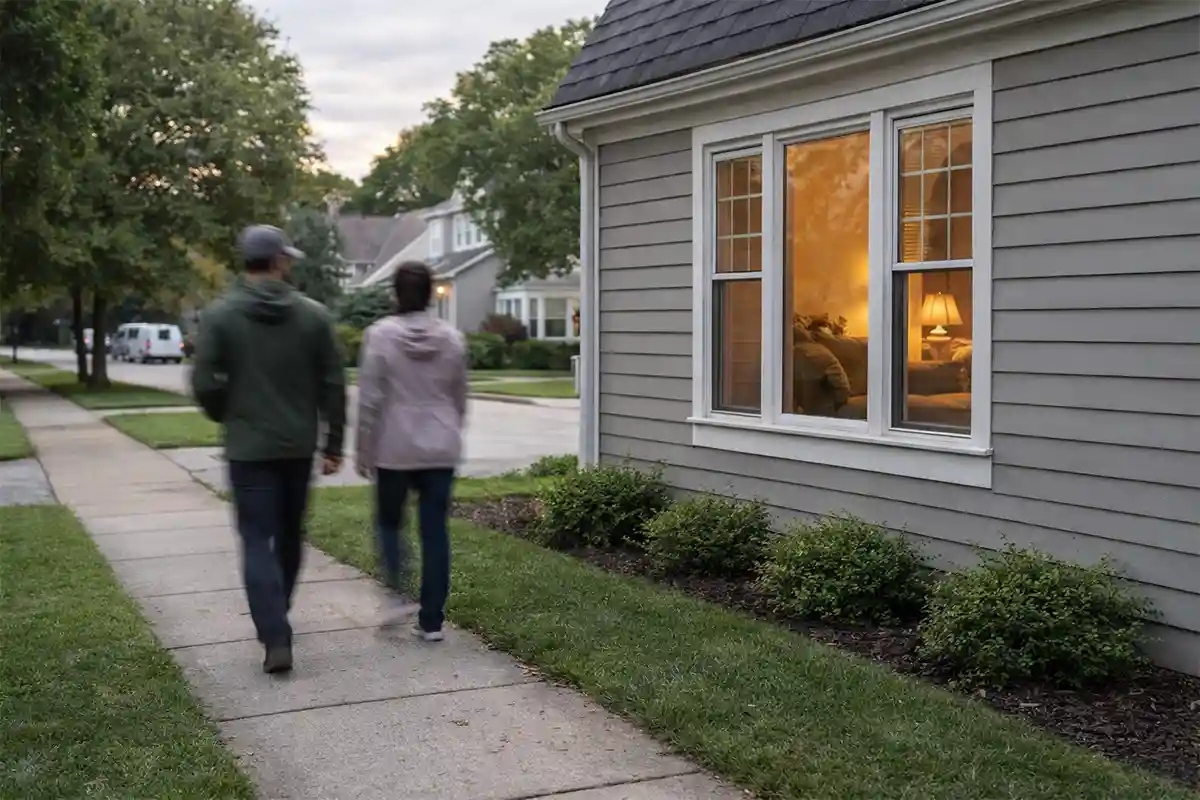
Late afternoon light stretches across the living room floor while activity outside the house gradually increases. A dog walker passes by the front yard. A neighbor slows briefly while checking a phone. A delivery driver stops along the sidewalk to confirm an address.
Inside the house, the situation begins to feel uncomfortable.
The living room window sits only a short distance from the public sidewalk. When the house was first purchased, the openness seemed like an advantage. The yard felt spacious, sunlight entered easily, and the view toward the street made the home feel connected to the neighborhood.
Over time, the dynamic changes.
Pedestrians walking along the sidewalk now fall directly within the viewing angle of the window. In the evening, interior lights brighten the room, making furniture and movement visible from the street.
The distance between the sidewalk and the window measures barely 7 feet.
A narrow strip of lawn separates the pavement from the house. The planting beds remain low, with small shrubs barely reaching two feet tall. Nothing interrupts the visual line between the sidewalk and the glass.
From the perspective of someone walking past, the interior of the home appears almost like a display window.
This situation appears frequently in American neighborhoods built between the 1920s and 1960s, when homes were often placed close to sidewalks. In many of these areas, setback distances from public walkways range between 6 and 10 feet, leaving limited space for landscape buffering.
What Is Actually Happening
When sidewalks run very close to residential windows, the issue is not simply the window itself. The real problem lies in how pedestrian sightlines interact with typical residential building dimensions.
Most adults walking along a sidewalk have an eye level between 5 and 6 feet above the ground. Coincidentally, the center of many residential living room windows sits within the same height range.
When the horizontal distance between the sidewalk and the house drops below 10 feet, a direct viewing corridor forms.
At distances closer to 6–8 feet, pedestrians naturally fall within the full viewing angle of the window. Even casual glances toward the house can reveal interior details.
Several environmental and structural factors amplify the effect:
• low shrubs below window height
• flat lawns with no vertical landscape elements
• straight sightlines from sidewalk to glass
• bright interior lighting after sunset
• windows facing directly toward pedestrian movement
Landscape designers often describe the front yard as a transition zone between public and private space. When that zone becomes too narrow, the visual boundary disappears.
Instead of functioning as a buffer, the yard becomes a clear viewing corridor between the street and the home.
Design strategies that introduce layered landscaping and visual barriers can restore that separation, a concept explored in 15 Beautiful Front Yard Privacy Ideas for a Stylish, Private Yard where structure and planting height are used to interrupt sightlines without closing off the property.
Quick Diagnostic Checklist
Certain conditions commonly indicate that the proximity between the sidewalk and the house is creating a visibility problem.
Typical warning signs include:
• the sidewalk sits less than 10 feet from the front wall of the house
• the window center aligns roughly with pedestrian eye level
• shrubs remain below 3 feet tall beneath the window
• the front yard contains mostly open lawn
• interior lighting becomes visible from the street at night
• pedestrians occasionally glance inside while passing
Properties located on street corners often experience even greater exposure because the viewing angle expands.
Multiple sidewalks or crosswalk paths increase the number of sightlines toward the house. Under these conditions, landscape buffering becomes especially important, as explained in How to Create Front Yard Privacy When Your House Sits Directly on a Busy Street Corner where properties face pedestrian movement from several directions.
Practical Ways to Fix the Issue
When the sidewalk sits only 6–8 feet from the house, privacy solutions must focus on blocking the most common pedestrian sightline — the eye-level view toward the center of the window.
Instead of attempting to close off the yard completely, effective designs interrupt that viewing angle while maintaining an open and welcoming appearance.
Window-Level Shrub Layer
The most effective first layer typically sits directly beneath the window.
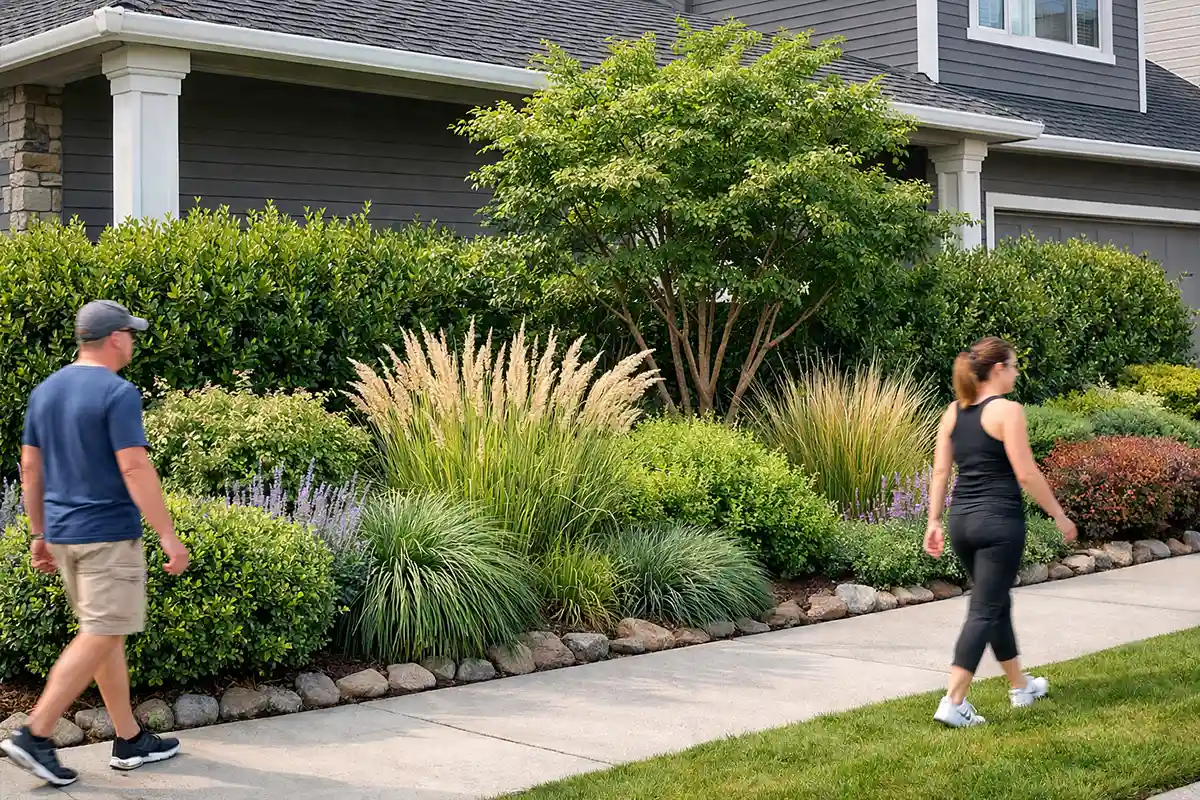
Shrubs planted to reach 3–4 feet in height block the eye-level sightline from pedestrians walking past at close range. At this height, the plants remain low enough to preserve outward views from inside the house while preventing direct visibility inward.
This layer functions as the primary visual filter when the sidewalk distance is extremely short.
Layered Planting Structure
In narrow front yards, privacy improves when vegetation forms multiple vertical layers.
A typical arrangement includes:
• groundcover or low perennials (1–2 feet)
• mid-height shrubs (3–4 feet)
• ornamental grasses or small trees (6–10 feet)
This layered structure disrupts straight sightlines and visually deepens the yard.
Angled Planting Beds
Straight planting beds parallel to the sidewalk often maintain the same viewing corridor.
By curving or angling the bed slightly toward the house, the visual path between sidewalk and window becomes indirect. Even subtle changes in planting layout can dramatically reduce visibility from passing pedestrians.
Small Tree Canopy Screening
Planting a small ornamental tree approximately 8–12 feet from the window creates a partial canopy between the sidewalk and the house.
Tree branches and foliage soften sightlines from above while allowing light to continue entering the home.
Vertical Screens in Narrow Yards
When planting space is limited, narrow decorative screens can provide additional filtering.
Wood slat panels, lattice structures, or planted trellises create visual interruption without blocking airflow or sunlight.
In some cases, privacy improvements fail because landscaping elements remain too short or too widely spaced to interrupt pedestrian sightlines. These common mistakes are examined in Front Yard Privacy Without Fences: What Usually Fails, where incomplete solutions allow the original exposure problem to remain.
Situations, Risks, and Recommended Fixes
| Situation | Hidden Cause | Risk Level | Recommended Fix |
|---|---|---|---|
| Sidewalk located 6–8 feet from window | Pedestrian eye level aligns with window height | High | Install 3–4 ft shrubs directly below the window |
| Open lawn between sidewalk and house | No visual buffer zone | Medium | Add layered planting beds with varied heights |
| Window directly facing pedestrian traffic | Straight sightline from sidewalk to interior | High | Angle planting beds and introduce vertical screening |
| Corner property with multiple sidewalk angles | Exposure from several directions | High | Use tree canopy and layered vegetation |
| Interior lighting visible at night | Glass becomes transparent from street | Medium | Combine landscaping with interior window treatments |
Quick Questions
Why does a sidewalk only a few feet away create such strong visibility?
When pedestrians walk within about 6–8 feet of a window, their natural eye level aligns directly with the center of the glass, allowing interior spaces to be seen easily.
Will tall hedges solve the issue?
Tall hedges can work but often feel heavy in small front yards. Mid-height shrubs combined with layered plantings usually create a more balanced solution.
Do privacy landscapes reduce curb appeal?
Well-designed plantings typically improve curb appeal because they introduce structure, depth, and seasonal interest to the front yard.
Key Takeaways
Front yard privacy problems often occur when sidewalks sit only 6–10 feet from residential windows.
At these distances, pedestrian eye level aligns with typical window height, allowing direct views into living spaces.
Without landscape structure in the narrow strip of yard between the sidewalk and the house, the home becomes visually exposed to passing foot traffic.
Effective solutions focus on interrupting those sightlines rather than blocking the yard entirely. Window-level shrubs, layered planting structures, angled beds, and small trees can restore the transition between public and private space.
Even properties with extremely shallow front yards can regain privacy when the landscape introduces height variation and visual buffering.
For additional research on residential landscape planning and urban design principles, resources from the American Society of Landscape Architects provide professional guidance and case studies.