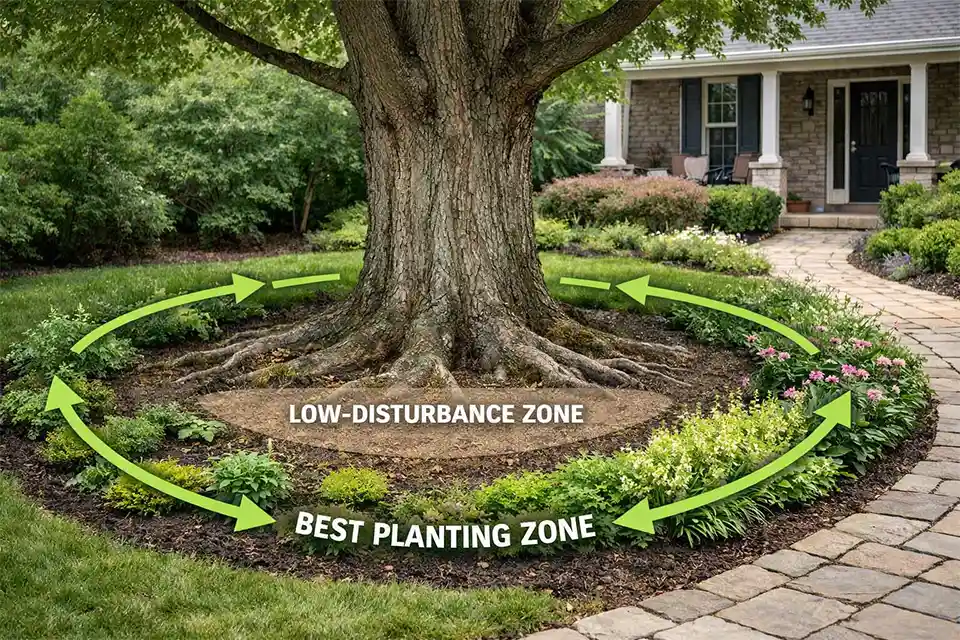
When tree roots limit soil depth in a front yard, the right answer is usually not “find tougher shade plants.” The real job is to match plant size, root behavior, and visual placement to a bed where usable soil may be only 4 to 8 inches deep and the top layer dries fast under root competition.
Start with three checks before you buy anything: how many inches of loose soil you have before hitting woody roots, whether the bed dries within 24 to 36 hours after watering in warm weather, and whether the most visible part of the bed sits near the walk, driveway, or canopy edge rather than close to the trunk.
That last check changes the whole design. In many front yards, the area nearest the trunk is both the hardest place to plant and the least important place to visually emphasize.
A lot of homeowners misread this as a shade problem because the plants that fail often have “part shade” on the tag. But the underlying mechanism is shallower rooting volume plus moisture competition.
A plant that tolerates shade can still fail quickly if it is forced into 3 to 5 inches of root-packed soil. That is why this kind of bed is won by better limits, not by a longer shopping list.
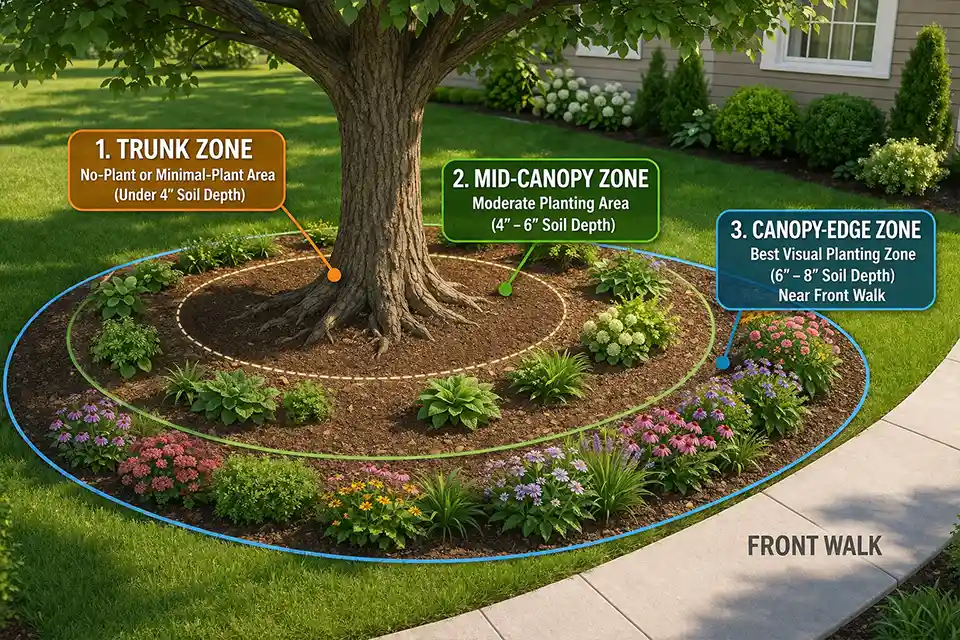
The First Decision: Classify the Bed Before Choosing Plants
The whole area under a mature tree should not be treated as one planting zone. That assumption causes a lot of wasted planting.
Zone 1: Trunk zone
This is the zone people overestimate most. If major roots sit just 2 to 4 inches below the surface, this is not a shrub zone and usually not even a dense perennial zone. It is a restraint zone: mulch, a few carefully placed bulbs, or sparse low groundcover only if you can plant without cutting roots.
Zone 2: Mid-canopy zone
This is usually the real working zone. If you have about 4 to 8 inches of usable soil between roots, small shallow-rooted perennials and sedges become realistic. This is where plant choice starts to matter more than survival luck.
Zone 3: Canopy edge
This is where the front yard should do most of its visual work. Light is often better here, the soil is usually a little less root-packed, and plants are easier to see from the street, driveway, and entry walk. Many front yards waste money trying to force fullness near the trunk while ignoring the outer band that can actually carry the design.
That same root-pressure pattern often shows up in related site problems, which is why issues like tree roots lifting sidewalks and damaging the front yard lawn often happen on the same property.
What to Plant Where
The stronger answer is not a longer plant list. It is a shorter, more accurate one tied to actual conditions.
Best choices for the trunk zone
If usable soil is under 4 inches, think in categories, not wishful thinking. Small bulbs, restrained patches of epimedium, select sedges, and a few low groundcovers are the upper limit in many beds. This is also the zone where doing less looks better. A cleaner mulch area with only a few intentional plants almost always beats a crowded ring of struggling foliage.
Best choices for the mid-canopy zone
This is where the most dependable plant palette lives. Carex, epimedium, hellebores in less brutally dry beds, hardy geranium, regionally appropriate liriope, and a few tough groundcovers make sense here. Small starter plants usually establish better than large nursery pots because they need less open soil and create less root conflict.
Best choices for the canopy edge
This is where color and contrast belong. In brighter outer bands, catmint, creeping thyme, low sedums, or other tougher low perennials can outperform classic shade favorites. In shadier but less root-packed edge zones, wider drifts of sedges or one reliable groundcover usually look better than a mixed collection of “shade plants.”
Pro Tip: In front yards, put the strongest-looking plants where people see them first, not where digging feels most satisfying.
What Usually Fails First
Some articles soften this too much. In shallow root-filled beds, a few choices fail often enough that they should be treated as poor bets, not as maybe-plants.
Large shrubs in nursery pots
A 2-gallon shrub may look like the shortcut to structure, but it usually needs a planting hole the site cannot support without root cutting. In these beds, shrub ambition wastes money fast.
Moisture-loving shade plants
Hostas, astilbes, hydrangeas, and other lush shade plants are regularly overplanted under mature trees. They may look acceptable in spring, then collapse in midsummer once tree demand increases. People usually overestimate shade tolerance and underestimate dry competition.
Bigger holes and better soil
This sounds logical and often disappoints. If the surrounding bed is packed with roots, a richer planting hole does not create a larger root zone. It creates a brief pocket of optimism. By summer, the site takes control again.
This same overbuilding instinct sits behind a lot of front yard landscaping mistakes to avoid: trying to force a design layer the site never had enough soil to support.
How to Plant Without Making the Tree Situation Worse
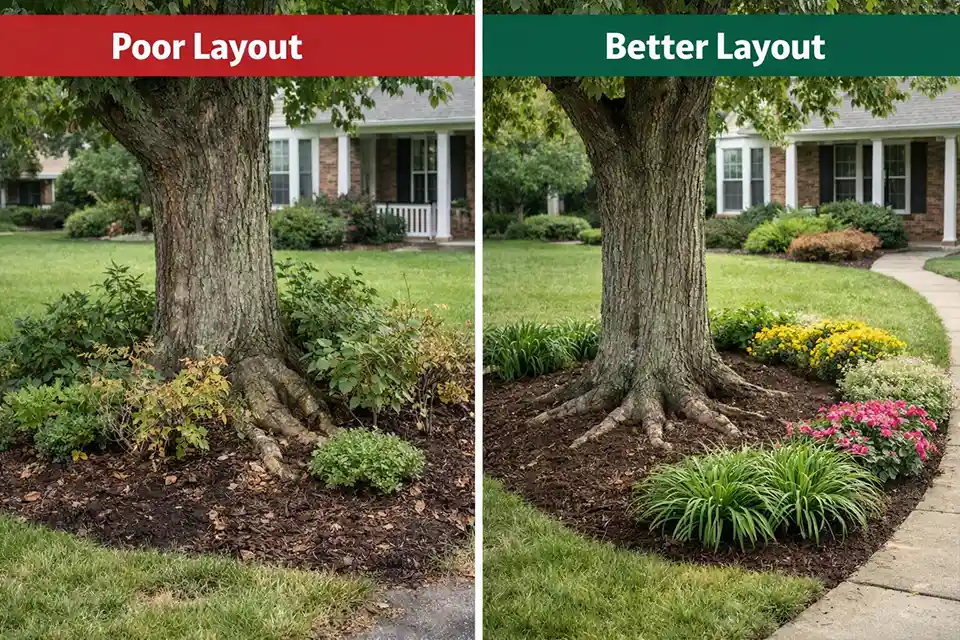
Use small plants and shift the layout
Small plugs and 3.5-inch pots are usually smarter here than gallon-sized plants. If you hit a major root, move the plant. Do not preserve a rigid spacing plan at the expense of the tree or the planting.
Disturb less than you think you should
In a normal bed, better soil prep often helps. Under mature trees, that logic has a hard limit. If deeper digging starts cutting roots across the whole planting area, the prep quality is no longer a win. Work in the top few inches where possible and use the openings that already exist.
Mulch is part of the planting strategy
A 2- to 3-inch mulch layer does more work here than many people realize. It slows surface drying, reduces visual clutter, and lets you avoid cramming extra plants into weak positions. Keep mulch pulled back from the trunk flare.
If nearby trees are also stealing moisture and shrinking your options, the pattern often overlaps with front-yard maintenance problems caused by neighbor trees.
A Better Decision Table Than a Generic Plant List
| Site condition | Best direction | Usually the wrong move |
|---|---|---|
| Under 4 inches of usable soil | mulch, bulbs, sparse shallow-rooted groundcover | shrubs, lush perennials, dense mixed planting |
| 4–6 inches soil + dry shade | sedges, epimedium, selective tough groundcovers | hosta-heavy palette, moisture-dependent plants |
| 6–8 inches soil + filtered light | small repeated perennials, broader but still restrained palette | oversized starter plants needing large holes |
| Brighter canopy edge | flowering accents and visual focal plants | spending the whole budget near the trunk |
| Bed dries in under 24–36 hours | reduce plant count and choose tougher plants | trying to correct the site with fertilizer |
The Front-Yard Move Most People Miss
The goal is not to make the area under the tree equally full everywhere. The goal is to make the yard look intentional from the street.
That usually means keeping the inner root zone cleaner, planting the mid-zone selectively, and letting the outer edge carry more of the visual payoff near the walk, driveway, or entry sequence. Readers often underestimate how much better a front yard looks when the strongest plants sit where people actually see them first.
This is also why front yard grass not growing under shade trees is often less a turf problem than a sign that the whole planting language needs to change.
When Containers Beat In-Ground Planting
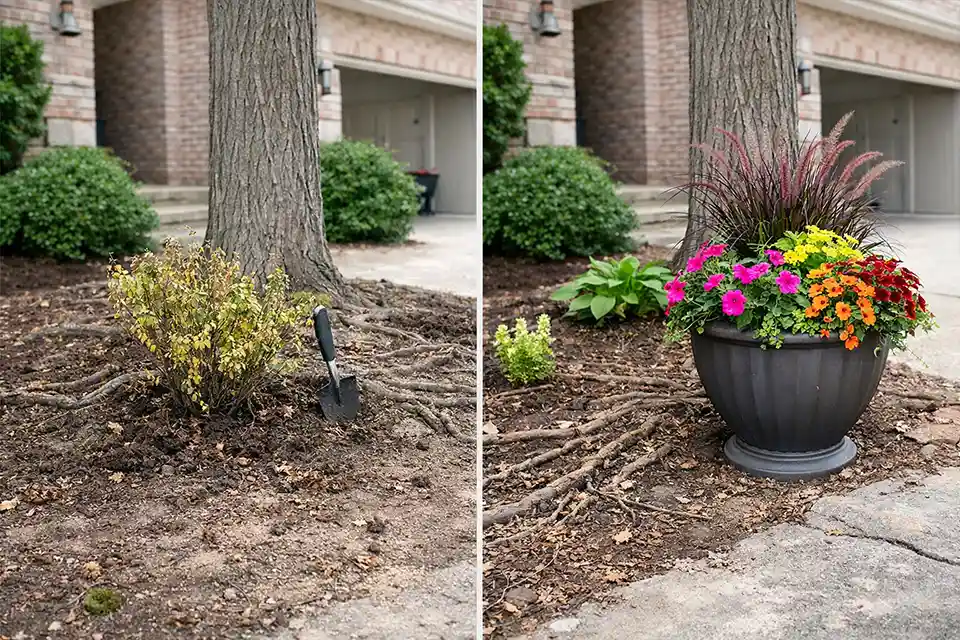
This is one of the missing answers in a lot of competing content. If you want height or seasonal color near a root-heavy area but do not have enough soil to plant safely, decorative containers are often the smarter move. They give you visual presence without forcing deep digging into an impossible bed.
Containers are especially useful when:
- the bed has under 4 inches of usable soil across most of the visible area
- you want one stronger focal point near the entry
- previous in-ground plants have failed within 1 to 2 seasons
- tree roots are too dense to place even a small 1-gallon root ball cleanly
Container use should not replace every in-ground planting, but in front yards it often solves the exact problem people keep trying to solve with the wrong shrub.
Quick Final Plant Shortlist
Best for the driest inner zone
Small bulbs, epimedium, select sedges, sparse low groundcovers, or mulch with intentional open space.
Best for the mid-zone
Carex, epimedium, hardy geranium, hellebores where summer dryness is not severe, and regionally appropriate liriope.
Best for the brighter outer edge
Catmint, creeping thyme, low sedums, and tougher low flowering perennials that benefit from better light and slightly less root pressure.
Best avoided in most root-packed beds
Large shrubs, hostas in dry shade, astilbes, hydrangeas, and any plant that needs a large softened planting hole to stand a chance.
Quick Final Planting Rule
Use this shorthand before buying anything:
If the soil is under 4 inches deep
Plant less, not smarter. Use mulch, bulbs, sparse low growers, or containers.
If the soil is 4 to 6 inches deep and dries fast
Choose sedges, epimedium, and a small tough palette. Avoid thirsty shade plants.
If the soil is 6 to 8 inches deep with better light at the edge
Put your visual emphasis there, not near the trunk.
If a plant still needs rescue watering every 2 to 3 days after its first full growing season
The mismatch is the site, not your effort.
When the Standard Fix Stops Making Sense
If usable soil stays under about 4 inches, the bed dries rapidly, and earlier plantings have already failed within 1 to 2 seasons, the answer is usually not a better shopping list.
It is a simpler design language: fewer plants, smaller root balls, more open mulch, more visual weight at the canopy edge, and containers where you want height without root conflict.
That is the real dividing line. Once the site is telling you “groundcover scale only,” forcing shrubs and lush perennials is not persistence. It is misreading the bed.
For a practical guide to planting under mature trees without creating new root problems, Penn State Extension.