Last updated: July 4, 2026
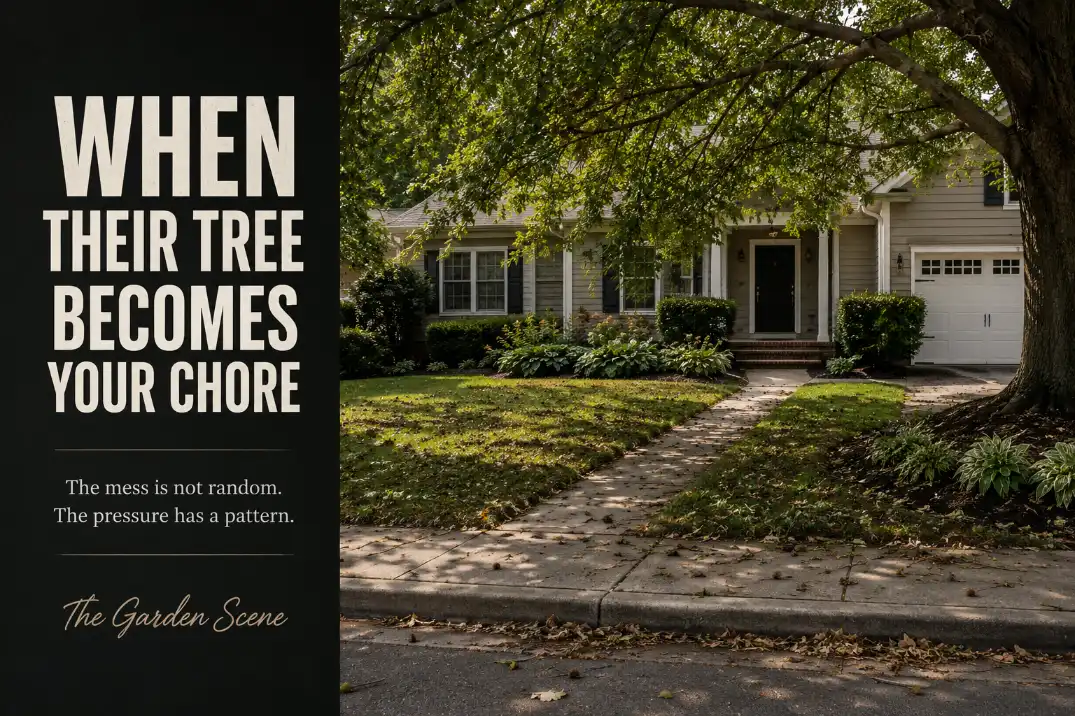
A neighbor tree becomes a front yard maintenance problem when the same part of your yard keeps failing for a reason that starts outside your control. Leaves collect along the same edge. Grass thins under the same shade band. Twigs land on the same walkway after wind. Seed pods roll into the same bed.
The problem is not simply “a tree nearby.” The problem is a pressure pattern landing in a visible, high-maintenance part of the front yard.
That is why the first fix should not be faster cleanup, more seed, or a sharper edge. The first fix is diagnosis. Is the tree creating a debris zone, a shade zone, a root-zone conflict, a slippery route, or a neighbor-boundary problem?
Each pressure needs a different response. Treat them as one general mess, and the yard keeps asking for the same work.
Why Neighbor Trees Make Front Yard Maintenance Feel Endless
Neighbor-tree maintenance feels endless because you are maintaining the receiving zone, not the source. Your front yard catches the leaves, shade, seed pods, twigs, root competition, and wind-driven debris, but the tree itself may sit partly or entirely beyond your control.
Front yards also expose small problems faster than backyards. A few wet leaves on a back corner can wait. The same leaves pressed into a front walk, driveway apron, curb strip, or foundation bed make the whole yard look neglected even when the rest of the landscape is maintained.
The pressure usually arrives in two layers. First comes the visible mess: leaves, pods, petals, small branches, and twigs. Then comes the slower decline: thin grass, damp shaded soil, weak bed performance, and edges that become harder to keep clean.
The useful diagnosis is not “the neighbor has a tree.” It is more specific: the tree is creating a debris zone, a shade zone, a root-zone conflict, or a boundary-sensitive maintenance problem.
First Identify the Kind of Pressure the Tree Is Creating
The strongest clue is where the problem repeats. If the same strip near the sidewalk gets slick after rain, that is a route-safety issue.
If the same grass band thins every season, that is probably shade pressure. If debris gathers along the same border, the edge may be acting like a trap.
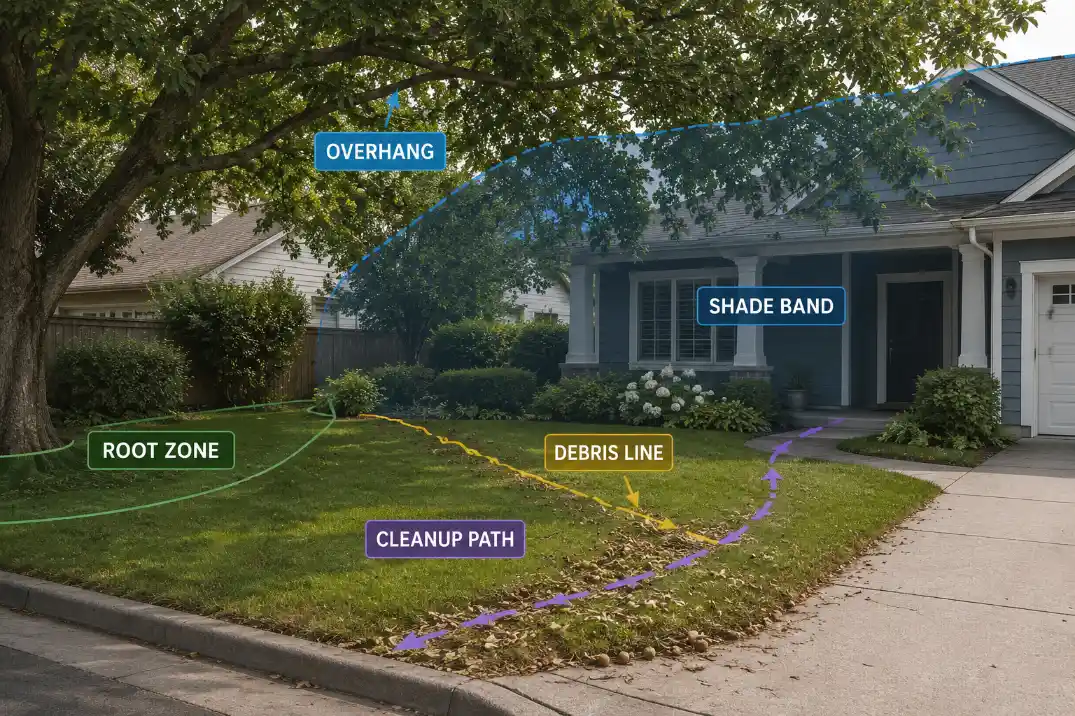
Use the yard pattern before deciding on the fix:
| Visible front yard symptom | Likely neighbor-tree pressure | Where it usually shows up | Practical response |
|---|---|---|---|
| Leaves return right after cleanup | Overhanging canopy and wind drift | Lawn edge, curb strip, walkway, driveway apron | Define a repeat cleanup zone instead of treating the whole yard equally |
| Thin or patchy grass | Shade band, damp soil, weak turf recovery | Under canopy edge or drip line | Stop forcing full-sun lawn expectations in that zone |
| Twigs, pods, or small branches in beds | Seasonal drop and canopy movement | Foundation beds, narrow border beds, fence lines | Simplify planting where debris gets trapped |
| Slick buildup after rain | Wet leaves, petals, algae-prone shade | Sidewalk, steps, front walk, driveway edge | Prioritize route clearing over cosmetic cleanup |
| Edging lifts or shifts near the boundary | Roots, soil movement, repeated debris pressure | Bed edges, fence lines, lawn borders | Treat it as a pressure edge, not just a loose edging problem |
| Plants keep struggling in one strip | Root competition, shade, dry pockets | Small beds near the canopy or trunk side | Adjust plant expectations or convert the weak zone |
| Pruning feels like the obvious fix | Boundary-sensitive tree issue | Property line, overhanging limbs | Slow down, check local rules, and avoid damaging the tree |
The point is to avoid fixing the prettiest symptom first. A messy bed can look like a planting issue when debris trapping is the real cause. A patchy lawn can look underfed when light is the real limitation. A shifting border can look badly installed when roots and repeated cleanup pressure are moving the line.
Leaf Drop, Twigs, and Seed Pods Create a Cleanup Zone, Not Just a Mess
Debris becomes a maintenance problem when it lands where the front yard has to stay usable. Leaves scattered across lawn are one level of work. Wet leaves on steps, a front walk, a driveway edge, or a sidewalk approach are a different priority.
Wind makes the pattern less obvious. A branch does not need to hang directly over a bed for that bed to collect debris. Leaves and seed pods can blow across the property line, hit a fence, porch wall, low hedge, or edging strip, then settle into the same narrow pocket.
That is why the mess often looks unfairly concentrated. One side of the front yard stays clean while the other side needs attention after every windy day.
If that same boundary is already hard to trim or keep straight, the tree pressure can make edging that keeps shifting near pressure zones feel like a weekly problem instead of a simple border detail.
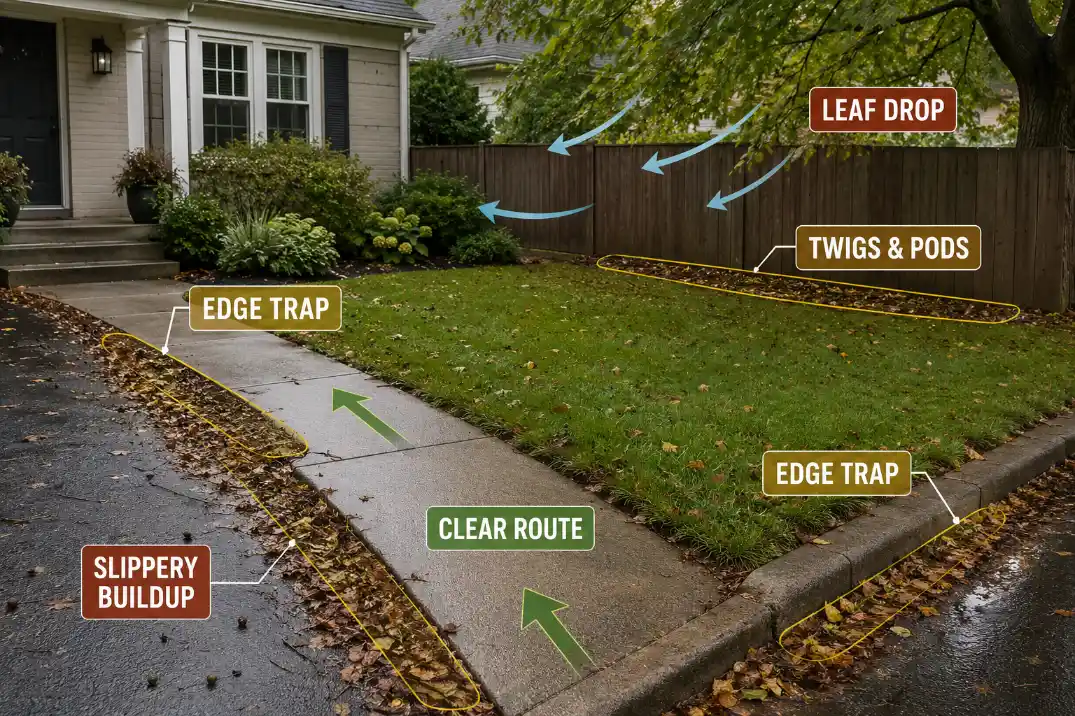
The practical move is to stop treating the whole front yard as one cleanup surface. Separate it into three zones: the route that must stay clear, the lawn or bed that can tolerate some seasonal debris, and the trap zone that needs a simpler shape.
The route comes first. Steps, walkways, driveway edges, and sidewalk approaches matter more than perfect lawn appearance because they affect footing and arrival. The trap zone comes next. If low shrubs, tight bed curves, or textured grasses catch every leaf, the planting may be making the tree problem harder to maintain.
The common mistake is chasing spotless conditions everywhere. Under a neighbor canopy, the better standard is targeted control: keep the entry route clean, reduce debris traps, and accept that some seasonal drop will repeat.
Shade From a Neighbor Tree Can Quietly Weaken the Lawn
Shade pressure is easy to misdiagnose because it looks like ordinary lawn failure. The homeowner sees patchy grass and reaches for seed, fertilizer, or more watering. But if the weak area lines up with the canopy edge, the lawn may be failing because it is being asked to perform like a sunny lawn in a shade-heavy zone.
The clue is shape. Grass under neighbor-tree pressure usually thins in a band, not randomly across the entire yard. It may weaken under the outer canopy, near the drip line, beside a driveway shade strip, or in the area that stays damp longest after rain.
Shade also changes moisture behavior. The surface can stay damp after rain while the root zone still struggles during hot weather because the tree is competing for water. That mixed signal makes repeated reseeding tempting, but it rarely solves the pressure if light and root competition have not changed.
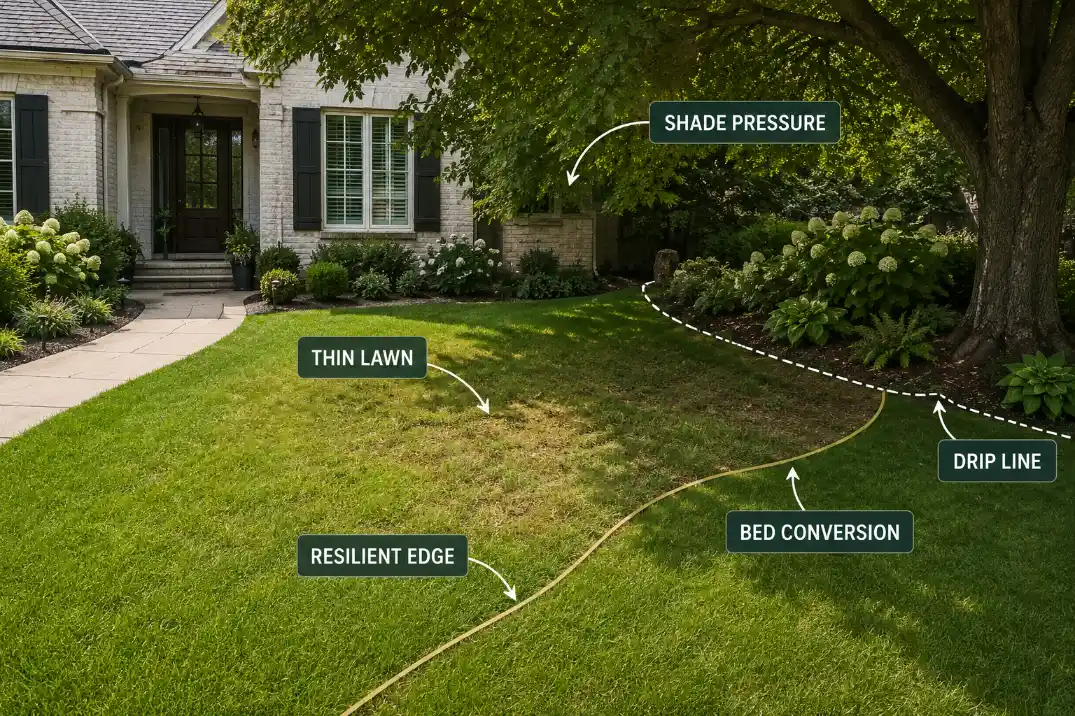
This is where the maintenance decision changes. If the same shaded strip keeps thinning, the question is not only how to repair the grass. It is whether that strip should still carry a lawn role at all.
That does not mean turning the whole front yard into a shade garden. It means not forcing the weakest strip to perform like the sunny lawn. When exposure is the real limitation, choosing plants that can handle the actual front yard exposure matters more than repeating quick lawn repairs.
Roots and Drip-Line Pressure Can Change How Beds and Edges Behave
Root-zone pressure usually shows up as behavior, not drama. The bed dries faster than nearby soil. New plants stay undersized. A border becomes harder to keep clean. The lawn edge near the boundary looks disturbed even after it has been reset.
Near a neighbor tree, the issue is often combined pressure. The same strip may receive less light, more debris, and more root competition. That is why plants near the canopy side can look uneven even when similar plants elsewhere in the front yard are fine.
The drip line matters because it marks the tree’s influence zone, not a tidy property-line problem. Under and near that area, moisture demand, shade, and debris drop often overlap.
Aggressive digging is the wrong instinct. Cutting, trenching, or chopping through roots can damage the tree and may create a bigger neighbor issue than the original maintenance problem. The safer maintenance response is usually to simplify the edge, reduce fussy planting, and avoid designs that require repeated digging in the pressure zone.
Flower Beds and Small Planting Areas Often Carry the Pressure First
Small front yard beds expose neighbor-tree pressure quickly because they have little room to absorb mess. A wide lawn can hide scattered leaves. A narrow bed beside the walkway cannot. Every pod, twig, and damp leaf sits on top of the planting and changes the look of the entrance.
This is why foundation beds, walkway borders, and narrow strips often become the most frustrating parts of the yard. They collect debris, receive uneven shade, dry out under root competition, and still have to look tidy from the street.
Repeated replanting is a warning sign. If annuals, small perennials, or low shrubs keep failing in the same strip, the problem may not be plant quality. It may be the combined pressure of shade, dry soil pockets, falling debris, and cleanup disturbance.
In that case, small front yard plant beds that are already hard to maintain need a simpler role, not just another planting attempt.
A better bed under neighbor-tree pressure usually has fewer moving parts. Fewer delicate plants. Fewer tight pockets. Fewer edges that trap leaves. The design may look simpler, but it often reads cleaner because it is built around the pressure instead of fighting it every week.
The Neighbor Boundary Changes What a Realistic Fix Looks Like
The boundary is what makes this different from maintaining a tree in your own yard. You may be able to clean, adjust the lawn, simplify beds, or talk with the neighbor, but pruning should not be treated as a casual shortcut.
Editorial note: The most reliable fix is often not controlling the tree. It is adjusting the front yard zone that receives the pressure while handling pruning questions carefully, locally, and without damaging the tree.
That puts the first layer of action inside your own yard: keep the walkway and driveway edge clear, reduce debris traps, and stop expecting weak lawn areas to behave like sunny lawn. The second layer is communication. If a limb is dropping larger branches, rubbing a roofline, or creating a clear safety concern, a calm conversation usually belongs before escalation.
The third layer is rule awareness. Tree pruning rules can vary by city, county, HOA, utility easement, and property condition. This article is not legal advice, but the maintenance decision should still respect that uncertainty.
Avoid actions that could damage the tree, destabilize a limb, or turn a manageable front yard problem into a neighbor dispute.
Build the Yard Around the Pressure You Cannot Fully Remove
The best response depends on which pressure keeps returning. A debris problem needs a cleanup zone. A shade problem needs different lawn expectations. A root-zone problem needs less digging and simpler planting. A boundary problem needs caution before pruning becomes the default answer.
For leaf drop and seed pods, the practical standard is not “no debris.” It is “debris does not control the entry route.” Keep the path, steps, driveway edge, and sidewalk approach readable first. Let lower-priority lawn or bed zones carry some seasonal mess without forcing daily perfection.
For shade and thinning lawn, decide whether that strip still deserves to be grass. If it keeps failing in the same pattern, convert the weakest area or reduce its visual responsibility. A resilient edge can look more intentional than a patchy lawn that is constantly being repaired.
For planting beds, remove the features that make cleanup harder. Dense low plants, tight curves, and debris-catching grasses may look good when freshly installed but become frustrating under canopy drop. This is where ornamental grasses that trap debris instead of simplifying maintenance can quietly add work instead of reducing it.
For roots and boundary pressure, keep the response conservative. Avoid repeated digging near the pressure zone. Avoid dramatic pruning assumptions. Avoid turning every symptom into a conflict with the neighbor. The front yard gets easier to manage when each zone has a realistic job: clear route, resilient lawn, simplified bed, cautious boundary.
A neighbor tree does not have to ruin the front yard, but it does change the maintenance math. The cleanest yards under outside canopy pressure are rarely the ones trying to erase every leaf. They are the ones that know where the pressure lands, protect the visible routes, and stop asking weak zones to perform jobs they cannot keep.
For general pruning principles and tree-health caution, see the University of Minnesota Extension guide to pruning trees and shrubs.