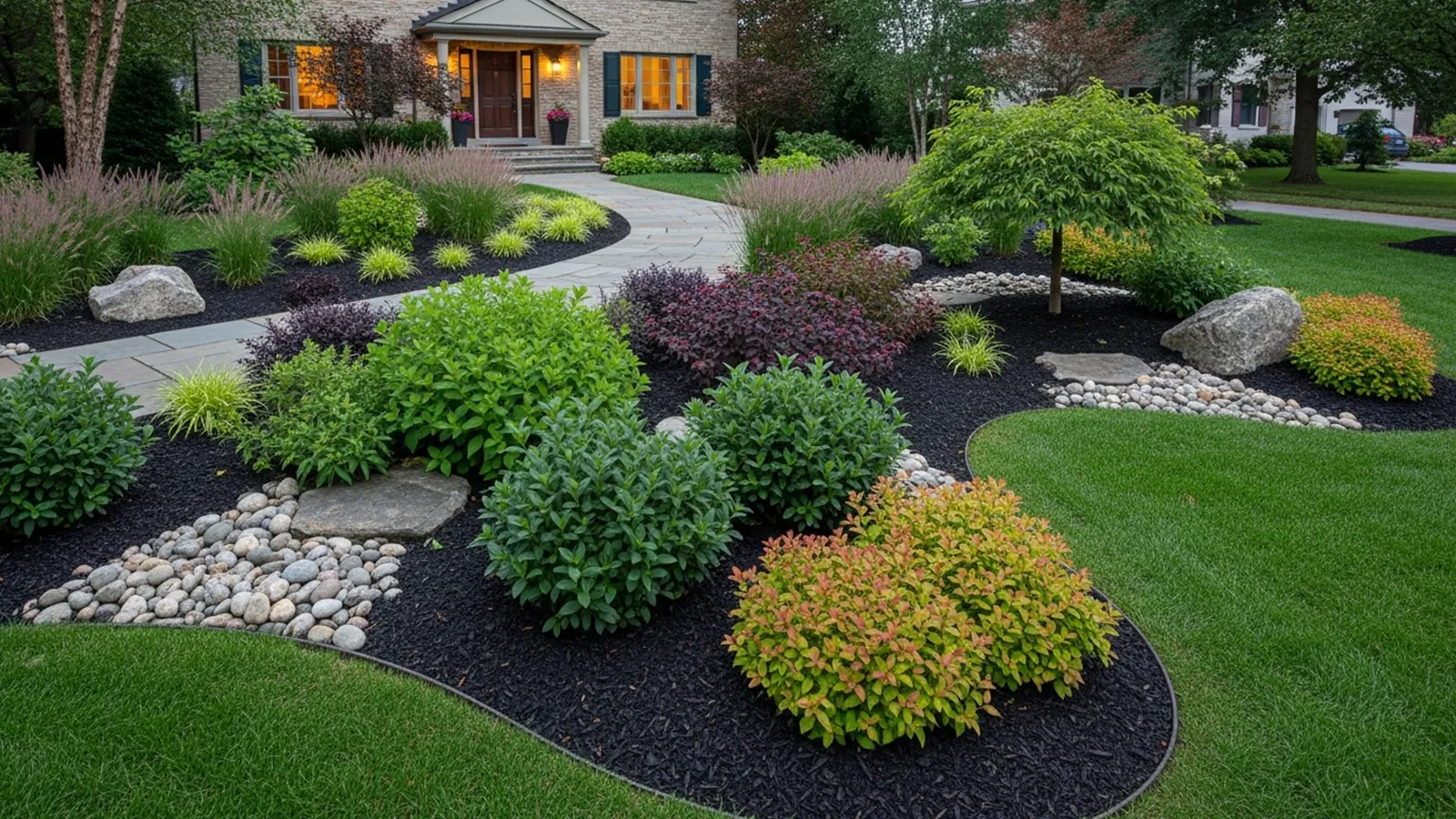
A native-planted front yard usually gives off a certain calm early on. The space stops looking temporary and starts feeling settled. That shift often shows up in small, everyday details.
These are the moments people notice first:
-
Plants hold their shape through heat or dry spells.
-
Growth feels even instead of patchy.
-
The yard looks finished without constant touch-ups.
Over time, those signals matter more than color or novelty. The yard feels steady rather than in progress, which quietly strengthens first impressions.
When native landscapes feel messy, the problem rarely comes from the plants themselves. It usually comes from a missing visual framework. Once structure is in place, native plants read as intentional instead of loose or random.
Why Native Plants Perform Better in Front Yard Conditions
Front yards deal with stress in very visible ways. Soil gets compacted, heat reflects off pavement, and watering is rarely consistent. Native plants are already tuned to these pressures, which is why they tend to hold up better.
That resilience shows itself in familiar ways:
-
Leaves recover faster after heat.
-
Plants bounce back after missed watering.
-
Growth stays more even across the season.
Deeper roots play a major role here. They help plants stabilize sooner and reduce the highs and lows that make a yard look uneven. Over time, the space feels more predictable instead of fragile.
Using Structure to Guide a Natural Plant Palette
A natural plant palette only works when the eye can understand the layout quickly. Structure gives the yard that clarity. Without it, even healthy plants can feel scattered.
Structure usually comes from a few consistent moves:
-
Clear bed edges that define limits.
-
Repeated plant groupings.
-
Obvious transitions between lawn, path, and planting.
Front yards are often seen in passing. Repetition helps the layout register without effort. When the same shrubs or grasses appear in multiple places, the space feels calmer and easier to read.
Hardscape supports this quietly. Walkways, edging, and subtle grade changes hold the framework together so plant forms don’t have to do all the work.
Choosing Native Plants That Support Visual Balance
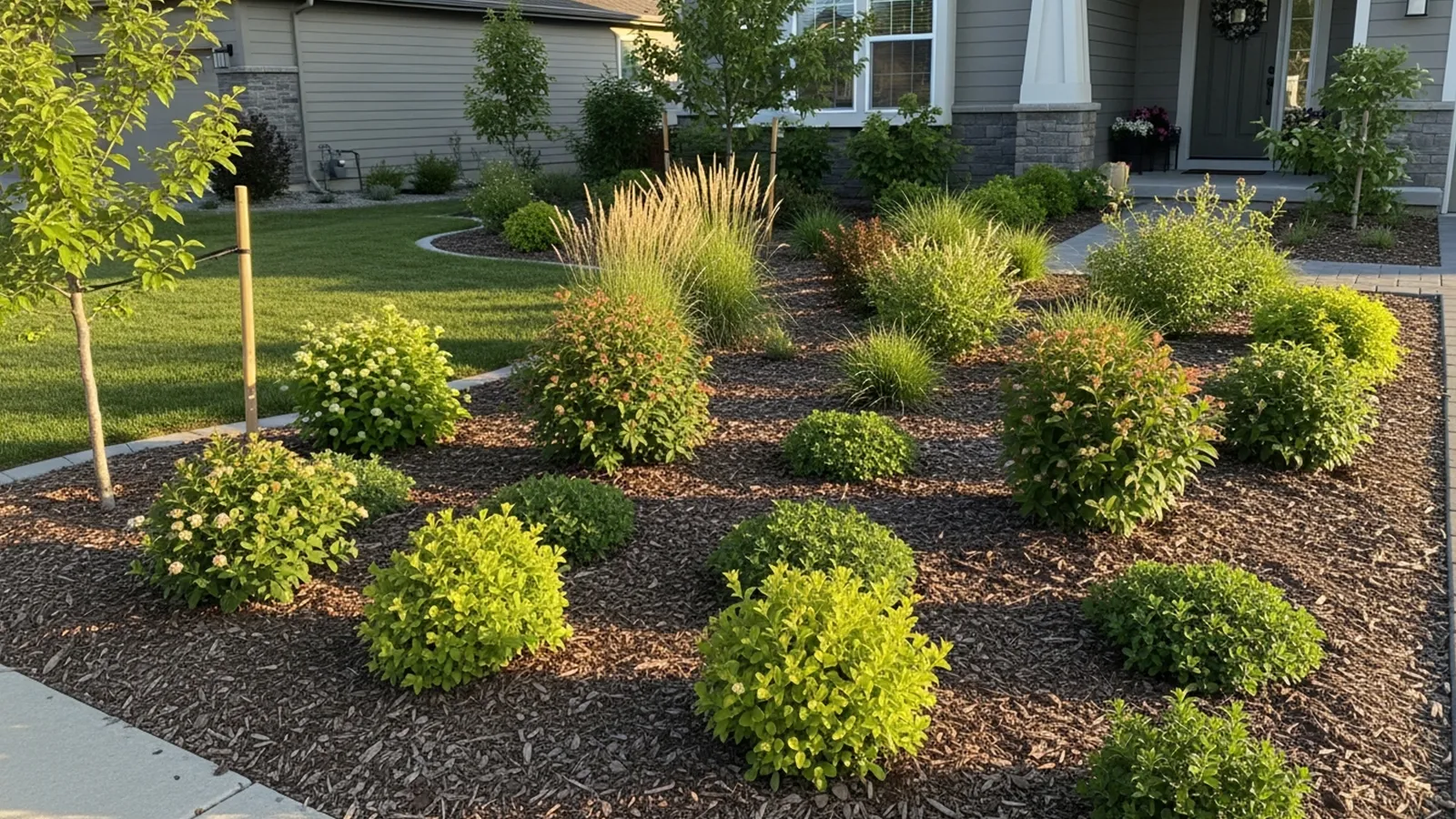
Not every native plant behaves well in a front-facing space. Some spread aggressively, while others change dramatically through the seasons. Visual balance depends on choosing plants that stay readable over time.
Plants tend to feel calmer when they are used this way:
-
Shrubs with steady form near entrances.
-
Grasses and perennials planted in clusters.
-
Limited variation within each zone.
Mature size matters more than planting-day appearance. A plant that seems restrained at first can dominate later if spacing is ignored. Designing for full growth keeps the yard proportional year after year.
Achieving Low Maintenance Without Visual Gaps
Bare soil draws attention immediately in front yards. Even intentional gaps can read as neglect. Native landscapes feel more complete when the ground looks covered and settled.
Spacing decisions shape how the yard ages:
-
Plants set too close compete and weaken.
-
Plants set too far apart leave empty pockets.
-
Balanced spacing allows gradual, even coverage.
Mulch reinforces this balance. It protects soil, softens transitions, and helps the yard look finished. As soil conditions improve, the landscape asks for less attention without losing density.
Supporting Curb Appeal Through Order and Restraint
A front yard feels welcoming when it is easy to understand at a glance. Clear layout and restrained plant choices do more for curb appeal than decoration. Native plants support that clarity when used deliberately.
When a front yard is planned around visual order and plant discipline, curb appeal becomes a byproduct of the layout rather than something that requires ongoing effort.
This approach shows how front yard landscaping choices can improve curb appeal without turning maintenance into a constant task.
The difference between refined and unfinished native yards usually comes down to a few basics:
-
Consistent spacing.
-
Repeated forms.
-
Clear edges.
Long-Term Stability of Native Front Yard Landscapes
Native front yards tend to improve quietly over time. Roots deepen, soil settles, and the system becomes more self-supporting. Seasonal changes feel expected instead of disruptive.
Small imperfections blend in rather than standing out. That reduces the urge to intervene constantly. Over the long term, native plants provide consistency, allowing the front yard to maintain its presence without ongoing correction.
Managing Growth and Seasonal Change in Native Front Yards
Seasonal change becomes noticeable quickly in native front yards. Plants don’t hold a fixed look from month to month, and that variation shows up in everyday use. A space that feels open in early summer can feel fuller by late season, while winter can expose structure that was hidden before.
These shifts are usually felt in simple ways:
-
Grasses grow taller and soften edges.
-
Flowering cycles come and go in waves.
-
Dormant periods leave some areas visually quieter.
Designing with these patterns in mind prevents the yard from feeling uneven. Mixing plants that hold structure with those that change more dramatically keeps the space readable across the year.
Controlling Spread Without Constant Correction
Some native plants spread once they settle in. In a front yard, that movement becomes noticeable fast, especially near walkways and lawns. The goal is not to stop growth, but to keep it contained.
Control usually comes from physical cues rather than frequent trimming:
-
Clear edges signal where plants should stop.
-
Hardscape borders slow encroachment.
-
Grouping keeps spread visually contained.
When spreading plants are clustered, their growth feels intentional instead of messy. The yard stays dense where it should and clear where it needs to remain open.
Balancing Wildlife Activity With Everyday Comfort
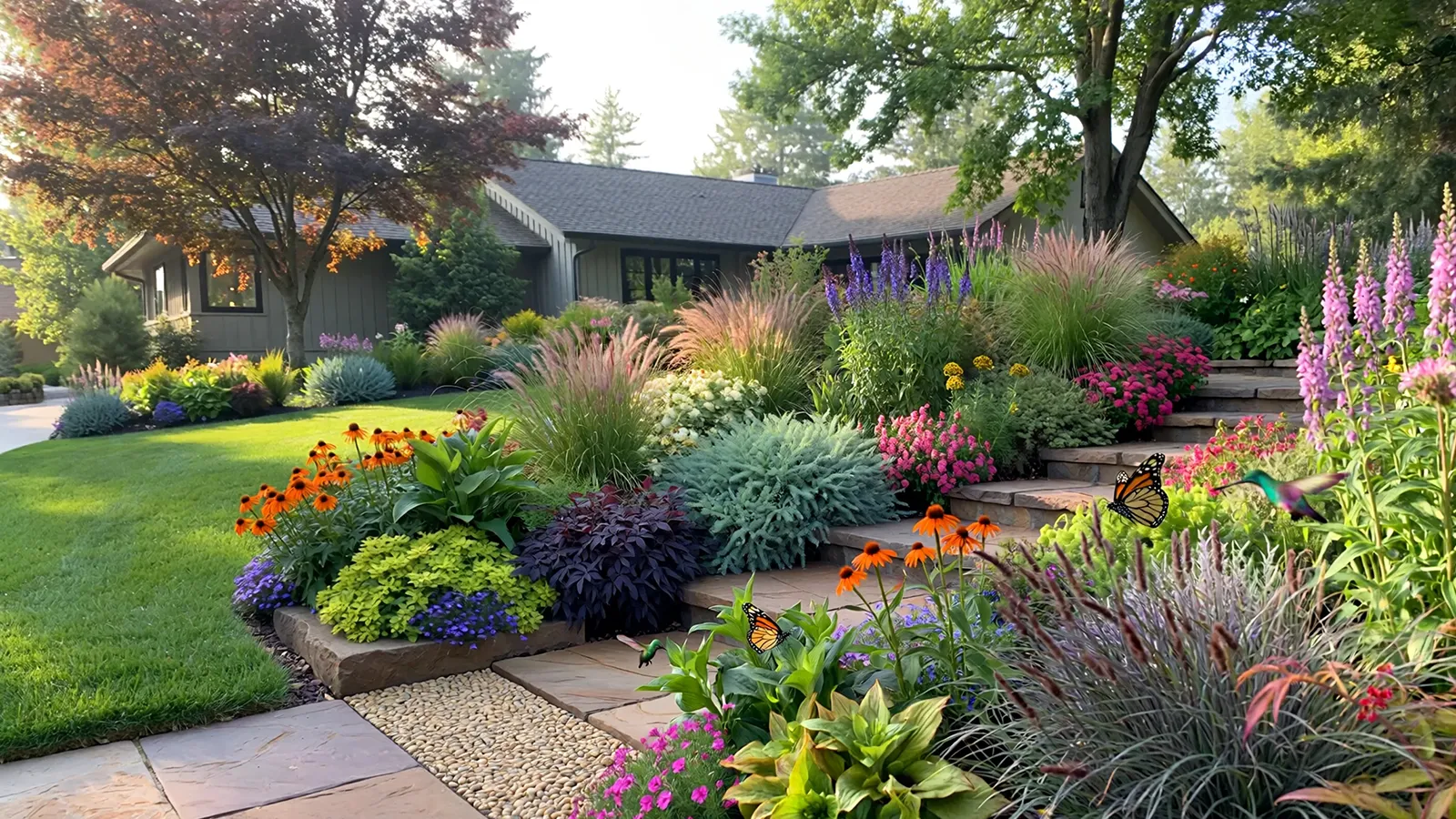
Native plants naturally attract birds, insects, and pollinators. In front yards, this activity is often visible and constant. When handled well, it adds life rather than distraction.
Comfort depends on placement:
-
High-activity plants work better away from doors.
-
Clear paths reduce hesitation near movement zones.
-
Open sightlines keep the space feeling approachable.
Order changes how wildlife is perceived. When edges are trimmed and circulation is clear, activity feels like part of a managed system rather than a disruption.
Reducing Maintenance Through Layout Choices
Maintenance effort is shaped more by layout than by plant type. Even low-maintenance plants become work when beds are awkward or access is limited. Thoughtful layout decisions reduce effort quietly over time.
Layouts that age well usually share a few traits:
-
Simple bed shapes that are easy to reach.
-
Clear paths for moving tools or mulch.
-
Planting zones that are easy to monitor.
When access is straightforward, small issues get noticed early. This prevents minor problems from turning into large corrections later.
Preventing Native Front Yards From Feeling Unkempt
Native landscapes can feel neglected if visual signals of care are missing. In front yards, perception matters as much as plant health. Order reassures viewers before details register.
The strongest signals are simple:
-
Crisp transitions between beds and lawn.
-
Consistent plant heights within zones.
-
Repeated forms instead of scattered accents.
These cues make relaxed planting feel intentional. Without them, even healthy plants can read as uncontrolled.
Coordinating Plantings With Walkways and Access
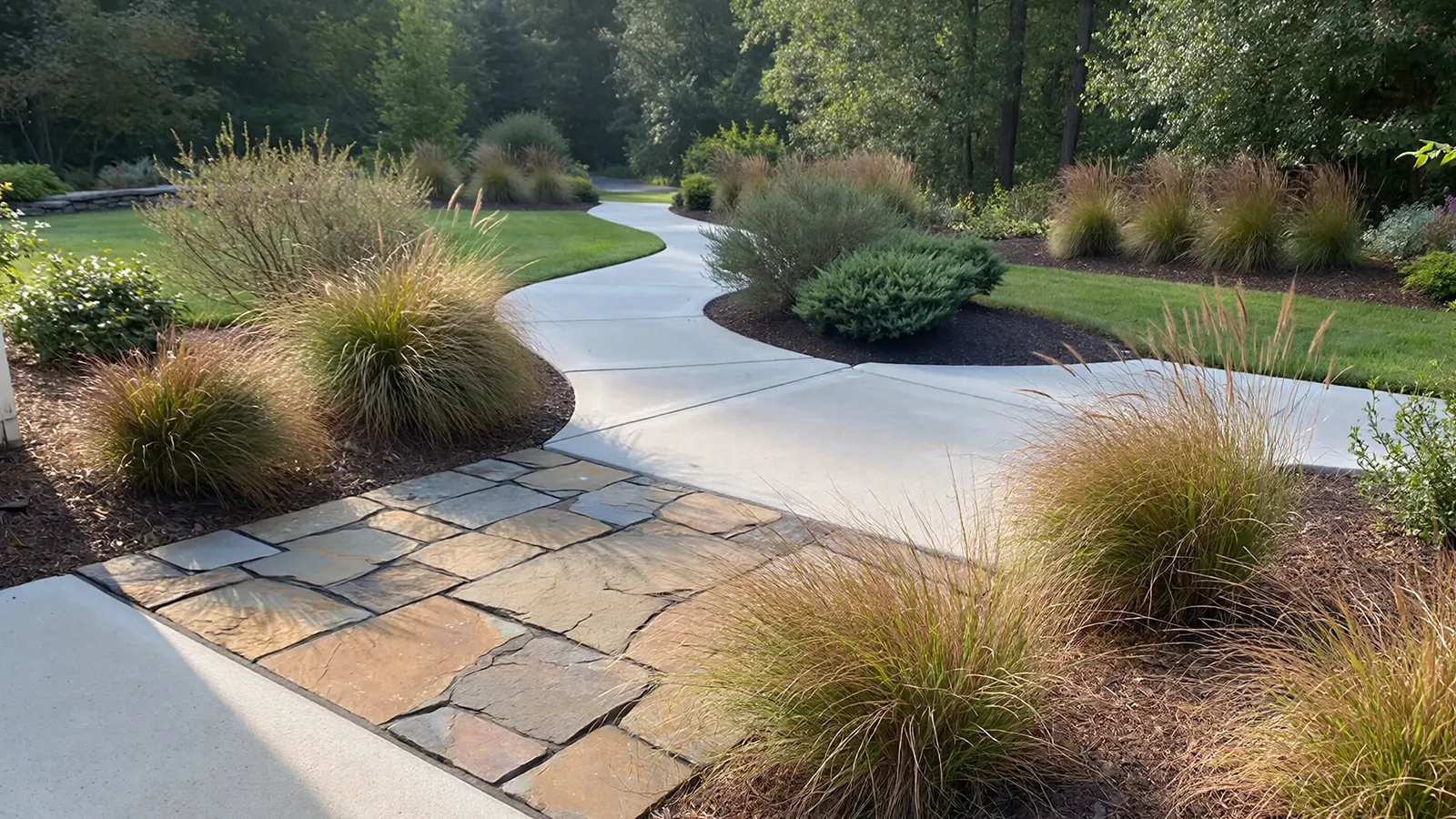
Movement through the front yard should feel obvious and comfortable. Native plants should frame paths, not crowd them. Clearance becomes more important as plants mature.
Visibility depends on placement:
-
Taller plants belong farther from entrances.
-
Lower plants keep walkways open.
-
Gradual height changes avoid sudden visual blocks.
When plants and hardscape support each other, the yard stays usable as it grows. The space feels welcoming rather than something to navigate around, even as seasonal change becomes more pronounced.
Long-Term Planning for Native Front Yard Landscapes
A native front yard often feels quieter than expected in its first year. The space may look calm, even slightly restrained, which can feel unfamiliar if faster results were expected. That early stillness is usually a sign that the landscape is stabilizing below the surface.
This phase tends to show itself in a few recognizable ways:
-
Plants invest more in roots than visible growth.
-
Open areas feel deliberate rather than unfinished.
-
Change happens gradually instead of week to week.
As seasons pass, these early conditions allow the yard to mature evenly. Growth fills in where it should, and the original layout holds without needing redesign.
Adjusting Native Plantings as the Yard Evolves
No native front yard stays perfectly balanced without small shifts. Some plants outperform expectations, while others respond differently to shade, moisture, or heat. These changes become noticeable through everyday use rather than sudden failure.
Adjustments usually appear as subtle corrections:
-
A cluster becomes denser and needs thinning.
-
One planting area gains more visual weight than planned.
-
Seasonal growth shifts emphasis across the yard.
Responding early keeps the system stable. Small changes preserve the original intent and prevent the space from feeling reactive or patched together later.
Using Native Plants to Define Boundaries and Zones
Front yards feel more comfortable when their layout is easy to read. Native plants can create this clarity without fences or heavy structure. Differences in height and density naturally guide movement and attention.
Clear zones are often shaped by simple contrasts:
-
Lower plants along walkways and driveways.
-
Taller groupings near corners or property edges.
-
Consistent plant types within each zone.
When zones are legible, the yard feels organized even as plants shift and mature. The space reads as intentional rather than blended into one mass.
Managing Perception Within the Neighborhood Context
A front yard is always part of a shared visual environment. Even a healthy native landscape can feel out of place if it ignores surrounding scale and rhythm. Perception forms quickly, often before details are noticed.
Successful alignment usually comes from:
-
Respecting common setbacks and proportions.
-
Avoiding abrupt visual jumps from neighboring yards.
-
Keeping edges and circulation visibly maintained.
These signals help native plantings register as a deliberate choice rather than an unmaintained one.
Integrating Seasonal Interest Without Visual Overload
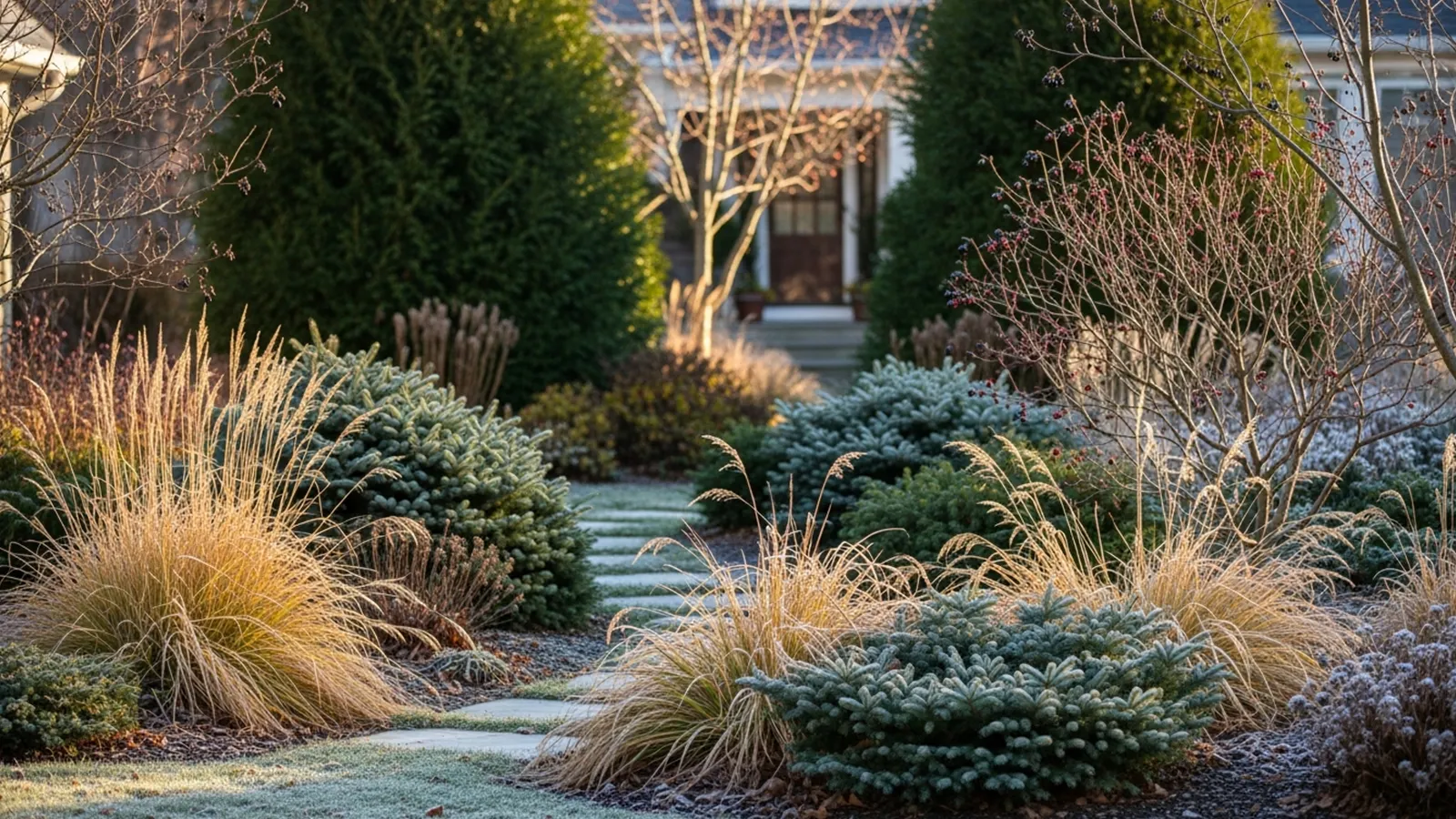
Seasonal change is one of the main strengths of native plants, but it can overwhelm small front yards if everything peaks at once. The key is allowing variation to sit within a steady framework. Structure absorbs change so it feels rhythmic instead of chaotic.
Balance is usually maintained through a few consistent elements:
-
Evergreen or semi-evergreen anchors.
-
Staggered bloom and color timing.
-
Repeated forms that remain visible year-round.
Limiting overlap keeps the eye moving calmly through the space. The yard changes with the seasons but never feels visually crowded.
Evaluating Success Beyond First Impressions
The success of a native front yard becomes clearer over time. Early impressions only tell part of the story because soil, roots, and plant relationships are still forming. Different signals begin to matter as the system settles.
Long-term success is often reflected in:
-
Fewer weeds each season.
-
Reduced need for watering or replacement.
-
A layout that feels easier to live with year after year.
As layers mature, the yard gains depth rather than clutter. What once felt simple begins to feel complete.
Native Front Yards as Living Systems
Native front yards behave more like living systems than fixed designs. Plants respond to weather, soil, and each other in ways that cannot be fully controlled. Design works best when it allows for that movement rather than resisting it.
Flexible layouts support this approach:
-
Accessible beds make small adjustments easier.
-
Clear structure absorbs natural change.
-
Tolerance for variation reduces long-term friction.
When these elements are in place, the yard becomes quieter to manage and clearer to read. It supports daily use, seasonal change, and neighborhood context without constant correction.
native plant guidance: https://www.usda.gov/