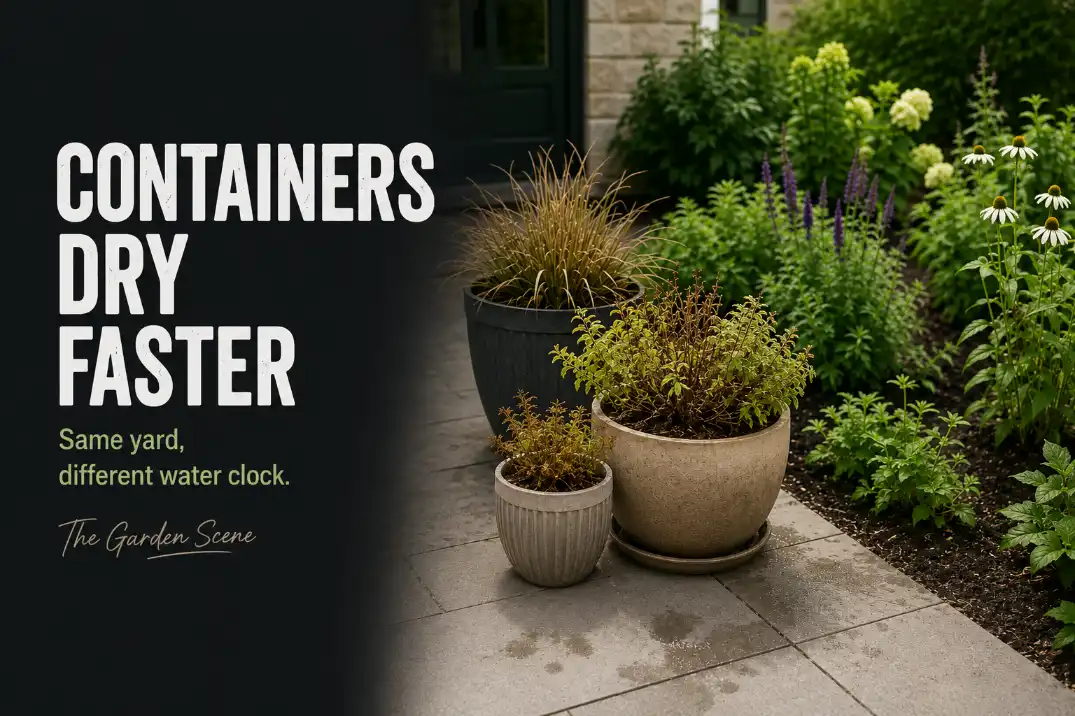
The common mistake is judging container plants by the bed beside them.
A nearby ground bed can look steady while the containers on the patio edge are already running dry. That does not mean the container plants are weaker or that the whole yard needs a longer watering cycle. It means they are living in a different moisture system.
A ground bed has surrounding soil, cooler mass, and room for roots to search. A container has limited soil volume, exposed sides, drainage holes, and often more reflected heat from paving, walls, or house siding.
The practical decision is not “How often should this yard be watered?” It is “Which root zones dry independently and need their own check?”
Once containers are treated as separate root zones, the watering problem gets easier to read. You stop relying on the lawn schedule, group containers by drying speed, and fix the setup only when the container itself is making water loss worse.
Why Containers Lose Water Faster Than Ground Beds
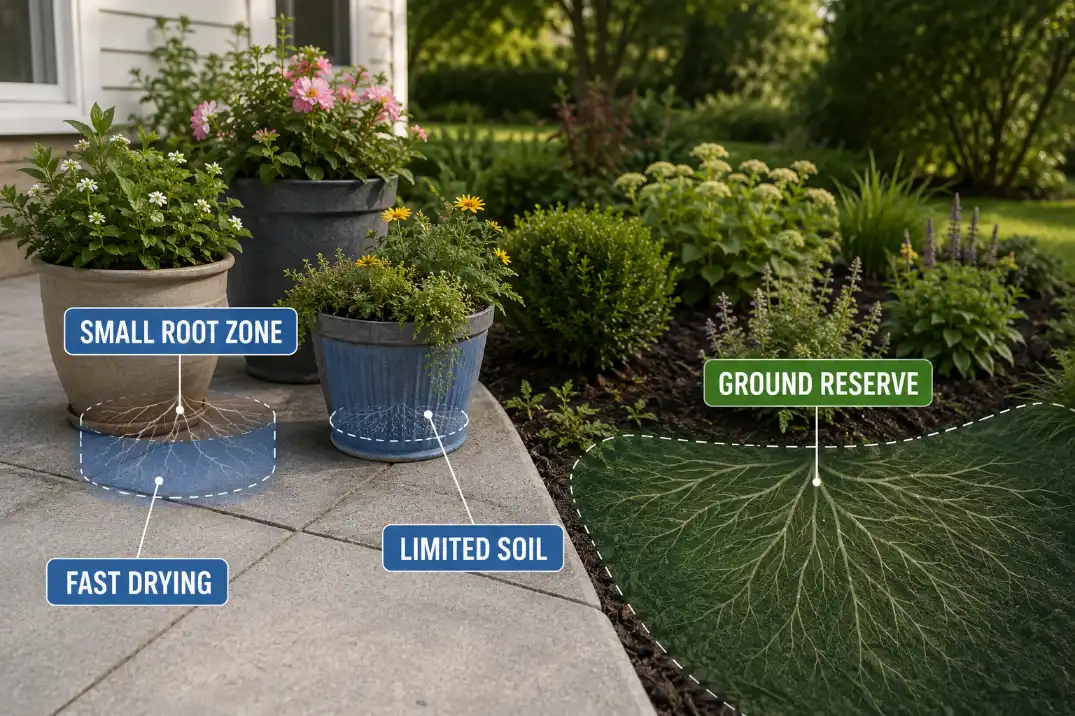
The first difference is storage. A ground bed has a larger soil body around the plant, so moisture can remain below the surface even after the top layer looks dry.
A container only has the soil volume inside the pot. When that volume dries, the roots cannot pull from the bed beside it.
That limited volume also heats and cools faster. The sides of the container are exposed to sun, warm air, wind, and nearby hard surfaces. Ground soil is partly insulated by surrounding soil. A pot is not.
Drainage holes add another important distinction. They are necessary because container roots need oxygen and excess water needs a way out. But good drainage also means a container does not hold water like a deeper planting bed.
Water may move through the pot quickly, especially when the mix is dry, loose, root-filled, or separated from the sides.
| Watering factor | Ground bed behavior | Container behavior |
|---|---|---|
| Soil volume | Larger soil mass holds moisture longer | Limited pot volume dries faster |
| Root reach | Roots can move into surrounding soil | Roots are confined inside the container |
| Heat exposure | Soil is partly insulated by the ground | Pot sides heat from air, sun, and surfaces |
| Drainage | Water can spread through surrounding soil | Excess water exits through drainage holes |
This is why a bed can still be fine while the container next to it needs attention. They may share the same view, but they do not share the same moisture reserve.
How Patio Heat and Reflected Sun Change Container Watering
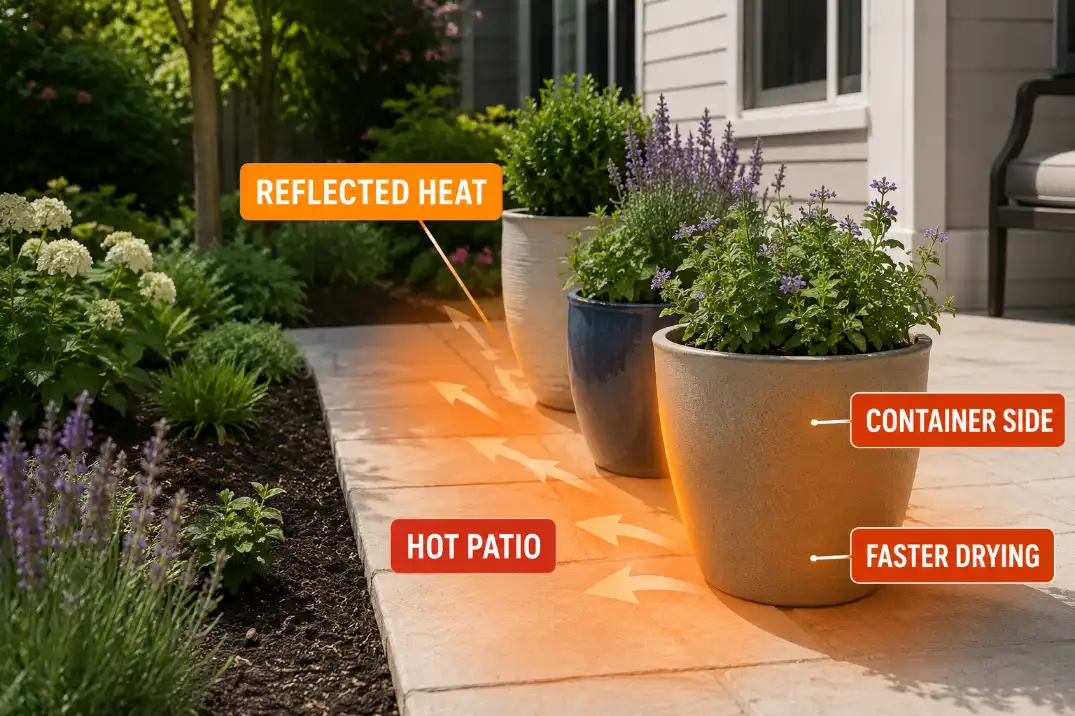
A container’s location can make the drying gap wider. Pots near patios, driveways, walls, and light-colored paving often lose moisture faster than pots surrounded by planting beds because heat reaches the root zone from more than one direction.
A container on concrete or pavers can warm from below. A container near a wall or house siding can receive reflected light and stored heat. A dark container can absorb more heat along the sides. Even if the plant itself looks partly shaded, the root zone may still be warmer than the soil in the nearby bed.
That is why patio containers can decline in a pattern that feels inconsistent. The bed beside the patio looks fine. The lawn still looks green. But the pot wilts, crisps at the edges, or needs water again after a hot afternoon.
For a broader patio context, reflected heat around hard surfaces can change how outdoor spaces behave, not just how they feel underfoot. That same exposure pressure applies to containers placed along hot patio edges.
The afternoon check matters more than the morning look
A container can look fine in the morning and be stressed by late afternoon. Morning shade does not cancel a hot western wall, a sun-baked patio slab, or several hours of reflected heat later in the day.
The better test is direct and local: check the container soil itself. If the soil below the surface is dry and the pot feels light, the container is giving you better information than the bed beside it.
Why Containers Should Not Follow the Lawn Schedule
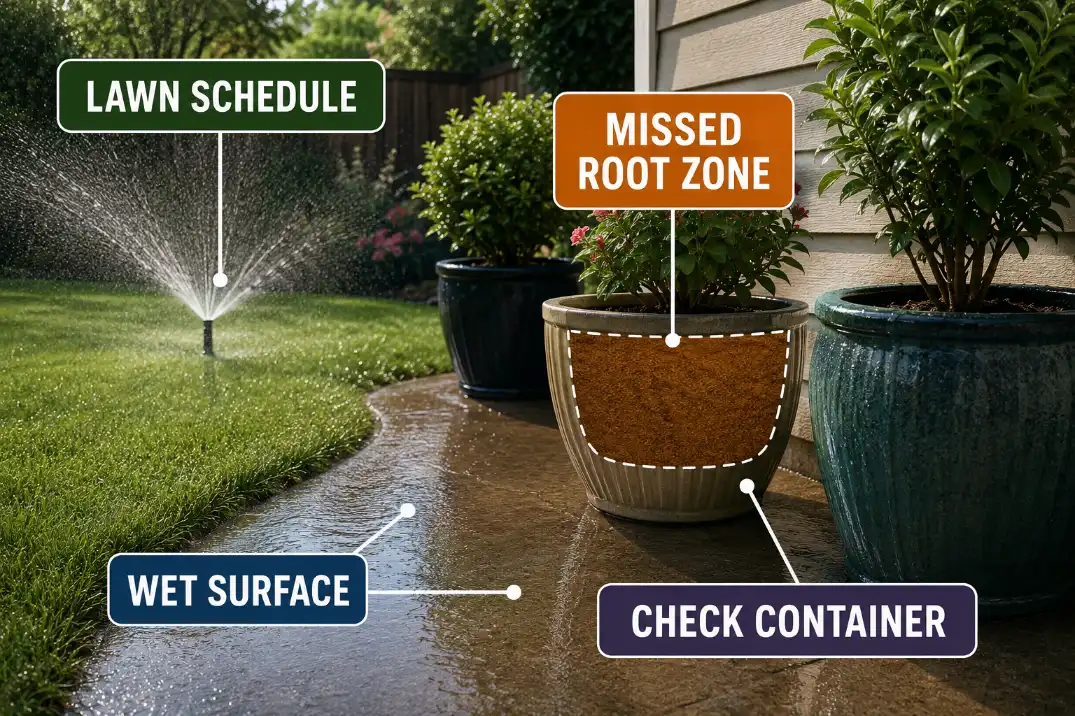
A lawn schedule is designed for broad soil coverage, not small raised root zones. When containers rely on the sprinkler cycle, the yard may look watered while the potting mix stays unevenly dry.
Sprinklers can wet leaves, splash the container wall, dampen the patio, or hit only one side of the pot. That visual wetness is misleading. The root ball may still be dry in the center, especially if the container is dense with roots or the mix has pulled away from the sides.
The opposite mistake is extending the whole lawn cycle because the containers look thirsty. That may soak turf, beds, walkways, or patio edges without solving the container problem. The stronger move is targeted watering: water the container soil, not the whole surrounding zone.
This is the same logic behind watering new plants without soaking the whole yard. The root zone that needs water is often smaller and more specific than the area around it. Containers make that separation even clearer because their roots are physically cut off from the ground.
Decision Check:
A container should not be considered watered just because the sprinkler ran. Check the potting mix directly, below the dry surface layer, and treat that pot as its own watering zone.
Common Mistake Box: Letting the Lawn Decide for the Pots
- The lawn looks fine, so the containers are assumed to be fine.
- The sprinkler runs, so the container soil is assumed to be soaked.
- The whole zone is extended, even though only the containers need targeted water.
Mixed yard schedules can create the same problem at a larger scale. When different root zones need different amounts of water, sprinkler zones can waste water in mixed backyards instead of solving the specific dry area.
How to Group Containers by Water Demand
Container grouping should be based on drying speed before appearance. A neat row of pots may look organized, but if each pot sits in a different heat, size, and exposure condition, it is not one watering group.
The useful filter is behavior. Which containers dry first after normal watering? Which ones stay damp longer? Which ones sit on hot paving or catch afternoon reflection? Grouping by those signals reduces two opposite mistakes: missing the thirsty pots and overwatering the slower ones.
Group by conditions, not by color
A practical grouping system looks at container size, sun exposure, surface heat, and how quickly the potting mix dries. You do not need a plant species list to start. You need to notice which containers keep asking for water sooner.
| Container group | What usually controls watering | Better habit |
|---|---|---|
| Small pots | Limited soil volume | Check first during heat |
| Hot-surface pots | Patio or reflected heat | Check after hot afternoons |
| Sheltered large pots | More soil and less exposure | Avoid watering just because smaller pots need it |
| Mixed-demand clusters | Different drying speeds in one area | Split into separate watering checks |
This is also why container placement should not be judged only by how it frames a patio or entry. A pot that looks good in a hot corner may need a routine that the homeowner will not realistically keep. When that happens, the design is already creating a watering problem.
When the Container Setup Is the Real Problem
If a container dries out too fast no matter how carefully it is checked, the setup may be working against the plant. At that point, adding more water is only a partial fix.
A very small container has less soil reserve. A dark container in full sun may heat faster. A pot sitting directly on hot paving may dry from the top, sides, and bottom zone. A root-bound plant may shed water through the mix without holding enough moisture where the roots need it.
Drainage can also be misread. Drainage holes are not the problem; containers generally need them. The problem is assuming that water draining out the bottom proves the whole root zone was hydrated.
Very dry potting mix can let water move through quickly, especially if the root mass is dense or the soil has pulled away from the container wall.
Before changing the whole yard schedule, ask the more useful setup questions:
- Is the container too small for the heat it receives?
- Is the pot sitting on a hard surface that stays hot into the evening?
- Is the sprinkler wetting the outside but missing the soil?
- Are fast-drying containers mixed with slower-drying ones?
- Is the root ball no longer absorbing water evenly?
Those checks keep the fix targeted. The answer may be a better watering habit, a different grouping, a cooler placement, or a container setup adjustment. It should not automatically be a longer lawn cycle.
When container plants dry out faster than nearby beds, do not solve it by making the whole yard wetter. Treat the container as its own root zone with its own soil volume, heat exposure, drainage behavior, and drying speed.
Once that separate water clock is clear, the watering decision becomes simpler: check the pot, water the root zone, and stop asking the ground bed schedule to manage a container it cannot read.
For a neutral horticulture reference on container watering and drainage, see the University of Minnesota Extension guide to fertilizing and watering container plants.