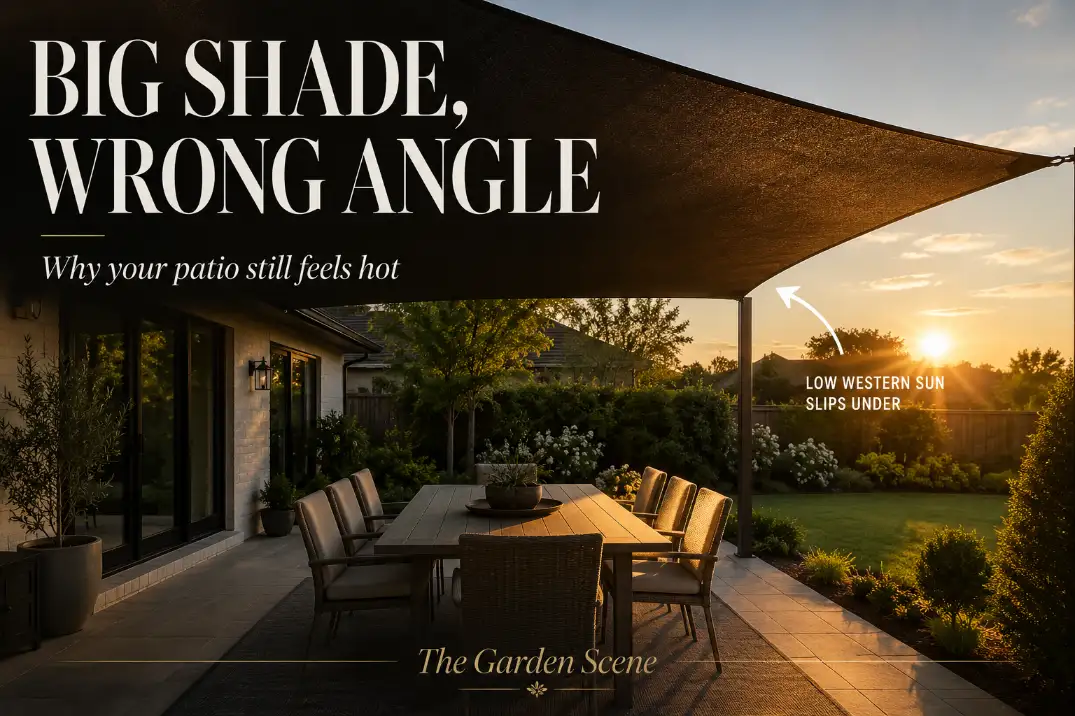
The best shade sail or outdoor canopy for a hot, sunny patio is the one that matches your actual sun angle, seating layout, wind exposure, and tolerance for permanent hardware.
The wrong buy usually fails in one of three ways: it shades the table but not the chairs, blocks airflow while technically creating shade, or solves the sun problem while making the patio harder to move through.
Start with the time of day. If your patio feels worst from 11 a.m. to 2 p.m., overhead shade usually helps. If it becomes uncomfortable after 3 p.m., low side sun is probably the real issue.
If the shaded area still feels stale after 20–30 minutes, ventilation matters as much as coverage. For dining or lounge seating, the useful shadow should extend at least 18–24 inches beyond occupied chair backs during your normal use window.
Quick Answer: Which Shade Category Should You Browse First?
For a fixed dining or lounge area, start with a breathable HDPE shade sail. It keeps floor space open, can be aimed at the actual seating zone, and usually feels cooler than a low solid canopy because air can move through and around it.
For renters, weekend use, parties, or changing furniture layouts, start with a vented pop-up canopy. It is the practical choice when you need shade without drilling, posts, or a layout commitment.
For a more finished seasonal patio zone, start with a pergola-style outdoor canopy with a vented or retractable top. It works best when you want the patio to feel more designed, but a full roof would be too much.
This guide does not rank individual brands. It narrows the product category first, so you do not waste time comparing products that solve the wrong patio problem.
The mistake is buying by fabric size alone. A 12-foot cover can still fail if the shadow lands in the wrong place, the legs block the path, or the top traps heat over the seating area.
The First Category to Rule In or Out
Breathable shade sails are best for fixed patio zones
A breathable HDPE shade sail is the strongest first choice when your patio layout does not change much. If the dining table, outdoor sofa, or lounge chairs stay in one predictable place, the sail can be aimed at that comfort zone instead of wasting coverage over unused concrete.
This is where shade sails beat many canopies. There is no center pole, no umbrella base, and no four-leg frame sitting inside the walking path. On small and medium patios, that matters as much as the shade itself.
Look for knitted HDPE fabric, reinforced corners, stainless or corrosion-resistant hardware, and a shape that fits the actual seating footprint. Many patio shade sails advertise UV-blocking performance in the 90% range, but placement, breathability, and shadow direction still matter as much as the rating.
A triangle sail works well for selective shade over a small seating corner. A rectangle or square sail is better for dining tables, sectionals, or lounge zones where the shadow needs to be broader and more predictable.
Many installs need a visible slope, often around 12–18 inches from high side to low side on smaller residential setups, but the product instructions and drainage path should decide the final pitch.
The main skip condition is weak anchoring. A shade sail is not a loose fabric sheet; it is a tensioned surface. If you cannot mount into strong posts, masonry, or structural framing, do not force the sail just because it looks cleaner than a canopy.
For large sails, house-mounted hardware, or exposed windy patios, treat the anchor system as a structural decision and follow manufacturer instructions or local professional guidance.
If your seating area stays in one place and your anchor points are strong, a breathable HDPE shade sail is the category to browse first. It gives you fixed overhead shade without adding a pole, base, or canopy legs where people need to move.
BEST FIRST CHOICE FOR FIXED PATIOS
Breathable HDPE Shade Sail
Best for patios where the dining or lounge area stays in one predictable place. It fits hot patios because it creates overhead shade while still allowing air to move through the fabric. Look for knitted HDPE fabric, reinforced corners, stainless hardware, and a size that shades the chairs — not just the table.
🔴 SHOP breathable HDPE shade sails
Vented pop-up canopies are best when flexibility matters
A vented pop-up canopy is the better first buy when the shade need changes by weekend, season, or event. It is useful for renters, temporary seating, kids’ play areas, cookouts, and patios where permanent anchors are not realistic.
A common 10×10 canopy gives about 100 square feet of overhead coverage, but the full footprint is not always comfortable shade. When the sun is low, the best shade sits closer to the center, and the outer edges may still leave people exposed. That does not make the canopy bad; it just means you should buy it for flexible temporary comfort, not precision shade.
The buying filters are straightforward: vented roof, sturdy frame, usable tie-down points, weighted-leg compatibility, and enough height for heat to rise above seated head level. If your patio regularly sees noticeable 15–20 mph gusts, weight bags, stakes, or tie-downs should be treated as part of the setup, not optional accessories.
Skip this category if you want something to stay up unattended all summer in a storm-prone, coastal, or open windy yard. A pop-up canopy is flexible shade, not a permanent structure.
If you cannot install permanent anchors or only need shade for certain days, a vented pop-up canopy is the practical first buy. It gives you usable shade without drilling, posts, or a layout decision you have to live with all summer.
BEST FLEXIBLE SHADE OPTION
Vented Pop-Up Canopy
Best for renters, parties, temporary seating, and patios where permanent anchors are not available. It fits changing layouts because it can be moved, removed, or repositioned as the sun pattern changes. Look for a vented roof, sturdy frame, weighted-leg compatibility, and enough height for warm air to rise above seated head level.
🔴 outdoor pop up canopy 10×10
Where Buyers Usually Choose the Wrong Category
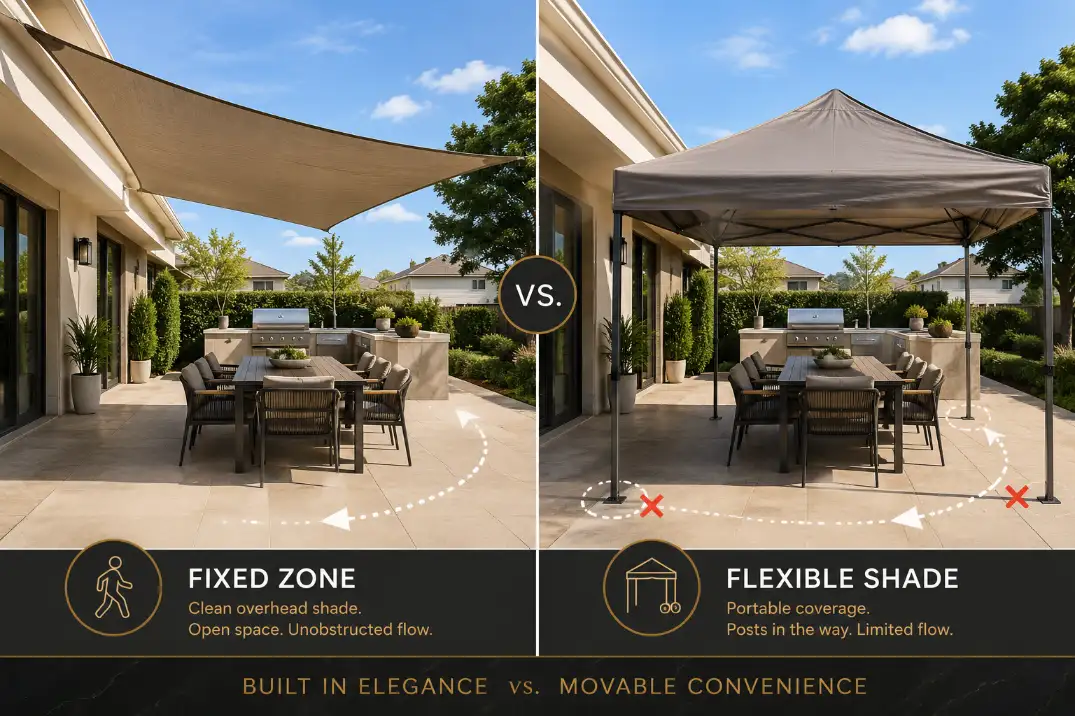
The biggest mistake is treating shade sails, pop-up canopies, and pergola canopies as different versions of the same product. They solve different patio problems.
A shade sail is best when the seating zone is fixed and the supports are strong. A pop-up canopy is best when the shade need is temporary or movable. A pergola-style canopy is best when you want a more finished outdoor room and have enough space for a frame.
If the patio is already narrow, do not buy a canopy just because it promises more square footage of shade. Legs can land exactly where people need to walk, pull out chairs, or move from the sliding door to the yard.
In that case, a smaller, better-aimed sail may outperform a larger canopy. That same floor-space logic matters when trying to add patio shade without blocking walkways.
When a Pergola-Style Outdoor Canopy Is Worth It
A pergola-style canopy makes sense when a pop-up looks too temporary, but a full roof or built structure feels like too much. It gives the patio a more intentional shape and can make a lounge or dining zone feel finished.
The risk is heat buildup. A solid low canopy over concrete can feel stuffy even if it blocks the sun well. That is why roof height, open sides, and venting matter.
A canopy roof around 8 feet or higher often feels better than a low cover because warm air has more room to rise above seated head level. In humid regions, especially parts of the Southeast and Gulf Coast, open airflow can matter as much as the shade fabric itself.
Look for a weather-resistant frame, vented or retractable top, stable anchoring points, and a footprint that does not trap furniture. Skip bulky pergola canopies on patios where the legs will crowd chair pullout, grill access, or the main door path.
A pergola canopy should not create the same heat problem it was bought to solve. Before choosing one, it helps to understand why a covered patio can trap heat when shade, roof height, and airflow are not working together.
If the patio is used often enough that a pop-up feels temporary, but a full roof feels like too much, a pergola-style outdoor canopy is the better category to browse. It gives the space a more finished shade zone while still keeping the sides open for airflow.
BEST SEMI-PERMANENT PATIO SHADE
Outdoor Gazebo Canopy
Best for patios that need a more finished lounge or dining zone without building a full roof. It fits larger hot patios because it creates a defined shade area while keeping the sides open for airflow. Look for a vented or double-tier roof, weather-resistant frame, stable anchoring points, and enough clearance to avoid trapped heat.
🔴 SHOP outdoor gazebo canopies
Shade Sail vs Canopy: What Actually Matters Before Buying
| Category | Best Fit | What Buyers Overestimate | What Buyers Underestimate |
|---|---|---|---|
| Breathable shade sail | Fixed seating, open floor space, hot overhead sun | Fabric size | Anchor strength and sun angle |
| Waterproof shade sail | Rain-sensitive seating areas | Rain blocking as a comfort upgrade | Heat buildup and drainage slope |
| Vented pop-up canopy | Temporary shade, renters, parties | Full 10×10 usable comfort zone | Wind control and leg placement |
| Pergola-style canopy | Semi-permanent lounge or dining zone | How “covered” it feels | Roof height and airflow |
| Side screen or lower sail edge | Late afternoon sun | Overhead shade alone | Low-angle sun after 3 p.m. |
The Sun-Angle Problem Most Product Pages Do Not Solve
Many shade products look effective in photos because they are shown near midday. The shadow sits neatly below the fabric, the table looks protected, and the patio looks cooler.
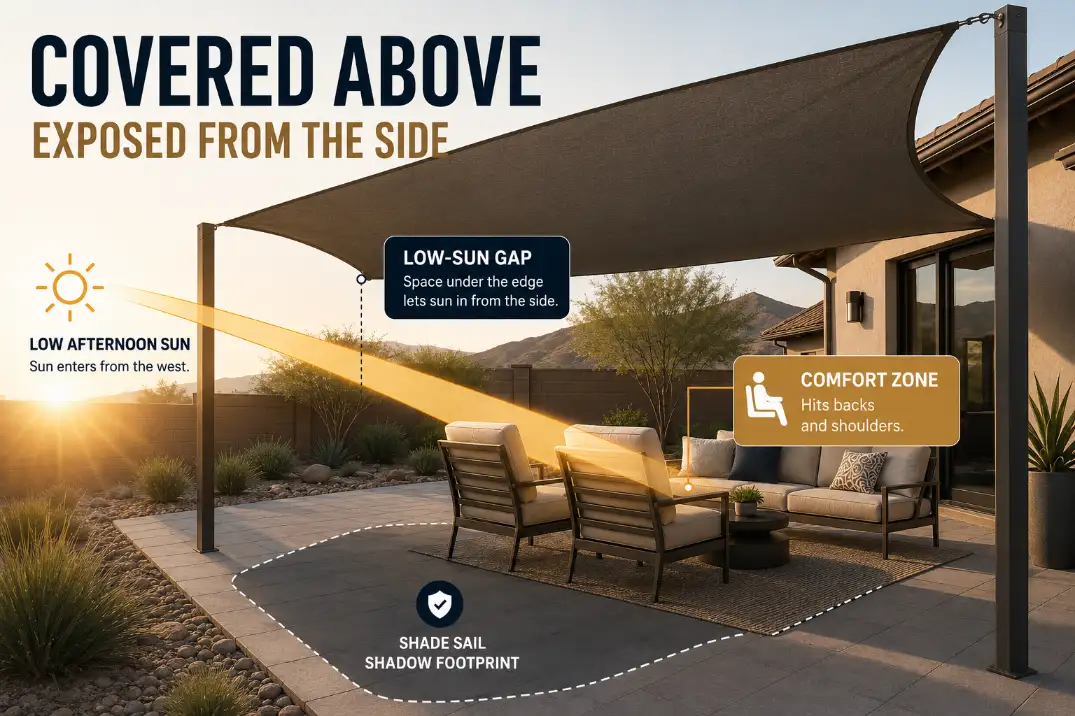
Real patios often fail later. If the space is worst between 3 p.m. and 6 p.m., the sun is no longer behaving like a simple overhead problem. It comes from the side, slips below high shade edges, and reaches faces, shoulders, chair backs, and table edges.
That is the difference between a visible symptom and the actual mechanism. The symptom is “the patio still feels hot.” The mechanism may be low-angle sun missing the shade plane.
For west-facing patios, the better answer may be a lower sail edge, an angled sail, a side screen, or a smaller shade zone placed more precisely.
More fabric overhead may not fix it. For more late-day shade decisions, compare your setup with best patio shade solutions for afternoon sun.
Fabric Choice: Breathable, Waterproof, or Heavy-Duty?
Fabric choice matters, but not in the way many buyers assume. The strongest fabric is not automatically the most comfortable fabric.
Breathable HDPE is usually better for heat
For hot patios, breathable knitted HDPE is usually the safest first choice. It blocks a high amount of sun while letting some air pass through. That airflow is why it often feels better over seating than a low waterproof cover.
This is the right fabric direction for dry heat, hot suburban patios, poolside seating, and dining zones where comfort matters more than rain protection.
Waterproof fabric is useful, but easier to misuse
Waterproof shade fabric sounds like an upgrade, but it can create new problems. It blocks rain better, but it also blocks airflow and needs more slope. If the sail is too flat, water can pool, stretch the fabric, and increase stress on anchors.
Waterproof sails make more sense over furniture that must stay dry between uses than over seating zones where summer heat relief is the main goal. Choose waterproof only if rain protection is a real need. If the main problem is heat, breathable fabric usually makes more sense.
Heavy-duty fabric cannot compensate for weak anchors
A heavier sail may resist wear better, but it also transfers more stress to the mounting points. In windy yards, the anchor system matters more than the marketing language on the fabric. Strong corners, proper hardware, and structural mounting points are what keep the setup reliable.
A tighter turnbuckle is not a fix for a weak post or flexible fascia board.
How to Size Shade Around People, Not Pavement
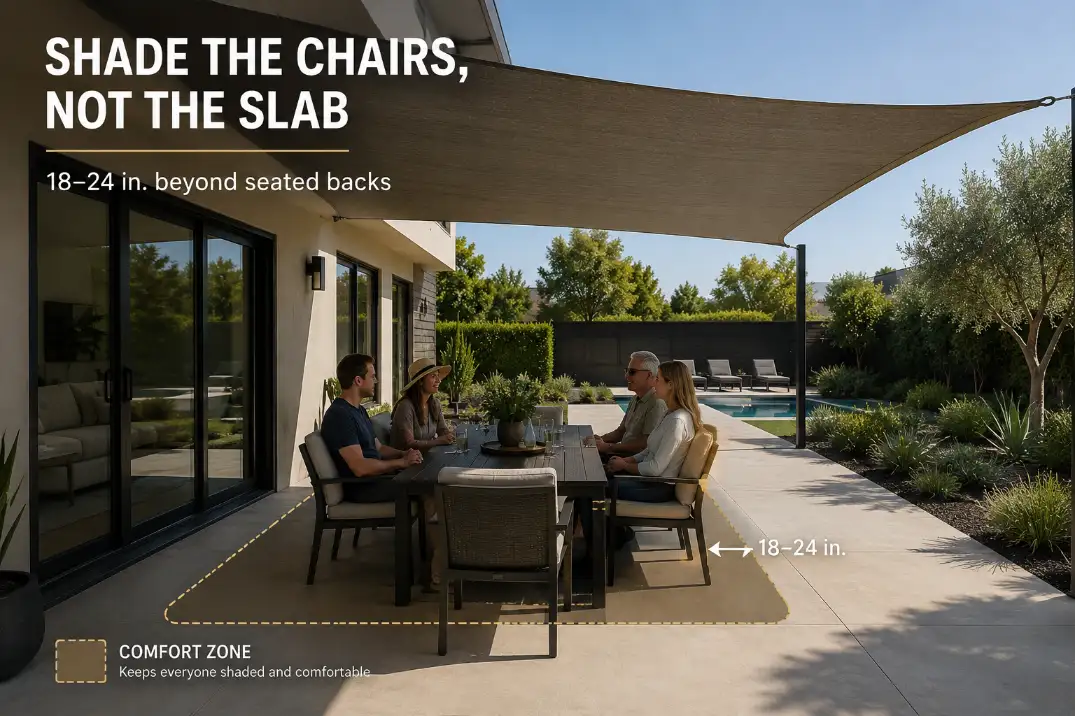
A shade product should be sized around the way people sit. If the table is shaded but the chairs are exposed, the patio will still feel uncomfortable.
For dining areas, check the chair positions when people are seated and when chairs are pulled out. The reliable shade should extend at least 18–24 inches beyond occupied chair backs during the main use window.
For lounge seating, shade the seat and upper body first. Shading empty floor space in front of a sofa does less for comfort.
Small patios usually do better with one precise shade zone than one oversized cover. A triangular sail can protect two chairs or a bistro table while keeping the patio visually open.
A bulky canopy may make the same patio feel smaller because the legs create hard corners inside an already limited area.
If the patio is only 8×10 or 10×12 feet, a canopy leg near the door or grill path can make the shaded space harder to use. In that case, compare the decision against small patio shade options that keep the space open before buying the largest cover that fits.
Large patios need a different approach. Once a patio gets above about 250 square feet, two smaller shade areas often perform better than one oversized sail or canopy. Shade the dining area, lounge area, or kids’ play space separately instead of trying to cover every square foot.
When Shade Alone Still Will Not Fix the Patio
Shade helps, but it may not fully fix a heat-storing surface. Concrete, dark pavers, and stone can hold heat after the sun moves.
If the surface stays uncomfortable to bare feet after 10–15 seconds, the patio may need a broader cooling strategy: shade, airflow, lighter furnishings, outdoor-rated rugs, nearby planting, or a layout change that reduces reflected heat.
This is where people overestimate the product and underestimate the environment. A canopy can block sunlight and still leave the seating area uncomfortable if hot air is trapped, the slab radiates heat upward, or the seating sits outside the best shadow.
That is the difference between buying shade and building comfort. If the surface itself is part of the problem, start with the larger heat pattern in backyard shade ideas for hot patios before assuming one canopy will solve everything.
Final Verdict: What Should You Buy First?
Choose a breathable HDPE shade sail first if your seating area is fixed, your anchor points are strong, and you want hot-weather comfort without cluttering the patio floor.
This is the best starting category for many sunny patios because it solves the most common problem: steady overhead sun on a predictable seating zone.
Choose a vented pop-up canopy first if you rent, host occasionally, or need shade that can move. It is the most flexible buy, but it should not be treated like a permanent structure.
Choose a pergola-style outdoor canopy first if you want a more finished seasonal patio zone and have enough space for a frame. Prioritize venting, height, and stable anchoring over a heavy covered look.
Do not buy the largest shade product first. Map the sun during your real use window, protect the chairs rather than the slab, and choose the lightest category that solves the actual comfort problem without blocking airflow or movement.
For broader official guidance on cooling outdoor environments, see the U.S. Environmental Protection Agency.