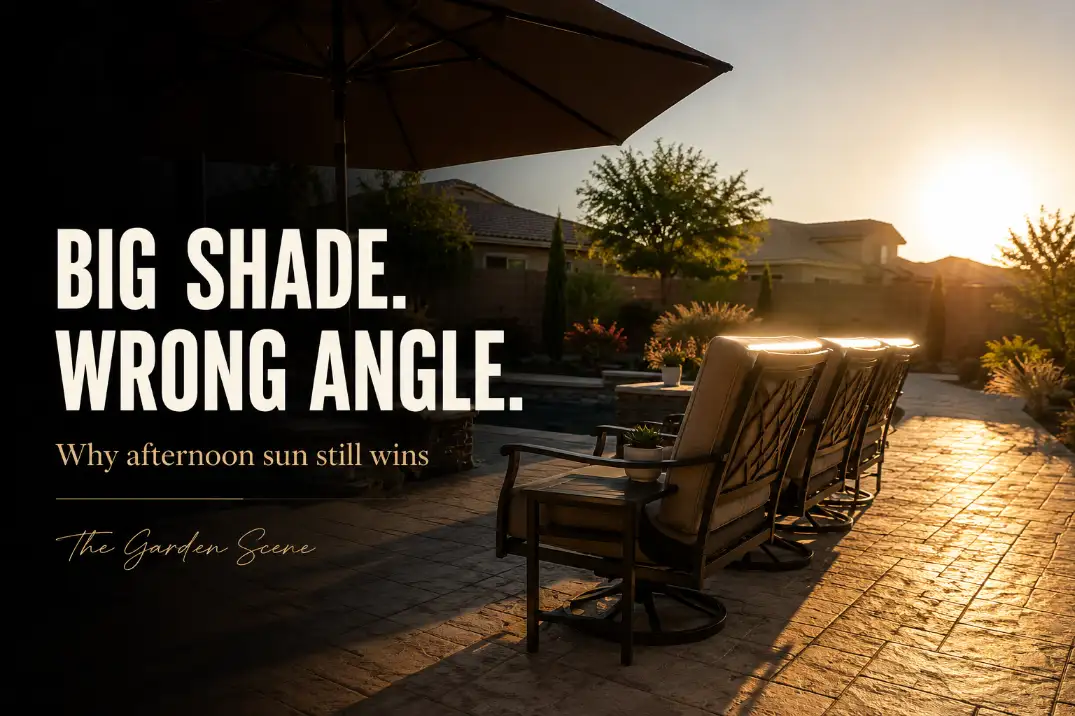
The best patio shade solution for harsh afternoon sun is usually a layered setup: overhead shade for heat, vertical west-side shade for glare, and surface cooling to reduce the heat stored in concrete, pavers, or stone.
If your patio feels fine at noon but becomes unusable from about 3 p.m. to 7 p.m., the problem is not simply “not enough shade.” It is low-angle sun entering from the side.
Start with three checks: where the sun enters, whether it hits people at seated height, and how long the patio stays hot after shade arrives.
If the surface remains uncomfortable 45–60 minutes after direct sun is gone, you are dealing with stored heat as well as glare.
That is different from a midday shade problem, where a roof, umbrella, or pergola directly overhead often solves most of the issue.
The Best Shade Choice by Patio Situation
For harsh afternoon sun, do not start by asking which shade product looks best. Start by asking what the sun is doing at the hours you actually use the patio.
| Patio condition | Best first choice | Why it works | Weak point to watch |
|---|---|---|---|
| Small seating zone | Cantilever umbrella | Fast, adjustable shade without center pole clutter | Needs tilt and enough base weight |
| House-attached patio | Retractable awning plus drop shade | Covers broad area and can be retracted seasonally | Low sun may slip under the front edge |
| Covered west-facing patio | Exterior roller shade | Blocks glare at the open side | Needs a solid mounting surface |
| Open paver or concrete patio | Angled shade sail | Can intercept sun before it reaches seating | Fails if installed flat and too high |
| Permanent lounge area | Pergola with curtains or louvers | Defines an outdoor room and adds side control | Open slats alone rarely block late sun |
| Long-term cooling | Trees, vines, or tall planting | Cools air and surfaces over time | Slow payoff, often 5–10 years |
The biggest mistake is treating all shade as overhead shade. Afternoon sun behaves more like a side glare problem. A 12-foot-wide cover can still fail if the west side remains open.
Fastest Fix: Cantilever Umbrella
A cantilever umbrella is usually the fastest useful fix for one dining table, two lounge chairs, or a compact seating corner. It works better than a center-pole umbrella when the furniture needs to stay open and walkable because the base can sit outside the main use zone.
The important detail is not only canopy diameter. It is whether the canopy can tilt, rotate, and sit between the afternoon sun and the seats.
An 11-foot umbrella placed directly over the table may still miss chair backs at 4 p.m. For afternoon sun, the canopy often needs to sit slightly west or southwest of the seating area.
Pro Tip: If the umbrella shadow does not cover the back of the chair at 4 p.m., it will probably disappoint during the hottest part of the afternoon.
Best Covered-Patio Fix: Exterior Roller Shade
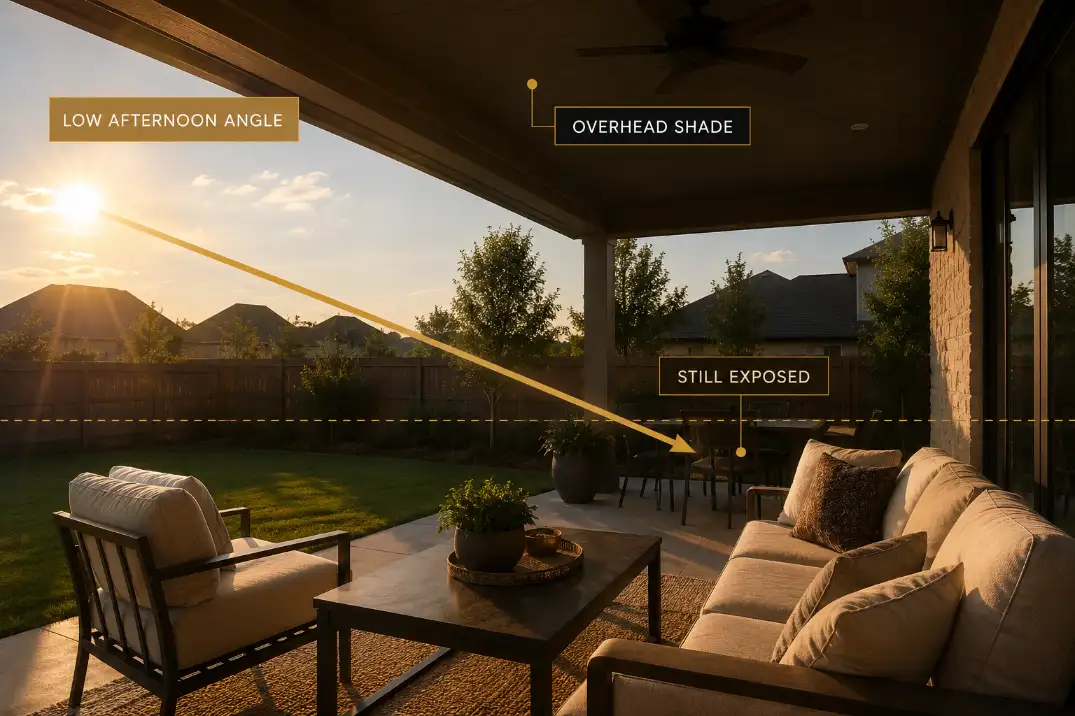
If your patio already has a roof, pergola, or solid overhead cover, adding more overhead material often wastes money. The weak point is usually the open west or southwest side. Exterior roller shades solve that specific problem by dropping into the glare path.
They are especially useful where the patio is attached to the house and the late sun hits faces, glass doors, cushions, or a dining table. A mesh screen also preserves more airflow than a solid curtain, which matters in humid parts of Florida and the Gulf Coast.
For glare control, fabric openness matters. Lower openness blocks more glare and privacy views; higher openness preserves the view and airflow but lets more light through. The right choice depends on whether the main irritation is brightness, heat, privacy, or all three.
Best Open-Patio Fix: Angled Shade Sail
Shade sails can work well on open patios, but only when the geometry is right. A flat square sail stretched high overhead may look substantial and still allow late-day sun to slide underneath. The stronger setup lowers one edge toward the west or southwest so the sail intercepts the low sun before it reaches the seating.
This is where readers often overestimate fabric area and underestimate anchor placement. More fabric does not help much if it is all above the sun angle. You need interception, not decoration.
Before setting posts, mock the sail edge with rope and observe the shadow at 3 p.m., 5 p.m., and 6:30 p.m. on a clear day. A shade layout that looks correct at noon can miss the patio by several feet later.
Shade Specs That Matter More Than Looks
The right specifications depend on whether you are trying to block UV, glare, heat, or wind. These are related, but they are not the same thing.
UV Rating Is Not the Whole Comfort Story
For strong sun exposure, look for shade fabric with a UPF 50+ rating. That helps with UV protection, especially over dining areas, children’s play zones, and lounge seating.
But UV rating alone does not guarantee comfort. A fabric can block UV and still allow harsh glare from the side. If the sun hits your eyes under the fabric edge, the product is not solving the real afternoon problem.
Tilt and Rotation Beat Extra Diameter
For umbrellas, tilt and rotation often matter more than another foot of canopy width. A fixed umbrella can only shade the spot directly under it. A tilting cantilever umbrella can follow the low sun and protect chair backs, shoulders, and faces.
Base weight also matters. Cantilever umbrellas place more leverage on the base than center-pole umbrellas. Lightweight bases are usually the first part of the system to disappoint in gusty backyards.
Hardware Decides Whether Shade Sails Last
For shade sails, the weak link is rarely the fabric alone. It is usually the anchors, tensioning hardware, or attachment point. Use proper turnbuckles, reinforced corners, and corrosion-resistant hardware. Rope tied to a fence post may hold temporarily, but it often sags, flaps, or pulls out of alignment.
In coastal areas, cheap steel fittings age quickly. In desert climates, UV degradation and fabric tension deserve more attention. In northern states, permanent posts also need to account for freeze-thaw movement and winter conditions.
Why Overhead Shade Often Fails in Late Afternoon
Afternoon sun arrives at a lower angle. That sounds obvious, but it changes the solution. A roof, pergola, or umbrella blocks vertical sunlight well, yet may leave the side completely open.
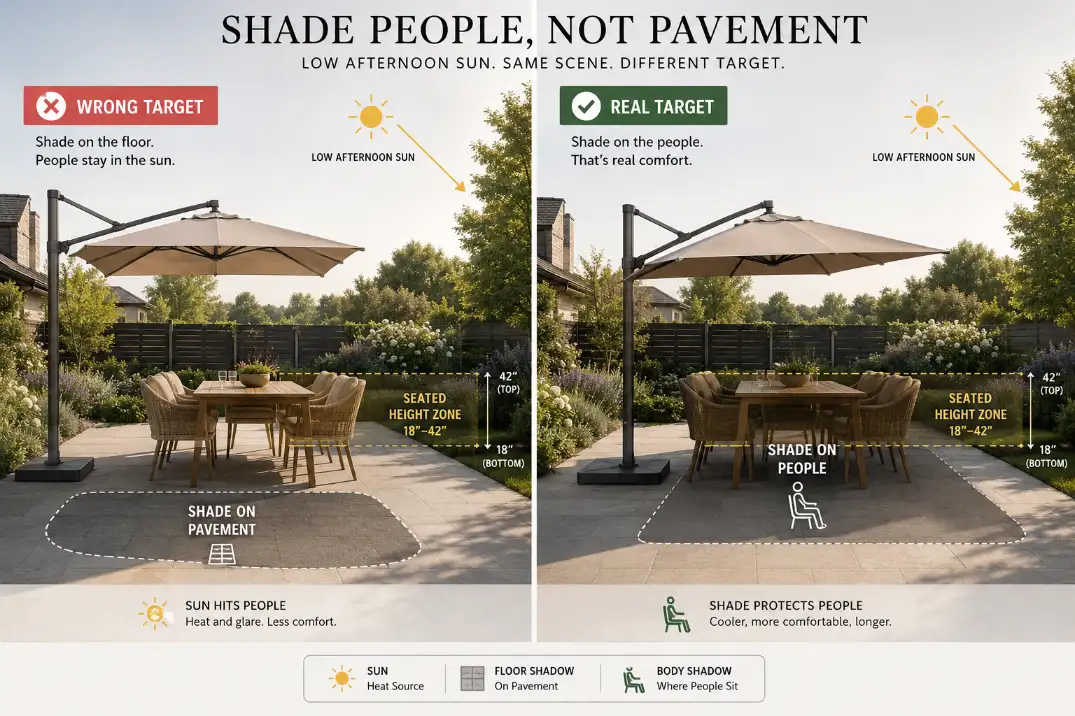
Shade on the Floor Is Not Shade on People
The useful test is not whether the patio floor looks shaded. It is whether seated bodies are shaded. Check the area from roughly 18 to 42 inches above the patio surface. If direct sun hits chair backs, cushions, faces, or the upper body at that height, the shade is incomplete.
This is why open pergolas often disappoint. They create attractive shadow lines while letting harsh side light pass through. The symptom is glare on the seating. The mechanism is an unblocked west-side sun path.
If furniture is already too close to doors, walkways, or grill routes, adding posts or shade bases can make the patio less usable. Shade planning should work with circulation, especially around patio layouts with sliding glass doors and walkways, not against it.
Surface Heat Keeps Working After the Sun Moves
Concrete, stone, and dark pavers can keep radiating heat after direct sun is gone. On a 90°F afternoon, a shaded patio can still feel uncomfortable if the surface baked for hours first.
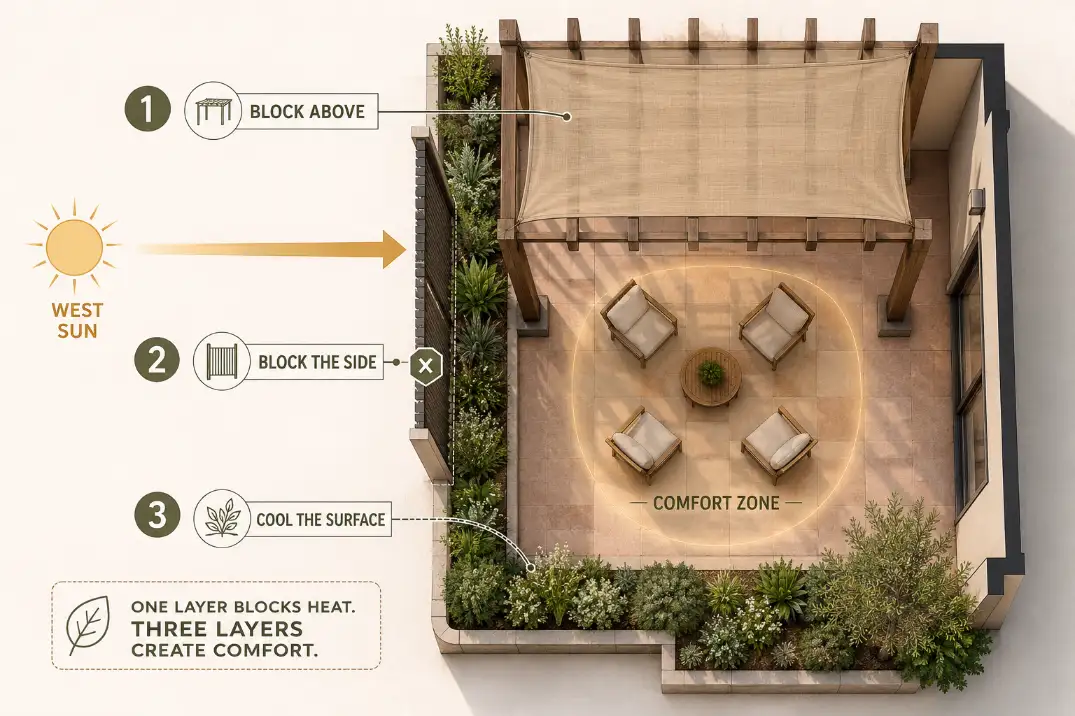
That is why the best harsh-sun plan often combines overhead shade, side shade, and surface cooling. Lighter materials, outdoor rugs rated for heat and moisture, planted edges, and better airflow can all reduce the heat that lingers after shade arrives.
The same issue shows up when patio surfaces get too hot in summer, even if the shade layout seems reasonable.
What to Try Before Building a Permanent Structure
Permanent shade can be worth it, but it should not be the first move if the problem is narrow or seasonal. The routine fix stops making sense when the structure solves shade but damages layout, airflow, drainage, or flexibility.
If the Problem Lasts Under 2 Hours
Use adjustable shade first. A cantilever umbrella, movable screen, or roll-down shade may be enough if the patio only has one bad window of sun. This is especially true for renters or homeowners who are still figuring out how they use the backyard.
A small patio under about 120 square feet usually benefits from fewer shade pieces, not more. If a shade base, post, or tie-down narrows the main walkway below about 30 inches, the “solution” is starting to create a new usability problem.
If the Problem Lasts 3–4 Hours Daily
Move toward fixed or layered shade. A west-facing patio that is unusable for most of the late afternoon probably needs more than one umbrella. Combine an awning, pergola canopy, or sail with vertical control on the sun-facing side.
This is where a larger umbrella often stops being the smart upgrade. If the sun is entering below the canopy edge, more diameter does not fix the angle. Add side control instead.
If the Patio Stays Hot After Shade Arrives
Do not keep adding overhead shade and expect instant comfort. Stored heat means the hardscape is part of the problem. Lighter surface colors, planted borders, and earlier shade can matter as much as the visible cover.
If the patio also holds water after storms, avoid rushing into posts, planters, or planting beds that may trap runoff. Shade improvements should not create the kind of long-term problems covered in patio drainage layout problems.
Pergolas, Awnings, and Trees: When Each One Wins
These are the bigger, more permanent options. They can be excellent, but only when matched to the right problem.
Pergola With Side Shade
A pergola makes sense when you want a defined outdoor room and have enough space for posts. It does not make sense as a bare frame if your main issue is low afternoon sun. Open slats soften light but rarely block the worst glare.
For performance, add at least one of these: a retractable canopy, adjustable louvers, curtains, vines, or exterior screens on the west side. Without that, the pergola may improve the look more than the comfort.
Before committing to post locations, check whether the patio furniture layout already works. A post near a chair pullout zone or walking route can make the space feel tighter every day, even if the shade looks good.
This is where patio furniture layout by size becomes part of the shade decision.
Retractable Awning
A retractable awning is strongest on a house-attached patio where you want broad shade without posts. It is especially useful when the patio is exposed in summer but welcome to sunlight in cooler months.
The key limit is projection. Many residential awnings project about 8 to 13 feet, which may cover the slab but not block low west sun. If the glare enters under the front edge, pair the awning with a drop shade, side curtain, or planting screen.
Trees, Vines, and Tall Planting
Trees and planted shade are the best long-term cooling strategy, but they are not a quick fix. A young shade tree may take 5 to 10 years before it meaningfully changes patio comfort.
That does not mean planting should be ignored. Tall planters, trellised vines, and narrow evergreen screens can soften glare sooner, especially along the west edge. A 5- to 7-foot planted screen can make a seated patio feel calmer even if it does not shade the whole surface.
The condition people underestimate is maintenance. Fast-growing trees and vines can bring pruning, leaf litter, root conflicts, or irrigation demands. For immediate relief, use a shade device now and plant for the future.
Checks Before Installing Posts, Sails, or Awnings
Permanent shade should be treated like a small outdoor structure, not just a décor upgrade.
Check Rules Before You Build
Many US neighborhoods have HOA limits on visible sails, pergolas, awnings, and exterior colors. Local permit rules may also apply if you are adding posts, attaching a structure to the house, or changing electrical components for motorized shades.
Call 811 before digging post holes. This is easy to skip for a “simple” sail or pergola, but buried utilities can run through side yards and patio edges.
Do Not Attach Shade to Weak Trim
Shade sails create pull. Do not attach them to fascia boards, decorative trim, light fence sections, or aging posts unless the structure is designed for the load. A sail that looks calm in still weather can pull hard when wind gets under it.
If gusts regularly reach 20–25 mph in your yard, be cautious with lightweight umbrellas, cheap sails, and freestanding fabric frames. In hurricane-prone regions, retractable or removable shade is usually safer than anything that stays exposed year-round.
Keep Heat and Smoke in Mind
Shade can make a grill area more pleasant, but it can also trap smoke or place fabric too close to heat. Keep combustible curtains, sails, and screens away from grills, fire pits, and heaters.
Wind matters here too. A shade screen that blocks glare may also redirect smoke toward seating. If cooking is part of the patio layout, think through airflow before installing fixed panels, especially in yards where wind affects outdoor kitchen layouts.
What People Usually Misread First
The cosmetic signal is the shadow on the ground. The decision-useful signal is whether the shade blocks glare at seated height during the hours the patio is actually used.
People overestimate pergola frames, fabric area, and umbrella diameter. They underestimate low-angle sun, wind, and stored surface heat. That is why the best solution is often not the biggest cover, but the best-positioned combination.
A good afternoon shade plan should answer three questions: does it block sun from the west, does it protect people rather than only the floor, and does it reduce the heat that remains after the sun moves?
Questions People Usually Ask
Is a pergola enough for afternoon sun?
Not usually by itself. A pergola needs side shade, vines, curtains, louvers, or a canopy to handle harsh late-day sun. Open slats alone are better for filtered light than real afternoon comfort.
What is the cheapest effective patio shade fix?
For one seating zone, a sturdy tilting cantilever umbrella is usually the fastest low-commitment fix. For a covered patio, an exterior roller shade on the west side may solve more than another overhead layer.
Do shade sails work in windy backyards?
They can, but only with proper anchors, tension, and hardware. In exposed yards, a poorly tensioned sail can flap, sag, or pull out of alignment. Retractable or removable shade is often better where storms or strong gusts are common.
Bottom Line
For harsh afternoon sun, the best patio shade solution is the one that blocks the low western angle before it reaches people.
Start with the sun path, not the product category. In most backyards, the strongest plan is overhead shade plus side shade plus surface cooling.
That combination solves more than a bigger umbrella, a bare pergola, or a decorative sail installed too high.
For broader official guidance on using trees, shrubs, and vines to shade patios and reduce heat gain, see the U.S. Department of Energy.