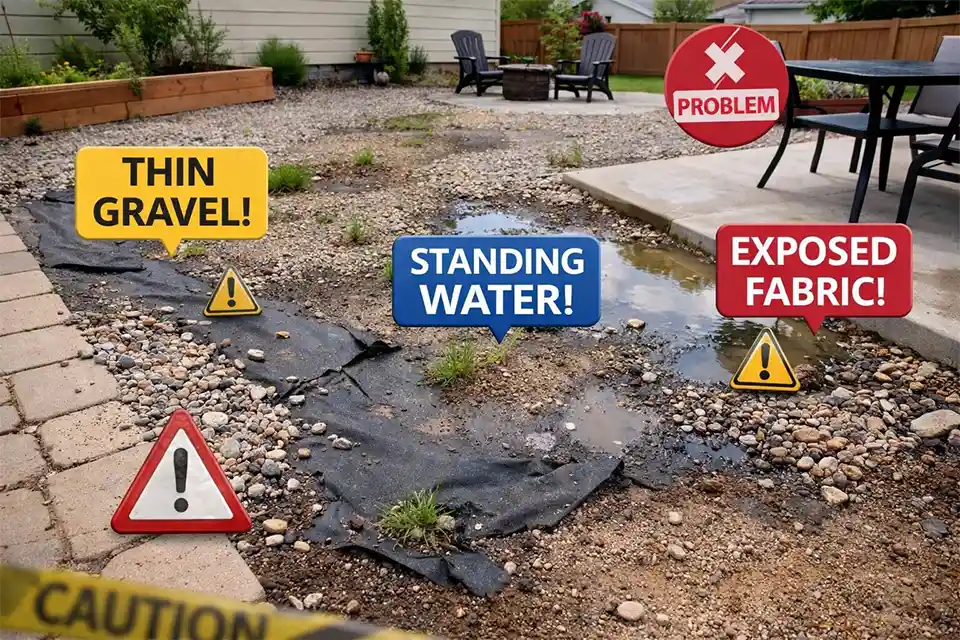
Most grass-free backyards do not fail because there is no lawn. They fail because water, heat, and loose surface materials were never managed as a system.
If weeds come back within 3 to 6 weeks, water still sits after 24 hours, or gravel keeps creeping 6 to 12 inches into paths after every cleanup, the decorative layer is not the real problem.
Start with three checks: where runoff collects, how deep the surface actually is, and whether the yard has enough planted soil to cool and stabilize the space.
That is the distinction people usually miss. A few weeds in gravel are annoying, but not a structural failure. A yard that stays damp the next day, bakes roots by late afternoon, or sheds rock and mulch into every walking route is different.
That is not a routine maintenance nuisance. It is a no-grass layout that was built without enough drainage control, edge restraint, or soil volume.
Quick Diagnostic Checklist
- Water remains in one area longer than 24 hours after a normal rain.
- Gravel, mulch, or decomposed granite has thinned to less than about 2 inches in active areas.
- Main walking routes are narrower than 36 inches, so loose material gets kicked out constantly.
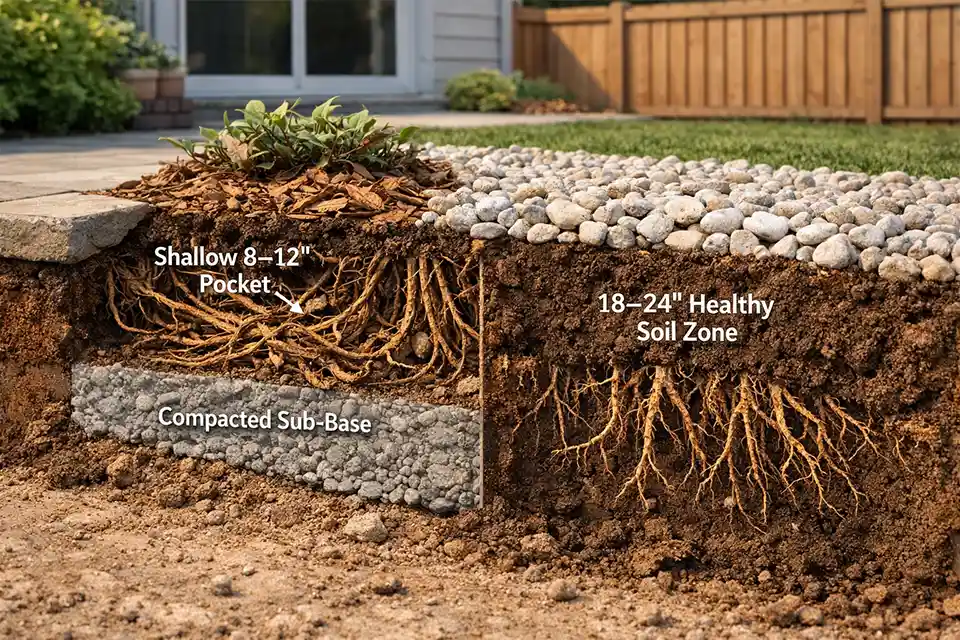
- Planting pockets are so shallow that roots hit compacted base within 8 to 12 inches.
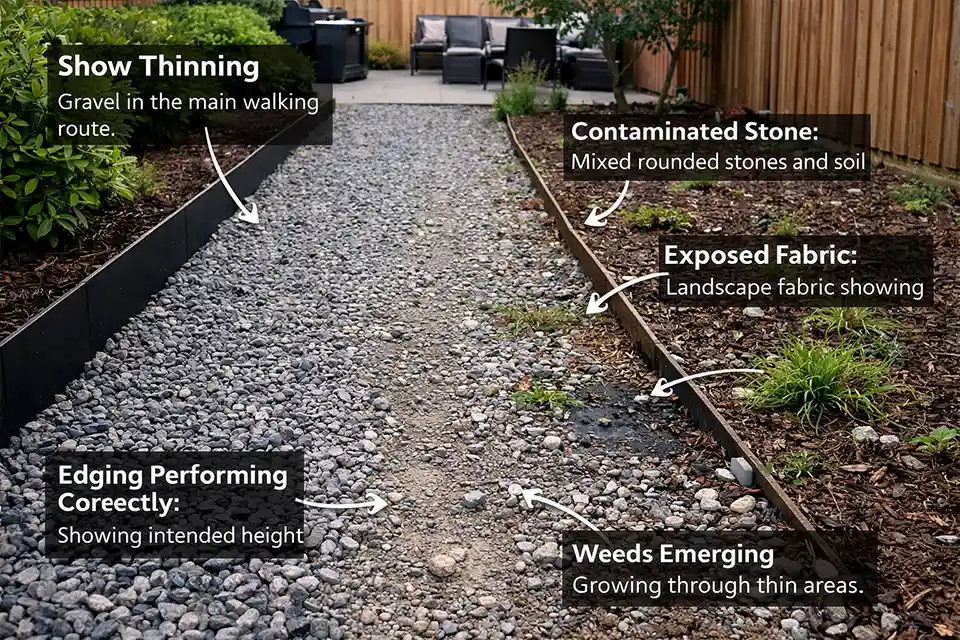
- Weeds are sprouting from dust and debris above the barrier, not only from below.
- The yard feels noticeably hotter than nearby planted spaces by midafternoon.
- One trouble spot needs cleanup, refill, or weed treatment every few weeks.
What People Usually Misread First
The first mistake is assuming “without grass” automatically means “low maintenance.” In reality, it usually means maintenance changes form. You mow less, but you may spend more time controlling migration, heat, windblown debris, and weed germination in surface dust.
A grass-free yard works when each zone has one clear job: firm surfaces for movement, planted areas for cooling and absorption, and loose materials used only where they can stay contained.
That is why the underlying issue in Small Garden Landscaping Without a Lawn: Hidden Problems is usually not the absence of turf. It is the decision to spread one surface everywhere, then expect that single material to handle drainage, traffic, appearance, and weed suppression at the same time.
Another common misread is blaming landscape fabric first. Fabric has a narrow role. It can separate layers in some installations, but it does not fix poor grade, thin gravel, shallow planting pockets, or the organic dust layer where many weeds actually sprout.
People often overestimate the barrier and underestimate how quickly debris builds on top of it.
The Most Common Problems in Grass-Free Backyards
1. Puddling and soggy zones
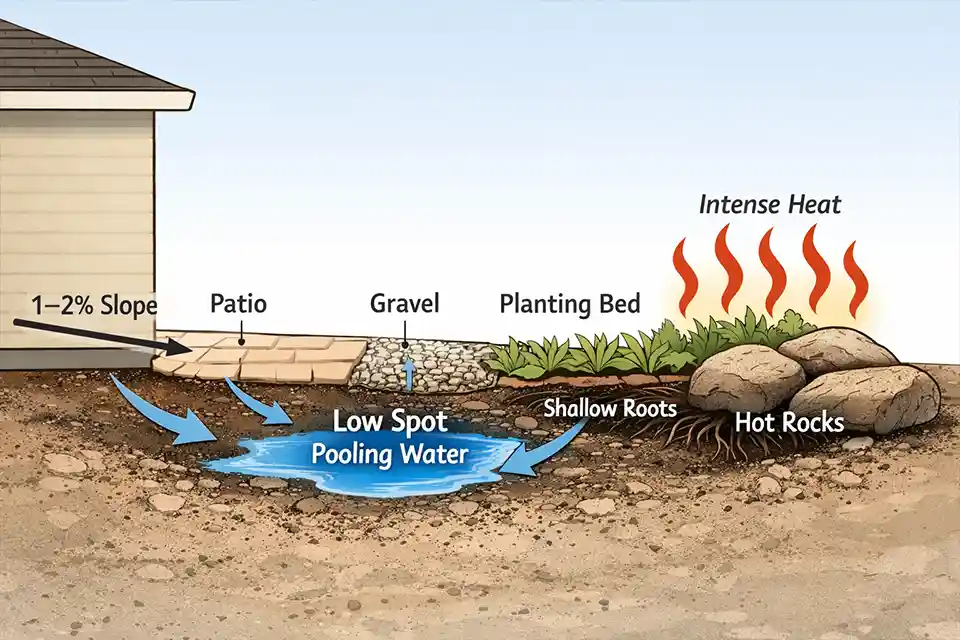
If a no-lawn yard looks tidy in dry weather but turns tacky or soft after rain, the failure starts below the surface. On a healthy yard, water either drains through the profile or moves away fast enough that the surface firms up within 30 to 60 minutes after a routine storm. On a failing one, you still see footprints, algae-prone dampness, or low spots the next day.
The practical threshold is simple: once water sits longer than 24 hours, stop treating it as a top-layer issue. For patios and paver areas, a slope of about 1% to 2% away from the house matters more than the finish above it. For gravel and planting zones, runoff needs a path, not just more stone.
That same pattern gets worse on grade changes and subtle low spots. In Sloped Backyard Problems: Drainage, Erosion, and Safety the real problem is not simply erosion. It is that water starts choosing its own route, and loose materials rarely hold up once that starts.
2. Weeds in gravel or rock beds
Weeds in a grass-free backyard are not always a sign that the installation failed underground. Very often, they germinate in the dust, leaf litter, and fine organic residue that collect above the rock. That is why a yard can have brand-new fabric underneath and still look weedy within a month.
This is also where many homeowners waste time. Adding another layer of fabric over contaminated gravel usually delays the problem briefly and makes the bed harder to clean later. If the rock layer is dirty and thin, the better fix is to remove accumulated fines, restore a real 2- to 3-inch depth where needed, and reduce open gravel-only zones that catch every leaf and seed.
3. Gravel and mulch that will not stay put
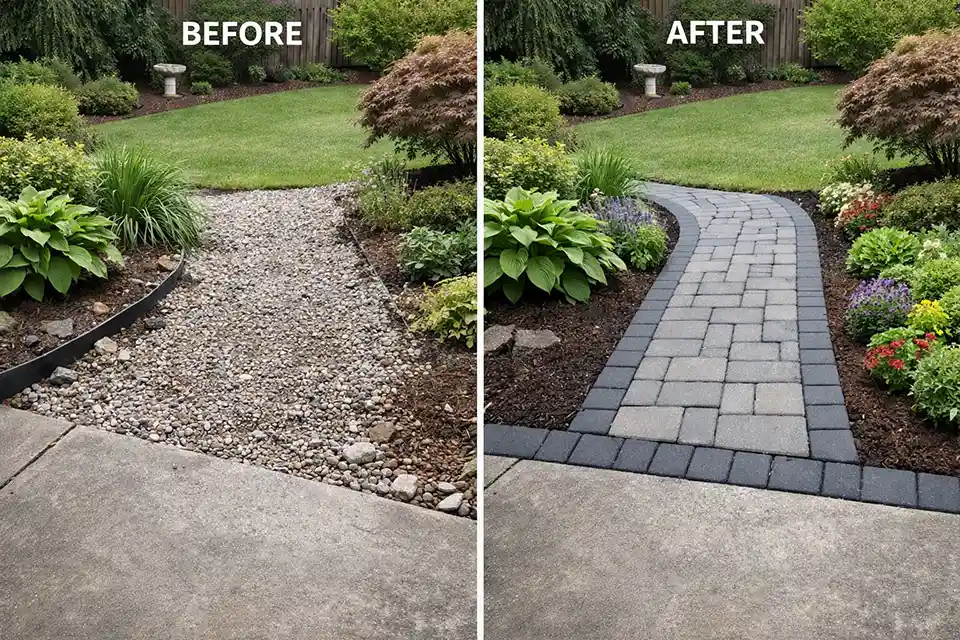
Migration is one of the most common no-grass failures because it shows up early and keeps repeating. The material moves into paths, drains, and patio edges not because it is bad, but because the yard never had enough edge restraint or the wrong material was used in high-traffic areas.
Rounded pebble drifts faster than angular stone. Fine mulch blows or washes faster than shredded bark. Decomposed granite weakens fast where runoff crosses it.
What usually fails first is the transition point: out of a gate, beside a patio, or along the shortest route from the back door to seating. A decorative surface can look acceptable in a photo and still be wrong for daily movement.
4. Heat buildup and plant stress
Heat is one of the most underestimated grass-free backyard problems. Rock, concrete, and synthetic surfaces can run 20 to 30 degrees Fahrenheit hotter than the surrounding air in full summer sun. In dry climates or south-facing yards, reflected heat from walls and fences pushes root zones even harder.
That is one reason Why Low-Maintenance Backyards Become High-Maintenance often comes down to surface ratio, not labor. A yard with too much exposed mineral surface and too little plant mass stays hotter, dries faster, and becomes less usable long before it looks damaged.
5. Planting pockets that are too small or too shallow
This is one of the most grass-free-specific problems, and it is easy to miss at install time. Planting pockets often look generous from above but have very little usable soil once you account for base layers, buried fabric, compacted subgrade, and surrounding hardscape.
If shrubs or larger perennials only have 12 inches of workable soil before roots hit resistance, the bed may survive spring and then struggle in the first serious heat.
For many mixed ornamental beds, 18 to 24 inches of decent soil depth is a much safer target than shallow decorative pockets. When soil volume is too low, plants dry out faster, overheat faster, and never do the cooling and screening work the design depends on.
The Fix Sequence That Usually Works
The order matters more than most people expect. Grass-free backyards often get patched in reverse, which is why the same trouble spots keep returning.
First, correct water movement. If runoff is crossing paths, pooling near the house, or settling into one low corner, no amount of fresh gravel will solve that. Regrade, redirect downspouts, or rebuild the affected base before touching the finish layer.
Second, rebuild edges and transitions. The yard needs firm boundaries wherever people turn, step down, or cut across. If a loose surface borders a main route, give it stronger restraint or shrink that surface entirely.
Third, restore proper depth. Most decorative stone or similar loose coverage needs around 2 to 3 inches to hide the base and resist quick contamination. Thin areas are where weeds, exposed fabric, and dirty patches show first.
Fourth, reduce the amount of loose material doing heavy-duty work. A stable paver path, stepping-stone route, or compacted hard surface usually performs better than asking gravel or mulch to carry daily circulation.
That pattern shows up in Costly Backyard Landscaping Mistakes: the expensive part is often not the original material, but the repeated cleanup and rework from putting it in the wrong place.
Fifth, give the yard more cooling and root volume. One tree canopy, one larger island bed, or a few deeper planting zones often changes the maintenance pattern more than a cosmetic surface swap.
Pro Tip: In a grass-free backyard, fixed surfaces should handle movement and loose surfaces should handle appearance. Once one material is doing both jobs, upkeep usually rises fast.
Comparison Guide: Which Grass-Free Surfaces Fail How
| Surface type | Most common problem | Early warning sign | Better fix |
|---|---|---|---|
| Loose gravel | Migration and contamination | Rock spills into paths and weeds return in surface dust | Deepen to 2–3 inches, strengthen edging, reduce coverage in traffic zones |
| Decomposed granite | Washout and soft spots | Surface loosens after rain or shifts on slope | Improve drainage path and reserve it for lower-stress routes |
| Mulch-heavy yard | Blowout, float, or soggy decay | Bare patches appear after wind or storms | Tighten bed boundaries and keep mulch for planted zones only |
| Pavers or steppers | Settlement or joint washout | Edges rock, joints open, water tracks across surface | Rebuild base and correct slope before resetting |
| Rock beds with small planting pockets | Heat stress and plant decline | Plants wilt fast and need water too often | Increase soil volume and add shade or larger planting zones |
When Patching Stops Making Sense
A grass-free backyard crosses the line from needs maintenance to needs redesign when more than one failure pattern stacks up. If the same yard is hot, dirty, wet after rain, and constantly losing material at the edges, the problem is no longer cosmetic. At that point, another round of weed control, top-up gravel, or extra mulch is just delay.
That is where Backyard Design Mistakes That Ruin Outdoor Spaces becomes relevant. The layouts that disappoint most are not always the ugliest ones. They are the ones that force one material to do everything while giving plants too little soil and water too little direction.
The durable version is usually simpler: one reliable circulation surface, fewer loose-material zones, deeper planted areas, and enough shade or canopy to keep the yard usable in summer.
A no-grass backyard can absolutely be lower maintenance, but only when it is built around containment, drainage, and cooling rather than just coverage.
Pro Tip: If one trouble spot needs fixing every few weeks, treat that area as a design failure, not a maintenance chore. Repeating the same cleanup cycle is usually the clearest sign the material or layout is wrong.
For broader guidance on managing residential runoff, see the EPA’s Soak Up the Rain.