Backyard Design Problems in Long, Narrow Yards (And Smart Fixes)

Long, narrow backyards are extremely common in modern suburban developments across the United States. Many residential lots—especially those built after the early 2000s—prioritize depth over width, creating outdoor spaces that may stretch 70–120 feet long while remaining only 18–30 feet wide.

At first glance, these yards appear large. In reality, their proportions introduce several design challenges. Instead of functioning like flexible outdoor living spaces, they often behave like corridors, where movement flows straight from the patio to the back fence with very little variation.

Homeowners frequently try to solve the problem by adding more features—fire pits, pergolas, garden beds, or larger patios. Unfortunately, these additions sometimes make the layout worse. Furniture blocks circulation paths, planting beds narrow usable space, and fences dominate the visual field.

Environmental conditions also amplify these design issues. In humid climates such as Florida or the Gulf Coast, narrow yards may trap warm air between fences, increasing humidity levels and reducing airflow. In dry desert regions like Arizona, long hardscape corridors can reflect heat and raise surface temperatures on stone or concrete patios to 110–130°F during summer afternoons.

Understanding the structural problems unique to narrow backyards is the first step toward designing outdoor spaces that feel balanced, comfortable, and genuinely usable.


Why Long, Narrow Backyards Often Feel Difficult to Use

The core issue with narrow yards is proportion.

When a backyard is three or four times longer than it is wide, visual balance becomes difficult to achieve. Human perception naturally interprets long parallel boundaries—such as fences—as movement corridors rather than gathering spaces.

This effect is sometimes called the “hallway effect.”

Instead of encouraging people to stay in the yard, the layout subconsciously signals that the space is meant to be passed through.

Several design patterns commonly trigger this effect:

  • a straight lawn strip running the entire length of the yard

  • identical planting beds along both fences

  • one large focal point placed at the far end

  • patios that span the entire width of the yard

  • uninterrupted fence lines

These conditions create a strong visual tunnel that directs the eye forward rather than across the space.

In many homes, the same layout problems discussed in Backyard Layout Problems That Make Spaces Hard to Use appear even more strongly in narrow yards because the limited width leaves little room for correction.

Breaking this tunnel effect is one of the most important goals in narrow backyard design.


Quick Diagnostic Checklist

You may be dealing with a narrow-yard design problem if several of these conditions apply.

  • The backyard feels like a long corridor rather than a gathering space

  • Most activity happens only on the patio near the house

  • The middle portion of the yard is rarely used

  • The eye sees the back fence immediately when stepping outside

  • Furniture placement leaves less than 36 inches of walking space

  • The central lawn strip extends more than 40–50 feet without interruption

If three or more of these signs appear, the layout is likely amplifying the narrow proportions of the property.

In most cases, the issue is not the yard size itself—it is how the space is organized.


The “Hallway Effect” in Landscape Design

Landscape designers often describe narrow yards as linear environments.

Linear spaces encourage forward movement rather than lingering. This principle appears in architecture, city planning, and garden design.

When two parallel fences sit 12–20 feet apart, they create strong visual lines that guide the eye toward the far end of the yard.

The effect becomes even stronger when additional elements reinforce those lines.

Design Element Visual Impact Result
Straight lawn corridor Reinforces forward sightline Yard feels longer and emptier
Identical side beds Emphasizes symmetry Space feels rigid
Full-width patio Creates a hard boundary Blocks visual depth
Rear focal point only Pulls eye forward Middle space unused
Continuous fencing Forms a visual tunnel Yard appears narrower

Breaking these lines is essential for transforming narrow yards into comfortable outdoor living spaces.

Designers typically introduce visual interruptions every 15–25 feet to slow down how the eye moves through the landscape.
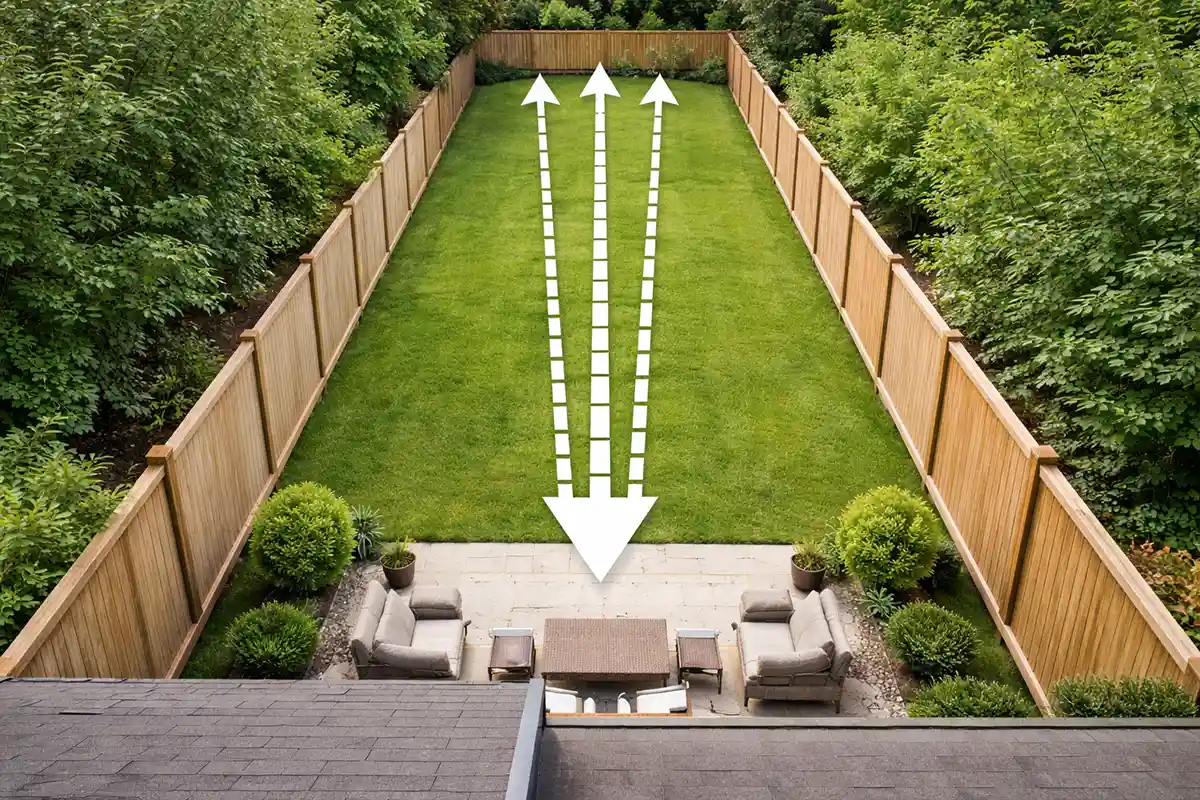

Diagram illustrating hallway effect in long narrow backyard design


Poor Zoning: Why Narrow Yards Feel Empty

Another major design mistake is treating the backyard as a single continuous space.

Large open lawns often look appealing in wide yards, but they rarely work in narrow ones. When the entire yard functions as one open strip, the space becomes visually monotonous and difficult to use.

Successful narrow backyard layouts usually divide the yard into three functional zones.

1. Transition Zone (Near the House)

This area connects indoor living space to the yard. It usually includes the main patio, outdoor dining area, or lounge seating.

Typical depth:

10–20 feet

2. Activity Zone (Middle Section)

The central portion of the yard can host flexible uses such as lawn space, garden beds, or play areas.

Typical depth:

20–40 feet

3. Destination Zone (Rear Yard)

The far end of the yard often works best as a focal point or retreat area. Small pergolas, benches, or garden structures work well here.

Typical depth:

10–25 feet

Dividing the yard this way interrupts long sightlines and encourages movement between zones.

Outdoor layouts benefit from the same spatial planning principles used in patio design. For example, many circulation issues discussed in Patio Furniture Layout Fixes That Make a Big Difference also appear when backyard seating areas are poorly positioned.


Fence Dominance and Visual Compression

In narrow backyards, fences often become the most visually dominant element.

Standard residential fences are typically 5–6 feet tall, while the yard itself may be only 18–25 feet wide. This creates a strong vertical boundary that compresses the visual space.

Dark fence colors—such as deep brown or black-stained wood—can intensify this effect by absorbing light.

Over time, homeowners often try to hide fences completely with tall hedges or dense planting. Unfortunately, that strategy can make the yard feel even tighter.

Instead, designers often soften fences using layered planting.

Strategy Effect Difficulty
Staggered shrubs Creates depth Moderate
Trellis panels Breaks flat surfaces Easy
Climbing vines Adds vertical texture Moderate
Light-colored fences Reflects sunlight Easy
Espalier trees Adds structure without width Advanced

In coastal regions of California where marine air and fog reduce natural brightness, lighter fence colors can improve perceived yard width by 10–15 percent.
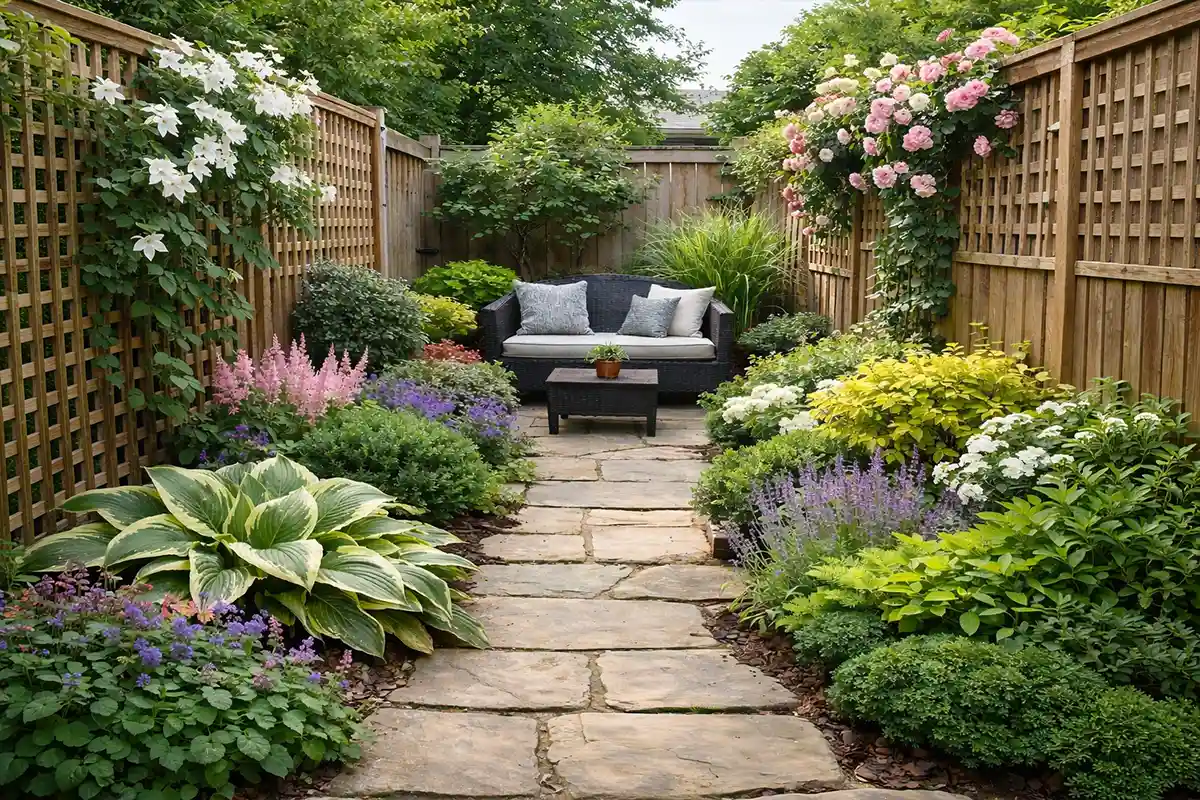

Layered planting along fences reducing visual compression in narrow backyard


Circulation Problems in Narrow Backyards

Circulation is another critical factor that homeowners often overlook.

Outdoor spaces require clear walking paths to function comfortably. Landscape designers generally recommend a minimum pathway clearance of 36–48 inches for normal movement.

In narrow yards, patios, planting beds, and furniture can easily shrink these paths below 24 inches, making the space feel cramped.

Common circulation mistakes include:

  • placing large furniture sets directly in walking paths

  • building patios that extend the full width of the yard

  • installing stepping stones too close together

  • planting shrubs that encroach on pathways

When circulation is restricted, people naturally avoid walking deeper into the yard.

In some cases, improving usability simply requires shifting furniture, widening pathways, or slightly repositioning planting beds.

The same principle applies to broader backyard planning strategies, where layout decisions determine whether outdoor spaces feel comfortable or awkward. Concepts explored in Backyard Design Mistakes That Ruin Outdoor Spaces often appear in narrow landscapes where small design errors have larger consequences.


Environmental Factors That Amplify Narrow Yard Problems

The physical environment can make narrow backyard issues more noticeable.

Because fences and neighboring homes surround the space, airflow, sunlight, and heat distribution behave differently than in open landscapes.

Heat Accumulation

Hardscape materials like concrete, stone, or porcelain pavers absorb heat during the day. In narrow spaces where fences reflect sunlight, surface temperatures can reach 110–130°F in summer conditions common in Arizona or Nevada.

Reduced Airflow

In humid regions such as Florida or Louisiana, narrow side yards can restrict airflow, trapping warm air and increasing humidity levels by 5–10 percent compared with open yards.

Uneven Sunlight

Tall fences and neighboring structures may create uneven shading patterns. In northern states, the back section of the yard may receive 2–3 fewer hours of sunlight per day, affecting plant growth and lawn health.

Research from the University of California Agriculture & Natural Resources shows that small residential landscapes often create unique microclimates that influence plant performance and outdoor comfort.

Recognizing these environmental patterns helps explain why some narrow yards feel hotter, darker, or more stagnant than expected.
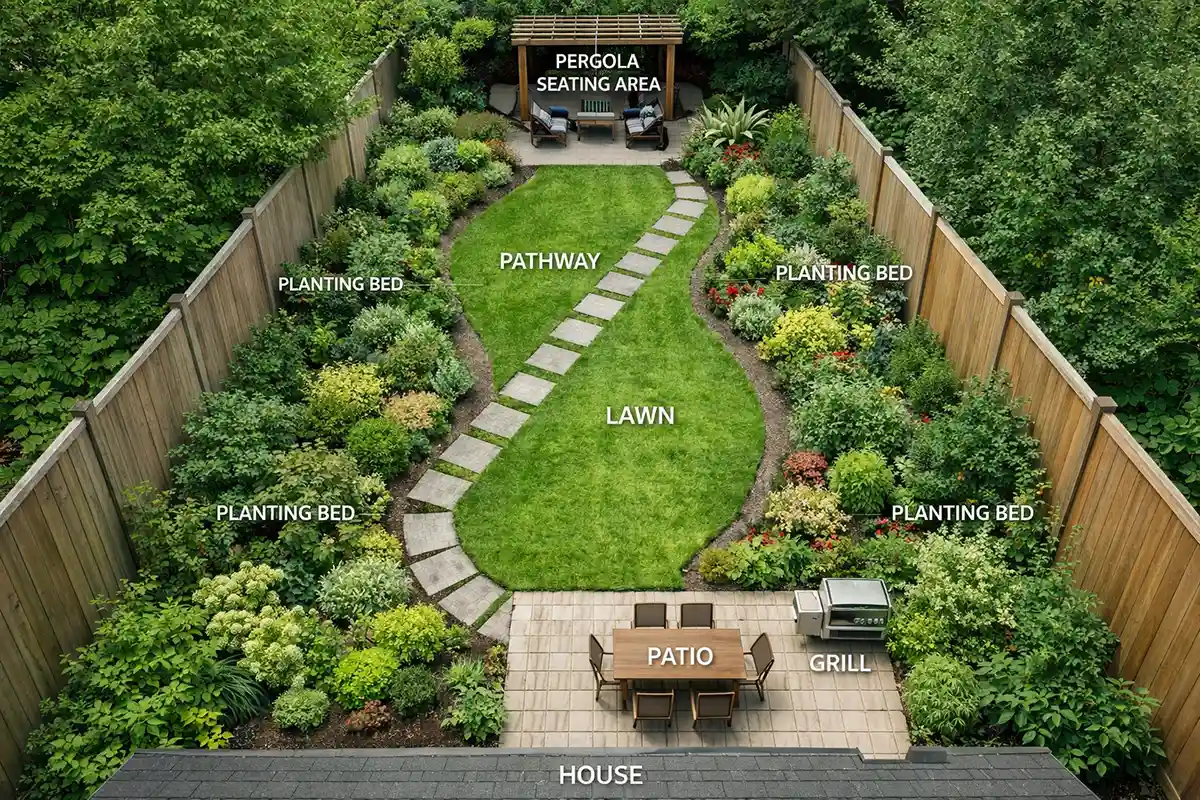
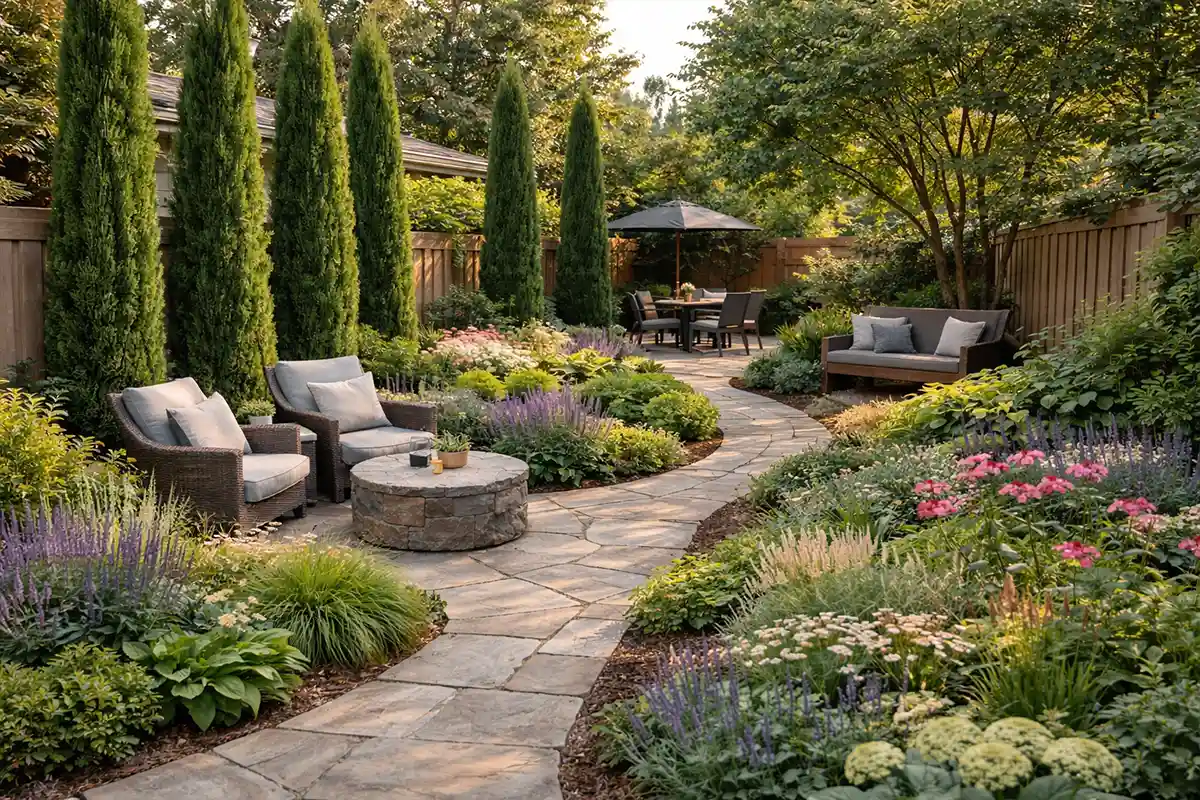
Smart Layout Strategies for Long, Narrow Backyards

The most effective way to fix narrow backyard design problems is to change how the space is visually organized, not simply add more elements.

Instead of allowing the yard to behave like a straight corridor, successful designs introduce subtle shifts in direction, layered planting, and focal points that shorten the perceived length of the space.

These layout strategies help transform a narrow yard into a sequence of usable outdoor areas.

1. Diagonal Layout Strategy

One of the simplest ways to break the hallway effect is by introducing diagonal lines.

When pathways, patios, or garden beds are positioned at a slight angle—often between 10° and 25°—they interrupt the straight sightline from the house to the back fence.

This change forces the eye to move across the yard rather than straight through it.

Diagonal layouts often include:

  • angled stepping-stone paths

  • triangular planting beds

  • offset patio corners

  • diagonal pergola placement

Even a small diagonal feature placed in the middle of the yard can visually shorten the entire space.


2. Offset Patio Placement

Many narrow yards include a patio that spans the entire width of the yard directly behind the house.

While this seems practical, it can unintentionally reinforce the corridor effect.

An offset patio solves this problem.

Instead of stretching wall-to-wall, the patio occupies only one side of the yard, leaving space for planting beds or pathways on the opposite side.

Benefits include:

  • improved circulation

  • more varied sightlines

  • increased planting space

  • a softer transition between house and yard

Offset patios often work best when they measure roughly 10–14 feet deep and 10–16 feet wide, depending on yard width.

These dimensions allow seating areas without blocking movement deeper into the yard.


Landscape plan showing offset patio and diagonal pathway in narrow backyard


3. Garden Room Strategy

Landscape designers often approach narrow yards by dividing them into garden rooms.

Each section functions like a small outdoor space with a distinct purpose.

Typical garden room layouts may include:

Garden Zone Purpose Typical Depth
Patio Room Dining or seating 10–18 ft
Garden Room Plant beds or lawn 20–30 ft
Retreat Zone Bench, pergola, or fire pit 10–20 ft
Utility Zone Storage or small shed 8–12 ft

By separating the yard into rooms, the eye stops at each boundary instead of traveling directly to the back fence.

Low hedges, small trees, pergolas, or raised beds can act as soft visual walls between these zones.


4. Split Lawn Layout

A single uninterrupted lawn strip is one of the main causes of the hallway effect.

Instead of one large lawn, designers sometimes divide the lawn into two smaller sections separated by planting beds or pathways.

For example:

  • a 12–18 foot lawn near the patio for casual use

  • a planting bed or stepping path in the middle

  • a second smaller lawn or garden area toward the rear

This layered approach visually shortens the yard and creates multiple focal points.

Split lawns also improve drainage and irrigation management, particularly in regions with seasonal rainfall patterns such as the Midwest.


5. Mid-Yard Anchor Features

A common mistake in narrow yards is placing the only focal point at the very back.

Instead, designers often introduce mid-yard anchors that interrupt the corridor.

Examples include:

  • small pergolas

  • raised planters

  • garden arches

  • water features

  • sculptural plants such as Japanese maple or multi-stem trees

Placing one of these elements roughly 25–35 feet from the house helps divide the yard visually into two smaller spaces.


Mid-yard pergola acting as visual anchor in long narrow backyard


Planting Strategies That Help Narrow Yards Feel Wider

Plants play a critical role in shaping how narrow spaces are perceived.

Instead of symmetrical planting along both fences, designers typically use layered and staggered planting patterns.

Key techniques include:

Staggered Shrub Layers

Rather than placing shrubs in straight lines, alternating plant groupings create visual depth.

Typical layering pattern:

  • groundcover plants 6–12 inches tall

  • mid-height shrubs 2–4 feet tall

  • small ornamental trees 10–15 feet tall

This layered effect softens fence lines and reduces visual compression.

Columnar Trees

Trees with narrow growth habits help create vertical structure without consuming valuable yard width.

Common options include:

  • columnar hornbeam

  • upright juniper

  • narrow ornamental pear varieties

These trees typically spread only 6–10 feet wide while reaching 20–35 feet tall, making them ideal for tight spaces.

Softening Fence Lines

Instead of hiding fences completely, designers often partially obscure them with:

  • trellis panels

  • climbing vines

  • espalier fruit trees

This technique maintains openness while reducing the visual dominance of the fence.


Circulation Improvements That Make Narrow Yards More Usable

Functional outdoor spaces depend on clear movement paths.

In narrow yards, even small circulation adjustments can dramatically improve usability.

Important circulation guidelines include:

  • maintain 36–48 inches of walkway clearance

  • avoid placing furniture directly in main paths

  • stagger stepping stones 18–24 inches apart

  • use gentle curves rather than straight paths

Curved pathways encourage slower movement and create a sense of exploration, making the yard feel larger than it actually is.

Some homeowners discover that circulation problems are the main reason their outdoor spaces feel uncomfortable. Layout adjustments similar to those discussed in Backyard Layout Ideas for Functional Outdoor Living can significantly improve how often the yard is used.


Practical Fixes for Common Narrow Yard Problems

The following table summarizes several common design issues and the most effective solutions.

Problem Cause Practical Fix
Corridor-like appearance Straight lawn strip Introduce curves or mid-yard features
Fence dominance Tall solid fencing Layered planting and trellis panels
Poor circulation Furniture blocking paths Maintain 36–48 inch walkways
Unused middle yard Single rear focal point Add mid-yard pergola or seating
Overheated hardscape Heat reflection from fences Introduce shade structures

These adjustments often improve the usability of narrow yards without requiring a complete landscape redesign.


——————- VISUAL BLOCK ——————-

AI IMAGE PROMPT:
A redesigned narrow backyard with curved pathways, layered planting beds, columnar trees, and multiple seating zones that visually shorten the yard. Realistic residential landscaping photography with natural lighting.

ALT TEXT:
Improved long narrow backyard layout with curved paths and layered planting

—————– VISUAL BLOCK END —————–


Key Insights for Designing Long Narrow Backyards

Long, narrow backyards require a different design mindset than square or wide outdoor spaces.

Instead of emphasizing the full length of the yard, successful layouts focus on breaking long sightlines and guiding movement sideways.

The most effective strategies usually include:

  • dividing the yard into smaller zones

  • introducing curves or diagonal elements

  • layering plants to soften fences

  • placing focal points in the middle of the yard

  • maintaining comfortable circulation paths

These techniques gradually transform a corridor-like yard into a series of inviting outdoor rooms.

When applied carefully, even a backyard only 20 feet wide can feel spacious and functional.


Frequently Asked Questions

Can a narrow backyard still include a patio and lawn?

Yes. Narrow yards work best when the patio remains moderately sized—typically 10–14 feet deep—leaving room for planting beds and circulation paths.

What plants work best for narrow landscapes?

Columnar trees, layered shrubs, ornamental grasses, and climbing vines often perform well because they add height without consuming too much horizontal space.

How wide should backyard walkways be?

Most landscape designers recommend 36–48 inches of walking space for comfortable movement.

Do pergolas help narrow yards?

Yes. Pergolas placed in the middle or rear portion of the yard act as visual anchors that break up long sightlines.

Is lawn necessary in narrow backyards?

Not always. Many successful narrow-yard designs replace large lawns with planting beds, gravel paths, or small garden rooms.


Conclusion

Backyards that are long and narrow often present unique design challenges. The corridor effect, fence dominance, and poor circulation can make these spaces feel awkward and underused.

However, these problems are rarely caused by the yard size itself.

With thoughtful layout strategies—such as diagonal paths, garden rooms, layered planting, and mid-yard focal points—even narrow properties can become comfortable and visually balanced outdoor living spaces.

By focusing on visual interruptions, circulation, and spatial layering, homeowners can transform a restrictive layout into a backyard that feels inviting, functional, and much larger than its actual dimensions.