Last updated: April 15, 2026
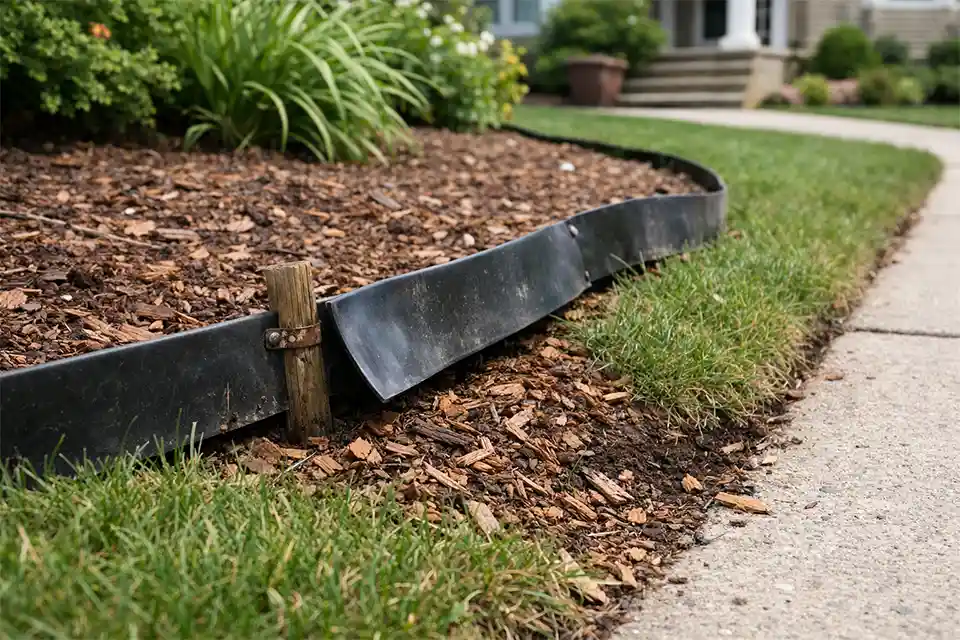
If front yard edging keeps moving, the material is usually not the main problem. The better first suspect is unstable support under it. In most yards, repeated shifting comes from one of three patterns: shallow anchoring, softened soil, or water moving through the bed often enough to loosen the edge.
Check three things before doing anything else: whether the line is off by more than 1 inch, whether stakes pull loose with moderate hand pressure, and whether the soil near the edge stays soft longer than 24 to 48 hours after rain or watering.
Those checks matter because a crooked edge can look like a minor cosmetic issue when it is actually the visible result of soil movement.
That distinction saves time. A section that gets bumped once by mower traffic is a touch-up. A section that bows again within 30 to 90 days after being reset is usually telling you the support system is failing.
Homeowners often spend too much time straightening the visible edge and not enough time asking why that section cannot stay put.
The most likely cause is below the edging, not in it
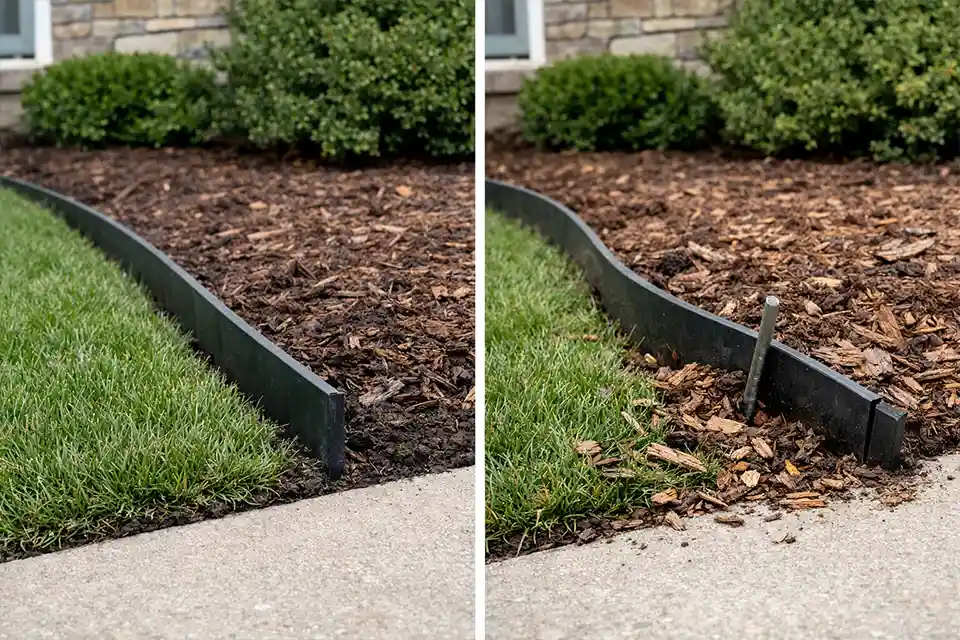
The most common failure is weak anchoring into disturbed bed soil. If the stakes are only gripping the top 2 to 3 inches of loose material, the edging may look fine for a few weeks and still start wandering after heavy rain, irrigation, or normal lawn traffic. That is why brand and material thickness often get blamed too early.
Water is the next thing to check. Beds that catch runoff from a roof, driveway, or slightly higher patch of lawn often lose support gradually.
The edging starts to lean or bow, mulch begins slipping over the line, and the problem gets treated as “bad edging” when the real issue is repeated softening and settling.
If the edging is still intact, the first thing to browse is usually not a full replacement. It is the category that helps the line stay anchored more securely when the soil has started loosening underneath it.
| BEST FIRST FIX FOR WEAK ANCHORING |
|---|
| Heavy-Duty Landscape Edging Stakes |
| This category makes the most sense when the edging is still usable but keeps shifting because the original stakes are too short, too light, or no longer gripping firm soil. |
| It fits front-yard beds where the line moves after rain, watering, or normal lawn traffic rather than from one obvious impact. |
| Look for longer steel stakes, heavier construction than basic plastic pins, and a design that holds better in disturbed bed soil. |
| 🔴 SHOP heavy-duty landscape edging stakes |
In yards where the bed also sheds mulch during storms, the edging problem is often tied to the same instability behind front yard mulch that washes away every season.
Freeze-thaw comes after that, especially in northern states. But even here, winter is usually not acting alone. Frost heave does more damage when the soil is already holding too much moisture. Wet soil plus shallow installation is far more important than cold by itself.
That ordering matters. Base failure is more likely than material failure. Water is more likely than random wear. People usually rank those in the wrong direction.
What people usually misread first
The bend is the symptom. The force behind it is the actual problem.
If the edging drifts outward into the lawn, the cause is often lateral pressure from wet soil, accumulated mulch, roots, or repeated contact from mower wheels.
If the edging lifts upward, the cause is more often frost movement, shallow seating, or an obstruction under the trench. Those are different repair paths, and this is where people waste time by using one fix for both.
Another common misread is assuming more stakes automatically solve the issue. They do not if the soil holding those stakes is still loose. More stakes in weak soil can buy a little time, but they do not create real holding power.
The other thing that gets overestimated is the need for hard edging in every bed. In simple front-yard layouts, especially where the bed line is clean and the surface material is light, a sharp trench edge may hold up better than a rigid border that keeps fighting movement.
Some high-maintenance borders are really design problems first, which is part of why low-maintenance front yards often become high-maintenance.
Quick diagnostic checklist
-
The edging is out of line by more than 1 inch over a 6- to 8-foot run
-
Stakes loosen by hand or rise after being tapped back in
-
Soil near the edge stays wet or soft beyond 24 to 48 hours
-
Mulch, gravel, or loose soil repeatedly spills over the same section
-
The same area shifts again within one season
-
The bed is on a slope of roughly 5% or more with no clear runoff control
If two or more of those are true, straightening the edge alone usually will not last.
For a closer look at the tools and edging types that can help stabilize a shifting border, see tools that help landscape edging stay put.
Why the obvious fix fails
The obvious fix is to hammer the edging back into line, add a few stakes, and move on. That can work when the problem came from one impact event. It usually fails when the bed edge keeps moving under ordinary conditions.
A useful threshold here is soil resistance. If you can push a screwdriver 3 to 4 inches into the edge zone easily during normal dry weather, the support is probably too loose to hold a long, clean line.
At that point, the problem is usually bigger than a quick re-pin. If the same section keeps drifting under normal conditions, the stronger category to browse first is usually a more rigid border system rather than another light reset.
| BEST CATEGORY FOR REPEATED SHIFTING |
|---|
| Steel Landscape Edging |
| This is usually the best category to browse first when the border has already been reset once and still will not hold a stable line. |
| It fits beds dealing with repeated lateral pressure from wet soil, mulch buildup, mower wheels, or routine movement along the lawn edge. |
| Look for thicker-gauge steel, enough depth to seat securely below grade, and a stake system designed for a firmer long-term hold. |
| 🔴 SHOP steel landscape edging |
In clay-heavy soil, the surface may look firm while the lower layer stays slick and unstable. In sandy soil, drainage may be fast but lateral support can still be too weak unless the edge is buried consistently and pinned into firmer ground.
This is also the point where some repairs stop making sense. If more than 20% to 25% of the bed perimeter has shifted, repeated spot straightening usually becomes a maintenance trap. You spend time preserving a failed installation pattern instead of correcting it.
Pro Tip: Before resetting anything, run water near the bed for 10 minutes and watch the path it takes. A section that keeps shifting next to concentrated runoff almost always needs water control before it needs prettier edging.
In many yards, edging drift overlaps with the same containment failure seen in front yard gravel or rock that keeps spreading into the lawn. Different material, same loss of edge control.
When to reset it and when to replace it
| Condition | What it usually means | Best response |
|---|---|---|
| One short section bent under 1 inch | Minor bump or isolated pressure | Straighten and re-pin |
| Same section bows again within 30 to 90 days | Support below is unstable | Rebuild that run, not just the line |
| Several stakes are loose across a longer stretch | Disturbed soil is no longer holding | Remove and reset a larger section |
| Edge lifts each spring | Moisture plus frost movement | Reinstall deeper and improve drainage |
| Plastic is cracked or connectors split | Material has reached its limit | Replace the edging material |
| Stone pieces rock individually | Base below has settled unevenly | Lift and rebuild the base layer |
The important judgment call is this: replacement only makes sense when the material is actually failing. If the edging is intact but the ground below it is moving, swapping one product for another often changes very little.
How to fix it so it stays put
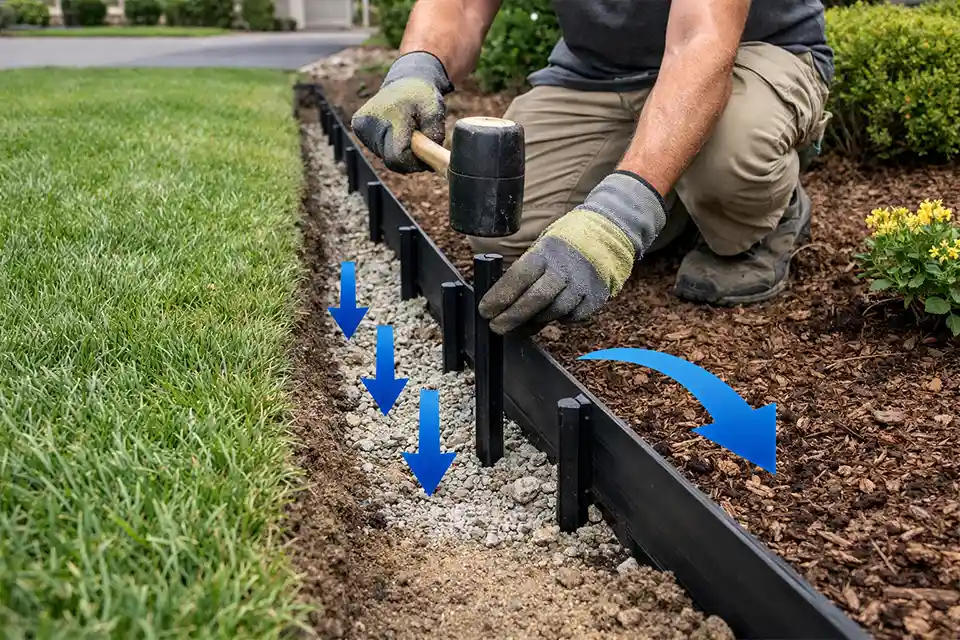
Lift the failed section and go wider than the visible damage. Extend the repair zone at least 12 inches beyond the shifted area on both sides.
Once the repair has moved from straightening to rebuilding, tool choice starts to matter more. The most useful category here is the one that helps cut a cleaner trench and reopen the run at a depth that gives the edging a more stable seat.
| BEST TOOL FOR REBUILDING THE RUN |
|---|
| Edging Spade |
| This is the right category to start with when the failed section needs to be lifted, widened, and rebuilt instead of simply tapped back into line. |
| It fits repairs where the old trench is shallow, uneven, or too soft to let the edging sit consistently below grade. |
| Look for a narrow blade, enough strength for compacted soil, and a shape that gives better control along straight lines and gradual curves. |
| 🔴 SHOP edging spade |
Very short repairs often leave stress concentrated at the joint, which is why the next failure tends to show up immediately beside the patch.
Then rebuild the support zone. Remove washed or softened material, re-form the trench, and compact the base before reinstalling the edge.
Flexible edging usually performs better when seated about 3 to 4 inches below grade with a consistent reveal above the lawn side. Stakes need to reach firmer soil beneath the loose top layer, not just pin the edging in place cosmetically.
For stone or paver edging, the standard is stricter. Those systems rely more heavily on a stable base, and shallow resets tend to rock loose again. In freeze-thaw regions, that becomes even more obvious by late winter.
Next, correct the water path. If runoff from a downspout, driveway, or sloped walk keeps feeding that bed, the edging will continue to lose support no matter how straight the reinstallation looks on day one. That is the repair most people postpone, and it is usually the one that changes the outcome.
Backfill evenly and check the visible reveal. If the top of the edging varies by more than about 1/2 inch, the line usually looks sloppy from the street and becomes easier to catch with mower wheels. One practical trick is to step back 15 to 20 feet before finishing. Small waves often disappear up close and become obvious at curb view.
When the bed shape is too fragmented, edging problems also multiply. Multiple small curves, short transitions, and tiny separated beds create more weak points than most homeowners expect. That same upkeep pattern shows up in front yards with multiple small plant beds that increase maintenance.
What changes under different yard conditions
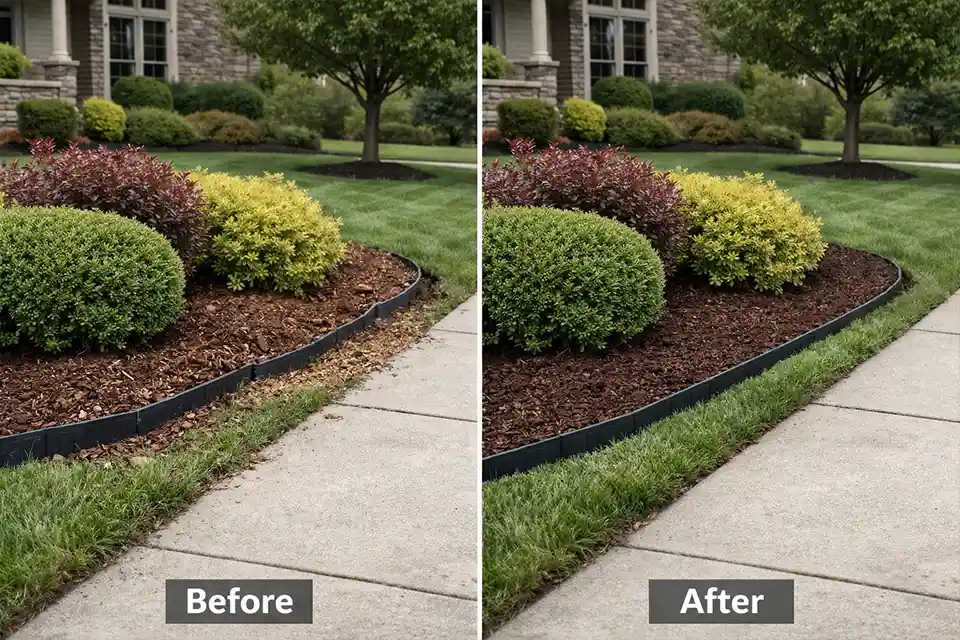
In cold climates, depth and drainage matter more than material thickness alone. A shallow edge in wet soil is much more likely to move after winter than a modest edge seated correctly in firm ground.
In dry regions, the problem is often different. Shrinking soil can pull away from the edging and reduce support, while brittle plastic components are more likely to crack under stress. There, the movement may look subtle at first and still get worse over a full hot season.
In wetter regions, the bigger risk is prolonged softness. If the edge zone stays damp for days, the border is functioning in unstable ground whether it looks tidy or not.
Once surrounding grade, roots, or runoff start changing the soil shape, related trouble may show up in nearby hardscape too, as seen in tree roots and grade pressure that start lifting front-yard surfaces.
The point where realignment stops being maintenance
A front-yard edge should not need regular rescue work to keep its shape. When straightening becomes seasonal, the problem is no longer maintenance. It is failed support.
That is the part homeowners tend to underestimate. They see movement and assume they need stronger edging.
What they usually need is firmer ground, better drainage control, or a simpler bed layout that does not ask so much from the border. If you fix the line without fixing the support, you are only resetting the countdown to the next shift.
For broader official guidance, see the Iowa State University Extension overview on landscape installation and maintenance.