Quick Solution Summary
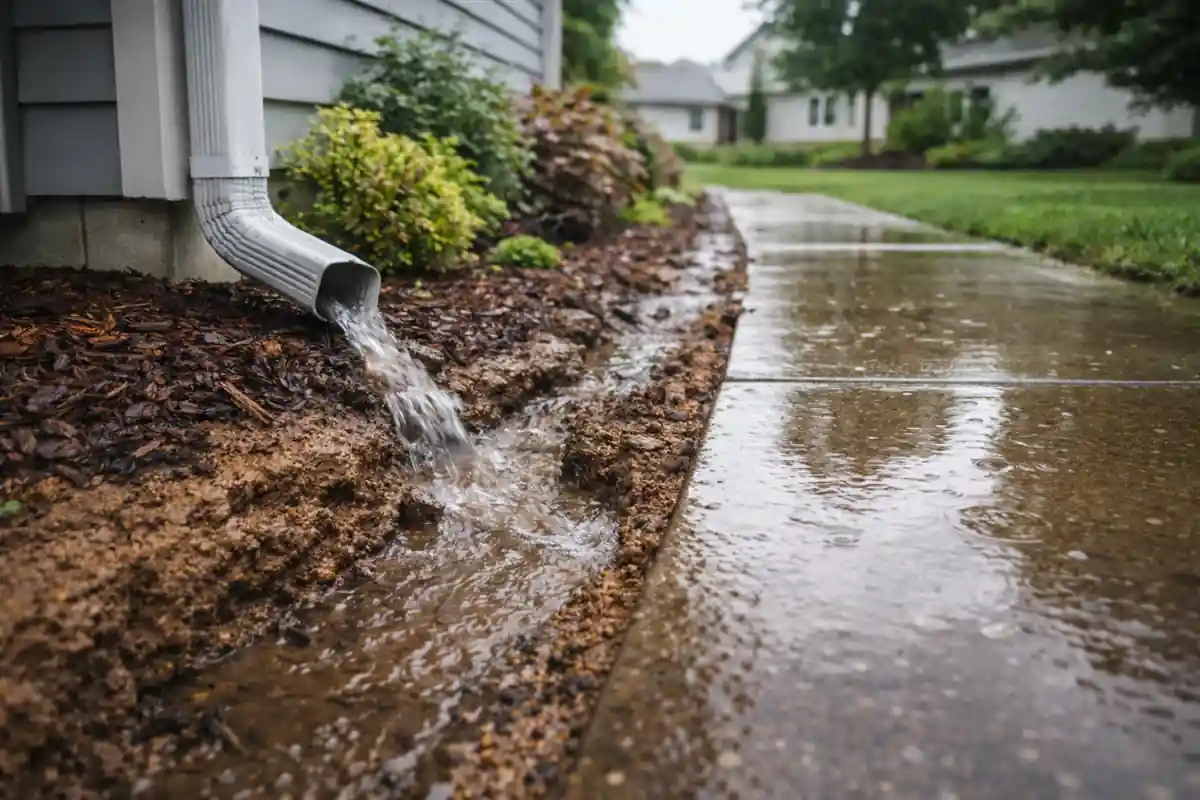
When a roof downspout releases water directly next to a front walkway, the concentrated flow often overwhelms the surrounding soil. During a typical rainstorm, a 1,000-square-foot roof section can produce 600–800 gallons of runoff in a single hour of moderate rainfall (0.75–1 inch). If that water exits only a few inches from a walkway, the ground becomes saturated quickly.
The result is familiar to many homeowners: puddles forming along the path, muddy edges, algae on concrete, or even gradual sinking of the walkway base.
The primary fix is redirecting roof runoff at least 6–10 feet away from pedestrian surfaces. This can be done with simple downspout extensions, underground drain pipes, or landscape drainage features such as gravel trenches or rain gardens.
Addressing the problem early prevents long-term issues like walkway settling, soil erosion, foundation moisture, and slippery surfaces during wet weather.
In many suburban neighborhoods, small drainage mistakes in the front yard often cascade into bigger landscaping problems over time.
Why Downspouts Near Walkways Create Drainage Issues
Front yard drainage failures frequently start with roof runoff being concentrated in the wrong place.
A single downspout collects water from a large roof area and releases it in a narrow stream. Instead of rainfall spreading naturally across soil, water exits in a concentrated discharge point.
Several things happen when this discharge occurs beside a walkway.
Soil Saturation
Typical garden soil absorbs water at 0.25–0.5 inches per hour, depending on clay or sand content. A downspout discharge can exceed this rate easily, leading to surface pooling.
Walkway Edge Erosion
Flowing water begins carving shallow channels along the side of concrete or paver paths. Over time this washes away supporting soil.
Surface Puddles
When runoff meets compacted soil near walkways, it spreads sideways instead of soaking in. The result is standing water.
Slippery Surfaces
Persistent moisture encourages algae and moss on concrete surfaces. In shaded areas, especially in coastal climates like California, this can create dangerously slick walkways.
Drainage problems around paths often appear gradually, which is why homeowners may overlook them until damage becomes obvious.
Quick Diagnostic Checklist
Signs that your downspout is causing front yard walkway drainage problems:
-
Water pooling along the edge of the walkway after rain
-
Mud splashing onto concrete during storms
-
Small trenches or grooves forming beside the path
-
Algae, moss, or dark staining on the walkway surface
-
Soil sinking along the walkway edge
-
Ice patches forming during winter freezes
Even two or three of these signals typically indicate the runoff is not being properly redirected.
How Roof Runoff Volume Contributes to the Problem
Many people underestimate how much water a roof collects.
| Roof Area | Rainfall Amount | Runoff Volume |
|---|---|---|
| 500 sq ft | 1 inch rain | ~310 gallons |
| 1,000 sq ft | 1 inch rain | ~620 gallons |
| 1,500 sq ft | 1 inch rain | ~930 gallons |
| 2,000 sq ft | 1 inch rain | ~1,240 gallons |
A downspout releasing even a fraction of that volume next to a walkway can quickly saturate soil.
The issue becomes even worse during Midwest thunderstorms, where rainfall rates often exceed 1–2 inches per hour.
Common Design Mistakes That Cause This Issue
Several landscaping design oversights often contribute to walkway drainage failures.
Short Downspouts
Many homes have downspouts that stop only 6–12 inches from the foundation, which allows water to collect near walkways.
Walkways Installed in Low Spots
If the path sits slightly below surrounding soil, runoff naturally flows toward it.
Compacted Construction Soil
Builders frequently compact soil during construction. This reduces infiltration rates and increases surface runoff.
Lack of Drainage Planning
Front yard landscaping sometimes prioritizes curb appeal without considering water movement.
Drainage design should always be integrated with front yard layout. Problems like these often appear alongside other issues discussed in Front Yard Landscaping Mistakes That Lower Home Value.
Practical Ways to Redirect Downspout Water
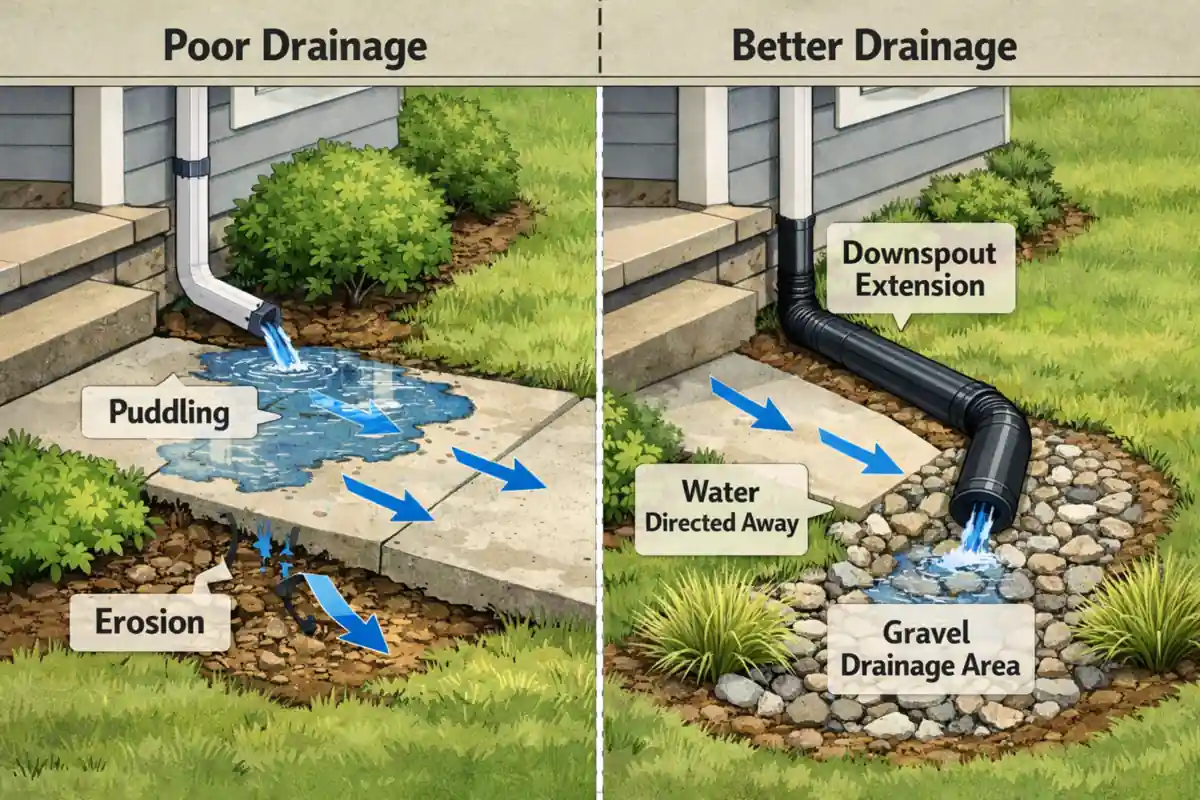
Several solutions can eliminate walkway drainage problems. The right approach depends on soil conditions and yard layout.
| Problem | Solution | Difficulty |
|---|---|---|
| Downspout ends near walkway | Install 6–10 ft extension | Easy |
| Frequent puddles | Add gravel drainage trench | Moderate |
| Water flows toward house | Regrade soil slope | Moderate |
| Heavy rainfall runoff | Install underground drain pipe | Moderate |
| Poor soil drainage | Create small rain garden | Moderate–Advanced |
Downspout Extensions
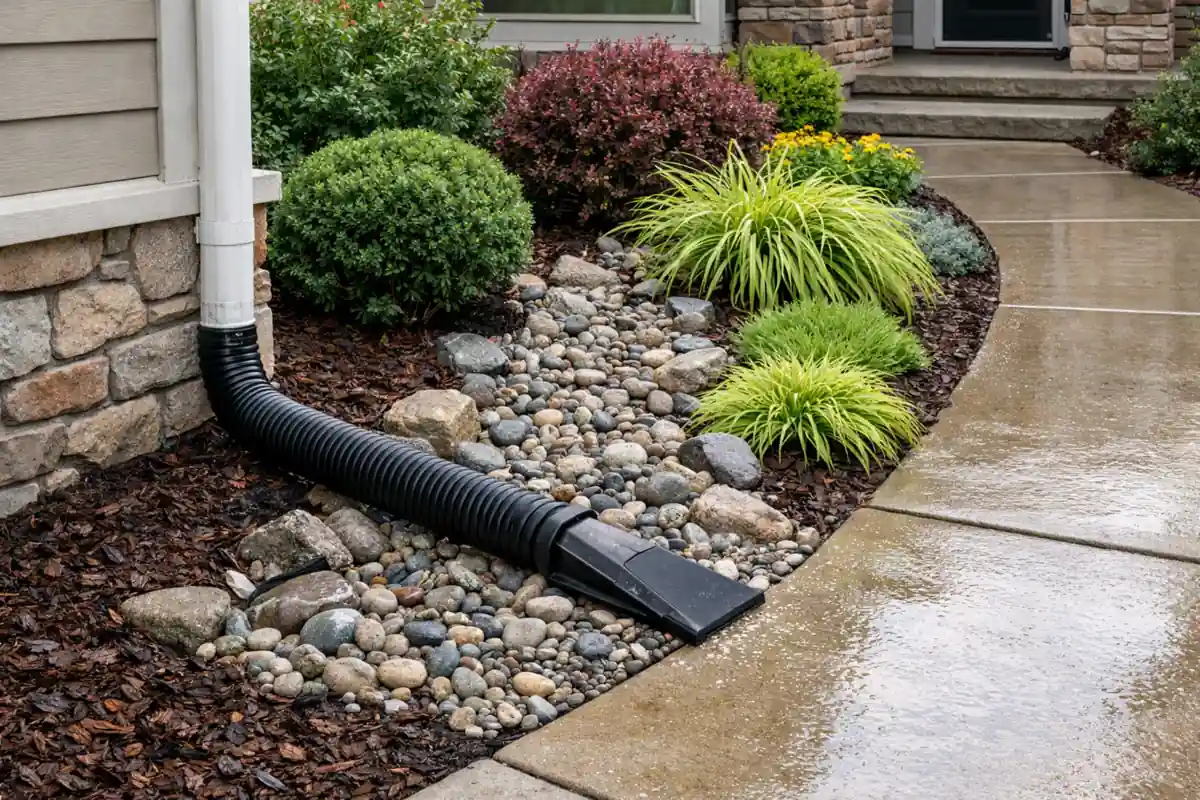
Flexible or rigid extensions redirect water away from paths. They are inexpensive and often solve the issue immediately.
Underground Drain Pipes
Buried corrugated pipes carry water safely to a discharge point such as a lawn area or drainage swale.
Gravel Trenches
A French drain style trench filled with gravel improves infiltration and prevents puddles near paths.
Rain Gardens
In regions with regular rainfall—such as the eastern United States—rain gardens can absorb runoff naturally using deep-rooted plants.
Environmental Factors That Make the Problem Worse
Drainage issues vary depending on climate and soil.
Clay Soil Regions
States like Texas, Illinois, and parts of Georgia have heavy clay soil with infiltration rates below 0.1 inches per hour. Water tends to pool easily.
Freeze–Thaw Cycles
In northern states such as Minnesota or Michigan, saturated soil near walkways can freeze in winter. Ice expansion may shift pavers or crack concrete.
Coastal Moisture
High humidity along the Pacific Coast often accelerates algae growth on constantly wet walkways.
Desert Storms
Even in dry states like Arizona, intense monsoon storms can overwhelm poorly placed downspouts.
Understanding the environmental context helps determine the best drainage solution.
How Walkway Drainage Connects to Larger Yard Problems
Water rarely causes problems in isolation.
Runoff near walkways may eventually lead to broader landscaping issues, including soil erosion or unstable surfaces. Similar patterns occur in yards where slope directs water toward hardscape features, as explained in Sloped Front Yard Landscaping Problems and Drainage Issues.
Poor water management can also affect patios and outdoor seating areas, where puddles often develop long before structural issues become visible. Situations like these are discussed in Patio Drainage Problems Most Homeowners Notice Too Late.
Even routine landscaping projects can unintentionally worsen drainage if runoff patterns are ignored. In fact, many homeowners discover the issue only after new planting beds or pathways are installed, a pattern also seen in Front Yard Landscaping Mistakes to Avoid.
Step-by-Step Fix for a Downspout Walkway Drainage Problem
-
Observe water flow during rainfall.
Identify where runoff travels and where puddles form. -
Measure the distance from downspout to walkway.
Ideally water should discharge 6–10 feet away. -
Install a temporary extension.
This quick test often confirms whether runoff location is the main issue. -
Improve soil grading.
Maintain a gentle slope of 1–2% away from walkways and foundations. -
Add drainage materials if necessary.
Gravel beds or underground drains help disperse excess water. -
Monitor after several storms.
Observe changes during both light rain and heavy storms.
This process helps ensure the fix actually solves the drainage pattern rather than shifting water somewhere else.
Questions Homeowners Often Ask
How far should a downspout discharge from a walkway?
Most drainage professionals recommend 6–10 feet away from hard surfaces to prevent pooling and erosion.
Can a simple splash block fix the problem?
Splash blocks help disperse water but usually move runoff only 1–2 feet. Extensions or drains are more effective.
Is standing water near a walkway dangerous?
Yes. Persistent moisture encourages algae growth, which can make concrete slippery.
Will drainage problems damage my walkway?
Over time they can. Soil erosion beneath the walkway edge may cause pavers to shift or concrete slabs to settle.
Key Insight
Many front yard drainage problems are surprisingly simple. The issue often isn’t rainfall volume—it’s where that water is concentrated. Redirecting runoff even a few feet away can dramatically reduce puddles, erosion, and long-term landscaping damage.
For more technical guidance on residential drainage systems, resources from the University of Minnesota Extension provide helpful research on runoff management and soil infiltration in residential landscapes.