Last updated: October 4, 2026
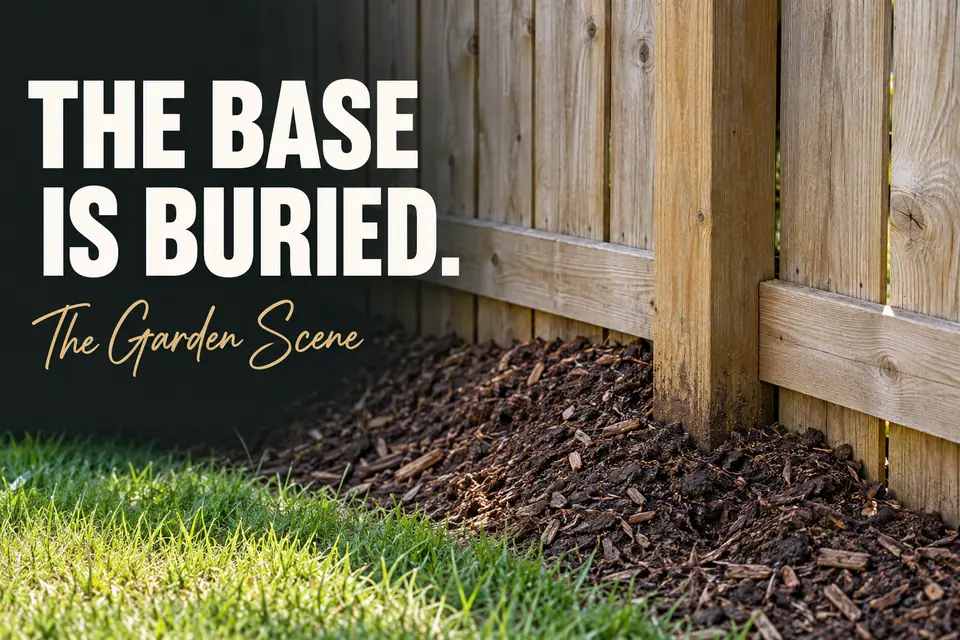
When the bottom of a wood fence disappears behind soil or mulch, the first change is its exposure: the covered wood has fewer opportunities to dry, and its condition becomes harder to inspect. Visible rot may come later. A fence can remain straight while its newly buried lower band stays damp.
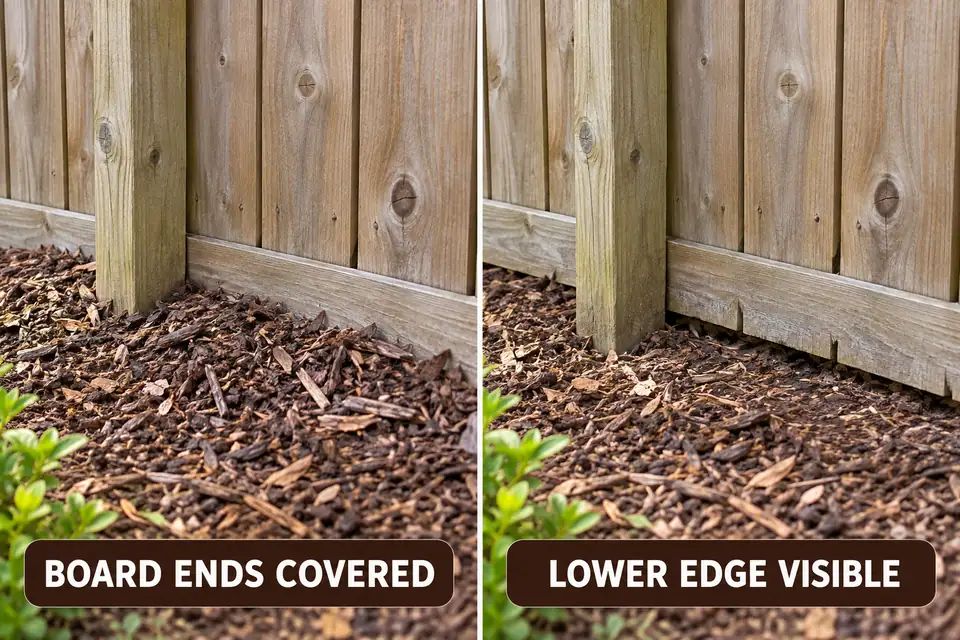
Start by locating the board ends and the line where each post enters the ground. Are those surfaces visible, or has accumulated material covered them? Dark wood alone does not prove decay. The useful distinction is between increased moisture contact, surface discoloration, and actual loss of wood fibers.
Why a Raised Ground Line Changes Fence Exposure
A fence does not have to sink for its bottom clearance to disappear. Repeated mulch top-ups, soil added to a nearby bed, and debris collecting along the boundary can gradually raise the surface against it.
The mineral-soil grade and the top of the mulch are different levels, but either can create contact. Pulling back a few wood chips may reveal that soil underneath already reaches the boards. Conversely, loose mulch may be the only material bridging an otherwise open gap.
Compare several points along the fence. An exposed board end nearby can help reveal where buildup is concentrated, although it does not establish the original grade. Slopes, uneven board lengths, and previous changes can produce different clearances.
The deciding question is whether material now covers wood that previously sat above the surface. Check the opposite face where access is available. A clear lawn-facing edge can conceal a higher bed on the other side, leaving the back of the same boards in contact.
Moisture Contact at Boards and Posts
Board Ends and Lower Rails
Board ends expose end grain, which can absorb water when held against damp material. Soil or packed mulch also maintains contact with the lower faces, reducing the exposed surface available for drying.
That contact matters beyond the bottom tip. Material packed behind boards may reach a lower rail or collect around connections. The visible front can dry while the rear contact area remains damp. Inspect the lowest accessible rail and attachment points rather than judging only the board faces.
Look for the extent of contact: one small pile, a continuous buried edge, or material trapped on both sides. That pattern identifies where closer observation is most useful.
The Newly Covered Band Around Posts
An embedded fence post already has ground contact. Added material extends the covered band upward and conceals wood that was previously available for inspection. The problem is not simply that a post touches soil; it is that its exposure and visibility have changed.
Pressure treatment and naturally durable wood can improve resistance, but neither makes the post immune to deterioration. Appearance alone cannot establish the treatment specification or remaining condition.
Keep the component distinction clear. A deteriorated board end may be a localized repair issue. Deterioration around a supporting post can affect the stability of an entire bay. Clearing the visible face helps assessment, but it does not reveal the buried portion or establish that concealed wood is sound.
Hidden Rot vs Ordinary Surface Staining
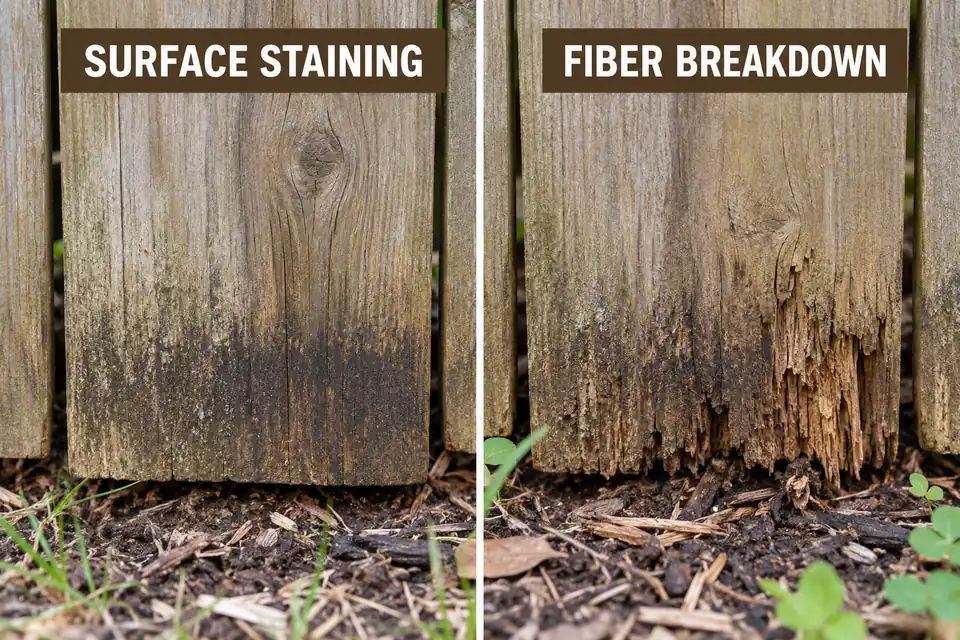
Once loose material is moved away, a dark band may mark the former contact line. It records exposure, but it does not identify the condition of the wood by itself. Wetness, transferred soil, weathering, and staining can all alter color.
Give more weight to the fibers. A continuous surface with discoloration presents different evidence from wood that is visibly crumbling, separating into weak fibers, or missing along an edge. Localized softness or a narrowed section deserves closer evaluation, especially at a post base.
Use accessible surfaces for a gentle initial check. Do not drive a screwdriver deeply into the wood, pry off a surface layer, or lever against a board to see whether it breaks. Aggressive probing can damage material and still fail to establish the condition behind it. A homeowner’s surface check is screening, not a strength assessment.
Also distinguish an old split from deterioration around it. A crack alone does not establish decay; softened or missing material along that crack changes the concern.
A firm-looking outer face cannot rule out damage farther inside or on the hidden side. This matters when the accessible face looks acceptable but a connection is loose, the post has moved, or material loss is visible elsewhere around its base.
There is no dependable sequence in which boards, rails, and posts must fail. Their exposure histories and resistance differ. Allowing covered wood to dry can reduce conditions favorable to decay, but drying does not replace lost fibers. A lighter surface after several dry days is therefore useful moisture evidence, not proof of restored strength.
How to Restore an Inspection Gap
The goal is to remove accumulated contact and regain access to the lower edge. It is not to dig down until every post looks exposed. Established soil around a post may be part of its support, and a fence holding back raised ground needs a different assessment.
- Check before disturbing the buildup. Look for existing lean, damaged post bases, and soil pressing against one side of the fence. If the fence appears to retain ground or a supporting component is visibly compromised, stop routine clearing. Removing material there may involve more than surface maintenance.
- Remove loose accumulation first. Pull mulch, leaves, and loose debris away in small amounts. Work without levering against boards or striking the post base. This first pass should reveal what lies underneath, allowing you to distinguish removable surface buildup from established soil.
- Reassess the soil beneath it. Remove only clearly identifiable loose added material where doing so will not disturb support. If restoring clearance would require cutting into established grade, digging around a footing, or deciding how much supporting soil can be removed, stop and arrange assessment.
- Expose the edge without making a trench. Seek visible separation beneath board ends while leaving the post embedded. Avoid a narrow depression that collects water beside the fence. Do not chase buried wood downward or undermine the soil around a post to obtain a cleaner-looking line.
- Inspect, then revisit. Observe the exposed surfaces and check them again after subsequent rain and a suitable drying period. Keep fresh top-ups away from the cleared edge. If material repeatedly returns or the base remains wet, the contact problem has not been fully resolved.
Vertical clearance beneath boards and horizontal inspection access serve different purposes. The gap separates board ends from the surface; the inspection strip lets you see and reach that edge. Broader guidance on keeping maintenance access along the fence helps when plants or bed growth also obstruct access.
Completion should be judged by visibility, separation, and preserved support. A neat strip that leaves soil packed behind the boards has only addressed the accessible face.
When the Fence Base Needs Closer Evaluation
Clearing is insufficient when it reveals softened or missing wood at a post base, deteriorated material around lower connections, or an existing lean. A damaged individual board and a weakened supporting post have different consequences; the latter can affect the whole fence section.
Support also needs attention when clearing reveals voids or soil washing away along the fence line. Removing buildup cannot resolve a recurring water path or replace lost support.
Persistent wetness deserves another look even when the exposed wood appears intact. Soil on the opposite side may still maintain contact, or water may repeatedly arrive at the same low point.
A fence carrying raised soil is another stopping point. Restoring a visible gap may require resolving how that ground is retained, beyond ordinary mulch removal.
Beside a gate, a gate post that moves during normal operation requires assessment of its support. Do not repeatedly operate the gate or shake the fence to test a questionable base.
Where accessible wood shows no concerning deterioration or movement, maintaining the cleared edge and observing it through wet and dry conditions may be reasonable. Concealed areas remain uncertain. Where fibers are lost, support moves, or soil removal would affect stability, a cleaner base is only the start of evaluation.
For background on moisture, staining, and decay, see the USDA Forest Products Laboratory’s explanation of wood biodeterioration.