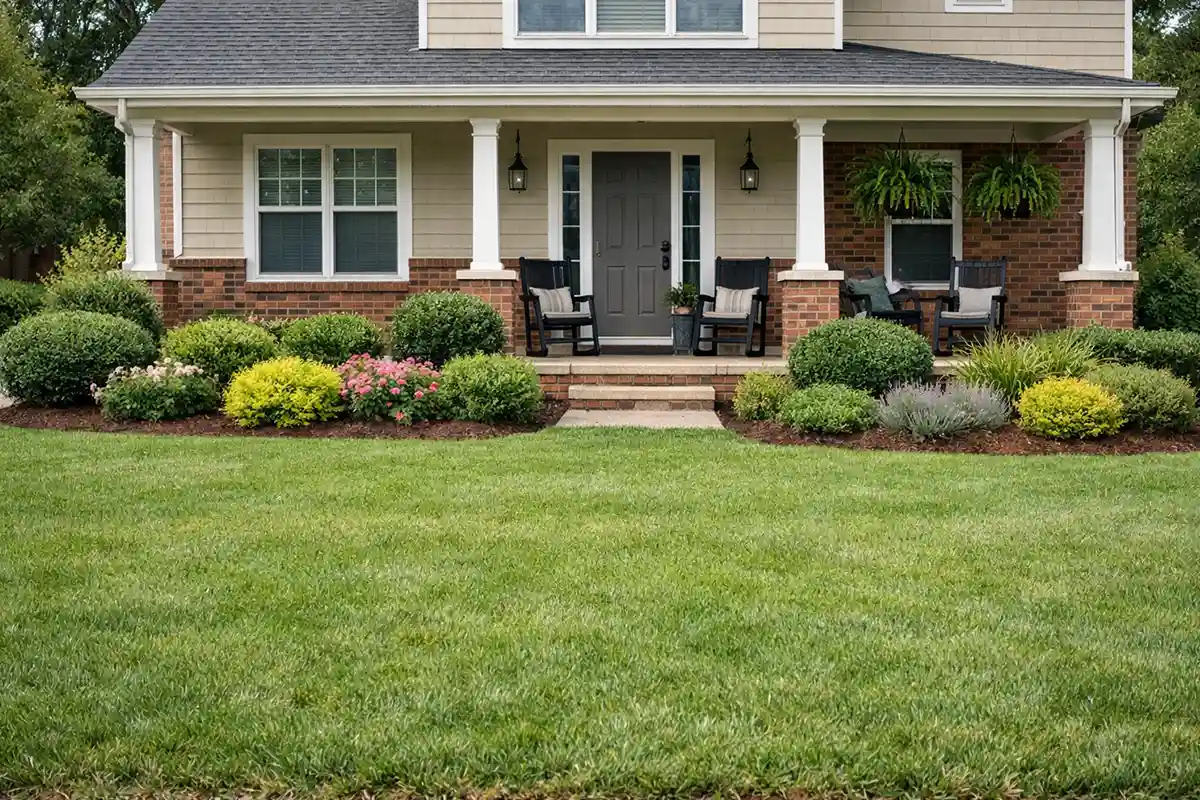
Most front yard privacy problems persist not because there isn’t enough planting, but because sightlines are evaluated from the yard instead of from the street.
An open front yard often looks calm and welcoming, yet that same openness can quietly increase exposure. What appears spacious from the driveway can feel surprisingly visible from the sidewalk.
Most privacy concerns begin not with neglect, but with assumptions. Visual softness is mistaken for visual shielding, and decorative layering is mistaken for functional screening.
The tension builds gradually. The yard feels designed, yet daily activity inside the home feels increasingly on display.
Relying on Low Plantings That Never Reach Eye Level
Neatly trimmed shrubs and ornamental grasses look intentional and balanced, but they rarely interrupt a standing sightline. What feels substantial while walking through the yard often disappears when viewed from the street. The eye travels over two or three feet of foliage without slowing down.
This creates a contrast between perceived enclosure and actual exposure. From inside the home, the greenery appears dense and comforting. From the sidewalk, it reads as ground cover rather than a barrier.
Over time, seasonal dieback sharpens that tension. Summer fullness shifts to winter transparency, and the yard that once felt buffered becomes visually open again.
| What Seems Stable | What Is Overlooked | Structural Tension Beneath |
|---|---|---|
| Dense summer foliage | Winter leaf drop | Seasonal transparency increases exposure |
| Uniform low hedges | Average adult eye level | Sightlines pass directly above planting mass |
| Decorative edging | Street elevation | Slight grade shifts extend visibility |
| Fresh nursery spacing | Mature pruning patterns | Interior thinning creates viewing gaps |
When the issue is occasional and tied to one season, the yard may feel private during part of the year and simply lighter during another. As frequency increases across multiple seasons or as pedestrian traffic grows, the pattern shifts from temporary openness to repeated visual access that becomes part of daily life.
Depending on Symmetry Instead of Screening Strategy
Balanced foundation beds frame a facade beautifully, yet balance does not equal blockage. A symmetrical layout satisfies architectural proportion while leaving diagonal sightlines untouched. The house looks orderly, but visibility flows through the very spaces symmetry creates.
The contrast is subtle. Matching shrubs on both sides of a door appear complete, yet the space between them often aligns directly with front windows. The visual rhythm of symmetry can unintentionally guide the eye inward rather than deflect it.
This tension intensifies on corner lots or angled approaches. Straight-on views may seem controlled, while cross-angle views reach deeper into the porch or living room.
When this alignment occurs only from a narrow angle, the exposure feels situational and brief. As traffic patterns diversify or as landscaping matures unevenly, those angled views become more frequent and sustained, shifting the yard from composed to penetrable.
Assuming Distance From the Road Is Enough
A deep setback feels protective at first glance. Extra lawn between the sidewalk and the house creates psychological separation, yet open turf does little to interrupt vision. What looks like breathing room often acts as a clear runway for sightlines.
Flat terrain intensifies this contrast. Without vertical interruption, the eye moves effortlessly across grass toward windows and porches. At night, interior lighting reverses the dynamic, turning the home into the brightest focal point on the block.
Homes on busy streets experience this difference more acutely. Even moderate foot traffic creates repeated visual contact throughout the day. Front Yard Privacy Problems on Busy Streets explains how traffic patterns change the way exposure is perceived and why distance alone rarely solves it.
When traffic is sporadic, exposure feels occasional and easy to dismiss. As pedestrian flow, delivery activity, or neighborhood density increases, the repetition of visibility changes from incidental to constant, altering how the space is experienced over time.
Choosing the Wrong Type of “Open” Trees
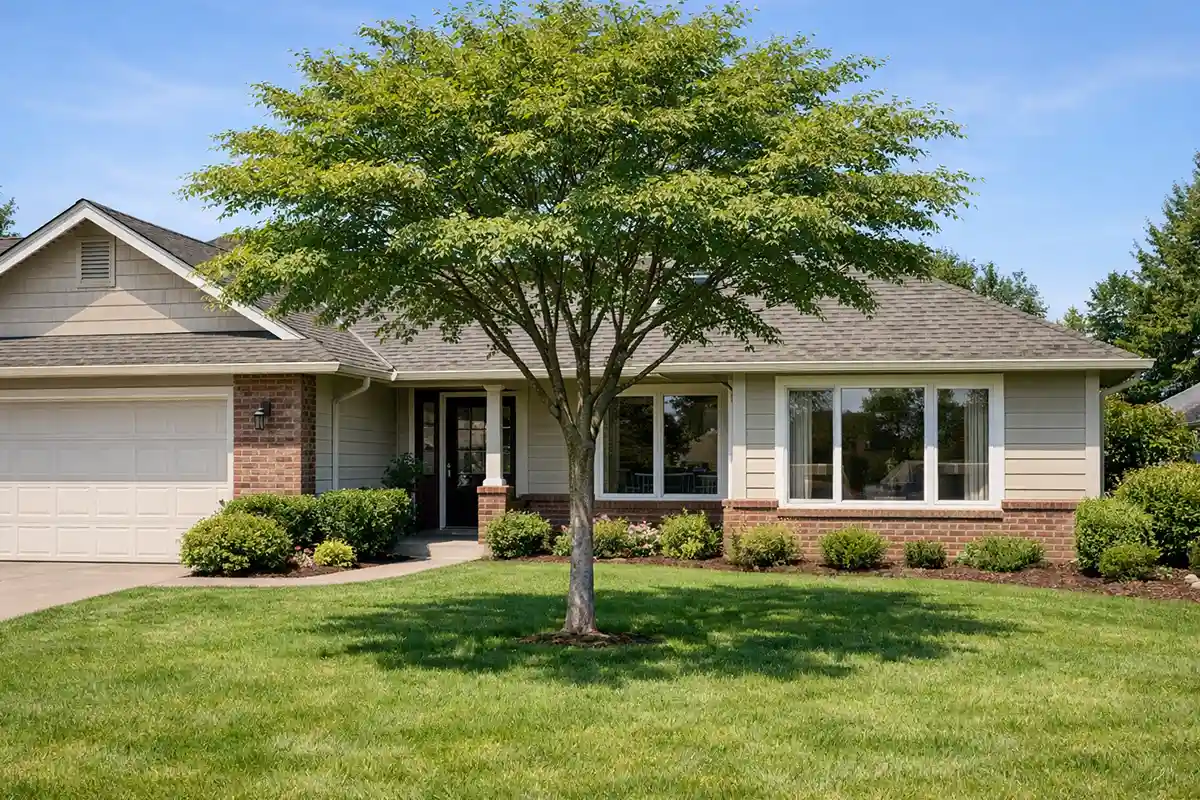
An airy ornamental tree offers shade and seasonal interest, yet it rarely blocks lower sightlines. High canopies create overhead softness while leaving the base fully transparent. The yard feels framed, but not filtered.
This produces a layered contrast:
-
Overhead coverage vs ground-level exposure
-
Visual elegance vs functional screening
-
Focal point attraction vs peripheral protection
A single specimen tree often draws attention toward the home rather than away from it. Without lower branching or companion massing, it operates as a ceiling instead of a wall.
When foliage is dense during peak growing months, visibility may appear softened. As leaves thin or drop, the underlying openness becomes more pronounced, and repeated seasonal shifts begin to define the yard’s character.
Ignoring the Porch as a Privacy Threshold
The porch may feel like a transitional retreat, yet it frequently sits fully exposed to the street. Landscaping often frames the lawn and foundation while leaving the porch visually detached. What appears welcoming can also feel performative when seating areas align directly with pedestrian eye level.
Elevation compounds the effect. A porch raised even slightly above grade positions seated occupants closer to standing sightlines outside. The comfort of being lifted contrasts with the increased visibility that elevation creates.
Design layers that stop short of the porch leave a direct corridor from sidewalk to seating. Front Yard Landscaping for Privacy Without Fences explores how layered plant heights and staggered placement can quietly reshape those sightlines without closing the yard off entirely.
When the porch is used occasionally, exposure feels incidental. As daily routines shift outdoors or neighborhood interaction increases, that same openness becomes more noticeable, and the space transitions from inviting to visibly active in ways that were not originally anticipated.
Overusing Decorative Elements That Do Not Block Views
Stone borders, accent boulders, and sculptural planters often make a yard feel curated, yet they rarely interrupt vision at standing height. What feels grounded and substantial at ground level dissolves when viewed from across the street. Decorative mass creates visual interest, but not visual resistance.
This contrast becomes sharper when elevation shifts slightly upward toward the house. A raised planter can appear protective from inside the yard while remaining visually transparent from the sidewalk. The decorative layer stabilizes aesthetics while leaving exposure structurally unchanged.
When decorative elements are isolated and infrequent, the yard feels styled but open. As more accents accumulate without height variation, the space becomes busier yet no more shielded, increasing visual complexity without reducing sightlines.
Creating Gaps Between Plant Layers
Layered planting suggests depth, yet spacing often prioritizes symmetry over interception. Shrubs are placed with breathing room, and ornamental grasses are staggered for rhythm, but the resulting corridors allow clear diagonal views. What appears thoughtfully spaced can function like a series of visual tunnels.
This tension grows as plants mature. Early fullness can mask narrow openings, while later pruning restores airflow and inadvertently restores visibility. The balance between plant health and density quietly shifts toward transparency.
When gaps remain occasional and isolated, exposure feels situational. As multiple openings align from angled approaches, those separate gaps begin to operate as one continuous viewing path.
Treating Curb Appeal as the Primary Goal
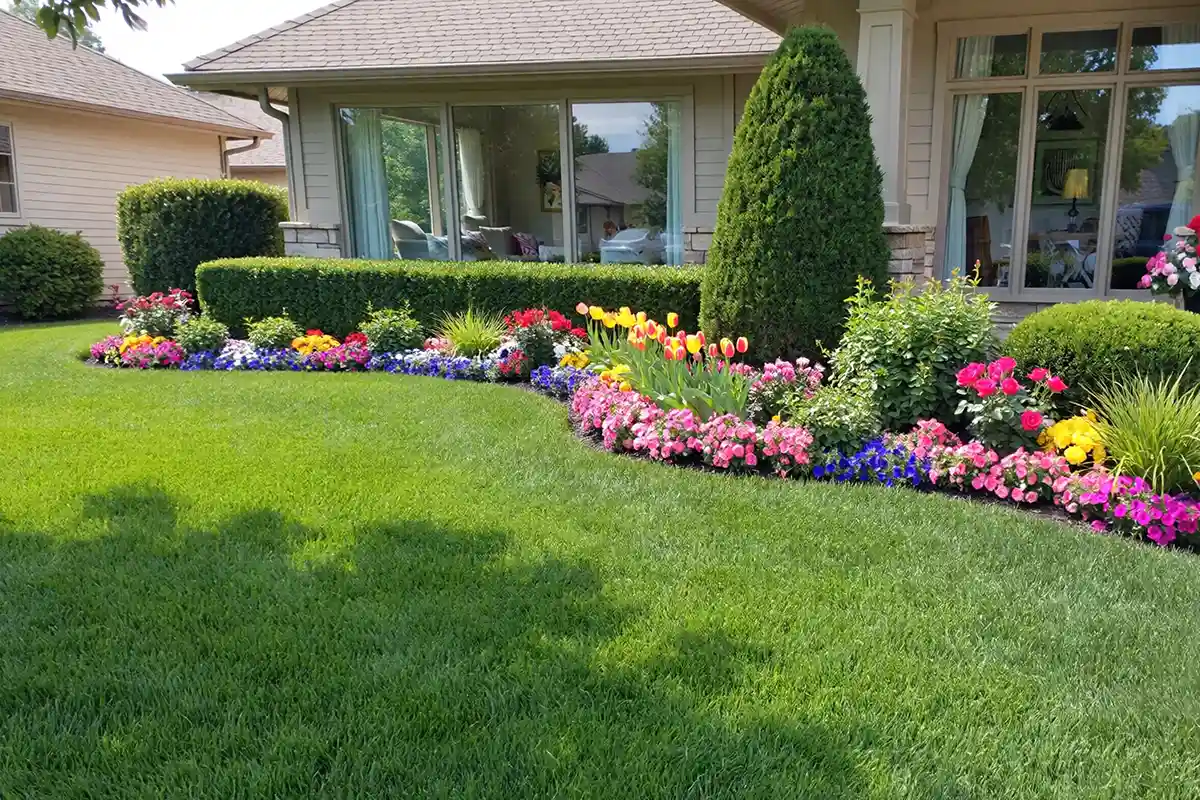
A polished lawn and balanced flower beds photograph beautifully, yet they often leave the home fully readable from the curb. Visual order attracts the eye, while privacy requires interrupting it. The yard may feel complete, but exposure remains uninterrupted.
The trade-off becomes visible in listing-style layouts. Open lawns enhance perceived property size, yet openness removes intermediate layers that could soften sightlines. Curb appeal strengthens first impressions while weakening ongoing screening.
When resale is the primary lens, exposure feels acceptable and temporary. As daily living replaces listing logic, the repeated visibility becomes part of the home’s rhythm rather than a brief marketing moment.
Do Taller Hedges Actually Solve Front Yard Privacy?
Increasing hedge height seems like a direct fix, yet height alone rarely resolves structural exposure. A taller mass blocks straight-on views but may amplify contrast at driveways or corners. Immediate coverage can conceal the deeper geometry of the lot.
Short-term relief often masks longer-term shifts:
-
Does added height reduce visibility, or does it simply redirect it toward unprotected angles?
-
Is the hedge dense at planting, or does interior thinning create see-through zones later?
-
Does shade from taller growth protect privacy, or does it weaken surrounding plant layers?
-
Does tighter spacing block views, or does it increase airflow stress within the row?
-
Is the yard quieter visually, or does a single wall draw more attention?
-
Does privacy improve during leaf season, or does winter transparency return?
-
Does faster growth create coverage quickly, or does it accelerate maintenance drift?
-
Does a uniform hedge feel protective, or does it visually compress the lot?
| Adjustment Attempt | Immediate Effect | Hidden Cost | Long-Term Structural Shift |
|---|---|---|---|
| Taller evergreen hedge | Blocks direct sightlines | Increased shade beneath | Understory thinning increases gaps |
| Tighter plant spacing | Faster visual coverage | Airflow reduction | Interior dieback creates transparency |
| Single-row screening | Clean edge definition | Limited depth | Angle exposure remains |
| Fast-growing species | Rapid height gain | Weak branch structure | Uneven density over time |
| Uniform hedge wall | Consistent facade | Visual compression | Focus shifts to entry gaps |
Each adjustment shifts balance rather than eliminating tension. Height increases immediate screening while subtly altering light, airflow, and maintenance load.
When hedge growth is modest and maintenance remains consistent, the system holds in relative balance. As growth accelerates or pruning patterns change, density redistributes unevenly, and what began as coverage evolves into patchwork visibility.
Selecting Plants Without Considering Seasonal Transparency
A plant may look dense in peak summer and nearly skeletal in winter. The yard feels shielded during warm months yet unexpectedly open during colder ones. Seasonal contrast reveals whether privacy was built on foliage volume or structural mass.
Evergreen additions can rebalance that exposure, but when inserted reactively, they often compete with existing layers. Overlapping canopies create shade pockets that thin adjacent shrubs. What appears like reinforcement may quietly redistribute density.
How to Choose Plants for Front Yard Landscaping explains why growth pattern, not just height, determines whether a plant truly contributes to privacy.
When seasonal shifts are predictable and brief, the yard’s openness feels cyclical. As multiple plant types respond differently to weather extremes, the staggered thinning can extend exposure beyond a single season, increasing the duration of transparency.
Underestimating Maintenance Drift Over Time
Fresh installations look cohesive, yet maintenance gradually reshapes density. Pruning for symmetry can hollow interiors, while delayed trimming allows top-heavy growth. The yard oscillates between fullness and thinning.
This creates a structural tension between control and vitality:
-
Controlled shaping vs natural branching spread
-
Airflow optimization vs interior density
-
Clean edges vs layered depth
When trimming cycles are steady and light, plant mass remains relatively even. As maintenance becomes reactive to growth spurts or weather stress, density redistributes unpredictably, and screening effectiveness fluctuates.
Temporary balance often feels stable because exposure appears limited to small zones. As growth, pruning, and seasonal change interact over years, those isolated shifts combine, and the yard gradually transitions from layered openness to recurring visual stress patterns.
Layering Depth Instead of Height Alone
Raising hedge height can feel decisive, yet height without depth often shifts the problem instead of resolving it. A taller row blocks direct views but leaves diagonal sightlines intact. The yard may appear more enclosed from the center while remaining exposed from the sides.
Depth changes how visibility behaves across space. When plant groupings are staggered instead of aligned in a single straight line, sightlines lose their uninterrupted path toward windows. The result is not total closure, but fragmentation of exposure.
In practical layouts, this often looks like positioning a denser 5–6 foot shrub slightly forward near driveway corners while allowing central lawn areas to remain visually lighter. That subtle forward offset intercepts diagonal views without turning the frontage into a solid wall.
If only vertical growth is intensified, shade concentration increases while angle exposure persists. When depth is layered alongside height variation, visual pressure distributes more evenly across the yard.
Rebalancing Sightlines at Angled Entry Points
Exposure rarely spreads evenly across the frontage. Corners, driveway transitions, and walkway alignments typically carry more visual traffic than central beds. A layout that appears controlled head-on may remain fully readable from moving vehicles.
Rebalancing often involves shifting plant mass toward those approach angles instead of thickening the entire frontage. For example, a slightly taller mass placed near the outer edge of a walkway can intercept views before they align with porch seating.
When only central planting is reinforced, exposure relocates rather than diminishes. When angle interception is integrated into the layout, visibility becomes diffused instead of redirected.
Integrating Porch-Level Filters as Mid-Range Buffers
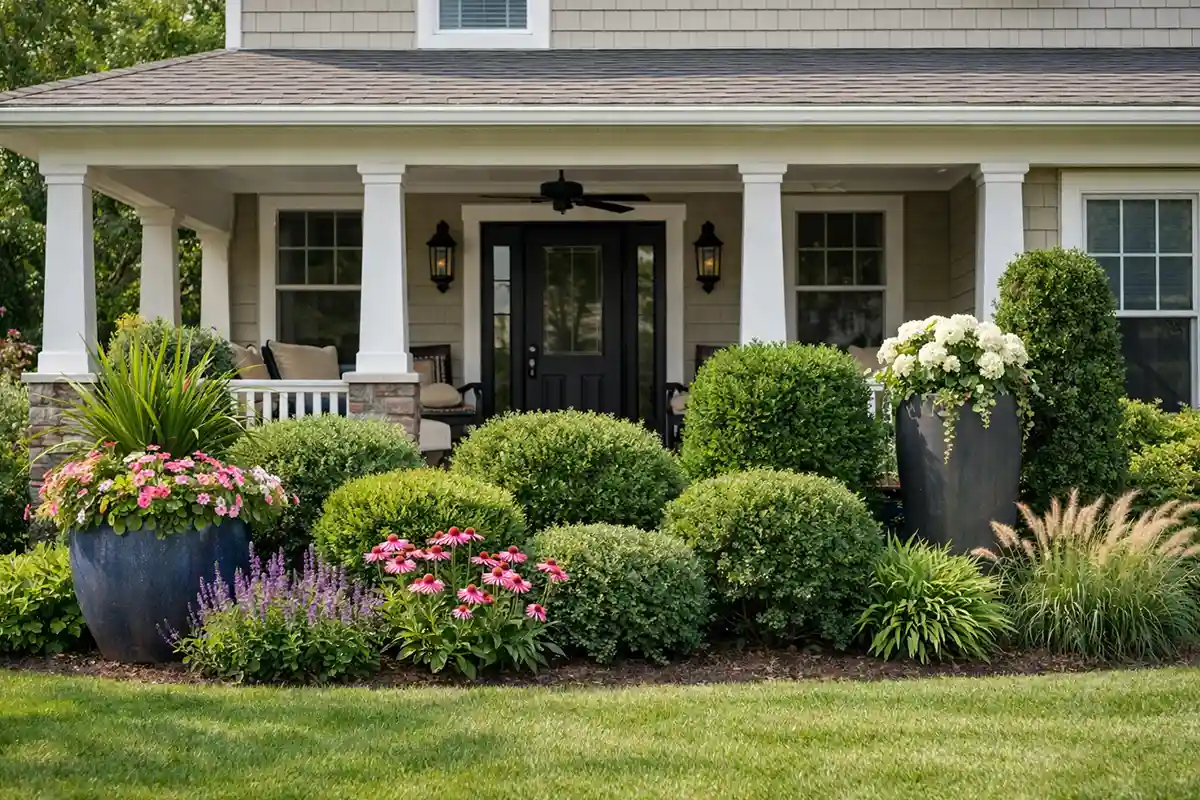
The porch often carries the highest visibility load, yet adjustments frequently stop at the property boundary. Introducing mid-range filters closer to seated eye level changes how the space is experienced without enclosing the yard.
In real-world layouts, this can mean placing taller planters or dense shrubs within several feet of seating zones rather than relying solely on distant perimeter planting. The visual interruption happens where activity occurs, not just where property lines exist.
If screening remains distant, porch-level activity continues to read clearly from the sidewalk. When filtering occurs near daily-use areas, privacy becomes proportional to how the space is actually occupied.
Concentrated Rebalancing Across All Layers
Isolated adjustments tend to shift imbalance rather than resolve it. A taller hedge without depth may increase shade while leaving angle exposure intact. Dense corner planting without porch filtering can compress one view while leaving another untouched.
A more stable configuration typically involves:
-
Gradual height transitions instead of abrupt walls
-
Staggered massing near angle entry points
-
Mid-range filtering near seating zones
-
Preserved openness toward lower-traffic sightlines
When only one dimension is intensified, secondary stress emerges elsewhere in the system. Coordinated adjustments allow each layer to carry part of the screening load instead of overburdening a single element.
Balanced privacy layers can still preserve visual openness from the street, and this is where broader structural design becomes critical. Front Yard Landscaping Ideas That Improve Curb Appeal explores how layered planting can enhance appearance without sacrificing spatial function.
Cosmetic Stabilization, Partial Rebalancing, and Structural Realignment
Cosmetic stabilization modifies surface appearance without changing spatial geometry. Filling small gaps or adding decorative mass softens the visual impression while primary sightlines remain largely intact.
Partial rebalancing strengthens one structural dimension. Height may increase, or angled interception may improve, reducing exposure in specific zones. However, unaddressed layers continue to carry visual load.
Structural realignment occurs when height, depth, angle coverage, and porch-level filtering operate together. No single hedge or cluster defines the yard’s privacy performance. Openness remains intentional rather than accidental.
Diagnostic Checklist for Ongoing Imbalance
The following observable indicators suggest privacy tension remains uneven:
-
Diagonal views from corners penetrate deeper than straight-on views.
-
Porch seating remains visible despite increased hedge height.
-
Seasonal leaf drop noticeably alters interior exposure.
-
Hedge interiors thin even when outer surfaces appear maintained.
-
Night lighting amplifies window visibility through narrow gaps.
-
Decorative elements increase density at ground level without affecting eye-level sightlines.
-
Shade concentration reduces vitality of lower planting layers.
-
Repeated pruning creates hollow centers within mass groupings.
When multiple indicators persist across seasons and traffic conditions, the yard may require full structural realignment rather than incremental surface adjustments.
For research-based guidance on landscape structure and plant systems, visit the University of Minnesota Extension home page.