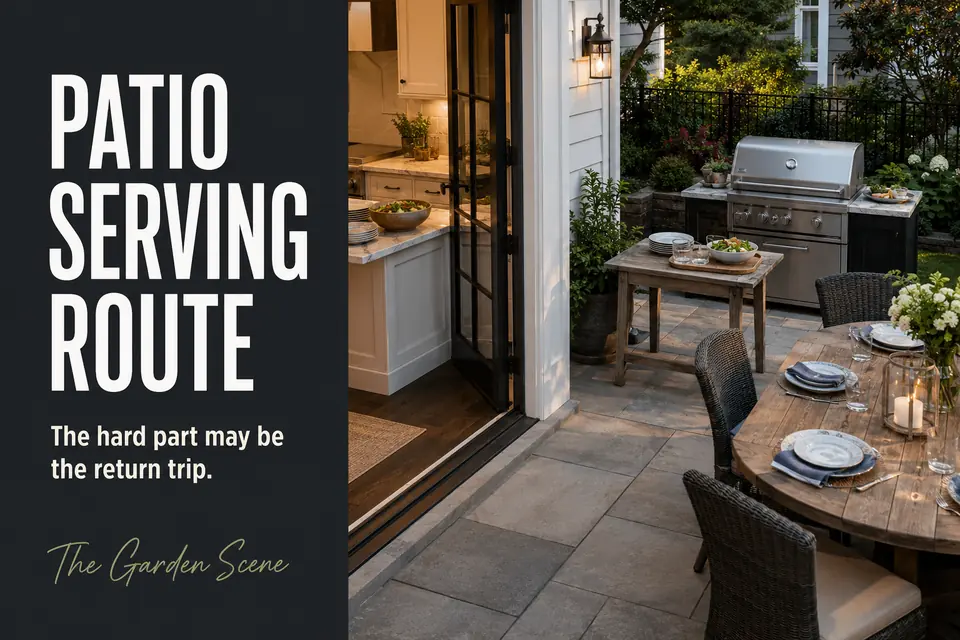
A short kitchen-to-patio distance can still produce a difficult serving route. The real problem is usually the number of transfers packed into that distance: lifting food from the counter, operating the exterior door with full hands, moving around a pulled-back chair, finding somewhere to land a platter, and repeating the process for drinks, condiments, and forgotten items.
Clearing the meal exposes the same route in reverse. Used plates are less stable than clean ones, leftovers need to return inside, and trash may head toward a different destination. A path that looked open before dinner can become a sequence of turns, pauses, and crossed movements.
The useful test is therefore not how close the dining table sits to the kitchen. It is whether food can move out and dishes can return without setting items down, circling occupied furniture, or passing repeatedly through another active patio zone.
Why Outdoor Meals Feel Hard Even With a Good Patio
Judge the patio after the chairs are occupied and the first serving trip has begun. An empty arrangement hides its active footprint: chairs are tucked in, the doorway is unobstructed, and nobody is carrying a platter wider than their body.
The main dish may leave the kitchen first, followed by plates, utensils, drinks, ice, condiments, and one forgotten item. Refills extend the movement through the meal. Clearing adds uneven dish stacks, food containers, napkins, and waste.
This is why a patio designed for appearance can still underperform during ordinary use. Planning a backyard for everyday use means evaluating repeated actions rather than whether each feature fits while the space is quiet.
The failure is often cumulative. A door that requires an extra hand, a chair that causes a small detour, and a table with no free landing area may add little effort to one pass. Repeated in both directions, those interruptions define the meal.
How the Kitchen Route Controls Serving Flow
Trace the serving path from the counter where the load is assembled—not from the exterior door. A nearby patio table offers little advantage if food must first travel around an island, cross the kitchen, or approach the exit through a sharp turn.
The departure point determines how the load reaches the door. A clear counter near the exit can consolidate several items into one trip. A counter across the room may scatter food, drinks, and utensils among separate journeys before outdoor movement even begins.
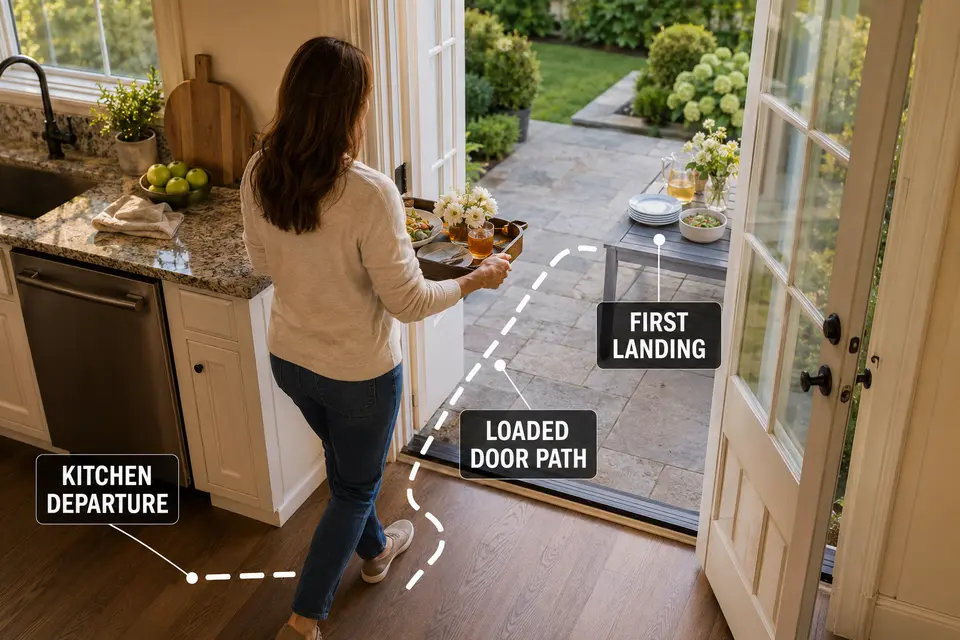
The loaded door passage
A passage that feels adequate during normal walking can become awkward when a tray extends beyond the carrier’s shoulders. A hinged door may require backing up after pulling the handle. A screen door introduces a second operation. Even a sliding door becomes inconvenient when its opening is partly occupied by a mat, pet bowl, planter, or chair corner.
The conflict is common on patios organized directly outside large glass doors. Furniture may look properly centered from indoors while narrowing the actual passage. A layout planned around sliding glass doors and patio walkways must protect the path used by someone carrying a load, not merely the opening visible on a floor plan.
Test this part with an ordinary tray or a group of plates. Needing to rotate the load, step sideways, move a chair, or set something down to operate the door means the serving problem begins before the food reaches the patio.
The route back into the kitchen
Test the return direction separately. Clean food normally leaves the kitchen in controlled loads; used dishes return as uneven stacks with utensils, napkins, and containers added along the way. The carrier may also need to open a closed door from the patio side.
A good departure path can therefore have a poor return. The first outdoor landing point should work in both directions—receiving food as it comes out and briefly holding dishes or leftovers before they go inside. Without that handoff point, the dining table remains the only staging surface, and clearing stalls as soon as it fills.
Where Grill, Table, Door, and Trash Collide
Do not evaluate the door, grill, table, and trash location separately. Their individual positions may look reasonable while the movements between them repeatedly intersect.
Food from the kitchen may cross the cook’s working edge before reaching the table. Finished dishes from the grill may require circling occupied chairs. Used plates may head toward the house while waste moves across the same narrow strip in another direction.
Food moving toward the table
The table does not need to sit immediately beside the door. It needs a direct approach that remains open after people sit down. Test that relationship with chairs pulled back, not tucked neatly under the tabletop.
This is one reason broader patio layout problems become more apparent during meals. The table itself may fit, yet its active footprint expands once chair pullback, occupied seats, and the approach from the door are included.
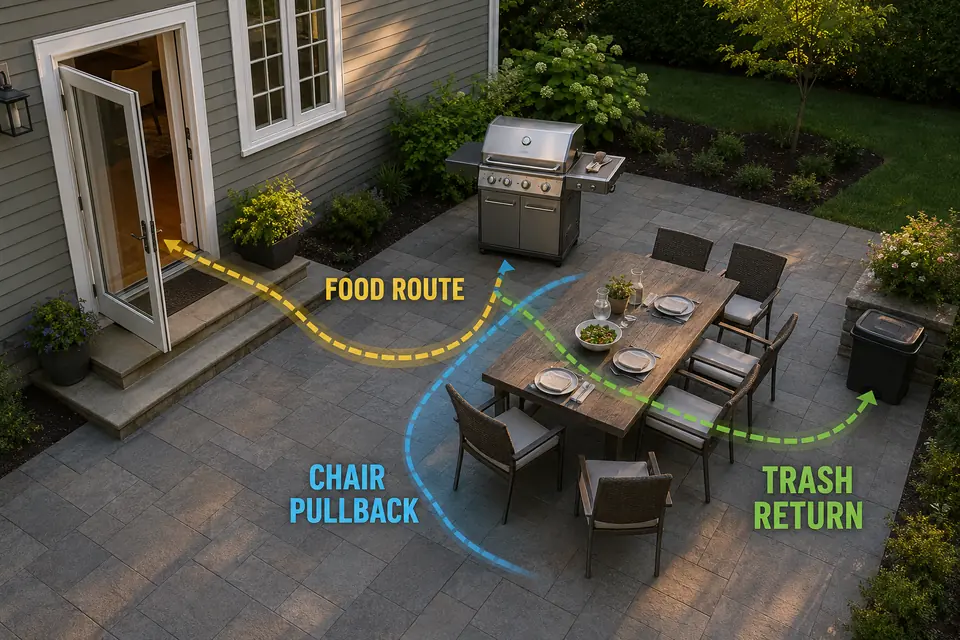
The grill also needs a practical handoff to the table without turning the dining area into part of the cooking zone. That does not mean forcing the grill closer. It means avoiding an arrangement in which every finished platter must pass behind occupied seats or circle the far end of the table.
Waste moving away from it
Give waste a reachable clearing path, not the patio’s most convenient central position. A bin beyond the seating area creates a second cleanup loop; one placed directly in the food passage makes clean and discarded items compete for the same space.
A discreet destination accessible from the clearing side of the table usually works better. Where insects are already a concern, the relationship between outdoor trash and dining areas also matters, so convenience should not mean placing a frequently opened bin beside diners.
Complete separation is unnecessary on a residential patio. The stronger standard is simpler: incoming food should not repeatedly meet used dishes and waste at the narrowest part of the path.
Why a Serving Surface Helps Only in the Right Spot
A serving surface earns its footprint only when it removes a transfer. If people must step away from the natural kitchen-to-table line to reach it, the surface adds a destination instead of eliminating a trip.
The most useful position is often just beyond the loaded door passage but before movement divides toward the grill and dining table. Food can land there without blocking the threshold, and the carrier can release the door before distributing individual items.
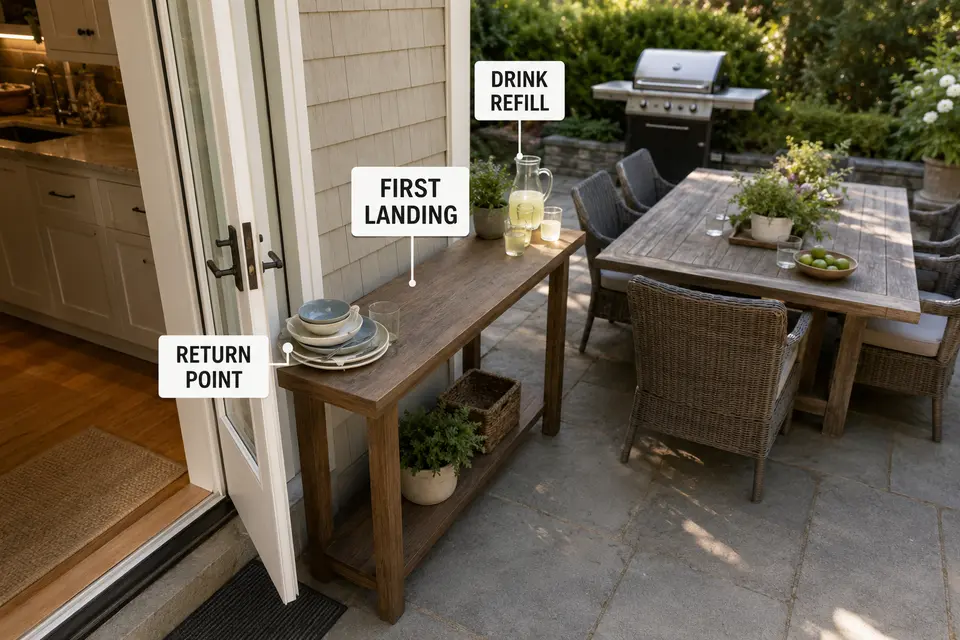
The first useful landing point
A surface beside the door still fails if a person using it blocks the opening. One behind dining chairs stops working once people sit down. A surface near the grill but beyond the table may help the cook while extending every transfer from the kitchen.
Location matters more than size. The surface needs enough open area for the next load, but it should not become permanent storage for decor, grilling tools, or unrelated patio items. Once it is already full, the route loses the landing point it was meant to provide.
Drinks without another full trip
Place drinks where refills do not require another complete kitchen journey or interrupt the main food handoff. Ice, water, and empty containers create repeated movement long after the first plates reach the table.
A compact drink point works when diners can reach it without entering the grill approach or stopping in the doorway. It should also connect naturally to the return direction so empty cups, bottles, and pitchers do not collect at the patio’s far edge.
One surface can support both serving and return functions if its roles remain legible: incoming food and clean items toward their next destination, with used dishes gathered on the kitchen-facing side. Without that distinction, the surface becomes a congested midpoint rather than a useful handoff.
How to Shorten the Route Without Crowding the Patio
The first fix should not be pushing every feature closer to the door. That concentrates stopping, serving, and chair movement around the one passage that must remain open. Shorten the trip by removing turns and crossed movements instead.
Fix the movement before adding furniture
Start at the kitchen counter used for meal preparation. Carry a realistic load through the door to the first outdoor landing point, then continue to the table. Follow the grill-to-table handoff, walk a drink refill, remove trash, and return a stack of dishes to the kitchen.
This test distinguishes a serving-specific failure from wider patio layout problems that make spaces hard to use. When several activities compete for the same narrow strip, repositioning one serving surface may not be enough; the active furniture footprint may need a modest shift.
Move or repurpose existing items before adding another piece. A small table already on the patio may become the first landing point if it is cleared and repositioned. Moving the dining table slightly may eliminate a chair conflict without placing it inconveniently far from the house.
Keep drinks convenient to the dining side but outside the main food handoff. Give trash an accessible clearing path rather than the most visually direct position. Above all, keep people who are pouring, serving, or sorting out of the loaded door passage.
Test both directions
Run the adjusted layout once with food going out and again with used items returning. Pull chairs into their occupied positions, operate the door normally, and place realistic items on the serving surface.
The arrangement works when a carrier can pass through the door, reach a landing point, and continue without rotating the load or asking someone to move. It works better when dishes and leftovers can return along the same basic line without meeting the trash trip at its tightest point.
An efficient patio meal does not require every object to sit close together. It requires a clear sequence: kitchen departure, usable door passage, first landing, direct handoff, and uncomplicated return. Preserve that sequence and the patio can remain open without making every meal feel scattered.
For outdoor cooking and serving practices beyond layout planning, consult the USDA’s grilling and food safety guidance.