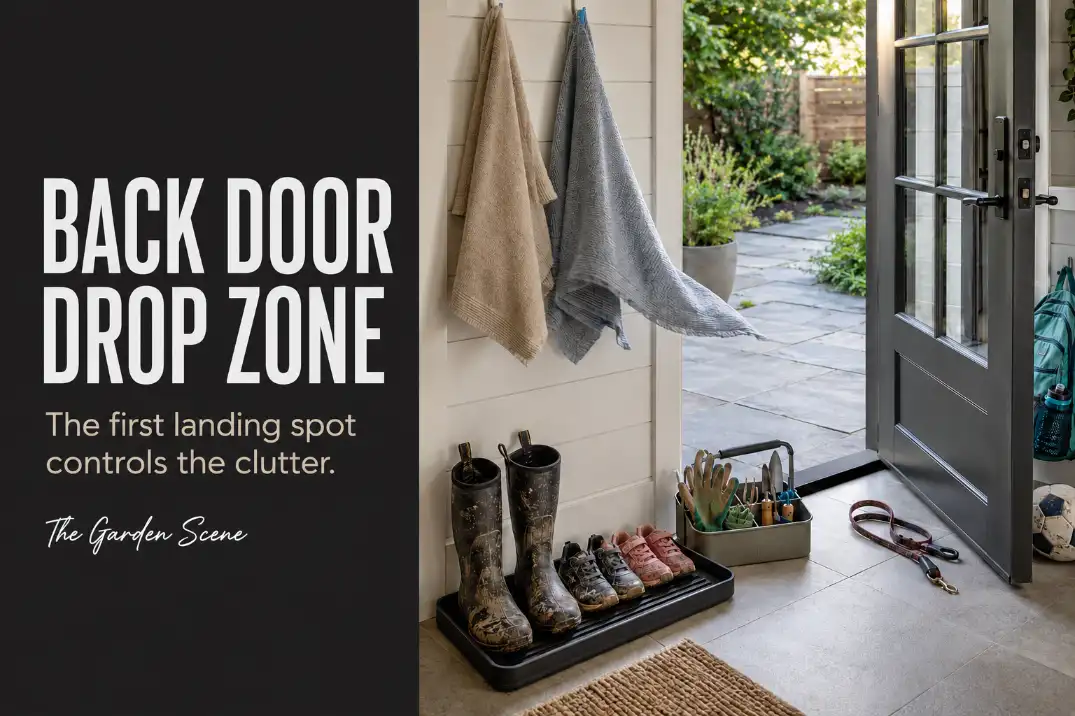
A child comes in with muddy shoes and a ball. Someone else arrives with garden gloves, hand pruners, and a damp towel. The dog leash lands near the handle because another trip outside is likely. After two or three passes, the threshold has become a pile of unfinished outdoor tasks.
The real problem is not a general lack of storage. It is a broken handoff: outdoor items arrive faster than anyone can put them fully away, so the first open surface becomes their default destination.
A useful back door drop zone has four jobs. It must catch mud, let damp items breathe, keep frequently reused gear easy to retrieve, and move everything else toward its permanent home. The door swing and walking line set the hard boundary. If someone has to step around the drop zone, it is occupying the wrong space.
Why the Back Door Becomes the Real Outdoor Drop Zone
Treat the back door as a handoff point, not a miniature storage room. It connects directly to the patio, garden beds, play area, grill, dog run, or side gate, so it may handle several short trips within the same hour. Putting everything fully away between those trips feels inefficient.
The first landing spot is also chosen while someone is carrying more than one thing. Shoes come off while hands still hold a towel. Gloves are set down to operate the door. A child drops a toy before stepping inside. These actions happen too quickly for a system that requires lids, deep shelves, or several sorting decisions.
An awkward transition can therefore create clutter even when the patio has adequate space. A door that opens toward furniture, a narrow landing, or an undefined threshold makes every incoming object compete with movement. Correcting the back door and patio transition matters more than squeezing another container beside it.
The zone only needs to manage the handoff: land, contain, hang, or hold. Larger garden tools, bulk toys, and seasonal equipment still belong elsewhere. When the back-door area becomes permanent storage, it loses the open capacity needed for the next arrival.
What Usually Lands There First
Sort items by what must happen next—not simply by who owns them. Muddy items need containment, damp items need airflow, frequently reused gear needs visibility, and tools awaiting return need a controlled holding point.
Muddy and damp items need separate treatment
Muddy shoes need a defined low landing surface that catches loose soil without projecting into the walkway. It should sit where someone can step out of the shoes naturally, without turning across the path or carrying them to the opposite side of the door.
A damp towel needs open hanging space. Dropping it into a deep bin may look organized temporarily, but it traps moisture and hides an item that still needs to move to laundry. Garden gloves can share a ventilated return point once loose soil has been removed and they are reasonably dry.
Quick-grab gear should remain visible
The dog leash is different from both shoes and towels. It is lightweight, frequently reused, and most useful near the exit. Give it one consistent hook that does not interfere with the door handle, lock, light switch, or a towel hanging beside it.
Children’s balls, chalk, bubbles, or small yard toys need a reachable landing place with deliberately limited capacity. When a container holds the entire outdoor toy collection, children must unload it to find one item. A smaller “currently in use” container works better beside the door.
Small hand tools need a handoff point rather than a second permanent home. A narrow caddy can receive pruners, a hand trowel, plant ties, or gloves during active yard work. If larger tools begin accumulating nearby, the next decision is how to contain backyard tools and supplies outside this compact entry zone.
FIRST-LANDING MAP
- Muddy shoes → Low contained landing outside the walking line
- Damp towels → Open hook or rail with airflow
- Garden gloves → Small visible return point after loose soil is removed
- Small tools → Temporary handoff caddy, followed by return to primary storage
- Kids’ gear → Reachable, limited-capacity container
- Dog leash → Consistent quick-grab hook clear of the door hardware
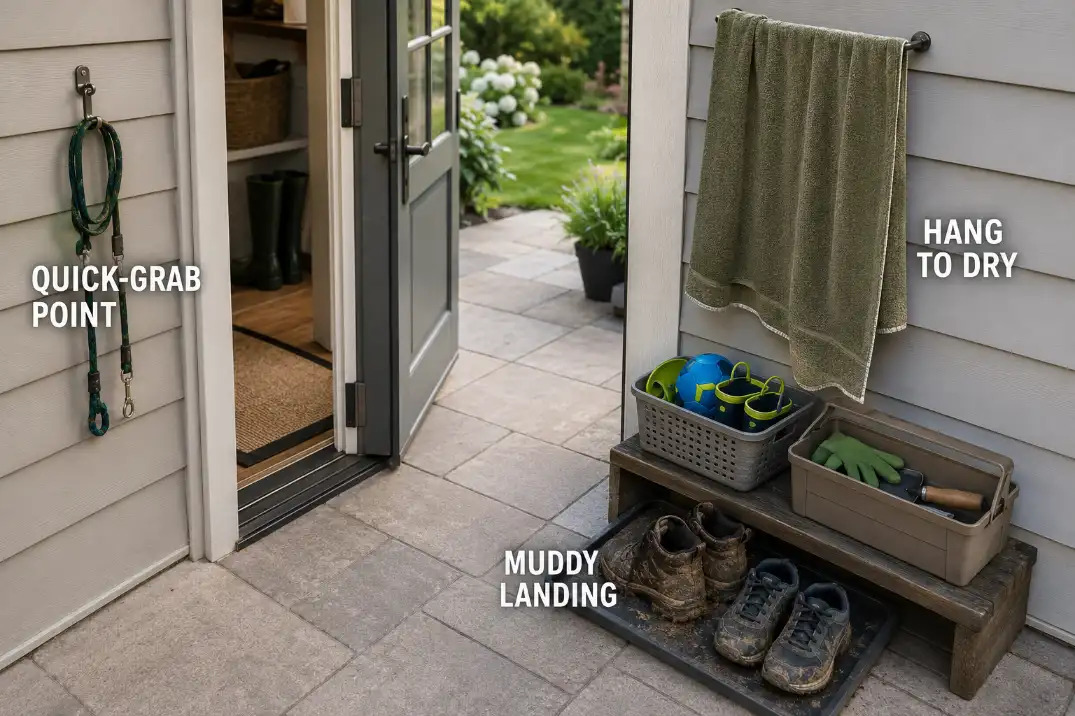
The map is intentionally small. The drop zone does not need a dedicated container for everything that might pass through the yard. It needs enough separation to prevent wet, muddy, sharp, and frequently reused items from collapsing into one pile.
How to Keep the Door Swing and Walkway Clear
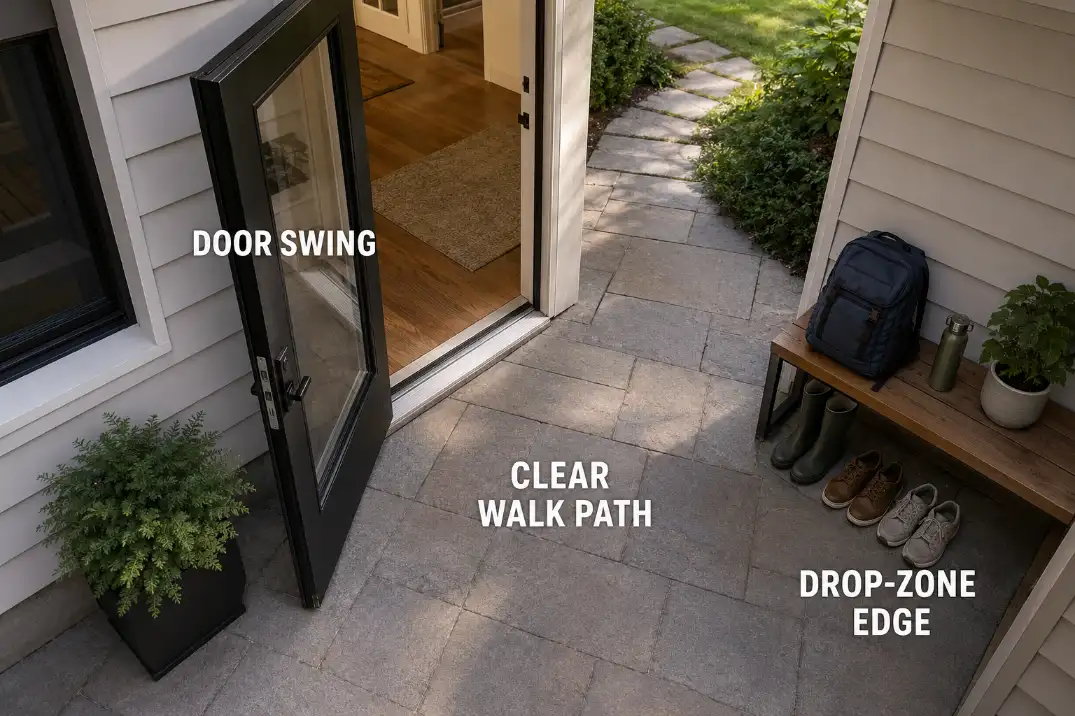
Define the no-storage area before choosing storage. Open the door completely, then walk through while carrying the items that normally arrive together. Repeat the test in both directions. A spot that looks available beside a closed door may sit directly inside its sweep or where someone naturally turns after crossing the threshold.
Watch people’s feet rather than the wall line. Shoes placed neatly against a wall can still force a sideways step. A basket may sit beyond the door edge yet catch someone carrying a wide load. A low hook can leave a leash or towel hanging at knee height.
The protected area includes the threshold, the complete door movement, the first step beyond it, and the natural line toward the kitchen, laundry area, yard, or patio.
Sliding doors remove the hinged sweep but not the conflict. Storage can still narrow the opening or occupy the spot where someone pauses to operate the handle. The same access logic used for patio layouts around sliding doors and walkways applies here: preserve the actual passage first, then use what remains.
Children and dogs reveal weak placement quickly. A child will take the shortest path instead of stepping carefully around shoes. A dog may pull toward the opening while someone is reaching for the leash. Storage that works only for an unencumbered adult does not belong beside a busy back door.
LAYOUT CHECK: Open the door fully and carry a towel, shoes, and one awkward item through the entrance. If you must turn sideways, lift something over storage, or step around an object, that location belongs to movement—not storage.
Where Storage Should Sit Without Blocking the Patio
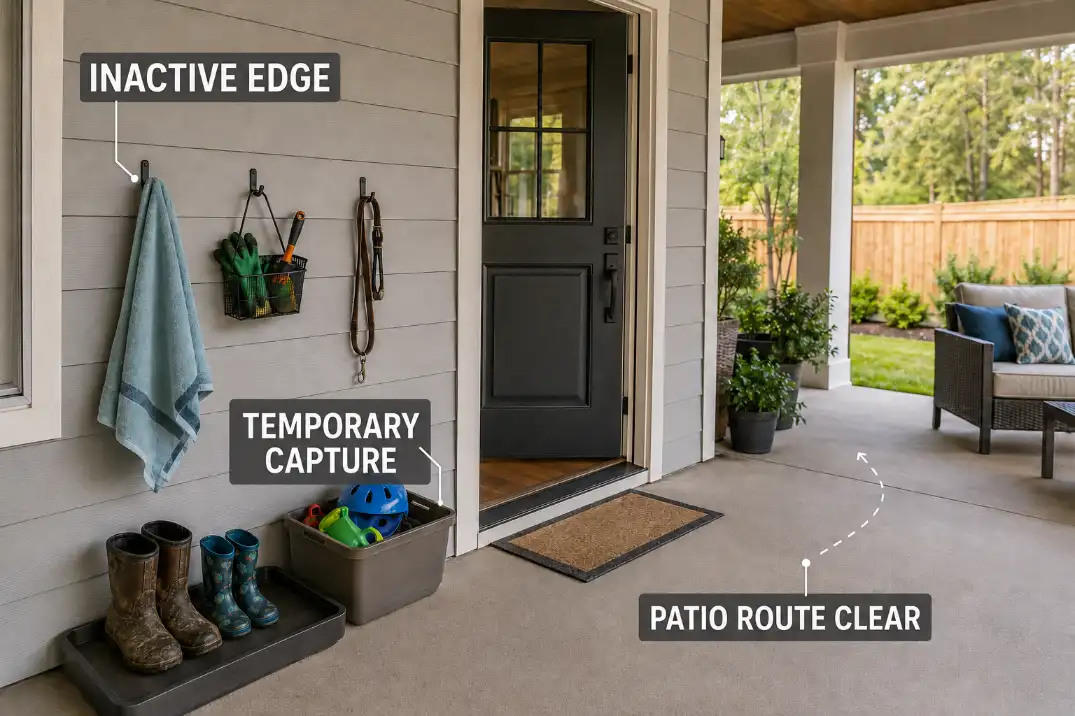
Storage earns space beside the back door only when it stays outside the active passage. Use an inactive edge beside the approach rather than building a second wall around the doorway. This lets someone release an item with one natural reach without stopping in the center of the path.
Place by weight, moisture, and frequency
Heavy or muddy items belong low, where they cannot fall and do not need to be lifted over cleaner gear. Frequently grabbed lightweight items can sit near hand height. Wet towels need enough separation to hang freely, so they should not overlap the leash, gloves, or anything mounted on the door.
Children’s gear should be reachable without requiring a child to kneel in the walkway. A shallow container against a sheltered side edge is often more usable than a deep bench beside the threshold. The bench offers greater capacity, but its depth can consume the space needed for taking off shoes, turning, and carrying items indoors.
Exposure also changes placement. An uncovered wall may work for a temporary muddy-shoe landing but is unreliable for towels, gloves, or tools that should remain dry. When the doorway lacks shelter, temporary outdoor storage ideas can help route weather-sensitive items without making the entry zone responsible for long-term protection.
Size the zone for one normal use cycle
Capacity should reflect what arrives during one ordinary round of yard work, outdoor play, or dog activity—not everything the household owns. A compact zone that fills visibly is easier to reset than a large cabinet that conceals weeks of unfinished returns.
More storage can create less usable space. Deep cabinets interrupt the patio route. Wide benches invite unrelated items to accumulate on top. Multiple small baskets look orderly when empty but demand too many sorting decisions during a fast entry.
If the patio genuinely needs broader storage, treat that as a separate layout decision. These patio storage ideas for easy access address larger storage needs, while the back-door zone retains its narrower role: receiving items currently moving between indoors and outdoors.
How to Make the Zone Easy to Reset
The reset must be easier than dropping an item on the floor. Give every object one of three clear outcomes: dry here, grab again soon, or return elsewhere. When everything appears to belong permanently beside the door, nobody can tell when the area is full.
Give each frequently reused item one unmistakable position. The dog leash returns to the same hook. Shoes stay on the low landing only while they are muddy or likely to be worn again. Towels hang until they can move to laundry. Children’s active gear remains in the reachable container, while unused or seasonal toys return to primary storage.
Garden tools need the firmest boundary. The handoff caddy can hold tools during an active task, but it should not become a second tool shed. At the end of the work period, remove loose soil, allow damp items to dry as appropriate, and return the tools to their main location. An empty caddy signals that the task is complete.
Use an event as the reset trigger instead of waiting for someone to notice the clutter. The end of yard work, the end of outdoor play, or the final dog outing creates a natural moment to move items onward. Keep the routine short. If resetting requires reorganizing a cabinet, visiting several distant rooms, or deciding where each object belongs again, the system has too many steps.
The strongest drop zone is not the one that holds the most. It is the one that absorbs a normal burst of outdoor activity, protects the doorway, and becomes ready before the next round begins. Watch what lands there during one ordinary day. Those objects—not the available storage furniture—should define the zone.
For care beyond the entry-zone reset, the University of Minnesota Extension explains how to clean and disinfect gardening tools.