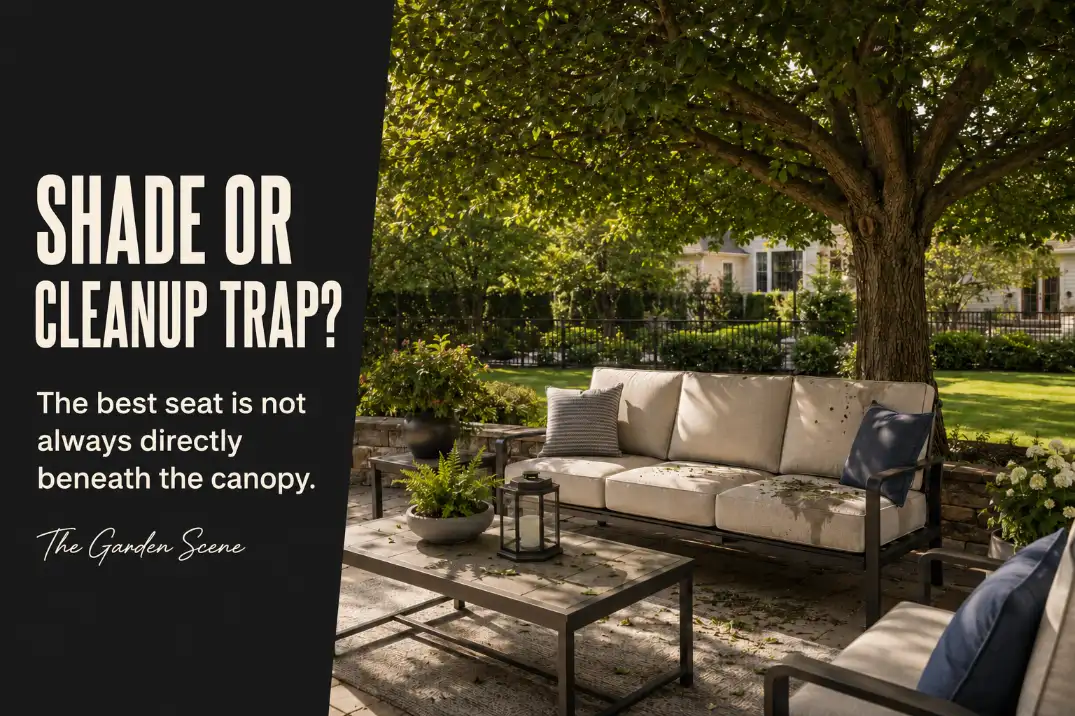
A shaded seating area starts failing before the tree stops providing useful shade. The practical threshold is reached when sitting down requires a preparation routine: brush off the seat, inspect for bird droppings, wipe the table, and check whether the cushions are still damp.
That friction can remain hidden while the patio is empty. Furniture looks naturally anchored beneath the canopy, and the branches appear to shelter the entire group. During repeated use, however, one chair stays wet longer, debris repeatedly lands on the table, or the most attractive seat becomes the one everyone avoids.
The real decision is not whether to keep or remove the shade. It is whether the most-used furniture occupies the right part of it. A localized problem overhead often needs a modest adjustment below—not a major change to the tree.
When Tree Shade Starts Controlling the Seating Area
Judge the canopy by how often it delays normal use, not by how much material falls from it. A few leaves during fall are ordinary outdoor upkeep. Repeatedly cleaning or drying the same chair before anyone can sit down is a placement problem.
The balance shifts when the canopy begins setting the terms of use. Cushions have to be removed after every humid night. A chair stays empty because it sits beneath an active bird perch. The table must be cleaned before a drink can be placed on it. People stop choosing seats by comfort and start choosing whichever one requires the least preparation.
Watch the seat people stop using
Occupancy is often more revealing than the canopy itself. One consistently neglected chair can expose a concentrated drop line, damp pocket, or contamination point that disappears when the whole patio is viewed from a distance.
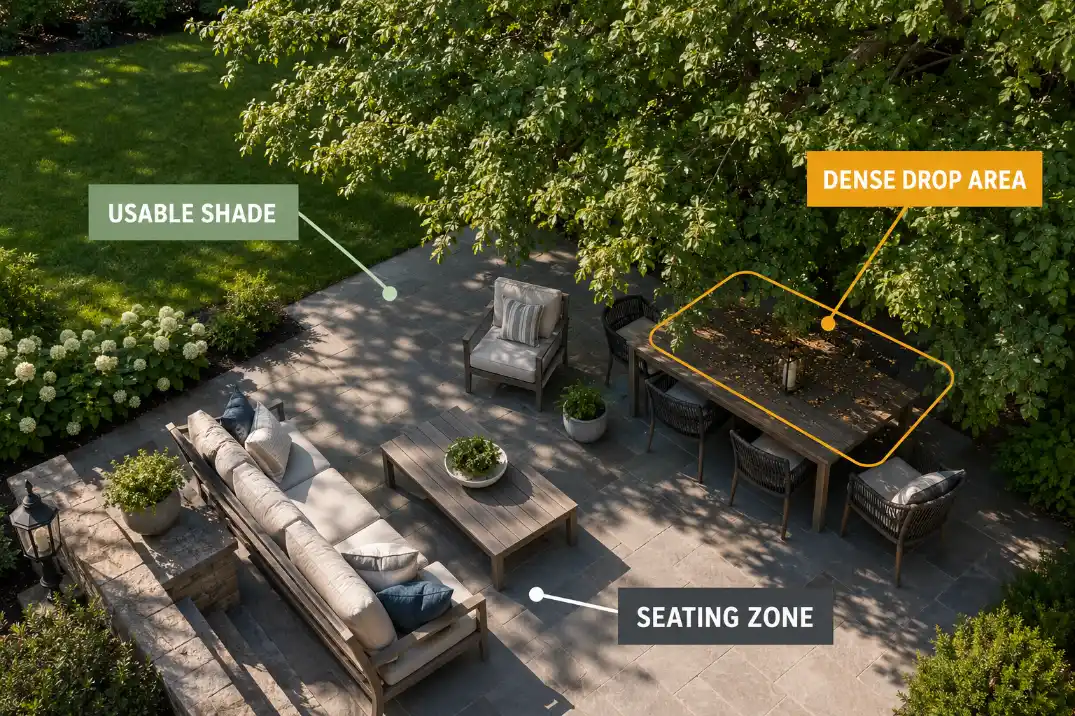
Twigs, pollen, berries, seed pods, leaf fragments, sap, and bird activity rarely affect every square foot beneath a tree equally. Branch ends, dense foliage clusters, and favored perches can make one narrow part of the patio carry most of the burden.
Editorial Note: The best shaded seat is not automatically the one beneath the densest canopy. Shade remains useful only while the seating can dry, stay reasonably clean, and be reset without a separate maintenance job.
How Overhead Branches Affect Debris, Moisture, and Comfort
Before choosing a response, separate what is landing on the furniture from what is keeping it damp. Dry leaves may require only occasional sweeping. Bird droppings on a chair arm, dining surface, or cushion demand deliberate cleaning and can make one part of the seating group unreliable.
Tree sap creates another localized problem. It makes surfaces unpleasant to touch and holds dust or leaf fragments in place. The question is not whether the tree produces sap somewhere in its canopy, but whether affected branches hang over furniture people regularly handle.
A separate guide explains how to manage tree sap on patio furniture and outdoor seating without treating the entire patio as one contaminated zone.
Dense shade can delay the morning reset
After dew, light rain, or a humid night, dense foliage can limit the sunlight and air movement reaching a cushion. A seat near the canopy edge may be ready by late morning while another deeper beneath the branches still feels cool and damp.
Cushions do not need to look soaked to discourage use. Moisture can linger along seams or underneath after the visible surface appears dry. The setup may therefore work on dry afternoons but become inconvenient during repeated morning or evening use.
Timing matters. A brief pollen release or a short seed-drop period may justify temporary cushion storage rather than a permanent change. Dampness or contamination that returns throughout the main seating season points to a more persistent location problem.
Why Moving Furniture May Work Better Than Removing Shade
The first correction should target the vulnerable surface, not the whole canopy. Useful shade often extends beyond the branch cluster causing the mess, so the seating group does not need to remain centered beneath the tree to benefit from it.
A chair, dining surface, or cushion zone moved toward the canopy edge may retain afternoon shade while receiving more light and air earlier in the day. That small difference can improve both drying and readiness without sacrificing the reason the furniture was placed under the tree.
Move the vulnerable surface first
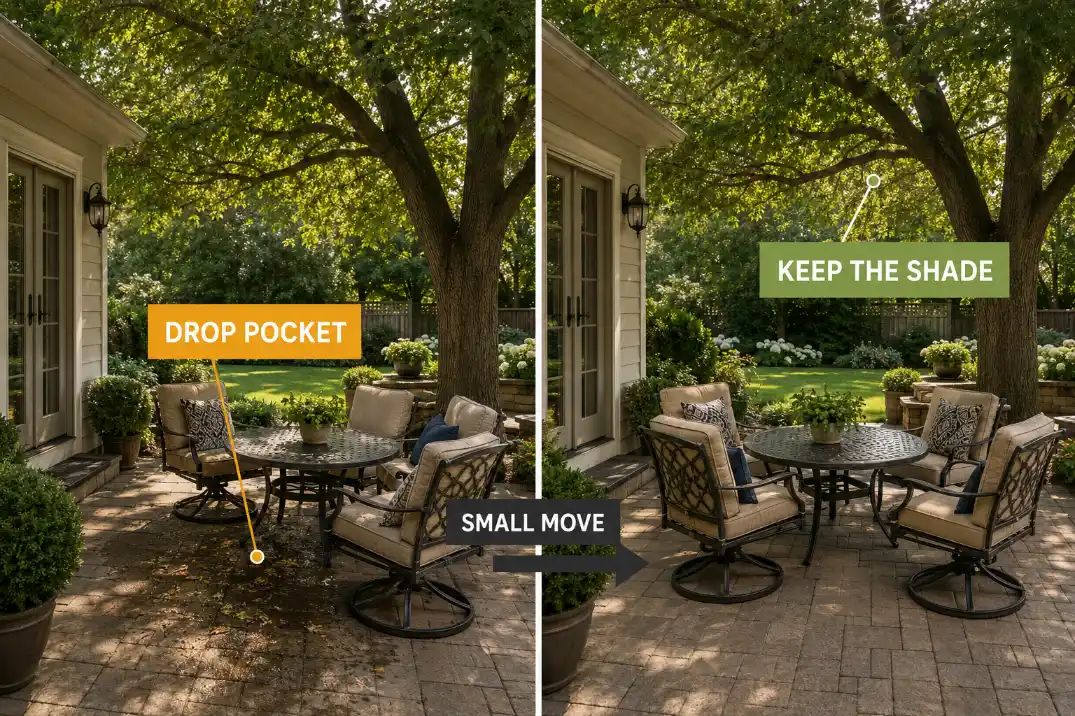
Start with the surface that causes the most friction. If bird droppings repeatedly land on the table, shift it away from the perch line. If one deep cushion stays damp, test that chair closer to the brighter canopy edge. The entire group may not need to move.
This works especially well when the landing pattern is narrow. Branch tips and habitual perches can affect one strip of patio while nearby space remains shaded and comparatively clean. Changing the relationship between that strip and the furniture may preserve more of the tree’s value than premature pruning.
Do not solve one conflict by creating another
A move fails if it pushes chairs into a sliding-door path, narrows the approach from the house, or places upholstery in a drainage low point. Test the furniture as people actually use it—with chairs pulled out and the normal path open—not only in its neatly arranged position.
Keep the group oriented toward conversation, dining, or the intended yard view. The strongest adjustment is usually the smallest one that moves vulnerable surfaces out of the drop pocket without making the rest of the patio awkward.
What to Check Before Pruning Near Seating
Pruning becomes a proportionate response only after the landing pattern and furniture options are understood. Observe the seating across several normal uses and weather conditions. One windy afternoon can scatter debris everywhere; a recurring problem usually points toward a specific branch cluster, low limb, or bird perch.
Test whether the furniture can move without blocking a door, narrowing an established path, or entering a wetter part of the patio. When a nearby position retains useful shade and restores normal use, the seating move has already solved the relevant problem.
If the same localized canopy feature continues to interfere, limited pruning may deserve consideration. Keep the objective narrow: improve clearance or relieve pressure over one heavily used surface, rather than opening the entire canopy and losing the shade that makes the space comfortable.
Branch size, tree condition, nearby structures, utilities, and local requirements can change what is appropriate. Large, high, damaged, or structurally uncertain branches require assessment by a qualified tree-care professional rather than an improvised attempt from the seating area.
How to Keep Shade Without Creating a Cleanup Trap
A workable shaded zone keeps its most vulnerable surfaces outside the worst landing area and leaves enough access to clean around them. That standard matters more than placing every piece of furniture beneath the deepest shade.
A metal side table may tolerate occasional debris better than a deep upholstered chair. A chair wedged against a planter or railing, however, can trap leaves underneath and make its cushions difficult to remove. Tightly packed furniture may also conceal a damp corner after the visible surfaces have dried.
Treat seasonal storage as support, not a location fix
Removing loose cushions before prolonged wet weather or a debris-heavy period reduces maintenance, but it cannot correct a chair left beneath a year-round perch or persistent damp pocket.
If cushions repeatedly remain wet underneath or develop a stale odor, the causes of outdoor cushion mildew problems should be checked after the placement issue is addressed.
Keep an open approach for wiping surfaces, lifting cushions, and clearing debris beneath the furniture. The densest part of the canopy can remain open or hold a less vulnerable object while the chairs people use most occupy the cleaner edge of the shade.
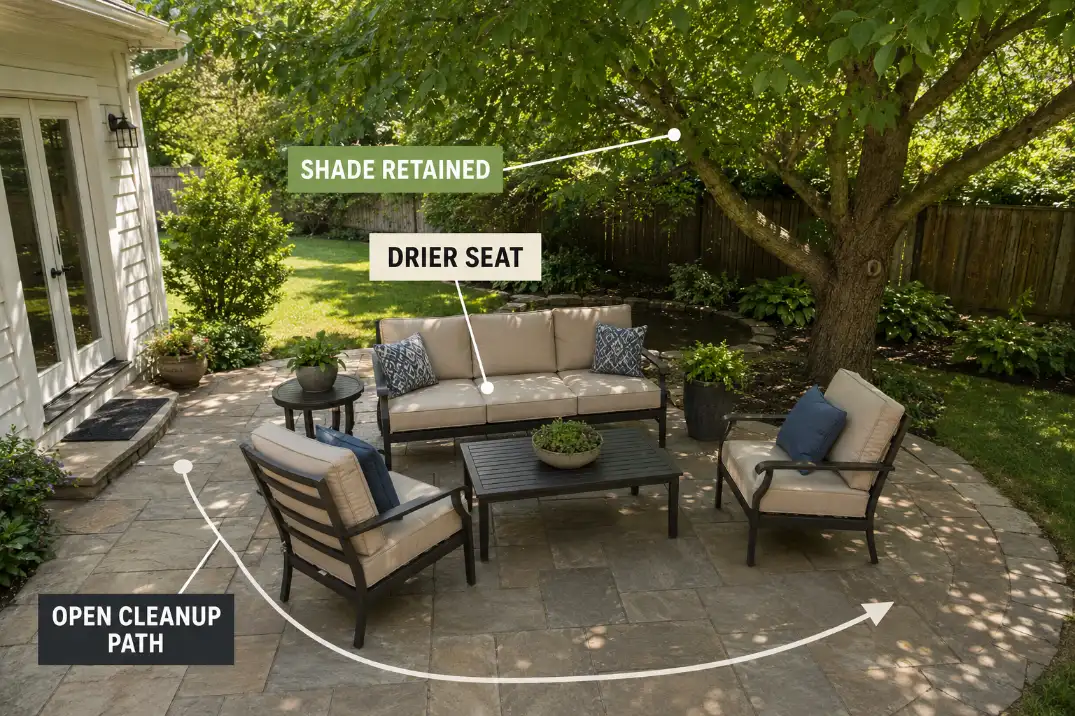
The right result is not a debris-free patio. It is a seating area that preserves useful shade without requiring cleaning or drying before nearly every use. When that standard is missed, move the affected surface first and change the canopy only when a persistent, localized branch condition remains.
For pruning that involves large branches, uncertain tree condition, or work beyond safe homeowner reach, the University of Minnesota Extension explains how to choose a qualified tree-care professional.