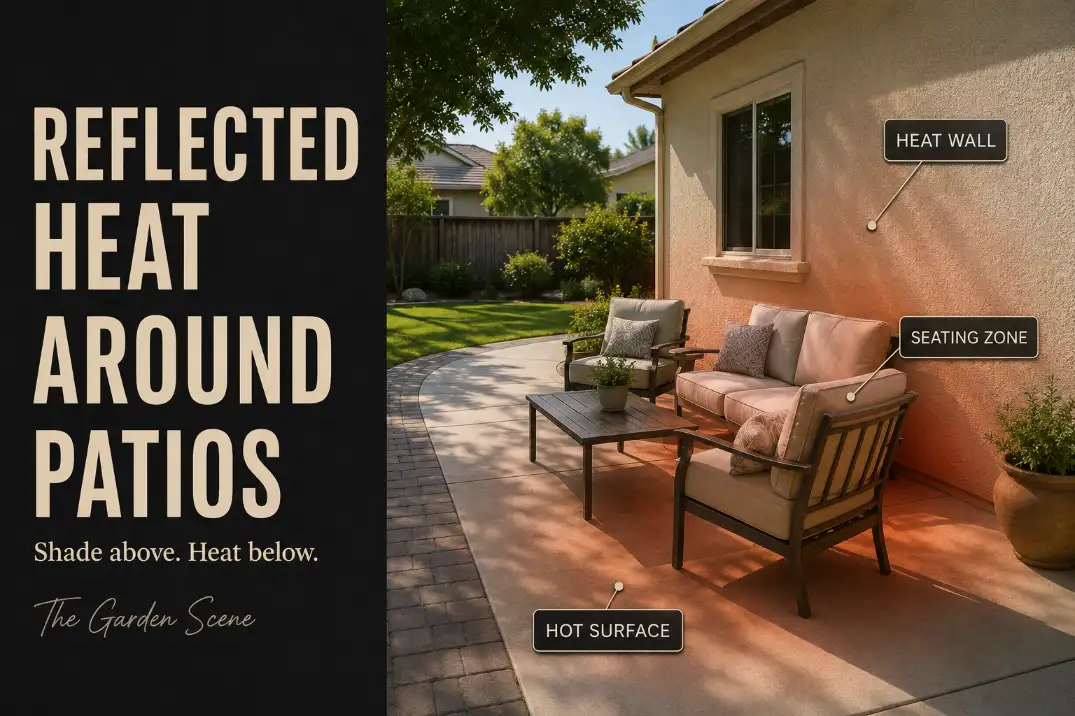
Reflected heat around patios usually comes from a stack of surfaces, not one missing umbrella.
The first useful checks are simple: stand near the wall, then near the open edge; touch-test the patio surface after 2–3 hours of afternoon sun; and notice whether the seat feels hottest from overhead, from the ground, or from the side.
If the air temperature is 90°F but the patio surface feels closer to 120–140°F, shade alone will not make the space comfortable.
The key distinction is direct sun versus stored and reflected heat. If shade makes the patio noticeably better within 15–30 minutes, sun exposure is probably the main problem.
If the patio still feels hot 60–90 minutes after the sun has moved, the surface or wall is likely holding heat.
If one chair feels worse than another only 2–3 feet away, the seating is probably sitting inside a reflected heat path.
Heat Comes From More Than Sun
A hot patio is easy to misread because the discomfort feels like “too much sun.” Sometimes that is true. But when a patio stays uncomfortable after the umbrella is open or after the sun moves behind the roofline, the stronger cause is usually heat that has already been absorbed by concrete, pavers, walls, fences, or glass.
The three-source heat test
Before adding another shade product, separate the heat into three likely sources.
| What You Notice | Most Likely Heat Source | What It Tells You |
|---|---|---|
| Patio improves within 15–30 minutes of shade | Direct sun | More shade may help if it blocks the correct sun angle |
| Patio stays hot 60–90 minutes after shade arrives | Stored surface heat | Ground material and hardscape area matter more |
| Seat near wall feels hotter than seat near open edge | Reflected side heat | Furniture placement and wall buffers matter first |
| Patio looks painfully bright even in partial shade | Glare bounce | The issue is visual harshness, not only temperature |
| Plants or cushions suffer near walls first | Concentrated radiant heat | That edge needs a cooler buffer or tougher placement |
The most useful threshold is not a perfect surface temperature. It is whether the patio remains noticeably hotter than nearby grass, mulch, or an open walkway after direct sun has been gone for at least an hour. If it does, the problem has moved beyond shade.
That is why some patios feel worse than the forecast suggests. Weather apps measure air temperature, not the heat coming off a slab, paver field, stucco wall, vinyl fence, grill island, or sliding glass door.
For a broader look at this same comfort pattern, Patio Design Problems in Hot Climates connects heat comfort with layout, materials, and airflow instead of treating shade as the only fix.
Walls That Push Heat Back
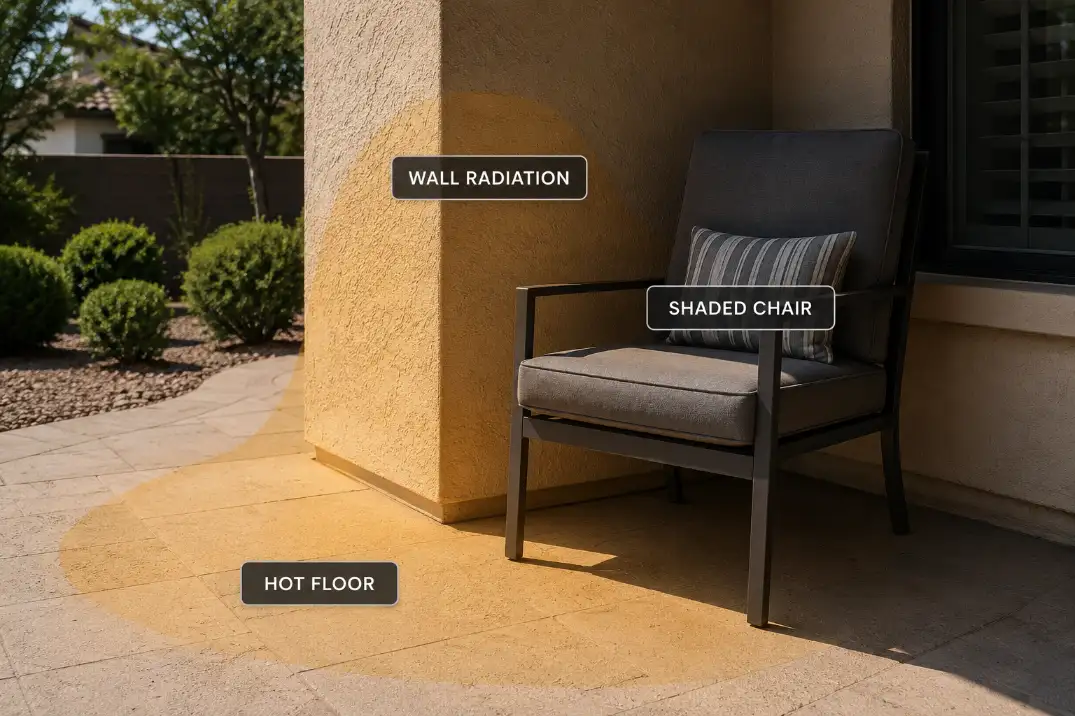
If the hottest seat is the one closest to the wall, the first fix is not a bigger umbrella. It is distance, buffering, or a different seating angle.
Side heat is different from overhead sun
West and southwest-facing walls are the usual offenders because they collect afternoon sun during the most punishing part of the day.
Stucco, brick, masonry, privacy walls, garage sides, and tall fences can all become radiant surfaces after several hours of exposure.
The discomfort often shows up late. A patio may feel tolerable at noon, then harsh from 3 p.m. to 7 p.m. as the wall, floor, and nearby glass begin pushing heat into the same sitting zone.
This is especially noticeable in dry Western yards where the air may move but the surface heat still feels intense.
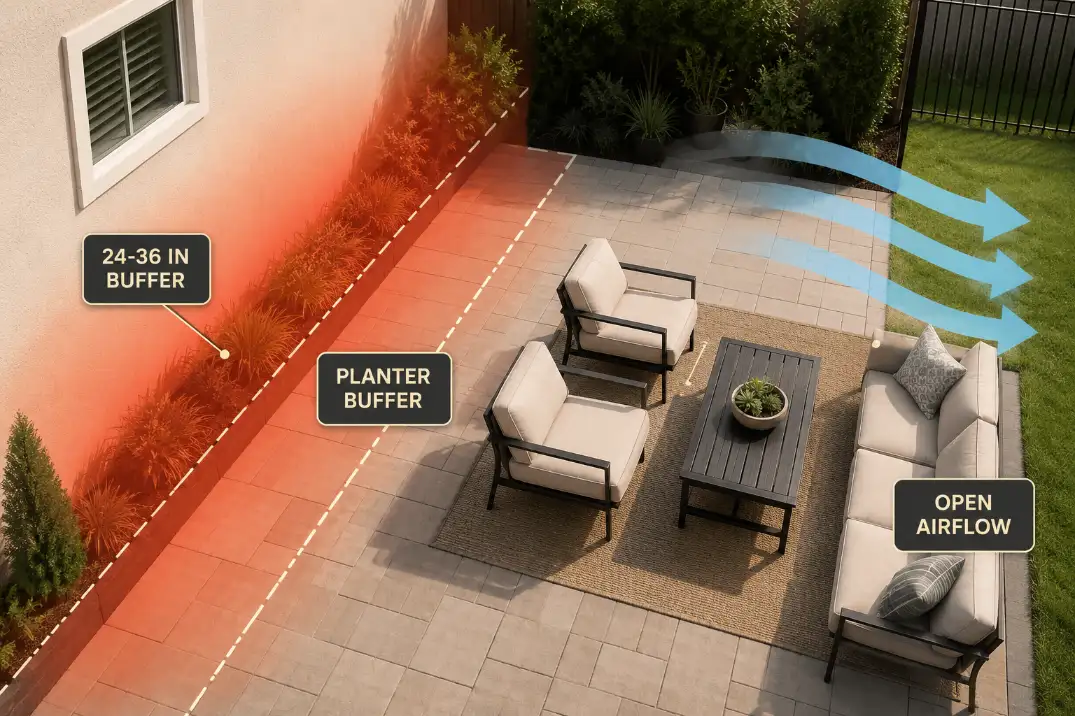
A simple test is to pull one chair 24–36 inches away from the wall and leave another chair near the wall for 20 minutes in late afternoon.
If the pulled-out chair feels better, the wall is part of the problem. That small shift can do more than a new umbrella because it moves the body out of the bounce-back zone.
Light walls are not automatically comfortable
A light stucco wall may absorb less heat than a dark wall, but it can still reflect sunlight into the patio. A dark wall may reduce visual glare, but it can store and release more heat later. Neither color is automatically right.
The better question is where the heat goes. If the wall faces the seating, dining table, or sliding door area, the patio may feel hotter even when the surface looks clean and bright.
If the wall is behind planting, broken by texture, or separated from the seating by a buffer, the same material may be far less noticeable.
This is where homeowners often overestimate color and underestimate distance. A new wall color might help, but pulling seating out of the first 2–3 feet of reflected heat is usually the cheaper and more reliable first move.
Pavers That Hold Heat
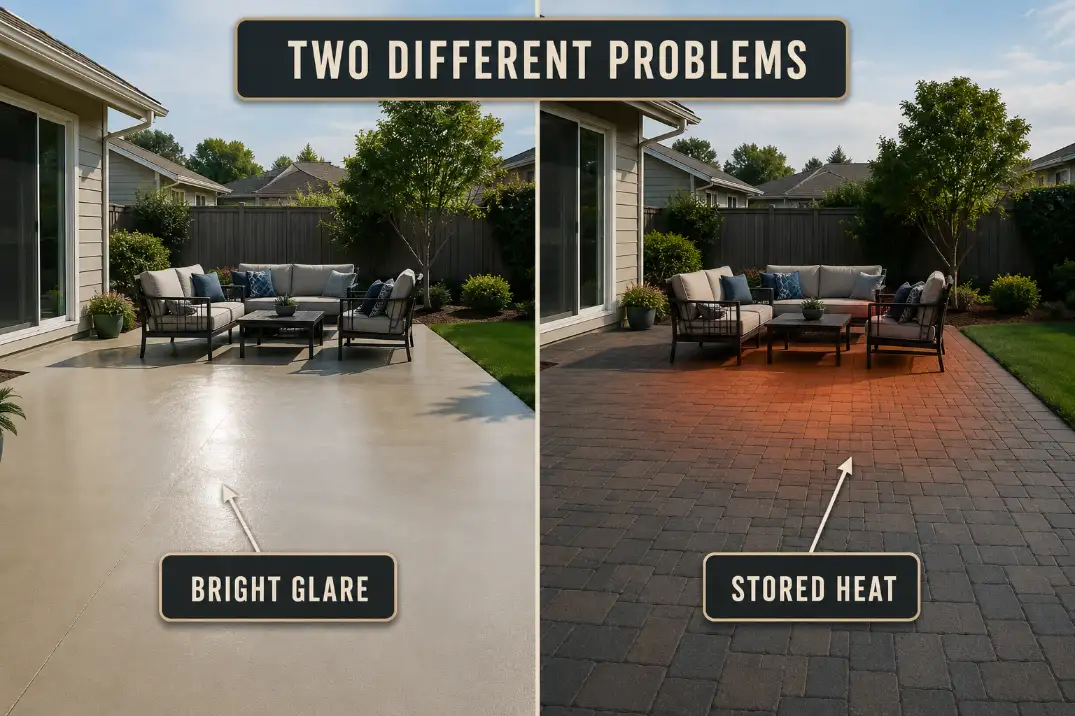
Pavers are not the enemy. The problem is judging them only by color or style. Heat comfort depends on color, density, thickness, joint spacing, base material, airflow, and how much of the surrounding yard is paved.
Stored heat lasts longer than direct sun
A concrete slab can heat quickly, but thick pavers over a compacted base can keep releasing warmth into the evening. In humid climates, that extra radiant heat feels worse because the air already feels heavy.
In dry climates, the surface itself can feel severe because there is less moisture cooling the surrounding space.
A useful pattern is this: if the patio feels fine in the morning but becomes unpleasant from 3 p.m. through dinner time, the issue is probably stored heat, not just poor shade placement. Direct sun moves away. Dense hardscape keeps working.
If your main discomfort is hot ground underfoot or a surface that stays punishing late in the day, Patio Surfaces That Get Too Hot in Summer is the closer surface-specific guide.
The paved field matters more than one paver
A small patio surrounded by lawn, planting beds, or open soil usually sheds heat better than the same patio connected to a driveway, side walkway, grill pad, retaining wall, and hard border. The individual surface still matters, but the total hardscape field can matter more.
This is the part people underestimate. If 70–80% of the visible area around the seating is hard surface, changing one strip of pavers may not transform the space.
The patio needs a break in the heat field: planted edges, permeable joints, a smaller paved footprint, a cooler border, or a seating zone moved away from the largest hardscape mass.
A darker paver may reduce glare but hold more heat. A pale paver may reflect more light and feel visually harsher. A medium-tone, textured, non-glossy surface is often the more balanced direction because it avoids the worst of both extremes.
Concrete Glare and Bright Surfaces
Concrete glare is not the same problem as stored heat. It can make a patio feel hotter even when the surface is not the highest-temperature material in the yard.
Glare is a symptom, not the mechanism
Bright concrete, pale stone, light gravel, glossy sealers, and reflective glass can bounce light into the seating area.
The symptom is squinting, washed-out color, and a patio that feels exposed. The mechanism is reflected solar energy entering from below or the side.
This is why the obvious fix can disappoint. More overhead shade may darken the top of the seating area, but it may not stop light bouncing from the ground, wall, or sliding door.
If the patio still feels bright under shade, the glare path needs to be interrupted closer to its source.
That interruption can be simple: a textured outdoor rug in the seating zone, large containers along the wall, a lower side screen, a less glossy sealer next time, or a furniture shift that avoids the reflection path during the hours the patio is actually used.
The same late-day weakness appears in many shade setups. Patio Shade Problems in Afternoon Sun is relevant because afternoon sun often arrives from the side, where overhead shade is least effective.
Seating Too Close to Heat
Furniture placement is often the cheapest correction, but only when it responds to the actual heat source. Moving a chair randomly will not fix a patio. Moving it out of the heat path can.
The first 2–3 feet matter most
The first 2–3 feet beside a sun-heated wall, glass door, grill island, metal railing, masonry planter, or tall fence is often the most uncomfortable zone.
It may look like the efficient place to put furniture because it keeps the patio center open, but it also places people directly beside the surface that is radiating or reflecting heat.
A good patio layout needs comfort clearance, not just walking clearance. For movement, 30–36 inches is a useful route target behind chairs or through a main path. For heat comfort, a similar distance away from a hot wall can be just as important.
This becomes harder on compact patios. An 8-by-10-foot space may not have room for deep lounge chairs, a table, a walkway, and a heat buffer.
In that case, the smarter fix may be a smaller furniture set, a bench on the cooler edge, or one primary seating zone instead of forcing a full outdoor living room into the hottest corner.
For spacing and route decisions, Small Rectangular Patio Layout Flow helps connect comfort with chair pullback and movement.
Glass can create a second heat path
Sliding doors and large windows are easy to miss because they feel like part of the house, not part of the patio.
But glass can reflect sunlight onto paving, furniture, and nearby walls. A seat placed across from bright glass may feel hotter than the same seat shifted a few feet sideways.
The fix is not always window film or a new door treatment. First, check whether the reflection hits the main seating during the hour you actually use the patio.
If the glare only hits from 4 p.m. to 4:30 p.m., furniture placement may be enough. If it hits the main dining chair every day from 3 p.m. to 7 p.m., the patio needs a more deliberate side-shade or layout correction.
Cooler Without More Shade
More shade helps when direct sun is the active problem. Once heat is coming from walls, paving, glass, and stored hardscape, the stronger fixes are often lower, smaller, and more strategic.
Break the heat path first
The best order is not “add more cover.” It is:
- move seating out of the strongest reflected heat zone
- place a planter buffer or textured edge between wall and chair
- reduce glare where people sit, not across the whole patio
- soften the seating footprint without trapping moisture
- keep airflow open on at least one side
- add side shade only where late sun still enters
Plants can help, but this is another commonly overestimated fix. A few small pots will not cool a large paved heat field. Larger containers, layered planting, or a planted edge work better because they interrupt heat at body level.
If the patio still needs a physical shade layer after the heat path is corrected, Best Shade Sails and Outdoor Canopies for Hot Patios is the more useful next decision than simply buying a larger umbrella.
When more cover stops making sense
More cover stops making sense when the patio is already shaded but still uncomfortable in the evening. At that point, another umbrella is less likely to change the result than surface correction, wall buffering, airflow, or furniture relocation.
A practical threshold is simple: if the patio remains noticeably hotter than nearby grass, mulch, or an open walkway 90 minutes after direct sun leaves, treat it as a stored-heat problem. If the discomfort drops quickly within 15–30 minutes after shade arrives, treat it as a direct-sun problem.
Covered patios can also disappoint when they block airflow while trapping heat near walls and ceilings. If the space feels still and heavy rather than sun-exposed, Covered Patio Traps Heat is the better next read because ventilation may matter more than shade area.
Final Takeaway
Reflected heat around patios is usually a comfort-layer problem, not a single shade problem. The surface stores heat, the wall pushes it back, bright finishes add glare, and the seating layout decides whether people sit inside or outside that hot zone.
The smartest order is simple: identify whether the heat is direct, stored, or reflected; move seating out of the first 2–3 feet of bounce-back heat; reduce glare where people sit; preserve airflow; then add shade only where sun still enters the patio.
That order saves money because it fixes the mechanism instead of decorating around the symptom.
For broader official guidance on heat-reducing paving strategies, see the EPA’s cool pavement guidance.