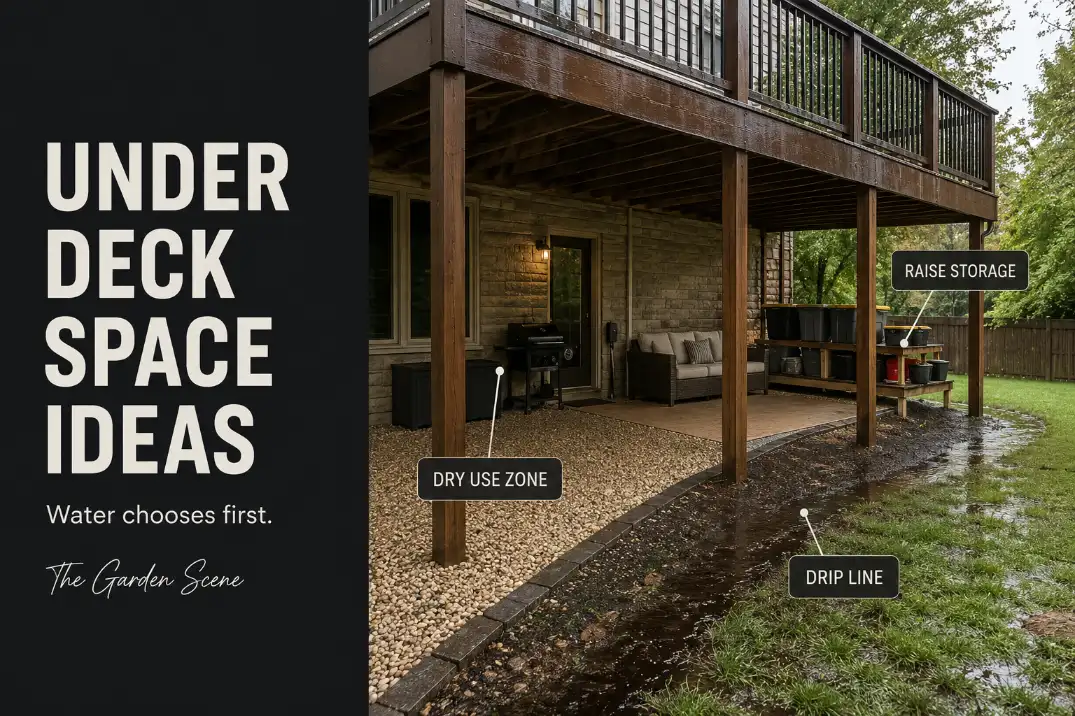
Under deck space ideas only work when the space is matched to what the deck actually allows. A dry, tall area can become a shaded seating nook. A low but protected bay may work better for bikes, tools, bins, or a potting bench.
A damp edge should not hold cushions, rugs, cardboard boxes, or anything that needs to stay clean.
The first checks are water, headroom, and access. If puddles remain more than 24 hours after normal rain, or the soil still feels soft after 48 hours, do not start with furniture.
If the clearance is under 7 feet, treat seating as secondary unless the area is unusually open and comfortable. This is different from a normal patio layout issue.
A patio is mostly about furniture flow and shade. An under deck area is more like a small outdoor utility zone with a roof that may or may not actually protect it.
The Forgotten Space Below
The space below a raised deck often becomes a catchall because it is shaded, close to the house, and visually out of the way. A few bins go in first.
Then folding chairs, leftover pavers, kids’ toys, bags of soil, and garden tools follow. By the end of one season, the area is no longer an idea. It is overflow.
Sort the Space by Height First
Headroom is the first filter because it decides whether the area can invite people in or only hold things.
Under 3 feet, the space is usually for visual cleanup, low storage access, or screened concealment. Between 3 and 6 feet, it can work for bikes, tools, bins, or a short potting shelf, but it rarely becomes comfortable seating.
At 7 feet or more, the area starts to behave like a real outdoor room, especially if the ground is firm and the sides are open.
The mistake is assuming shade equals usable space. Shade helps, but it does not erase low beams, stair stringers, damp ground, or awkward routes. If someone has to duck every time they step in, the space will be used less often than the layout drawing suggests.
Mark the Dry Bay Before Choosing the Idea
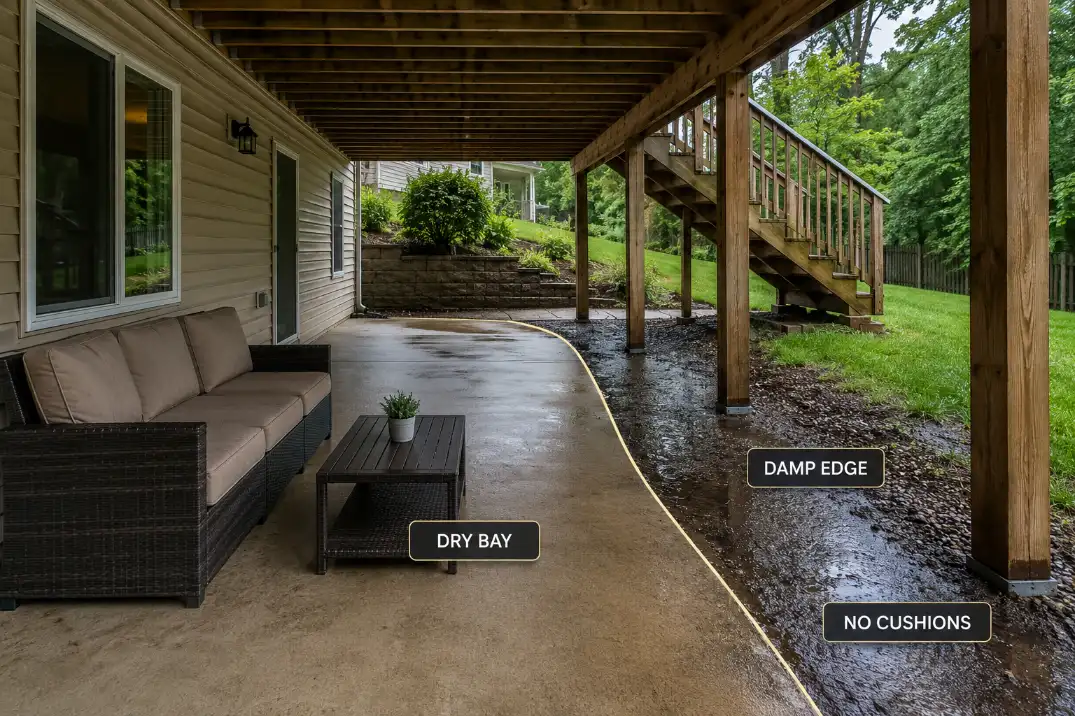
The dry bay is the part of the under deck area that stays protected after rain, not just the area that looks shaded at noon. The outer 12 to 24 inches below many decks still catches angled rain, edge runoff, or splashback. That strip should be treated as a wet margin until the deck proves otherwise.
This matters because the best idea is rarely spread evenly across the whole footprint. The inner bay might hold storage or seating. The outer edge may need gravel, drainage, or open clearance.
That same site-reading habit is useful in broader yard drainage problems caused by soil, slope, and runoff because the visible wet spot is usually a symptom, not the real path water took to get there.
Water Decides the Use
Water is the main decision-maker under a deck. It tells you whether the space can become seating, storage, a utility zone, or a project that needs drainage work before anything else.
Drying Time Matters More Than Appearance
A dark patch right after rain is not automatically a failure. The useful question is how long it stays wet. If the surface dries within 6 to 12 hours and the ground stays firm, the space may only need a cleaner surface.
If it remains slick overnight, smells earthy, or leaves mud on shoes after 24 to 48 hours, the problem is no longer cosmetic.
A healthy under deck surface should feel stable under foot traffic. A failing one shows depressions beneath bins, leaves silt lines after storms, or stays cool and damp long after nearby open ground has dried.
When an Under-Deck Ceiling Changes the Plan
If water regularly drips through the deck boards, ground improvements alone will not make the space feel finished. Gravel, pavers, and outdoor rugs can improve the floor, but they do not stop water from falling from above.
An under-deck ceiling or drainage system starts to make sense when the goal includes fabric seating, a rug, a TV, lighting, a fan, or anything that should stay dry during normal rain.
Without overhead water control, those upgrades become maintenance items. They may look finished on a dry day and disappoint after the first storm.
The threshold is simple: if you can stand under the deck during rain and see repeated drips across the area you want to furnish, do not treat that zone as a dry room yet.
The Fix That Often Wastes Time
Adding more gravel over soft soil is the most common under deck shortcut that disappoints. Gravel can help a firm surface that only needs mud control. It does not fix water moving through the space, pooling against the house, or washing fines into the low corner after every storm.
A 1% to 2% slope away from the house is usually more important than making the under deck area look perfectly level. If runoff is coming from a downspout, side slope, or patio edge, the water path has to be handled before the surface layer can perform.
Storage or Seating
Under deck ideas should be chosen by condition, not by a favorite photo. The same space that fails as a lounge may work beautifully as a storage wall or garden utility bay.
| Under deck condition | Best idea | Usually avoid |
|---|---|---|
| Dry floor within 6–12 hours, 7 ft+ clearance | Shaded seating nook, coffee spot, small lounge | Overloading the dry bay with bins |
| Damp outer edge but dry inner bay | Raised storage wall, narrow console, tool rail | Cushions or rugs at the drip line |
| Less than 3 ft clearance | Low access storage, visual screening, hatch-style concealment | Daily-use seating or deep bins |
| 3–6 ft clearance | Bikes, tools, kids’ gear, potting shelf | Anything that requires standing comfort |
| Soft ground after 24–48 hours | Drainage and base repair first | Deck tiles, rugs, closed cabinets |
| Stable but dark area | Utility zone, open shelving, seasonal storage | Fully sealed walls with no airflow |
When Seating Makes Sense
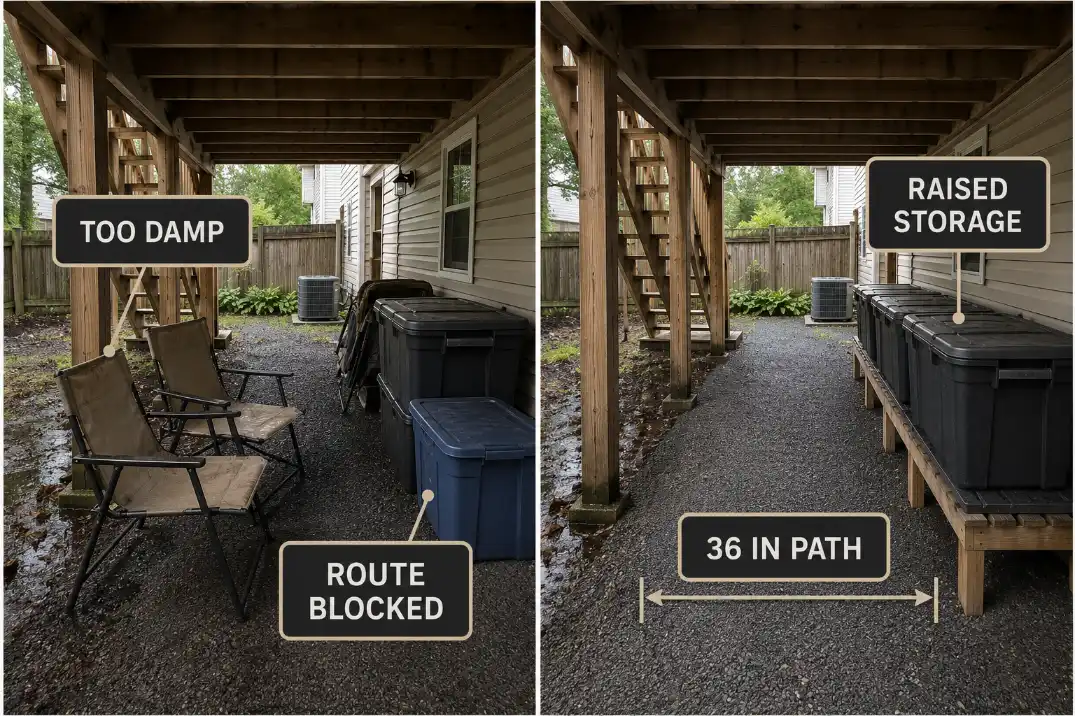
Seating works when the deck overhead behaves like real cover and the space feels easy to enter. The ground should stay dry enough that chair legs do not sink, and the approach route should remain at least 30 to 36 inches wide.
If people have to step around bins, posts, hoses, or stair framing, the area will not become a daily sitting spot.
Comfort also depends on air. In humid areas like Florida or the Gulf Coast, shaded under deck seating can feel stale if all sides are screened too tightly.
In dry desert climates, shade may be the main advantage, but dust and wind can still collect in corners. Either way, the seating idea needs open movement, not just cover.
When Storage Is the Smarter Use
Storage is often the better under deck use when the space is protected but not pleasant enough for sitting. Bikes, folding chairs, garden tools, seasonal bins, and outdoor cushions can work well if they are raised, reachable, and not pushed into the dampest corner.
Keep stored items at least 2 to 4 inches off the ground, especially where shaded soil dries slowly. Closed deck boxes and cabinets can help, but they should not block the only walking route or hide a wet wall.
If the storage zone will hold tools, cushions, or seasonal supplies, compare options built for damp outdoor corners before choosing a box or cabinet; this is where Best Backyard Storage Cabinets and Tool Organizers fits naturally into the planning decision.
A storage-first layout also needs restraint. One organized wall is usually better than three scattered piles.
Keep the Ground Stable
The ground under a deck does not need to look decorative first. It needs to stay stable, drain predictably, and remain clean enough that the space does not become another maintenance burden.
Match the Surface to the Moisture Level
Compacted gravel, pavers, concrete, mulch, and deck tiles can all work under a deck, but they solve different problems. Gravel helps with splash and mud control when the base is already stable.
Pavers need a properly prepared base, or they will rock and settle. Concrete creates the cleanest finished floor, but it can make drainage mistakes more visible if slope is wrong.
Mulch is the easy option that people often overrate. It may look tidy at first, but in a dark, protected, damp area it can hold moisture, collect leaves, and create a soft organic layer where pests feel hidden.
Use mulch carefully under raised decks, especially if the space is enclosed on several sides.
Know When Surface Fixes Stop Making Sense
A routine surface fix stops making sense when the same low area stays wet after every storm. At that point, the problem is not the top layer. It is grade, runoff, compaction, or water entering from somewhere else.
If the ground feels soft after 48 hours, if gravel keeps sinking into mud, or if pavers rock after freeze-thaw cycles in northern states, pause before adding another finish material.
The better move is to correct the base condition first. A finished surface on unstable ground only makes the space look solved for a short time.
Keep Pest Cover Out of the Design
Under deck areas become attractive hiding zones when they are dark, cluttered, and rarely disturbed. Storage touching the ground, closed corners, fallen leaves, and stacked organic materials make the problem worse.
The goal is not to make the space empty. It is to make it inspectable. Leave a few inches behind storage pieces, avoid packing bins into every corner, and do not seal off the entire perimeter with no access panel.
If you notice droppings, tunnels, chewing marks, or nesting material, solve that before adding nicer storage. The same hidden-cover problem is explained more directly in rodent hiding spots under decks and storage areas.
Hide Without Sealing Off
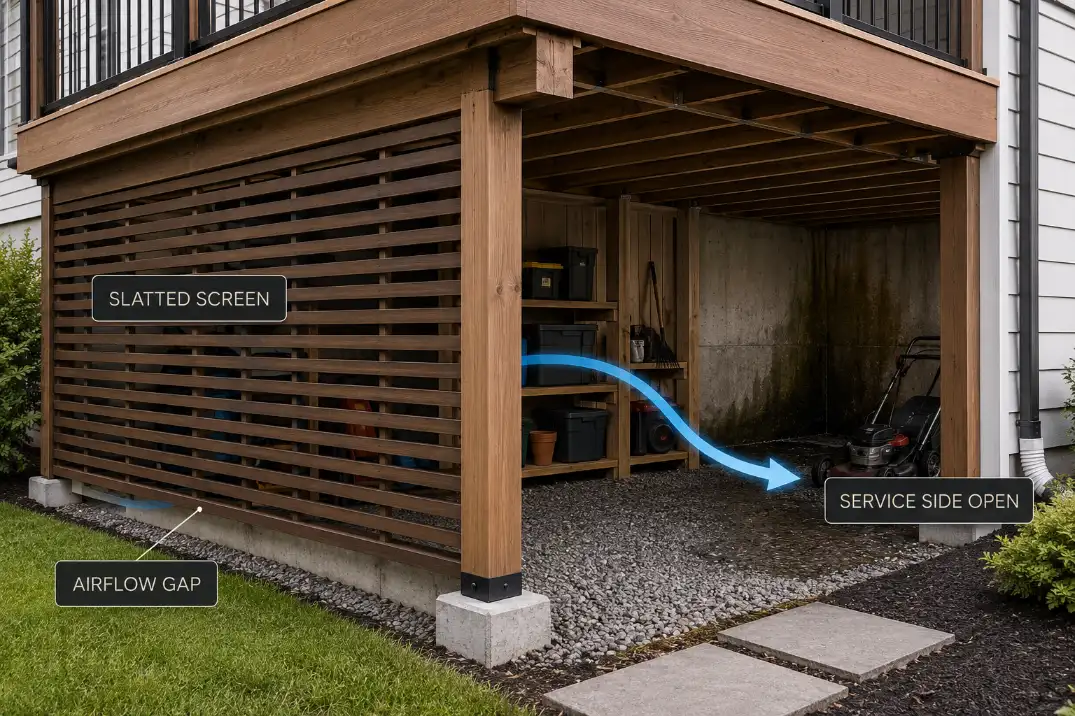
Screening can make an under deck area look finished, but the wrong screening turns a useful covered space into a damp box. The best approach hides the view while keeping air, light, and access.
Use Partial Screens Before Full Enclosure
A slatted panel, lattice section, planter screen, or short privacy run can soften the view without closing the whole space. Gaps matter. They let air move, make wet spots easier to notice, and prevent the under deck area from feeling like hidden storage behind a wall.
This is one condition homeowners often underestimate. A sealed-off under deck space may look cleaner from the yard, but it becomes harder to inspect, harder to dry, and harder to use.
Keep One Service Side Clear
Every under deck plan needs one service side. That may be the side where bins roll out, where a hose reaches, where a mower passes, or where someone can inspect posts and framing. A beautiful screen that blocks the only practical route usually becomes a regret.
Leave at least one direct 30-inch access path through or beside the space. If the deck stairs land nearby, protect that route first.
Under deck improvements should support the larger yard route, not compete with it, which is why the same access logic matters in raised deck layouts around back doors, stairs, and yard routes.
Useful Without Becoming Clutter
The final test is not whether the under deck space has an idea. It is whether that idea still works after the first month of real use.
Give the Space One Main Job
An under deck area can be a storage wall, shaded seating nook, bike bay, potting zone, kids’ gear station, utility corner, or screened-off service area. It should not try to be all of them at once.
For small backyards, one clear use beats three weak ones. A narrow storage wall with a clean path is stronger than a cramped lounge with hidden bins behind every chair. A potting bench near a hose is more useful than decorative furniture in a space nobody wants to sit in.
Use This Final Field Check
Before buying furniture, cabinets, lattice, deck tiles, or gravel, check the space in this order:
- Does the ground stay firm 24 hours after rain?
- Is there at least 7 ft of comfortable headroom for seating?
- Can one route stay 30–36 inches clear?
- Are stored items raised at least 2–4 inches off the ground?
- Can you still inspect posts, corners, damp edges, and storage backs?
- Does the plan leave airflow on at least two sides?
- Will the space still look organized with real daily items in it?
If the answer fails on water or access, do not decorate first. Fix the base condition, then choose the use.
Under deck space becomes valuable when it is honest about its limits: dry bays can invite people in, low protected zones can hold organized storage, and damp margins should stay simple enough to drain and inspect.
For broader official guidance on managing runoff around outdoor spaces, see the EPA’s Soak Up the Rain.