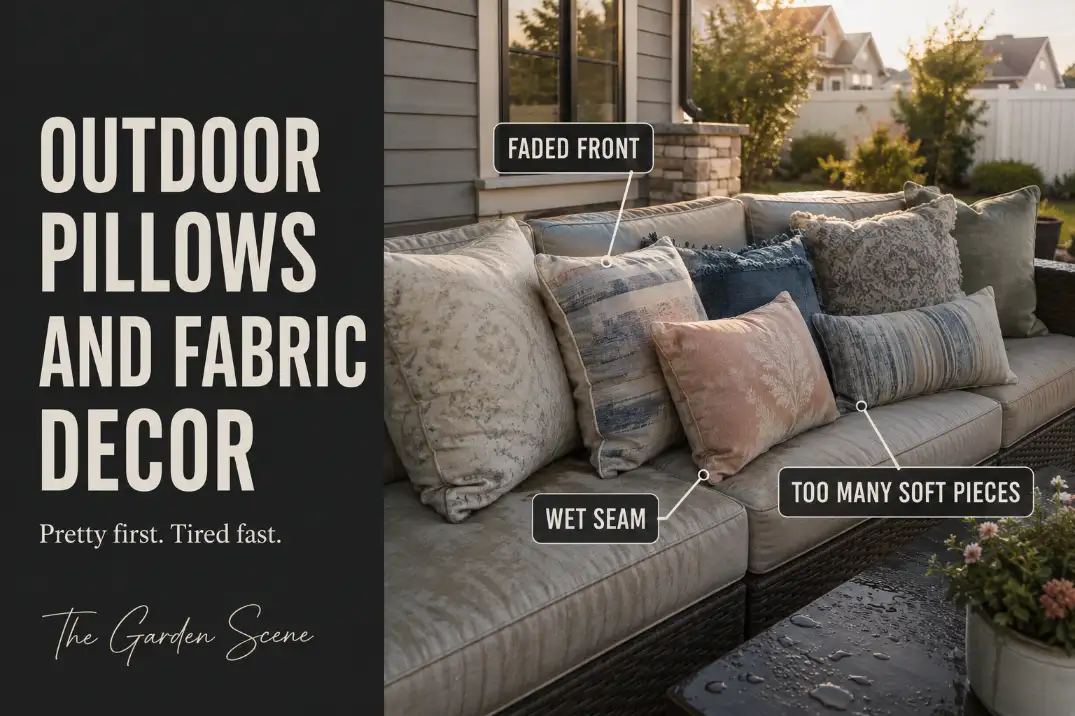
Outdoor pillows and fabric decor last outside only when the fabric, seams, fill, exposure, and storage habit all match the way the patio is actually used. The first failure is usually not a dramatic tear.
It is one pillow face fading after 4–6 hours of daily sun, a seam staying damp more than 24 hours after rain, or a pile of soft pieces that gets moved every time someone sits down.
The best choice depends less on the pillow color and more on what the site punishes first: UV exposure, trapped seam moisture, damp fill, or daily handling.
Dirt sits on the surface. Sun damage changes the color and weakens fibers. Water that enters through seams can keep the insert damp even when the outside feels dry.
If a pillow still feels cool or heavy after one full dry day, the issue is moisture retention, not just appearance.
Pretty Pieces Fail Fast
Indoor-style fabric decor fails outside because it is usually designed for touch, color, and pattern first. Outdoor use asks tougher questions: Does the color resist UV exposure? Does the cover drain? Does the fill rebound after getting damp? Can the piece be stored without turning into a daily chore?
The weakest detail usually fails first
“Outdoor” on a tag is useful, but it does not protect the whole pillow equally. A cover may use outdoor-rated fabric and still fail at the zipper, piping, insert, seam stitching, fringe, or decorative trim.
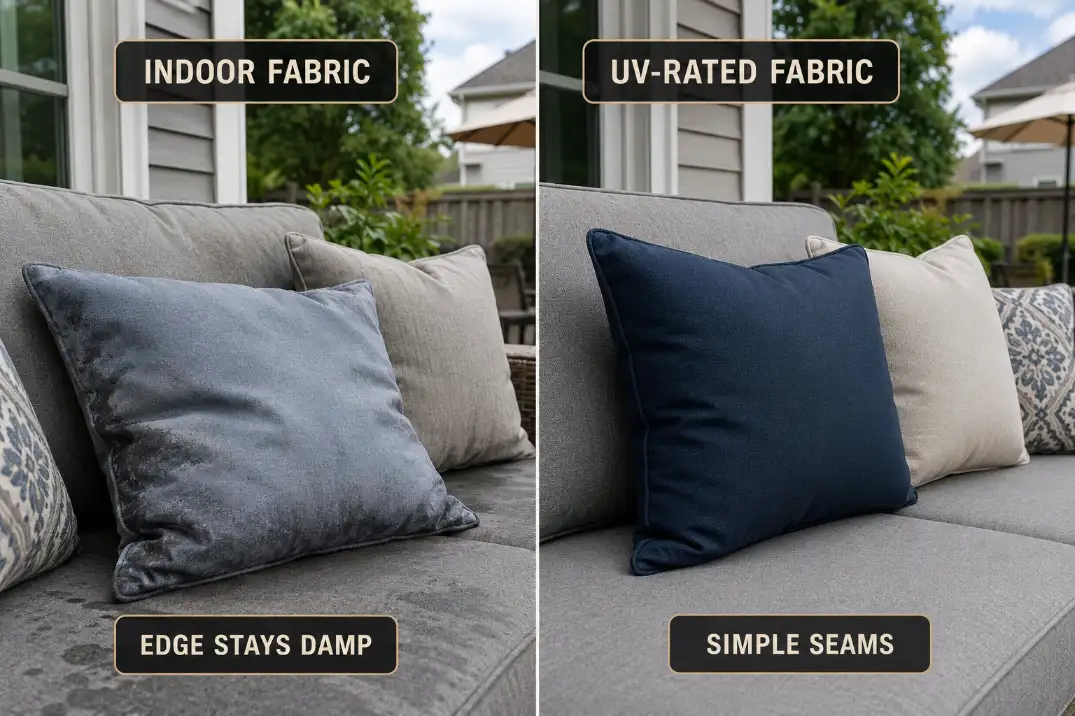
The first place to inspect is the edge construction. If the seam is thick, deeply folded, or slow to dry, it becomes the water-holding part of the pillow.
That is why two pillows made from similar-looking fabric can age very differently. A tight, simple cover with a removable insert usually survives better than a highly decorative pillow with tassels, fringe, deep seams, or a heavy braided border.
Those extra details look good in product photos, but outside they trap pollen, hold water, and make cleaning slower.
Which outdoor fabric actually earns the label
For open sunny patios, solution-dyed acrylic is usually the stronger long-term fabric because the color runs through the fiber instead of sitting mostly on the surface. Olefin or polypropylene can be a smart choice where quick drying and mildew resistance matter more than a premium fabric feel.
Outdoor polyester can work as a budget choice, but the coating and UV rating matter; cheap printed polyester often fades faster on exposed west-facing seating.
Cotton, linen-look blends, and indoor decorative covers belong only in protected places: screened porches, deep covered patios, or short-use setups where the pieces are brought inside often. They can look good, but they should not be treated as all-season patio fabric.
When soft pieces already smell musty or show dark specks along the lower edge, the problem has moved beyond styling. At that point, the better comparison is not another pillow color but the moisture pattern explained in Outdoor Cushion Mildew Problems.
Quick diagnostic checklist
- One side is 20–30% lighter than the back after one season.
- Seams stay damp more than 24 hours after rain.
- The insert feels heavier after wet weather.
- Pillows must be moved before every meal or conversation.
- Covers feel rough, brittle, or fuzzy after summer sun.
- Storage is so inconvenient that pieces stay out during storms.
Sun Fades the First Side
Sun fading usually starts on the side that faces west, south, or a reflective surface. In Arizona or inland California, a pillow can get intense afternoon exposure even under partial shade.
In humid Florida, the same pillow may fade more slowly but deal with more mildew pressure. The mistake is treating all “outside” exposure as the same.
Flip the pillow before blaming cleaning
Turn the pillow over before judging the color. If the back still looks rich while the front looks chalky, the problem is UV exposure, not poor cleaning. Washing will not bring back fiber color once the dye has broken down.
A useful threshold: if a pillow gets more than 4 hours of direct afternoon sun most days, choose solution-dyed acrylic, solution-dyed polyester, olefin, or another fabric specifically made for UV exposure.
Printed cotton blends, indoor linen looks, and low-cost decorative covers can be fine for covered porches, but they should not be treated as open-patio pieces.
Shade changes the outcome more than many buyers expect. A pillow that lasts one summer on an open west-facing patio may last several seasons under a covered seating zone.
If afternoon sun is the main stress point, the patio itself may need a shade correction before new fabric decor makes sense. The same exposure logic shows up in Patio Shade Problems in Afternoon Sun, especially where one side of the seating area takes the hardest hit.
What people overestimate
People often overestimate waterproofing and underestimate sunlight. A pillow can shed a light sprinkle and still look tired after one hot season because UV damage happens every clear day. Rain is occasional in many regions. Sun exposure is daily.
The better buying decision is not “waterproof or not.” It is “which stress will this exact spot punish first?” For open patios, colorfastness matters before extra ornament. For covered patios, seam drying and mildew resistance may matter more.
| Outdoor fabric signal | What it usually means | Better decision |
|---|---|---|
| Front fades but back stays rich | UV exposure is the main stress | Move to shade or choose higher UV-rated fabric |
| Seams darken after rain | Water is collecting at stitching | Simplify trim and improve drying |
| Pillow feels heavy after 24 hours | Fill is retaining water | Replace insert or store before storms |
| Fabric feels rough or fuzzy | Fibers are degrading | Stop cleaning harder; replace |
| Decor blocks seating depth | Quantity is the problem | Use fewer, larger pieces |
| Musty smell returns after washing | Moisture source remains | Change storage and drying habit |
Rain Finds the Seams
Rain rarely attacks outdoor pillows evenly. It finds the lowest edge, the zipper line, the welt cord, and the folded seam. Even a 0.25–0.5 inch rain can leave enough water in those edges to feed mildew if the pillow is stacked flat afterward.
Dry face, damp seam, cool fill
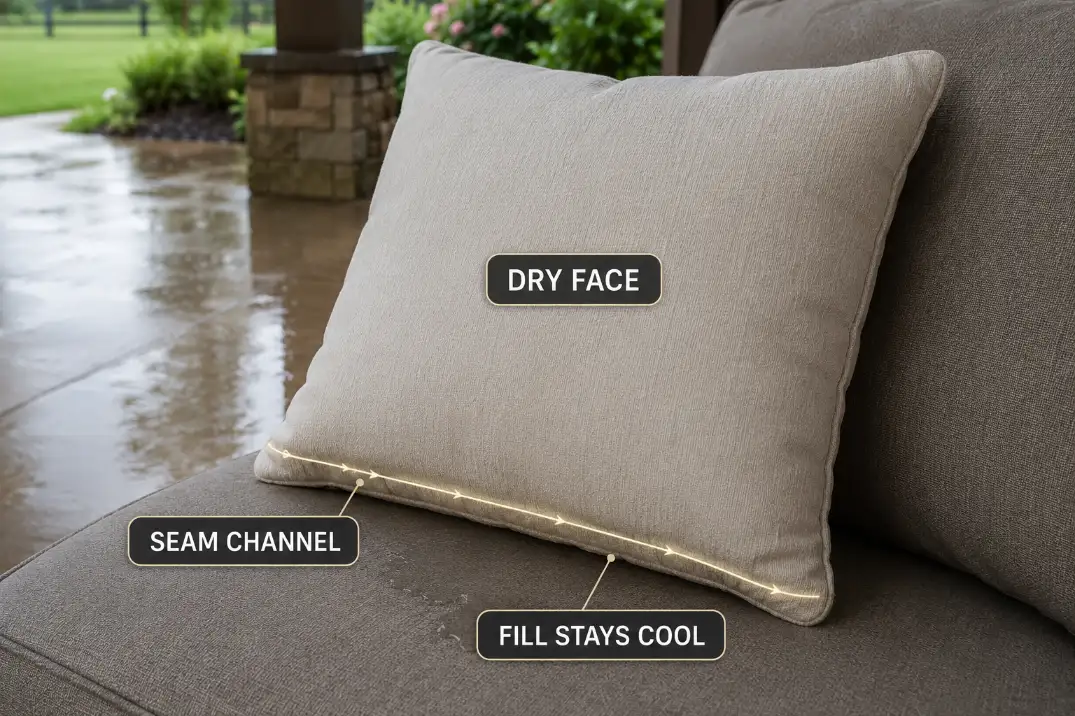
The outside face may dry in 2–4 hours on a warm breezy day, while the seam and insert take much longer. That is why pillows often smell fine at first and then develop odor after a few damp cycles. The surface looked finished, but the slowest-drying part was still holding moisture.
After rain, stand pillows upright with at least 1–2 inches of air space between pieces. Do not stack them flat on a chair or shove them into a closed bin while they are cool to the touch.
If they are still damp after 24 hours in warm weather, they need airflow, sun, or indoor drying before storage. If the musty smell returns within 48 hours after drying, the insert or storage routine is usually the problem, not the surface fabric alone.
Pro Tip: Press a paper towel along the lower seam after the fabric face feels dry. If the towel picks up moisture, the pillow is not ready for storage.
Waterproof covers are not a cure-all
A cover helps only when it does not trap damp fabric underneath. If pillows go into a storage box wet, a cover or bin simply creates a slower drying chamber. This is where many “weatherproof” setups disappoint. The product may block rain from above, but it cannot undo moisture already inside the seams.
That is also why storage problems often start as patio layout problems. If the box is across the yard, behind a grill, or too small to use quickly, the routine fails.
The practical storage habit matters more than the label on the container, a pattern that also shows up in Outdoor Cushion Storage Mistakes.
Storage Becomes the Habit
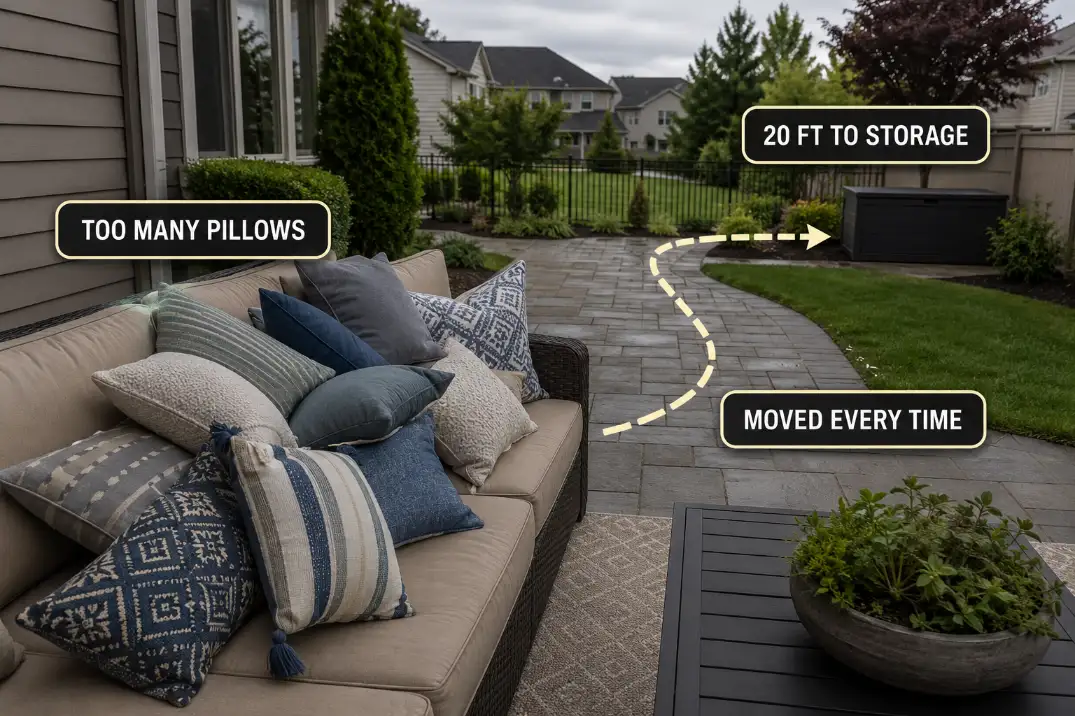
The best outdoor pillow setup is the one you will actually maintain. If storing the pieces takes more than 60 seconds, most households stop doing it consistently. That is not laziness. It is a design problem.
Keep storage inside the use zone
Storage should sit within 6–10 feet of the seating area, open easily, and have enough room that pillows are not crushed. A deck box packed to 100% capacity becomes a damp compression box. Leave roughly 25–30% open volume if the pieces are even slightly cool or humid when stored.
For many patios, the right answer is not more pillows. It is fewer pillows plus one reliable storage place. If rain is frequent or cushions already have mildew history, a dedicated storage choice can matter more than another decorative upgrade.
A buying-focused option like Best Outdoor Cushion Storage for Rain and Mildew makes the most sense when the current habit fails because there is nowhere convenient and dry to put soft goods.
Climate changes the storage rule
In humid Gulf Coast and Florida patios, pillows can feel dry on the surface but stay cool at the seam because the air itself slows drying. In Midwest regions with repeated summer storms, the issue is often timing: the pieces never get a clean 24-hour dry window before the next rain.
In northern states, winter storage matters more; fabric pieces should be fully dry before being sealed away for months, especially if they sit in an unheated garage or shed.
Dry desert climates are more forgiving about mildew, but they punish color. There, shade and UV-rated fabric usually matter more than oversized waterproof bins. The climate does not change the basic rule; it changes which weak point fails first.
Too Many Soft Pieces Clutter
Fabric decor can make a patio feel finished, but it can also shrink the usable seat. This is especially common on small sofas, deep chairs, dining chairs, and narrow benches where pillows steal the exact space people need for backs, elbows, plates, or conversation.
Comfort is not the same as volume
A good outdoor pillow should support posture or soften a hard edge. Once the pillow has no job except filling a photo, it starts competing with the seating.
On a small patio sofa, 2–3 well-sized pillows usually work better than six small ones. On dining chairs, loose pillows often become clutter unless they tie securely or stay in place during repeated sitting.
A useful test is simple: sit down without adjusting anything. If you have to move pillows before sitting, the decor is not serving comfort. If guests place pillows on the ground, the setup has already failed.
This is where fabric decor overlaps with broader layout clutter. The same principle behind Reduce Patio Clutter Without Losing Function applies here: every object needs either a comfort job, a storage place, or a reason to survive weather exposure.
The better fabric decor mix
For most patios, the strongest mix is restrained:
- 1–2 outdoor pillows per lounge chair or sofa corner
- 1 washable outdoor throw stored nearby, not left wet
- 1 larger cushion only where the seat surface needs it
- no fringe, tassels, or absorbent trim in wet climates
- fewer pale fabrics where pollen, dust, or bird droppings are common
This does not mean the patio has to look plain. It means the softness should be deliberate. Durable fabric decor looks better longer when each piece has space around it, dries quickly, and does not need constant handling.
Comfort Without Constant Rescue
Long-lasting outdoor pillows are less about finding one perfect material and more about matching pieces to exposure. Sun-heavy patios need colorfast fabric and shade strategy.
Rain-heavy patios need simple seams, quick drying, and easy storage. Small patios need restraint so comfort does not turn into clutter.
Use the right priority order
Start with exposure, then fabric, then seam and fill, then storage, then quantity. That order prevents wasted fixes.
Replacing faded pillows without changing sun exposure may buy only one more season. Buying waterproof covers without drying seams first may trap moisture.
Adding more pillows to make a patio feel finished may make the seating harder to use. The better outdoor setup is usually smaller, tougher, and easier to maintain than the one that looks best in a product photo.
When replacement makes more sense than rescue
Cleaning stops making sense when the fabric has lost color and texture, when the fill stays heavy after drying, or when odor returns within 48 hours of being aired out. Those are not normal dirt signals. They point to UV damage, trapped moisture, or a soft-goods routine that does not match the patio.
If the goal is fabric decor that ages gracefully, choose pieces that can survive the least glamorous part of outdoor life: wet seams, hot sun, pollen, storage friction, and repeated use.
That is also the larger design lesson behind Garden Decor That Ages Well Outdoors: outdoor style lasts when the material and the habit both fit the site.
For broader official guidance on moisture and mold control, see University of Minnesota Extension.